Geothermal Energy Essentials
Understanding Earth's Heat and Its Power for Our Future
What if the most reliable renewable energy source was literally beneath your feet?
207 pages9 chaptersDec 2, 2025Renewable Energy
About this book
Geothermal energy represents one of the most underutilized yet promising solutions to our global energy challenges. This book explores the geological foundations of geothermal systems, revealing how Earth's internal heat can be converted into electricity and direct heating applications. You'll discover why certain regions are geothermal hotspots, how drilling and extraction technologies work, and what makes geothermal energy fundamentally different from intermittent renewables. From Iceland's geothermal dominance to emerging projects in unexpected locations, this guide examines real-world applications, economic viability, and environmental considerations. Whether you're curious about energy alternatives, interested in sustainable development, or exploring career opportunities in renewable energy, this book provides the knowledge needed to understand geothermal energy's critical role in our energy future.
Table of contents
- IntroductionWhy Geothermal Energy Matters Now, What You'll Learn in This Book, Geothermal Energy at a GlanceRead below
- Chapter 1: Earth's Internal Heat EngineHow Earth Generated Its Heat, Radioactive Decay: The Continuous Heat Source, How Heat Flows Through Earth's Layers, Understanding Geothermal Gradients
- Chapter 2: Geological Foundations of Geothermal SystemsPlate Tectonics and Geothermal Hotspots, What Makes a Geothermal Reservoir, Geothermal Fluids and Circulation Patterns, Rock Types and Thermal Properties
- Chapter 3: Global Geothermal Resources and DistributionWhere Geothermal Energy Exists Worldwide, Iceland: A Geothermal Success Story, Emerging Geothermal Regions and Potential, Assessing Geothermal Potential in New Areas
- Chapter 4: Geothermal Electricity GenerationTypes of Geothermal Power Plants, Drilling and Fluid Extraction Technologies, Converting Heat to Electricity, Efficiency and Performance Optimization
- Chapter 5: Direct-Use Applications of Geothermal EnergySpace Heating and Cooling Systems, Industrial and Agricultural Applications, District Heating Networks, Economic Advantages of Direct Use
- Chapter 6: Enhanced Geothermal Systems and InnovationWhat Are Enhanced Geothermal Systems?, Creating Reservoirs Through Fracturing, Expanding Geothermal Beyond Traditional Zones, Next-Generation Geothermal Technologies
- Chapter 7: Environmental Considerations and SustainabilityEnvironmental Advantages Over Fossil Fuels, Managing Induced Seismicity and Earthquakes, Geothermal Fluid Handling and Disposal, Life Cycle Environmental Impact Analysis
- Chapter 8: Economics and Project DevelopmentCapital Costs and Economic Feasibility, Financing and Investment Strategies, Government Policies and Incentive Programs, Local Economic Development and Job Creation
- Chapter 9: Geothermal Energy and Climate SolutionsGeothermal's Role in Reducing Carbon Emissions, Integrating Geothermal with Other Renewables, Meeting Global Climate Goals with Geothermal, Geothermal in Future Energy Systems
- ConclusionKey Takeaways and Insights, Your Next Steps in Understanding Geothermal Energy
- Glossary of Geothermal Terms
- Further Reading and Resources
Introduction
Beneath your feet lies an energy source so vast and reliable that it could fundamentally transform how we power our world. While solar panels and wind turbines capture headlines in renewable energy discussions, geothermal energy quietly operates around the clock, unaffected by clouds, calm days, or seasonal variations. This constant availability makes geothermal fundamentally different from other renewable sources—it provides baseload power, the steady, continuous electricity that keeps hospitals running, data centers operating, and homes comfortable regardless of weather conditions. Yet despite its enormous potential, geothermal energy remains one of the most underutilized renewable resources on our planet, generating less than one percent of global electricity while the technology and geological knowledge to expand it already exist.
The Earth's interior contains approximately 44 terawatts of heat flowing continuously toward the surface—more than twice the total energy humanity currently consumes from all sources combined[1]. This heat originates from two primary sources: the residual thermal energy from Earth's violent formation 4.5 billion years ago, and the ongoing radioactive decay of elements like uranium, thorium, and potassium deep within the planet's crust and mantle. Unlike fossil fuels that took millions of years to form and can be depleted within human timescales, this geothermal heat represents a renewable resource that will continue generating energy for billions of years. The challenge isn't whether sufficient heat exists—it's learning where to find it, how to access it efficiently, and how to convert it into useful energy for human needs.
Understanding geothermal energy requires looking beyond simple definitions to grasp the complex interplay of geology, engineering, economics, and environmental science that determines where and how this resource can be harnessed. Some regions, like Iceland and New Zealand, sit atop geological goldmines where superheated water and steam naturally rise close to the surface, making energy extraction relatively straightforward. Other areas require sophisticated drilling technologies and enhanced geothermal systems to access heat trapped in deep, impermeable rock formations. This book will guide you through these complexities, providing the knowledge needed to understand not just what geothermal energy is, but why it matters increasingly in our transition away from fossil fuels, how different geological settings create opportunities and constraints, and what technological innovations are expanding geothermal potential into regions previously considered unsuitable for development.
The timing for understanding geothermal energy has never been more critical. As nations worldwide commit to aggressive carbon reduction targets and seek energy independence from volatile fossil fuel markets, geothermal offers unique advantages that complement intermittent renewables like solar and wind. While battery storage technologies improve, they remain expensive and limited in duration—geothermal provides the consistent power generation that stabilizes electrical grids and reduces reliance on fossil fuel backup plants. Furthermore, geothermal applications extend far beyond electricity generation. Direct-use applications—heating buildings, growing crops in greenhouses, processing food, and even melting snow on roads—often prove more economically viable than power generation, particularly in regions with moderate geothermal resources. These diverse applications create opportunities for communities worldwide to reduce energy costs, create local jobs, and build resilient energy systems tailored to their specific geological circumstances.
Why Geothermal Energy Matters Now
The global energy landscape faces unprecedented challenges that geothermal energy is uniquely positioned to address. Climate change demands rapid decarbonization of energy systems, yet maintaining reliable electricity supply remains non-negotiable for modern societies. This creates a fundamental tension: how do we transition away from fossil fuels that provide on-demand power while avoiding the intermittency problems that plague solar and wind installations? Geothermal energy resolves this tension by offering capacity factors—the percentage of time a power plant operates at full capacity—typically exceeding 90 percent, compared to 25 percent for solar and 35 percent for wind[2]. This reliability means a single geothermal plant can replace multiple solar or wind installations while requiring significantly less land area and producing power continuously through day and night, summer and winter.
Economic considerations increasingly favor geothermal development as drilling technologies improve and costs decline. The levelized cost of energy (LCOE) for geothermal electricity—the total cost of building and operating a plant divided by its lifetime energy production—has decreased substantially over the past decade, making it competitive with natural gas in many regions and cheaper than coal when environmental costs are factored in. More importantly, geothermal projects create energy price stability that fossil fuels cannot match. Once a geothermal plant is built, its operating costs remain relatively fixed because there's no fuel to purchase—the heat is free and inexhaustible. This insulates communities from the price volatility that characterizes oil and gas markets, where geopolitical events can double energy costs within months. For developing nations and remote communities, this price predictability enables long-term economic planning and reduces vulnerability to external economic shocks.
Environmental imperatives extend beyond carbon emissions to encompass water usage, land disturbance, and ecosystem impacts—areas where geothermal demonstrates clear advantages. A typical geothermal power plant uses less than 20 liters of freshwater per megawatt-hour of electricity produced, compared to 1,000 liters for coal plants and 750 liters for natural gas facilities[3]. This minimal water consumption proves critical in water-stressed regions where competition for freshwater intensifies between agriculture, industry, and human consumption. Additionally, geothermal plants occupy remarkably small footprints—a geothermal facility generating 100 megawatts typically requires less than one square kilometer, while solar installations producing equivalent annual energy would need 50-100 square kilometers, and wind farms would require even more. This land efficiency preserves ecosystems, agricultural land, and scenic landscapes while still meeting energy demands.
The strategic importance of geothermal energy extends to national security and energy independence considerations that resonate across political spectrums. Countries lacking domestic fossil fuel reserves face perpetual trade deficits, currency vulnerabilities, and geopolitical dependencies that constrain foreign policy options. Geothermal resources, by contrast, cannot be embargoed, sanctioned, or controlled by foreign powers—they exist wherever geology permits and remain accessible regardless of international tensions. This energy sovereignty proves particularly valuable for island nations and countries in tectonically active regions. Consider the Philippines, which has transformed from energy importer to geothermal powerhouse, now generating nearly 15 percent of its electricity from domestic geothermal resources. This shift has reduced foreign currency expenditures, created thousands of skilled jobs, and demonstrated that energy independence need not require fossil fuel reserves—just the right geology and political will to develop it.
Technological convergence between geothermal development and other industries creates unexpected synergies that accelerate progress. The oil and gas industry's century of drilling innovation directly transfers to geothermal exploration, with experienced drilling crews, proven equipment, and established supply chains readily adaptable to geothermal projects. As fossil fuel extraction declines in response to climate policies, this workforce transition becomes increasingly important—geothermal development offers high-paying technical jobs for workers whose skills remain valuable but whose traditional industry faces long-term contraction. Similarly, advances in materials science, data analytics, and remote sensing technologies developed for other purposes now enhance geothermal exploration and operation. Machine learning algorithms originally designed for oil reservoir modeling now predict geothermal resource locations with unprecedented accuracy, while advanced drilling fluids and drill bits developed for deep offshore oil wells enable access to previously unreachable geothermal resources.
The integration potential between geothermal and other renewable energy sources creates opportunities for optimized energy systems that exceed what any single technology can achieve alone. Geothermal's constant output perfectly complements solar's daytime peak production and wind's variable generation patterns. In hybrid systems, geothermal provides the stable baseline while solar and wind contribute additional capacity during favorable conditions, with the geothermal component adjusting output to balance supply and demand. This integration extends to thermal storage applications, where excess solar or wind electricity can heat underground reservoirs, effectively storing energy as heat for later conversion back to electricity when needed. Such systems combine the low cost of solar and wind with geothermal's reliability, creating resilient energy portfolios that maintain grid stability without fossil fuel backup plants. Iceland's energy system exemplifies this approach, combining geothermal baseload with hydroelectric capacity to achieve nearly 100 percent renewable electricity generation.
Direct-use applications of geothermal energy offer immediate, cost-effective opportunities that don't require the high temperatures needed for electricity generation. Approximately 90 percent of Earth's landmass sits above geothermal resources suitable for heating applications, even if temperatures are insufficient for power generation[4]. District heating systems that distribute geothermal heat through insulated pipes can warm entire cities, as demonstrated in Reykjavik, Iceland, where 95 percent of buildings receive geothermal heating at costs substantially below fossil fuel alternatives. Agricultural applications include greenhouse heating that extends growing seasons and enables crop production in cold climates, aquaculture facilities that maintain optimal water temperatures for fish farming, and soil warming systems that accelerate plant growth. Industrial processes like food dehydration, lumber drying, and mineral extraction benefit from reliable, low-cost geothermal heat. These applications often prove more economically attractive than electricity generation because they use heat directly without the efficiency losses inherent in thermal-to-electrical conversion, making geothermal viable in many more locations than power generation alone would suggest.
The urgency of climate action creates a compelling timeline for geothermal expansion. The Intergovernmental Panel on Climate Change (IPCC) indicates that limiting global warming to 1.5°C requires reducing global carbon emissions by 45 percent by 2030 and reaching net-zero by 2050. Meeting these targets demands rapid deployment of all available low-carbon energy sources, not just the most visible ones. Geothermal energy currently contributes only about 14 gigawatts of global electricity capacity, yet identified resources could support more than 200 gigawatts with existing technology, and enhanced geothermal systems could theoretically provide thousands of gigawatts. Closing this gap between potential and deployment requires overcoming not just technical challenges but also awareness barriers—many policymakers, investors, and citizens simply don't understand geothermal energy's capabilities and advantages. This knowledge gap explains why geothermal receives far less policy support and investment than solar and wind despite its superior reliability and comparable environmental benefits. Addressing this awareness deficit represents a critical step toward unlocking geothermal's climate mitigation potential.
What You'll Learn in This Book
This book provides a comprehensive journey through geothermal energy, structured to build your understanding progressively from fundamental geological principles to practical applications and future possibilities. The early chapters establish the scientific foundation you'll need to understand why geothermal resources exist where they do and how Earth's internal processes create the heat we can harness. You'll discover how radioactive decay continuously generates heat deep within the planet, how this heat flows through different rock layers, and why certain geological settings concentrate thermal energy in accessible locations. These concepts might seem abstract initially, but they're essential for understanding why Iceland can power its entire nation with geothermal energy while other countries struggle to find viable resources, and why technological innovations like enhanced geothermal systems can potentially democratize access to this energy source.
The middle chapters transition from theory to practice, examining how geothermal energy is actually extracted and utilized. You'll explore the different types of geothermal power plants—dry steam, flash steam, and binary cycle systems—and understand why each design suits particular geological conditions and temperature ranges. The drilling and extraction technologies that make geothermal development possible receive detailed attention, including the challenges of drilling several kilometers into the Earth's crust, managing corrosive geothermal fluids, and maintaining well productivity over decades of operation. These technical details matter because they determine project costs, environmental impacts, and long-term viability. Understanding these factors enables you to evaluate geothermal projects critically, distinguishing between realistic proposals and overly optimistic projections that ignore geological or engineering constraints.
Direct-use applications receive dedicated coverage because they represent geothermal energy's most widespread and often most economically viable applications. You'll learn how geothermal heat pumps can heat and cool buildings efficiently in virtually any location, how district heating networks distribute geothermal energy throughout communities, and how industries from agriculture to manufacturing utilize geothermal heat for processes ranging from greenhouse warming to food processing. These applications often prove more accessible than electricity generation for communities exploring geothermal development, requiring lower temperatures, less complex technology, and smaller capital investments. The economic analysis provided will help you understand when direct-use applications make financial sense and how they compare to conventional heating and cooling alternatives in different contexts.
Enhanced geothermal systems (EGS) receive thorough examination because they represent geothermal energy's most transformative potential. Unlike conventional geothermal resources that require naturally occurring heat, permeability, and fluid in the same location, EGS technology creates artificial reservoirs by fracturing hot, dry rock and circulating water through the created fracture networks. This approach could theoretically make geothermal energy available almost anywhere if drilling reaches sufficient depth, potentially expanding geothermal capacity by orders of magnitude. However, EGS also presents significant technical challenges and risks, including induced seismicity concerns, high drilling costs, and uncertain reservoir performance. This book provides balanced coverage of both EGS potential and limitations, enabling you to understand the technology's promise without succumbing to unrealistic hype about its near-term deployment prospects.
Environmental considerations receive careful, nuanced treatment that acknowledges both geothermal energy's advantages and its genuine environmental challenges. While geothermal produces minimal carbon emissions and uses little water compared to fossil fuels, it's not entirely impact-free. Geothermal fluids often contain dissolved gases including carbon dioxide and hydrogen sulfide that require management, some geothermal developments have triggered minor earthquakes, and improper fluid disposal can contaminate groundwater. You'll learn how modern geothermal projects address these concerns through reinjection systems that return fluids to the reservoir, seismic monitoring protocols that detect and respond to induced seismicity, and closed-loop systems that eliminate atmospheric emissions. This honest assessment of environmental trade-offs provides the foundation for informed decision-making about geothermal development in specific contexts, recognizing that all energy sources involve environmental impacts that must be weighed against their benefits.
Economic analysis throughout the book examines the financial realities of geothermal development, from initial exploration costs through decades of operation. You'll understand why geothermal projects require substantial upfront investment but offer low operating costs and stable energy prices over their 30-50 year lifespans. The discussion covers financing mechanisms including government incentives, private investment models, and international development funding that make projects financially viable. Case studies illustrate how different economic contexts—from wealthy nations with established energy infrastructure to developing countries seeking energy access—influence project design and financing strategies. This economic perspective proves essential for understanding why geothermal development proceeds rapidly in some regions while remaining stagnant in others despite comparable geological resources, and what policy interventions might accelerate deployment.
The final chapters examine geothermal energy's role in broader energy transitions and climate solutions. You'll explore how geothermal integrates with other renewable energy sources to create resilient, low-carbon energy systems, and how its unique characteristics complement the intermittency of solar and wind power. The discussion addresses geothermal's potential contribution to meeting global climate targets, including realistic assessments of how much geothermal capacity could be deployed by 2030 and 2050 under different policy and investment scenarios. You'll also encounter emerging technologies and research directions that could further enhance geothermal's capabilities, from advanced drilling techniques that reduce costs to novel power cycle designs that extract more energy from moderate-temperature resources. This forward-looking perspective helps you understand not just where geothermal energy stands today, but where it's heading and what breakthroughs might accelerate its adoption.
Throughout the book, real-world examples and case studies ground abstract concepts in concrete applications. You'll examine Iceland's transformation into a geothermal-powered nation, Kenya's rapid geothermal expansion along the East African Rift, and innovative projects in unexpected locations like Munich, Germany, where geothermal district heating serves a major city far from volcanic activity. These examples illustrate both successes and failures, providing lessons about what works, what doesn't, and why. The case studies span different scales from small community heating projects to utility-scale power plants, different geological settings from volcanic regions to sedimentary basins, and different economic contexts from wealthy nations to developing countries. This diversity of examples ensures you understand geothermal energy's versatility and adaptability to different circumstances rather than viewing it as a one-size-fits-all solution.
Geothermal Energy at a Glance
Geothermal energy, at its most fundamental level, is simply heat energy stored within the Earth. The term itself derives from Greek roots: geo meaning Earth and therme meaning heat. This heat manifests in various forms depending on depth and geological context—from the relatively cool ground just below the frost line that geothermal heat pumps exploit, to superheated steam exceeding 300°C that drives turbines in volcanic regions. Understanding this temperature spectrum is crucial because different applications require different temperature ranges. Low-temperature resources below 90°C suit direct heating applications and geothermal heat pumps. Moderate-temperature resources between 90°C and 150°C can generate electricity using binary cycle power plants or serve industrial processes requiring substantial heat. High-temperature resources above 150°C enable conventional steam turbine electricity generation and represent the most valuable geothermal resources for power production.
The three essential components of a productive geothermal system create a useful framework for understanding where and why geothermal resources exist. First, a heat source must exist—typically either magma bodies relatively close to the surface in volcanic regions, or simply the normal geothermal gradient in the Earth's crust where temperature increases with depth. Second, permeability must allow fluids to circulate through rock formations, either through natural fractures and porous rock or through artificially created fracture networks in enhanced geothermal systems. Third, fluid must be present to absorb heat and transport it to the surface, whether naturally occurring groundwater or water injected from the surface. When all three components coincide in the same location, a viable geothermal resource exists. When one or more components are missing or inadequate, geothermal development becomes more challenging and expensive, though not necessarily impossible with appropriate technology.
Geothermal resources are commonly classified into several categories based on their geological setting and characteristics:
- Hydrothermal systems contain naturally occurring hot water or steam in permeable rock formations, representing the most economically attractive and widely developed geothermal resources
- Geopressured resources consist of hot water under high pressure in deep sedimentary basins, containing both thermal energy and dissolved natural gas
- Hot dry rock systems contain heat but lack natural permeability and fluid, requiring enhanced geothermal system technology to create artificial reservoirs
- Magma resources represent the ultimate geothermal energy source with temperatures exceeding 600°C, though extracting energy directly from molten rock remains beyond current technological capabilities
The global distribution of geothermal resources follows predictable geological patterns that reflect Earth's tectonic activity. The Ring of Fire encircling the Pacific Ocean contains the world's most abundant high-temperature geothermal resources, with major developments in countries including Indonesia, Philippines, Japan, New Zealand, Mexico, and the western United States. The East African Rift represents another geothermal hotspot where continental rifting creates volcanic activity and high heat flow, with Kenya, Ethiopia, and Djibouti rapidly developing their resources. Mid-ocean ridge systems like Iceland's location on the Mid-Atlantic Ridge create exceptional geothermal conditions where tectonic plates diverge and magma rises close to the surface. Even regions far from plate boundaries contain geothermal potential in sedimentary basins where thick insulating rock layers trap heat, or in areas where deep circulation brings hot water toward the surface through fault systems. This global distribution means that while some countries enjoy exceptional geothermal resources, virtually every nation has some level of geothermal potential suitable for at least direct-use applications.
Geothermal power generation operates on principles similar to conventional thermal power plants, but with crucial differences in heat source and environmental impact. In the most common flash steam configuration, high-pressure hot water from production wells is allowed to "flash" into steam as pressure decreases, with the steam then driving turbines connected to electrical generators. Dry steam plants, the simplest and oldest design, use steam directly from the reservoir without requiring a flashing process, though such resources are rare. Binary cycle plants use geothermal fluid to heat a secondary working fluid with a lower boiling point than water, enabling electricity generation from moderate-temperature resources that couldn't produce steam. After passing through the power plant, cooled geothermal fluids are typically reinjected into the reservoir through injection wells, maintaining reservoir pressure and creating a sustainable cycle. This reinjection also addresses environmental concerns by preventing surface discharge of geothermal fluids that may contain dissolved minerals and gases.
Direct-use applications bypass electricity generation entirely, using geothermal heat for purposes where thermal energy is the desired end product. This approach achieves much higher overall efficiency because it avoids the substantial energy losses inherent in converting heat to electricity—typically only 10-20 percent of geothermal heat energy becomes electricity in power plants, while direct-use applications can utilize 50-70 percent of the available heat. Common direct-use applications include:
- Space heating for individual buildings or entire districts through insulated pipe networks
- Greenhouse heating that enables year-round crop production in cold climates
- Aquaculture maintaining optimal water temperatures for fish and shrimp farming
- Industrial processes including food dehydration, lumber drying, and mineral processing
- Snow melting for roads, sidewalks, and parking areas in winter climates
- Balneology using geothermal water for therapeutic bathing and spa applications
Geothermal heat pumps (also called ground-source heat pumps) represent a distinct category of geothermal technology that works almost anywhere regardless of local geology. These systems exploit the fact that underground temperatures remain relatively constant year-round—typically 10-15°C at depths of just 3-10 meters. In winter, heat pumps extract this modest heat and concentrate it to warm buildings. In summer, the process reverses, using the cool ground as a heat sink to cool buildings. While geothermal heat pumps don't access the deep geothermal resources that power plants and direct-use applications exploit, they still qualify as geothermal technology because they utilize Earth's thermal properties. These systems achieve remarkable efficiency, typically providing 3-4 units of heating or cooling energy for every unit of electricity consumed to run the pump. This efficiency advantage over conventional heating and air conditioning systems makes geothermal heat pumps increasingly popular for residential and commercial buildings, with millions of installations worldwide demonstrating their reliability and economic benefits.
The environmental profile of geothermal energy distinguishes it from both fossil fuels and other renewable sources. Geothermal power plants emit approximately 120 kilograms of carbon dioxide per megawatt-hour of electricity produced—about 5 percent of coal plant emissions and 10 percent of natural gas plant emissions[5]. These minimal emissions come primarily from dissolved carbon dioxide in geothermal fluids that escapes during the flashing process, not from combustion. Closed-loop binary cycle plants can achieve near-zero emissions by keeping geothermal fluids contained. Water consumption remains minimal because most water is recycled through reinjection, unlike fossil fuel plants that consume vast quantities for cooling. Land use efficiency exceeds other renewables significantly—a geothermal plant occupies roughly 400 square meters per gigawatt-hour of annual production, compared to 3,600 square meters for solar and 1,300 square meters for wind. However, geothermal development does present environmental considerations including potential induced seismicity from fluid injection, hydrogen sulfide emissions that require abatement systems, and careful management of geothermal fluids containing dissolved minerals and trace elements.
The economic characteristics of geothermal projects differ substantially from other energy sources in ways that influence development patterns and financing strategies. Geothermal projects are capital-intensive with high upfront costs for exploration, drilling, and plant construction, but feature low operating costs once commissioned because the fuel is free. This cost structure contrasts with natural gas plants that have low capital costs but ongoing fuel expenses, and even with solar and wind that have no fuel costs but require larger installations to produce equivalent annual energy due to lower capacity factors. Geothermal's high capacity factor means that despite higher initial costs per kilowatt of capacity, the cost per kilowatt-hour of actual energy produced often proves competitive. The long operational lifetime of geothermal plants—typically 30-50 years compared to 20-25 years for solar panels—further improves lifetime economics. However, the high upfront costs and geological risks associated with exploration create financing challenges, particularly in developing countries where capital costs are high and risk tolerance is low. Government policies including loan guarantees, tax incentives, and feed-in tariffs often prove essential for catalyzing geothermal development, particularly in emerging markets.
Notes
Introduction
- 1. H. N. Pollack and others, "Heat flow from the Earth's interior," Reviews of Geophysics, 1993
- 2. U.S. Energy Information Administration, Electric Power Monthly, Table 6.07.A. Capacity Factors for Utility Scale Generators, 2022
- 3. J. Meldrum and others, "Life cycle water use for electricity generation," Environmental Research Letters, 2013
- 4. J. W. Lund and T. L. Boyd, Direct utilization of geothermal energy 2015 worldwide review, Geothermics, 2016
- 5. IPCC, Special Report on Renewable Energy Sources and Climate Change Mitigation, Cambridge University Press, 2011
This is the end of the free sample. The full book has 9 chapters.
Want this book written for you?
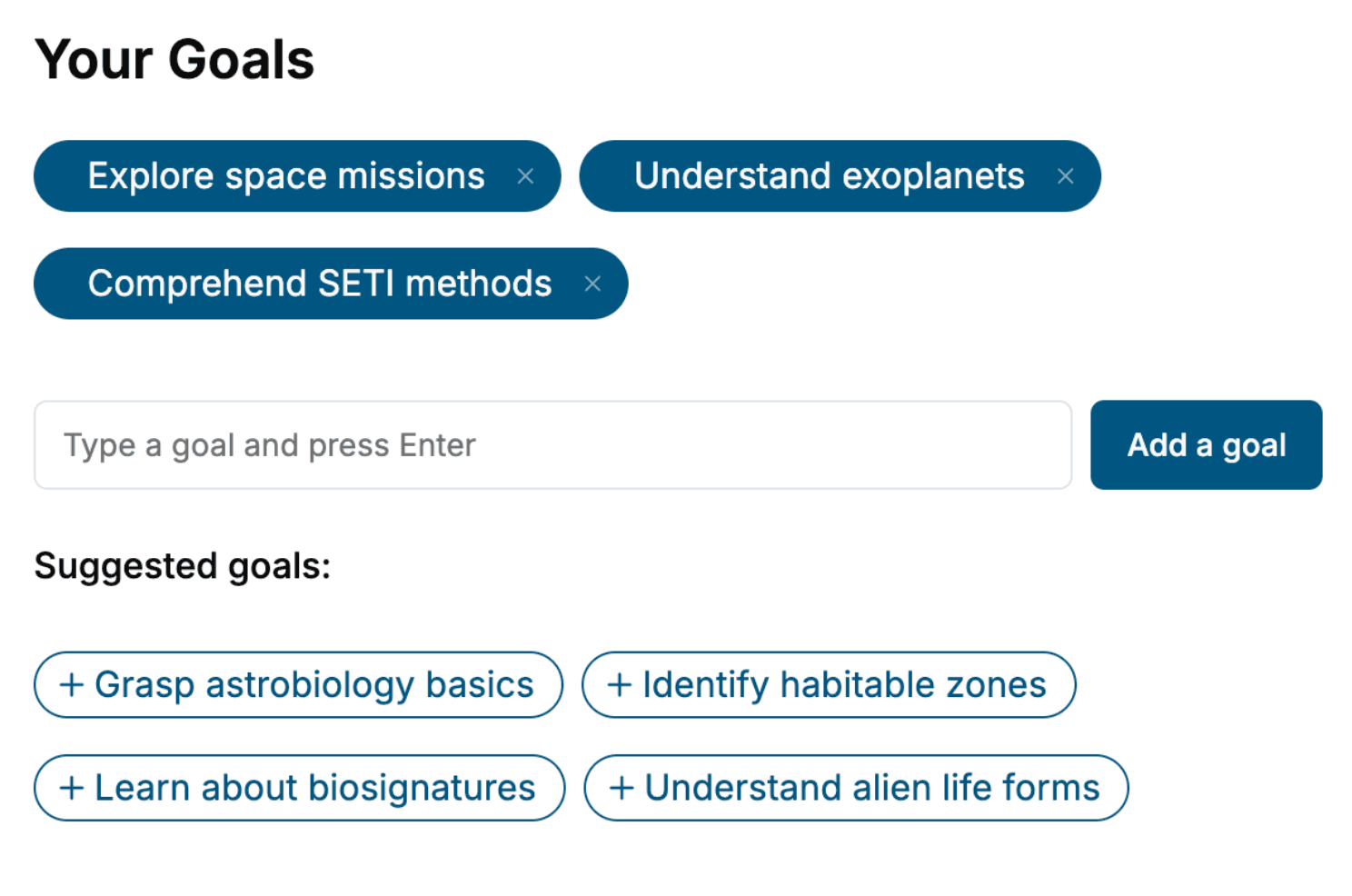
Tell us your goals and background, and get your own version of this book, tailored by AI to you.


Benefits of AI-tailored books
- Read one book, not ten:
- all the Renewable Energy knowledge you need, gathered into a single book.
- Save days of learning:
- tell us your goals, choose your topics, and the whole book is built around them.
- Learn effortlessly:
- Renewable Energy book written for your specific background and expertise.
- Understand at a glance:
- includes charts, tables, timelines, checklists, decision trees, and more.
- Stay current:
- written the day you order it, not years ago.
- Trust what you read:
- every book is checked for accuracy, with real research when your subject needs it.
Create your unique book in 3 steps
- 1. Select your focus
Select the focus of your Renewable Energy book and share your background
- 2. Personalize your book
Specify your goals and choose sub-topics to include
- 3. Get your tailored book
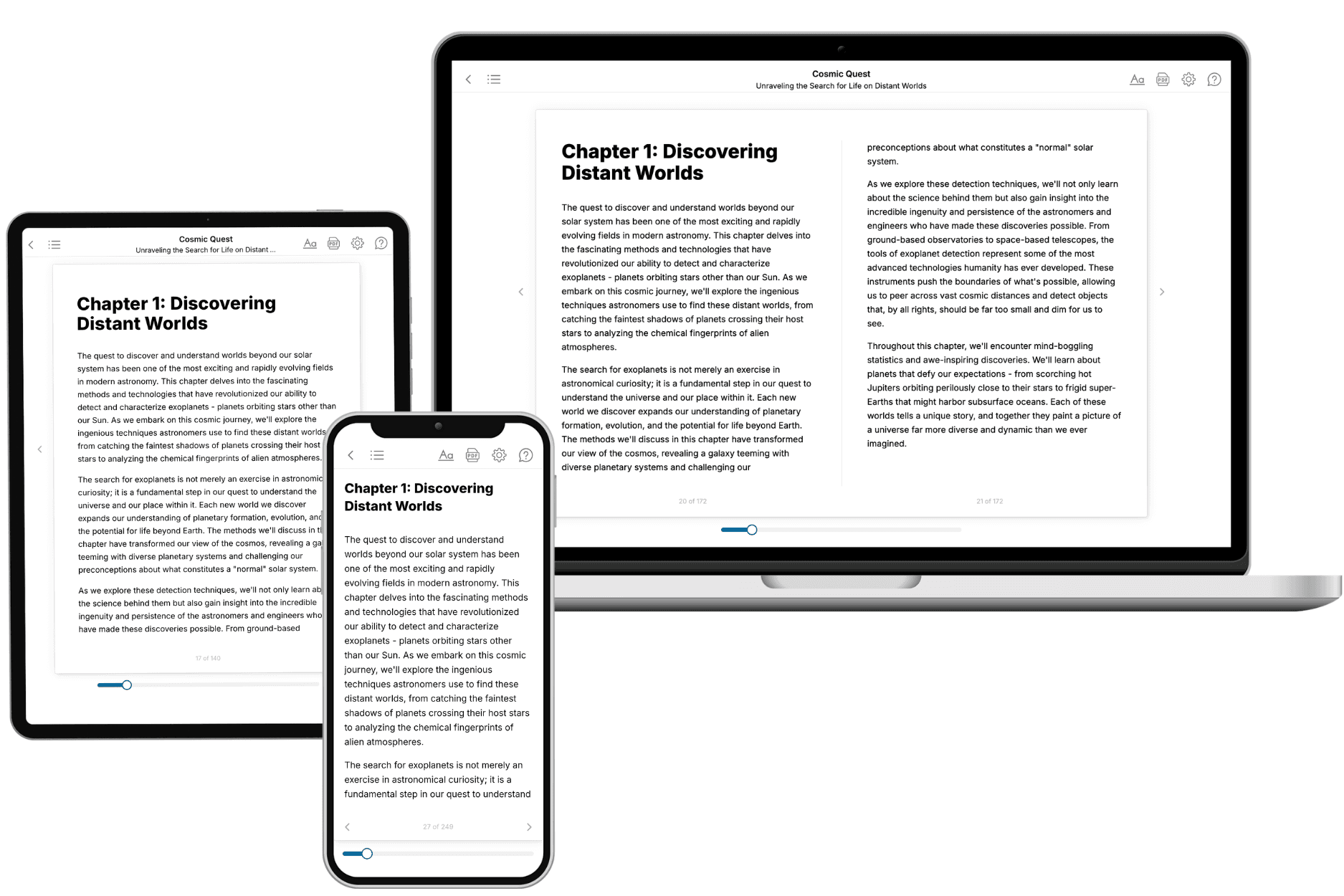
Your book is ready in 10 minutes. Read it online, download as EPUB or PDF, or send to Kindle.

Frequently asked questions
- What is TailoredRead?
TailoredRead creates complete, full-length nonfiction ebooks, written specifically for you. Tell us what you want to learn and why, and TailoredRead writes you a complete ebook on it, with charts, tables, and diagrams throughout. Read it online, on Kindle, or on any e-reader, or download it as a PDF or EPUB. Every book is written fresh the day you order it.
- How is the book tailored to me?
Before anything is written, you answer a few short questions about your goals, your background, and the topics you care about. Your book is then planned around your answers: written at your level, focused on your goals, and covering the topics you chose, instead of the one-size-fits-all book a store sells everyone.
- Will it read like generic AI content?
No. Your book isn't a chat transcript: it's planned chapter by chapter before a single word is written, told in a clear book voice, and explains ideas visually with charts, tables, and diagrams. After writing, every book goes through an editorial pass that polishes chapters so the book reads consistent from start to finish. Judge for yourself: browse thousands of sample books on our Explore Books page.
- How accurate is the content?
Our AI first checks whether your subject needs live research. Niche and fast-moving subjects are researched before writing, and the book plan and chapters are grounded in what it finds. After writing, every book goes through a quality pass that checks its facts and consistency, and researched books list their sources in a Notes section at the back.
- How long is the book?
You choose the length: Comprehensive (250-300 pages), Detailed (150-200 pages), Essential (70-100 pages), or Short (30-50 pages).
- Does the book include visuals?
Yes. Every book includes visual elements such as timelines, checklists, step-by-step guides, decision trees, comparison tables, and matrices, and many include bar charts. A typical book includes dozens of these visual elements.
- Can I read it on Kindle? What formats can I download?
Yes. Every book can be read in our online reader or downloaded as a PDF or EPUB. The EPUB can be opened with Kindle, Apple Books, Kobo, and any e-reader. The Commercial and Author licenses also include an editable Word (DOCX) and Markdown download.
- How much does it cost?
About the price of a regular ebook. The exact price depends on your book's length and complexity, from $2 for the shortest books to $35 for the most comprehensive, and it's shown when you review your book, before you commit to anything. Each book is a one-time purchase, yours to keep, no subscription. Licenses that let you share, teach, or publish your book range from $35.99 to $49.99.
- Can I preview the book before purchasing?
Before you pay, you'll see what your book will cover: the title, a detailed description, the estimated length, and the complete chapter-by-chapter table of contents, so you know what you're getting before you decide. The full text itself is written after you purchase.
- How long does it take to create a book?
About 10 minutes. You can start reading the opening chapters while the rest is still being written.