The Giza Pyramids and Sphinx
Your Complete Guide to Cairo's Most Iconic Monuments
Standing before the Giza Pyramids and Sphinx can feel overwhelming—towering monuments shrouded in mystery, surrounded by crowds, and separated from the context that makes them truly meaningful.
191 pages9 chaptersMar 29, 2026Ancient History
About this book
Without proper guidance, you might miss the remarkable stories these structures tell or struggle to navigate the practical realities of visiting one of the world's most visited archaeological sites. This guide bridges that gap. You'll discover the fascinating history behind each pyramid, understand the engineering innovations that made their construction possible, and learn the theories surrounding the enigmatic Sphinx. Beyond the history, you'll find practical advice on planning your visit, navigating the site efficiently, choosing the best times to explore, and experiencing these monuments respectfully. Whether you're a first-time visitor to Cairo or a returning traveler seeking deeper knowledge, this book transforms your visit from a checklist experience into a meaningful encounter with humanity's most enduring architectural legacy.
Table of contents
- IntroductionWhy Giza Matters Today, What You'll Discover in This Guide, How to Use This BookRead below
- Chapter 1: Ancient Egypt and the Pyramid AgeThe Old Kingdom: Egypt's Golden Age, Pharaohs and the Divine Afterlife, The Evolution of Pyramid Design
- Chapter 2: The Great Pyramid of KhufuKhufu's Reign and Vision, Construction Methods and Engineering, Interior Chambers and Passages, The Great Pyramid's Original Appearance
- Chapter 3: The Pyramid of Khafre and the SphinxKhafre's Legacy and Reign, The Sphinx: Guardian and Enigma, Theories About the Sphinx's Purpose, Unique Features of Khafre's Pyramid
- Chapter 4: The Pyramid of Menkaure and the Giza ComplexMenkaure's Reign and Smaller Scale, The Giza Plateau Layout and Design, The Queens' Pyramids and Subsidiary Structures
- Chapter 5: Building the Pyramids: Labor and OrganizationWho Built the Pyramids, Tools, Techniques, and Logistics, Organization and Project Management
- Chapter 6: Preservation and Modern ChallengesFactors Contributing to Deterioration, Restoration and Conservation Efforts, Protecting Giza for Future Generations
- Chapter 7: Planning Your Visit to GizaBest Times to Visit, Getting to Giza from Cairo, Tickets, Admission, and Special Access, What to Bring and How to Prepare
- Chapter 8: Navigating the Giza SiteSite Layout and Orientation, Viewing Options: Walking, Camel, or Horse, Guided Tours and Independent Exploration, Accessibility and Physical Considerations
- Chapter 9: Responsible Tourism and Local CultureRespecting the Sacred and Archaeological Site, Local Customs and Cultural Etiquette, Supporting Local Communities and Sustainable Practices
- ConclusionThe Lasting Impact of Giza, Beginning Your Journey
- Further Reading and Resources
Introduction
There is a moment that almost every visitor to Giza describes in the same way. You are moving through the noise and color of Cairo, past honking traffic and street vendors and the ordinary chaos of a modern city, and then the road curves and the pyramids appear on the horizon. They are bigger than you expected. They are older than you can truly comprehend. And for a few seconds, everything else falls away. That moment is why this guide exists: to help you arrive at Giza prepared, informed, and ready to feel the full weight of what you are looking at.
The Giza plateau sits on the edge of Cairo's western suburbs, where the city meets the desert in one of the most dramatic transitions on earth. Three massive pyramids, a colossal limestone sphinx, and the remains of temples, causeways, and tombs stretch across a landscape that has been drawing visitors for thousands of years. Ancient Greeks counted the Great Pyramid among the Seven Wonders of the World. It is the only one of those seven that still stands. That fact alone should tell you something about what you are dealing with.
But standing in front of something extraordinary is not the same as understanding it. Without context, the pyramids can feel like enormous, silent puzzles. Who built them, and how? What did they mean to the people who constructed them? Why does the Sphinx sit where it does, and what was it guarding? What is actually inside these structures, and what has been found there? These are the questions that transform a sightseeing trip into a genuine encounter with one of humanity's most remarkable chapters. This guide is built around answering them, while also giving you the practical tools to make your visit as smooth and rewarding as possible.
Whether you are planning a trip to Cairo in the coming months or simply want to understand these monuments more deeply before you go, this book is designed to work for you. It moves from historical context to architectural detail, from construction mysteries to conservation challenges, and from big-picture significance to the very practical question of what to pack in your bag on the day you visit. The goal throughout is the same: to make sure that when you stand before the pyramids, you are not just seeing them. You are reading them.
Why Giza Matters Today
The pyramids of Giza were built roughly 4,500 years ago, during a period of Egyptian history known as the Old Kingdom. That number is almost impossible to hold in your mind in a meaningful way. To put it in perspective, consider that the Roman Empire, which most people think of as ancient history, was closer in time to us than it was to the builders of the Great Pyramid. When Julius Caesar visited Egypt in 48 BCE, the pyramids were already more than 2,500 years old. They were ancient to the ancients.
What makes Giza matter today is not just its age, though. It is the scale of human ambition and organization that these structures represent. The Great Pyramid of Khufu contains an estimated 2.3 million stone blocks, with individual blocks weighing between 2.5 and 15 tons.[1] The structure rises to a height of 138.8 meters today, and was originally taller at 146.5 meters before its outer casing stones were removed over centuries. Building it required coordinating thousands of workers, sourcing stone from quarries hundreds of kilometers away, and solving engineering problems that modern architects still find impressive. The pyramids are not just old. They are evidence of what organized human effort can achieve.
Giza also matters because it sits at the intersection of history, religion, science, and culture in a way that few places on earth can match. The pyramids were not simply tombs. They were theological statements, built to ensure the pharaoh's transformation into a divine being after death and to maintain the cosmic order that ancient Egyptians believed kept the world functioning. Understanding that religious framework changes how you see everything on the plateau, from the alignment of the structures to the imagery carved into the temple walls.
There is also the question of what we still do not know. Despite more than two centuries of modern archaeological investigation, Giza continues to produce surprises. In 2017, researchers using muon tomography (a scanning technique that uses cosmic-ray particles to see inside solid structures) discovered a large void inside the Great Pyramid that had not been previously documented.[2] Nobody knows exactly what it is. The plateau continues to yield new information, and that ongoing sense of discovery is part of what keeps Giza relevant in a world that has mapped nearly every corner of the planet.
For travelers, Giza matters on a more personal level too. It is one of those rare places where the experience of being physically present cannot be replicated by photographs or documentaries. The scale of the structures only becomes real when you are standing next to them. The silence of the desert at the edges of the plateau, the texture of the limestone, the way the light changes the color of the stone throughout the day: these are things you have to be there to feel. This guide is designed to help you get the most out of that experience.
Finally, Giza matters because it is under pressure. Tourism, urban encroachment, pollution, and the slow work of time are all taking a toll on structures that have survived for millennia. The choices that visitors make, including how they behave on site, what they support financially, and how they engage with local communities, have a real impact on whether these monuments survive for future generations. Understanding that responsibility is part of what it means to visit Giza thoughtfully.
What You'll Discover in This Guide
This guide covers the Giza complex from multiple angles, because the pyramids and Sphinx reward that kind of layered attention. A visitor who understands the religious beliefs of the Old Kingdom will see the plateau differently than one who only knows the basic facts. A traveler who has read about the construction workforce will look at the stones differently than one who assumes the pyramids were built by slaves. Context changes everything, and this book is built to provide it.
The first section of the book establishes the historical and cultural foundation you need. You will learn about the Old Kingdom period of ancient Egyptian history, the role of the pharaoh as a divine figure, and how pyramid design evolved over several centuries before reaching its peak at Giza. This context is not just background noise. It is the key to understanding why the pyramids look the way they do and why they were built at all.
From there, the guide moves through each of the three main pyramids in detail. Here is a summary of what each chapter covers:
- The Great Pyramid of Khufu: The largest structure on the plateau, its construction methods, interior chambers, and what it looked like when it was first completed.
- The Pyramid of Khafre and the Sphinx: Khafre's slightly smaller but visually dominant pyramid, and a deep dive into the Sphinx, including the competing theories about its age, purpose, and the mystery of its missing nose.
- The Pyramid of Menkaure: The smallest of the three main pyramids and what its more modest scale tells us about the changing priorities of the pharaohs who followed Khufu and Khafre.
The guide then turns to the question of construction. Who actually built the pyramids? The answer, supported by archaeological evidence discovered in the 1990s, is more interesting and more human than the old myths suggested. You will learn about the workers' villages, the organization of labor gangs, the tools they used, and the logistical challenges of moving millions of tons of stone across the desert. This section dismantles some persistent misconceptions and replaces them with a picture that is, if anything, more impressive than the myths.
Preservation is another major theme. The pyramids have survived for 4,500 years, but they are not invulnerable. A dedicated chapter examines the factors that are currently threatening the Giza complex, from rising groundwater and air pollution to the physical impact of millions of tourists each year. It also covers the conservation efforts underway and what responsible visitors can do to help rather than harm.
The final section of the book is entirely practical. It covers everything you need to plan and execute a successful visit, including:
- The best times of year and day to visit, with specific guidance on avoiding crowds and extreme heat.
- How to get to Giza from central Cairo, including transportation options and approximate costs.
- A breakdown of ticket types, what each one includes, and how to purchase them without getting overcharged.
- What to bring, what to wear, and how to prepare physically for a site that involves significant walking on uneven terrain.
- How to navigate the plateau itself, including the pros and cons of guided tours versus independent exploration.
- Cultural etiquette and responsible tourism practices that will make your visit better and help protect the site.
Throughout all of this, the goal is to give you information that is specific and actionable, not vague and general. When this guide says the best time to arrive is early morning, it explains exactly why and what difference it makes. When it discusses ticket options, it breaks down the actual costs and what you get for each one. The aim is to leave you with no unanswered practical questions when you walk through the entrance gate.
You will also find, woven throughout the historical chapters, a consistent effort to connect the ancient world to the experience of standing on the plateau today. The pyramids are not museum exhibits behind glass. They are real structures in a real landscape, and the more you understand about them, the more alive they become when you are standing in front of them.
How to Use This Book
This guide is designed to be flexible. You can read it straight through from beginning to end, which will give you the most complete picture of Giza before your visit. But it is also structured so that you can jump directly to the sections most relevant to your needs. If you are already familiar with ancient Egyptian history and just need practical planning advice, the later chapters on visiting, navigating, and responsible tourism are self-contained and easy to use on their own.
If you are reading this in the weeks or months before your trip, the recommended approach is to start with the historical and architectural chapters first. Reading about Khufu's reign, the construction methods, and the mystery of the Sphinx before you arrive will fundamentally change what you notice when you are on the plateau. You will find yourself looking for specific details, asking better questions, and making connections that a first-time visitor without that background would miss entirely.
For those who are reading this guide while already in Cairo or even on the day of their visit, the practical chapters are the priority. Here is a quick reference for the most time-sensitive information:
- Getting there: See the chapter on Planning Your Visit, specifically the section on getting to Giza from Cairo.
- Tickets and costs: The Tickets, Admission, and Special Access section has current pricing structures and purchasing advice.
- What to bring: The What to Bring and How to Prepare section has a practical checklist.
- Navigating the site: The Navigating the Giza Site chapter covers layout, viewing options, and tour choices.
One important note about information that changes over time: ticket prices, opening hours, and access rules at Giza are subject to change by Egyptian authorities. The figures and policies described in this guide reflect the most current available information at the time of writing, but it is always worth verifying specific costs and access rules through official sources before your visit. The Egyptian Ministry of Tourism and Antiquities website is the most reliable source for up-to-date entry requirements and pricing.[3]
Throughout the book, you will find key terms highlighted in bold when they are introduced for the first time. These are words and concepts that come up repeatedly in discussions of ancient Egypt and the Giza complex, and understanding them will make the rest of the content easier to follow. You will also find blockquotes used to highlight particularly important points, notable historical observations, or vivid descriptions that deserve special attention.
Footnotes appear throughout the historical chapters to point you toward the sources behind specific claims and statistics. Egyptology is a field where popular myths and genuine scholarship sometimes get mixed together, and the footnotes are there to help you distinguish between the two. If a claim in this guide sounds surprising or counterintuitive, the footnote will point you toward the research that supports it.
The pyramids are not a mystery to be solved. They are a story to be read. The more vocabulary you bring to that reading, the richer the story becomes.
That idea is the organizing principle of this entire guide. Giza rewards preparation. The visitors who get the most out of the plateau are not necessarily the ones who spend the most money on tours or the most time on site. They are the ones who arrive knowing something about what they are looking at. This book is designed to give you that knowledge, whether you have two weeks to prepare or two hours.
A few practical notes on language and terminology used throughout the book. Ancient Egyptian names are spelled in the most commonly used English transliterations, which means you may see slight variations in other sources. For example, the pharaoh whose pyramid is the largest at Giza is referred to here as Khufu, which is the Egyptian form of his name. He is also sometimes called Cheops, which is the Greek version. Both names refer to the same person. Where alternative names exist for major figures or structures, they are noted the first time the name appears.
Distances and measurements in this guide are given in both metric and imperial units, since visitors come from countries that use different systems. Heights, weights, and distances are presented with the metric figure first, followed by the imperial equivalent in parentheses. Temperatures are given in Celsius with Fahrenheit in parentheses, which is particularly relevant for the practical chapters on when to visit and what to wear.
Finally, a word about what this guide is not. It is not an academic text, and it does not attempt to resolve every scholarly debate about the pyramids and Sphinx. Egyptology is a living field, and researchers continue to disagree about important questions, including the precise construction methods used, the exact purpose of certain chambers, and the dating of the Sphinx. Where significant debates exist, this guide presents the main positions fairly and notes where the evidence is strongest. The goal is to give you an accurate and honest picture of what is known, what is debated, and what remains genuinely mysterious. That honesty is part of what makes Giza so compelling. After 4,500 years, it still has secrets.
This is the end of the free sample. The full book has 9 chapters.
Want this book written for you?
Tell us your goals and background, and get your own version of this book, tailored by AI to you.


Benefits of AI-tailored books
- Read one book, not ten:
- all the Ancient History knowledge you need, gathered into a single book.
- Save days of learning:
- tell us your goals, choose your topics, and the whole book is built around them.
- Learn effortlessly:
- Ancient History book written for your specific background and expertise.
- Understand at a glance:
- includes charts, tables, timelines, checklists, decision trees, and more.
- Stay current:
- written the day you order it, not years ago.
- Trust what you read:
- every book is checked for accuracy, with real research when your subject needs it.
Create your unique book in 3 steps
- 1. Select your focus
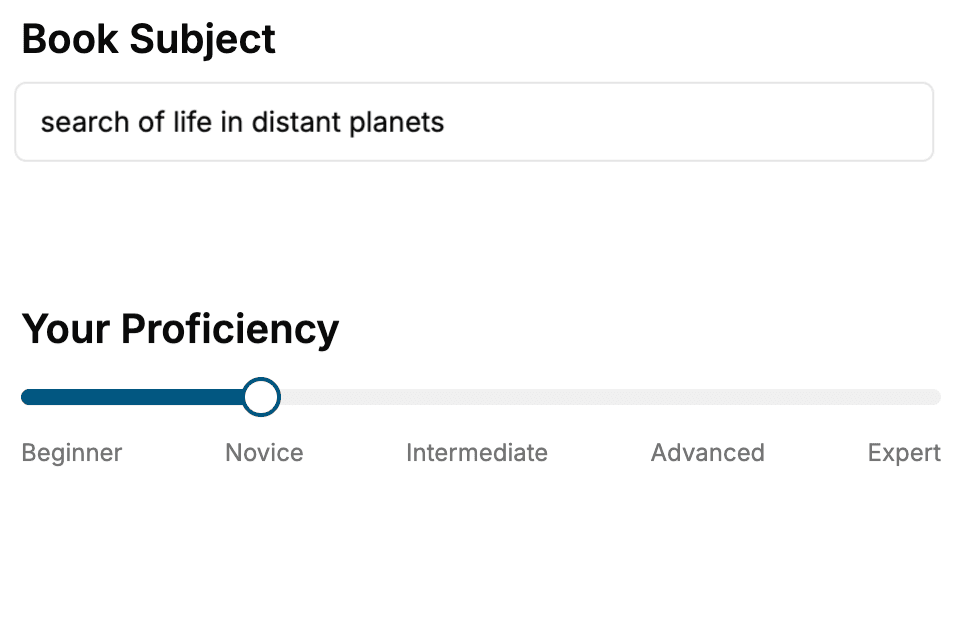
Select the focus of your Ancient History book and share your background
- 2. Personalize your book
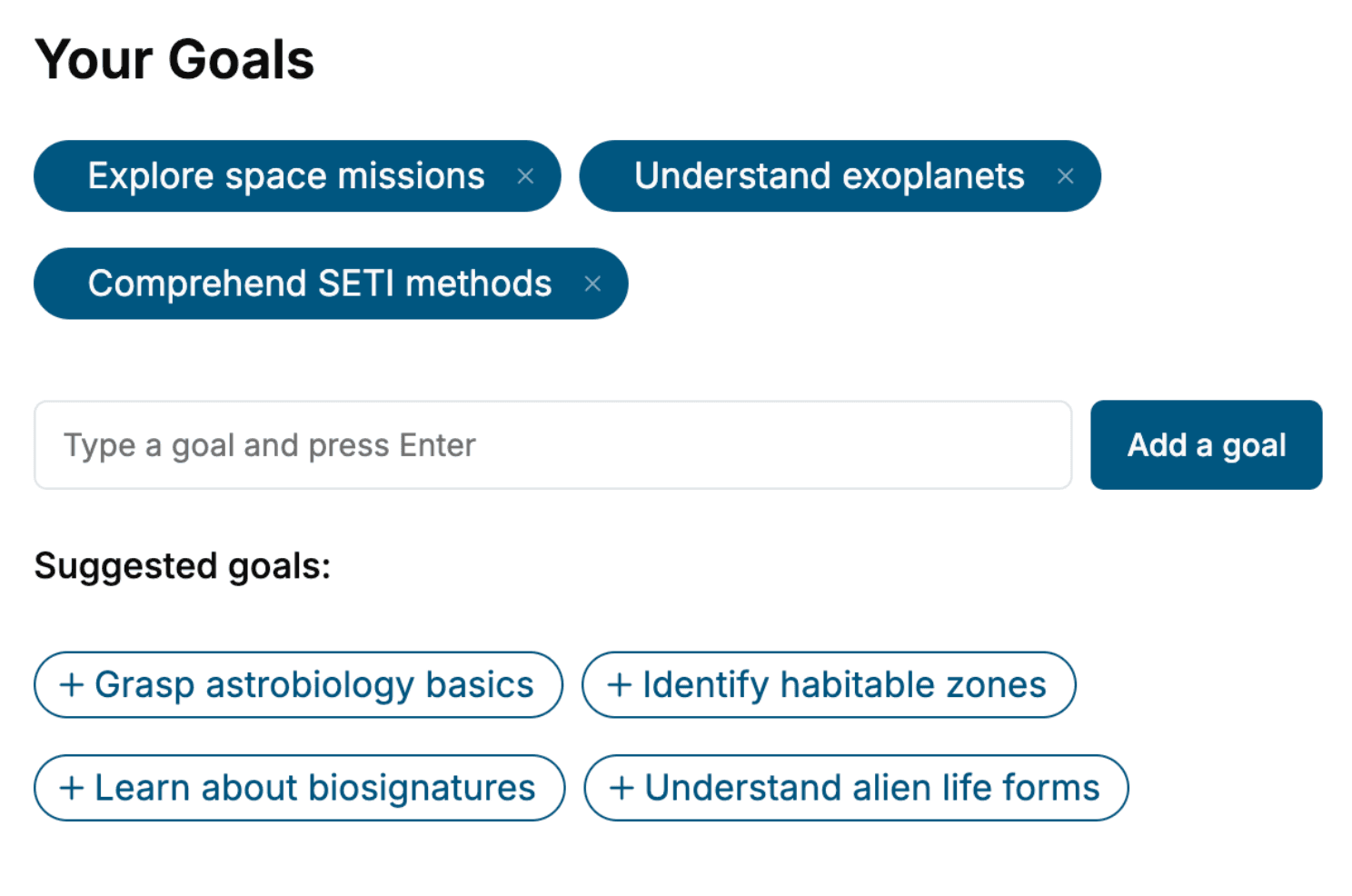
Specify your goals and choose sub-topics to include
- 3. Get your tailored book
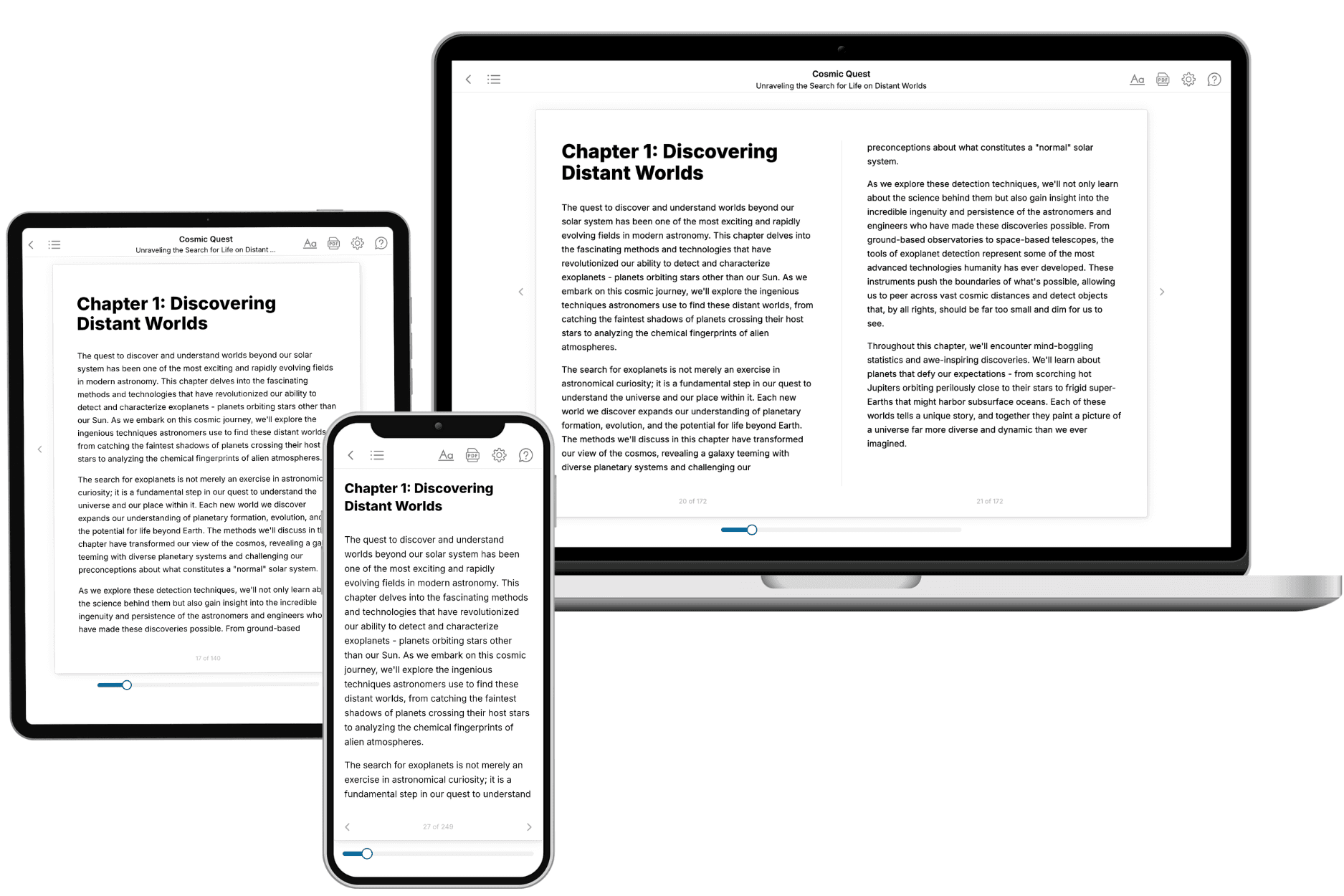
Your book is ready in 10 minutes. Read it online, download as EPUB or PDF, or send to Kindle.
Frequently asked questions
- What is TailoredRead?
TailoredRead creates complete, full-length nonfiction ebooks, written specifically for you. Tell us what you want to learn and why, and TailoredRead writes you a complete ebook on it, with charts, tables, and diagrams throughout. Read it online, on Kindle, or on any e-reader, or download it as a PDF or EPUB. Every book is written fresh the day you order it.
- How is the book tailored to me?
Before anything is written, you answer a few short questions about your goals, your background, and the topics you care about. Your book is then planned around your answers: written at your level, focused on your goals, and covering the topics you chose, instead of the one-size-fits-all book a store sells everyone.
- Will it read like generic AI content?
No. Your book isn't a chat transcript: it's planned chapter by chapter before a single word is written, told in a clear book voice, and explains ideas visually with charts, tables, and diagrams. After writing, every book goes through an editorial pass that polishes chapters so the book reads consistent from start to finish. Judge for yourself: browse thousands of sample books on our Explore Books page.
- How accurate is the content?
Our AI first checks whether your subject needs live research. Niche and fast-moving subjects are researched before writing, and the book plan and chapters are grounded in what it finds. After writing, every book goes through a quality pass that checks its facts and consistency, and researched books list their sources in a Notes section at the back.
- How long is the book?
You choose the length: Comprehensive (250-300 pages), Detailed (150-200 pages), Essential (70-100 pages), or Short (30-50 pages).
- Does the book include visuals?
Yes. Every book includes charts, tables, and diagrams: timelines, checklists, step-by-step guides, decision trees, comparison tables, matrices, and bar charts. A typical book includes dozens of these visual elements.
- Can I read it on Kindle? What formats can I download?
Yes. Every book can be read in our online reader or downloaded as a PDF or EPUB. The EPUB can be opened with Kindle, Apple Books, Kobo, and any e-reader. The Commercial and Author licenses also include an editable Word (DOCX) and Markdown download.
- How much does it cost?
About the price of a regular ebook. The exact price depends on your book's length and complexity, from $2 for the shortest books to $35 for the most comprehensive, and it's shown when you review your book, before you commit to anything. Each book is a one-time purchase, yours to keep, no subscription. Licenses that let you share, teach, or publish your book range from $35.99 to $49.99.
- Can I preview the book before purchasing?
Before you pay, you'll see what your book will cover: the title, a detailed description, the estimated length, and the complete chapter-by-chapter table of contents, so you know what you're getting before you decide. The full text itself is written after you purchase.
- How long does it take to create a book?
About 10 minutes. You can start reading the opening chapters while the rest is still being written.