Google's Quantum Leap
How Google is Building the Future of Computing
Discover how Google is pioneering one of technology's most transformative frontiers.
207 pages9 chaptersApr 1, 2026Quantum Computing
About this book
This book takes you through Google's quantum computing journey, from the fundamental physics that makes quantum computers possible to the practical applications that could reshape industries. You'll learn what quantum supremacy actually means, why it matters, and how Google's breakthroughs compare to competitors like IBM and Microsoft. Explore the engineering challenges Google engineers face daily, the current limitations of quantum technology, and the realistic timeline for when quantum computers might solve real-world problems. Whether you're curious about the science, interested in the business implications, or wondering how this technology might affect your industry, this book provides the clarity and context you need to understand one of the most important technological races of our time.
Table of contents
- IntroductionWhy Quantum Computing Matters Now, Google's Role in the Quantum Revolution, What You'll Learn in This BookRead below
- Chapter 1: The Quantum Computing FundamentalsClassical Computing vs. Quantum Computing, Understanding Qubits and Superposition, The Physics Behind Quantum Advantage
- Chapter 2: Google's Journey into QuantumEarly Quantum Investments and Partnerships, Building the Quantum Team, Key Research Milestones
- Chapter 3: The Sycamore Processor and Quantum SupremacySycamore's Architecture and Design, What Quantum Supremacy Really Means, Implications and Criticisms
- Chapter 4: Engineering the Quantum FutureError Correction and Qubit Stability, Scaling to Thousands of Qubits, Hardware Innovations and Improvements
- Chapter 5: Real-World Applications and Use CasesDrug Discovery and Molecular Simulation, Optimization Problems and Logistics, Quantum Machine Learning Potential
- Chapter 6: The Quantum Computing RaceIBM's Quantum Computing Approach, Microsoft, Amazon, and Other Competitors, Startups and the Emerging Quantum Ecosystem
- Chapter 7: Google's Quantum Strategy and VisionNear-Term Goals and Timelines, Long-Term Vision for Quantum Computing, Building the Quantum Ecosystem
- Chapter 8: Programming Quantum ComputersGoogle's Cirq Programming Framework, Quantum Algorithms and Their Design, Resources for Quantum Developers
- Chapter 9: The Future of Quantum ComputingRealistic Timelines for Practical Applications, Quantum and Classical Computing Coexistence, Broader Societal and Economic Impact
- ConclusionKey Takeaways, Staying Informed About Quantum Developments
- Glossary of Quantum Computing Terms
- Further Reading and Resources
Introduction
Something unusual happened in a Google lab in Santa Barbara, California, in the fall of 2019. A processor about the size of a thumbnail, kept colder than outer space, completed a calculation in roughly 200 seconds. The world's most powerful classical supercomputer at the time would have needed an estimated 10,000 years to do the same thing. That moment, quietly confirmed in a paper published in Nature, marked what Google called quantum supremacy, a milestone that sent shockwaves through the technology industry and sparked debates that are still ongoing today.[1]
For most people, quantum computing still sounds like science fiction. The words "superposition," "entanglement," and "qubit" feel abstract, almost mystical. But the technology is very real, and the race to develop it is one of the most consequential competitions in the history of computing. Billions of dollars are flowing into research labs. Governments are treating quantum capability as a matter of national security. And companies like Google, IBM, Microsoft, and Amazon are betting that whoever masters this technology first will hold enormous advantages in fields ranging from medicine to finance to artificial intelligence.
This book is your guide to understanding what is actually happening in the world of quantum computing, with Google's efforts at the center of the story. You do not need a physics degree to follow along. What you do need is curiosity and a willingness to think about computing in a fundamentally different way. The goal here is not to overwhelm you with equations or technical jargon. Instead, the aim is to give you a clear, honest, and grounded picture of where this technology stands today, what it can realistically do, and why it matters for the future of virtually every industry on the planet.
Throughout these chapters, you will encounter both the excitement and the hard reality of quantum computing. The breakthroughs are genuine and impressive. But so are the challenges. Quantum computers are extraordinarily fragile, difficult to program, and still far from replacing the laptop on your desk. Understanding both sides of that story is what separates informed enthusiasm from hype, and that distinction matters enormously as this technology moves closer to practical use.
Why Quantum Computing Matters Now
Classical computing has been one of the greatest engines of human progress over the past 75 years. From the room-sized machines of the 1950s to the smartphones in your pocket today, the steady doubling of transistor density described by Moore's Law has delivered extraordinary gains in speed and efficiency.[2] But that era is slowing down. Transistors are now so small that they are approaching the physical limits of silicon, and the easy performance gains of previous decades are becoming harder and harder to achieve through classical means alone.
At the same time, the problems humanity needs to solve are growing more complex, not less. Consider drug discovery. Designing a new molecule to treat a disease requires simulating the quantum behavior of electrons and atoms, a task that scales exponentially in difficulty as the molecule grows larger. Even the most powerful classical supercomputers can only approximate these simulations. A sufficiently capable quantum computer could, in theory, simulate molecular behavior exactly, potentially cutting the time and cost of drug development by orders of magnitude.[3]
The same logic applies to a wide range of critical challenges. Climate modeling, logistics optimization, financial risk analysis, materials science, and cryptography all involve problems of such complexity that classical computers struggle to find optimal solutions within practical timeframes. Quantum computing does not solve all of these problems, but for a specific and important class of them, it offers a fundamentally different and potentially far more powerful approach. That is why the technology matters, not as a replacement for everything that came before, but as a new tool for problems that were previously out of reach.
There is also a security dimension that makes quantum computing urgent in a way that goes beyond academic interest. Many of the encryption systems that protect internet communications, financial transactions, and government data today rely on the fact that classical computers cannot factor very large numbers quickly. A powerful enough quantum computer could break those encryption systems. This threat, sometimes called "harvest now, decrypt later," means that adversaries could be collecting encrypted data today with the intention of decrypting it once quantum computers become capable enough. Governments and organizations around the world are already working on quantum-resistant cryptography in response.[4]
The timing of quantum computing's rise also intersects with the explosion of artificial intelligence. Machine learning models are growing larger and more computationally demanding every year. Researchers are actively exploring whether quantum algorithms could accelerate certain aspects of AI training and inference, potentially unlocking capabilities that are currently too expensive or slow to achieve with classical hardware. The intersection of quantum computing and AI is one of the most watched areas in all of technology right now.
None of this means quantum computers are arriving tomorrow to transform everything overnight. The honest answer is that practical, large-scale quantum computing is still years away, and some of the most optimistic timelines have already slipped. But the direction of travel is clear, and the investments being made today will shape the technological landscape for decades. Understanding quantum computing now, while it is still developing, puts you in a far better position to anticipate its impact and act on the opportunities it creates.
A useful analogy: Think of quantum computing the way early internet pioneers thought about the web in 1993. The infrastructure was primitive, the applications were limited, and most people had no idea what it would eventually become. But the underlying capability was real, and those who understood it early had a significant advantage when the technology matured.
The window for building that understanding is open right now. The field is moving fast, the stakes are high, and the decisions being made in labs and boardrooms today will have consequences that ripple outward for generations. That is why quantum computing matters now, not just as a technical curiosity, but as one of the defining technological stories of this era.
Google's Role in the Quantum Revolution
Google did not stumble into quantum computing. The company made a deliberate, long-term bet on the technology starting around 2006, when it began collaborating with academic researchers and eventually hired some of the world's leading quantum physicists. By 2014, Google had established its own dedicated quantum hardware lab and brought on John Martinis, a physicist from the University of California Santa Barbara who was widely regarded as one of the best superconducting qubit researchers in the world.[5] That hire signaled that Google was serious about building quantum hardware from the ground up, not just writing software for someone else's machine.
What makes Google's approach distinctive is its focus on superconducting qubits, a technology that uses tiny circuits cooled to near absolute zero to create and manipulate quantum states. This is not the only approach to building quantum computers. IBM uses a similar superconducting method, while Microsoft is pursuing a more experimental approach based on topological qubits, and IonQ works with trapped ions. Each approach has different trade-offs in terms of stability, scalability, and error rates. Google's bet on superconducting qubits has so far produced the most publicly visible results, including the Sycamore supremacy demonstration.
Google's quantum efforts sit within a broader organizational structure that includes Google AI and Alphabet's research divisions. This positioning matters because it connects quantum computing research directly to Google's core strengths in machine learning, data infrastructure, and software engineering. The company is not just trying to build a quantum processor in isolation. It is trying to build an entire quantum computing stack, from the physical hardware at the bottom to the programming tools and cloud access layers at the top. That full-stack ambition sets Google apart from many competitors who focus on just one layer of the problem.
The 2019 Sycamore result was a landmark, but it was also just one point on a longer journey. Since then, Google has continued publishing research on error correction, qubit coherence times, and new processor designs. In 2023, the company announced its Willow chip, which demonstrated significant improvements in error correction, showing that adding more qubits could actually reduce errors rather than amplify them, a critical step toward fault-tolerant quantum computing.[6] That result addressed one of the most fundamental challenges in the field and was widely recognized as a major technical achievement.
Google's role in the quantum revolution is not just about hardware milestones. The company has also invested heavily in open-source tools, most notably the Cirq programming framework, which allows researchers and developers to write and test quantum algorithms. Through Google Quantum AI's research publications and partnerships with universities, the company has contributed significantly to the broader scientific community's understanding of quantum systems. This combination of proprietary hardware development and open ecosystem building reflects a strategy that mirrors how Google approached the early days of Android and TensorFlow.
It is also worth being clear about what Google is not. It is not the only serious player in this space, and it has not solved quantum computing. IBM has its own impressive roadmap and has arguably been more aggressive about giving external developers access to real quantum hardware through its cloud platform. Microsoft is pursuing a fundamentally different technical approach that, if it works, could leapfrog current superconducting designs. China has made quantum computing a national priority and has produced its own notable results. Google is a leader in this race, but the race is genuinely competitive and the outcome is far from certain.
Understanding Google's specific role, its technical choices, its organizational structure, its competitive position, and its stated goals, gives you a concrete anchor for understanding the broader quantum computing landscape. Google's story is not the whole story, but it is one of the most detailed and publicly documented examples of what it actually takes to push this technology forward. That makes it an ideal lens through which to explore the entire field.
What You'll Learn in This Book
This book is organized to take you from the foundations of quantum computing all the way through to its future implications, with Google's work as the central thread running through every chapter. You do not need to read it cover to cover in order, though that approach will give you the most complete picture. Each chapter is designed to stand on its own if you want to jump directly to a topic that interests you most. Here is a clear map of what each part of the book covers and what you will be able to do with that knowledge.
The first chapter lays the conceptual groundwork. It explains the difference between classical and quantum computing in plain terms, introduces the idea of qubits and superposition, and walks through the physics principles that give quantum computers their potential advantage. If you have ever wondered what "quantum" actually means in a computing context, or why it is so different from anything that came before, that chapter answers those questions directly. No prior physics knowledge is assumed.
Chapters two and three tell the story of Google's quantum journey. Chapter two covers the history, from early investments and academic partnerships through the building of Google's internal quantum team. Chapter three focuses on the Sycamore processor and the quantum supremacy claim, including what the experiment actually tested, why it was significant, and why some researchers pushed back on the framing. Understanding that debate is important because it illustrates how progress in quantum computing is measured and contested.
Chapter four gets into the engineering realities that rarely make headlines. Building a quantum computer is not just a physics problem. It is an extraordinarily difficult engineering challenge involving:
- Keeping qubits stable long enough to perform calculations (coherence time)
- Detecting and correcting the errors that inevitably occur
- Scaling systems from dozens of qubits to thousands without compounding those errors
- Designing the classical control systems that operate alongside the quantum hardware
Chapter five shifts from the "how" to the "so what." It explores the real-world applications that quantum computing could enable, with specific focus on drug discovery and molecular simulation, optimization problems in logistics and supply chains, and the intersection of quantum computing with machine learning. For each application area, the chapter explains why quantum approaches could outperform classical ones, what the current state of research looks like, and what realistic timelines for practical impact might be.
Chapter six steps back to survey the competitive landscape. Google is not building quantum computers in a vacuum. IBM, Microsoft, Amazon, IonQ, Quantinuum, and a growing ecosystem of startups are all pursuing their own approaches. This chapter gives you a clear-eyed comparison of the major players, their technical strategies, their public milestones, and their business models. Understanding the competitive dynamics helps you assess which claims to take seriously and which to treat with skepticism.
Chapters seven and eight focus on Google's strategy and the practical tools available to developers. Chapter seven examines Google's stated near-term goals and long-term vision, including how the company thinks about the path from today's noisy, error-prone quantum processors to the fault-tolerant machines of the future. Chapter eight is more hands-on, covering Google's Cirq programming framework, the design principles behind quantum algorithms, and the resources available if you want to start experimenting with quantum programming yourself.
The final chapter looks ahead. It offers a grounded assessment of realistic timelines for practical quantum applications, explores how quantum and classical computing are likely to coexist in hybrid systems rather than one replacing the other, and considers the broader societal and economic implications of a world where quantum computing becomes widely available. The conclusion then pulls together the key themes and points you toward resources for staying current as the field continues to evolve rapidly.
By the time you finish this book, you will be able to do several specific things that most people in the technology industry currently cannot:
- Explain the core principles of quantum computing clearly to a non-technical audience
- Evaluate quantum computing news and announcements critically, separating genuine progress from marketing hype
- Understand Google's technical approach and how it compares to competitors
- Identify which industries and problem types are most likely to be affected by quantum computing first
- Assess the realistic timeline for quantum computing's practical impact on your own field or organization
- Know where to look for reliable, ongoing information as the technology develops
One important note on scope: this book focuses on gate-based quantum computing, which is the approach Google and most major players are pursuing. There is a separate category called quantum annealing, associated primarily with D-Wave Systems, which takes a different approach to a narrower class of optimization problems. That technology is mentioned where relevant but is not the primary focus here. The gate-based approach is where the most significant scientific and commercial activity is concentrated, and it is the foundation for the fault-tolerant quantum computers that researchers believe will eventually deliver the most transformative results.
Quantum computing is one of those rare topics where the gap between public understanding and actual significance is enormous. Most people have heard the term, but very few have a clear picture of what it means, what it can do, or why it matters. This book is designed to close that gap. The technology is real, the progress is genuine, and the implications are profound. The best time to start understanding it is now, before it arrives fully formed and changes the rules of the game in ways that catch the unprepared off guard.
Notes
Introduction
- 1. F. Arute and others, "Quantum supremacy using a programmable superconducting processor," Nature, 2019
- 2. G. E. Moore, "Cramming more components onto integrated circuits," Electronics, 1965
- 3. Y. Cao and others, "Quantum Chemistry in the Age of Quantum Computing," Chemical Reviews, 2019
- 4. National Institute of Standards and Technology, "Post-Quantum Cryptography Standardization," NIST, 2022
- 5. J. M. Martinis, "Qubit metrology for building a fault-tolerant quantum computer," npj Quantum Information, 2015
- 6. Google Quantum AI, "Quantum error correction below the surface code threshold," Nature, 2024
This is the end of the free sample. The full book has 9 chapters.
Want this book written for you?
Tell us your goals and background, and get your own version of this book, tailored by AI to you.


Benefits of AI-tailored books
- Read one book, not ten:
- all the Quantum Computing knowledge you need, gathered into a single book.
- Save days of learning:
- tell us your goals, choose your topics, and the whole book is built around them.
- Learn effortlessly:
- Quantum Computing book written for your specific background and expertise.
- Understand at a glance:
- includes charts, tables, timelines, checklists, decision trees, and more.
- Stay current:
- written the day you order it, not years ago.
- Trust what you read:
- every book is checked for accuracy, with real research when your subject needs it.
Create your unique book in 3 steps
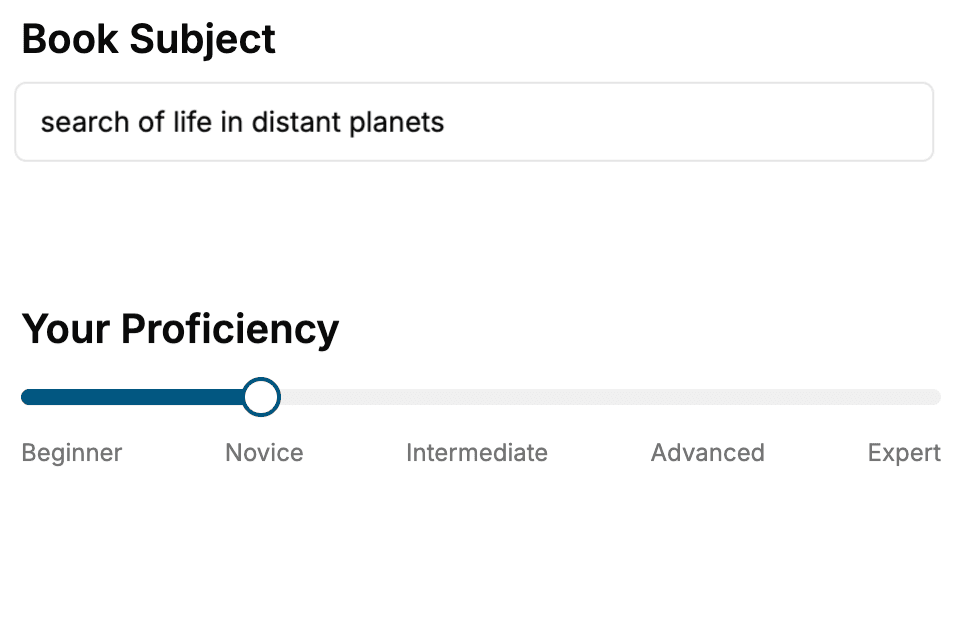
- 1. Select your focus
Select the focus of your Quantum Computing book and share your background
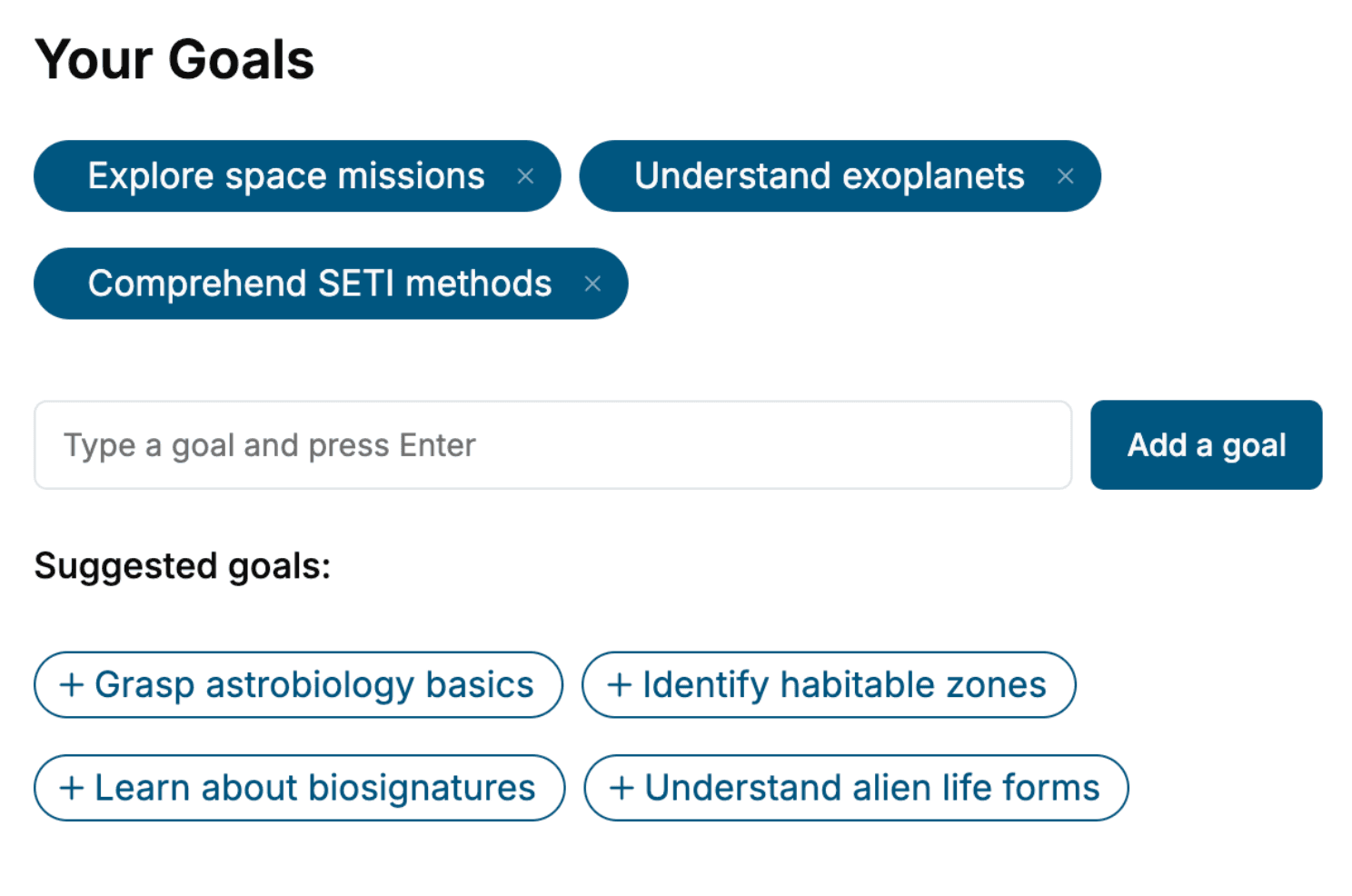
- 2. Personalize your book
Specify your goals and choose sub-topics to include
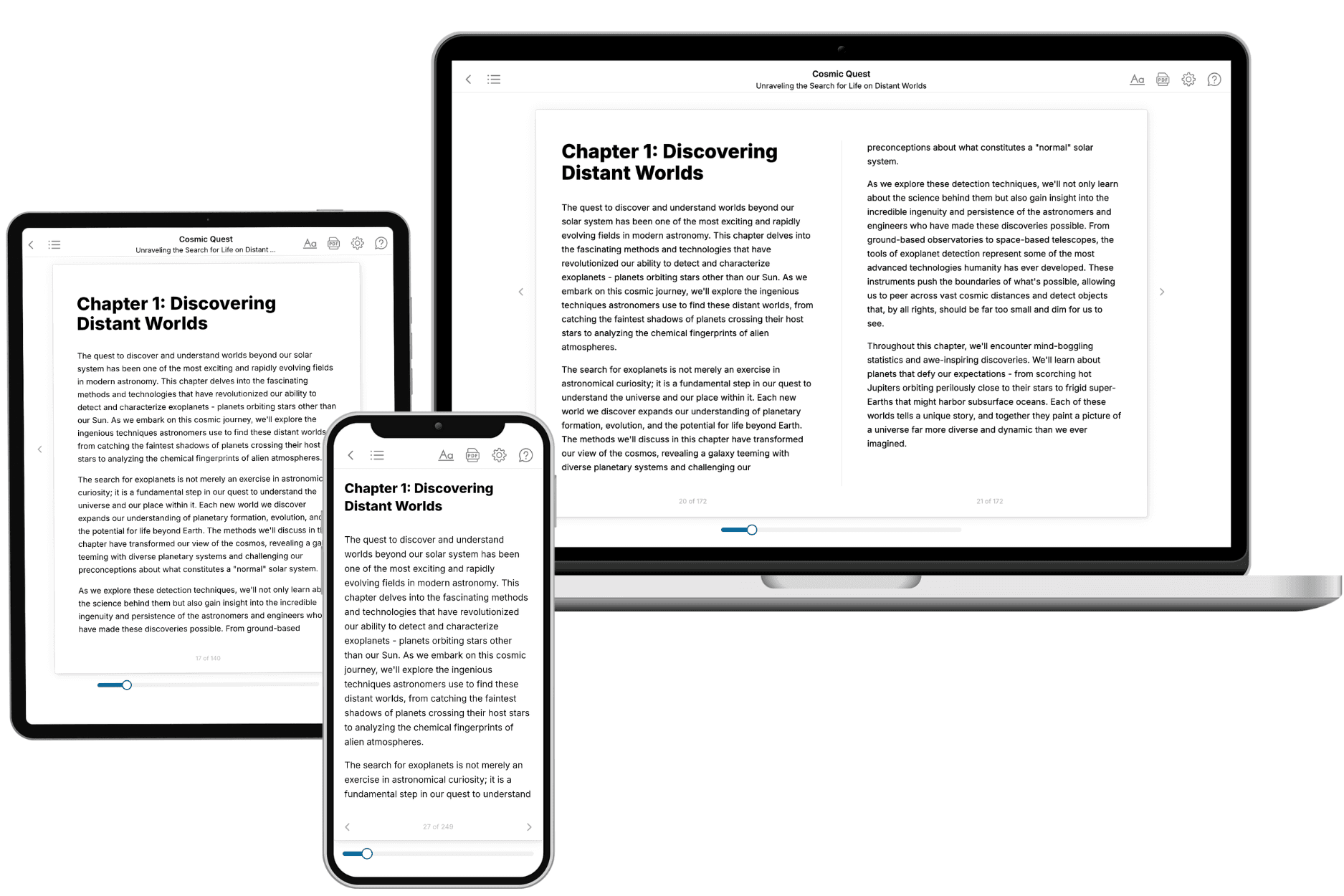
- 3. Get your tailored book
Your book is ready in 10 minutes. Read it online, download as EPUB or PDF, or send to Kindle.
Frequently asked questions
- What is TailoredRead?
TailoredRead creates complete, full-length nonfiction ebooks, written specifically for you. Tell us what you want to learn and why, and TailoredRead writes you a complete ebook on it, with charts, tables, and diagrams throughout. Read it online, on Kindle, or on any e-reader, or download it as a PDF or EPUB. Every book is written fresh the day you order it.
- How is the book tailored to me?
Before anything is written, you answer a few short questions about your goals, your background, and the topics you care about. Your book is then planned around your answers: written at your level, focused on your goals, and covering the topics you chose, instead of the one-size-fits-all book a store sells everyone.
- Will it read like generic AI content?
No. Your book isn't a chat transcript: it's planned chapter by chapter before a single word is written, told in a clear book voice, and explains ideas visually with charts, tables, and diagrams. After writing, every book goes through an editorial pass that polishes chapters so the book reads consistent from start to finish. Judge for yourself: browse thousands of sample books on our Explore Books page.
- How accurate is the content?
Our AI first checks whether your subject needs live research. Niche and fast-moving subjects are researched before writing, and the book plan and chapters are grounded in what it finds. After writing, every book goes through a quality pass that checks its facts and consistency, and researched books list their sources in a Notes section at the back.
- How long is the book?
You choose the length: Comprehensive (250-300 pages), Detailed (150-200 pages), Essential (70-100 pages), or Short (30-50 pages).
- Does the book include visuals?
Yes. Every book includes charts, tables, and diagrams: timelines, checklists, step-by-step guides, decision trees, comparison tables, matrices, and bar charts. A typical book includes dozens of these visual elements.
- Can I read it on Kindle? What formats can I download?
Yes. Every book can be read in our online reader or downloaded as a PDF or EPUB. The EPUB can be opened with Kindle, Apple Books, Kobo, and any e-reader. The Commercial and Author licenses also include an editable Word (DOCX) and Markdown download.
- How much does it cost?
About the price of a regular ebook. The exact price depends on your book's length and complexity, from $2 for the shortest books to $35 for the most comprehensive, and it's shown when you review your book, before you commit to anything. Each book is a one-time purchase, yours to keep, no subscription. Licenses that let you share, teach, or publish your book range from $35.99 to $49.99.
- Can I preview the book before purchasing?
Before you pay, you'll see what your book will cover: the title, a detailed description, the estimated length, and the complete chapter-by-chapter table of contents, so you know what you're getting before you decide. The full text itself is written after you purchase.
- How long does it take to create a book?
About 10 minutes. You can start reading the opening chapters while the rest is still being written.