GPA Mastery
Proven Strategies for Academic Excellence in College
Achieve the academic success you've always dreamed of with "GPA Mastery: Proven Strategies for Academic Excellence in College." This comprehensive guide is your roadmap to maintaining a stellar GPA and excelling in your college courses.
269 pages14 chaptersJun 5, 2025Study Skills
About this book
You'll discover a wealth of powerful techniques, from the Pomodoro Technique for time management to the Feynman Technique for deep understanding. Learn how to leverage active recall, spaced repetition, and mind mapping to enhance your learning retention and boost your academic performance. Packed with practical advice on creating effective study plans, optimizing your study environment, and managing academic stress, this book equips you with the tools you need to thrive in challenging courses. You'll master the art of critical analysis, improve your note-taking skills, and develop the academic discipline necessary for consistent success. Whether you're aiming for the Dean's List or simply want to maximize your learning potential, "GPA Mastery" provides the strategies and insights you need to transform your academic journey and achieve excellence in college.
Table of contents
- IntroductionThe Importance of GPA in College, Overview of the Book, Cultivating a Mindset for Academic SuccessRead below
- Chapter 1: Mastering Time ManagementThe Pomodoro Technique: Focused Work Sessions, Time Blocking for Optimal Productivity, Prioritizing Tasks with the Eisenhower Matrix, Strategies for Avoiding Procrastination
- Chapter 2: Effective Study TechniquesActive Recall: Testing Your Knowledge, Spaced Repetition for Long-Term Retention, Mind Mapping for Visual Learning, The SQ3R Reading Method
- Chapter 3: Note-Taking StrategiesThe Cornell Note-Taking Method, Concept Mapping for Comprehensive Understanding, Digital Note-Taking Tools and Techniques, Effective Note Review Strategies
- Chapter 4: Memory Enhancement TechniquesMnemonic Devices for Better Recall, The Memory Palace Technique, Chunking Information for Easier Memorization, Elaborative Rehearsal: Making Meaningful Connections
- Chapter 5: Developing Critical Thinking SkillsSocratic Questioning for Deep Understanding, Analyzing Arguments and Evidence, Problem-Solving Frameworks, Recognizing and Overcoming Cognitive Biases
- Chapter 6: Effective Exam PreparationCreating a Comprehensive Study Plan, The Power of Practice Tests, Maximizing Group Study Sessions, Exam Day Strategies for Peak Performance
- Chapter 7: Honing Research SkillsEffective Online and Library Searching, Evaluating Source Credibility, Organizing Research Notes, Managing Citations and References
- Chapter 8: Improving Academic WritingUnderstanding the Writing Process, Developing Strong Thesis Statements, Crafting Effective Paragraphs, Self-Editing and Proofreading Techniques
- Chapter 9: Cultivating Motivation and DisciplineSMART Goal Setting for Academic Success, Building Positive Study Habits, Creating Effective Reward Systems, Strategies for Overcoming Academic Setbacks
- Chapter 10: Managing Academic StressBalancing Study Time and Personal Life, Mindfulness and Relaxation Techniques, Maintaining Healthy Habits for Academic Performance, Building and Utilizing Support Systems
- Chapter 11: Advanced Learning StrategiesThe Feynman Technique for Deep Understanding, Interleaved Practice for Enhanced Learning, Dual Coding Theory in Practice, Maximizing Learning with Retrieval Practice
- Chapter 12: Leveraging Technology for LearningEssential Digital Tools for Students, Maximizing Online Learning Resources, Productivity Apps for Academic Success, Managing Digital Distractions
- Chapter 13: Subject-Specific Study StrategiesEffective Strategies for Math and Sciences, Mastering Humanities and Social Sciences, Techniques for Language Learning, Approaches for Practical and Applied Subjects
- Chapter 14: Long-Term Academic PlanningStrategic Course Selection, Planning Your Major and Career Path, Understanding GPA Calculation and Improvement, Maximizing Academic Opportunities
- ConclusionKey Takeaways for Academic Excellence, The Path to Continuous Academic Improvement
- AppendixStudy Plan Templates, Recommended Resources and Tools
Introduction
Welcome to "GPA Mastery: Proven Strategies for Academic Excellence in College." This comprehensive guide is designed to equip you with the tools, techniques, and mindset necessary to excel in your academic pursuits and maintain a high GPA throughout your college career. As you embark on this journey of academic improvement, it's essential to understand that success in college is not just about natural intelligence or luck. It's about developing effective study habits, mastering time management, and cultivating a growth mindset that embraces challenges and sees them as opportunities for learning and personal development.
Throughout this book, you'll discover a wealth of research-backed strategies and practical advice that have helped countless students achieve academic excellence. From time-tested techniques like the Pomodoro Method for focused study sessions to advanced learning strategies like the Feynman Technique for deep understanding, this guide covers a wide range of approaches to suit different learning styles and academic disciplines. By implementing these methods and consistently applying them to your studies, you'll be well-equipped to tackle even the most challenging courses and maintain a stellar GPA.
As we delve into the various aspects of academic success, remember that this book is not just about memorizing facts or cramming for exams. It's about developing a holistic approach to learning that will serve you well beyond your college years. The skills and habits you cultivate through these strategies will be invaluable assets in your future career and lifelong learning journey. So, let's begin this transformative exploration of academic mastery, starting with understanding the importance of GPA in college and setting the foundation for your success.
The Importance of GPA in College
Your Grade Point Average (GPA) is more than just a number; it's a crucial metric that can significantly impact your academic and professional future. In college, your GPA serves as a comprehensive measure of your academic performance, reflecting your ability to learn, adapt, and excel across various subjects and challenges. Understanding the importance of maintaining a high GPA can provide powerful motivation for implementing the strategies outlined in this book.
First and foremost, your GPA is often a key factor in academic opportunities within your college or university. Many institutions have GPA requirements for honors programs, research positions, and study abroad opportunities. For instance, a study by the National Association for College Admission Counseling found that 77% of colleges consider grades in college prep courses "considerably important" in admissions decisions for transfer students[1]. This means that maintaining a strong GPA can open doors to enriching experiences that can further enhance your education and personal growth.
Beyond academic opportunities, your GPA can play a significant role in your post-graduation prospects. Many employers use GPA as an initial screening tool when reviewing job applications, especially for entry-level positions. A survey by the National Association of Colleges and Employers found that 67% of employers screen candidates by their GPA[2]. While it's not the only factor in hiring decisions, a high GPA can give you a competitive edge in the job market, demonstrating to potential employers your dedication, work ethic, and ability to meet high standards consistently.
For those considering graduate school, your undergraduate GPA is often a critical component of your application. Many graduate programs have minimum GPA requirements, and a higher GPA can strengthen your application, potentially leading to better program options and scholarship opportunities. According to data from the Law School Admission Council, the median GPA for students admitted to ABA-approved law schools in 2020 was 3.54[3], highlighting the competitive nature of graduate admissions and the importance of maintaining a strong academic record.
It's also worth noting that your GPA reflects more than just your academic abilities. It demonstrates your capacity to manage time effectively, meet deadlines, and balance multiple responsibilities – all skills that are highly valued in the professional world. Employers often view a high GPA as an indicator of a candidate's potential for success in a demanding work environment. Moreover, the process of maintaining a high GPA helps you develop crucial soft skills such as discipline, perseverance, and the ability to perform under pressure, which are invaluable in any career path you choose to pursue.
However, it's important to recognize that while GPA is significant, it's not the sole determinant of your success. Colleges and employers also value practical experience, leadership skills, and personal qualities. This book will not only help you improve your GPA but also guide you in developing a well-rounded profile that showcases your full potential. By focusing on comprehensive academic excellence, you'll be better prepared for the challenges and opportunities that lie ahead, both in college and beyond.
As you progress through this book, keep in mind that every strategy and technique you learn is contributing to more than just a number on your transcript. You're building a foundation for lifelong learning, critical thinking, and professional success. Your GPA is a reflection of your hard work, dedication, and ability to rise to academic challenges – qualities that will serve you well throughout your life. With this understanding of the importance of your GPA, let's move forward to explore the wealth of strategies and insights this book has to offer to help you achieve and maintain academic excellence.
Overview of the Book
"GPA Mastery: Proven Strategies for Academic Excellence in College" is structured to provide you with a comprehensive toolkit for academic success. Each chapter focuses on a crucial aspect of effective learning and study habits, building upon the previous ones to create a holistic approach to improving your academic performance. This overview will give you a clear picture of what to expect from the book and how each section contributes to your overall goal of mastering your GPA.
The book begins with foundational concepts and gradually progresses to more advanced strategies. Chapter 1, "Mastering Time Management," sets the stage by introducing you to essential techniques like the Pomodoro Technique, time blocking, and the Eisenhower Matrix. These tools will help you optimize your study schedule and increase productivity, addressing one of the most common challenges college students face – balancing academic work with other responsibilities. Effective time management is the cornerstone of academic success, providing the structure needed to implement other strategies consistently.
Chapters 2 through 4 delve into core study techniques that will transform how you approach learning. "Effective Study Techniques" introduces methods like active recall and spaced repetition, which are backed by cognitive science research to enhance long-term retention. For instance, a study published in the journal Memory found that students who used active recall techniques remembered 50% more information after a week compared to those who used passive review methods[4]. "Note-Taking Strategies" and "Memory Enhancement Techniques" build upon these foundations, providing you with a robust set of tools to capture, organize, and retain information effectively.
As you progress through the book, you'll encounter chapters that focus on higher-order thinking skills crucial for academic excellence. Chapter 5, "Developing Critical Thinking Skills," equips you with frameworks for analyzing arguments, solving problems, and overcoming cognitive biases. These skills are essential not only for achieving a high GPA but also for excelling in your future career. The chapter on "Effective Exam Preparation" ties together many of the previously discussed techniques, showing you how to apply them specifically to ace your exams.
Recognizing that academic success extends beyond just studying, the book also addresses crucial aspects of student life that impact your GPA. "Cultivating Motivation and Discipline" and "Managing Academic Stress" provide strategies for maintaining your drive and well-being throughout your college journey. These chapters acknowledge the psychological and emotional factors that play a significant role in academic performance, offering practical advice for building resilience and maintaining a healthy work-life balance.
In the later chapters, the book explores advanced learning strategies and subject-specific study techniques. "Advanced Learning Strategies" introduces powerful methods like the Feynman Technique and interleaved practice, which can significantly enhance your understanding and retention of complex material. The chapter on "Subject-Specific Study Strategies" recognizes that different disciplines require tailored approaches, providing you with adaptable techniques for various fields of study.
Throughout the book, you'll find practical examples, case studies, and exercises that help you apply the concepts to your own academic situation. Each chapter concludes with action steps and reflection questions, encouraging you to implement what you've learned and track your progress. This hands-on approach ensures that you're not just passively reading about study techniques, but actively engaging with the material and adapting it to your unique needs and learning style.
The book also addresses the role of technology in modern learning, with a chapter dedicated to "Leveraging Technology for Learning." This section guides you through selecting and using digital tools and online resources effectively, while also addressing the challenge of managing digital distractions – a crucial skill in today's connected world.
Finally, the book concludes with chapters on "Long-Term Academic Planning" and a comprehensive conclusion that ties all the strategies together. These sections help you think beyond individual courses or semesters, providing a roadmap for sustained academic success throughout your college career and beyond. The appendix offers additional resources, including study plan templates and a curated list of tools and further reading, giving you concrete materials to support your academic journey.
By the time you finish this book, you'll have a comprehensive understanding of what it takes to achieve and maintain a high GPA in college. More importantly, you'll have a set of practical, proven strategies that you can immediately apply to your studies. Remember, the key to success lies not just in knowing these techniques, but in consistently applying them. As you work through this book, commit to implementing these strategies, and you'll be well on your way to mastering your GPA and achieving academic excellence.
Cultivating a Mindset for Academic Success
Before diving into specific strategies and techniques, it's crucial to understand the importance of mindset in achieving academic success. Your mindset – the set of attitudes and beliefs you hold about your abilities and potential – plays a pivotal role in determining your academic performance and overall success in college. Cultivating the right mindset can significantly enhance your ability to learn, persist through challenges, and maintain the motivation necessary for consistent high performance.
At the core of academic success is the concept of a growth mindset, pioneered by psychologist Carol Dweck. In her groundbreaking research, Dweck found that individuals who believe their abilities can be developed through dedication and hard work – a growth mindset – tend to achieve more than those who believe their talents are innate gifts – a fixed mindset[5]. Adopting a growth mindset means viewing challenges as opportunities to learn and grow, rather than as threats to your intelligence or abilities. This perspective is particularly crucial in the college environment, where you'll frequently encounter new and difficult material.
To cultivate a growth mindset, start by reframing how you think about your academic abilities. Instead of saying, "I'm not good at math," try "I'm still learning math skills." This subtle shift acknowledges that your abilities are not fixed and that improvement is possible with effort and practice. When faced with a difficult assignment or poor grade, rather than becoming discouraged, view it as valuable feedback that can guide your future efforts. Research has shown that students who adopt this mindset are more likely to persist in the face of setbacks and ultimately achieve higher levels of academic success[6].
Another crucial aspect of the academic success mindset is embracing the value of effort and practice. Many students enter college with the misconception that academic achievement should come easily if they're truly intelligent. This belief can lead to frustration and demotivation when faced with challenging coursework. Instead, recognize that struggle and effort are normal and necessary parts of the learning process. Neuroscience research has shown that the brain physically changes and grows stronger when we engage in challenging learning tasks[7]. By embracing the idea that your intelligence and abilities can grow through dedicated effort, you'll be more likely to put in the work required to achieve academic excellence.
Developing resilience is another key component of the academic success mindset. College presents numerous challenges, from difficult exams to competing deadlines, and your ability to bounce back from setbacks will greatly influence your overall performance. Resilience isn't about avoiding failure; it's about how you respond to it. Practice viewing setbacks as temporary and specific, rather than permanent and pervasive. When you receive a poor grade or struggle with a concept, remind yourself that this is a single event, not a reflection of your overall ability or future potential. This perspective will help you maintain motivation and continue putting forth effort, even when faced with obstacles.
An often-overlooked aspect of the academic success mindset is the importance of self-compassion. Many high-achieving students are prone to harsh self-criticism, which can lead to stress, anxiety, and burnout. Research by Dr. Kristin Neff has shown that self-compassion – treating yourself with the same kindness and understanding you would offer a good friend – is associated with greater emotional resilience and motivation[8]. Practice self-compassion by acknowledging that everyone faces challenges and makes mistakes, and that these experiences are part of the learning process. This mindset will help you maintain a positive attitude and persist in your efforts, even when things get tough.
Additionally, cultivating a sense of purpose can significantly enhance your academic motivation and performance. Understanding why your education matters to you – beyond just achieving a high GPA – can provide powerful motivation during challenging times. Take some time to reflect on your long-term goals and how your current academic efforts contribute to those aspirations. Research has shown that students who have a clear sense of purpose tend to be more engaged in their studies and achieve better academic outcomes[9].
Finally, embrace a collaborative mindset. While individual effort is crucial, learning is often enhanced through interaction with peers and instructors. Be open to group study sessions, class discussions, and seeking help when needed. Research has consistently shown that collaborative learning can lead to better understanding and retention of material[10]. By viewing your classmates as potential collaborators rather than competitors, you can create a supportive learning environment that benefits everyone.
As you progress through this book and implement various strategies for academic success, remember that your mindset is the foundation upon which all these techniques build. Cultivate a growth mindset, embrace challenges as opportunities for learning, practice resilience and self-compassion, connect with your sense of purpose, and approach your studies with a collaborative spirit. With this mindset in place, you'll be well-equipped to tackle the challenges of college and achieve the academic excellence you're striving for. The strategies and techniques in the following chapters will provide you with the practical tools to translate this mindset into tangible academic success.
Notes
Introduction
- 1. National Association for College Admission Counseling, State of College Admission Report, 2019
- 2. National Association of Colleges and Employers, Job Outlook 2019, 2018
- 3. Law School Admission Council, National Decision Profiles, 2021
- 4. J. D. Karpicke and H. L. Roediger, "The Critical Importance of Retrieval for Learning," Science, 2008
- 5. C. S. Dweck, Mindset: The New Psychology of Success, Random House, 2006
- 6. D. S. Yeager and C. S. Dweck, "Mindsets That Promote Resilience," Educational Psychologist, 2012
- 7. J. D. Bransford and others, How People Learn, National Academy Press, 2000
- 8. K. D. Neff and others, "Self-compassion, Achievement Goals, and Coping with Academic Failure," Self and Identity, 2005
- 9. D. S. Yeager and others, "Boring but Important," Journal of Personality and Social Psychology, 2014
- 10. D. W. Johnson and others, "Cooperative Learning," Journal on Excellence in College Teaching, 2014
This is the end of the free sample. The full book has 14 chapters.
Want this book written for you?
Tell us your goals and background, and get your own version of this book, tailored by AI to you.


Benefits of AI-tailored books
- Read one book, not ten:
- all the Study Skills knowledge you need, gathered into a single book.
- Save days of learning:
- tell us your goals, choose your topics, and the whole book is built around them.
- Learn effortlessly:
- Study Skills book written for your specific background and expertise.
- Understand at a glance:
- includes charts, tables, timelines, checklists, decision trees, and more.
- Stay current:
- written the day you order it, not years ago.
- Trust what you read:
- every book is checked for accuracy, with real research when your subject needs it.
Create your unique book in 3 steps
- 1. Select your focus
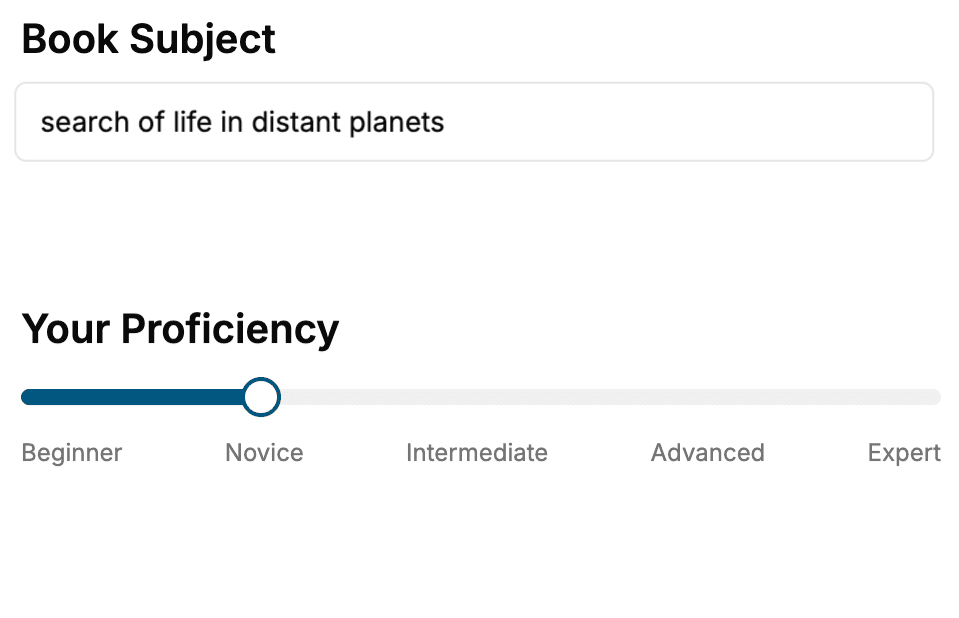
Select the focus of your Study Skills book and share your background
- 2. Personalize your book
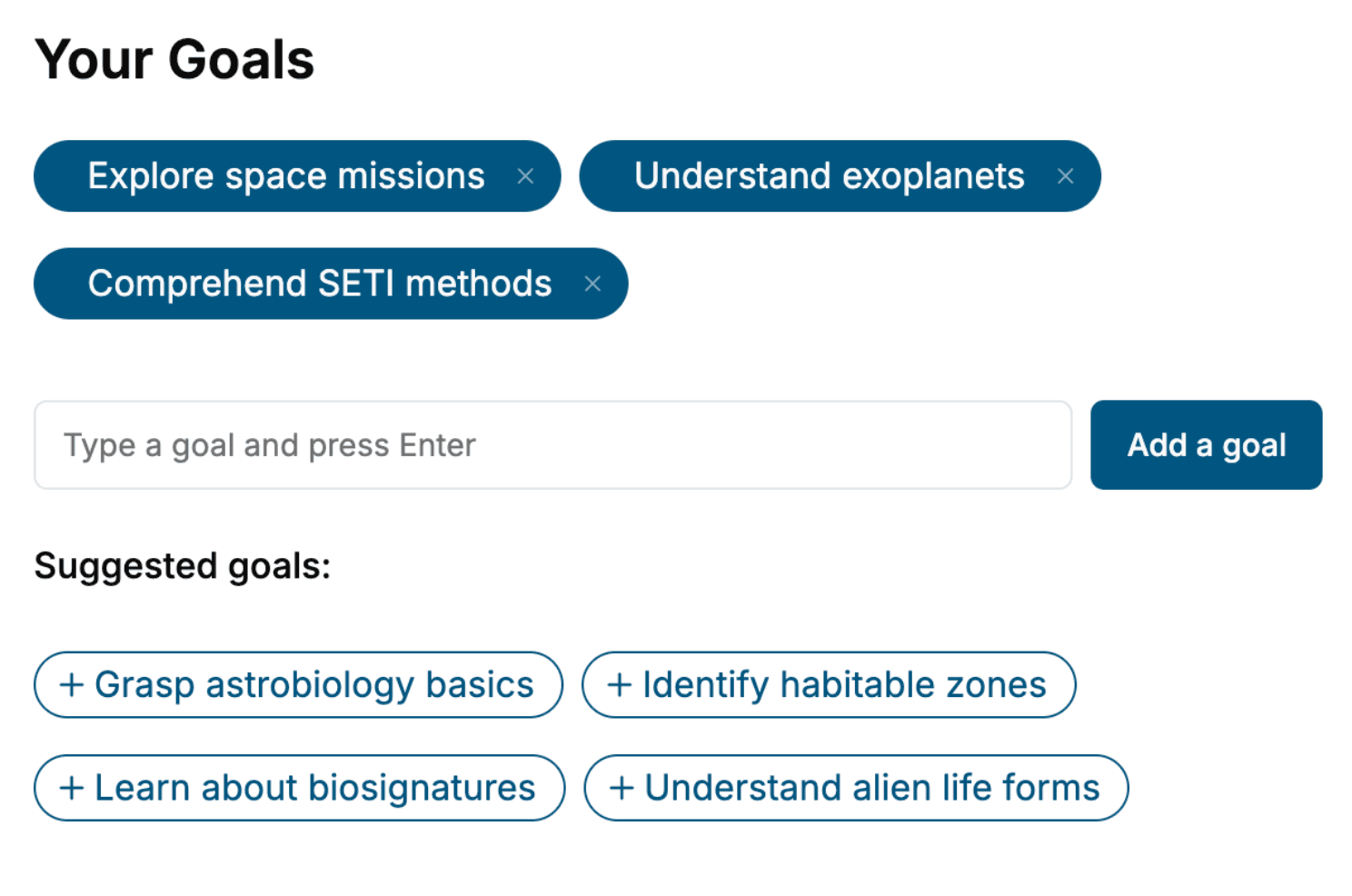
Specify your goals and choose sub-topics to include
- 3. Get your tailored book
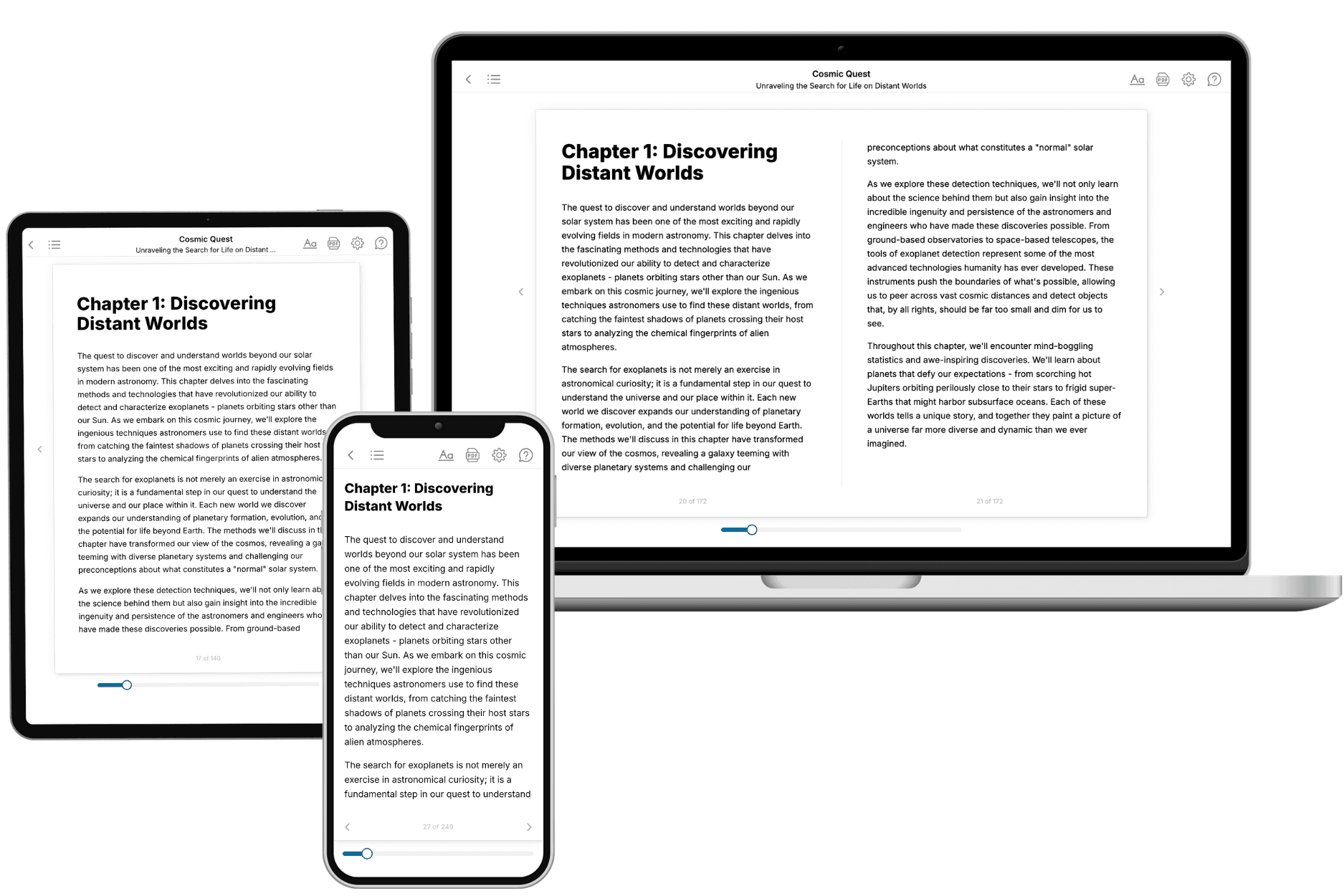
Your book is ready in 10 minutes. Read it online, download as EPUB or PDF, or send to Kindle.
Frequently asked questions
- What is TailoredRead?
TailoredRead creates complete, full-length nonfiction ebooks, written specifically for you. Tell us what you want to learn and why, and TailoredRead writes you a complete ebook on it, with charts, tables, and diagrams throughout. Read it online, on Kindle, or on any e-reader, or download it as a PDF or EPUB. Every book is written fresh the day you order it.
- How is the book tailored to me?
Before anything is written, you answer a few short questions about your goals, your background, and the topics you care about. Your book is then planned around your answers: written at your level, focused on your goals, and covering the topics you chose, instead of the one-size-fits-all book a store sells everyone.
- Will it read like generic AI content?
No. Your book isn't a chat transcript: it's planned chapter by chapter before a single word is written, told in a clear book voice, and explains ideas visually with charts, tables, and diagrams. After writing, every book goes through an editorial pass that polishes chapters so the book reads consistent from start to finish. Judge for yourself: browse thousands of sample books on our Explore Books page.
- How accurate is the content?
Our AI first checks whether your subject needs live research. Niche and fast-moving subjects are researched before writing, and the book plan and chapters are grounded in what it finds. After writing, every book goes through a quality pass that checks its facts and consistency, and researched books list their sources in a Notes section at the back.
- How long is the book?
You choose the length: Comprehensive (250-300 pages), Detailed (150-200 pages), Essential (70-100 pages), or Short (30-50 pages).
- Does the book include visuals?
Yes. Every book includes charts, tables, and diagrams: timelines, checklists, step-by-step guides, decision trees, comparison tables, matrices, and bar charts. A typical book includes dozens of these visual elements.
- Can I read it on Kindle? What formats can I download?
Yes. Every book can be read in our online reader or downloaded as a PDF or EPUB. The EPUB can be opened with Kindle, Apple Books, Kobo, and any e-reader. The Commercial and Author licenses also include an editable Word (DOCX) and Markdown download.
- How much does it cost?
About the price of a regular ebook. The exact price depends on your book's length and complexity, from $2 for the shortest books to $35 for the most comprehensive, and it's shown when you review your book, before you commit to anything. Each book is a one-time purchase, yours to keep, no subscription. Licenses that let you share, teach, or publish your book range from $35.99 to $49.99.
- Can I preview the book before purchasing?
Before you pay, you'll see what your book will cover: the title, a detailed description, the estimated length, and the complete chapter-by-chapter table of contents, so you know what you're getting before you decide. The full text itself is written after you purchase.
- How long does it take to create a book?
About 10 minutes. You can start reading the opening chapters while the rest is still being written.