Groundwater Essentials
Understanding Water Movement, Storage, and Management Beneath Your Feet
What lies beneath the surface of the ground, and why should you care?
222 pages10 chaptersMar 8, 2026Hydrology
About this book
Groundwater sustains billions of people worldwide, yet most of us never think about where our water comes from or how it moves through rock and soil. This book demystifies the hidden world of hydrogeology—the science of water beneath our feet. You'll discover how water infiltrates the ground, travels through aquifers, and emerges in springs and wells. Learn the essential properties that control groundwater flow, explore different types of aquifers and their characteristics, and understand the critical challenges facing groundwater resources today. Whether you're a student, environmental professional, or simply curious about Earth's water systems, this guide provides the knowledge you need to understand groundwater dynamics, recognize contamination risks, and appreciate why sustainable water management matters. Packed with practical examples and clear explanations, this book transforms complex hydrogeological concepts into accessible insights.
Table of contents
- IntroductionWhy Hydrogeology Matters, What You Will Learn in This Book, How to Use This GuideRead below
- Chapter 1: The Water Cycle and Subsurface SystemsGlobal Water Distribution and Groundwater's Role, Infiltration and Percolation: Water Enters the Ground, The Vadose and Saturated Zones
- Chapter 2: Rock and Soil Properties That Control WaterPorosity: How Much Water Can Rock Hold?, Permeability and Hydraulic Conductivity: How Fast Water Moves, Grain Size, Texture, and Their Effects on Water Movement, Specific Storage and Specific Yield: Water Release Mechanisms
- Chapter 3: Groundwater Flow Principles and PatternsHydraulic Head and Hydraulic Gradient, Darcy's Law: The Foundation of Groundwater Flow, Flow Paths and Directions in Aquifers
- Chapter 4: Aquifer Types and CharacteristicsConfined and Unconfined Aquifers, Semi-Confined and Leaky Aquifers, Fractured Rock and Karst Aquifers, Aquifer Productivity and Classification Systems
- Chapter 5: Groundwater Recharge and DischargeNatural Recharge Processes and Rates, Artificial Recharge and Managed Aquifer Recharge, Discharge Mechanisms: Springs, Baseflow, and Evapotranspiration
- Chapter 6: Wells, Pumping, and Water ExtractionWell Types and Design Considerations, Drawdown, Cone of Depression, and Aquifer Response, Sustainable Extraction Rates and Aquifer Depletion
- Chapter 7: Groundwater Contamination and ProtectionContaminant Sources and Types, Contaminant Transport and Fate in Aquifers, Aquifer Protection Strategies and Wellhead Protection, Remediation Approaches and Treatment Technologies
- Chapter 8: Hydrogeological Investigations and Site CharacterizationDrilling and Sampling Methods, Aquifer Testing and Data Analysis, Geophysical Surveys and Remote Sensing
- Chapter 9: Groundwater Modeling and PredictionConceptual Models and System Understanding, Numerical Modeling Basics and Applications, Model Limitations and Uncertainty Assessment
- Chapter 10: Global Groundwater Challenges and SolutionsGroundwater Depletion and Overexploitation, Saltwater Intrusion and Coastal Aquifer Management, Climate Change Impacts on Groundwater Systems, Sustainable Management Strategies and Policy Solutions
- ConclusionKey Takeaways and Core Concepts, The Future of Hydrogeology and Water Security
- Glossary of Hydrogeological Terms
- Further Reading and Resources
Introduction
Right now, somewhere beneath your feet, water is moving. It seeps through tiny pores in sand grains, trickles along fractures in ancient rock, and collects in vast underground reservoirs that have been filling for thousands of years. This hidden world of groundwater is one of Earth's most critical resources, yet most people go through their entire lives without giving it a second thought. That invisibility is part of what makes groundwater both fascinating and vulnerable. You cannot see it, you cannot easily measure it, and you often cannot tell when it is in trouble until the damage is already done.
Groundwater supplies drinking water to roughly half the global population and irrigates about 40 percent of the world's agricultural land.[1] In many regions, it is the only reliable freshwater source available, especially during droughts when rivers and lakes shrink or disappear entirely. Despite this enormous importance, groundwater is frequently overextracted, contaminated, and mismanaged. Aquifers that took millennia to fill are being drained in decades. Pollution from agriculture, industry, and urban development is spreading through underground systems in ways that are difficult to detect and even harder to reverse. Understanding how groundwater works is no longer just an academic exercise. It is a practical necessity for anyone involved in water resources, environmental management, land use planning, or public health.
This book is designed to give you a solid, working understanding of hydrogeology, the science that studies water in the subsurface. Whether you are a student building foundational knowledge, an environmental professional looking to sharpen your technical skills, or someone who simply wants to understand the water systems that sustain life on this planet, this guide will take you from basic principles to real-world applications. The goal is not to overwhelm you with equations or jargon, but to build genuine understanding, the kind that lets you look at a landscape and start to picture what is happening underground. That kind of intuition, grounded in solid science, is what separates a competent hydrogeologist from someone who is just reading numbers off a report.
The chapters ahead cover everything from the fundamental physics of water movement to the practical challenges of managing groundwater in a changing climate. Along the way, you will encounter real examples, concrete data, and frameworks you can actually use. Each concept builds on the last, so by the time you reach the final chapters on global challenges and sustainable management, you will have the background to engage with those issues meaningfully. Think of this introduction as your orientation. It explains why this subject matters, what you will learn, and how to get the most out of the pages that follow.
Why Hydrogeology Matters
Groundwater is the largest reservoir of liquid freshwater on Earth. Oceans hold the vast majority of the planet's water, but nearly all of it is saltwater. Of the freshwater that exists, most is locked in glaciers and ice caps. Groundwater accounts for roughly 30 percent of all freshwater on Earth, compared to less than 0.3 percent held in rivers and lakes combined.[2] That comparison alone should shift how you think about water. The rivers and lakes we can see and touch are a tiny fraction of the freshwater story. The real reserves are underground.
The practical consequences of this are enormous. Cities like Mexico City, Dhaka, and Riyadh depend heavily on groundwater for their municipal water supplies. In the United States, groundwater provides drinking water for more than 120 million people, including the majority of those living in rural areas.[3] In India, groundwater supports more than 60 percent of irrigated agriculture, making it the backbone of food production for over a billion people. When these underground systems are stressed, the effects ripple outward into food security, public health, and economic stability.
Hydrogeology matters because groundwater problems are often invisible until they become crises. Consider the case of the Ogallala Aquifer, which underlies about 174,000 square miles of the central United States and supports roughly 30 percent of all groundwater used for irrigation in the country.[4] In some parts of Kansas and Texas, water levels in this aquifer have dropped by more than 150 feet since large-scale irrigation began in the mid-twentieth century. The aquifer recharges at a rate of roughly half an inch per year in some areas, while farmers pump out many feet annually. This is not a distant future problem. It is happening now, and the communities that depend on that water are already feeling the effects.
Contamination is the other major concern. Unlike a polluted river, which can flush itself clean over days or weeks, a contaminated aquifer may remain unusable for decades or even centuries. Contaminants from leaking underground storage tanks, agricultural chemicals, industrial waste sites, and improperly disposed pharmaceuticals can travel slowly but persistently through groundwater systems. By the time contamination is detected at a drinking water well, the source may be miles away and years in the past. Understanding how contaminants move through the subsurface is essential for protecting public health and designing effective cleanup strategies.
There is also a strong connection between groundwater and surface water that is often underappreciated. Rivers do not just flow on top of the land. They interact constantly with the groundwater beneath them. In many streams, a significant portion of the flow during dry seasons comes from groundwater discharging into the channel. This process, called baseflow, keeps rivers alive between rain events and supports aquatic ecosystems. When groundwater levels drop due to over-pumping, baseflow decreases, rivers shrink, and the ecosystems that depend on them suffer. Hydrogeology is therefore not just about wells and aquifers. It is about understanding a connected system that links rainfall, soil, rock, rivers, and the living world above and below ground.
Climate change is adding new urgency to all of these issues. Changing precipitation patterns are altering where and when groundwater recharge occurs. More intense droughts are increasing demand for groundwater at the same time that recharge rates may be declining. Rising sea levels are pushing saltwater into coastal aquifers, threatening freshwater supplies for millions of people in low-lying areas. These are not hypothetical scenarios. They are documented trends that hydrogeologists are already working to understand and address. The science of groundwater has never been more relevant, and the need for people who understand it has never been greater.
Finally, hydrogeology matters because good decisions about water require good information. Governments, water utilities, farmers, and developers all make choices that affect groundwater systems, often without fully understanding the consequences. A farmer who drills a deeper well to compensate for falling water levels may be accelerating the very depletion they are trying to escape. A city that approves a new industrial facility without assessing groundwater flow paths may be setting up a contamination problem that will cost millions to address later. Knowledge of hydrogeology does not just satisfy intellectual curiosity. It enables better decisions at every level, from individual land use choices to national water policy.
What You Will Learn in This Book
This book is organized to take you through hydrogeology in a logical sequence, starting with the big picture and progressively zooming in on the details. Each chapter builds on the concepts introduced before it, so the knowledge accumulates in a way that feels natural rather than overwhelming. Here is a brief overview of what each part of the book covers and why it matters.
Chapter 1: The Water Cycle and Subsurface Systems. Before diving into groundwater specifically, it helps to understand where it fits in the broader water cycle. This chapter explains how water moves from the atmosphere to the surface, into the ground, and back again. You will learn how groundwater fits into the global freshwater picture and why the subsurface portion of the water cycle is so often overlooked. Key concepts include infiltration, percolation, and the distinction between the unsaturated zone above the water table and the saturated zone below it.
Chapter 2: Rock and Soil Properties That Control Water. Not all underground materials are equal when it comes to storing and transmitting water. This chapter introduces the two most fundamental properties in hydrogeology: porosity (how much empty space exists in a material) and permeability (how easily water can move through it). You will learn why a clay layer can hold a lot of water but release it very slowly, while a gravel bed transmits water rapidly. These concepts are the foundation for everything that follows.
Chapter 3: Groundwater Flow Principles and Patterns. Water underground does not just sit still. It moves, driven by differences in pressure and elevation. This chapter introduces hydraulic head, the concept that describes the energy state of groundwater, and explains how gradients in hydraulic head drive flow from one place to another. You will also encounter Darcy's Law, the fundamental equation that quantifies groundwater flow and underpins most of modern hydrogeology.
Chapter 4: Aquifer Types and Characteristics. An aquifer is any underground formation that can store and yield useful quantities of water. But not all aquifers behave the same way. This chapter covers the major types, including:
- Unconfined aquifers, where the water table is the upper boundary and the aquifer is open to the atmosphere above
- Confined aquifers, where water is trapped under pressure beneath an impermeable layer
- Semi-confined or leaky aquifers, which fall somewhere in between
- Fractured rock and karst aquifers, where water moves through cracks and dissolutional voids rather than pore spaces
Chapter 5: Groundwater Recharge and Discharge. Aquifers are not static reservoirs. They are constantly receiving water from recharge and losing water through discharge. This chapter explains the natural processes by which water enters aquifers, including rainfall infiltration, river leakage, and snowmelt. It also covers artificial recharge techniques used to deliberately replenish aquifers, and the various ways groundwater leaves the system, through springs, baseflow to rivers, and evapotranspiration from shallow water tables.
Chapter 6: Wells, Pumping, and Water Extraction. Most people interact with groundwater through wells, and this chapter explains how wells work, how they are designed, and what happens to an aquifer when water is pumped out. You will learn about the cone of depression that forms around a pumping well, how multiple wells can interfere with each other, and what sustainable extraction actually means in practice. This chapter also addresses the serious problem of aquifer depletion and how to recognize when extraction rates are exceeding natural recharge.
Chapter 7: Groundwater Contamination and Protection. This chapter addresses one of the most practically important topics in hydrogeology. It covers the major sources of groundwater contamination, from agricultural chemicals and septic systems to industrial spills and landfill leachate. You will learn how contaminants move through aquifers, what factors control their spread, and what strategies can be used to protect drinking water sources. The chapter also introduces remediation approaches, the methods used to clean up contaminated aquifers, and their limitations.
Chapters 8 and 9 shift toward the investigative and analytical side of hydrogeology. Chapter 8 covers the methods used to characterize subsurface conditions, including drilling, sampling, aquifer testing, and geophysical surveys. Chapter 9 introduces groundwater modeling, explaining how computer models are built, what they can and cannot tell us, and how uncertainty is handled in predictions about future groundwater behavior.
Chapter 10: Global Groundwater Challenges and Solutions. The final chapter zooms back out to the big picture, examining the major challenges facing groundwater resources worldwide. Topics include aquifer depletion, saltwater intrusion in coastal areas, and the impacts of climate change on groundwater systems. The chapter closes with a discussion of sustainable management strategies and the policy frameworks that support them, giving you a sense of where the field is headed and what role science plays in shaping water policy.
By the end of this book, you will have a working vocabulary in hydrogeology, a clear understanding of the physical principles that govern groundwater behavior, and practical knowledge of how groundwater systems are investigated, managed, and protected. You will be equipped to read technical reports, engage with hydrogeological data, and contribute meaningfully to conversations about water resource management.
How to Use This Guide
This book is written for readers who already have some background in earth sciences or geology, but it does not assume deep expertise in hydrogeology. If you know the difference between sedimentary and igneous rock, understand basic concepts like pressure and flow, and are comfortable with simple mathematical relationships, you have everything you need to follow along. Technical terms are introduced carefully and explained in context, and a glossary at the back of the book provides quick reference definitions for all key terms.
The most effective way to use this guide is to read it sequentially, at least on the first pass. The chapters are designed to build on each other. Concepts introduced in Chapter 2 (porosity and permeability) are used extensively in Chapter 3 (groundwater flow), and both are essential for understanding Chapter 4 (aquifer types). Jumping ahead without that foundation can make later chapters feel confusing or abstract. That said, once you have read through the book once, it works well as a reference. Each chapter is self-contained enough that you can return to specific sections when you need to refresh your understanding of a particular topic.
Pay close attention to the examples and case studies throughout the book. Hydrogeology is a subject where abstract principles become much clearer when you see them applied to real situations. When a chapter introduces a concept like hydraulic gradient, for instance, it will follow up with a concrete example showing how that gradient is calculated and what it means for water movement in a specific setting. Working through those examples actively, rather than just reading past them, will significantly deepen your understanding.
You will also notice that some chapters include simple frameworks or step-by-step processes. For example, the chapter on hydrogeological investigations outlines a logical sequence for characterizing a site, from initial desktop review through field investigation to data interpretation. These frameworks are not rigid rules, but they reflect how experienced practitioners actually approach problems. Internalizing them will help you think more systematically about hydrogeological questions, whether you encounter them in academic coursework, professional practice, or field work.
A useful habit when reading any technical chapter: after finishing a section, pause and ask yourself, "If I had to explain this concept to a colleague in two sentences, what would I say?" If you can do that clearly, you understand it. If you struggle, that is a signal to re-read the section before moving on.
For those using this book in an academic context, the footnotes and references throughout the text point to primary sources and authoritative publications that you can explore for deeper coverage of specific topics. The "Further Reading and Resources" section at the back of the book provides a curated list of textbooks, journals, and online resources for readers who want to go beyond what is covered here. Hydrogeology is a rich and active field, and this book is intended as a strong starting point, not a final destination.
If you are a working professional, you may find it useful to focus particular attention on the chapters most relevant to your current projects. Someone working on a contamination investigation will want to spend extra time with Chapters 7 and 8. Someone involved in water supply planning will find Chapters 5, 6, and 10 especially relevant. The conceptual chapters (2, 3, and 4) are worth revisiting periodically, because a strong grasp of fundamentals makes everything else easier to apply correctly.
One practical suggestion: keep a notebook or digital document handy as you read. Jot down questions that arise, terms you want to look up, and connections you notice between concepts. Hydrogeology is a subject where many ideas are interconnected, and actively tracking those connections as you read will help you build a more integrated understanding. It will also give you a useful personal reference to return to when you encounter similar concepts in the field or in technical literature.
Finally, approach this subject with curiosity. Groundwater is genuinely fascinating. The idea that water falling as rain today might not reach a deep aquifer for hundreds or thousands of years, or that a spring bubbling up in a desert valley might be discharging water that fell as snow on a mountain range fifty miles away, these are not just technical facts. They are reminders of how dynamic and interconnected Earth's systems are. The science of hydrogeology gives you the tools to read those stories in the landscape, and that is a genuinely rewarding skill to develop. The water beneath your feet has been on a long journey. This book will help you understand where it has been, where it is going, and why that matters.
Notes
Introduction
- 1. UNESCO, The United Nations World Water Development Report 2022: Groundwater: Making the Invisible Visible, UNESCO, Paris, 2022
- 2. P. H. Gleick, "Water resources," Encyclopedia of Climate and Weather, ed. by S.H. Schneider, Oxford University Press, New York, 1996
- 3. U.S. Geological Survey, "Groundwater Use in the United States," USGS Water Science School, 2019
- 4. V. L. McGuire, "Water-level and recoverable water in storage changes, High Plains aquifer, predevelopment to 2015 and 2013-15," U.S. Geological Survey Scientific Investigations Report 2017-5040, 2017
This is the end of the free sample. The full book has 10 chapters.
Want this book written for you?
Tell us your goals and background, and get your own version of this book, tailored by AI to you.


Benefits of AI-tailored books
- Read one book, not ten:
- all the Hydrology knowledge you need, gathered into a single book.
- Save days of learning:
- tell us your goals, choose your topics, and the whole book is built around them.
- Learn effortlessly:
- Hydrology book written for your specific background and expertise.
- Understand at a glance:
- includes charts, tables, timelines, checklists, decision trees, and more.
- Stay current:
- written the day you order it, not years ago.
- Trust what you read:
- every book is checked for accuracy, with real research when your subject needs it.
Create your unique book in 3 steps
- 1. Select your focus
Select the focus of your Hydrology book and share your background
- 2. Personalize your book
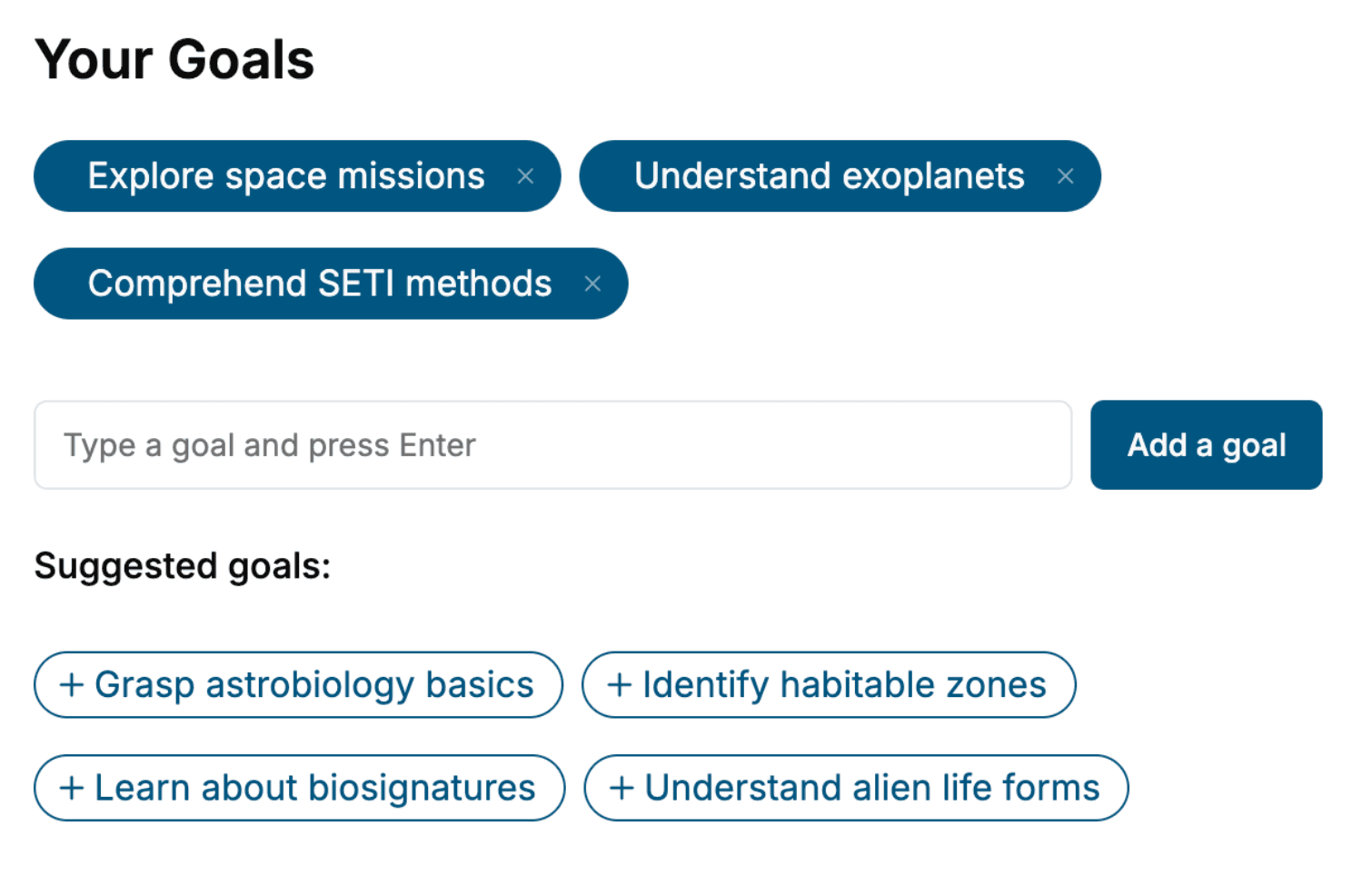
Specify your goals and choose sub-topics to include
- 3. Get your tailored book
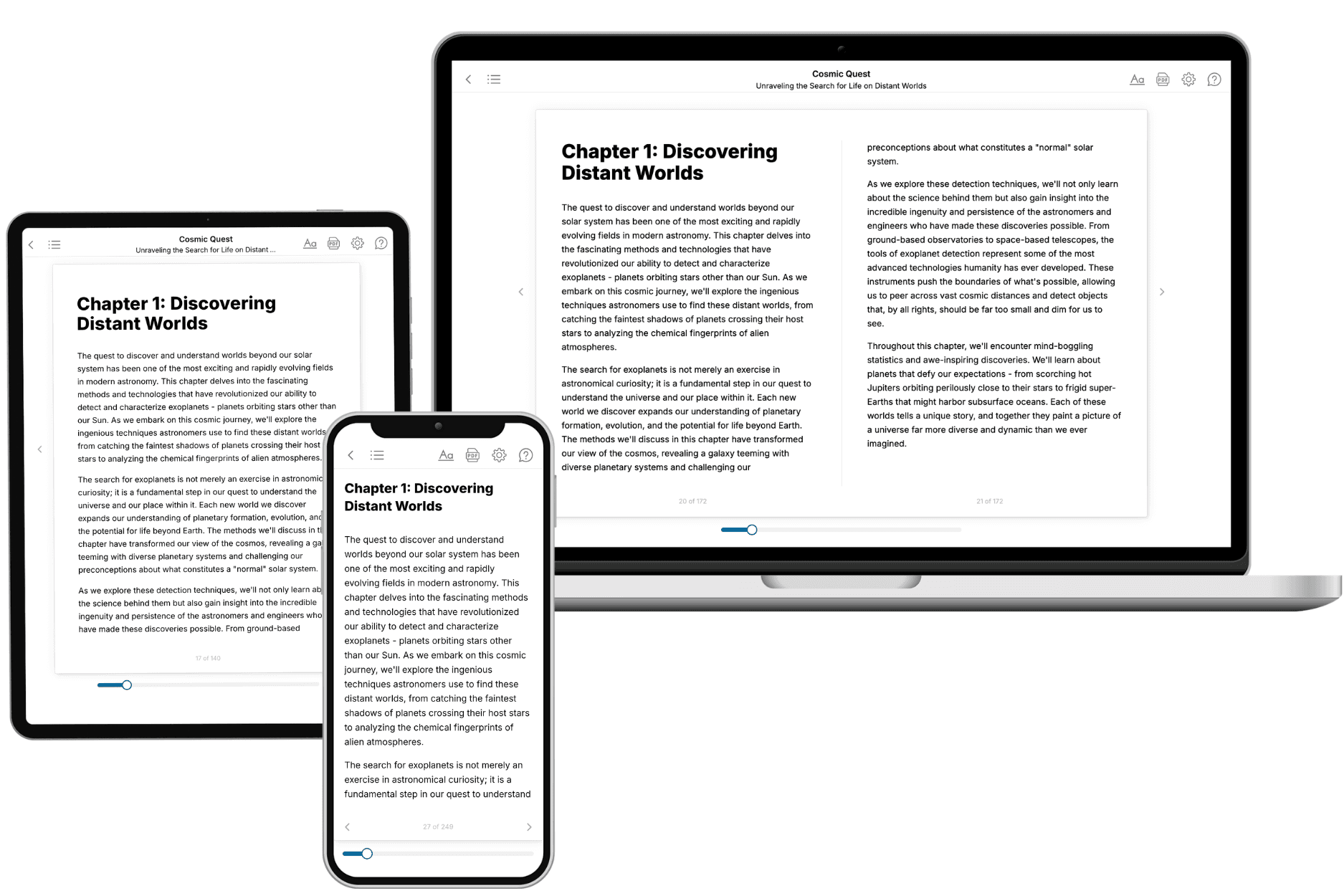
Your book is ready in 10 minutes. Read it online, download as EPUB or PDF, or send to Kindle.

Frequently asked questions
- What is TailoredRead?
TailoredRead creates complete, full-length nonfiction ebooks, written specifically for you. Tell us what you want to learn and why, and TailoredRead writes you a complete ebook on it, with charts, tables, and diagrams throughout. Read it online, on Kindle, or on any e-reader, or download it as a PDF or EPUB. Every book is written fresh the day you order it.
- How is the book tailored to me?
Before anything is written, you answer a few short questions about your goals, your background, and the topics you care about. Your book is then planned around your answers: written at your level, focused on your goals, and covering the topics you chose, instead of the one-size-fits-all book a store sells everyone.
- Will it read like generic AI content?
No. Your book isn't a chat transcript: it's planned chapter by chapter before a single word is written, told in a clear book voice, and explains ideas visually with charts, tables, and diagrams. After writing, every book goes through an editorial pass that polishes chapters so the book reads consistent from start to finish. Judge for yourself: browse thousands of sample books on our Explore Books page.
- How accurate is the content?
Our AI first checks whether your subject needs live research. Niche and fast-moving subjects are researched before writing, and the book plan and chapters are grounded in what it finds. After writing, every book goes through a quality pass that checks its facts and consistency, and researched books list their sources in a Notes section at the back.
- How long is the book?
You choose the length: Comprehensive (250-300 pages), Detailed (150-200 pages), Essential (70-100 pages), or Short (30-50 pages).
- Does the book include visuals?
Yes. Every book includes charts, tables, and diagrams: timelines, checklists, step-by-step guides, decision trees, comparison tables, matrices, and bar charts. A typical book includes dozens of these visual elements.
- Can I read it on Kindle? What formats can I download?
Yes. Every book can be read in our online reader or downloaded as a PDF or EPUB. The EPUB can be opened with Kindle, Apple Books, Kobo, and any e-reader. The Commercial and Author licenses also include an editable Word (DOCX) and Markdown download.
- How much does it cost?
About the price of a regular ebook. The exact price depends on your book's length and complexity, from $2 for the shortest books to $35 for the most comprehensive, and it's shown when you review your book, before you commit to anything. Each book is a one-time purchase, yours to keep, no subscription. Licenses that let you share, teach, or publish your book range from $35.99 to $49.99.
- Can I preview the book before purchasing?
Before you pay, you'll see what your book will cover: the title, a detailed description, the estimated length, and the complete chapter-by-chapter table of contents, so you know what you're getting before you decide. The full text itself is written after you purchase.
- How long does it take to create a book?
About 10 minutes. You can start reading the opening chapters while the rest is still being written.