Hangul Unveiled
Mastering Korea's Revolutionary Writing System
Master the elegant logic behind Hangul, Korea's revolutionary writing system, and unlock the ability to read and write Korean with confidence.
207 pages9 chaptersJan 30, 2026Learning Korean
About this book
This comprehensive guide takes you beyond basic letter recognition to reveal the ingenious design principles that make Hangul one of the world's most scientifically constructed scripts. Discover how King Sejong's 15th-century innovation created a system so intuitive that it transformed literacy across an entire nation. You'll explore the phonetic architecture where letter shapes mirror mouth positions, learn the systematic combination rules that govern consonants and vowels, and understand how Hangul's structure reflects Korean grammar and pronunciation. Whether you're a language learner, linguistics enthusiast, or cultural explorer, this book provides the deep knowledge needed to appreciate why Hangul remains a model for accessible writing system design. From historical context to modern digital applications, gain the insights that transform Hangul from mysterious characters into a logical, learnable system you can truly master.
Table of contents
- IntroductionWhy Hangul Matters in Today's World, What You'll Learn in This Book, How to Use This GuideRead below
- Chapter 1: The Birth of HangulKorea Before Hangul: The Hanja Era, King Sejong's Vision for Accessibility, The Creation and Proclamation of 1443, Initial Reception and Resistance
- Chapter 2: The Phonetic FoundationUnderstanding Phonetic Writing Systems, Hangul's Unique Phonetic Design, The Connection Between Sound and Shape, Advantages of Phonetic Systems
- Chapter 3: Consonants: The Building BlocksThe 14 Basic Consonants (자음), Mouth Position and Articulation, Double Consonants and Variations, Pronunciation Rules and Assimilation
- Chapter 4: Vowels: The ComplementsThe 10 Basic Vowels (모음), Complex Vowels and Diphthongs, Vowel Pronunciation and Distinctions, Vowel Harmony in Korean
- Chapter 5: Syllable Structure and CompositionUnderstanding Syllable Blocks (글자), Rules for Combining Letters, Initial, Medial, and Final Positions, Creating Complex Syllables
- Chapter 6: Grammar and Written MarkersParticles and Grammatical Markers, Spacing and Word Division Conventions, Punctuation and Formatting, Writing Honorifics and Formality Levels
- Chapter 7: Hangul's Evolution Through HistoryThe Joseon Period: Establishment and Refinement, Modern Standardization and Reform, North and South Korean Variations, Contemporary Hangul in the Digital Age
- Chapter 8: Literacy and Cultural ImpactHow Hangul Transformed Literacy Rates, Educational Accessibility and Social Mobility, Hangul as a Symbol of Korean Identity, Hangul Day and National Celebration
- Chapter 9: Practical Mastery and ApplicationDeveloping Reading Fluency, Writing Techniques and Handwriting, Digital Input Methods and Typing, Common Mistakes and How to Avoid Them
- ConclusionHangul's Enduring Legacy, The Future of Hangul
- Glossary of Terms
- Further Reading and Resources
Introduction
Every writing system tells a story about the culture that created it, but few scripts reveal their origins as clearly as Hangul. Unlike alphabets that evolved gradually over centuries through countless modifications and adaptations, Hangul emerged fully formed in 1443 as a deliberate act of linguistic engineering. King Sejong the Great of Korea commissioned scholars to create a writing system that would be accessible to all people, not just the educated elite who had mastered Chinese characters. The result was a phonetic alphabet so logical and intuitive that it could be learned in a matter of hours rather than years. This revolutionary approach to script design makes Hangul not just a tool for communication, but a testament to what happens when accessibility and scientific thinking guide language policy.
What makes Hangul particularly fascinating is how its visual design mirrors the physical act of speech production. Each consonant letter was crafted to resemble the position of the tongue, lips, or throat when producing that sound. The letter ㄱ (g/k), for example, represents the back of the tongue blocking the throat, while ㅁ (m) shows closed lips. This featural quality—where letter shapes encode phonetic information—places Hangul in a unique category among the world's writing systems. You're not simply memorizing arbitrary symbols; you're learning a visual representation of how your mouth creates Korean sounds. This connection between form and function accelerates learning and creates an intuitive understanding that persists long after initial study.
The impact of Hangul extends far beyond its elegant design principles. Within a few generations of its introduction, Korea achieved literacy rates that would have been impossible under the previous system of Chinese characters. Common people who had been excluded from written communication suddenly gained access to literature, official documents, and personal correspondence. Women, in particular, embraced Hangul as a means of education and expression in a society that had largely denied them access to classical Chinese learning. Today, South Korea boasts one of the highest literacy rates in the world—virtually 100 percent—a achievement directly attributable to the accessibility of its writing system. This historical transformation demonstrates how script design isn't merely an academic concern but a practical matter with profound social consequences.
As you begin this journey into Hangul mastery, you're joining a tradition that spans six centuries and continues to evolve. The same script that King Sejong's scholars carved into wooden printing blocks now appears on smartphone screens, in K-pop lyrics, and across global social media platforms. Hangul has adapted seamlessly to digital technology, with input methods that leverage its systematic structure for efficient typing. The script has even been adopted by linguistic communities seeking to preserve endangered languages, serving as a model for how writing systems can be both culturally specific and universally applicable. Understanding Hangul means engaging with a living system that continues to shape how millions of people think, communicate, and express their identity.
Why Hangul Matters in Today's World
In an era of global connectivity, Hangul serves as a gateway to one of the world's most dynamic cultures and economies. South Korea has emerged as a technological powerhouse, cultural trendsetter, and major player in international affairs. Korean entertainment—from films like Parasite to music groups like BTS—has captured global attention, creating unprecedented interest in the Korean language. Understanding Hangul allows you to engage directly with this cultural phenomenon rather than relying on translations that inevitably lose nuance and context. Whether you're interested in Korean cinema, literature, business, or technology, reading the original script provides insights that remain hidden to those dependent on romanization or translation.
The scientific elegance of Hangul offers valuable lessons for anyone interested in linguistics, education, or communication design. Linguists frequently cite Hangul as one of the most rational and efficient writing systems ever created, with a learning curve dramatically shorter than alphabets like English or logographic systems like Chinese. This efficiency isn't accidental—it results from deliberate design choices that prioritize learnability and consistency. By studying Hangul, you gain insight into how writing systems can be optimized for human cognition. These principles have applications far beyond Korean, informing debates about literacy education, language preservation, and even user interface design in digital products.
Hangul's structure provides a unique window into Korean phonology and grammar in ways that romanization cannot replicate. When Korean words are written in the Roman alphabet, crucial information about pronunciation, syllable boundaries, and grammatical structure gets lost or distorted. The word 한글 (Hangul itself) becomes "Hangeul" or "Hangul" in romanization, obscuring the fact that it consists of two distinct syllable blocks with specific consonant-vowel patterns. Learning to read Hangul directly means accessing Korean as Koreans themselves experience it, with all the phonetic and grammatical information encoded in the script. This direct access accelerates language learning and deepens cultural understanding in ways that romanized approximations simply cannot achieve.
The practical applications of Hangul literacy extend into numerous professional and personal domains. For business professionals, reading Korean documents, websites, and correspondence without translation delays provides a competitive advantage in negotiations and market research. For travelers, navigating Korean cities becomes significantly easier when you can read street signs, menus, and transportation information directly. For technology enthusiasts, understanding Hangul opens access to Korean software, gaming communities, and technical documentation that may not be available in English. Even for casual learners, the ability to read Korean social media, news sources, and online communities provides unfiltered access to Korean perspectives on global events.
Beyond practical utility, Hangul represents a philosophical approach to communication that emphasizes accessibility and democratization of knowledge. King Sejong's explicit goal was to create a script that even a fool could learn in a morning and a wise man before noon
—a radical departure from systems that required years of study and reinforced social hierarchies. This egalitarian vision resonates strongly in contemporary discussions about educational equity, digital literacy, and inclusive design. By understanding Hangul's history and structure, you engage with questions about who has access to written communication and how writing systems can either perpetuate or challenge social inequalities. These aren't merely historical concerns; they remain relevant as communities worldwide grapple with literacy, language preservation, and digital inclusion.
The international recognition of Hangul's design excellence has led to its adoption in unexpected contexts. The Cia-Cia language in Indonesia, which previously had no writing system, adopted Hangul in 2009 to preserve their endangered language. Linguists have proposed Hangul as a model for creating writing systems for other languages lacking standardized scripts. This cross-cultural application demonstrates that Hangul's principles transcend Korean itself, offering a template for how phonetic writing systems can be constructed efficiently. Understanding these principles equips you with knowledge applicable to broader questions about language documentation, preservation, and revitalization—skills increasingly valuable as linguistic diversity faces unprecedented threats from globalization.
For language learners specifically, Hangul mastery provides a foundation that makes subsequent Korean study dramatically more effective. Students who invest time in truly understanding Hangul's structure—rather than simply memorizing letter shapes—develop stronger pronunciation, better spelling intuition, and faster reading comprehension. The systematic nature of Hangul means that patterns learned early continue to apply as vocabulary expands. Unlike English, where spelling and pronunciation often diverge unpredictably, Hangul maintains remarkable consistency between written form and spoken sound. This reliability means that time invested in mastering the script pays dividends throughout your entire language learning journey, making Hangul not just a prerequisite but a powerful tool for ongoing improvement.
What You'll Learn in This Book
This book takes you on a comprehensive journey through Hangul, beginning with its historical origins and progressing to practical mastery. You'll start by exploring the context that made Hangul necessary—the challenges of using Chinese characters in Korea and King Sejong's revolutionary solution. Understanding this historical background isn't merely academic; it illuminates why Hangul was designed with specific features and how those design choices continue to influence the script today. You'll discover how political resistance, social change, and technological innovation have shaped Hangul's evolution from royal decree to modern digital standard. This historical foundation provides context that makes the technical aspects of the script more meaningful and memorable.
The core of your learning will focus on Hangul's phonetic architecture and systematic structure. You'll master the 14 basic consonants and 10 basic vowels, understanding not just what sounds they represent but why they look the way they do. Each letter's shape will be explained in terms of the articulatory phonetics—the physical mouth positions that produce each sound. This approach transforms letter learning from rote memorization into logical understanding. You'll also learn the additional consonants and complex vowels that expand Hangul's expressive range, along with the rules governing how these elements combine. By the end of these chapters, you'll be able to analyze any Korean syllable and understand its phonetic composition.
Syllable construction forms a crucial component of Hangul mastery that this book addresses systematically. Unlike alphabets that write letters in linear sequences, Hangul arranges letters into compact syllable blocks that function as visual units. You'll learn the specific rules that govern how consonants and vowels combine within these blocks, including the different spatial arrangements required for various vowel types. The book provides extensive practice with syllable construction, moving from simple two-letter combinations to complex four-letter syllables. You'll understand how the position of a consonant within a syllable (initial, medial, or final) affects both its pronunciation and its visual placement, developing the spatial reasoning that makes Hangul reading fluent and automatic.
Grammar and writing conventions receive detailed attention, moving beyond individual letters to how Hangul functions in actual Korean text. You'll learn about grammatical particles—small but crucial elements that indicate relationships between words—and how they're written and spaced. The book explains Korean spacing conventions, which differ significantly from English and can confuse learners who assume similar rules apply. Punctuation, formatting, and the integration of Arabic numerals and occasional Chinese characters in modern Korean text are all covered. You'll also explore how different levels of formality and honorific speech are reflected in written Korean, understanding that Hangul isn't just a neutral transcription system but a medium that carries social and cultural information.
The book dedicates substantial coverage to pronunciation rules and sound changes that occur when letters combine in actual speech. Korean pronunciation involves numerous assimilation patterns, where sounds change based on their phonetic environment. For example, certain consonants become nasalized when followed by nasal sounds, and final consonants undergo specific transformations when followed by vowels. These rules are systematic and predictable once you understand the patterns, but they can seem arbitrary without proper explanation. You'll learn not just what changes occur but why they happen, grounding these rules in the phonetic principles that make them natural and logical. This knowledge bridges the gap between reading Hangul and actually pronouncing Korean correctly.
Historical evolution and contemporary variations receive thorough treatment, helping you understand Hangul as a living, changing system. You'll explore how the script was refined during the Joseon period, how it was standardized in the modern era, and how North and South Korea have developed slightly different conventions. The book examines Hangul's adaptation to digital technology, including keyboard layouts, input methods, and how the script appears across different devices and platforms. You'll also learn about ongoing debates regarding spelling reforms, loanword transcription, and how Hangul handles sounds from foreign languages. This contemporary perspective ensures your knowledge remains relevant to how Hangul is actually used today, not just how it was designed centuries ago.
Practical mastery techniques form the final component of your learning journey. The book provides specific strategies for developing reading fluency, including how to practice effectively and what materials to use at different skill levels. You'll learn proper handwriting techniques, understanding that while digital communication dominates, handwriting reinforces letter recognition and spatial understanding. Typing methods are explained in detail, with guidance on both standard Korean keyboard layouts and alternative input systems. The book also addresses common mistakes that learners make—confusing similar-looking letters, misapplying pronunciation rules, or making spacing errors—and provides targeted strategies for overcoming these challenges. By the end, you'll have not just theoretical knowledge but practical skills for reading, writing, and typing Hangul confidently.
Throughout the book, you'll encounter concrete examples, practice exercises, and real-world applications that reinforce your learning. Rather than presenting Hangul as an abstract system, the book grounds every concept in practical usage. You'll see how Hangul appears in Korean street signs, restaurant menus, social media posts, and formal documents. Examples include both common everyday words and more complex vocabulary, gradually building your recognition skills. The book also provides cultural context for various expressions and writing conventions, helping you understand not just how to read Hangul but what you're reading and why it matters. This integrated approach ensures that your Hangul knowledge serves as a foundation for broader Korean language and cultural competency.
How to Use This Guide
This book is structured to build your knowledge progressively, with each chapter laying groundwork for subsequent material. While you might be tempted to skip directly to the consonant and vowel chapters, the historical and theoretical foundations provided early in the book will significantly enhance your understanding of why Hangul works the way it does. Readers who understand the design principles behind Hangul learn faster and retain information better than those who treat it as arbitrary symbols to memorize. That said, the book is designed with clear chapter divisions that allow you to return to specific topics for review or reference. If you're already familiar with Korean history, you might move more quickly through the early chapters, but don't skip them entirely—they contain insights that illuminate later technical material.
Active engagement with the material will dramatically accelerate your learning. Simply reading about Hangul isn't sufficient; you need to practice writing letters, constructing syllables, and reading actual Korean text. The book includes numerous examples and practice opportunities, but you should supplement these with your own exercises. Keep a notebook dedicated to Hangul practice where you can write letters repeatedly, experiment with syllable combinations, and copy Korean text you encounter. This physical practice reinforces visual recognition and develops the muscle memory needed for fluent handwriting. Even if you primarily plan to read rather than write Korean, the act of writing by hand strengthens your understanding of letter shapes and spatial relationships in ways that passive reading cannot achieve.
Pacing your learning appropriately is crucial for long-term retention. Hangul's reputation as a script that can be learned quickly is both accurate and misleading. You can indeed learn to recognize and produce all the basic letters in a few hours, but developing true fluency—the ability to read Korean text at a natural pace without conscious effort—requires sustained practice over weeks or months. Resist the temptation to rush through the book in a single sitting. Instead, work through one or two chapters at a time, then spend several days practicing that material before moving forward. This spaced repetition approach, where you return to material multiple times with intervals between practice sessions, produces much stronger retention than cramming everything at once.
Supplement your study with authentic Korean materials as early as possible. Once you've learned the basic consonants and vowels, start looking at real Korean text—even if you can't understand the words yet. Korean websites, social media, product packaging, and street view images of Korean cities all provide opportunities to practice letter recognition in context. Initially, you might only be able to sound out words without understanding their meaning, but this phonetic reading practice is valuable. It trains your eyes to recognize letters quickly and your brain to process syllable blocks as units. As your vocabulary grows through separate language study, you'll find that your Hangul fluency makes learning new words much easier because you can read and pronounce them correctly from the start.
Use the book's structure to diagnose and address your specific challenges. If you find yourself confusing certain letters, return to the chapter on consonants or vowels and review the articulatory explanations for those sounds. If syllable construction feels confusing, spend extra time with the chapter on syllable blocks, perhaps creating your own practice exercises. If pronunciation rules seem overwhelming, break them down into smaller categories and master one pattern at a time before moving to the next. The book is designed to be a reference you return to repeatedly, not just a text you read once. Different aspects of Hangul will click at different times, and having a comprehensive resource to consult when questions arise will support your learning throughout your Korean language journey.
Connect with other learners and native speakers to reinforce and expand your knowledge. While this book provides comprehensive coverage of Hangul, language learning is inherently social. Online communities, language exchange partners, and Korean language classes offer opportunities to practice reading, receive feedback on your writing, and ask questions about ambiguous cases. Native speakers can provide insights into contemporary usage, regional variations, and informal writing conventions that books cannot fully capture. They can also help you understand when certain rules are relaxed in casual communication versus formal writing. This social dimension of learning transforms Hangul from an academic subject into a living tool for communication and connection.
Set specific, measurable goals to track your progress and maintain motivation. Rather than vague objectives like "learn Hangul," establish concrete targets such as "read 50 Korean words without hesitation" or "write all consonants and vowels from memory" or "type a paragraph in Korean at 20 words per minute." These specific goals provide clear milestones that demonstrate your improvement and help you identify areas needing more practice. Celebrate these achievements—learning a new writing system is a significant intellectual accomplishment that deserves recognition. As you progress, adjust your goals to reflect your growing competence, perhaps moving from letter recognition to reading simple sentences to engaging with authentic Korean content like news articles or social media posts.
Finally, maintain perspective on Hangul's role in your broader Korean language learning. Mastering the script is essential but represents just the beginning of Korean language competency. Hangul gives you the tools to access Korean vocabulary, grammar, and culture, but it doesn't automatically provide that knowledge. Think of Hangul mastery as learning to read music notation—it's a prerequisite for playing an instrument, but knowing how to read notes doesn't make you a musician. Similarly, reading Hangul fluently enables Korean language study but doesn't replace it. Use your growing Hangul skills as a foundation for vocabulary acquisition, grammar study, listening practice, and conversation. The investment you make in truly understanding Hangul will pay dividends throughout your entire Korean learning journey, making every subsequent step easier and more effective.
This is the end of the free sample. The full book has 9 chapters.
Want this book written for you?
Tell us your goals and background, and get your own version of this book, tailored by AI to you.


Benefits of AI-tailored books
- Read one book, not ten:
- all the Learning Korean knowledge you need, gathered into a single book.
- Save days of learning:
- tell us your goals, choose your topics, and the whole book is built around them.
- Learn effortlessly:
- Learning Korean book written for your specific background and expertise.
- Understand at a glance:
- includes charts, tables, timelines, checklists, decision trees, and more.
- Stay current:
- written the day you order it, not years ago.
- Trust what you read:
- every book is checked for accuracy, with real research when your subject needs it.
Create your unique book in 3 steps
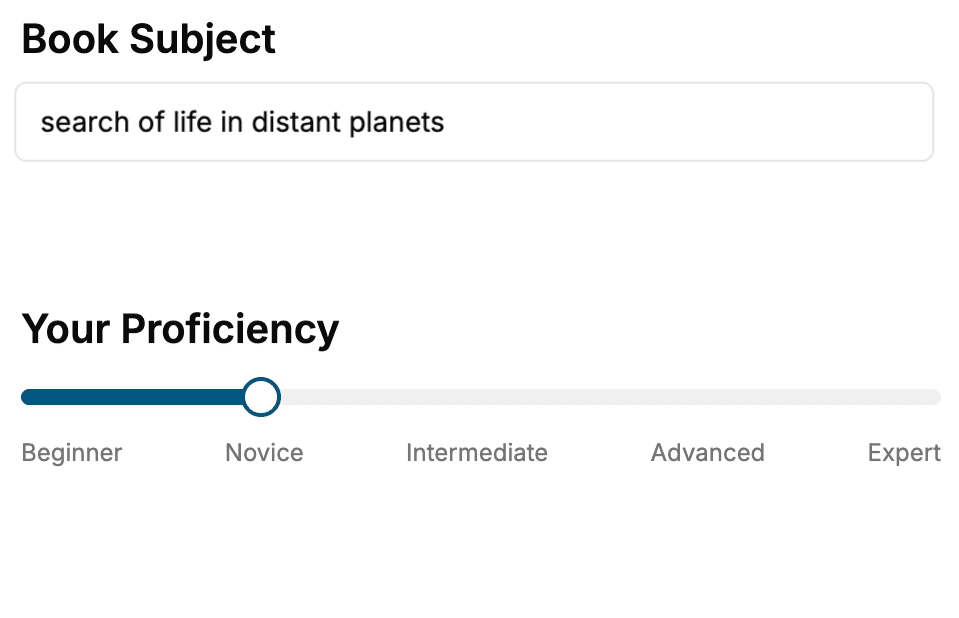
- 1. Select your focus
Select the focus of your Learning Korean book and share your background
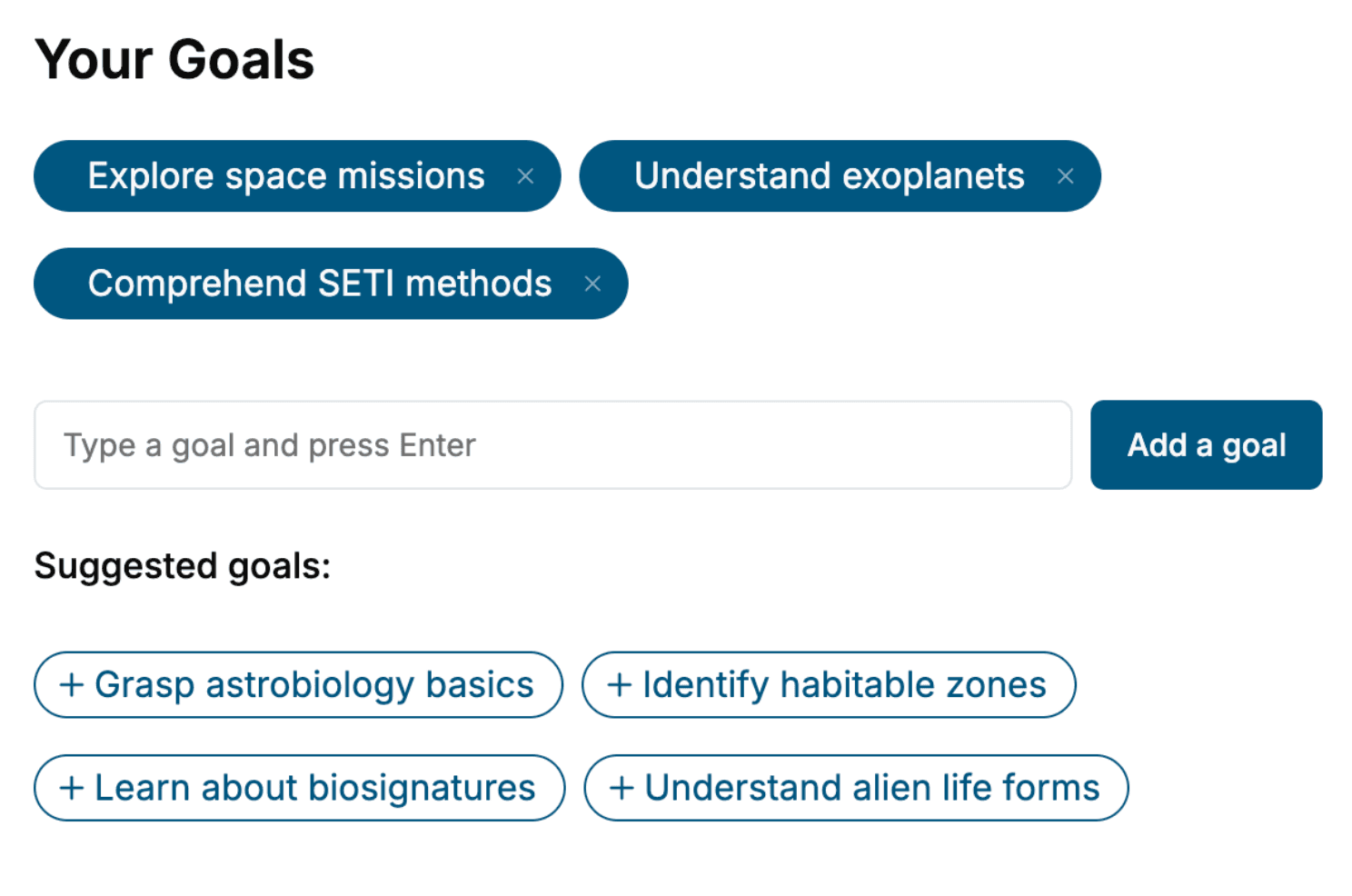
- 2. Personalize your book
Specify your goals and choose sub-topics to include
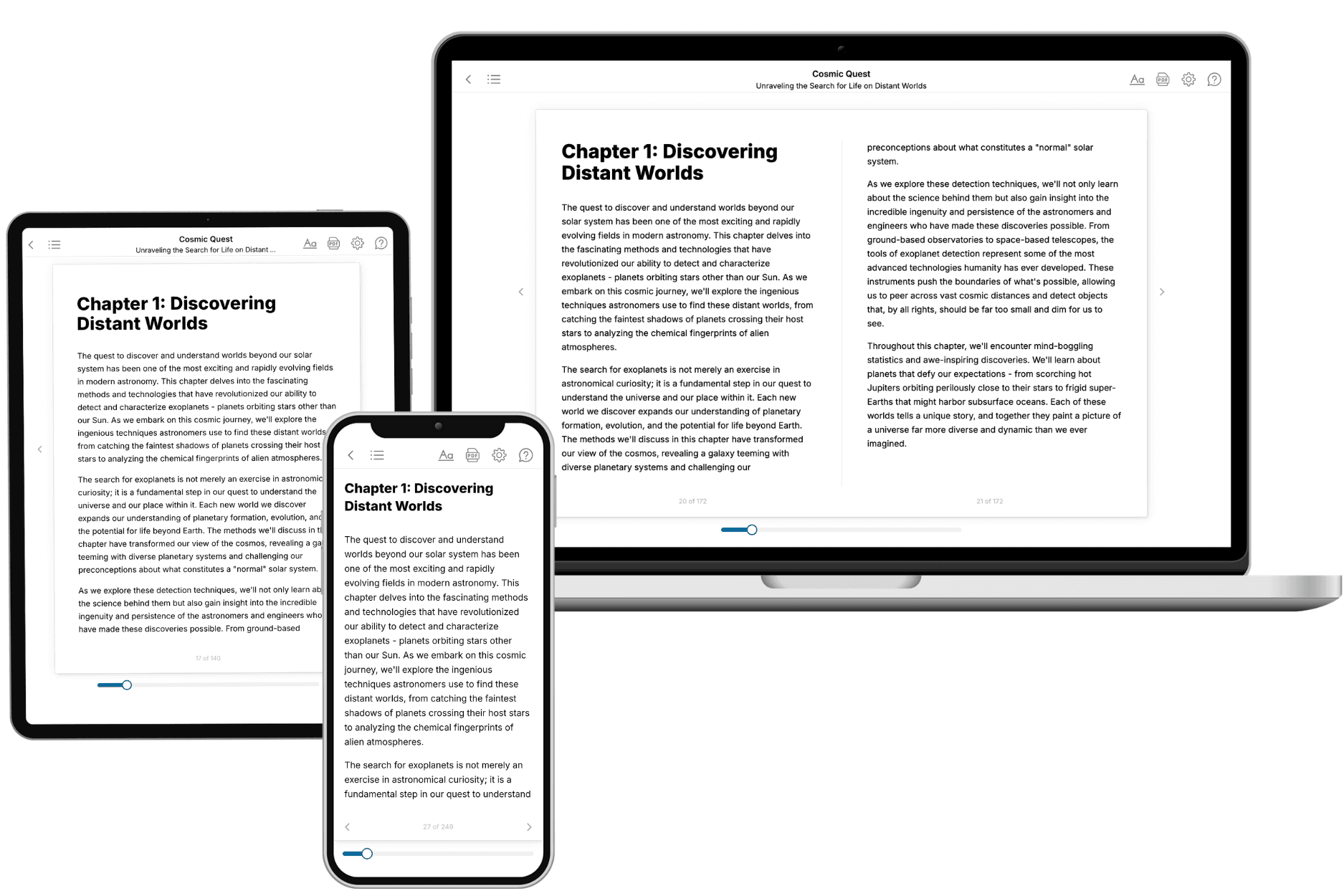
- 3. Get your tailored book
Your book is ready in 10 minutes. Read it online, download as EPUB or PDF, or send to Kindle.
Frequently asked questions
- What is TailoredRead?
TailoredRead creates complete, full-length nonfiction ebooks, written specifically for you. Tell us what you want to learn and why, and TailoredRead writes you a complete ebook on it, with charts, tables, and diagrams throughout. Read it online, on Kindle, or on any e-reader, or download it as a PDF or EPUB. Every book is written fresh the day you order it.
- How is the book tailored to me?
Before anything is written, you answer a few short questions about your goals, your background, and the topics you care about. Your book is then planned around your answers: written at your level, focused on your goals, and covering the topics you chose, instead of the one-size-fits-all book a store sells everyone.
- Will it read like generic AI content?
No. Your book isn't a chat transcript: it's planned chapter by chapter before a single word is written, told in a clear book voice, and explains ideas visually with charts, tables, and diagrams. After writing, every book goes through an editorial pass that polishes chapters so the book reads consistent from start to finish. Judge for yourself: browse thousands of sample books on our Explore Books page.
- How accurate is the content?
Our AI first checks whether your subject needs live research. Niche and fast-moving subjects are researched before writing, and the book plan and chapters are grounded in what it finds. After writing, every book goes through a quality pass that checks its facts and consistency, and researched books list their sources in a Notes section at the back.
- How long is the book?
You choose the length: Comprehensive (250-300 pages), Detailed (150-200 pages), Essential (70-100 pages), or Short (30-50 pages).
- Does the book include visuals?
Yes. Every book includes charts, tables, and diagrams: timelines, checklists, step-by-step guides, decision trees, comparison tables, matrices, and bar charts. A typical book includes dozens of these visual elements.
- Can I read it on Kindle? What formats can I download?
Yes. Every book can be read in our online reader or downloaded as a PDF or EPUB. The EPUB can be opened with Kindle, Apple Books, Kobo, and any e-reader. The Commercial and Author licenses also include an editable Word (DOCX) and Markdown download.
- How much does it cost?
About the price of a regular ebook. The exact price depends on your book's length and complexity, from $2 for the shortest books to $35 for the most comprehensive, and it's shown when you review your book, before you commit to anything. Each book is a one-time purchase, yours to keep, no subscription. Licenses that let you share, teach, or publish your book range from $35.99 to $49.99.
- Can I preview the book before purchasing?
Before you pay, you'll see what your book will cover: the title, a detailed description, the estimated length, and the complete chapter-by-chapter table of contents, so you know what you're getting before you decide. The full text itself is written after you purchase.
- How long does it take to create a book?
About 10 minutes. You can start reading the opening chapters while the rest is still being written.