Subject-Verb Agreement Made Simple
Rules, tricky cases and exercises for confident English sentences
Achieve flawless subject-verb agreement in your English writing and speaking.
269 pages13 chaptersMar 13, 2025Grammar
About this book
"Harmony in Grammar" is your comprehensive guide to mastering this essential aspect of English grammar. You'll learn to identify subjects and verbs with ease, navigate tricky singular and plural agreements, and handle complex sentence structures with confidence. Through clear explanations, practical examples, and targeted exercises, you'll develop an intuitive understanding of subject-verb harmony. By the end of this book, you'll be crafting grammatically correct sentences effortlessly, elevating your English proficiency to new heights. Whether you're writing essays, preparing for exams, or aiming for more polished professional communication, "Harmony in Grammar" will be your trusted companion on the journey to grammatical excellence.
Table of contents
- IntroductionThe Importance of Subject-Verb Agreement, Overview of the Book, How to Use This Guide, Building a Strong Grammar FoundationRead below
- Chapter 1: The Basics of Subject-Verb AgreementDefining the Subject, Understanding Verbs, The Principle of Agreement, Singular vs. Plural: The Basics
- Chapter 2: Identifying the True SubjectSimple Subjects, Compound Subjects, Hidden or Implied Subjects, Subjects in Inverted Sentences
- Chapter 3: Singular and Plural Agreement RulesRegular Nouns, Irregular Nouns, Uncountable Nouns, Collective Nouns
- Chapter 4: Compound Subjects and AgreementSubjects Joined by 'And', Subjects Joined by 'Or' or 'Nor', Mixed Conjunctions, Correlative Conjunctions
- Chapter 5: Indefinite Pronouns and AgreementAlways Singular Indefinite Pronouns, Always Plural Indefinite Pronouns, Singular or Plural Depending on Context, Exercises with Indefinite Pronouns
- Chapter 6: Tricky Subjects and Special CasesEither and Neither, Everyone and Everybody, The Case of 'None', Expressions of Quantity
- Chapter 7: Intervening Phrases and ClausesPrepositional Phrases, Relative Clauses, Parenthetical Expressions, Practice with Intervening Elements
- Chapter 8: Notional Agreement and Collective NounsDefining Notional Agreement, Collective Nouns in Detail, Group as a Unit vs. Individual Members, Practice with Notional Agreement
- Chapter 9: Agreement with Distant SubjectsLong and Complex Sentences, Sentences with Multiple Clauses, When the Subject Comes After the Verb, Exercises on Distant Agreement
- Chapter 10: Verb Forms and Tenses in AgreementPresent Tense Agreement, Past Tense and Perfect Tenses, Progressive Forms, Modal Verbs and Agreement
- Chapter 11: Exceptions and IrregularitiesThere Is/There Are Constructions, Units of Measurement and Time, Titles, Company Names, and Book Titles, Fractions and Percentages
- Chapter 12: Common Mistakes and How to Avoid ThemWhen Subjects and Verbs Are Separated, Errors with Compound Subjects, Mistakes with Indefinite Pronouns, Collective Noun Agreement Errors
- Chapter 13: Practice for MasteryComprehensive Exercises, Real-World Examples and Corrections, Self-Assessment Quiz, Writing Prompts for Application
- ConclusionKey Takeaways, The Importance of Ongoing Practice
- Glossary of Terms
- Appendix: Quick Reference Guide
Introduction
Welcome to "Harmony in Grammar: Mastering Subject-Verb Agreement for Clearer, More Confident English." This book is your comprehensive guide to understanding and mastering one of the most fundamental aspects of English grammar: subject-verb agreement. Whether you're an intermediate English language learner looking to refine your skills or someone who wants to enhance their writing and speaking abilities, this book will provide you with the knowledge and practice you need to achieve grammatical excellence.
Subject-verb agreement is more than just a rule; it's the backbone of clear and effective communication in English. When subjects and verbs agree, your sentences flow smoothly, your meaning is conveyed accurately, and your overall message becomes more powerful. Mastering this aspect of grammar will not only improve your language skills but also boost your confidence in various situations, from academic writing to professional communication.
Throughout this book, you'll discover that subject-verb agreement is both an art and a science. While there are clear rules to follow, there are also nuances and exceptions that require a deeper understanding and sometimes even a bit of intuition. By the time you finish this guide, you'll have developed a keen sense for identifying subjects and verbs, navigating tricky agreements, and crafting sentences that are grammatically sound and stylistically elegant.
This introduction will lay the groundwork for your journey through the intricacies of subject-verb agreement. We'll explore why this grammatical concept is so crucial, provide an overview of what you can expect from this book, and offer guidance on how to make the most of this learning experience. Additionally, we'll discuss the importance of building a strong grammar foundation, which will serve as the bedrock for your mastery of subject-verb agreement.
So, let's embark on this grammatical adventure together. By the end of this book, you'll have the tools and confidence to tackle any subject-verb agreement challenge that comes your way, elevating your English proficiency to new heights.
The Importance of Subject-Verb Agreement
Subject-verb agreement is a cornerstone of English grammar, playing a crucial role in effective communication. At its core, this grammatical principle ensures that the subject of a sentence matches the verb in number and person. While this may sound simple, mastering subject-verb agreement is essential for several reasons that extend far beyond mere grammatical correctness.
First and foremost, proper subject-verb agreement enhances clarity in your writing and speech. When subjects and verbs agree, the relationship between the doer of an action and the action itself becomes crystal clear. This clarity prevents misunderstandings and ensures that your message is conveyed exactly as you intend. Consider the difference between "The team is practicing today" and "The team are practicing today." The first sentence, with correct agreement, clearly indicates that the team is acting as a single unit, while the second might suggest individual members acting separately, potentially causing confusion.
Moreover, correct subject-verb agreement lends credibility to your communication. In academic, professional, and even social contexts, the ability to consistently apply proper grammar demonstrates attention to detail and a high level of language proficiency. This can significantly impact how your ideas are received and evaluated. For instance, a well-written essay or report with flawless subject-verb agreement is more likely to be taken seriously and earn higher marks or recognition compared to one riddled with agreement errors.
Subject-verb agreement also plays a vital role in maintaining the rhythm and flow of your sentences. When agreement is correct, readers or listeners can process your words smoothly, without the jarring interruptions that grammatical errors can cause. This smooth flow is particularly important in longer, more complex sentences where maintaining clarity and coherence can be challenging. By mastering subject-verb agreement, you'll be able to construct sophisticated sentences that are both grammatically correct and easy to follow.
Furthermore, understanding subject-verb agreement deepens your overall comprehension of English sentence structure. As you learn to identify subjects and match them with appropriate verbs, you'll develop a keener sense of how different elements in a sentence relate to each other. This understanding extends beyond just subjects and verbs, helping you grasp other grammatical concepts more easily and improving your overall language skills.
In the realm of standardized testing and language proficiency exams, subject-verb agreement is often a key area of assessment. Many English language tests, such as TOEFL, IELTS, and various academic entrance exams, include questions that specifically target this aspect of grammar. By mastering subject-verb agreement, you're not only improving your general language skills but also preparing yourself for success in these important evaluations.
It's worth noting that subject-verb agreement can vary subtly across different English dialects and in formal versus informal contexts. Understanding these nuances allows you to adapt your language use appropriately, whether you're writing an academic paper, composing a business email, or engaging in casual conversation. This flexibility is a hallmark of advanced language proficiency and will serve you well in diverse communication scenarios.
Lastly, mastering subject-verb agreement opens the door to more advanced grammatical concepts. Many complex grammatical structures in English build upon the foundation of subject-verb agreement. As you progress in your language journey, you'll find that a solid grasp of this fundamental principle makes it easier to tackle more challenging aspects of English grammar, such as conditional sentences, reported speech, and advanced verb tenses.
In essence, subject-verb agreement is not just a set of rules to memorize; it's a key that unlocks clearer, more effective, and more sophisticated communication in English. By dedicating time and effort to mastering this crucial aspect of grammar, you're investing in your overall language proficiency and setting yourself up for success in various academic, professional, and personal endeavors. As we delve deeper into the intricacies of subject-verb agreement throughout this book, keep in mind the far-reaching impact this skill will have on your English language journey.
Overview of the Book
"Harmony in Grammar: Mastering Subject-Verb Agreement for Clearer, More Confident English" is designed to be your comprehensive guide to understanding and applying subject-verb agreement in English. This book is structured to take you on a logical journey from the basics to more complex aspects of this grammatical concept, ensuring that you build a solid foundation before tackling more challenging topics. Let's take a closer look at what you can expect from each chapter and how this book will help you achieve mastery in subject-verb agreement.
We begin with Chapter 1, "The Basics of Subject-Verb Agreement," which lays the groundwork for your understanding. Here, you'll learn to define subjects and verbs accurately, understand the fundamental principle of agreement, and distinguish between singular and plural forms. This chapter ensures that you have a strong grasp of the essentials before moving on to more complex topics.
Chapter 2, "Identifying the True Subject," delves into the sometimes tricky task of pinpointing the actual subject in a sentence. You'll explore simple and compound subjects, learn to recognize hidden or implied subjects, and navigate the challenges posed by inverted sentences. This chapter is crucial for developing your ability to identify subjects correctly, a skill that's fundamental to achieving proper agreement.
In Chapter 3, "Singular and Plural Agreement Rules," we expand on the basics by examining the specific rules governing agreement with various types of nouns. You'll learn about regular and irregular nouns, uncountable nouns, and the often-confusing category of collective nouns. This chapter will sharpen your ability to determine whether a subject requires a singular or plural verb form.
Chapter 4, "Compound Subjects and Agreement," tackles the complexities that arise when sentences have multiple subjects. You'll explore how conjunctions like "and," "or," and "nor" affect agreement, and learn to handle mixed and correlative conjunctions. This chapter is essential for mastering agreement in more complex sentence structures.
Indefinite pronouns present unique challenges in subject-verb agreement, which we address in Chapter 5, "Indefinite Pronouns and Agreement." You'll learn which pronouns are always singular, which are always plural, and which can be either depending on context. The exercises in this chapter will help you internalize these rules and apply them confidently.
Chapter 6, "Tricky Subjects and Special Cases," delves into some of the more challenging aspects of subject-verb agreement. You'll explore the nuances of words like "either," "neither," "everyone," and "none," as well as how to handle expressions of quantity. This chapter will help you navigate some of the most common pitfalls in subject-verb agreement.
In Chapter 7, "Intervening Phrases and Clauses," we address how to maintain proper agreement when other elements come between the subject and verb. You'll learn about prepositional phrases, relative clauses, and parenthetical expressions, and practice identifying the true subject even when it's not immediately adjacent to the verb.
Chapter 8, "Notional Agreement and Collective Nouns," introduces the concept of agreement based on meaning rather than strict grammatical rules. You'll explore how collective nouns can take singular or plural verbs depending on context and learn to distinguish between a group acting as a unit and its individual members.
Chapter 9, "Agreement with Distant Subjects," tackles the challenges posed by long and complex sentences. You'll learn strategies for maintaining proper agreement even when the subject and verb are far apart or when the subject comes after the verb. This chapter is particularly useful for improving your skills in academic and professional writing.
In Chapter 10, "Verb Forms and Tenses in Agreement," we explore how different verb tenses and forms interact with subject-verb agreement. You'll learn about agreement in present and past tenses, perfect tenses, progressive forms, and with modal verbs. This chapter will help you maintain proper agreement across various time frames and verb structures.
Chapter 11, "Exceptions and Irregularities," covers those special cases that don't seem to follow the usual rules. You'll learn about constructions like "there is/there are," how to handle units of measurement and time, and the unique rules for titles, company names, and book titles. This chapter will give you the tools to handle even the most unusual agreement situations.
In Chapter 12, "Common Mistakes and How to Avoid Them," we focus on the errors that even advanced English users often make. By understanding these common pitfalls, you'll be better equipped to catch and correct them in your own writing and speech.
Finally, Chapter 13, "Practice for Mastery," provides a comprehensive set of exercises, real-world examples, and writing prompts to help you solidify your skills. This chapter is designed to give you ample opportunity to apply what you've learned throughout the book in various contexts.
Throughout the book, you'll find clear explanations, numerous examples, and targeted exercises to reinforce your learning. We've also included tips and tricks to help you remember key concepts and navigate tricky situations. By the time you reach the conclusion, you'll have a robust understanding of subject-verb agreement and the confidence to apply it in your own communication.
How to Use This Guide
To get the most out of "Harmony in Grammar: Mastering Subject-Verb Agreement for Clearer, More Confident English," it's important to approach your learning strategically. This guide is designed to be both comprehensive and flexible, allowing you to tailor your study approach to your individual needs and learning style. Here are some suggestions on how to use this book effectively to maximize your mastery of subject-verb agreement.
First and foremost, consider your current level of understanding. If you're relatively new to the concept of subject-verb agreement, it's recommended that you work through the book sequentially, starting from Chapter 1 and progressing through each chapter in order. This approach will ensure that you build a strong foundation before tackling more complex topics. Each chapter builds upon the knowledge and skills developed in previous sections, so following the book's structure will provide a logical progression in your learning.
However, if you already have a solid grasp of basic subject-verb agreement and are looking to refine your skills or address specific challenges, feel free to jump to the chapters that are most relevant to your needs. The table of contents and chapter summaries will help you identify which sections will be most beneficial for your particular focus areas. For instance, if you struggle with collective nouns, you might want to pay special attention to Chapter 8 on notional agreement.
As you work through each chapter, take an active approach to your learning. Don't just read passively; engage with the material. Take notes, highlight key points, and write down any questions or areas of confusion that arise. This active engagement will help reinforce your understanding and make it easier to review important concepts later.
Make the most of the examples provided throughout the book. These are carefully chosen to illustrate specific points and common challenges in subject-verb agreement. Try to understand not just the rule being demonstrated, but also why the agreement works the way it does in each example. Can you think of similar sentences? Try creating your own examples to test your understanding.
The exercises at the end of each chapter are crucial for cementing your knowledge. Don't skip them! These exercises are designed to test your understanding and application of the concepts covered in the chapter. Attempt them without referring back to the chapter content first. This will help you identify areas where you might need more practice. After completing the exercises, review your answers and go back to the relevant sections of the chapter to clarify any points you found challenging.
Consider creating flashcards for key rules and tricky cases. This can be particularly helpful for memorizing irregular forms or exceptions to general rules. Review these flashcards regularly, especially focusing on areas where you tend to make mistakes.
As you progress through the book, periodically review earlier chapters. Subject-verb agreement involves many interconnected concepts, and revisiting earlier material can help reinforce your understanding and reveal new insights as you become more advanced.
Don't hesitate to use the glossary provided at the end of the book. Familiarizing yourself with grammatical terms will not only help you understand the explanations in this book but will also be beneficial for your overall English language development.
Practice applying what you learn in your everyday writing and speaking. Try to consciously think about subject-verb agreement when composing emails, writing reports, or even in casual conversations. The more you actively apply these concepts, the more natural and intuitive they will become.
Consider forming a study group or finding a language exchange partner to discuss the concepts in the book. Explaining subject-verb agreement rules to others can significantly enhance your own understanding. Plus, hearing how others interpret and apply these rules can provide valuable new perspectives.
Make use of the real-world examples and writing prompts provided in Chapter 13. These will help you bridge the gap between theoretical knowledge and practical application. Try to incorporate a variety of sentence structures and subject types in your responses to these prompts.
Finally, be patient with yourself. Mastering subject-verb agreement is a process that takes time and practice. Celebrate your progress, no matter how small, and don't get discouraged by mistakes. Each error is an opportunity to learn and improve.
Remember, the goal of this book is not just to help you avoid errors, but to develop a deep understanding of how subject-verb agreement contributes to clear and effective communication in English. By approaching this guide with dedication and an active learning mindset, you'll be well on your way to achieving grammatical harmony in your English usage.
Building a Strong Grammar Foundation
Before delving deep into the intricacies of subject-verb agreement, it's crucial to establish a solid foundation in English grammar. This foundation will not only facilitate your understanding of subject-verb agreement but also enhance your overall language skills. Let's explore the key components of a strong grammar foundation and how they relate to mastering subject-verb agreement.
First and foremost, a thorough understanding of parts of speech is essential. Knowing how to identify and use nouns, pronouns, verbs, adjectives, adverbs, prepositions, conjunctions, and interjections forms the bedrock of English grammar. For subject-verb agreement, nouns and pronouns (which often serve as subjects) and verbs are particularly crucial. Being able to quickly and accurately identify these elements in a sentence is the first step towards ensuring proper agreement.
Equally important is a solid grasp of sentence structure. Understanding the basic components of a sentence - subject, predicate, and object - is fundamental. Recognizing how these elements work together will help you identify the subject and verb in even the most complex sentences. Moreover, familiarity with different types of sentences (simple, compound, complex, and compound-complex) will prepare you for the various scenarios in which subject-verb agreement can be challenging.
Verb tenses form another critical aspect of your grammar foundation. While subject-verb agreement primarily concerns itself with the number (singular or plural) of the subject and verb, understanding how verbs change across different tenses is crucial. This knowledge becomes particularly relevant when dealing with perfect tenses, progressive forms, and modal verbs, all of which have unique considerations for subject-verb agreement.
A strong foundation also includes an understanding of number in English grammar. This goes beyond simply recognizing singular and plural nouns. It involves understanding how number applies to pronouns, how collective nouns can be treated as singular or plural depending on context, and how indefinite pronouns relate to number. This nuanced understanding of number is essential for mastering the more complex aspects of subject-verb agreement.
Familiarity with English syntax, or the arrangement of words and phrases to create well-formed sentences, is another key component. This includes understanding how word order can change (such as in questions or inverted sentences) and how this might affect subject-verb agreement. It also involves recognizing how modifying phrases and clauses can separate subjects from verbs, a common source of agreement errors.
An often-overlooked aspect of grammar foundation is punctuation. While it might seem unrelated to subject-verb agreement, proper punctuation can clarify sentence structure and help identify subjects and verbs. For instance, understanding how commas are used with non-essential clauses can prevent confusion when identifying the true subject of a sentence.
Building a strong grammar foundation also involves developing an ear for correct English usage. This comes with exposure to well-written texts and spoken English. Reading widely, listening to podcasts or news broadcasts, and engaging in conversations with proficient English speakers can all contribute to developing this intuitive sense of what "sounds right" in English.
It's also beneficial to understand the concept of grammatical agreement beyond just subjects and verbs. This includes agreement between pronouns and their antecedents, and between adjectives and the nouns they modify. Recognizing that agreement is a broader concept in English grammar can help you approach subject-verb agreement with a more comprehensive understanding.
Lastly, developing good habits of self-correction and proofreading is an essential part of your grammar foundation. Learning to critically examine your own writing, identify potential errors, and make corrections is a skill that will serve you well not just in mastering subject-verb agreement, but in all aspects of your English language use.
As you work through this book, you'll find that many of these foundational elements come into play. The stronger your general grammar foundation, the more easily you'll grasp the nuances of subject-verb agreement. Conversely, as you deepen your understanding of subject-verb agreement, you'll likely find that your overall grammar skills improve as well.
Remember, building a strong grammar foundation is an ongoing process. Even as you focus on mastering subject-verb agreement, continue to work on other aspects of your English grammar. Read grammar guides, practice with online resources, and most importantly, apply what you learn in your everyday English use. With a solid foundation and dedicated practice, you'll not only master subject-verb agreement but also elevate your overall English proficiency to new heights.
This is the end of the free sample. The full book has 13 chapters.
Want this book written for you?
Tell us your goals and background, and get your own version of this book, tailored by AI to you.


Benefits of AI-tailored books
- Read one book, not ten:
- all the Grammar knowledge you need, gathered into a single book.
- Save days of learning:
- tell us your goals, choose your topics, and the whole book is built around them.
- Learn effortlessly:
- Grammar book written for your specific background and expertise.
- Understand at a glance:
- includes charts, tables, timelines, checklists, decision trees, and more.
- Stay current:
- written the day you order it, not years ago.
- Trust what you read:
- every book is checked for accuracy, with real research when your subject needs it.
Create your unique book in 3 steps
- 1. Select your focus
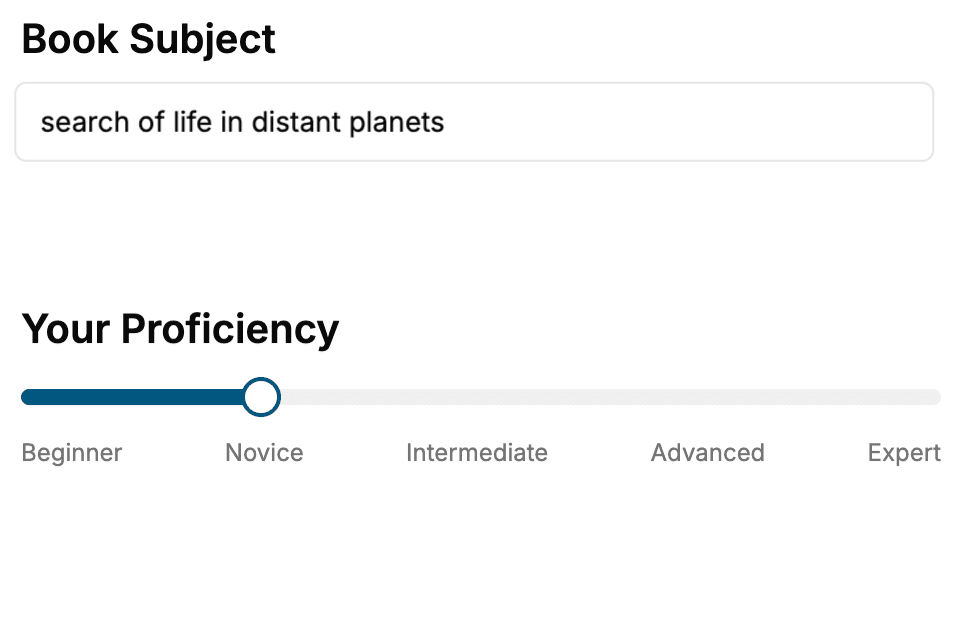
Select the focus of your Grammar book and share your background
- 2. Personalize your book
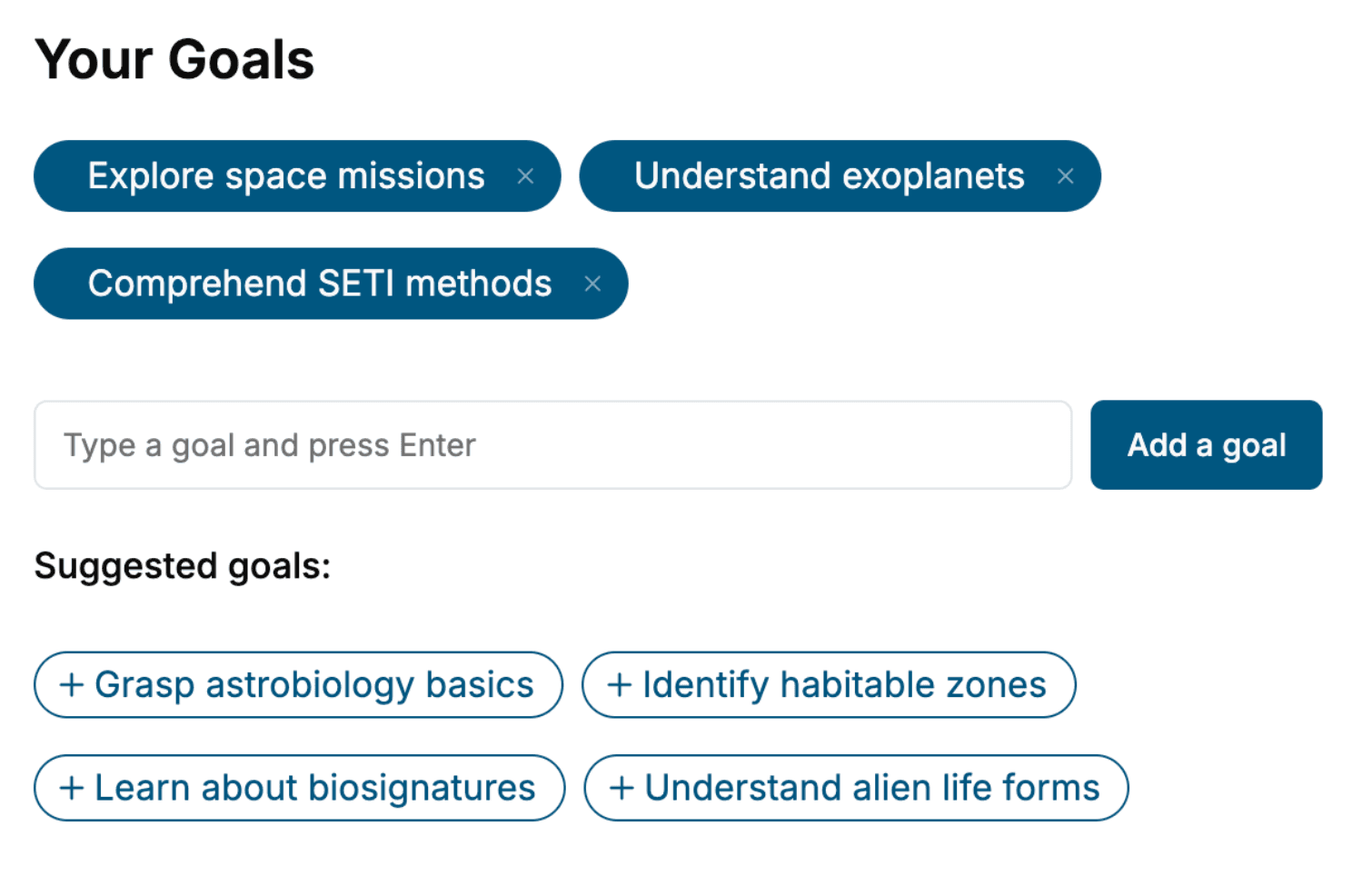
Specify your goals and choose sub-topics to include
- 3. Get your tailored book
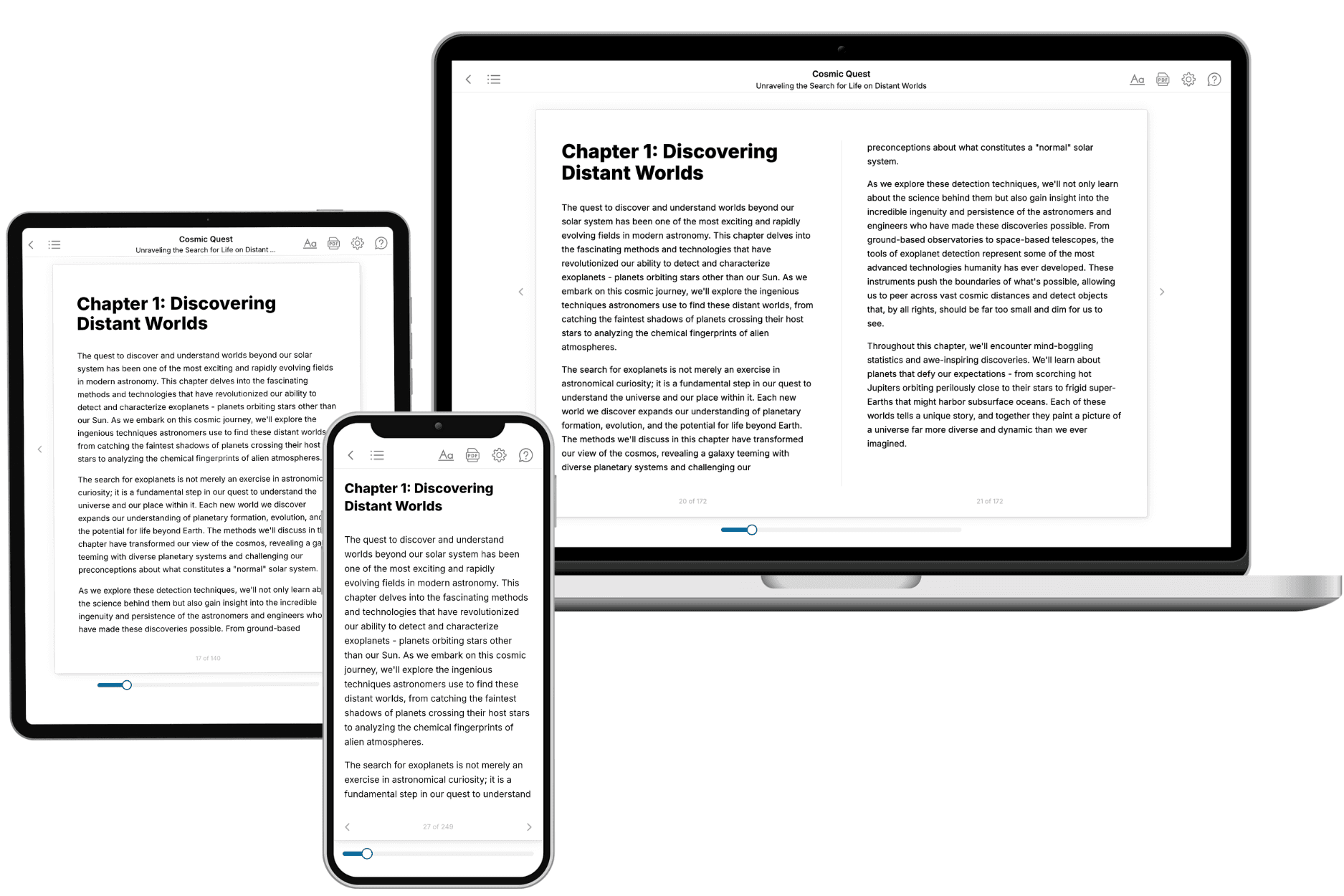
Your book is ready in 10 minutes. Read it online, download as EPUB or PDF, or send to Kindle.
Frequently asked questions
- What is TailoredRead?
TailoredRead creates complete, full-length nonfiction ebooks, written specifically for you. Tell us what you want to learn and why, and TailoredRead writes you a complete ebook on it, with charts, tables, and diagrams throughout. Read it online, on Kindle, or on any e-reader, or download it as a PDF or EPUB. Every book is written fresh the day you order it.
- How is the book tailored to me?
Before anything is written, you answer a few short questions about your goals, your background, and the topics you care about. Your book is then planned around your answers: written at your level, focused on your goals, and covering the topics you chose, instead of the one-size-fits-all book a store sells everyone.
- Will it read like generic AI content?
No. Your book isn't a chat transcript: it's planned chapter by chapter before a single word is written, told in a clear book voice, and explains ideas visually with charts, tables, and diagrams. After writing, every book goes through an editorial pass that polishes chapters so the book reads consistent from start to finish. Judge for yourself: browse thousands of sample books on our Explore Books page.
- How accurate is the content?
Our AI first checks whether your subject needs live research. Niche and fast-moving subjects are researched before writing, and the book plan and chapters are grounded in what it finds. After writing, every book goes through a quality pass that checks its facts and consistency, and researched books list their sources in a Notes section at the back.
- How long is the book?
You choose the length: Comprehensive (250-300 pages), Detailed (150-200 pages), Essential (70-100 pages), or Short (30-50 pages).
- Does the book include visuals?
Yes. Every book includes charts, tables, and diagrams: timelines, checklists, step-by-step guides, decision trees, comparison tables, matrices, and bar charts. A typical book includes dozens of these visual elements.
- Can I read it on Kindle? What formats can I download?
Yes. Every book can be read in our online reader or downloaded as a PDF or EPUB. The EPUB can be opened with Kindle, Apple Books, Kobo, and any e-reader. The Commercial and Author licenses also include an editable Word (DOCX) and Markdown download.
- How much does it cost?
About the price of a regular ebook. The exact price depends on your book's length and complexity, from $2 for the shortest books to $35 for the most comprehensive, and it's shown when you review your book, before you commit to anything. Each book is a one-time purchase, yours to keep, no subscription. Licenses that let you share, teach, or publish your book range from $35.99 to $49.99.
- Can I preview the book before purchasing?
Before you pay, you'll see what your book will cover: the title, a detailed description, the estimated length, and the complete chapter-by-chapter table of contents, so you know what you're getting before you decide. The full text itself is written after you purchase.
- How long does it take to create a book?
About 10 minutes. You can start reading the opening chapters while the rest is still being written.