HIIT Soccer
High-Intensity Interval Training Strategies for Modern Soccer Coaching
You're about to discover how to revolutionize your soccer training by harnessing the power of high-intensity interval training.
191 pages9 chaptersEnglishFeb 19, 2026Soccer
About this book
This comprehensive guide walks you through the science behind HIIT, showing you exactly why it works so effectively for soccer players and how to implement it strategically within your coaching program. You'll learn to design sport-specific drills that develop explosive power, aerobic capacity, and tactical intelligence simultaneously. From understanding work-to-rest ratios and periodization principles to managing player recovery and preventing overtraining, you'll gain the knowledge to transform your team's conditioning. Whether you're coaching youth players, competitive teams, or elite athletes, you'll discover how to scale HIIT appropriately for your context. By the end, you'll have a complete framework for integrating HIIT into your training calendar, monitoring player progress, and achieving measurable improvements in match performance.
Table of contents
- IntroductionWhy HIIT Matters in Modern Soccer, How to Use This Book, What You'll Learn and AchieveRead below
- Chapter 1: The Science of HIIT in SoccerUnderstanding Aerobic and Anaerobic Energy Systems, HIIT vs. Traditional Steady-State Training, Physiological Adaptations from HIIT, How HIIT Addresses Soccer's Unique Demands
- Chapter 2: Foundational HIIT PrinciplesWork-to-Rest Ratios and Their Impact, Measuring and Monitoring Intensity, Active vs. Passive Recovery Between Intervals, Progressive Overload in HIIT Programming
- Chapter 3: Designing Ball-Involved HIIT DrillsCreating Sport-Specific HIIT Exercises, Small-Sided Games as HIIT Tools, Technical Conditioning Drills, Position-Specific HIIT Variations
- Chapter 4: Periodization and Season PlanningMacrocycle Planning and HIIT Integration, Mesocycle Structure and Progression, Microcycle Management and Weekly Balance, Adjusting HIIT Throughout the Season
- Chapter 5: Age-Specific and Level-Specific ProgrammingHIIT for Youth Players: Safety and Effectiveness, Adolescent Athletes and HIIT Adaptation, Elite-Level HIIT Programming, Scaling HIIT for Different Team Resources
- Chapter 6: Recovery and Injury PreventionEssential Recovery Protocols After HIIT, Recognizing and Preventing Overtraining, Managing Injury Risk in HIIT Programs, Sleep, Nutrition, and Recovery Optimization
- Chapter 7: Monitoring and AssessmentFitness Testing Protocols for HIIT, Key Performance Metrics to Track, Analyzing Data and Adjusting Programming, Tracking Individual Player Response
- Chapter 8: Integrating HIIT with Strength and FlexibilityComplementary Strength Training with HIIT, Flexibility and Mobility Integration, Balancing Concurrent Training Demands
- Chapter 9: Practical HIIT Workout TemplatesBeginner-Level HIIT Workouts, Intermediate-Level HIIT Workouts, Advanced-Level HIIT Workouts, In-Season HIIT Maintenance Workouts
- ConclusionYour Implementation Roadmap, Continuous Improvement and Adaptation
- Appendix: Quick Reference GuidesHIIT Terminology and Definitions, Complete Drill Library, Assessment Tools and Forms
Introduction
Soccer has changed dramatically over the past two decades. The modern game demands more from players than ever before: faster sprints, quicker recoveries, sharper decision-making under fatigue, and the ability to sustain high-intensity efforts across 90 minutes or more. If you've been coaching for any length of time, you've probably felt the gap between what traditional training methods produce and what the game now requires. That gap is real, and it's growing. The good news is that a well-established, research-backed solution exists, and it's already being used by some of the world's top clubs to close it.
High-intensity interval training, or HIIT, is not a new concept. Athletes in track, cycling, and swimming have used interval-based methods for over a century. But the application of HIIT specifically to soccer, with its unique blend of aerobic endurance, explosive power, and technical skill, has matured significantly in recent years. Research from sports science institutions across Europe, North America, and Australia has produced a clear picture: structured HIIT programs improve soccer-relevant fitness markers faster and more efficiently than traditional steady-state conditioning.[1] That's a compelling reason to pay attention.
This book was written for coaches who already understand the basics of training but want a deeper, more practical framework for applying HIIT in a soccer context. You don't need a sports science degree to benefit from what's here. What you do need is a willingness to think carefully about how you structure training time, how you monitor your players, and how you balance intensity with recovery. Whether you're coaching a youth academy, a competitive amateur side, or a semi-professional team, the principles in this book apply. The specifics will vary, but the foundation is the same.
Throughout these chapters, you'll find a consistent emphasis on practicality. Every concept is grounded in research, but every concept is also translated into something you can actually use on the training pitch. You'll find drill templates, programming frameworks, monitoring tools, and real-world examples drawn from soccer coaching practice. The goal isn't to overwhelm you with theory. The goal is to give you a complete, usable system that you can begin implementing immediately and refine over time as you learn what works best for your specific group of players.
Why HIIT Matters in Modern Soccer
To understand why HIIT matters, it helps to look at what the modern game actually demands from players physically. GPS tracking data from professional matches consistently shows that outfield players cover between 10 and 13 kilometers per game, with a significant portion of that distance covered at high speed.[2] More importantly, elite players perform anywhere from 150 to 250 high-intensity actions per match, including sprints, jumps, tackles, and rapid direction changes. These actions are brief, explosive, and repeated throughout the game with incomplete recovery between them.
Traditional steady-state conditioning, such as long-distance runs at a moderate pace, does build aerobic base fitness. But it doesn't replicate the intermittent, high-intensity nature of match play. A player who can comfortably run 8 kilometers at a steady pace may still struggle to maintain sprint quality in the 80th minute of a competitive match. The physiological demands of those final minutes are fundamentally different from what steady-state training prepares the body for. HIIT, by contrast, trains the body to perform, recover, and perform again under conditions that closely mirror the game itself.
The research supporting HIIT in soccer is substantial and growing. A landmark study by Helgerud and colleagues found that soccer players who completed an 8-week HIIT program improved their maximal oxygen uptake (VO2max) by 10.8%, increased their distance covered in matches by 20%, and nearly doubled the number of sprints they performed per game compared to a control group.[3] These are not marginal gains. They represent a meaningful transformation in match performance, achieved through a relatively short training intervention.
Beyond the physiological benefits, HIIT offers a practical advantage that matters enormously to coaches: efficiency. Most teams have limited training time. Fitting conditioning, technical work, tactical sessions, and recovery into a weekly schedule is a constant challenge. HIIT allows you to achieve significant conditioning gains in shorter sessions, often 20 to 30 minutes of actual work, which frees up time for other training priorities. When HIIT is delivered through ball-involved drills and small-sided games, it simultaneously develops fitness and technical-tactical skills, making every training minute count twice.
The modern game has also become more positionally demanding. Central midfielders cover the most ground, but forwards and defenders face their own specific high-intensity challenges. A center back who can't recover quickly after a sprint to intercept a through ball is a liability. A winger who loses sprint quality after the 60-minute mark becomes predictable and easy to defend. HIIT can be tailored to address these position-specific demands, something that generic conditioning programs simply cannot do as effectively.
It's also worth acknowledging what HIIT is not. It's not a magic solution that replaces all other forms of training. It's not appropriate at maximum intensity every session, and it's not suitable for every player at every point in the season. Used intelligently, with proper periodization and recovery management, HIIT is one of the most powerful tools available to a soccer coach. Used carelessly, it can lead to overtraining, injury, and burnout. This book will help you use it intelligently.
Key insight: The average soccer player performs a high-intensity action every 30 to 90 seconds during a match. HIIT trains the body to handle exactly this kind of repeated, intermittent stress, making it the most sport-specific conditioning method available to soccer coaches.
One more reason HIIT matters in modern soccer is player engagement. Long, repetitive conditioning runs are notoriously unpopular with players, and low motivation during training translates directly into reduced effort and adaptation. HIIT sessions, especially those built around competitive small-sided games and ball work, tend to generate significantly higher player engagement. When players are competing, problem-solving, and working with the ball, they push harder without being told to. That intrinsic motivation is a training resource in itself, and smart coaches know how to harness it.
How to Use This Book
This book is designed to be both a learning resource and a practical reference guide. You can read it cover to cover to build a comprehensive understanding of HIIT in soccer, or you can navigate directly to the chapters most relevant to your current coaching challenges. Both approaches work. The chapters are structured to build on each other logically, but each one also stands on its own as a self-contained resource.
Here's a quick overview of how the content is organized so you can find what you need quickly:
- Chapters 1 and 2 cover the science and foundational principles of HIIT. If you want to understand why the methods work before you apply them, start here. If you're already confident in the theory, you can skim these and return to them as reference material.
- Chapter 3 gets into drill design, including ball-involved HIIT exercises, small-sided games, and position-specific variations. This is where the theory becomes practical on-pitch content.
- Chapter 4 addresses periodization and season planning, showing you how to integrate HIIT across a full training calendar without overloading players.
- Chapter 5 covers age-specific and level-specific programming, which is essential if you're working with youth players or adapting HIIT for teams with limited resources.
- Chapters 6 and 7 focus on recovery, injury prevention, and monitoring. These chapters are critical for sustainable HIIT implementation and are often undervalued by coaches who focus only on the training stimulus.
- Chapter 8 explores how to integrate HIIT with strength and flexibility work to create a complete athletic development program.
- Chapter 9 provides ready-to-use workout templates at beginner, intermediate, and advanced levels, including in-season maintenance sessions.
- The Appendix contains quick-reference guides, a complete drill library, and assessment tools you can use immediately.
If you're new to HIIT programming, the recommended path is to read Chapters 1 through 4 in sequence before jumping into the drill content. This will give you the conceptual framework to make good decisions when you're adapting drills to your specific context. If you're an experienced coach who already understands interval training principles, you might start with Chapter 3 and use the earlier chapters as reference material when specific questions arise.
Throughout the book, you'll find practical tools embedded in the text. These include drill diagrams described in detail, programming templates, monitoring checklists, and decision frameworks for adjusting training loads. Don't skip these. They represent the most immediately actionable content in the book, and they're designed to be used directly in your coaching practice, not just read and forgotten.
One important note about context: the examples and recommendations in this book draw from a wide range of soccer environments, from youth academies to semi-professional clubs. No single recommendation will be perfectly suited to every coaching context. You'll need to apply judgment when adapting these frameworks to your specific situation. The book will help you develop that judgment by explaining the reasoning behind each recommendation, not just the recommendation itself. When you understand why something works, you can adapt it intelligently rather than following it blindly.
Finally, treat this book as a starting point rather than a final word. Sports science continues to evolve, and new research on HIIT in team sports is published regularly. The principles here are grounded in well-established evidence, but the field is dynamic. Staying curious, reading new research, and experimenting thoughtfully with your own players will always be the most important habits a coach can develop. This book gives you a strong foundation to build on.
Practical tip: Keep a coaching journal as you work through this book. Note which concepts resonate most with your current challenges, which drills you want to try first, and what questions come up as you read. This active engagement will accelerate how quickly you can apply what you're learning.
The Appendix at the back of the book deserves special mention. It's not an afterthought. The quick-reference guides, drill library, and assessment forms there are designed to be printed out and used on the training pitch. Many coaches find it useful to bookmark the Appendix early and refer to it frequently as they work through the main chapters. The terminology guide in particular will be helpful if you encounter unfamiliar terms in the early chapters.
What You'll Learn and Achieve
By the time you finish this book, you'll have a fundamentally different relationship with conditioning in your coaching practice. You'll move from thinking about fitness as a separate component of training to seeing it as something that can be developed simultaneously with technical and tactical skills. That shift in perspective alone will change how you design sessions and use your training time.
Here's a concrete picture of what you'll be able to do after working through this material:
- Explain the physiological reasons why HIIT produces superior results for soccer players compared to traditional steady-state conditioning
- Design HIIT sessions with appropriate work-to-rest ratios based on the specific fitness goals and player profiles you're working with
- Create ball-involved HIIT drills that develop physical conditioning and technical-tactical skills at the same time
- Build a periodized training calendar that integrates HIIT appropriately across pre-season, in-season, and off-season phases
- Adapt HIIT programming for different age groups, from youth players to senior athletes, with appropriate safety considerations
- Implement recovery protocols that allow players to absorb training adaptations without accumulating excessive fatigue
- Recognize early signs of overtraining and adjust programming before performance declines or injuries occur
- Use fitness testing and performance metrics to track player progress and make data-informed programming decisions
- Integrate HIIT with complementary strength and flexibility work to build complete, resilient athletes
These outcomes are achievable regardless of your current level of sports science knowledge. The book builds concepts progressively, starting with the fundamentals and moving toward more sophisticated applications. If some of the early science chapters feel review-level for you, that's fine. Move through them quickly and use the later chapters to deepen your practical skills. If the science is new territory, take your time with Chapters 1 and 2. The investment will pay off when you're making programming decisions later.
It's also worth being honest about what this book won't do. It won't give you a single, universal training program that works perfectly for every team in every context. Soccer coaching doesn't work that way, and any resource that claims to offer that is oversimplifying. What this book will give you is a framework for thinking about HIIT programming, a library of tools and methods, and the understanding to combine them intelligently for your specific situation. The application is yours to make.
Consider what a typical coaching scenario might look like after applying the principles here. Imagine you're preparing for a pre-season with a competitive amateur team. You have six weeks before your first competitive match, training four days per week. Using the periodization framework from Chapter 4, you'd structure the first two weeks around building aerobic base with moderate-intensity intervals, progress to higher-intensity work in weeks three and four, and then taper intensity in weeks five and six while maintaining volume. You'd use the small-sided game formats from Chapter 3 to deliver most of this conditioning with the ball, keeping players engaged and developing tactical patterns simultaneously. By match day, your players would be fitter, sharper, and more confident than they'd be after six weeks of traditional pre-season running.
That scenario is not hypothetical. It's the kind of outcome that coaches who apply structured HIIT programming consistently report. Research supports it, and practical experience from clubs at all levels confirms it. The methods work when they're applied thoughtfully, and this book will show you exactly how to apply them thoughtfully.
One of the most valuable things you'll develop through this book is the ability to individualize training. Not every player on your squad has the same fitness level, the same recovery capacity, or the same positional demands. Chapter 7's monitoring tools will help you track how individual players respond to HIIT loads, and Chapter 5's age-specific guidance will help you make appropriate adjustments for players at different developmental stages. This kind of individualization is what separates good conditioning programs from great ones.
What success looks like: A coach who has fully implemented the frameworks in this book will be able to look at any training week and clearly articulate why each session is structured the way it is, what physiological adaptation it targets, how it fits into the broader periodization plan, and how it will be monitored and adjusted based on player response. That level of intentionality is the hallmark of elite coaching practice.
The journey from reading this introduction to running your first well-designed HIIT session doesn't have to be long. Chapter 9's ready-to-use templates give you something you can take to the pitch immediately, even before you've worked through all the theory. Many coaches find it useful to start with a template session, experience how it feels in practice, and then go back to the earlier chapters with fresh questions generated by that real-world experience. Learning by doing and learning by reading reinforce each other powerfully.
Ultimately, the goal of this book is to make you a more effective, more confident, and more scientifically informed soccer coach. The players you work with deserve training that's grounded in evidence, designed with care, and delivered with purpose. HIIT, applied well, is one of the most powerful ways to give them that. The chapters ahead will show you exactly how.
Notes
Introduction
- 1. T. Stølen and others, "Physiology of Soccer," Sports Medicine, 2005
- 2. J. Bangsbo and others, "Physical and metabolic demands of training and match-play in the elite football player," Journal of Sports Sciences, 2006
- 3. J. Helgerud and others, "Aerobic endurance training improves soccer performance," Medicine & Science in Sports & Exercise, 2001
This is the end of the free sample. The full book has 9 chapters.
Want this book written for you?
Tell us your goals and background, and get your own version of this book, tailored by AI to you.


Benefits of AI-tailored books
- Read one book, not ten:
- all the Soccer knowledge you need, gathered into a single book.
- Save days of learning:
- tell us your goals, choose your topics, and the whole book is built around them.
- Learn effortlessly:
- Soccer book written for your specific background and expertise.
- Understand at a glance:
- includes charts, tables, timelines, checklists, decision trees, and more.
- Stay current:
- written the day you order it, not years ago.
- Trust what you read:
- every book is checked for accuracy, with real research when your subject needs it.
Create your unique book in 3 steps
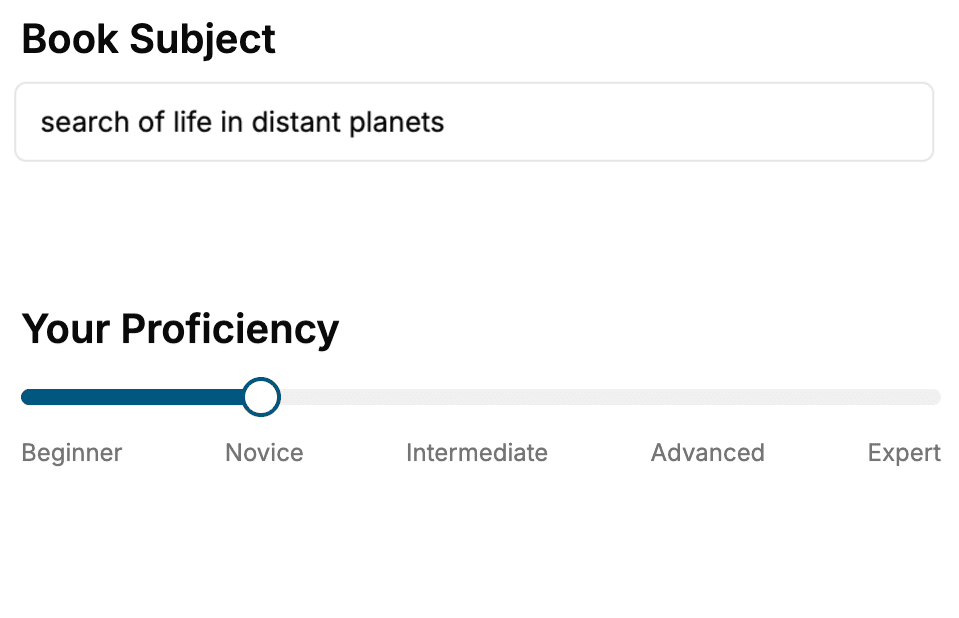
- 1. Select your focus
Select the focus of your Soccer book and share your background
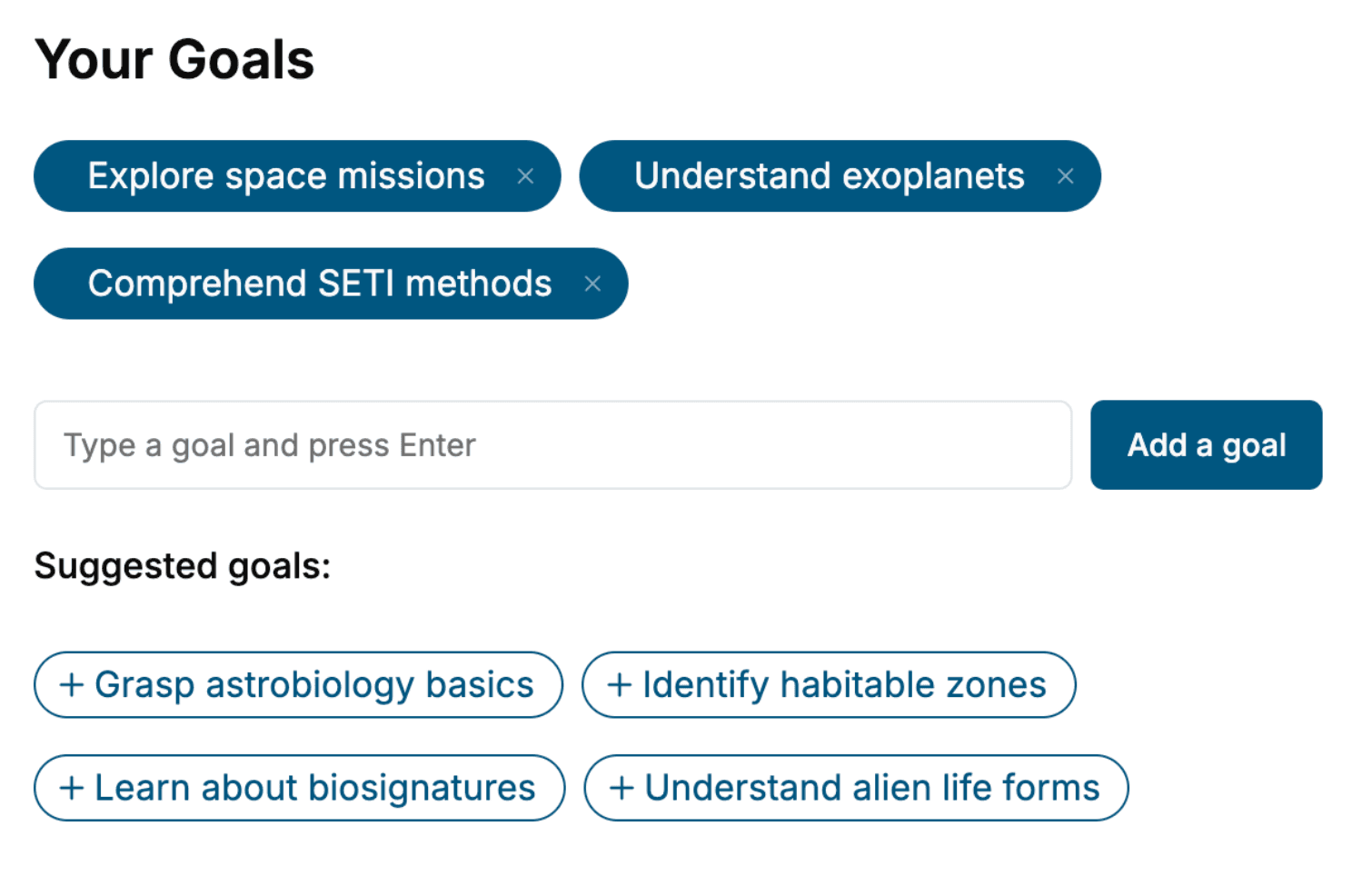
- 2. Personalize your book
Specify your goals and choose sub-topics to include
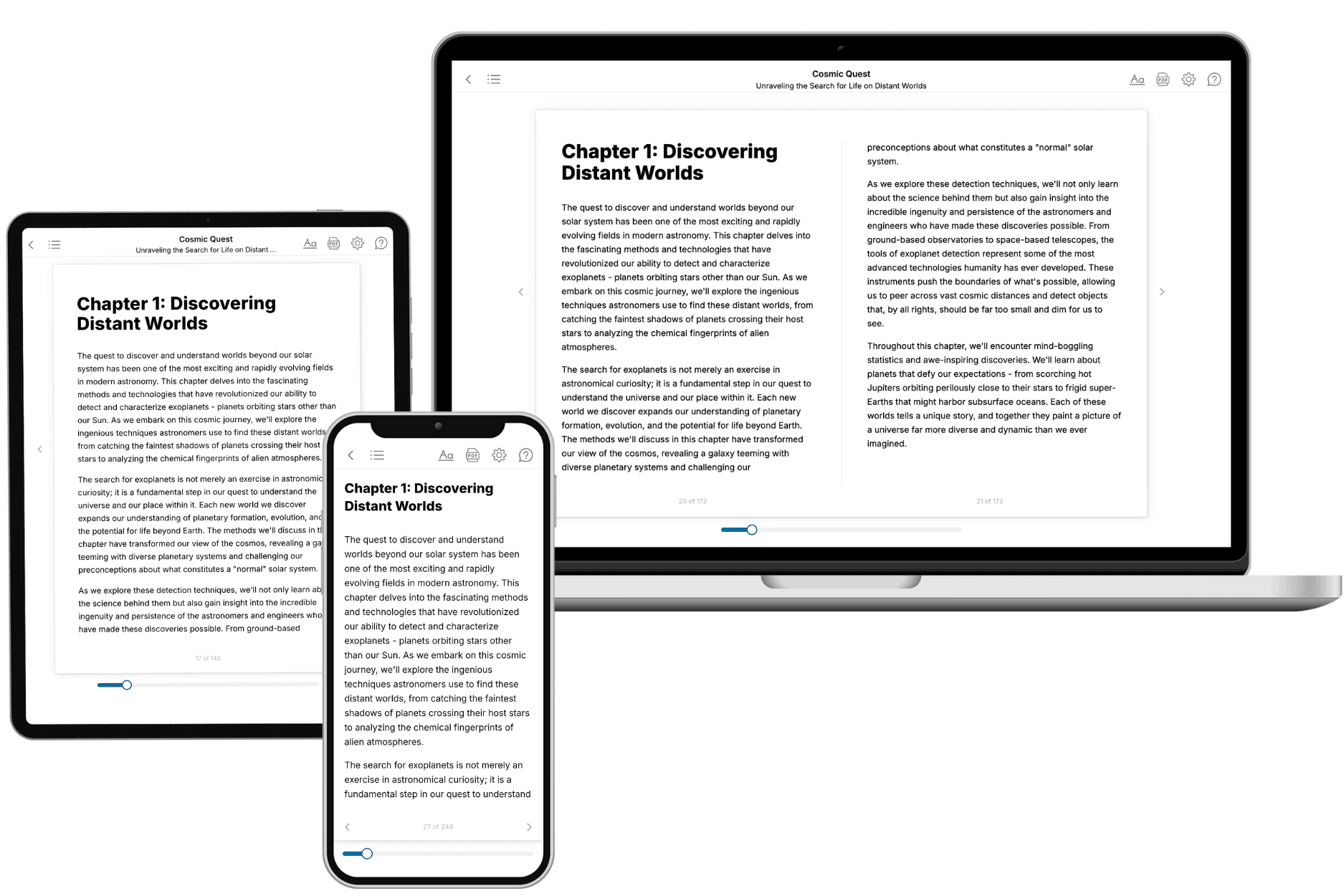
- 3. Get your tailored book
Your book is ready in 10 minutes. Read it online, download as EPUB or PDF, or send to Kindle.
Frequently asked questions
- What is TailoredRead?
TailoredRead creates complete, full-length nonfiction ebooks, written specifically for you. Tell us what you want to learn and why, and TailoredRead writes you a complete ebook on it, with charts, tables, and diagrams throughout. Read it online, on Kindle, or on any e-reader, or download it as a PDF or EPUB. Every book is written fresh the day you order it.
- How is the book tailored to me?
Before anything is written, you answer a few short questions about your goals, your background, and the topics you care about. Your book is then planned around your answers: written at your level, focused on your goals, and covering the topics you chose, instead of the one-size-fits-all book a store sells everyone.
- Will it read like generic AI content?
No. Your book isn't a chat transcript: it's planned chapter by chapter before a single word is written, told in a clear book voice, and explains ideas visually with charts, tables, and diagrams. After writing, every book goes through an editorial pass that polishes chapters so the book reads consistent from start to finish. Judge for yourself: browse thousands of sample books on our Explore Books page.
- How accurate is the content?
Our AI first checks whether your subject needs live research. Niche and fast-moving subjects are researched before writing, and the book plan and chapters are grounded in what it finds. After writing, every book goes through a quality pass that checks its facts and consistency, and researched books list their sources in a Notes section at the back.
- How long is the book?
You choose the length: Comprehensive (250-300 pages), Detailed (150-200 pages), Essential (70-100 pages), or Short (30-50 pages).
- Does the book include visuals?
Yes. Every book includes charts, tables, and diagrams: timelines, checklists, step-by-step guides, decision trees, comparison tables, matrices, and bar charts. A typical book includes dozens of these visual elements.
- Can I read it on Kindle? What formats can I download?
Yes. Every book can be read in our online reader or downloaded as a PDF or EPUB. The EPUB can be opened with Kindle, Apple Books, Kobo, and any e-reader. The Commercial and Author licenses also include an editable Word (DOCX) and Markdown download.
- How much does it cost?
About the price of a regular ebook. The exact price depends on your book's length and complexity, from $2 for the shortest books to $35 for the most comprehensive, and it's shown when you review your book, before you commit to anything. Each book is a one-time purchase, yours to keep, no subscription. Licenses that let you share, teach, or publish your book range from $35.99 to $49.99.
- Can I preview the book before purchasing?
Before you pay, you'll see what your book will cover: the title, a detailed description, the estimated length, and the complete chapter-by-chapter table of contents, so you know what you're getting before you decide. The full text itself is written after you purchase.
- How long does it take to create a book?
About 10 minutes. You can start reading the opening chapters while the rest is still being written.