Polish Cuisine: A Nation's Culinary Heritage
Recipes and history behind pierogi, soups and holiday feasts
You'll discover how every pierogi fold, every sauerkraut recipe, and every holiday feast carries within it the DNA of Polish history and culture.
300 pages16 chaptersOct 2, 2025European Cooking
About this book
This comprehensive exploration takes you beyond basic recipes to understand the fascinating stories behind Poland's most beloved dishes and how they evolved through centuries of triumph, struggle, and cultural exchange. Through detailed historical context and authentic recipes, you'll learn how Polish cuisine developed its distinctive character through interactions with neighboring cultures, adaptation to harsh climates, and the ingenuity of generations of home cooks. From the medieval spice trade routes that brought exotic flavors to Polish tables to the regional specialties that reflect local traditions, you'll gain a deep appreciation for how food serves as both sustenance and cultural memory. You'll master traditional cooking techniques while understanding their historical origins, explore regional variations that tell the story of Poland's diverse cultural landscape, and learn to prepare authentic dishes that connect you to centuries of culinary tradition. Each chapter reveals how historical events shaped ingredients, cooking methods, and food customs that continue to define Polish identity today. By the end of this culinary journey, you'll not only cook with greater skill and authenticity but also appreciate how Polish cuisine represents one of Europe's most fascinating examples of how food preserves culture, adapts to change, and brings communities together across generations.
Table of contents
- IntroductionPoland's Culinary Heritage, Food as Living History, Regional Diversity and Unity, How to Use This BookRead below
- Chapter 1: Medieval FoundationsEarly Polish Settlements and Food Culture, Medieval Trade Routes and Spice Introduction, Monastery Kitchens and Preservation Techniques, Noble Courts and Ceremonial Feasts
- Chapter 2: The Golden Age of Polish CuisineRenaissance Italian and French Influences, Royal Kitchens of the Jagiellonian Dynasty, Exotic Imports and New World Ingredients, Early Polish Cookbook Traditions
- Chapter 3: The Commonwealth EraLithuanian, Ukrainian, and Belarusian Influences, Jewish Culinary Contributions, German Settlements and Brewing Traditions, Magnate Estates and Regional Specialties
- Chapter 4: Cuisine During the PartitionsAustrian Culinary Influence in Galicia, Prussian Influence in Western Poland, Russian Influence and Eastern Adaptations, Cultural Resistance Through Traditional Foods
- Chapter 5: Peasant Traditions and Rural CookingSeasonal Cooking and Agricultural Cycles, Traditional Preservation Methods, Communal Cooking and Village Traditions, Harvest Celebrations and Folk Customs
- Chapter 6: Bread and GrainsRye Bread Traditions and Techniques, Wheat Cultivation and White Bread, Buckwheat, Barley, and Ancient Grains, Ceremonial and Holiday Breads
- Chapter 7: Soups and BrothsŻurek and Sour Rye Soup Traditions, Barszcz and Beetroot Soup Variations, Clear Broths and Consommés, Cold Soups and Summer Traditions
- Chapter 8: Pierogi and DumplingsThe History and Evolution of Pierogi, Regional Filling Variations, Other Polish Dumpling Varieties, Traditional Preparation Techniques
- Chapter 9: Meat and GamePork and Sausage Making Traditions, Beef Dishes and Preparation Methods, Wild Game and Forest Traditions, Poultry and Domestic Bird Dishes
- Chapter 10: Fish and SeafoodFreshwater Fish and River Traditions, Baltic Sea Seafood and Coastal Cuisine, Carp and Christmas Traditions, Fish Preservation and Smoking Techniques
- Chapter 11: Vegetables and HerbsCabbage and Sauerkraut Traditions, Root Vegetables and Winter Storage, Wild Herbs and Foraged Greens, Garden Cultivation and Seasonal Vegetables
- Chapter 12: Dairy and EggsTraditional Polish Cheese Making, Butter and Cream Production, Egg Dishes and Preparation Methods, Fermented Dairy Products
- Chapter 13: Beverages and SpiritsTraditional Beer Brewing, Mead and Honey Wine Traditions, Vodka and Distilled Spirits, Herbal Teas and Folk Remedies
- Chapter 14: Holiday and Celebration FoodsChristmas Eve and Holiday Traditions, Easter Foods and Spring Celebrations, Wedding Feasts and Life Celebrations, Religious Observances and Fasting Foods
- Chapter 15: Regional SpecialtiesSilesian Mining and Industrial Cuisine, Highland and Mountain Traditions, Coastal and Maritime Specialties, Eastern Borderland Influences
- Chapter 16: Modern Evolution and RevivalCommunist Era Adaptations, Contemporary Traditional Food Revival, Global Influences and Modern Adaptations, Preserving Culinary Heritage Today
- Conclusion
- Glossary of Polish Culinary Terms
Introduction
Polish cuisine stands as one of Europe's most fascinating culinary traditions, where every dish tells a story of survival, adaptation, and cultural exchange. When you taste authentic pierogi, savor a bowl of żurek, or break bread at a Polish table, you're experiencing flavors that have been shaped by centuries of history. These foods carry within them the memories of medieval trade routes, royal banquets, peasant ingenuity, and the resilience of a people who preserved their identity through food even when their nation disappeared from maps. Polish cooking represents far more than sustenance—it embodies the soul of a culture that has weathered invasions, partitions, and political upheavals while maintaining its distinctive character through the simple yet profound act of preparing and sharing meals.
The story of Polish cuisine unfolds across a thousand years of European history, reflecting the complex interactions between geography, climate, politics, and culture that shaped this remarkable nation. From the early Piast dynasty's simple grain-based meals to the elaborate feasts of the Polish-Lithuanian Commonwealth, from the survival cooking of wartime to today's revival of traditional techniques, Polish food has continuously evolved while preserving its essential character. Understanding this culinary heritage requires looking beyond recipes to examine how historical events, cultural exchanges, and regional influences created the distinctive flavors and techniques that define Polish cooking today. Each traditional dish represents a chapter in Poland's story, revealing how ordinary people adapted to extraordinary circumstances while maintaining their cultural identity through food.
This exploration of Polish culinary history will take you on a journey through time, revealing how external influences merged with local traditions to create something uniquely Polish. You'll discover how the harsh continental climate shaped preservation techniques that became culinary art forms, how trade relationships brought exotic spices to Polish tables, and how regional variations reflect the diverse cultural landscape of historical Poland. Through understanding these connections between food and history, you'll gain not only cooking skills but also deep appreciation for how cuisine serves as both cultural memory and living tradition. The recipes and techniques you'll learn carry forward the wisdom of generations, connecting you to a rich heritage that continues to evolve while honoring its roots.
Poland's Culinary Heritage
Polish culinary heritage represents a unique synthesis of influences that reflects the country's position at the crossroads of European cultures. Located between Germanic traditions to the west, Slavic customs to the east, and Mediterranean influences filtering north through trade routes, Poland developed a distinctive food culture that borrowed selectively while maintaining its own character. The foundation of Polish cuisine rests on several key elements that emerged from this cultural mixing:
- Grain-based traditions rooted in Slavic agricultural practices
- Fermentation techniques developed for food preservation through harsh winters
- Seasonal cooking patterns that maximized available ingredients throughout the year
- Communal food traditions that strengthened social bonds and cultural identity
The geographical factors that shaped Polish cuisine cannot be understated in their importance to understanding traditional cooking methods and ingredient choices. Poland's location in the North European Plain, with its continental climate characterized by cold winters and warm summers, necessitated sophisticated food preservation techniques that became integral to the cuisine's character. The abundance of forests provided game, mushrooms, and berries, while extensive river systems offered freshwater fish, and fertile plains supported grain cultivation and livestock raising. This natural bounty, combined with the challenges of seasonal scarcity, led to the development of cooking techniques that maximized flavor while ensuring food security. Traditional Polish cooks became masters of fermentation, smoking, drying, and root cellar storage, transforming necessity into culinary art.
The social structure of historical Poland also profoundly influenced culinary development, creating distinct but interconnected food traditions across different social classes. Noble courts developed elaborate ceremonial cuisines that incorporated international influences and exotic ingredients, while peasant communities perfected hearty, economical dishes that made the most of locally available ingredients. Monastic communities contributed significantly to food preservation techniques and brewing traditions, while urban merchants and craftsmen created their own distinctive food culture that blended rural traditions with cosmopolitan influences. These different culinary streams flowed together over centuries, creating a rich tapestry of flavors and techniques that characterizes Polish cuisine today.
Religious traditions played a crucial role in shaping Polish culinary heritage, with Catholic observances creating a complex calendar of feast and fast days that influenced both cooking techniques and ingredient choices. The tradition of meatless days and Lenten fasting led to sophisticated vegetarian and fish-based dishes, while major religious holidays developed their own elaborate food customs. Christmas Eve's Wigilia feast, Easter's blessing of foods, and harvest celebrations all created opportunities for culinary creativity within religious frameworks. These traditions also served to preserve cultural identity during periods of political upheaval, as food customs proved more resilient than political institutions in maintaining continuity across generations.
The multicultural nature of historical Poland, particularly during the Commonwealth period, created a unique environment for culinary exchange and innovation. Polish tables welcomed influences from Lithuanian forest traditions, Ukrainian grain dishes, Jewish preservation techniques, German brewing methods, and Italian Renaissance refinements. Rather than simply adopting foreign dishes wholesale, Polish cooks adapted these influences to local tastes and available ingredients, creating hybrid dishes that became distinctly Polish over time. This process of culinary adaptation and integration reflects the broader Polish approach to cultural exchange—selective, creative, and ultimately transformative.
Traditional Polish cooking techniques developed sophisticated methods for extracting maximum flavor and nutrition from available ingredients, often through slow cooking processes that transformed simple ingredients into complex, satisfying dishes. The use of sour starters for soups, long fermentation processes for breads, and careful layering of flavors in stews and roasts all demonstrate a deep understanding of how time and technique can enhance natural ingredients. These methods also reflect the practical wisdom of cooks who needed to make food last through long winters and feed large families with limited resources, turning constraints into opportunities for culinary creativity.
The preservation of Polish culinary heritage through oral tradition and family practices created a living repository of knowledge that survived political upheavals and social changes. Unlike many European cuisines that were codified in written cookbooks by professional chefs, Polish cooking remained largely in the hands of home cooks who passed down techniques, recipes, and food wisdom through generations of family practice. This oral tradition created regional variations and family specialties while maintaining core techniques and flavor profiles that define Polish cuisine. Understanding this heritage means recognizing that Polish cooking is not just about following recipes but about participating in a continuous cultural conversation that spans centuries.
The resilience of Polish culinary traditions during periods of foreign occupation and political suppression demonstrates food's power as a form of cultural resistance and identity preservation. When political institutions were suppressed and cultural expression was limited, Polish families maintained their heritage through traditional cooking, holiday food customs, and the simple act of gathering around familiar flavors. This resistance through cuisine was not dramatic or overt but quietly persistent, ensuring that Polish food culture survived intact to be revived and celebrated when political conditions allowed. Today's appreciation for traditional Polish cuisine builds on this foundation of cultural persistence and pride.
Food as Living History
Food serves as one of the most reliable and revealing forms of historical documentation, preserving information about daily life, social structures, economic conditions, and cultural values that formal historical records often overlook. Polish cuisine offers particularly rich insights into European history because Poland's complex political situation and cultural diversity created a unique laboratory for culinary development and preservation. When you examine traditional Polish dishes, you're looking at archaeological evidence of historical processes—trade relationships revealed through spice usage, social hierarchies reflected in ingredient choices, technological developments shown through cooking techniques, and cultural exchanges demonstrated through recipe adaptations. Each traditional recipe represents a historical document that tells multiple stories simultaneously about the people who created, adapted, and preserved it across generations.
The evolution of specific Polish dishes provides concrete examples of how historical events shaped culinary traditions in measurable ways. Consider the development of bigos, often called Poland's national dish, which demonstrates how historical circumstances created culinary innovation. Originally a hunter's stew designed to use preserved cabbage and whatever meat was available during long expeditions, bigos evolved to incorporate ingredients that reflect Poland's changing political and economic relationships. The addition of exotic spices during the Renaissance shows increased trade connections, while regional variations reflect local ingredients and cultural influences. During periods of economic hardship, the dish adapted to include more vegetables and less meat, while prosperous times saw the addition of premium ingredients like wine and imported spices. This single dish thus serves as a timeline of Polish history, with each ingredient and technique marking specific historical developments.
Archaeological evidence supports the historical narrative told through Polish cuisine, with excavations revealing cooking implements, storage methods, and food remains that confirm the antiquity of many traditional techniques. Medieval archaeological sites in Poland have uncovered evidence of sophisticated grain processing, fermentation vessels, and food storage systems that directly connect to modern Polish cooking methods. The discovery of ancient bread ovens, brewing equipment, and preservation facilities shows that many techniques considered traditional today have roots stretching back centuries. This archaeological record validates the historical authenticity of traditional Polish cooking methods and demonstrates the continuity of culinary practices across political and social changes.
Written historical records, when they exist, provide additional layers of understanding about how Polish cuisine developed in response to specific historical events and social conditions. Medieval chronicles describe feast preparations and food customs that illuminate the social significance of cuisine in Polish culture. Renaissance-era accounts of royal banquets reveal how international influences entered Polish cooking through diplomatic and trade relationships. Monastery records document the development of brewing and preservation techniques that became central to Polish food culture. Even during periods when Polish political independence was suppressed, personal letters, diaries, and household accounts continued to record food customs and recipes, creating an unbroken chain of culinary documentation that spans centuries.
The linguistic evidence embedded in Polish culinary terminology reveals additional historical information about cultural exchanges and technological developments. Many Polish food terms derive from other languages, indicating when and how specific dishes or techniques entered Polish cuisine. German-derived terms for baking techniques reflect medieval trade relationships and settlement patterns. Italian-influenced vocabulary for pasta and refined cooking methods shows Renaissance cultural exchange. French culinary terms that entered Polish during the 18th and 19th centuries demonstrate aristocratic cultural preferences. Even Yiddish-derived food terms reveal the significant Jewish contribution to Polish culinary development. This linguistic archaeology provides precise evidence for the timing and nature of cultural influences on Polish cuisine.
Regional variations in Polish cuisine serve as historical maps that show how different areas of Poland experienced distinct cultural influences and historical developments. Silesian cuisine reflects Germanic influences and industrial development patterns. Highland cooking shows the influence of pastoral traditions and trade routes through mountain passes. Coastal regions developed distinctive seafood traditions that reflect maritime connections. Eastern regions of historical Poland show Lithuanian, Ukrainian, and Belarusian influences that reflect the multicultural nature of the Commonwealth. These regional differences are not just matters of local preference but historical records of how different areas of Poland experienced different cultural contacts and economic developments over time.
The social history embedded in Polish cuisine reveals information about class structures, gender roles, economic conditions, and community organization that formal historical records often miss or minimize. The distinction between noble and peasant cuisines shows economic stratification, while the role of women in preserving and transmitting culinary knowledge reveals gender dynamics in traditional Polish society. Seasonal cooking patterns reflect agricultural cycles and economic constraints, while holiday food traditions show the integration of religious and secular cultural values. Community cooking traditions reveal social organization and mutual support systems that helped Polish communities survive difficult periods. This social information embedded in food culture provides a more complete picture of historical Polish life than political or military histories alone.
The survival and revival of traditional Polish cuisine in modern times demonstrates how food culture can preserve historical memory and cultural identity across generations of political and social change. During the communist period, when many aspects of traditional Polish culture were suppressed or discouraged, food traditions continued in family kitchens and private celebrations, maintaining connections to pre-war Polish culture. The post-1989 revival of interest in traditional Polish cuisine represents not just culinary nostalgia but a conscious effort to reconnect with historical Polish identity through food. This process of culinary revival and historical recovery shows how cuisine can serve as a bridge between past and present, allowing contemporary people to experience and understand their historical heritage through direct sensory engagement with traditional flavors and techniques.
Regional Diversity and Unity
The regional diversity of Polish cuisine reflects the complex historical geography of Poland, where shifting borders, diverse settlement patterns, and varied cultural influences created distinct culinary traditions that nonetheless share common underlying characteristics. Understanding Polish regional cuisine requires recognizing that historical Poland was much larger and more culturally diverse than modern Poland, encompassing areas that are now parts of Lithuania, Ukraine, Belarus, and Germany. Each region developed its own specialties based on local ingredients, cultural influences, and historical experiences, yet all remained recognizably Polish through shared techniques, flavor preferences, and cultural values. This regional diversity within cultural unity represents one of the most fascinating aspects of Polish culinary heritage, showing how a coherent national cuisine can accommodate significant local variation while maintaining its essential character.
The western regions of Poland, particularly Silesia and areas that experienced significant German influence, developed culinary traditions that blend Polish and Germanic elements in distinctive ways. Silesian cuisine, shaped by mining communities and industrial development, emphasizes hearty, protein-rich dishes designed to fuel physically demanding work. Traditional Silesian dishes like kluski śląskie (Silesian dumplings) and rolada śląska (Silesian roulade) show Germanic influences in their preparation techniques while maintaining Polish flavor profiles and cultural significance. The region's brewing traditions also reflect German influence, with distinctive beer styles and brewing techniques that became integral to local food culture. These western influences demonstrate how Polish cuisine absorbed foreign elements while adapting them to Polish tastes and social customs, creating hybrid traditions that are neither purely Polish nor purely German but something uniquely regional.
The mountainous southern regions of Poland, including the Tatra and Carpathian areas, developed distinctive highland cuisines based on pastoral traditions, limited growing seasons, and the need for portable, high-energy foods. Highland specialties like oscypek (smoked sheep cheese), kwaśnica (sauerkraut soup with smoked meat), and various grilled meats reflect the pastoral lifestyle and the influence of seasonal migration patterns. The preservation techniques used in these regions, particularly smoking and aging, created distinctive flavors that became prized throughout Poland. Highland cuisine also shows influences from Slovak and Hungarian traditions, reflecting trade routes and cultural exchanges across mountain passes. The communal aspects of highland food culture, including shared cooking facilities and cooperative food preparation, demonstrate how geographical constraints shaped social customs around food.
The eastern regions of historical Poland, now largely in Lithuania, Belarus, and Ukraine, contributed significantly to Polish culinary diversity through their distinctive ingredients, techniques, and cultural traditions. These areas introduced Polish cuisine to buckwheat cultivation, distinctive mushroom preservation techniques, and various grain-based dishes that became Polish staples. The influence of Orthodox Christian food traditions created different fasting and feast patterns that enriched Polish culinary calendar. Lithuanian influences brought distinctive bread-making techniques and dairy traditions, while Ukrainian contributions included various grain dishes and distinctive ways of preparing vegetables. The multicultural nature of these eastern regions created a particularly rich culinary environment where Polish, Lithuanian, Ruthenian, and Jewish traditions interacted and influenced each other.
The northern coastal regions of Poland developed distinctive maritime cuisines based on Baltic Sea resources and trade connections with other Baltic countries. Coastal specialties include various fish preparations, distinctive smoking techniques, and dishes that incorporate ingredients brought by maritime trade. The influence of Hanseatic League connections brought Germanic and Scandinavian influences to coastal Polish cuisine, while the development of port cities created cosmopolitan food cultures that blended international influences with local traditions. Coastal preservation techniques, particularly for fish, became important throughout Poland and influenced inland cuisine as well. The seasonal nature of fishing and the risks of maritime life also created distinctive social customs around food that reflected the unique challenges of coastal communities.
Despite this remarkable regional diversity, Polish cuisine maintains underlying unity through shared techniques, flavor preferences, and cultural values that transcend regional boundaries. Common elements that appear throughout Polish regional cuisines include:
- Fermentation techniques for preserving vegetables, grains, and dairy products
- Seasonal cooking patterns that maximize summer abundance for winter consumption
- Emphasis on hearty, warming foods suitable for cold climate conditions
- Integration of sweet and sour flavors through various preservation and cooking techniques
- Communal food traditions that strengthen family and community bonds
The process by which regional specialties became part of broader Polish cuisine demonstrates how cultural exchange and migration patterns spread culinary innovations throughout the country. Dishes that originated in specific regions often spread through internal migration, military service, seasonal work patterns, and trade relationships. For example, pierogi, which may have originated in specific regions, became a national dish through this process of cultural diffusion. Similarly, regional preservation techniques and cooking methods spread beyond their original areas as people moved and shared their culinary knowledge. This internal cultural exchange created a dynamic culinary environment where regional innovations could become national traditions while maintaining their regional character and associations.
The modern understanding and appreciation of Polish regional cuisine has been enhanced by scholarly research, culinary revival movements, and increased cultural awareness that recognizes the value of regional diversity within national identity. Contemporary efforts to document and preserve regional Polish culinary traditions have revealed the richness and complexity of local food cultures that were sometimes overlooked in favor of more standardized national dishes. This regional revival has also led to increased appreciation for local ingredients, traditional techniques, and the cultural stories embedded in regional specialties. Understanding Polish regional cuisine today requires recognizing both the historical authenticity of regional traditions and their continued evolution as living cultural practices that adapt to contemporary conditions while maintaining their essential character.
The relationship between regional diversity and national unity in Polish cuisine offers important insights into how cultural identity can accommodate internal variation while maintaining coherence and distinctiveness. Polish cuisine demonstrates that national food cultures need not be monolithic to be authentic and meaningful. Instead, the regional diversity within Polish cuisine enriches and strengthens the overall tradition by providing multiple expressions of shared cultural values and techniques. This model of unity within diversity has implications beyond cuisine, showing how cultural traditions can maintain their essential character while adapting to local conditions and incorporating diverse influences. The study of Polish regional cuisine thus provides insights not only into food history but into broader questions of cultural identity, adaptation, and preservation.
How to Use This Book
This book is designed to serve both as a comprehensive historical exploration and a practical cooking guide, allowing you to understand Polish cuisine's development while learning to prepare authentic traditional dishes. The structure follows a chronological approach that traces Polish culinary evolution from medieval foundations through modern revival, with each chapter focusing on specific historical periods, ingredients, or cooking techniques. You can read the book sequentially to follow the complete historical narrative, or focus on specific chapters that address particular interests or cooking goals. Each chapter includes historical context, cultural analysis, and practical cooking information, with recipes and techniques integrated into their historical and cultural contexts rather than separated into isolated recipe collections.
The historical approach used throughout this book means that recipes and techniques are presented within their cultural and temporal contexts, helping you understand not just how to prepare dishes but why they developed as they did and what they meant to the people who created them. This contextual approach serves several purposes:
- Enhanced understanding of ingredient choices and preparation methods
- Cultural appreciation for the significance of different dishes and techniques
- Improved cooking results through understanding the principles behind traditional methods
- Adaptability in modifying recipes while maintaining their essential character
The practical cooking information in this book assumes intermediate cooking knowledge and focuses on traditional techniques that may be unfamiliar to contemporary cooks rather than basic cooking skills. Detailed instructions are provided for specialized techniques like sour rye starter preparation, traditional bread baking, fermentation processes, and preservation methods that are essential to authentic Polish cooking but may not be covered in general cookbooks. Modern adaptations and equipment substitutions are suggested where appropriate, but the emphasis remains on understanding and preserving traditional methods. Ingredient sourcing information is provided for specialty items, with suggestions for substitutions when traditional ingredients are unavailable.
Each chapter includes several types of practical information designed to help you apply historical knowledge to contemporary cooking:
This integrated approach ensures that you gain both practical cooking skills and cultural understanding that will enhance your appreciation and preparation of Polish cuisine.Traditional Techniques: Detailed explanations of historical cooking methods with modern adaptations
Authentic Recipes: Traditional recipes with historical context and cultural significance
Ingredient Profiles: Information about traditional ingredients, their historical uses, and modern availability
Cultural Context: Explanation of when, why, and how different dishes were traditionally prepared and consumed
The recipe format used throughout this book emphasizes traditional methods and authentic ingredients while providing practical guidance for contemporary kitchens. Measurements are given in both traditional and modern units where relevant, with explanations of how traditional cooks measured and proportioned ingredients. Timing information reflects traditional cooking rhythms, which often involved longer, slower processes than contemporary cooking, with suggestions for adapting these rhythms to modern schedules. Seasonal considerations are emphasized throughout, reflecting the traditional Polish approach to cooking with natural seasonal cycles and ingredient availability.
Special attention is given throughout the book to ingredient authenticity and sourcing, recognizing that traditional Polish cooking depends heavily on specific ingredients and their quality. Information is provided about:
- Traditional ingredient varieties and their characteristics
- Modern sourcing options for specialty Polish ingredients
- Acceptable substitutions when traditional ingredients are unavailable
- Quality indicators for selecting ingredients that will produce authentic results
- Seasonal availability and how it affects traditional cooking patterns
The cultural and historical information provided with each recipe and technique is designed to enhance your cooking experience by helping you understand the broader context and significance of what you're preparing. This cultural knowledge serves practical purposes by explaining why certain techniques work, how dishes fit into traditional meal patterns, and what variations are appropriate within traditional frameworks. Understanding the cultural context also helps in menu planning, as you'll learn how different dishes traditionally complement each other and how they fit into seasonal and ceremonial cycles that structured traditional Polish eating patterns.
To get the most from this book, approach it as both a historical exploration and a practical cooking guide, allowing the historical understanding to inform and enhance your cooking practice. Start with dishes and techniques that interest you most, but try to understand them within their historical and cultural contexts rather than as isolated recipes. Experiment with traditional techniques and ingredients, recognizing that mastering traditional Polish cooking requires time and practice to develop the intuitive understanding that traditional cooks possessed. Most importantly, remember that Polish cuisine is a living tradition that continues to evolve, and your own cooking experiences become part of that ongoing cultural conversation that connects contemporary kitchens to centuries of Polish culinary heritage.
This is the end of the free sample. The full book has 16 chapters.
Want this book written for you?
Tell us your goals and background, and get your own version of this book, tailored by AI to you.


Benefits of AI-tailored books
- Read one book, not ten:
- all the European Cooking knowledge you need, gathered into a single book.
- Save days of learning:
- tell us your goals, choose your topics, and the whole book is built around them.
- Learn effortlessly:
- European Cooking book written for your specific background and expertise.
- Understand at a glance:
- includes charts, tables, timelines, checklists, decision trees, and more.
- Stay current:
- written the day you order it, not years ago.
- Trust what you read:
- every book is checked for accuracy, with real research when your subject needs it.
Create your unique book in 3 steps
- 1. Select your focus
Select the focus of your European Cooking book and share your background
- 2. Personalize your book
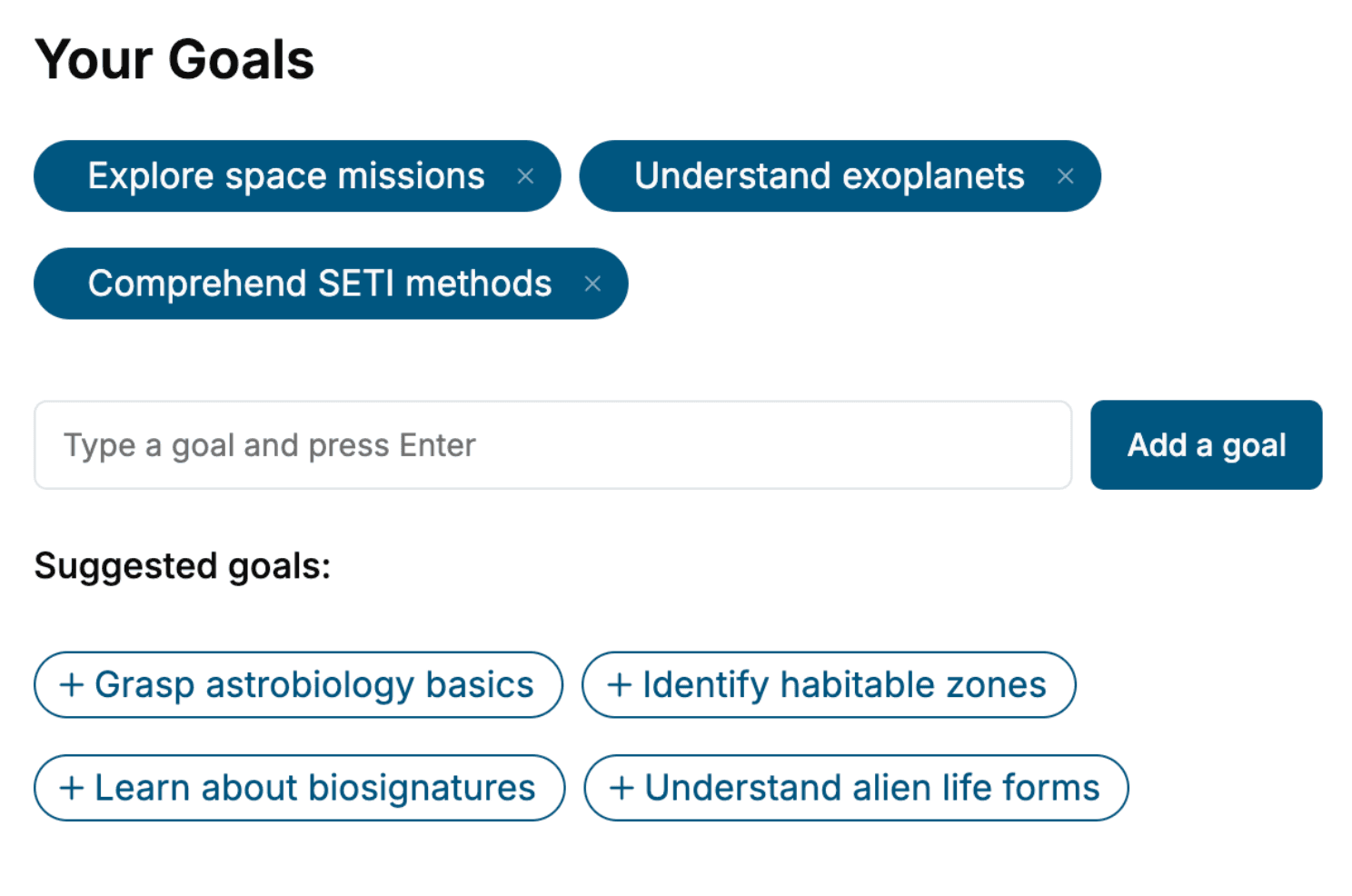
Specify your goals and choose sub-topics to include
- 3. Get your tailored book
Your book is ready in 10 minutes. Read it online, download as EPUB or PDF, or send to Kindle.

Frequently asked questions
- What is TailoredRead?
TailoredRead creates complete, full-length nonfiction ebooks, written specifically for you. Tell us what you want to learn and why, and TailoredRead writes you a complete ebook on it, with charts, tables, and diagrams throughout. Read it online, on Kindle, or on any e-reader, or download it as a PDF or EPUB. Every book is written fresh the day you order it.
- How is the book tailored to me?
Before anything is written, you answer a few short questions about your goals, your background, and the topics you care about. Your book is then planned around your answers: written at your level, focused on your goals, and covering the topics you chose, instead of the one-size-fits-all book a store sells everyone.
- Will it read like generic AI content?
No. Your book isn't a chat transcript: it's planned chapter by chapter before a single word is written, told in a clear book voice, and explains ideas visually with charts, tables, and diagrams. After writing, every book goes through an editorial pass that polishes chapters so the book reads consistent from start to finish. Judge for yourself: browse thousands of sample books on our Explore Books page.
- How accurate is the content?
Our AI first checks whether your subject needs live research. Niche and fast-moving subjects are researched before writing, and the book plan and chapters are grounded in what it finds. After writing, every book goes through a quality pass that checks its facts and consistency, and researched books list their sources in a Notes section at the back.
- How long is the book?
You choose the length: Comprehensive (250-300 pages), Detailed (150-200 pages), Essential (70-100 pages), or Short (30-50 pages).
- Does the book include visuals?
Yes. Every book includes charts, tables, and diagrams: timelines, checklists, step-by-step guides, decision trees, comparison tables, matrices, and bar charts. A typical book includes dozens of these visual elements.
- Can I read it on Kindle? What formats can I download?
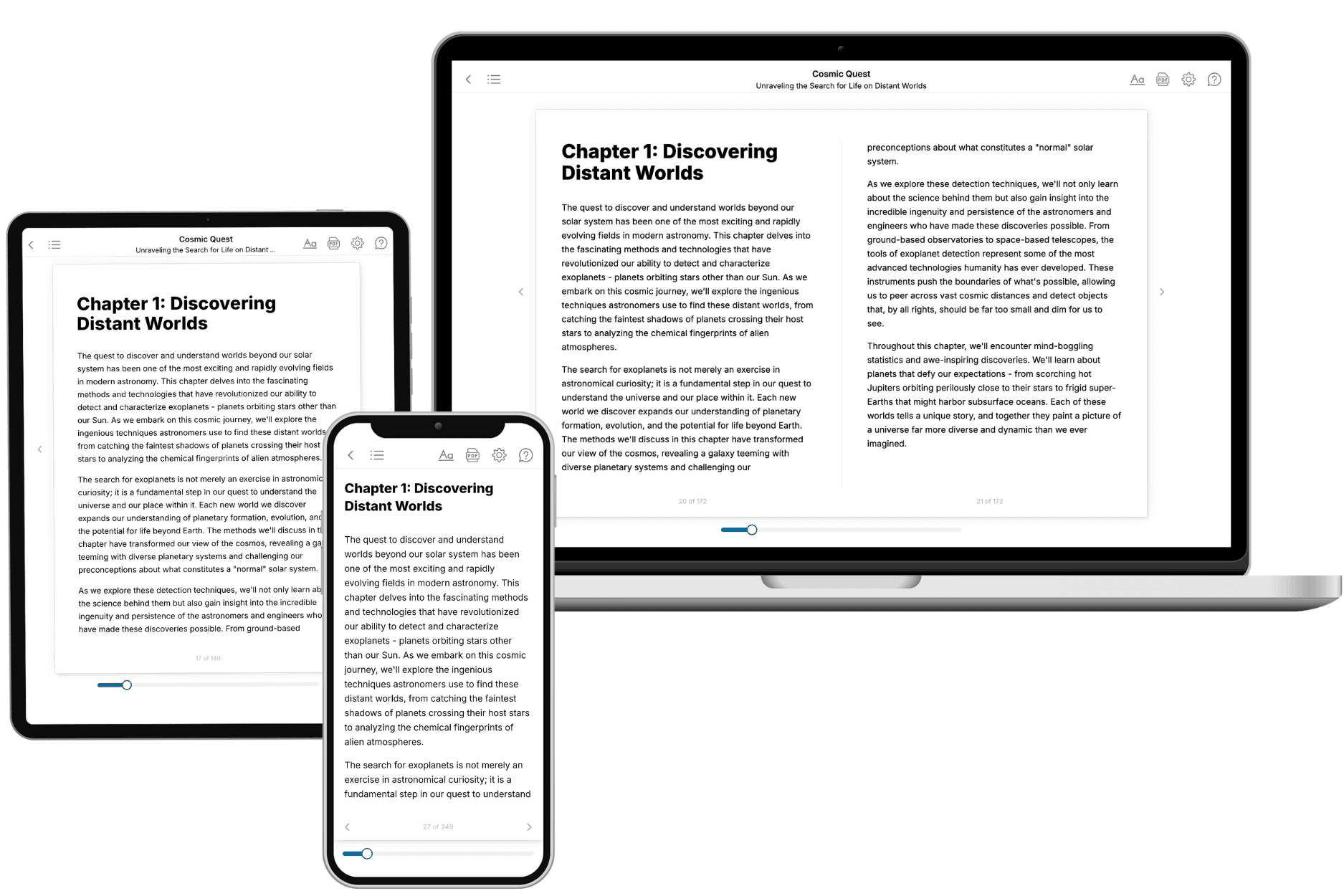
Yes. Every book can be read in our online reader or downloaded as a PDF or EPUB. The EPUB can be opened with Kindle, Apple Books, Kobo, and any e-reader. The Commercial and Author licenses also include an editable Word (DOCX) and Markdown download.
- How much does it cost?
About the price of a regular ebook. The exact price depends on your book's length and complexity, from $2 for the shortest books to $35 for the most comprehensive, and it's shown when you review your book, before you commit to anything. Each book is a one-time purchase, yours to keep, no subscription. Licenses that let you share, teach, or publish your book range from $35.99 to $49.99.
- Can I preview the book before purchasing?
Before you pay, you'll see what your book will cover: the title, a detailed description, the estimated length, and the complete chapter-by-chapter table of contents, so you know what you're getting before you decide. The full text itself is written after you purchase.
- How long does it take to create a book?
About 10 minutes. You can start reading the opening chapters while the rest is still being written.