The Holiday Beverage Playbook
Master the Art of Festive Drinks from Classic Cocktails to Warming Punches
Most people think holiday beverages are limited to eggnog, mulled wine, or whatever's on sale at the liquor store.
207 pages9 chaptersMay 3, 2026Cocktails
About this book
But the truth is, creating impressive festive drinks is entirely within your reach—and far easier than you might think. This book strips away the intimidation and gives you practical, tested recipes and techniques for crafting holiday beverages that taste like they came from a professional bartender. You'll learn the fundamentals of flavor balance, discover how to batch drinks for stress-free entertaining, master both classic cocktails and creative non-alcoholic options, and understand the simple tricks that make drinks look and taste restaurant-quality. Whether you're hosting an intimate dinner or a large gathering, you'll find recipes ranging from warming spiced punches to elegant champagne cocktails, all designed to be made at home without special equipment or hard-to-find ingredients. This is your complete guide to becoming the host everyone remembers.
Table of contents
- IntroductionWhy Holiday Beverages Matter, What You'll Learn in This Book, How to Use This GuideRead below
- Chapter 1: Foundations of Holiday Beverage MakingEssential Spirits and Liqueurs, Tools and Equipment You Need, Understanding Flavor Balance
- Chapter 2: Classic Holiday CocktailsChampagne and Sparkling Wine Cocktails, Whiskey-Based Holiday Drinks, Brandy and Cordial Cocktails
- Chapter 3: Warming Punches and Hot DrinksMulled Wine and Spiced Variations, Hot Toddies and Spiked Hot Chocolate, Festive Coffee and Tea Drinks
- Chapter 4: Batch Beverages for Easy EntertainingPunch Bowls and Large-Format Drinks, Make-Ahead Strategies and Storage, Scaling Recipes for Your Guest Count
- Chapter 5: Non-Alcoholic and Low-Alcohol OptionsSophisticated Mocktails, Festive Juices and Syrups, Low-Alcohol Alternatives
- Chapter 6: Seasonal Ingredients and Flavor ProfilesWinter Spices and Aromatics, Citrus, Berries, and Fresh Garnishes, Making Homemade Syrups and Infusions
- Chapter 7: Presentation and Professional TechniqueChoosing the Right Glassware, Garnish Techniques and Edible Decorations, Ice, Chilling, and Temperature Control
- Chapter 8: The Host's Guide to Beverage ServicePlanning Your Beverage Menu, Bar Setup and Service Flow, Accommodating Dietary Preferences
- Chapter 9: Complete Recipe CollectionSignature Holiday Recipes, Quick Reference Guide, Ingredient Index
- ConclusionYour Next Steps
- Glossary of Terms
- Further Reading and Resources
Introduction
There is a moment at every great holiday gathering that people remember long after the decorations come down. It is not always the food, though a beautiful spread certainly helps. It is not always the music or the lights. More often than not, it is the drink someone handed them when they walked through the door. That first sip of something warm and spiced, or cold and sparkling, signals that the celebration has officially begun. It tells your guests that someone put thought into this evening, that they are welcome, and that the next few hours are going to be worth remembering.
Most people underestimate how much a well-crafted beverage contributes to the atmosphere of a gathering. A steaming mug of mulled wine fills a room with the scent of cinnamon and cloves before anyone even takes a sip. A punch bowl filled with a jewel-toned, fruit-forward drink becomes a visual centerpiece that draws people together. A thoughtfully prepared mocktail tells a guest who does not drink alcohol that they were considered, not forgotten. These are small gestures with outsized impact, and they are entirely within your reach regardless of your current skill level behind the bar.
This book was built around one core belief: creating impressive holiday beverages does not require professional training, expensive equipment, or hard-to-find ingredients. What it does require is a solid understanding of a few key principles, a handful of reliable recipes, and the confidence to experiment. Whether you are hosting a large holiday party, a quiet dinner for six, or a casual New Year's Eve gathering, the techniques and recipes in these pages will help you serve drinks that feel intentional, festive, and genuinely delicious. The goal is not to turn you into a professional bartender. The goal is to make you the host that everyone talks about on the drive home.
Before diving into the chapters ahead, it helps to understand what this book covers, why it is organized the way it is, and how to get the most out of it. The three sections below walk you through exactly that. Think of this introduction as your orientation before the real work begins.
Why Holiday Beverages Matter
Drinks are one of the most underappreciated tools in a host's arsenal. Food gets most of the attention during holiday planning, and understandably so. But beverages are often the first thing guests encounter and the last thing they finish. They are present throughout the entire event, from the welcome drink at the door to the nightcap before people head home. That kind of sustained presence gives drinks a unique power to shape how a gathering feels from start to finish.
Consider the psychology of a warm drink on a cold evening. Research in sensory science has consistently shown that physical warmth influences emotional warmth, with people reporting feeling more socially connected and generous when holding something warm.[1] A hot toddy or a mug of spiced cider is not just a drink. It is a small, deliberate act of hospitality that puts guests at ease before a single word is exchanged. That is a meaningful advantage for any host.
Holiday beverages also carry enormous cultural and emotional weight. Eggnog, mulled wine, and wassail have been part of winter celebrations for centuries. When you serve a well-made version of a classic drink, you are tapping into a shared sense of tradition and nostalgia that resonates with guests on a level that a generic store-bought option simply cannot match. The difference between a carton of pre-made eggnog and a freshly made version with real cream, nutmeg, and a splash of good bourbon is not subtle. It is the difference between going through the motions and actually celebrating.
Beyond tradition, holiday beverages are one of the most flexible and creative areas of entertaining. Unlike a main course, which requires precise timing and careful execution, a well-planned drink menu can be largely prepared in advance. Syrups can be made days ahead. Punches can be batched the morning of the party. Garnishes can be prepped hours before guests arrive. This flexibility means that a thoughtful beverage program actually reduces your stress as a host rather than adding to it, provided you plan correctly.
There is also a practical inclusivity argument for taking your beverage menu seriously. Not every guest drinks alcohol, and not every guest who does drink wants the same thing. A host who offers only wine and beer is leaving a significant portion of their guests with limited options. When you build a beverage menu that includes sophisticated non-alcoholic options alongside classic cocktails and warming punches, you signal to every guest that their experience matters. That kind of thoughtfulness is what separates a good host from a great one.
Finally, holiday beverages are simply fun to make. There is something genuinely satisfying about building a drink from scratch, balancing flavors, adjusting sweetness, and watching a guest's face when they take the first sip and clearly enjoy it. This book is designed to give you that satisfaction repeatedly, with recipes and techniques that are tested, reliable, and genuinely impressive without being unnecessarily complicated.
The best holiday drink is not the most expensive or the most elaborate. It is the one that makes your guests feel like they are exactly where they are supposed to be.
What You'll Learn in This Book
This book is organized to take you from foundational knowledge through to complete, ready-to-serve recipes. Each chapter builds on the one before it, so reading straight through will give you the most complete picture. That said, if you already have a solid grasp of the basics and want to jump straight to warming punches or non-alcoholic options, every chapter is also designed to stand on its own.
Here is a clear overview of what each section covers:
- Chapter 1: Foundations of Holiday Beverage Making covers the essential spirits, liqueurs, tools, and equipment you need to get started. It also introduces the concept of flavor balance, which is the single most important skill in drink-making.
- Chapter 2: Classic Holiday Cocktails walks through the proven formulas behind champagne cocktails, whiskey-based drinks, and brandy and cordial classics. These are the recipes that have stood the test of time for good reason.
- Chapter 3: Warming Punches and Hot Drinks covers mulled wine, hot toddies, spiked hot chocolate, and festive coffee and tea drinks. These are the drinks that define cold-weather entertaining.
- Chapter 4: Batch Beverages for Easy Entertaining teaches you how to scale recipes, prepare drinks in advance, and set up a punch bowl or large-format drink that serves a crowd without requiring constant attention.
- Chapter 5: Non-Alcoholic and Low-Alcohol Options gives equal weight to mocktails, festive juices, homemade syrups, and low-alcohol alternatives. These are not afterthoughts. They are full recipes designed to impress.
- Chapter 6: Seasonal Ingredients and Flavor Profiles explores winter spices, citrus, berries, and how to make homemade syrups and infusions that elevate every drink you make.
- Chapter 7: Presentation and Professional Technique covers glassware selection, garnish techniques, and the science of ice and temperature control. These are the details that make drinks look as good as they taste.
- Chapter 8: The Host's Guide to Beverage Service helps you plan your beverage menu, set up your bar for smooth service, and accommodate the dietary preferences and restrictions of your guests.
- Chapter 9: Complete Recipe Collection brings everything together in a quick-reference format, including signature holiday recipes and an ingredient index for easy navigation.
One of the most important things you will learn in this book is how to think about flavor balance rather than just follow recipes mechanically. Understanding why a drink works, not just how to make it, gives you the freedom to adapt, substitute, and create. If you are out of one ingredient, you will know what can replace it. If a recipe is too sweet for your taste, you will know exactly how to adjust it. That kind of flexible, informed approach is what separates a confident home bartender from someone who is just following instructions.
You will also learn the value of preparation and planning. One of the biggest mistakes hosts make is trying to mix drinks to order for a large group. It creates a bottleneck, keeps you away from your guests, and often results in inconsistent drinks. This book teaches you how to batch, prep, and stage your beverages so that service is smooth and you can actually enjoy your own party.
Presentation is another major focus. A drink that looks beautiful is more enjoyable to drink, and the techniques for making drinks look professional are simpler than most people assume. A properly cut citrus wheel, a sprig of fresh rosemary, a sugar-rimmed glass, or a single large ice cube can transform the visual impact of a drink without adding significant time or cost. You will learn exactly how and when to use these techniques.
Finally, this book gives serious attention to non-alcoholic and low-alcohol options, because inclusive entertaining is good entertaining. The mocktail and festive juice recipes in Chapter 5 are built with the same care and attention to flavor as the cocktail recipes. They are not watered-down versions of alcoholic drinks. They are complete, sophisticated beverages in their own right, and your guests who do not drink alcohol will notice and appreciate the difference.
By the time you finish this book, you will have a working knowledge of holiday beverage fundamentals, a collection of reliable recipes for every occasion, and the confidence to adapt and experiment on your own. That combination of knowledge, recipes, and confidence is what this book is designed to give you.
How to Use This Guide
Before you start mixing anything, it is worth taking a few minutes to think about how to approach this book in a way that works for your specific situation. Not everyone is starting from the same place. Some readers have a well-stocked home bar and years of experience making cocktails. Others are picking up a cocktail shaker for the first time. This guide is designed to be useful for both, but the way you move through it may differ depending on where you are starting.
If you are relatively new to making drinks at home, the strongest recommendation is to read Chapters 1 through 3 before attempting any recipes. Chapter 1 in particular covers the foundational concepts of flavor balance and essential equipment that will make every subsequent recipe easier to understand and execute. Skipping the foundations and jumping straight to recipes is a common mistake that leads to frustration when something does not taste quite right and you do not know why.
If you already have a solid foundation in cocktail-making, feel free to use the book more selectively. The chapter structure is designed so that each section can be read independently. You might go straight to Chapter 4 for batch beverage strategies, or jump to Chapter 7 for presentation techniques. The recipe collection in Chapter 9 also serves as a standalone quick-reference guide once you have read through the relevant technique chapters.
Here are some practical ways to use this book depending on your immediate goal:
- Planning a holiday party in the next two weeks: Start with Chapter 8 to plan your menu and bar setup, then use Chapter 4 for batch preparation strategies. Pull specific recipes from Chapters 2, 3, and 5 based on your guest list and preferences.
- Building your home bar from scratch: Start with Chapter 1 and work through it carefully before purchasing anything. The essential spirits and tools section will save you money by helping you prioritize what actually matters.
- Impressing guests with presentation: Chapter 7 is your starting point. Read it alongside whichever recipe chapters are most relevant to your menu.
- Accommodating non-drinkers or guests with dietary restrictions: Chapter 5 and the guest preferences section of Chapter 8 are your primary resources.
- Making drinks ahead of time to reduce party-day stress: Chapter 4 covers everything you need to know about make-ahead strategies, storage, and scaling.
Throughout the book, you will find a few recurring elements that are worth knowing about. Technique notes appear within recipes to explain the reasoning behind a specific step, not just the instruction itself. Variation suggestions appear at the end of many recipes to show you how to adapt a base recipe in two or three different directions. Batch conversion guidance appears wherever a recipe is well-suited to large-format preparation. These elements are designed to give you more than just a list of instructions. They are designed to help you understand the drink well enough to make it your own.
A note on ingredients: this book deliberately avoids recipes that require obscure, hard-to-find, or expensive specialty ingredients. Every recipe is built around components that are available at a well-stocked grocery store or standard liquor store. Where a specialty ingredient does appear, a practical substitution is always provided. The goal is to make these recipes accessible and repeatable, not to send you on a scavenger hunt before every party.
On the topic of measurements, all recipes in this book use standard US measurements. Liquid ingredients are measured in ounces, which is the standard unit used in American bartending. If you are more comfortable with milliliters, a quick reference conversion is included in the glossary at the back of the book. A standard jigger, which is the small hourglass-shaped measuring tool used in bartending, typically measures 1 ounce on one side and 1.5 ounces on the other. This is the most useful single tool you can own for making consistent drinks, and it costs less than five dollars at most kitchen supply stores.
Finally, a word about experimentation. The recipes in this book are tested and reliable, but they are also starting points. Once you understand why a recipe works, you are encouraged to adjust it to your own taste. If you prefer less sweetness, reduce the simple syrup. If you want more spice, add another cinnamon stick or a pinch of cayenne. If a recipe calls for bourbon and you only have rye whiskey, use the rye and note how the flavor changes. Developing your palate and your instincts as a drink-maker is part of the process, and the only way to do that is to taste, adjust, and taste again.
The chapters ahead are full of practical knowledge, tested recipes, and specific techniques that will genuinely improve the drinks you serve. The investment you make in reading and applying this material will pay off every time you host a gathering and watch your guests reach for a second glass. That is the real measure of a great holiday beverage, and it is entirely within your reach.
Notes
Introduction
- 1. L. E. Williams and J. A. Bargh, "Experiencing Physical Warmth Promotes Interpersonal Warmth," Science, 2008
This is the end of the free sample. The full book has 9 chapters.
Want this book written for you?
Tell us your goals and background, and get your own version of this book, tailored by AI to you.


Benefits of AI-tailored books
- Read one book, not ten:
- all the Cocktails knowledge you need, gathered into a single book.
- Save days of learning:
- tell us your goals, choose your topics, and the whole book is built around them.
- Learn effortlessly:
- Cocktails book written for your specific background and expertise.
- Understand at a glance:
- includes charts, tables, timelines, checklists, decision trees, and more.
- Stay current:
- written the day you order it, not years ago.
- Trust what you read:
- every book is checked for accuracy, with real research when your subject needs it.
Create your unique book in 3 steps
- 1. Select your focus
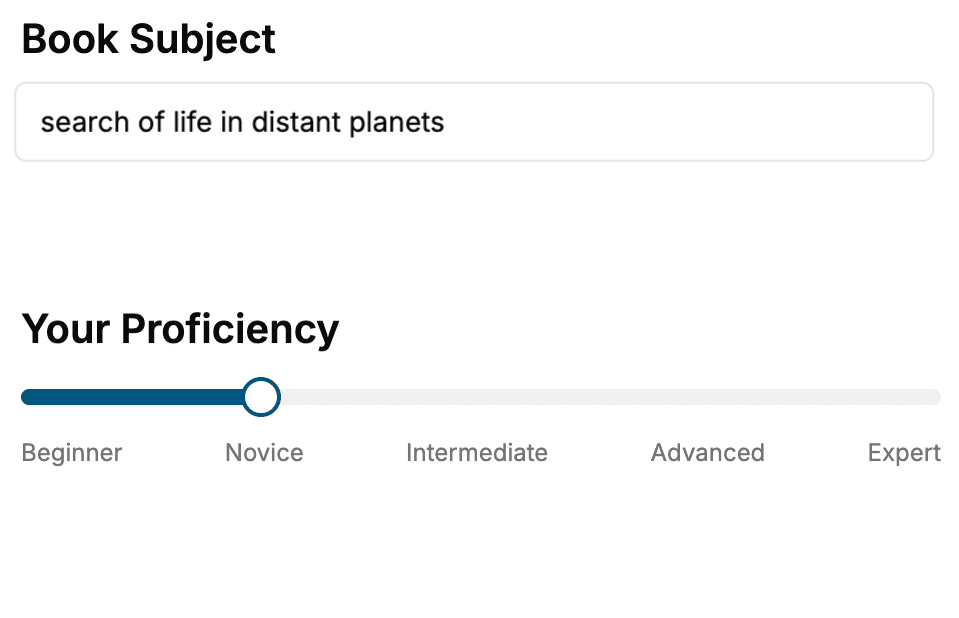
Select the focus of your Cocktails book and share your background
- 2. Personalize your book
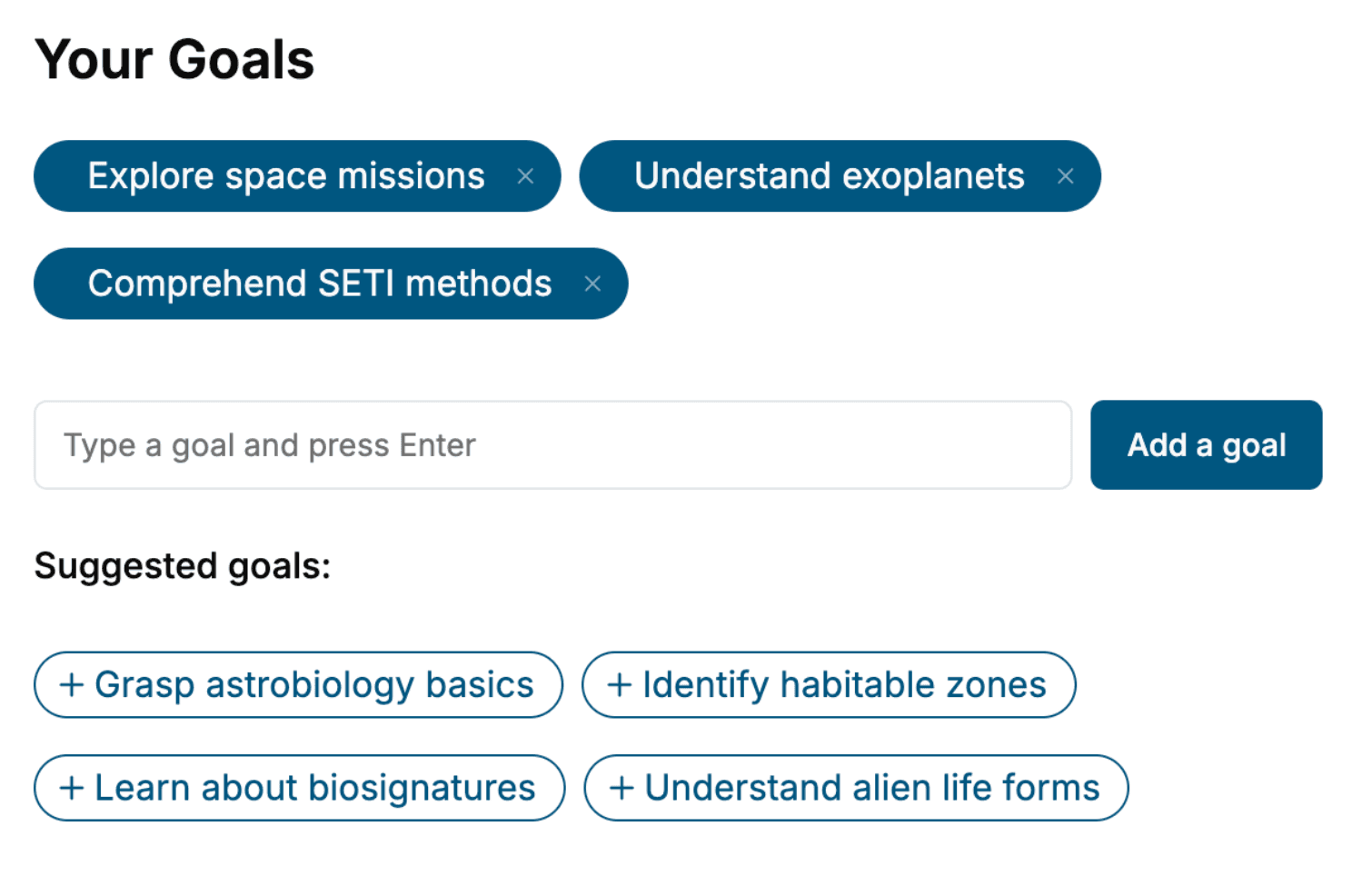
Specify your goals and choose sub-topics to include
- 3. Get your tailored book
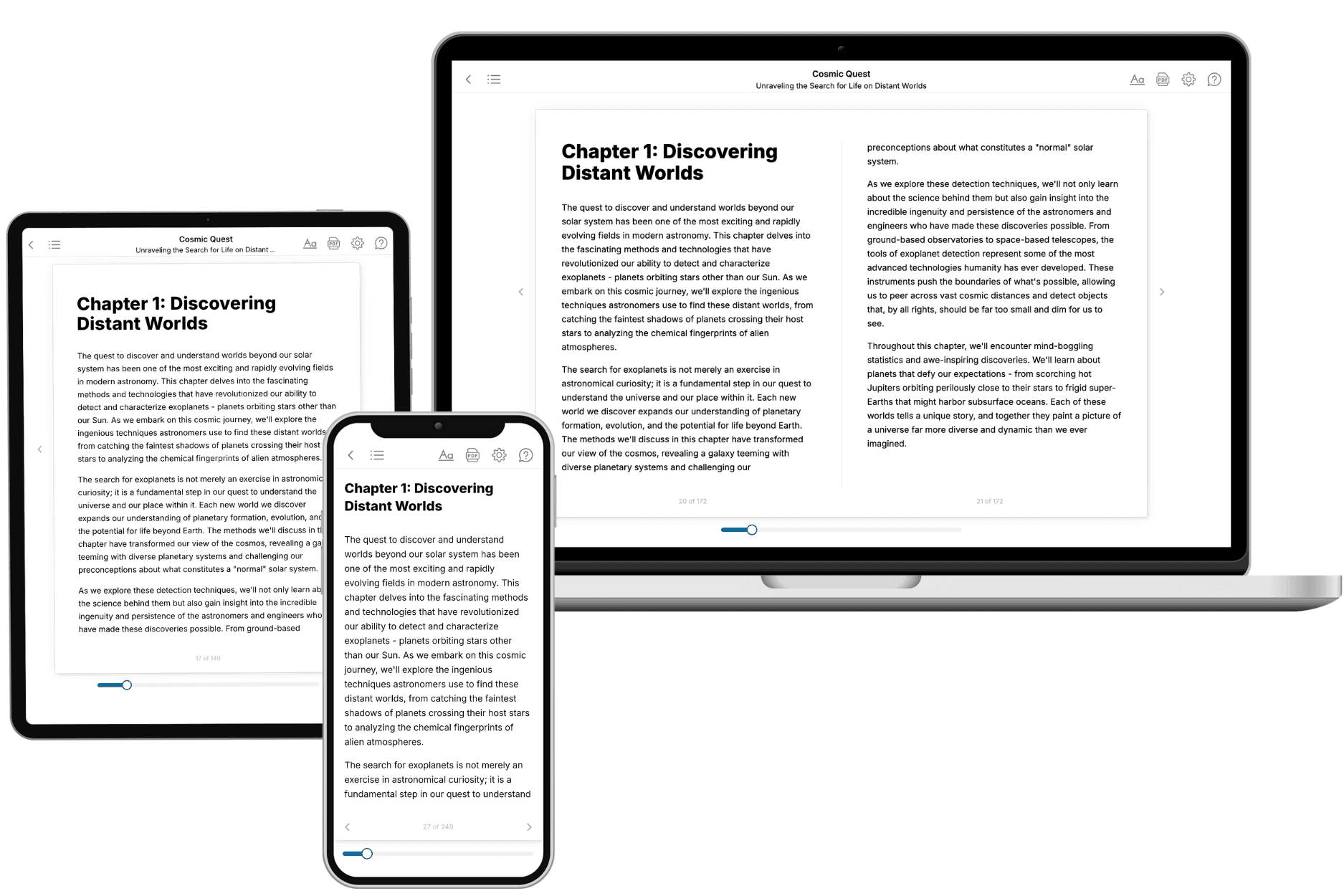
Your book is ready in 10 minutes. Read it online, download as EPUB or PDF, or send to Kindle.
Frequently asked questions
- What is TailoredRead?
TailoredRead creates complete, full-length nonfiction ebooks, written specifically for you. Tell us what you want to learn and why, and TailoredRead writes you a complete ebook on it, with charts, tables, and diagrams throughout. Read it online, on Kindle, or on any e-reader, or download it as a PDF or EPUB. Every book is written fresh the day you order it.
- How is the book tailored to me?
Before anything is written, you answer a few short questions about your goals, your background, and the topics you care about. Your book is then planned around your answers: written at your level, focused on your goals, and covering the topics you chose, instead of the one-size-fits-all book a store sells everyone.
- Will it read like generic AI content?
No. Your book isn't a chat transcript: it's planned chapter by chapter before a single word is written, told in a clear book voice, and explains ideas visually with charts, tables, and diagrams. After writing, every book goes through an editorial pass that polishes chapters so the book reads consistent from start to finish. Judge for yourself: browse thousands of sample books on our Explore Books page.
- How accurate is the content?
Our AI first checks whether your subject needs live research. Niche and fast-moving subjects are researched before writing, and the book plan and chapters are grounded in what it finds. After writing, every book goes through a quality pass that checks its facts and consistency, and researched books list their sources in a Notes section at the back.
- How long is the book?
You choose the length: Comprehensive (250-300 pages), Detailed (150-200 pages), Essential (70-100 pages), or Short (30-50 pages).
- Does the book include visuals?
Yes. Every book includes charts, tables, and diagrams: timelines, checklists, step-by-step guides, decision trees, comparison tables, matrices, and bar charts. A typical book includes dozens of these visual elements.
- Can I read it on Kindle? What formats can I download?
Yes. Every book can be read in our online reader or downloaded as a PDF or EPUB. The EPUB can be opened with Kindle, Apple Books, Kobo, and any e-reader. The Commercial and Author licenses also include an editable Word (DOCX) and Markdown download.
- How much does it cost?
About the price of a regular ebook. The exact price depends on your book's length and complexity, from $2 for the shortest books to $35 for the most comprehensive, and it's shown when you review your book, before you commit to anything. Each book is a one-time purchase, yours to keep, no subscription. Licenses that let you share, teach, or publish your book range from $35.99 to $49.99.
- Can I preview the book before purchasing?
Before you pay, you'll see what your book will cover: the title, a detailed description, the estimated length, and the complete chapter-by-chapter table of contents, so you know what you're getting before you decide. The full text itself is written after you purchase.
- How long does it take to create a book?
About 10 minutes. You can start reading the opening chapters while the rest is still being written.