The Home Care Leadership Compass
Navigating Excellence in Care Coordination and Team Management
Your journey as a home care service manager is about to take a transformative turn.
253 pages13 chaptersSep 8, 2025ManagementCreated by rachael
About this book
This comprehensive guide illuminates the path to becoming an exceptional leader in the home care industry. You'll discover how to orchestrate seamless care coordination, optimize staff scheduling, and cultivate a team that thrives on motivation and clear communication. As you progress through the pages, you'll uncover strategies to enhance client satisfaction through improved assessments and personalized care plans. You'll learn to navigate the challenges of staff retention and develop the leadership acumen necessary to inspire your team to new heights of performance. This book is your roadmap to mastering the delicate balance of administrative efficiency and compassionate care. From honing your time management skills to implementing effective conflict resolution techniques, you'll gain the tools to create a harmonious and productive work environment. Prepare to elevate your managerial prowess and make a lasting impact on the lives of both your staff and clients.
Table of contents
- IntroductionThe Evolving Landscape of Home Care Services, The Pivotal Role of the Home Care Manager, Navigating This Book: Your Guide to Excellence, Cultivating a Success-Oriented MindsetRead below
- Chapter 1: Mastering Care CoordinationPrinciples of Effective Care Coordination, Developing Comprehensive Care Plans, Fostering an Interdisciplinary Approach, Leveraging Technology for Seamless Coordination
- Chapter 2: Optimizing Staff SchedulingStrategic Scheduling Techniques, Balancing Workloads and Skill Sets, Maintaining Flexibility While Ensuring Consistency, Utilizing Scheduling Software Effectively
- Chapter 3: Enhancing Client SatisfactionDefining and Measuring Client Satisfaction, Implementing Personalized Care Approaches, Establishing Effective Feedback Systems, Continuous Improvement in Service Delivery
- Chapter 4: Mastering Time ManagementPrioritization Techniques for Managers, Effective Delegation Skills, Utilizing Productivity Tools and Systems, Achieving Work-Life Balance in a Demanding Role
- Chapter 5: Strategies for Staff RetentionUnderstanding Key Retention Factors, Implementing Career Development Programs, Creating Effective Recognition and Reward Systems, Fostering a Positive Work Culture
- Chapter 6: Developing Leadership SkillsUnderstanding Different Leadership Styles, Effective Decision-Making Processes, Motivating and Inspiring Your Team, Leading Through Change and Uncertainty
- Chapter 7: Improving Client AssessmentsUtilizing Comprehensive Assessment Tools, Taking a Holistic Approach to Client Needs, Determining Appropriate Reassessment Frequency, Documenting Assessments for Continuity of Care
- Chapter 8: Boosting Team CommunicationEstablishing Clear Communication Channels, Conducting Effective Team Meetings, Creating a Culture of Open Feedback, Implementing Conflict Resolution Strategies
- Chapter 9: Enhancing Caregiver TrainingIdentifying Training Needs and Gaps, Developing Comprehensive Training Programs, Implementing Ongoing Education Initiatives, Assessing and Validating Caregiver Skills
- Chapter 10: Stress Management for Managers and StaffIdentifying Sources of Workplace Stress, Developing Effective Coping Strategies, Creating a Supportive Work Environment, Promoting Self-Care Among Staff
- Chapter 11: Specialized Approaches to Dementia CareUnderstanding Dementia and Its Challenges, Effective Communication Techniques, Managing Challenging Behaviors, Supporting Caregivers in Dementia Care
- Chapter 12: Implementing Performance MetricsIdentifying Key Performance Indicators, Effective Data Collection and Analysis, Conducting Meaningful Performance Reviews, Using Metrics for Continuous Improvement
- Chapter 13: Enhancing Family CommunicationDeveloping Effective Communication Strategies, Managing Family Expectations, Resolving Conflicts with Family Members, Encouraging Positive Family Involvement
- ConclusionKey Takeaways for Home Care Excellence, Future Trends in Home Care Management
- AppendixAdditional Resources and Tools, Templates for Care Plans and Assessments
Introduction
Welcome to "The Home Care Leadership Compass: Navigating Excellence in Care Coordination and Team Management." This comprehensive guide is designed to empower you, a mid-level manager in home care services, with the knowledge, strategies, and practical skills necessary to excel in your role, improve care quality, and lead your teams effectively. As you embark on this journey through the pages of this book, you'll discover a wealth of information tailored to enhance your expertise in care coordination, staff management, and leadership within the dynamic field of home care services.
The home care industry is experiencing rapid growth and evolution, driven by an aging population, advancements in medical technology, and a shift towards patient-centered care models. As a manager with certifications in medical assisting, emergency medical services, patient care, and dementia care, you are uniquely positioned to make a significant impact on the lives of both your clients and your staff. This book will build upon your existing knowledge and provide you with cutting-edge insights and actionable strategies to navigate the complexities of modern home care management.
Throughout this introduction, we will explore the changing landscape of home care services, delve into the critical role you play as a home care manager, provide an overview of the book's structure and content, and help you cultivate a success-oriented mindset that will serve as the foundation for your professional growth. By the end of this chapter, you will be equipped with a clear understanding of the journey ahead and the transformative potential this book holds for your career in home care leadership.
The Evolving Landscape of Home Care Services
The home care industry has undergone significant transformation in recent years, shaped by demographic shifts, technological advancements, and changing healthcare policies. As the baby boomer generation ages, the demand for home care services continues to surge, with projections indicating sustained growth in the coming decades. According to the U.S. Bureau of Labor Statistics, employment of home health and personal care aides is expected to grow 33 percent from 2020 to 2030, much faster than the average for all occupations[1]. This rapid expansion brings both opportunities and challenges for home care managers like yourself.
One of the most significant trends shaping the home care landscape is the shift towards person-centered care. This approach emphasizes the importance of tailoring services to meet the unique needs, preferences, and goals of each individual client. As a result, home care managers are increasingly required to develop and implement personalized care plans that address not only medical needs but also social, emotional, and environmental factors that contribute to overall well-being. This holistic approach to care demands a high level of coordination and communication among various stakeholders, including caregivers, family members, and healthcare professionals.
Technological innovation is another driving force in the evolution of home care services. The integration of digital health tools, remote monitoring devices, and telehealth platforms has expanded the scope and efficiency of care delivery. For instance, wearable devices can now track vital signs and alert caregivers to potential health issues in real-time, while mobile apps facilitate seamless communication and documentation. As a home care manager, staying abreast of these technological advancements and effectively incorporating them into your care delivery model will be crucial for maintaining a competitive edge and ensuring the highest quality of care for your clients.
The regulatory environment surrounding home care services is also in a state of flux. Changes in healthcare policies, reimbursement models, and quality standards require home care organizations to be agile and adaptable. For example, the shift towards value-based care models has placed greater emphasis on outcomes and patient satisfaction, necessitating robust systems for measuring and reporting on care quality. Additionally, the COVID-19 pandemic has highlighted the importance of infection control and emergency preparedness in home care settings, leading to new guidelines and protocols that managers must implement and oversee.
Workforce challenges present another significant aspect of the evolving home care landscape. The industry faces high turnover rates, with estimates suggesting annual turnover as high as 60-80% for home care aides[2]. This turnover not only impacts the continuity of care for clients but also places additional strain on managers who must constantly recruit, train, and retain qualified staff. Addressing these workforce challenges requires innovative approaches to staff engagement, professional development, and retention strategies.
The increasing complexity of care needs among home care clients is another trend shaping the industry. As hospitals discharge patients earlier and medical advancements allow individuals with chronic conditions to live longer, home care providers are tasked with managing more medically complex cases. This shift demands a higher level of skill and expertise from caregivers and places greater responsibility on managers to ensure proper training and support for their staff.
Cultural competence and diversity awareness have also become critical components of effective home care delivery. As the population becomes more diverse, home care organizations must be prepared to serve clients from various cultural backgrounds, with different languages, beliefs, and customs. Managers play a pivotal role in fostering a culturally sensitive care environment and ensuring that staff are equipped to provide respectful and appropriate care to all clients.
The intersection of home care with other healthcare services is becoming increasingly important. Care coordination across the continuum, from hospitals to home care to community-based services, is essential for ensuring seamless transitions and optimal outcomes for clients. Home care managers must develop strong partnerships with other healthcare providers and navigate complex systems to advocate for their clients' needs effectively.
Lastly, the growing emphasis on preventive care and wellness presents new opportunities for home care organizations. By focusing on health promotion and disease prevention strategies, home care providers can play a crucial role in reducing hospital readmissions and improving overall health outcomes. This shift requires managers to think proactively about care planning and to implement programs that support clients' long-term health and independence.
As you navigate this dynamic landscape, it's clear that the role of a home care manager has never been more challenging or more critical. The ability to adapt to these changes while maintaining a focus on high-quality, compassionate care will be key to your success. Throughout this book, we will explore strategies and best practices for addressing these industry trends and positioning yourself as a leader in the evolving world of home care services.
The Pivotal Role of the Home Care Manager
As a home care manager, you occupy a position of immense responsibility and influence within your organization. Your role is multifaceted, requiring a unique blend of clinical knowledge, administrative acumen, and leadership skills. You serve as the linchpin that connects clients, caregivers, families, and healthcare partners, ensuring that all components of the care delivery system work in harmony to provide the highest quality of service. Understanding the full scope of your role is essential for maximizing your impact and driving excellence in home care services.
At the core of your responsibilities lies care coordination. You are tasked with orchestrating complex care plans that address the diverse needs of your clients. This involves conducting thorough assessments, developing personalized care strategies, and ensuring that these plans are executed effectively by your team of caregivers. Your expertise in medical assisting, emergency medical services, patient care, and dementia care provides you with a solid foundation for making informed decisions about client care. However, effective care coordination goes beyond clinical knowledge; it requires the ability to synthesize information from multiple sources, anticipate potential issues, and adapt quickly to changing circumstances.
Staff management is another critical aspect of your role. You are responsible for recruiting, training, and retaining a team of skilled and compassionate caregivers. This involves not only ensuring that your staff possess the necessary technical skills but also fostering a culture of empathy, professionalism, and continuous improvement. As a manager, you must be adept at motivating your team, addressing performance issues, and creating opportunities for professional growth. Your ability to build a cohesive and high-performing team directly impacts the quality of care your organization provides.
Quality assurance and compliance are paramount in home care services, and as a manager, you play a crucial role in maintaining high standards. This includes implementing and overseeing quality control measures, ensuring adherence to regulatory requirements, and continuously monitoring and improving care outcomes. You must stay informed about industry best practices, emerging regulations, and quality metrics to ensure that your organization not only meets but exceeds standards of excellence.
Financial management is an often-overlooked but essential component of the home care manager's role. While you may not be directly responsible for all financial decisions, your actions and strategies have significant implications for the organization's bottom line. This includes efficient resource allocation, budget management, and identifying opportunities for cost-effective care delivery without compromising quality. Understanding the financial aspects of home care operations allows you to make informed decisions that balance client needs with organizational sustainability.
As a leader, you are also responsible for shaping the culture and vision of your team. This involves setting clear expectations, leading by example, and fostering an environment of trust and open communication. Your leadership style can significantly impact staff morale, client satisfaction, and overall organizational performance. Effective home care managers are able to inspire their teams, navigate conflicts, and drive positive change within their organizations.
Technology integration has become an increasingly important aspect of the home care manager's role. You must be proficient in using and implementing various technological tools, from electronic health records to scheduling software and remote monitoring devices. Moreover, you play a crucial role in helping your staff and clients adapt to new technologies, ensuring that these tools enhance rather than hinder the care delivery process.
Crisis management and problem-solving are skills that home care managers must hone to excel in their roles. Whether dealing with unexpected client emergencies, staff shortages, or system-wide challenges like the COVID-19 pandemic, you must be prepared to make quick, informed decisions under pressure. Your ability to remain calm, think critically, and mobilize resources effectively can make the difference in ensuring client safety and maintaining operational continuity.
Advocacy is another vital aspect of your role as a home care manager. You serve as a voice for both your clients and your staff, advocating for their needs within your organization and in the broader healthcare system. This may involve negotiating with insurance providers, collaborating with other healthcare professionals, or engaging with policymakers to address industry challenges and improve care delivery.
Continuous learning and professional development are essential for home care managers to stay effective in their roles. The healthcare landscape is constantly evolving, and managers must commit to ongoing education to stay abreast of new care modalities, management techniques, and industry trends. Your commitment to personal growth sets an example for your team and ensures that your organization remains at the forefront of home care excellence.
In essence, as a home care manager, you are the conductor of a complex symphony of care. Your ability to harmonize the diverse elements of client needs, staff capabilities, organizational goals, and industry standards determines the quality and effectiveness of the care your organization provides. Throughout this book, we will delve deeper into each of these aspects of your role, providing you with the knowledge, tools, and strategies to excel in this pivotal position and make a lasting impact on the lives of those you serve.
Navigating This Book: Your Guide to Excellence
"The Home Care Leadership Compass" is designed to be your comprehensive guide to mastering the complexities of home care management. This book is structured to provide a logical progression of knowledge and skills, building upon your existing expertise and guiding you towards advanced proficiency in all aspects of your role. As you navigate through the chapters, you'll find a wealth of practical advice, evidence-based strategies, and real-world examples that will help you transform your approach to home care leadership.
The book is divided into thirteen core chapters, each focusing on a critical aspect of home care management. We begin with the foundational elements of care coordination and staff scheduling, providing you with advanced techniques to optimize these essential processes. From there, we delve into strategies for enhancing client satisfaction, a key metric in today's patient-centered care environment. You'll learn how to develop and implement personalized care approaches that not only meet but exceed client expectations.
Time management is a crucial skill for any manager, and in Chapter 4, we explore techniques specifically tailored to the unique demands of home care leadership. You'll discover how to prioritize effectively, delegate with confidence, and achieve a healthy work-life balance in this demanding role. Following this, we address one of the most pressing challenges in home care: staff retention. Chapter 5 provides you with innovative strategies to create a work environment that attracts and retains top talent, reducing turnover and improving care continuity.
Leadership development is a central theme throughout the book, with Chapter 6 dedicated to honing your leadership skills. You'll explore different leadership styles, learn effective decision-making processes, and discover how to motivate and inspire your team to achieve excellence. This chapter will help you develop the confidence and competence to lead your organization through challenges and towards new heights of success.
The book then focuses on specific aspects of care delivery, starting with improving client assessments in Chapter 7. You'll learn how to conduct comprehensive evaluations that capture all aspects of a client's needs, enabling you to develop more effective care plans. Chapter 8 addresses the critical issue of team communication, providing strategies to enhance information flow, conduct productive meetings, and foster a culture of open feedback.
Caregiver training is explored in depth in Chapter 9, offering insights into developing robust training programs that ensure your staff are equipped with the latest skills and knowledge. This is followed by a chapter on stress management, recognizing the high-pressure nature of home care work and providing techniques to support both your own well-being and that of your staff.
Given your expertise in dementia care, Chapter 11 is dedicated to specialized approaches in this area. You'll gain advanced strategies for managing the unique challenges of dementia care, enhancing communication techniques, and supporting caregivers in this demanding field. Chapter 12 focuses on implementing performance metrics, helping you identify key indicators, collect and analyze data effectively, and use this information to drive continuous improvement in your organization.
The final core chapter addresses the crucial aspect of family communication, providing you with strategies to manage expectations, resolve conflicts, and encourage positive family involvement in the care process. This chapter recognizes the vital role that families play in home care and equips you with the tools to foster productive relationships with clients' loved ones.
Throughout the book, you'll find practical examples, case studies, and exercises that allow you to apply the concepts to real-world scenarios. Each chapter concludes with key takeaways and reflection questions, encouraging you to think critically about how to implement these strategies in your specific context. The book also includes an extensive appendix with additional resources, templates, and tools that you can immediately put into practice in your organization.
As you progress through "The Home Care Leadership Compass," you'll notice that certain themes recur and interweave throughout the chapters. These include the importance of person-centered care, the role of technology in enhancing care delivery, the need for cultural competence, and the value of continuous learning and adaptation. By reinforcing these key concepts across different contexts, the book helps you develop a holistic understanding of home care excellence.
This book is designed to be both a comprehensive learning tool and a practical reference guide. While you may choose to read it from cover to cover, each chapter is also self-contained, allowing you to focus on specific areas of interest or immediate need. We encourage you to engage actively with the material, take notes, and reflect on how you can apply these insights in your daily work.
Remember, the journey to leadership excellence is ongoing. As you implement the strategies and techniques presented in this book, you'll likely encounter new challenges and opportunities. Use this guide as a foundation, but don't hesitate to adapt and innovate as you grow in your role. Your unique experiences and insights will contribute to your development as a leader in the home care field.
By the time you reach the conclusion of this book, you will have gained a comprehensive understanding of home care management best practices, developed advanced leadership skills, and acquired practical tools to excel in your role. You'll be well-equipped to navigate the complexities of the home care landscape, lead your team with confidence, and make a significant impact on the quality of care your organization provides. Let's begin this transformative journey towards becoming an exceptional home care leader.
Cultivating a Success-Oriented Mindset
As you embark on this journey of professional growth and leadership development, it's crucial to recognize that success in home care management begins with cultivating the right mindset. Your attitude, beliefs, and approach to challenges will significantly influence your effectiveness as a leader and the outcomes you achieve for your clients and organization. In this section, we'll explore the key elements of a success-oriented mindset and provide strategies for developing and maintaining this powerful mental framework.
At the core of a success-oriented mindset is a commitment to continuous improvement. This means embracing the belief that there is always room for growth, both personally and professionally. As a home care manager, you must be willing to critically examine your own performance, seek feedback from others, and actively pursue opportunities for learning and development. This growth mindset, as described by psychologist Carol Dweck, is characterized by the belief that abilities and intelligence can be developed through effort, learning, and persistence[3]. By adopting this perspective, you'll be more resilient in the face of challenges and more likely to innovate and find creative solutions to problems.
Another crucial aspect of a success-oriented mindset is maintaining a positive outlook while remaining grounded in reality. The home care industry can be demanding and at times overwhelming, but approaching challenges with optimism and confidence can make a significant difference in your ability to overcome them. This doesn't mean ignoring problems or difficulties; rather, it involves viewing challenges as opportunities for growth and improvement. Cultivate the habit of asking yourself, "What can I learn from this situation?" or "How can we use this experience to enhance our services?" This approach not only helps you navigate difficulties more effectively but also inspires confidence in your team and clients.
Resilience is a key characteristic of successful home care managers. The ability to bounce back from setbacks, adapt to changing circumstances, and maintain focus on long-term goals is essential in this dynamic field. Developing resilience involves building a strong support network, practicing self-care, and developing effective coping strategies. It also requires the ability to maintain perspective, recognizing that temporary setbacks do not define your overall success or capabilities. By cultivating resilience, you'll be better equipped to lead your team through challenges and maintain high standards of care even in difficult circumstances.
A success-oriented mindset also involves a strong sense of purpose and commitment to your role as a home care leader. Understanding the profound impact your work has on the lives of clients and their families can serve as a powerful motivator and guide for decision-making. Take time to reflect on your personal mission and values, and how they align with your organization's goals. This sense of purpose will not only drive your own performance but also inspire and motivate your team to strive for excellence.
Embracing accountability is another crucial element of a success-oriented mindset. This means taking ownership of your decisions, actions, and their outcomes. As a leader, you set the tone for accountability within your organization. By demonstrating a willingness to acknowledge mistakes, learn from them, and take decisive action to correct issues, you create a culture of responsibility and continuous improvement. This approach fosters trust among your team and clients, and contributes to a more transparent and effective care delivery system.
Developing a strategic perspective is essential for long-term success in home care management. While day-to-day operations demand much of your attention, it's crucial to regularly step back and consider the bigger picture. This involves staying informed about industry trends, anticipating future challenges and opportunities, and aligning your team's efforts with long-term organizational goals. Cultivate the habit of setting aside time for strategic thinking and planning, even amidst the busy pace of daily management tasks.
Collaboration and teamwork are fundamental to success in home care, and your mindset should reflect this reality. Recognize that achieving excellence in care delivery requires the combined efforts of a diverse team of professionals. Foster an attitude of openness to others' ideas and perspectives, and actively seek opportunities for collaboration both within your organization and with external partners. This collaborative mindset not only leads to better outcomes for clients but also creates a more engaging and fulfilling work environment for your team.
Emotional intelligence is a critical component of a success-oriented mindset for home care managers. This involves the ability to recognize and manage your own emotions, as well as to empathize with and positively influence the emotions of others. In the often emotionally charged environment of home care, your ability to remain calm under pressure, communicate effectively with diverse stakeholders, and navigate interpersonal dynamics can significantly impact your success as a leader. Cultivate self-awareness, practice active listening, and work on developing your emotional regulation skills to enhance your emotional intelligence.
Finally, maintaining a balance between confidence and humility is crucial for sustained success in home care management. Confidence in your abilities and decisions is important for effective leadership, but this should be balanced with the humility to recognize that you don't have all the answers. Be open to learning from your team, clients, and even competitors. This balanced approach allows you to make decisive actions when needed while remaining receptive to new ideas and perspectives that can improve your organization's performance.
Cultivating a success-oriented mindset is an ongoing process that requires conscious effort and practice. As you progress through this book and implement new strategies in your role, regularly reflect on your mindset and how it influences your approach to leadership. Consider keeping a journal to track your thoughts, challenges, and growth over time. Seek feedback from trusted colleagues or mentors on your leadership style and decision-making processes. Remember that developing a success-oriented mindset is not about achieving perfection, but about committing to continuous growth and improvement.
By embracing these elements of a success-oriented mindset – continuous improvement, positive outlook, resilience, purpose, accountability, strategic thinking, collaboration, emotional intelligence, and balanced confidence – you'll be well-positioned to lead your team effectively and drive excellence in home care services. This mindset will serve as the foundation upon which you can build the specific skills and strategies outlined in the following chapters, enabling you to navigate the complexities of home care management with confidence and achieve outstanding results for your clients, team, and organization.
This is the end of the free sample. The full book has 13 chapters.
Want this book written for you?
Tell us your goals and background, and get your own version of this book, tailored by AI to you.


Benefits of AI-tailored books
- Read one book, not ten:
- all the Management knowledge you need, gathered into a single book.
- Save days of learning:
- tell us your goals, choose your topics, and the whole book is built around them.
- Learn effortlessly:
- Management book written for your specific background and expertise.
- Understand at a glance:
- includes charts, tables, timelines, checklists, decision trees, and more.
- Stay current:
- written the day you order it, not years ago.
- Trust what you read:
- every book is checked for accuracy, with real research when your subject needs it.
Create your unique book in 3 steps
- 1. Select your focus
Select the focus of your Management book and share your background
- 2. Personalize your book
Specify your goals and choose sub-topics to include
- 3. Get your tailored book
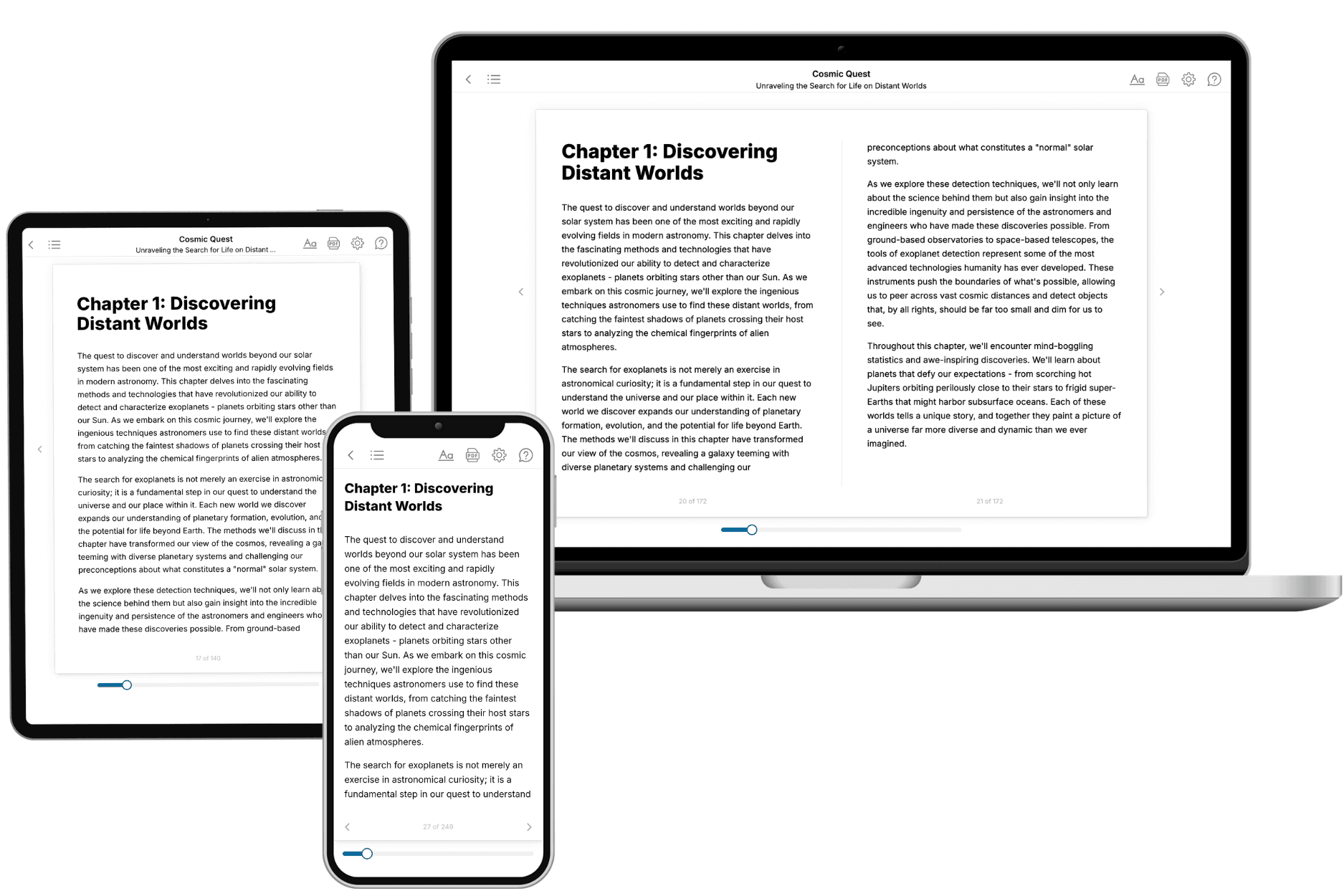
Your book is ready in 10 minutes. Read it online, download as EPUB or PDF, or send to Kindle.

Frequently asked questions
- What is TailoredRead?
TailoredRead creates complete, full-length nonfiction ebooks, written specifically for you. Tell us what you want to learn and why, and TailoredRead writes you a complete ebook on it, with charts, tables, and diagrams throughout. Read it online, on Kindle, or on any e-reader, or download it as a PDF or EPUB. Every book is written fresh the day you order it.
- How is the book tailored to me?
Before anything is written, you answer a few short questions about your goals, your background, and the topics you care about. Your book is then planned around your answers: written at your level, focused on your goals, and covering the topics you chose, instead of the one-size-fits-all book a store sells everyone.
- Will it read like generic AI content?
No. Your book isn't a chat transcript: it's planned chapter by chapter before a single word is written, told in a clear book voice, and explains ideas visually with charts, tables, and diagrams. After writing, every book goes through an editorial pass that polishes chapters so the book reads consistent from start to finish. Judge for yourself: browse thousands of sample books on our Explore Books page.
- How accurate is the content?
Our AI first checks whether your subject needs live research. Niche and fast-moving subjects are researched before writing, and the book plan and chapters are grounded in what it finds. After writing, every book goes through a quality pass that checks its facts and consistency, and researched books list their sources in a Notes section at the back.
- How long is the book?
You choose the length: Comprehensive (250-300 pages), Detailed (150-200 pages), Essential (70-100 pages), or Short (30-50 pages).
- Does the book include visuals?
Yes. Every book includes charts, tables, and diagrams: timelines, checklists, step-by-step guides, decision trees, comparison tables, matrices, and bar charts. A typical book includes dozens of these visual elements.
- Can I read it on Kindle? What formats can I download?
Yes. Every book can be read in our online reader or downloaded as a PDF or EPUB. The EPUB can be opened with Kindle, Apple Books, Kobo, and any e-reader. The Commercial and Author licenses also include an editable Word (DOCX) and Markdown download.
- How much does it cost?
About the price of a regular ebook. The exact price depends on your book's length and complexity, from $2 for the shortest books to $35 for the most comprehensive, and it's shown when you review your book, before you commit to anything. Each book is a one-time purchase, yours to keep, no subscription. Licenses that let you share, teach, or publish your book range from $35.99 to $49.99.
- Can I preview the book before purchasing?
Before you pay, you'll see what your book will cover: the title, a detailed description, the estimated length, and the complete chapter-by-chapter table of contents, so you know what you're getting before you decide. The full text itself is written after you purchase.
- How long does it take to create a book?
About 10 minutes. You can start reading the opening chapters while the rest is still being written.