Home Electrical Wiring Diagrams Simplified
Master the Visual Language of Electrical Systems and Wire Your Home with Confidence
Imagine confidently walking into your electrical panel, understanding exactly what each wire does and why it matters.
222 pages9 chaptersDec 1, 2025Home Electrical Wiring
About this book
Picture yourself reviewing a wiring diagram and immediately grasping the circuit layout, knowing which components connect where and why. This book transforms electrical wiring diagrams from confusing technical drawings into clear, actionable blueprints you can actually use. Whether you're planning a kitchen renovation, adding a new outlet, installing a ceiling fan, or troubleshooting a circuit problem, you need to read diagrams accurately. This comprehensive guide breaks down the symbols, conventions, and logic behind electrical wiring diagrams in plain language. You'll learn how to interpret different diagram types, understand circuit configurations, apply safety principles, and ensure your projects meet code requirements. With practical examples, real-world scenarios, and step-by-step guidance, you'll gain the confidence to tackle electrical projects safely and correctly—and know when to call a professional.
Table of contents
- IntroductionWhy Electrical Diagrams Matter for Your Home, What You'll Learn in This Book, Safety First: How to Use This Guide ResponsiblyRead below
- Chapter 1: The Fundamentals of Electrical Wiring DiagramsWhat Is an Electrical Wiring Diagram?, Why Standardization and Symbols Matter, How Diagrams Relate to Physical Wiring, Common Misconceptions About Electrical Diagrams
- Chapter 2: Decoding Electrical Symbols and ConventionsStandard Electrical Symbols You Need to Know, Power Sources and Voltage Symbols, Switches, Outlets, and Receptacles, Circuit Protection Devices and Their Symbols
- Chapter 3: Types of Electrical Wiring DiagramsSchematic Diagrams: The Logical Blueprint, Single-Line Diagrams: Simplified System Overview, Pictorial Diagrams: Physical Layout and Installation, Choosing the Right Diagram for Your Project
- Chapter 4: Understanding Circuit ConfigurationsSeries Circuits: How They Work and Look on Diagrams, Parallel Circuits: Multiple Paths for Electricity, Combination Circuits: Mixed Series and Parallel, Tracing Electricity Flow Through a Diagram
- Chapter 5: Grounding, Bonding, and Safety EssentialsGrounding Basics: Why It's Critical, Bonding Requirements and Diagram Representation, GFCI and AFCI Protection in Diagrams, Reading Safety Symbols and Codes
- Chapter 6: Common Residential Wiring DiagramsSingle-Switch Light Circuits, Three-Way and Four-Way Switch Circuits, Outlet and Receptacle Circuits, Combination Circuits in Home Applications
- Chapter 7: Reading Your Home's Electrical Panel DiagramUnderstanding Your Electrical Panel Layout, Identifying Breakers and Their Ratings, Main Disconnect and Service Entrance, Safety Considerations When Reading Panel Diagrams
- Chapter 8: Applying Diagrams to Real ProjectsPlanning Your Project Using Diagrams, Step-by-Step Installation Following Diagrams, Troubleshooting Problems Using Diagram Logic, Ensuring Code Compliance with Your Diagrams
- Chapter 9: Modern Systems and Updated DiagramsSmart Home Wiring Diagrams, Solar and Renewable Energy System Diagrams, Electric Vehicle Charging Station Diagrams
- ConclusionYour Path to Diagram Mastery, Next Steps and Continued Learning
- Glossary of Electrical Terms
- Further Reading and Resources
- Frequently Asked Questions
Introduction
You stand in front of your electrical panel, staring at a maze of wires, breakers, and labels that might as well be written in a foreign language. Or perhaps you've downloaded a wiring diagram for installing a ceiling fan, only to find yourself confused by cryptic symbols and lines that seem to go nowhere. You're not alone. Thousands of capable, intelligent homeowners face this same frustration every day. The good news is that electrical wiring diagrams aren't actually complicated—they just use a visual language you haven't learned yet. Once you understand this language, those confusing drawings transform into clear, logical blueprints that empower you to tackle electrical projects with confidence and safety.
Electrical wiring diagrams are the universal communication tool that electricians, inspectors, and engineers use to plan, install, and troubleshoot electrical systems. They're not designed to be mysterious or exclusive. In fact, they follow standardized conventions specifically to make electrical work safer and more accessible. Every symbol, every line, and every notation serves a specific purpose. When you learn to read these diagrams, you gain the ability to understand exactly how electricity flows through your home, where potential problems might exist, and how to implement changes correctly. This knowledge doesn't just save you money on simple projects—it helps you communicate effectively with professionals, make informed decisions about your home's electrical system, and recognize when a project exceeds your skill level.
This book is your comprehensive guide to mastering the visual language of electrical systems. Whether you're planning a kitchen renovation that requires new circuits, troubleshooting a malfunctioning outlet, or simply wanting to understand what's happening behind your walls, you'll find practical, actionable guidance here. We'll start with the fundamentals and build your knowledge systematically, using real-world examples and clear explanations. By the time you finish this book, you'll be able to read professional wiring diagrams, create simple diagrams for your own projects, and apply this knowledge to make your home safer and more functional. You'll understand not just the what of electrical diagrams, but the why behind every convention and symbol.
The approach in this book is deliberately practical and accessible. You won't find dense technical jargon or theoretical discussions that don't apply to real projects. Instead, each chapter builds on the previous one, introducing concepts in a logical sequence that mirrors how you'll actually use this knowledge. We'll examine actual residential wiring scenarios, walk through common projects step-by-step, and address the questions that homeowners most frequently ask. You'll learn to recognize the difference between schematic diagrams, pictorial diagrams, and single-line diagrams—and more importantly, when to use each type. We'll decode the symbols for switches, outlets, breakers, and protection devices, showing you exactly how they appear on paper and how they translate to physical components.
Safety is woven into every page of this book because electrical work demands respect and caution. Understanding wiring diagrams is a critical safety skill in itself—it helps you recognize proper grounding, identify circuit protection requirements, and spot potential hazards before they become problems. You'll learn which projects are appropriate for a knowledgeable homeowner and which absolutely require a licensed electrician. We'll discuss National Electrical Code (NEC) requirements not as abstract rules, but as practical guidelines that protect your family and property. This book will help you work smarter and safer, whether you're doing the work yourself or supervising a contractor.
Why Electrical Diagrams Matter for Your Home
Electrical wiring diagrams serve as the blueprint for your home's entire electrical system, documenting how power flows from the service entrance through circuits to every outlet, switch, and fixture. Without diagrams, electrical work becomes guesswork—dangerous, inefficient, and likely to fail inspection. When you understand diagrams, you can trace a circuit from the panel to the problem area, identify which breaker controls which rooms, and plan additions or modifications that integrate seamlessly with existing wiring. This knowledge transforms you from someone who simply flips breakers when something stops working into someone who understands the underlying system and can make informed decisions about it.
Consider a common scenario: you want to add several outlets in your garage for power tools and equipment. Without diagram literacy, you might randomly tap into an existing circuit, potentially overloading it and creating a fire hazard. With diagram knowledge, you can calculate the existing load on nearby circuits, determine whether you need a new dedicated circuit, and plan the wire routing efficiently. You'll know whether you need 15-amp or 20-amp protection, what wire gauge to use, and how to represent your plan on paper for permit applications. The diagram becomes your planning tool, your installation guide, and your documentation for future reference.
Diagrams also protect your investment in your home. When you sell your property, unpermitted or improperly documented electrical work can derail the sale or reduce your home's value. Professional home inspectors look for evidence of amateur electrical work, and missing or incorrect diagrams raise red flags. Conversely, well-documented electrical modifications with proper diagrams demonstrate that work was done thoughtfully and correctly. Many jurisdictions require diagram submissions for permit applications, and inspectors use these diagrams to verify that installations meet code requirements. Learning to create and read diagrams isn't just about understanding electricity—it's about protecting your property value and ensuring legal compliance.
The troubleshooting power of diagrams cannot be overstated. When a circuit stops working, a diagram lets you systematically trace the problem rather than randomly checking components. You can identify all devices on the affected circuit, locate junction boxes where connections might have failed, and understand the logical sequence of components. For example, if several outlets stop working simultaneously, a diagram reveals whether they're on the same circuit and helps you locate the likely failure point—often a loose connection in the first outlet in the series. This systematic approach saves hours of frustration and prevents the common mistake of replacing components that aren't actually faulty.
Modern homes increasingly incorporate complex electrical systems that go beyond simple lighting and outlets. Smart home devices, home automation systems, security systems, and renewable energy installations all require integration with your electrical system. Each of these systems comes with wiring diagrams that you need to interpret and apply. Understanding diagram conventions allows you to evaluate whether your existing electrical infrastructure can support new technologies, plan the integration properly, and troubleshoot problems when they arise. As homes become more technologically sophisticated, diagram literacy becomes increasingly essential for homeowners who want to maintain and upgrade their properties.
Diagrams also facilitate communication with electrical professionals. When you call an electrician, being able to describe your system using proper terminology and diagram concepts helps them understand your situation quickly and provide accurate estimates. You can discuss options intelligently, understand their proposals, and verify that completed work matches what was agreed upon. This knowledge prevents miscommunication and ensures you get the results you want. Additionally, when you can read the diagrams that electricians provide, you can make informed decisions about different approaches to solving problems or implementing improvements.
Financial benefits extend beyond avoiding costly mistakes. Many simple electrical projects that homeowners pay professionals to complete are actually within reach of a knowledgeable DIYer who can read diagrams. Installing a new light fixture, adding a switch, or replacing an outlet becomes straightforward when you understand the diagram showing how components connect. While complex projects still require professional expertise, handling appropriate tasks yourself can save thousands of dollars over the years you own your home. The key is knowing which projects are suitable for your skill level—and diagram literacy is fundamental to making that assessment.
Perhaps most importantly, understanding electrical diagrams gives you control and confidence in your own home. You're no longer dependent on others to explain what's happening with your electrical system or why certain work is necessary. You can evaluate contractor proposals critically, catch potential problems before they become expensive repairs, and plan improvements strategically. This knowledge empowers you to be an active, informed participant in maintaining and improving your home rather than a passive consumer of electrical services. That confidence and capability is worth far more than the time invested in learning this essential skill.
What You'll Learn in This Book
This book is structured to build your diagram literacy systematically, starting with fundamental concepts and progressing to practical applications. In the early chapters, you'll master the basic visual language of electrical diagrams—the symbols, conventions, and logic that make these drawings universally understandable. You'll learn to recognize standard symbols for switches, outlets, fixtures, and protection devices at a glance. We'll explore why standardization matters and how it enables electricians anywhere to read and implement diagrams created by others. These foundational chapters give you the vocabulary and grammar of electrical diagrams, preparing you to read increasingly complex drawings with confidence.
You'll discover the critical differences between the three main types of electrical diagrams: schematic diagrams, single-line diagrams, and pictorial diagrams. Each type serves distinct purposes and presents information differently. Schematic diagrams show the logical connections between components without regard to physical layout—they're perfect for understanding circuit operation and troubleshooting. Single-line diagrams provide simplified overviews of entire systems, showing major components and power distribution without excessive detail. Pictorial diagrams illustrate physical layouts and installation details, showing where components are actually located and how wires route through walls and conduits. Understanding when to use each type is essential for effective electrical work.
Circuit configurations form a major focus of this book because understanding how circuits work is fundamental to reading diagrams effectively. You'll learn to recognize series circuits, where components connect in a single path and failure of one component affects all others. We'll explore parallel circuits, where multiple paths allow components to operate independently—the configuration used for most home wiring. You'll master combination circuits that mix series and parallel elements, and learn to trace electricity flow through complex diagrams. These concepts aren't just theoretical—we'll apply them to real residential scenarios like three-way switch circuits, outlet strings, and lighting configurations you'll encounter in your own home.
Safety receives extensive coverage because it's non-negotiable in electrical work. You'll learn how grounding and bonding are represented on diagrams and why these safety features are critical. We'll decode the symbols and requirements for Ground Fault Circuit Interrupter (GFCI) and Arc Fault Circuit Interrupter (AFCI) protection, explaining where these devices are required and how to verify their proper installation from diagrams. You'll understand how to read safety notations, identify code compliance issues on diagrams, and recognize when a diagram shows unsafe or non-compliant configurations. This knowledge helps you evaluate both your own work and that of contractors.
The book includes detailed walkthroughs of common residential wiring diagrams that you'll encounter in real projects:
- Single-switch light circuits: The simplest configuration, perfect for understanding basic diagram reading
- Three-way and four-way switches: More complex circuits that control lights from multiple locations
- Outlet circuits: How receptacles connect in parallel to provide power throughout rooms
- Combination circuits: Mixed configurations that include switches, outlets, and fixtures on the same circuit
- Dedicated appliance circuits: High-power circuits for refrigerators, microwaves, and other major appliances
Your home's electrical panel receives special attention because it's the heart of your electrical system. You'll learn to read panel diagrams, identify breakers and their ratings, understand the main disconnect, and trace circuits from the panel to their destinations. We'll discuss how to safely work with panel diagrams, when panel work requires a professional, and how to document your panel configuration for future reference. Understanding your panel diagram is essential for troubleshooting, planning additions, and ensuring your electrical system operates safely within its designed capacity.
Practical application chapters show you how to use diagrams in real projects from start to finish. You'll learn to plan projects using diagrams, ensuring you have the right materials and approach before starting work. We'll walk through installation processes, showing how to translate diagram information into physical wiring. Troubleshooting sections teach you to use diagrams diagnostically, systematically identifying problems rather than guessing. Code compliance guidance helps you verify that your diagrams and installations meet National Electrical Code requirements, protecting your safety and your home's value.
Modern electrical systems receive coverage appropriate to their growing importance in residential settings. You'll learn to read diagrams for smart home wiring, understanding how low-voltage control systems integrate with line-voltage power circuits. Solar and renewable energy system diagrams are explained, showing how these systems connect to your home's electrical infrastructure and the grid. Electric vehicle charging station diagrams illustrate the requirements for these increasingly common installations. These chapters prepare you for the electrical systems of today and tomorrow, not just traditional configurations.
Throughout the book, you'll find practical examples drawn from real residential scenarios. Rather than abstract theory, you'll see how diagram knowledge applies to situations you might actually encounter: adding outlets in a basement, installing a ceiling fan, troubleshooting a dead circuit, or planning a kitchen renovation. Each example includes specific details, measurements, and considerations that make the information immediately applicable. You'll also learn what not to do, with examples of common mistakes and how to avoid them. This practical focus ensures that your learning translates directly into capability.
By the end of this book, you'll possess a comprehensive skill set for working with electrical wiring diagrams:
- Read and interpret professional electrical diagrams accurately
- Create simple diagrams for your own projects and permit applications
- Identify code compliance issues and safety concerns on diagrams
- Plan electrical projects effectively using diagram-based planning
- Troubleshoot electrical problems systematically using diagram logic
- Communicate effectively with electrical professionals using proper terminology
- Evaluate contractor proposals and verify completed work
- Understand when projects require professional expertise versus DIY capability
Safety First: How to Use This Guide Responsibly
Electricity is simultaneously one of the most useful and most dangerous forces in your home. It powers everything from lights to refrigerators, but it can also cause fires, serious injuries, and death when handled improperly. This book teaches you to read and understand electrical diagrams, but understanding diagrams doesn't automatically qualify you to perform all electrical work. You must approach every electrical project with appropriate caution, respect for the hazards involved, and honest assessment of your skills and limitations. The goal is informed, safe decision-making—not reckless overconfidence. Some projects are appropriate for knowledgeable homeowners; others absolutely require licensed professionals.
Before touching any electrical component, you must understand and follow lockout/tagout procedures. This means turning off power at the breaker, testing to verify power is actually off using a non-contact voltage tester, and ensuring no one can accidentally restore power while you're working. Simply turning off a switch is never sufficient—switches can be defective, and someone else might turn them back on. Even when reading diagrams without performing physical work, you should never open electrical panels or remove cover plates on live circuits. Observation and learning can happen safely, but only when you maintain appropriate boundaries and never expose yourself to live electrical components unnecessarily.
This book focuses on residential electrical systems operating at standard voltages—typically 120V and 240V in North American homes. These voltages are dangerous and potentially lethal. Even 120V circuits can cause fatal shocks under the right conditions, particularly in wet environments or when you're grounded. The information provided here is educational and designed to help you understand electrical systems, plan projects, and communicate with professionals. It is not a substitute for proper training, hands-on instruction, or professional expertise. Reading about electrical work is fundamentally different from safely performing it, and you must recognize this distinction.
Local codes and regulations vary significantly by jurisdiction, and you are responsible for understanding and following the requirements in your area. While this book references the National Electrical Code (NEC), which provides the foundation for most local codes, your municipality may have additional requirements, restrictions, or modifications. Many jurisdictions restrict certain electrical work to licensed electricians only, regardless of the homeowner's knowledge level. Before starting any project, research your local requirements, determine whether permits are needed, and understand what work you're legally allowed to perform. Ignorance of local codes is not a defense when safety violations or property damage occurs.
Certain projects should always be left to licensed electricians, regardless of your diagram literacy or general competence:
- Service entrance work: Anything involving the connection between utility lines and your home
- Main panel replacement or major modifications: Work on the main disconnect or panel bus bars
- Subpanel installation: Adding new distribution panels requires expertise in load calculations and proper bonding
- Whole-house rewiring: Major electrical system overhauls involve complexity beyond diagram reading
- Commercial or industrial work: Non-residential electrical systems operate under different codes and requirements
- Any work you're uncomfortable with: If you have doubts about your ability to complete a project safely, hire a professional
When you do perform electrical work yourself, follow a systematic safety approach. Always use proper tools rated for electrical work, including insulated screwdrivers and wire strippers. Wear rubber-soled shoes and avoid working in wet conditions. Keep one hand in your pocket when testing or working near live circuits to prevent current from crossing your chest. Use a voltage tester to verify circuits are de-energized before touching wires. Work during daylight hours when possible, and ensure you have adequate lighting. Never rush electrical work—take time to double-check connections, verify wire colors, and ensure everything matches the diagram before restoring power.
Understanding your limitations is a sign of wisdom, not weakness. A licensed electrician has completed years of training, passed rigorous examinations, and maintains insurance to protect clients. They've encountered situations you've never imagined and developed troubleshooting skills that come only from extensive experience. When you hire a professional for complex work, you're not admitting defeat—you're making a smart decision that protects your family and property. Use your diagram literacy to communicate effectively with electricians, understand their proposals, and verify their work. This collaborative approach combines your knowledge with their expertise for optimal results.
This book includes numerous warnings and cautions throughout, highlighting specific safety concerns related to particular topics. Pay attention to these warnings—they're based on real hazards that have caused injuries and property damage. When a section advises professional assistance, take that recommendation seriously. The information provided is accurate and thorough, but it cannot account for every possible situation or complication you might encounter. Unexpected conditions like aluminum wiring, knob-and-tube systems, or previous amateur work can create hazards that aren't apparent from diagrams alone. When you encounter anything unexpected or confusing, stop work and consult a professional.
Insurance and liability considerations matter more than many homeowners realize. If electrical work you perform causes a fire, your homeowner's insurance may deny the claim if the work wasn't permitted or was performed improperly. If someone is injured due to faulty electrical work, you could face serious legal liability. These aren't theoretical concerns—they're real consequences that have devastated families financially. Proper permits, inspections, and professional work when required aren't bureaucratic obstacles; they're protections for you and your family. The money saved by skipping permits or doing work beyond your capability is trivial compared to the potential costs of fires, injuries, or legal problems.
Use this book as it's intended: as an educational resource that builds your understanding of electrical systems and empowers you to make informed decisions. Let it guide you in planning projects, reading diagrams, and understanding how your home's electrical system works. Apply this knowledge to appropriate DIY projects within your skill level, and use it to communicate effectively with professionals for complex work. Approach every electrical project with caution, respect, and honest self-assessment. When you combine diagram literacy with appropriate safety practices and realistic evaluation of your capabilities, you'll successfully complete projects that improve your home while keeping your family safe. That's the true goal of this book—not just knowledge, but safe, effective application of that knowledge.
This is the end of the free sample. The full book has 9 chapters.
Want this book written for you?
Tell us your goals and background, and get your own version of this book, tailored by AI to you.


Benefits of AI-tailored books
- Read one book, not ten:
- all the Home Electrical Wiring knowledge you need, gathered into a single book.
- Save days of learning:
- tell us your goals, choose your topics, and the whole book is built around them.
- Learn effortlessly:
- Home Electrical Wiring book written for your specific background and expertise.
- Understand at a glance:
- includes charts, tables, timelines, checklists, decision trees, and more.
- Stay current:
- written the day you order it, not years ago.
- Trust what you read:
- every book is checked for accuracy, with real research when your subject needs it.
Create your unique book in 3 steps
- 1. Select your focus
Select the focus of your Home Electrical Wiring book and share your background
- 2. Personalize your book
Specify your goals and choose sub-topics to include
- 3. Get your tailored book
Your book is ready in 10 minutes. Read it online, download as EPUB or PDF, or send to Kindle.


Frequently asked questions
- What is TailoredRead?
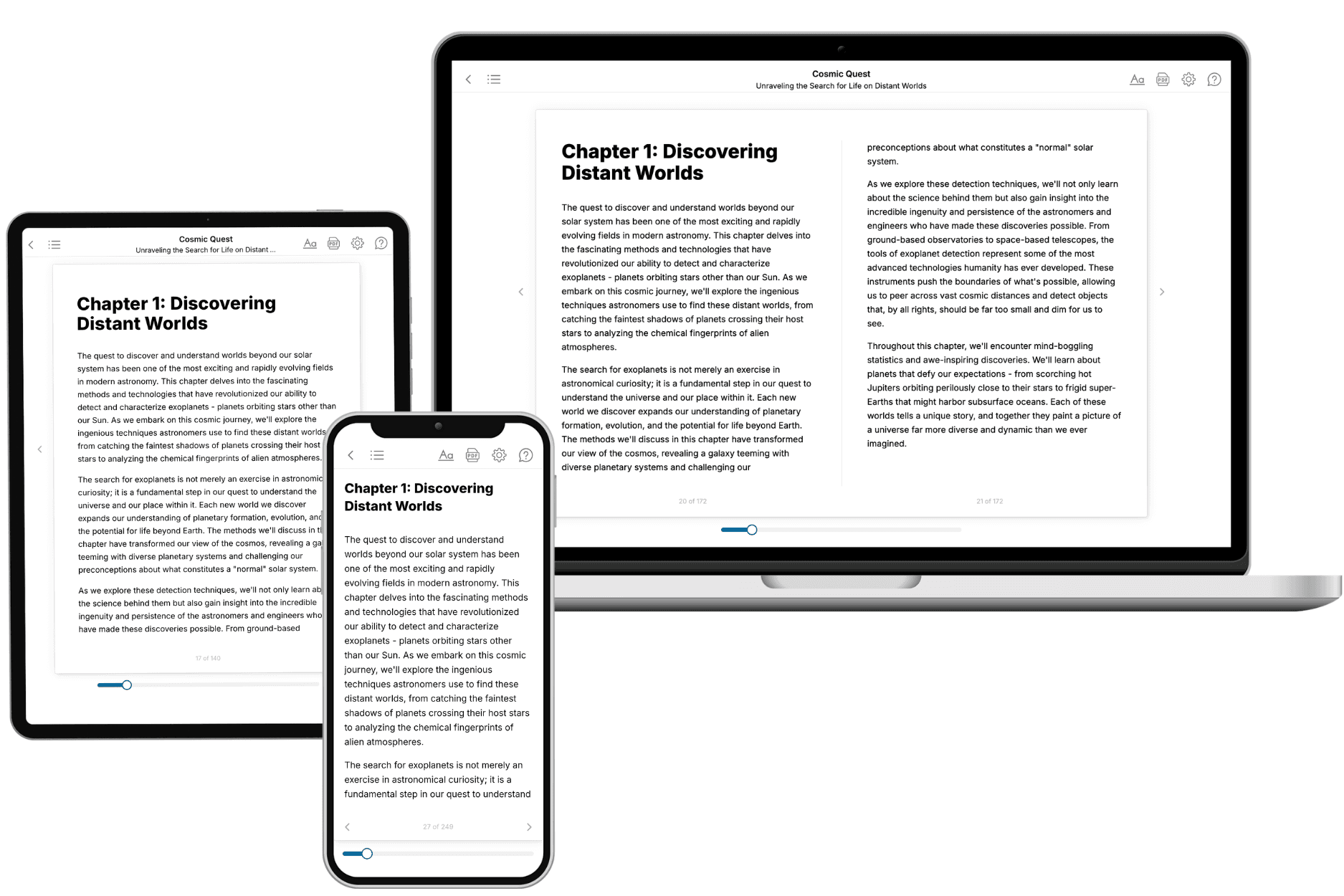
TailoredRead creates complete, full-length nonfiction ebooks, written specifically for you. Tell us what you want to learn and why, and TailoredRead writes you a complete ebook on it, with charts, tables, and diagrams throughout. Read it online, on Kindle, or on any e-reader, or download it as a PDF or EPUB. Every book is written fresh the day you order it.
- How is the book tailored to me?
Before anything is written, you answer a few short questions about your goals, your background, and the topics you care about. Your book is then planned around your answers: written at your level, focused on your goals, and covering the topics you chose, instead of the one-size-fits-all book a store sells everyone.
- Will it read like generic AI content?
No. Your book isn't a chat transcript: it's planned chapter by chapter before a single word is written, told in a clear book voice, and explains ideas visually with charts, tables, and diagrams. After writing, every book goes through an editorial pass that polishes chapters so the book reads consistent from start to finish. Judge for yourself: browse thousands of sample books on our Explore Books page.
- How accurate is the content?
Our AI first checks whether your subject needs live research. Niche and fast-moving subjects are researched before writing, and the book plan and chapters are grounded in what it finds. After writing, every book goes through a quality pass that checks its facts and consistency, and researched books list their sources in a Notes section at the back.
- How long is the book?
You choose the length: Comprehensive (250-300 pages), Detailed (150-200 pages), Essential (70-100 pages), or Short (30-50 pages).
- Does the book include visuals?
Yes. Every book includes visual elements such as timelines, checklists, step-by-step guides, decision trees, comparison tables, and matrices, and many include bar charts. A typical book includes dozens of these visual elements.
- Can I read it on Kindle? What formats can I download?
Yes. Every book can be read in our online reader or downloaded as a PDF or EPUB. The EPUB can be opened with Kindle, Apple Books, Kobo, and any e-reader. The Commercial and Author licenses also include an editable Word (DOCX) and Markdown download.
- How much does it cost?
About the price of a regular ebook. The exact price depends on your book's length and complexity, from $2 for the shortest books to $35 for the most comprehensive, and it's shown when you review your book, before you commit to anything. Each book is a one-time purchase, yours to keep, no subscription. Licenses that let you share, teach, or publish your book range from $35.99 to $49.99.
- Can I preview the book before purchasing?
Before you pay, you'll see what your book will cover: the title, a detailed description, the estimated length, and the complete chapter-by-chapter table of contents, so you know what you're getting before you decide. The full text itself is written after you purchase.
- How long does it take to create a book?
About 10 minutes. You can start reading the opening chapters while the rest is still being written.