Idiom Odyssey
Navigating the Colorful World of German Expressions
Dive into the rich tapestry of German language and culture through the lens of idiomatic expressions.
300 pages15 chaptersFeb 12, 2025Learning German
About this book
As you progress through this book, you'll discover how these linguistic gems can elevate your German from textbook-correct to authentically fluent. Each chapter unveils a new facet of German idioms, from their historical origins to their modern usage, helping you internalize these expressions and use them confidently in various contexts. You'll explore the nuances of German idioms grouped by themes, learning not just their literal translations but also their cultural significance and appropriate usage. Through engaging exercises, real-life examples, and cultural anecdotes, you'll develop an intuitive understanding of when and how to pepper your German conversations with these colorful phrases. By the end of this idiomatic journey, you'll have gained not only a vast repertoire of German expressions but also a deeper appreciation for the German mindset and way of life. Your newfound knowledge will enable you to express yourself with greater precision, humor, and cultural awareness, bridging the gap between language proficiency and true fluency.
Table of contents
- Introduction: The Power of Idioms in Language LearningWhy Idioms Matter in Language Mastery, Idioms as Windows to German Culture, How to Use This Book Effectively, Strategies for Learning and Remembering IdiomsRead below
- Chapter 1: The Basics of German IdiomsWhat Is an Idiom?, The Structure of German Idioms, Literal vs. Figurative Meanings, The Importance of Context
- Chapter 2: Body Parts in German IdiomsIdioms with 'Kopf' (Head), Expressions Using 'Hand' (Hand), Matters of the 'Herz' (Heart), Other Body Part Idioms
- Chapter 3: Animal-Inspired German IdiomsDogs and Cats in German Expressions, Idioms from the Farm, Wild Animal Expressions, Birds and Fish in German Sayings
- Chapter 4: Food and Drink in German IdiomsThe Importance of 'Brot' (Bread) in Idioms, Wurst (Sausage) Expressions, Fruits and Vegetables in Sayings, Idioms Related to Drinks
- Chapter 5: Colors in German IdiomsFeeling 'Blau' (Blue), The Many Shades of 'Grün' (Green), Seeing 'Rot' (Red), Other Colorful Expressions
- Chapter 6: Nature and Weather IdiomsTrees and Forests in German Sayings, Water-Related Expressions, Weather in German Idioms, Idioms Inspired by Landscapes
- Chapter 7: Emotions and Personality Traits in IdiomsExpressing Joy and Happiness, Idioms for Anger and Frustration, Love and Friendship Expressions, Describing Character and Personality
- Chapter 8: Time and Space in German IdiomsClock and Time-Related Sayings, Seasonal Expressions, Idioms of Distance and Space, Directional Idioms
- Chapter 9: Everyday Life and Activities in IdiomsWork-Related Expressions, Idioms About Home and Family, Travel and Transportation Sayings, Leisure and Hobby Idioms
- Chapter 10: Historical and Cultural IdiomsExpressions from Medieval Times, Idioms from German Literature, Wartime and Military Expressions, Modern and Pop Culture Idioms
- Chapter 11: Regional Variations in German IdiomsNorthern German Expressions, Southern German and Austrian Idioms, Swiss German Sayings, Dialect-Specific Idioms
- Chapter 12: Comparative and Superlative IdiomsGerman Similes and Comparisons, Expressing Extremes with Idioms, Idioms of Contrast and Difference, Expressing Similarity through Idioms
- Chapter 13: Situational and Contextual IdiomsIdiomatic Greetings and Farewells, Conversation Enhancers and Fillers, Expressing Reactions Idiomatically, Giving Advice with Idioms
- Chapter 14: German Proverbs and SayingsProverbs of Wisdom and Life Lessons, Humorous and Ironic Sayings, Culturally Significant Proverbs, Modern Adaptations of Traditional Proverbs
- Chapter 15: Putting It All Together: Idiom PracticeExercises in Contextual Usage, Translating Idioms Between German and English, Incorporating Idioms in Conversations, Using Idioms in Written German, Fun Games and Activities with Idioms
- Conclusion: Your Journey with German IdiomsRecap of Key Insights, Tips for Continued Idiomatic Learning, From Language Proficiency to Cultural Fluency
- Glossary of German Idioms
- Further Reading and Resources
Introduction: The Power of Idioms in Language Learning
Welcome to the fascinating world of German idioms! As you embark on this linguistic journey, you're about to discover a treasure trove of expressions that will not only enrich your German vocabulary but also provide you with a deeper understanding of German culture and mindset. Idioms are the spice of any language, adding flavor, color, and nuance to everyday communication. They are the phrases that often leave language learners scratching their heads in confusion but delight native speakers with their precision and cultural resonance. By mastering these idiomatic expressions, you'll take a significant step towards sounding more natural and fluent in German, bridging the gap between textbook knowledge and authentic, native-like speech.
Throughout this book, you'll explore a wide array of German idioms, from those rooted in ancient traditions to modern colloquialisms that reflect contemporary German society. You'll learn not just the literal translations of these phrases, but more importantly, their figurative meanings, appropriate contexts, and the cultural insights they offer. This introduction will set the stage for your idiomatic odyssey, explaining why idioms are crucial in language learning, how they serve as windows into German culture, and providing you with effective strategies to learn and remember these colorful expressions. By the end of this chapter, you'll be equipped with the tools and motivation to dive deep into the world of German idioms, ready to elevate your language skills to new heights.
Why Idioms Matter in Language Mastery
Idioms are far more than just quirky phrases or linguistic oddities; they are essential components of natural, fluent speech in any language. For German learners, mastering idioms is a crucial step in the journey from basic proficiency to true fluency. These expressions often encapsulate complex ideas, emotions, or situations in a concise and culturally specific way that literal language simply cannot match. When you use idioms correctly, you demonstrate not just linguistic knowledge, but also cultural understanding and the ability to communicate with nuance and precision.
One of the primary reasons idioms matter so much in language mastery is their frequency in everyday speech. Native German speakers use idiomatic expressions constantly, often without even realizing it. These phrases are so deeply ingrained in the language that they become second nature. By learning and using idioms, you'll be able to understand and participate in conversations more fully, catching subtle meanings and implications that might otherwise be lost. This enhanced comprehension and ability to express yourself idiomatically will make your interactions with native speakers more natural and enjoyable.
Moreover, idioms often carry emotional or humorous undertones that literal language struggles to convey. They can add emphasis, lightness, or depth to your speech in ways that straightforward expressions cannot. For instance, saying "Ich verstehe nur Bahnhof" (literally, "I only understand train station") to express complete confusion is far more evocative and culturally rich than simply stating "Ich verstehe nichts" ("I don't understand anything"). The idiomatic version not only communicates your lack of understanding but does so with a touch of humor and self-deprecation that is characteristically German.
Idioms also play a crucial role in developing your ability to think in German rather than translating from your native language. Many idiomatic expressions don't have direct equivalents in other languages, forcing you to grasp and internalize concepts in a uniquely German way. This process of understanding and using idioms helps rewire your brain to process information through a German linguistic and cultural lens, a key step in achieving true fluency. As you become more comfortable with idiomatic expressions, you'll find yourself naturally reaching for German phrases to express ideas, rather than translating from your native language.
Furthermore, mastering idioms can significantly enhance your reading comprehension, especially when it comes to literature, newspapers, and other forms of media. German authors and journalists frequently employ idiomatic expressions to add color to their writing, convey complex ideas succinctly, or make cultural references. Without a solid grasp of idioms, you might find yourself missing important nuances or struggling to understand the full meaning of texts. By building your idiomatic vocabulary, you'll open up a whole new world of German literature and media, allowing you to engage more deeply with German culture and current events.
Idioms also serve as excellent memory aids for vocabulary and grammar structures. Many German idioms incorporate common words in unexpected combinations or use grammatical structures in unique ways. By learning these phrases, you're not just memorizing isolated expressions, but reinforcing your understanding of vocabulary and grammar in context. For example, the idiom "jemandem einen Bären aufbinden" (literally, "to tie a bear on someone," meaning "to tell someone a tall tale") not only teaches you the words for bear (Bär) and to tie (aufbinden) but also reinforces the dative case usage with jemandem.
Lastly, the ability to use and understand idioms can be a significant confidence booster in your language learning journey. As you begin to incorporate these expressions into your speech and writing, you'll likely receive positive feedback from native speakers, who often react with delight when learners use idioms correctly. This positive reinforcement can motivate you to continue learning and push your language skills even further. Moreover, the confidence that comes from mastering idioms can encourage you to take more risks in your language use, leading to more frequent and meaningful interactions in German.
In conclusion, idioms are not just linguistic flourishes but essential building blocks of fluent, natural German. They enhance your ability to express yourself precisely and colorfully, improve your comprehension of both spoken and written German, help you think in the language, and boost your confidence as a learner. As you progress through this book, remember that each idiom you master is another step towards not just speaking German, but truly living the language in all its richness and complexity.
Idioms as Windows to German Culture
German idioms serve as more than just colorful ways to express ideas; they are veritable windows into the soul of German culture, offering unique insights into the history, values, and collective mindset of German-speaking peoples. These linguistic gems reflect centuries of cultural development, encapsulating in a few words what might otherwise require lengthy explanations. By studying and understanding German idioms, you're not just learning language; you're gaining access to the cultural DNA that shapes how German speakers view and interact with the world around them.
One of the most fascinating aspects of German idioms is how they often reflect the country's rich history. Many expressions have their roots in medieval times, the Reformation, or significant historical events. For example, the idiom "auf den Hund kommen" (literally, "to come to the dog," meaning "to go to the dogs" or fall on hard times) is believed to originate from medieval times when the dog painted on the bottom of a treasure chest was revealed only when the chest was empty. This idiom not only teaches a linguistic point but also offers a glimpse into medieval German life and the historical importance of visual symbols in a largely illiterate society.
German idioms also frequently reflect the country's geographical and natural features. The abundance of forest-related idioms, such as "den Wald vor lauter Bäumen nicht sehen" (to not see the forest for the trees), speaks to the historical and cultural significance of forests in German-speaking lands. Similarly, expressions related to mountains, rivers, and specific landscapes offer insights into how the physical environment has shaped German culture and language over centuries. These nature-based idioms not only enrich your vocabulary but also help you understand the deep connection between German culture and the natural world.
The values and characteristics often associated with German culture are also prominently reflected in idiomatic expressions. Idioms related to work, punctuality, and order abound, reinforcing the stereotype of German efficiency and precision. For instance, "Pünktlichkeit ist die Höflichkeit der Könige" (punctuality is the politeness of kings) underscores the high value placed on timeliness in German culture. Similarly, expressions related to thoroughness and attention to detail, such as "auf Herz und Nieren prüfen" (to examine thoroughly, literally "to test on heart and kidneys"), reflect the cultural emphasis on thoroughness and quality.
Food and drink play a significant role in German idioms, offering insights into culinary traditions and the social importance of eating and drinking in German culture. Expressions like "alles hat ein Ende, nur die Wurst hat zwei" (everything has an end, only the sausage has two) not only bring a smile but also highlight the cultural significance of sausages in German cuisine. The numerous beer-related idioms, such as "Das ist nicht mein Bier" (That's not my beer, meaning "That's not my problem"), reflect the central role of beer in German social life and cultural identity.
German idioms also provide fascinating insights into historical social structures and professions. Many expressions come from specific trades or social classes, preserving snippets of cultural history. The idiom "einen Zahn zulegen" (to step up the pace, literally "to add a tooth") originates from weaving looms, where adding a tooth to the comb would speed up the weaving process. Such expressions not only enrich your language skills but also offer mini-lessons in German cultural history, connecting you with the experiences of past generations.
The way emotions and interpersonal relationships are expressed through idioms can be particularly revealing of cultural attitudes. German has a wealth of idioms related to friendship, love, and social interactions that often differ subtly from their equivalents in other languages. Understanding these nuances can help you navigate social situations more effectively and gain deeper insights into German social norms and expectations.
Regional variations in idioms across German-speaking countries and regions offer another layer of cultural insight. Expressions specific to Austria, Switzerland, or different regions of Germany reflect local histories, traditions, and ways of life. Learning these regional idioms not only enhances your language skills but also deepens your understanding of the diversity within German-speaking cultures.
Moreover, the evolution of idioms over time provides a fascinating look at how German culture has changed. While many traditional idioms persist, new expressions continually emerge, reflecting contemporary issues, technology, and social changes. Studying both old and new idioms gives you a panoramic view of German culture, from its historical roots to its modern manifestations.
By learning and using German idioms, you're not just memorizing phrases; you're absorbing cultural knowledge that will enhance your ability to interact authentically with German speakers. Each idiom you master is like a key, unlocking another aspect of German cultural understanding. This deeper cultural awareness will not only improve your language skills but also enrich your personal and professional interactions in German-speaking contexts.
As you progress through this book, approach each idiom not just as a linguistic challenge, but as a cultural artifact worthy of exploration. Consider the historical, social, and cultural contexts that gave rise to these expressions. By doing so, you'll find that learning idioms becomes a journey of cultural discovery, making your language learning experience richer and more meaningful. Remember, true fluency is not just about speaking the language correctly; it's about understanding and connecting with the culture that shaped it. German idioms offer you a unique and colorful path to achieving this deeper level of linguistic and cultural fluency.
How to Use This Book Effectively
To make the most of your journey through the world of German idioms, it's essential to approach this book with a clear strategy and an open mind. This section will guide you on how to use this book effectively, ensuring that you not only learn a vast array of idiomatic expressions but also integrate them into your active German vocabulary and cultural understanding. By following these guidelines, you'll transform your learning experience from mere memorization to a comprehensive exploration of German language and culture.
First and foremost, it's crucial to understand the structure of this book. Each chapter is organized thematically, focusing on idioms related to specific aspects of life, culture, or language use. This thematic approach allows you to explore idioms in context, making connections between expressions and deepening your understanding of how they're used in real-life situations. As you progress through the chapters, you'll notice that idioms are presented with their literal translations, figurative meanings, usage examples, and cultural notes. This comprehensive approach ensures that you grasp not just the meaning of each idiom, but also its proper usage and cultural significance.
One effective way to use this book is to read it sequentially, chapter by chapter. This method allows you to build your idiomatic knowledge systematically, starting with more common expressions and gradually moving to more complex or specialized ones. However, don't feel constrained by this linear approach. Feel free to jump to chapters that interest you most or that align with your immediate language needs. The book is designed to be flexible, catering to both systematic learners and those who prefer a more exploratory approach.
As you encounter new idioms, resist the urge to simply read and move on. Engage actively with each expression. Try creating your own example sentences, imagining scenarios where you might use the idiom, or even drawing a quick sketch to visualize the literal meaning. This multi-sensory approach can significantly enhance your retention and understanding. Additionally, consider keeping an "idiom journal" where you can write down new expressions, their meanings, and personal notes on usage or memorable contexts. This personal record can become an invaluable resource for review and reinforcement.
The exercises and activities provided at the end of each chapter are not mere afterthoughts; they are integral to the learning process. Make sure to complete these exercises diligently. They are designed to help you practice using the idioms in context, reinforce your understanding, and challenge you to apply your knowledge creatively. Don't worry about getting everything right on the first try. The process of working through these exercises, even if you make mistakes, is a crucial part of internalizing the idioms and their usage.
One of the most effective ways to solidify your learning is through regular review. Set aside time periodically to revisit chapters you've already completed. You might be surprised at how much you've retained and how your understanding has deepened over time. This review process also allows you to notice connections between idioms across different chapters, enhancing your overall grasp of the language.
While this book provides a wealth of information, it's important to supplement your learning with real-world exposure to German. Look for opportunities to hear and use these idioms in context. This could involve watching German movies or TV shows, listening to podcasts, reading German news articles or literature, or engaging in conversations with native speakers. Pay attention to how idioms are used in these authentic materials, and don't be afraid to try using them yourself in appropriate situations.
Remember that learning idioms is not just about memorization; it's about understanding and feeling comfortable with their usage. Don't pressure yourself to use every idiom you learn immediately. Instead, focus on gradually incorporating them into your German communication as you become more confident. Start with a few that resonate with you or that you find particularly useful, and build from there.
The cultural notes provided with each idiom are not mere trivia; they are key to understanding the deeper significance of these expressions. Take the time to read and reflect on these cultural insights. They will not only enhance your appreciation of the idioms but also deepen your overall understanding of German culture and society.
Finally, approach this learning journey with patience and a sense of enjoyment. Learning idioms should be fun and enlightening, not a chore. Celebrate your progress as you begin to recognize and use these expressions more naturally. Share interesting idioms with fellow German learners or native speakers, and don't be afraid to ask for clarification or additional examples when you encounter challenging expressions.
By following these guidelines and approaching this book with enthusiasm and dedication, you'll find that learning German idioms becomes an engaging and rewarding experience. Remember, each idiom you master is another step towards not just speaking German, but thinking and expressing yourself like a native speaker. Embrace this journey of linguistic and cultural discovery, and watch as your German fluency and cultural understanding flourish.
Strategies for Learning and Remembering Idioms
Mastering idioms can be one of the most challenging yet rewarding aspects of learning German. Unlike vocabulary or grammar rules, idioms often defy logical analysis and require a different approach to learning and retention. This section will provide you with a range of effective strategies to learn and remember German idioms, helping you to integrate these colorful expressions into your active language use more easily and naturally.
One of the most powerful strategies for learning idioms is contextual learning. Rather than trying to memorize idioms in isolation, focus on understanding and remembering them within meaningful contexts. This book provides example sentences and situations for each idiom, but don't stop there. Try to create your own contexts or scenarios where you might use the idiom. The more personal and relevant you can make these contexts, the more likely you are to remember the idiom. For instance, if you're learning the idiom "Ich verstehe nur Bahnhof" (I only understand train station, meaning "It's all Greek to me"), imagine a specific situation in your life where you might use this expression, perhaps in a challenging German class or during a confusing conversation with a native speaker.
Visual association is another powerful tool for learning idioms. Many German idioms have vivid literal meanings that can be easily visualized. Take advantage of this by creating mental images or even simple drawings to represent the literal meaning of the idiom. For example, for "die Katze im Sack kaufen" (to buy a cat in a sack, meaning to buy something without inspecting it first), you might visualize or sketch a confused shopper holding a wriggling sack. This visual representation can help anchor the idiom in your memory and make it easier to recall both its literal and figurative meanings.
Grouping idioms thematically can also enhance your learning and retention. This book is already organized thematically, but you can take this further by creating your own thematic groups based on your interests or needs. For instance, you might create a group of idioms related to your profession, hobby, or daily routine. This personalized grouping can make the idioms more relevant to your life and easier to remember and use.
Spaced repetition is a proven technique for moving information from short-term to long-term memory. Instead of cramming many idioms in one long study session, spread your learning over time. Review idioms at increasing intervals - perhaps after one day, then after a week, then after a month. This method helps reinforce your memory and ensures that idioms stay fresh in your mind. Digital flashcard apps that use spaced repetition algorithms can be particularly helpful for this approach.
Active usage is crucial for truly internalizing idioms. Challenge yourself to use new idioms in your German conversations or writing as soon as possible after learning them. This might feel awkward at first, but it's an essential step in making the idioms a natural part of your German expression. If you don't have regular opportunities to speak German, consider joining a language exchange program or finding a language partner online. You can also practice by writing short stories or dialogues incorporating the idioms you're learning.
Mnemonic devices can be incredibly effective for remembering tricky idioms. Create acronyms, rhymes, or word associations that help you connect the idiom to its meaning. For example, to remember "ins Gras beißen" (to bite the grass, meaning to die), you might associate it with the English phrase "push up daisies," creating a connection between grass and death in both languages.
Exploring the etymology or origin of idioms can also aid in retention. Many German idioms have fascinating historical or cultural origins. Learning these backstories can make the idioms more memorable and provide additional cultural insights. While this book provides some of this information, you can also do your own research to deepen your understanding.
Incorporating multiple senses in your learning process can enhance retention. In addition to visualizing idioms, try saying them out loud, acting them out, or even creating songs or rhymes with them. The more senses you involve, the more neural pathways you create, making the idioms easier to remember and recall.
Comparative analysis with idioms in your native language can be both enlightening and helpful for retention. Look for idioms that have similar meanings but different imagery, or vice versa. This comparison can highlight cultural differences and similarities, making the learning process more engaging and memorable.
Setting specific, achievable goals can help structure your idiom learning. For example, you might aim to learn and use five new idioms each week. Tracking your progress and celebrating these small victories can keep you motivated and make the learning process more enjoyable.
Don't underestimate the power of teaching to reinforce your own learning. Explain German idioms to friends or family, even if they don't speak German. The process of explaining the literal meaning, figurative meaning, and usage of an idiom can significantly strengthen your own understanding and memory.
Lastly, be patient and persistent in your idiom learning journey. Mastering idioms takes time and practice. Don't get discouraged if you don't remember every idiom immediately or if you occasionally use them incorrectly. Each attempt at using an idiom, whether successful or not, is a step towards mastery.
By employing these strategies consistently, you'll find that learning and remembering German idioms becomes not just easier, but also more enjoyable. Remember, the goal is not just to know these idioms, but to make them a natural part of your German expression. With practice and persistence, you'll soon find yourself using these colorful expressions with confidence, adding depth and authenticity to your German communication.
This is the end of the free sample. The full book has 15 chapters.
Want this book written for you?
Tell us your goals and background, and get your own version of this book, tailored by AI to you.


Benefits of AI-tailored books
- Read one book, not ten:
- all the Learning German knowledge you need, gathered into a single book.
- Save days of learning:
- tell us your goals, choose your topics, and the whole book is built around them.
- Learn effortlessly:
- Learning German book written for your specific background and expertise.
- Understand at a glance:
- includes charts, tables, timelines, checklists, decision trees, and more.
- Stay current:
- written the day you order it, not years ago.
- Trust what you read:
- every book is checked for accuracy, with real research when your subject needs it.
Create your unique book in 3 steps
- 1. Select your focus
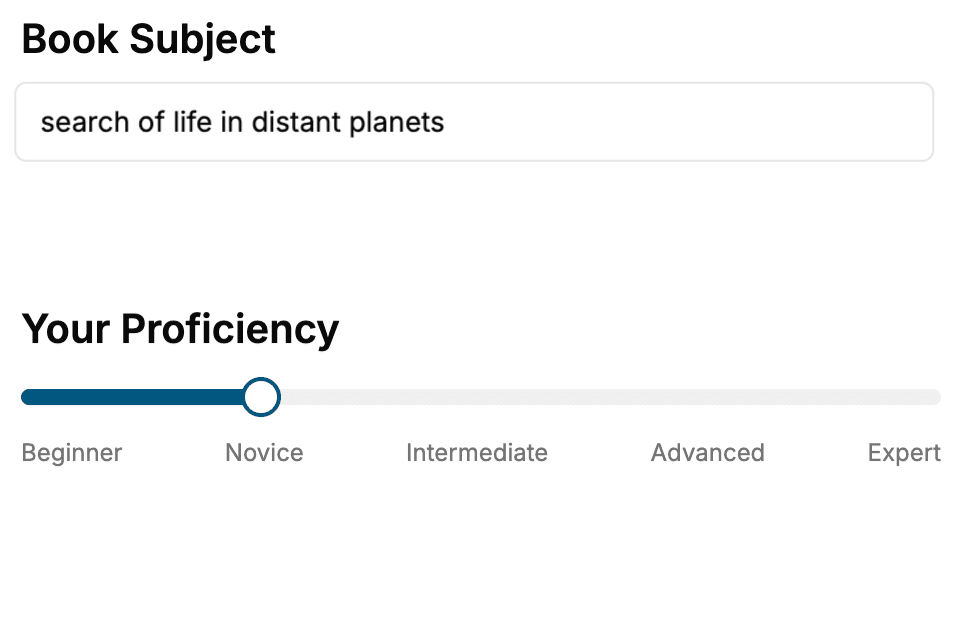
Select the focus of your Learning German book and share your background
- 2. Personalize your book
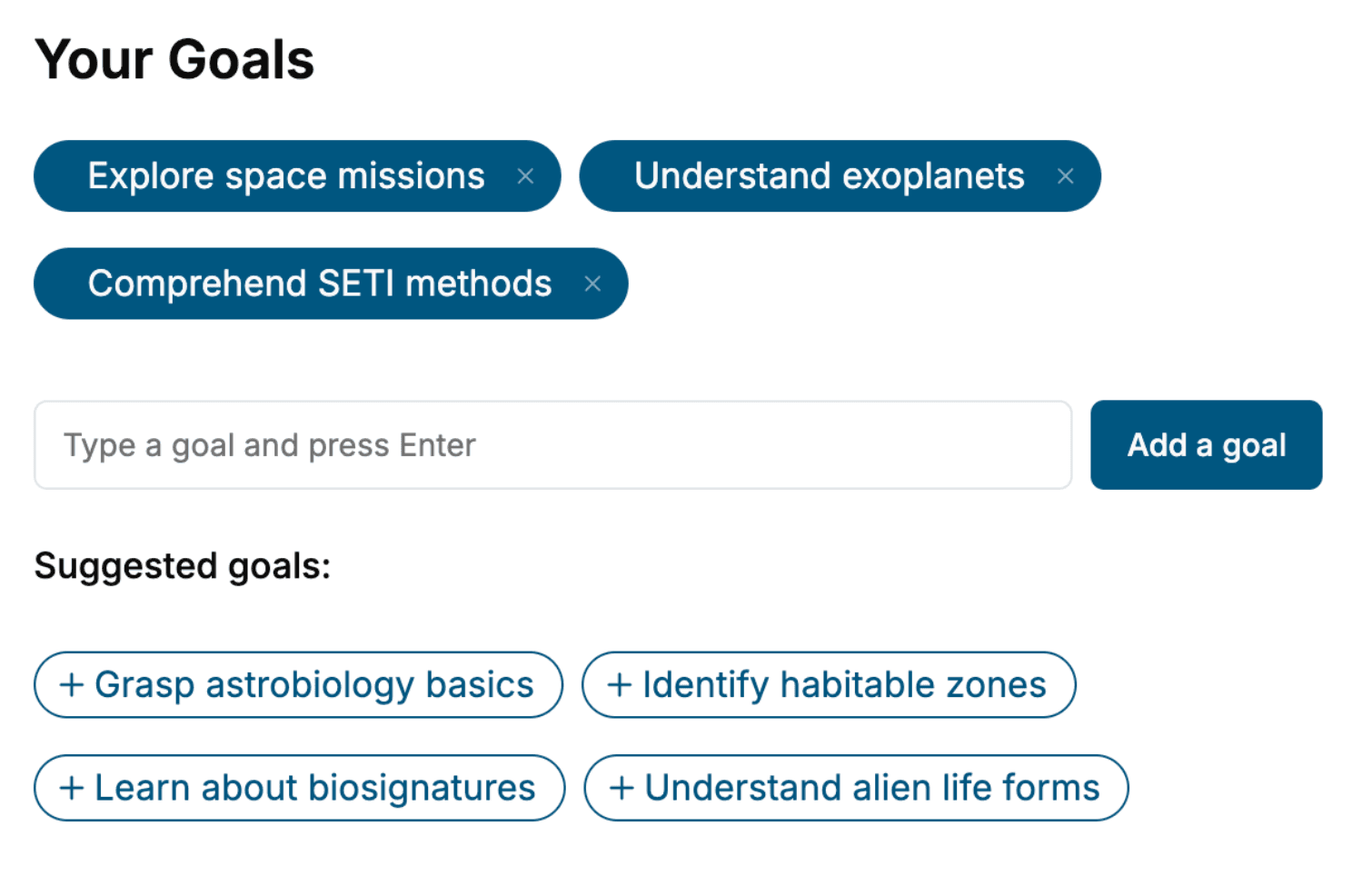
Specify your goals and choose sub-topics to include
- 3. Get your tailored book
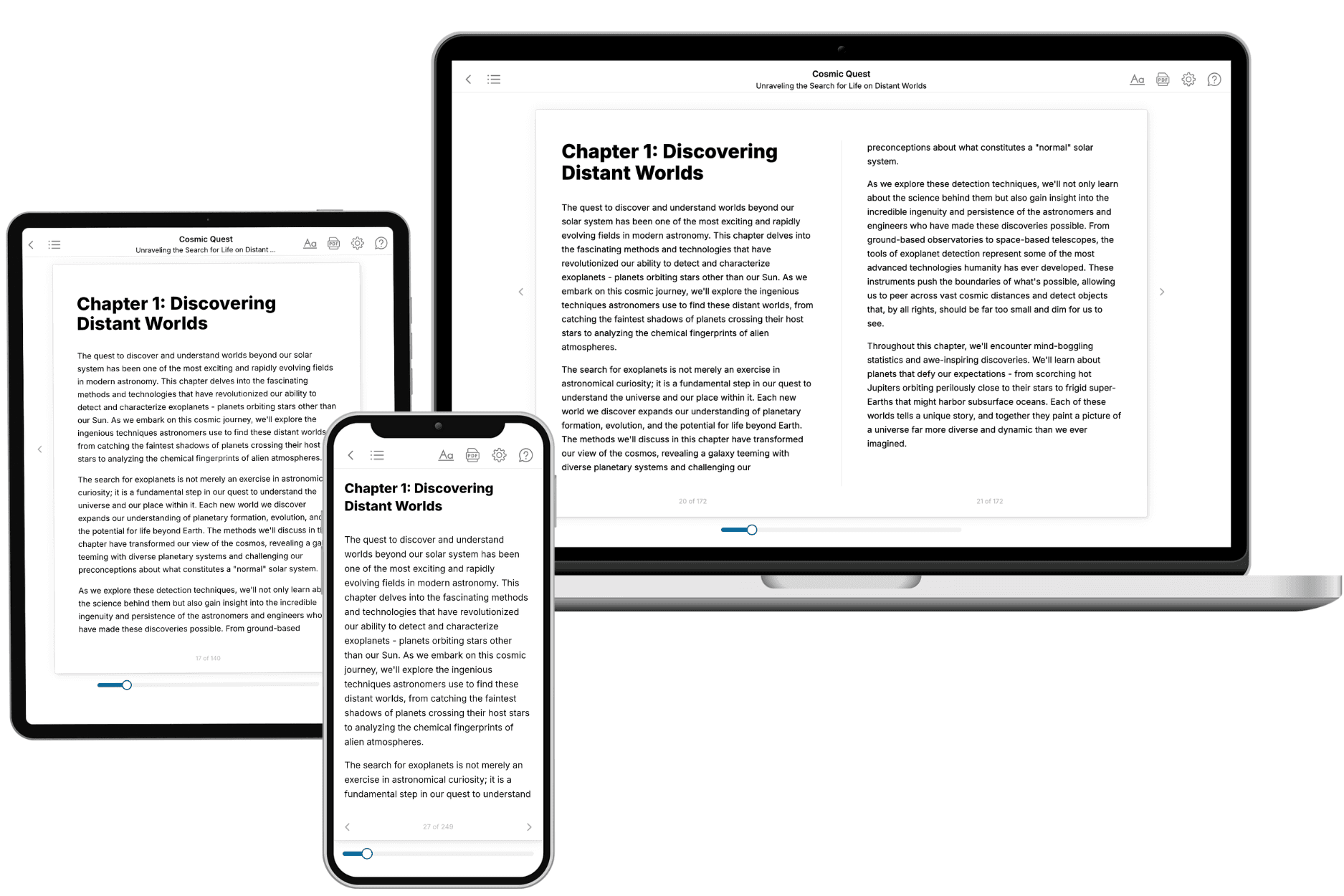
Your book is ready in 10 minutes. Read it online, download as EPUB or PDF, or send to Kindle.
Frequently asked questions
- What is TailoredRead?
TailoredRead creates complete, full-length nonfiction ebooks, written specifically for you. Tell us what you want to learn and why, and TailoredRead writes you a complete ebook on it, with charts, tables, and diagrams throughout. Read it online, on Kindle, or on any e-reader, or download it as a PDF or EPUB. Every book is written fresh the day you order it.
- How is the book tailored to me?
Before anything is written, you answer a few short questions about your goals, your background, and the topics you care about. Your book is then planned around your answers: written at your level, focused on your goals, and covering the topics you chose, instead of the one-size-fits-all book a store sells everyone.
- Will it read like generic AI content?
No. Your book isn't a chat transcript: it's planned chapter by chapter before a single word is written, told in a clear book voice, and explains ideas visually with charts, tables, and diagrams. After writing, every book goes through an editorial pass that polishes chapters so the book reads consistent from start to finish. Judge for yourself: browse thousands of sample books on our Explore Books page.
- How accurate is the content?
Our AI first checks whether your subject needs live research. Niche and fast-moving subjects are researched before writing, and the book plan and chapters are grounded in what it finds. After writing, every book goes through a quality pass that checks its facts and consistency, and researched books list their sources in a Notes section at the back.
- How long is the book?
You choose the length: Comprehensive (250-300 pages), Detailed (150-200 pages), Essential (70-100 pages), or Short (30-50 pages).
- Does the book include visuals?
Yes. Every book includes charts, tables, and diagrams: timelines, checklists, step-by-step guides, decision trees, comparison tables, matrices, and bar charts. A typical book includes dozens of these visual elements.
- Can I read it on Kindle? What formats can I download?
Yes. Every book can be read in our online reader or downloaded as a PDF or EPUB. The EPUB can be opened with Kindle, Apple Books, Kobo, and any e-reader. The Commercial and Author licenses also include an editable Word (DOCX) and Markdown download.
- How much does it cost?
About the price of a regular ebook. The exact price depends on your book's length and complexity, from $2 for the shortest books to $35 for the most comprehensive, and it's shown when you review your book, before you commit to anything. Each book is a one-time purchase, yours to keep, no subscription. Licenses that let you share, teach, or publish your book range from $35.99 to $49.99.
- Can I preview the book before purchasing?
Before you pay, you'll see what your book will cover: the title, a detailed description, the estimated length, and the complete chapter-by-chapter table of contents, so you know what you're getting before you decide. The full text itself is written after you purchase.
- How long does it take to create a book?
About 10 minutes. You can start reading the opening chapters while the rest is still being written.