The Impulse Control Handbook
Understanding, Managing, and Overcoming Impulse Control Disorders
Impulse control disorders affect millions of people, creating cycles of regret, shame, and damaged relationships.
207 pages10 chaptersMar 6, 2026Compulsive Behavior
About this book
This handbook guides you through understanding what's happening in your brain when impulses take over, why traditional willpower fails, and what actually works. You'll discover the neurobiological foundations of impulse control, learn to identify your personal triggers and warning signs, and gain access to proven strategies used by therapists and neuroscientists. Whether you struggle with compulsive behaviors, risky decisions, or emotional outbursts, this book provides a roadmap for reclaiming control. You'll explore cognitive-behavioral techniques, environmental design strategies, medication options, and lifestyle changes that address the root causes rather than just symptoms. Real-world examples and practical exercises help you apply these concepts immediately. This isn't about perfection—it's about understanding yourself better and building sustainable change through evidence-based approaches that actually fit your life.
Table of contents
- IntroductionWhy This Matters: The Hidden Struggle, What You'll Learn in This Book, How to Use This HandbookRead below
- Chapter 1: Understanding Impulse Control DisordersDefining Impulse Control Disorders, Common Types and Their Characteristics, Prevalence and Life Impact
- Chapter 2: The Neurobiology of Impulse ControlKey Brain Systems Involved, The Reward Pathway and Motivation, Prefrontal Cortex and Executive Function, Neurotransmitters and Chemical Imbalances
- Chapter 3: Identifying Your Personal TriggersTypes of Triggers: Emotional, Environmental, and Situational, Self-Assessment: Mapping Your Patterns, Recognizing Early Warning Signs
- Chapter 4: Cognitive-Behavioral StrategiesCBT Foundations for Impulse Control, Identifying and Challenging Unhelpful Thought Patterns, Behavioral Techniques and Practice, Delay and Distraction Strategies
- Chapter 5: Environmental Design and PreventionHow Environment Influences Impulses, Reducing Access and Opportunity, Creating Supportive Routines and Structure
- Chapter 6: Emotional Regulation and Stress ManagementThe Connection Between Emotions and Impulses, Emotion Regulation Techniques, Stress Management and Resilience Building, Mindfulness and Acceptance Practices
- Chapter 7: Medical and Pharmacological ApproachesMedication Options and How They Work, Finding the Right Treatment Plan, Combining Medication with Lifestyle Changes
- Chapter 8: Building a Support SystemWorking with Mental Health Professionals, Leveraging Social Support and Accountability, Navigating Family Dynamics and Communication
- Chapter 9: Addressing Co-occurring ConditionsAnxiety, Depression, and Impulse Control, ADHD and Impulse Control Overlap, Substance Use and Behavioral Addictions
- Chapter 10: Relapse Prevention and Long-Term SuccessUnderstanding Relapse Patterns and Warning Signs, Creating Your Personal Recovery Plan, Maintaining Progress and Celebrating Wins, Self-Compassion and Moving Forward After Setbacks
- ConclusionYour Path Forward, Final Thoughts and Encouragement
- Additional Resources and Further Reading
Introduction
There's a moment that many people recognize. It happens in a split second, somewhere between the thought and the action, when something inside takes over and the decision is already made before the rational mind has a chance to weigh in. Maybe it's the impulsive purchase that wrecked a budget. Maybe it's the outburst that damaged a relationship. Maybe it's the behavior that keeps repeating despite every sincere promise to stop. That moment, and the shame and confusion that follow it, is what this book is about.
Impulse control disorders are far more common than most people realize. Research suggests that somewhere between 10 and 20 percent of the general population experiences clinically significant impulse control problems at some point in their lives.[1] Yet the topic remains poorly understood, heavily stigmatized, and often mischaracterized as a simple failure of willpower or moral character. That misunderstanding causes real harm. It keeps people from seeking help, delays accurate diagnosis, and leaves individuals cycling through guilt and self-blame without ever addressing what's actually happening in their brains.
This handbook was written to change that. It draws on decades of research in neuroscience, clinical psychology, and behavioral medicine to offer a clear, honest, and practical guide to understanding impulse control disorders. The goal isn't to offer false reassurance or oversimplify a genuinely complex topic. The goal is to give you real knowledge, grounded in evidence, that you can actually use. Whether you're personally affected, supporting someone who is, or working in a professional capacity with people who struggle with these conditions, this book is designed to be a resource you return to again and again.
One thing worth saying clearly from the start: struggling with impulse control does not make someone a bad person. It makes them a person with a brain that processes certain signals differently. That distinction matters enormously, not just for how you feel about yourself or someone you care about, but for how you approach change. Shame rarely produces lasting behavioral improvement. Understanding, on the other hand, is a genuinely powerful starting point.
Why This Matters: The Hidden Struggle
Impulse control problems rarely announce themselves with a clear label. They tend to show up quietly at first, woven into everyday life in ways that are easy to rationalize or dismiss. A person might notice they spend money they don't have, but tell themselves they'll be more careful next month. Someone else might recognize that their anger flares faster than other people's, but chalk it up to stress or personality. Over time, though, the pattern becomes harder to ignore, and the consequences start to accumulate.
The hidden nature of this struggle is part of what makes it so painful. Unlike a broken leg or a diagnosed illness, impulse control difficulties are often invisible to others until something goes wrong. And when something does go wrong, the response from the outside world is frequently judgment rather than compassion. Friends, family members, and even some healthcare providers may frame the problem as laziness, selfishness, or lack of discipline. That framing is not only unhelpful; it's scientifically inaccurate.
Consider what the research actually shows. Neuroimaging studies have consistently found structural and functional differences in the brains of people with impulse control disorders, particularly in regions responsible for decision-making, emotional regulation, and reward processing.[2] These are not character defects. They are neurobiological patterns that can be understood, addressed, and in many cases significantly improved with the right support.
The consequences of untreated impulse control disorders extend well beyond the individual. Relationships suffer when trust is repeatedly broken. Financial stability erodes through compulsive spending or gambling. Careers are derailed by impulsive decisions or interpersonal conflicts. Physical health declines when risky behaviors go unchecked. And perhaps most significantly, the emotional toll of living with constant internal conflict, of wanting to change and feeling unable to, can be devastating to a person's sense of self-worth and hope.
There's also a systemic dimension worth acknowledging. Many people with impulse control disorders end up in contact with the legal system, the healthcare system, or social services before they ever receive an accurate diagnosis or appropriate treatment. The gap between where people are and where they need to be is often enormous, and it's a gap that better education and awareness can help close. Understanding these conditions more deeply is not just a personal benefit; it's a public health issue.
The good news, and there genuinely is good news, is that effective treatments exist. Cognitive-behavioral therapy has strong evidence behind it for several impulse control conditions. Certain medications can meaningfully reduce the intensity of urges. Lifestyle changes, environmental modifications, and social support all play measurable roles in recovery. The path forward is not always easy or linear, but it is real. People do get better. That's not wishful thinking; it's documented in clinical research and lived experience alike.
Recovery from impulse control difficulties is not about achieving perfect self-control. It's about building a life where the conditions for better choices are more consistently present, and where setbacks are met with understanding rather than shame.
This matters because the alternative, continuing to struggle without understanding or support, carries a heavy cost. Not just in the obvious consequences of impulsive behavior, but in the quieter costs: the energy spent on self-criticism, the relationships strained by misunderstanding, the opportunities missed because the underlying issue was never properly addressed. Bringing this struggle into the open, naming it accurately, and approaching it with both rigor and compassion is where meaningful change begins.
What You'll Learn in This Book
This handbook is organized to take you from foundational understanding through to practical, day-to-day application. Each chapter builds on the previous one, but the book is also designed so that you can navigate directly to the sections most relevant to your situation. You don't need to read it cover to cover in one sitting, though doing so will give you the most complete picture.
The early chapters focus on building a solid understanding of what impulse control disorders actually are. You'll learn how clinicians define and categorize these conditions, what distinguishes them from ordinary impulsiveness, and how they differ from one another. You'll also explore the neuroscience behind impulse control, including how the brain's reward system, prefrontal cortex, and key neurotransmitters all interact to shape behavior. This isn't just background information. Understanding the "why" behind impulsive behavior is genuinely useful for developing effective strategies to address it.
From there, the book moves into the practical work of self-awareness. A significant portion of effective impulse control management depends on knowing your own patterns: what triggers your impulses, what warning signs appear before a behavior escalates, and what emotional states make you most vulnerable. Chapter 3 provides structured tools for mapping these patterns, including self-assessment frameworks you can use immediately.
The middle section of the book covers the major evidence-based treatment approaches in depth. Here's a summary of what those chapters address:
- Cognitive-behavioral strategies (Chapter 4): How to identify and challenge the thought patterns that fuel impulsive behavior, along with specific behavioral techniques for building new habits.
- Environmental design (Chapter 5): How to restructure your physical and social environment to reduce the frequency and intensity of impulse triggers.
- Emotional regulation and stress management (Chapter 6): Techniques for managing the emotional states that most commonly precede impulsive episodes, including mindfulness-based approaches.
- Medical and pharmacological options (Chapter 7): A clear, accessible overview of medication approaches, how they work, and how to have productive conversations with healthcare providers about treatment.
The later chapters address the broader context of recovery. Chapter 8 covers building a support system, including how to work effectively with mental health professionals and how to involve trusted people in your life without creating unhelpful dynamics. Chapter 9 tackles co-occurring conditions, because impulse control disorders rarely exist in isolation. Anxiety, depression, ADHD, and substance use disorders frequently overlap with impulse control difficulties, and treating only one piece of the puzzle often produces limited results.
The final chapter on relapse prevention and long-term success is one of the most practically important sections in the book. Recovery is rarely a straight line. Understanding how relapse happens, what warning signs to watch for, and how to respond constructively when setbacks occur is essential knowledge for anyone working toward lasting change. This chapter also addresses self-compassion, not as a soft concept, but as a clinically supported component of sustainable recovery.[3]
Throughout the book, you'll find concrete examples, practical exercises, and specific frameworks you can apply to your own situation. The aim is never to overwhelm you with theory, but to give you tools that are genuinely usable in real life. Every major concept is grounded in research, and every strategy has been selected because there is meaningful evidence that it works for real people facing real challenges.
By the time you finish this book, you should have a clear understanding of what impulse control disorders are and how they develop, a personalized map of your own triggers and patterns, a toolkit of evidence-based strategies drawn from multiple treatment approaches, and a realistic, compassionate framework for thinking about long-term recovery. That's a substantial foundation, and it's one that can genuinely change how you navigate daily life.
How to Use This Handbook
This book is called a handbook for a reason. It's meant to be used, not just read. That means writing in the margins, returning to chapters when circumstances change, completing the self-assessment exercises honestly, and treating the strategies as experiments rather than tests you can pass or fail. The most useful relationship you can have with this material is an active one.
If you're coming to this book as someone personally affected by impulse control difficulties, the most important thing to know is that there's no single right way to engage with it. Some people find it helpful to read straight through to get the full picture before trying anything. Others prefer to identify the chapter most relevant to their immediate situation and start there. Both approaches are valid. What matters is that you actually engage with the content rather than treating it as something to absorb passively.
Here are some practical suggestions for getting the most out of this handbook:
- Keep a journal alongside this book. Many of the exercises and self-assessments work best when you write your responses down. Writing externalizes your thinking in a way that makes patterns easier to see and easier to work with.
- Don't skip the neuroscience chapters. It can be tempting to jump straight to the strategies, but understanding why your brain behaves the way it does makes the strategies significantly more effective. Knowledge reduces shame and increases motivation.
- Treat setbacks as data, not verdicts. If you try a strategy and it doesn't work, that's useful information. It tells you something about your specific situation that can help you refine your approach. It doesn't mean you're beyond help.
- Use the book in conversation with professional support. This handbook is a complement to professional treatment, not a replacement for it. If you're working with a therapist, psychiatrist, or counselor, bring what you're learning here into those conversations.
- Return to chapters as your situation evolves. What's most relevant to you today may not be what's most relevant in six months. Recovery is a process, and different tools become useful at different stages.
If you're a mental health professional reading this book, you'll find it useful both as a client-facing resource and as a concise synthesis of current evidence on impulse control disorders. The frameworks and exercises throughout the book are designed to be compatible with standard therapeutic approaches, including cognitive-behavioral therapy, dialectical behavior therapy, and acceptance and commitment therapy. You may find it helpful to recommend specific chapters to clients based on their current stage of treatment.
For caregivers and family members, this book offers something that's often hard to find: a clear explanation of what impulse control disorders actually are, why the person you care about behaves the way they do, and what kinds of support are genuinely helpful versus what tends to backfire. Chapter 8, which covers building a support system and navigating family dynamics, is particularly relevant for this group. Understanding the condition from the inside out tends to produce more effective and compassionate responses than trying to manage behavior from the outside.
One thing worth addressing directly is the question of professional help. This book provides substantial, evidence-based information and practical tools. But it cannot replace a trained clinician who knows your specific history, can make an accurate diagnosis, and can tailor treatment to your individual needs. If you suspect you have a clinically significant impulse control disorder, seeking a professional evaluation is strongly recommended. The Additional Resources section at the back of the book includes guidance on finding qualified mental health professionals and accessing support services.
It's also worth saying something about the pace of change. Impulse control difficulties typically develop over years, shaped by a combination of neurobiological factors, life experiences, and learned patterns. Meaningful change takes time. That's not a discouraging fact; it's a realistic one. The research on behavior change consistently shows that sustainable improvement comes from consistent, incremental effort rather than dramatic overhauls.[4] Small steps, taken consistently, compound into significant change over time. That's the framework this book operates within.
Finally, a word about the tone of this book. The aim throughout is to be honest, clear, and direct without being clinical to the point of coldness or optimistic to the point of unrealism. Impulse control disorders are genuinely difficult. They cause real harm to real people. Acknowledging that honestly is more respectful than glossing over it. At the same time, the evidence for meaningful recovery is real, and that deserves to be communicated with equal honesty. Both things are true, and holding both of them together is part of what makes this work possible.
You're here because something brought you to this topic. Maybe it was frustration, or curiosity, or a specific event that made the need for change feel urgent. Whatever brought you here, the fact that you're engaging with this material is itself a meaningful step. Understanding is where change begins, and that's exactly where this book starts.
Notes
Introduction
- 1. R. C. Kessler and others, "Lifetime prevalence and age-of-onset distributions of DSM-IV disorders in the National Comorbidity Survey Replication," Archives of General Psychiatry, 2005
- 2. J. W. Dalley and others, "Impulsivity, compulsivity, and top-down cognitive control," Neuron, 2011
- 3. K. D. Neff and C. K. Germer, "A pilot study and randomized controlled trial of the mindful self-compassion program," Journal of Clinical Psychology, 2013
- 4. J. O. Prochaska and C. C. DiClemente, "Stages and processes of self-change of smoking," Journal of Consulting and Clinical Psychology, 1983
This is the end of the free sample. The full book has 10 chapters.
Want this book written for you?
Tell us your goals and background, and get your own version of this book, tailored by AI to you.


Benefits of AI-tailored books
- Read one book, not ten:
- all the Compulsive Behavior knowledge you need, gathered into a single book.
- Save days of learning:
- tell us your goals, choose your topics, and the whole book is built around them.
- Learn effortlessly:
- Compulsive Behavior book written for your specific background and expertise.
- Understand at a glance:
- includes charts, tables, timelines, checklists, decision trees, and more.
- Stay current:
- written the day you order it, not years ago.
- Trust what you read:
- every book is checked for accuracy, with real research when your subject needs it.
Create your unique book in 3 steps
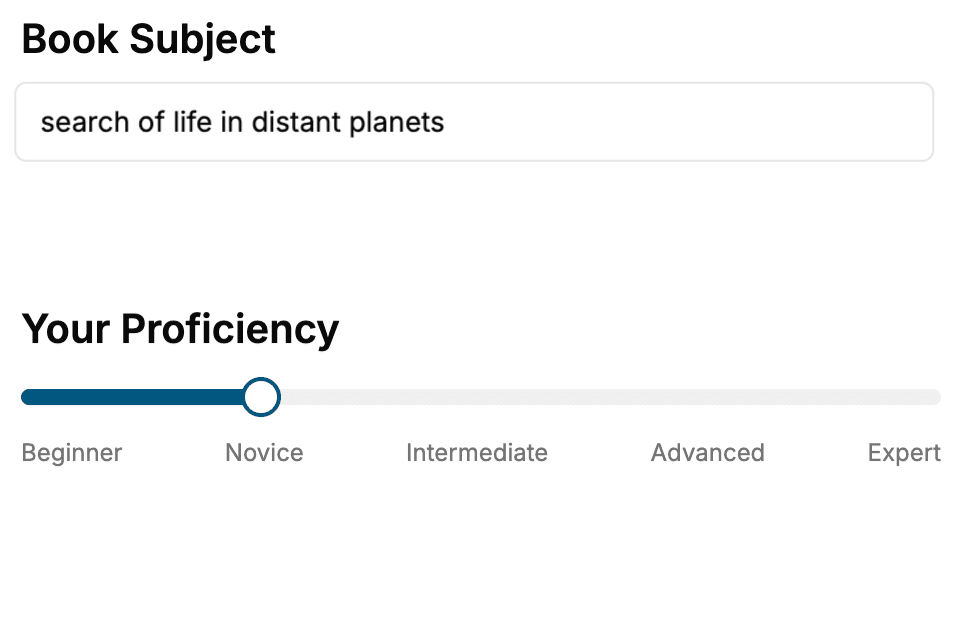
- 1. Select your focus
Select the focus of your Compulsive Behavior book and share your background
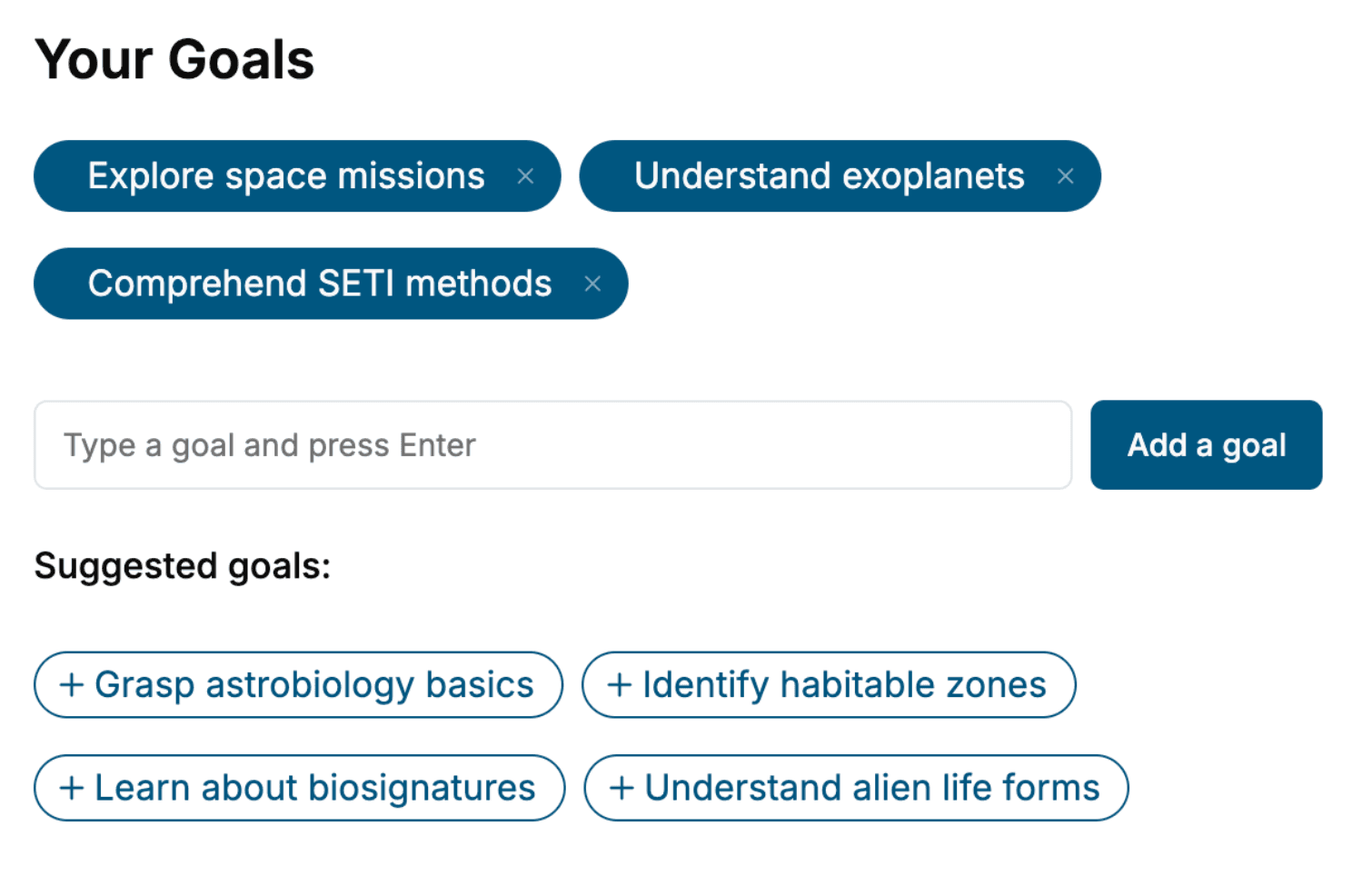
- 2. Personalize your book
Specify your goals and choose sub-topics to include
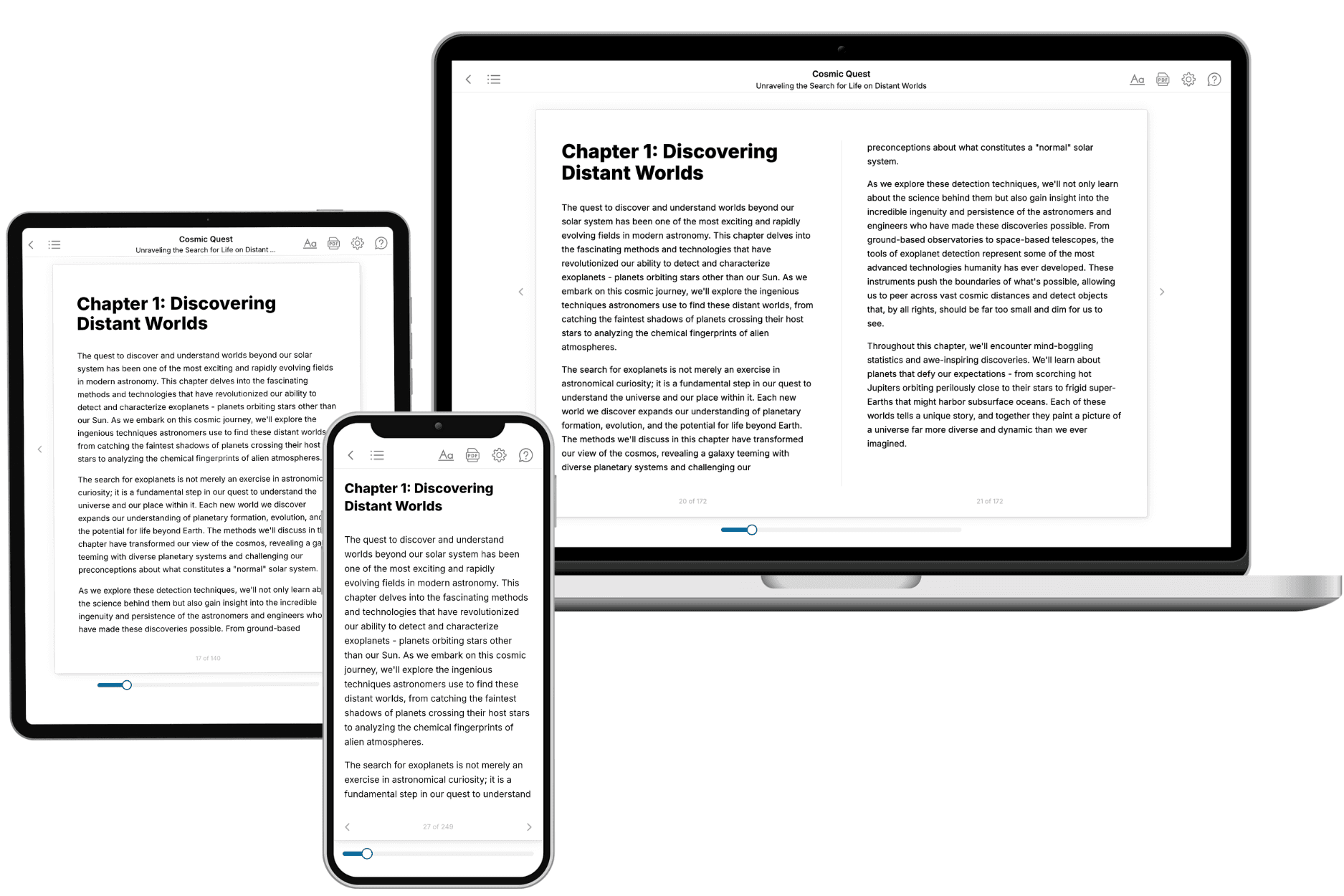
- 3. Get your tailored book
Your book is ready in 10 minutes. Read it online, download as EPUB or PDF, or send to Kindle.
Frequently asked questions
- What is TailoredRead?
TailoredRead creates complete, full-length nonfiction ebooks, written specifically for you. Tell us what you want to learn and why, and TailoredRead writes you a complete ebook on it, with charts, tables, and diagrams throughout. Read it online, on Kindle, or on any e-reader, or download it as a PDF or EPUB. Every book is written fresh the day you order it.
- How is the book tailored to me?
Before anything is written, you answer a few short questions about your goals, your background, and the topics you care about. Your book is then planned around your answers: written at your level, focused on your goals, and covering the topics you chose, instead of the one-size-fits-all book a store sells everyone.
- Will it read like generic AI content?
No. Your book isn't a chat transcript: it's planned chapter by chapter before a single word is written, told in a clear book voice, and explains ideas visually with charts, tables, and diagrams. After writing, every book goes through an editorial pass that polishes chapters so the book reads consistent from start to finish. Judge for yourself: browse thousands of sample books on our Explore Books page.
- How accurate is the content?
Our AI first checks whether your subject needs live research. Niche and fast-moving subjects are researched before writing, and the book plan and chapters are grounded in what it finds. After writing, every book goes through a quality pass that checks its facts and consistency, and researched books list their sources in a Notes section at the back.
- How long is the book?
You choose the length: Comprehensive (250-300 pages), Detailed (150-200 pages), Essential (70-100 pages), or Short (30-50 pages).
- Does the book include visuals?
Yes. Every book includes charts, tables, and diagrams: timelines, checklists, step-by-step guides, decision trees, comparison tables, matrices, and bar charts. A typical book includes dozens of these visual elements.
- Can I read it on Kindle? What formats can I download?
Yes. Every book can be read in our online reader or downloaded as a PDF or EPUB. The EPUB can be opened with Kindle, Apple Books, Kobo, and any e-reader. The Commercial and Author licenses also include an editable Word (DOCX) and Markdown download.
- How much does it cost?
About the price of a regular ebook. The exact price depends on your book's length and complexity, from $2 for the shortest books to $35 for the most comprehensive, and it's shown when you review your book, before you commit to anything. Each book is a one-time purchase, yours to keep, no subscription. Licenses that let you share, teach, or publish your book range from $35.99 to $49.99.
- Can I preview the book before purchasing?
Before you pay, you'll see what your book will cover: the title, a detailed description, the estimated length, and the complete chapter-by-chapter table of contents, so you know what you're getting before you decide. The full text itself is written after you purchase.
- How long does it take to create a book?
About 10 minutes. You can start reading the opening chapters while the rest is still being written.