IndexSRE Mastery
Revolutionizing Reliability Engineering with CoPilot Integration
Are you ready to take your SRE practices to the next level?
393 pages21 chaptersMar 17, 2025Software DevelopmentCreated by Chris
About this book
IndexSRE Mastery: Revolutionizing Reliability Engineering with CoPilot Integration is your comprehensive guide to optimizing system reliability and DevOps workflows. This book offers a deep dive into the synergy between IndexSRE and CoPilot, providing you with cutting-edge strategies to enhance your SRE toolkit. You'll discover how to leverage AI-driven incident triage, implement automated SLO tracking, and master proactive monitoring techniques. Learn to create custom CoPilot commands, optimize on-call rotations, and develop sophisticated IndexSRE dashboards that provide real-time insights into your systems' health. From chaos testing strategies to predictive maintenance, this book covers every aspect of modern SRE practices. You'll gain practical knowledge on scalability planning, CI/CD integration, and performance tuning, all while improving team collaboration and knowledge sharing. Whether you're looking to streamline your incident response, enhance your error budget management, or implement advanced risk assessment techniques, IndexSRE Mastery equips you with the tools and knowledge to excel in the ever-evolving world of Site Reliability Engineering.
Table of contents
- IntroductionThe Evolution of Site Reliability Engineering, IndexSRE and CoPilot: A Powerful Combination, What to Expect from This Book, Getting Started with IndexSRE and CoPilotRead below
- Chapter 1: Foundations of Modern SRECore Principles of Site Reliability Engineering, Understanding IndexSRE: Features and Benefits, Introduction to CoPilot for SRE, Essential SRE Tools and Technologies
- Chapter 2: Integrating CoPilot with IndexSRESetting Up and Configuring CoPilot for IndexSRE, Data Synchronization Between Platforms, API Integration and Custom Endpoints, Authentication and Security Considerations
- Chapter 3: Automated SLO TrackingSLO Fundamentals and Best Practices, Automating SLO Definition and Tracking, Leveraging CoPilot for SLO Suggestions, Advanced SLO Reporting and Visualization
- Chapter 4: AI-Driven Incident TriageAutomated Incident Classification, AI-Powered Severity Assessment, Intelligent Resource Allocation, Continuous Triage Process Optimization
- Chapter 5: SRE Workflow AutomationIdentifying Automatable SRE Tasks, Creating CoPilot Scripts for Common Workflows, Implementing Automated Approval Processes, Measuring and Optimizing Workflow Efficiency
- Chapter 6: Enhancing Code Reviews with CoPilotAutomating Code Review Processes, Implementing SRE Best Practices in Reviews, Integrating Security Checks in Reviews, Creating an Effective Feedback Loop
- Chapter 7: Proactive Monitoring StrategiesImplementing Predictive Analytics, Advanced Anomaly Detection Techniques, Proactive Capacity Planning, Long-term Trend Analysis and Forecasting
- Chapter 8: Mastering IndexSRE DashboardsPrinciples of Effective Dashboard Design, Creating Custom Metrics and Visualizations, Enabling Real-time Insights, Automating Dashboard Updates with CoPilot
- Chapter 9: Implementing Chaos Testing StrategiesPrinciples of Chaos Engineering, Designing Effective Chaos Tests, Automating Chaos Experiments with CoPilot, Analyzing and Acting on Chaos Test Results
- Chapter 10: Enhancing SRE Team CollaborationLeveraging Collaboration Tools, Implementing Effective Knowledge Sharing Practices, Fostering Cross-functional Collaboration, Strategies for Remote SRE Team Collaboration
- Chapter 11: Advanced Error Budget ManagementCalculating and Allocating Error Budgets, Real-time Error Budget Tracking, Implementing Error Budget Policies, Optimizing Development Velocity with Error Budgets
- Chapter 12: Developing CoPilot Custom CommandsUnderstanding CoPilot Command Structure, Creating and Testing Custom Commands, Advanced Command Techniques and Integrations, Managing and Versioning Custom Commands
- Chapter 13: On-Call Optimization TechniquesDesigning Effective On-Call Rotations, Reducing Alert Fatigue, Automating Initial Incident Response, Measuring and Improving On-Call Performance
- Chapter 14: Mastering IndexSRE MetricsIdentifying Key SRE Metrics, Creating and Tracking Custom Metrics, Advanced Metric Analysis Techniques, Driving Decisions with Metrics
- Chapter 15: Streamlining Postmortem ProcessesEffective Postmortem Practices, Tools for Postmortem Automation, Leveraging AI for Postmortem Insights, From Postmortems to Continuous Improvement
- Chapter 16: SRE Tool Development StrategiesAssessing Tool Development Needs, Best Practices in SRE Tool Development, Integrating Custom Tools with Existing Systems, Maintaining and Evolving SRE Tools
- Chapter 17: Advanced Alert Analysis with CoPilotImplementing Alert Correlation Techniques, Strategies for Alert Noise Reduction, Enriching Alerts with Contextual Information, Applying Machine Learning to Alert Analysis
- Chapter 18: Scalability Planning and ImplementationAssessing Current Scalability Challenges, Scalable Architecture Patterns, Advanced Load Testing Techniques, Implementing Auto-scaling Strategies
- Chapter 19: Elevating IndexSRE DocumentationBest Practices in SRE Documentation, Automating Documentation Processes, Building a Comprehensive SRE Knowledge Base, Measuring Documentation Effectiveness
- Chapter 20: Integrating SRE Practices in CI/CD PipelinesEnhancing CI/CD Pipeline Reliability, Implementing Automated SRE Tests in CI/CD, Advanced Deployment Strategies for Reliability, Measuring and Optimizing CI/CD Pipeline Performance
- Chapter 21: Implementing Predictive MaintenanceBuilding Predictive Maintenance Models, Data Collection and Preprocessing for Predictions, Automating Maintenance Tasks with CoPilot, Strategies for Effective Predictive Maintenance
- ConclusionThe Future of SRE with IndexSRE and CoPilot, Embracing Continuous Learning in SRE
- Glossary
- Further Reading
Introduction
Welcome to the cutting edge of Site Reliability Engineering (SRE). As you embark on this journey through "IndexSRE Mastery: Revolutionizing Reliability Engineering with CoPilot Integration," you're about to discover how the synergy between IndexSRE and CoPilot is reshaping the landscape of system reliability and DevOps workflows. This book is your comprehensive guide to mastering advanced SRE techniques and optimizing your use of these powerful tools. Whether you're looking to streamline incident response, enhance error budget management, or implement sophisticated risk assessment techniques, the pages that follow will equip you with the knowledge and strategies to excel in the ever-evolving world of SRE.
In today's rapidly changing technological landscape, the role of Site Reliability Engineers has become more crucial than ever. As systems grow increasingly complex and user expectations for reliability and performance continue to rise, SREs are at the forefront of ensuring that services remain available, scalable, and efficient. The integration of AI-driven tools like CoPilot with robust platforms such as IndexSRE represents a significant leap forward in our ability to manage and optimize these complex systems. This book will guide you through the intricacies of this integration, showing you how to leverage these tools to their fullest potential and revolutionize your SRE practices.
Throughout this book, you'll find a wealth of practical knowledge, from implementing AI-driven incident triage and automated SLO tracking to mastering proactive monitoring techniques and developing sophisticated IndexSRE dashboards. We'll explore how to create custom CoPilot commands, optimize on-call rotations, and dive deep into chaos testing strategies that improve system resilience. Each chapter is designed to build upon the last, providing you with a comprehensive understanding of modern SRE practices and how to apply them effectively in your organization.
As we progress through the book, you'll notice a strong emphasis on practical application. This isn't just about theory – it's about equipping you with actionable strategies that you can implement immediately to enhance your SRE toolkit. We'll back our claims with research, case studies, and data, ensuring that you have a solid foundation for the techniques and approaches we discuss. By the time you reach the final pages, you'll have gained not just knowledge, but the confidence to apply these advanced SRE techniques in your day-to-day work.
So, are you ready to take your SRE practices to the next level? Let's dive in and explore the exciting world of IndexSRE and CoPilot integration, and discover how these tools can transform your approach to system reliability and DevOps workflows.
The Evolution of Site Reliability Engineering
Site Reliability Engineering has come a long way since its inception at Google in the early 2000s. What began as an innovative approach to service management has evolved into a critical discipline that bridges the gap between development and operations, ensuring that large-scale systems remain reliable, scalable, and efficient. This evolution has been driven by the increasing complexity of modern software systems, the rise of cloud computing, and the growing demands of users for near-perfect reliability and performance.
In the early days of SRE, the focus was primarily on maintaining system uptime and responding to incidents. Engineers spent much of their time manually monitoring systems, troubleshooting issues, and implementing fixes. While effective for its time, this approach was reactive and often led to burnout among team members. As systems grew more complex and interconnected, it became clear that a more proactive and scalable approach was needed.
The next phase in SRE evolution saw the introduction of automation and the adoption of DevOps principles. SREs began developing tools and scripts to automate routine tasks, implement continuous integration and deployment pipelines, and monitor systems more effectively. This shift allowed teams to manage larger and more complex systems with greater efficiency. The concept of error budgets was introduced, providing a quantitative approach to balancing reliability with the need for rapid innovation.
As we entered the era of cloud computing and microservices, SRE practices evolved further to address the challenges of distributed systems. Concepts like chaos engineering emerged, allowing teams to proactively test and improve system resilience. Observability became a key focus, with SREs developing sophisticated monitoring and logging systems to gain deeper insights into system behavior. The role of the SRE expanded beyond just maintaining reliability to include performance optimization, capacity planning, and security considerations.
Today, we stand at the cusp of a new era in SRE, driven by the integration of artificial intelligence and machine learning into our toolsets. Platforms like IndexSRE and CoPilot represent the cutting edge of this evolution, offering unprecedented capabilities in automation, predictive analytics, and intelligent decision-making. These tools are transforming how we approach incident management, performance optimization, and system design.
With AI-driven incident triage, SREs can now respond to issues faster and more effectively than ever before. Machine learning algorithms can analyze vast amounts of system data to predict potential failures before they occur, allowing for proactive maintenance and optimization. Automated SLO tracking provides real-time insights into system performance, enabling teams to make data-driven decisions about reliability and resource allocation.
The integration of AI into SRE practices is not just about automating existing processes; it's about fundamentally changing how we approach system reliability. AI-powered tools can identify patterns and correlations in system behavior that would be impossible for humans to detect, leading to more robust and resilient systems. They can suggest optimizations and improvements based on historical data and current trends, helping SREs to continuously enhance system performance.
Moreover, the evolution of SRE has also seen a shift in how we think about reliability itself. It's no longer just about keeping systems up and running; it's about ensuring that they deliver value to users consistently and efficiently. This holistic approach considers factors like user experience, business impact, and long-term sustainability alongside traditional reliability metrics.
As we look to the future, the role of SRE is likely to continue evolving. With the rise of edge computing, 5G networks, and the Internet of Things, SREs will need to adapt to managing even more distributed and complex systems. The integration of AI and machine learning into SRE practices will deepen, potentially leading to self-healing systems and autonomous operations. The boundaries between development, operations, and security will continue to blur, with SREs playing a crucial role in bridging these disciplines.
This evolution of SRE underscores the importance of continuous learning and adaptation in the field. As an SRE professional, staying abreast of these changes and embracing new tools and methodologies is crucial. The integration of IndexSRE and CoPilot represents the latest step in this evolutionary journey, offering powerful capabilities that can revolutionize your approach to system reliability and performance. As we delve deeper into these tools and techniques in the coming chapters, keep in mind the broader context of SRE evolution and how these advancements fit into the larger picture of ensuring reliable, scalable, and efficient systems in an increasingly complex technological landscape.
IndexSRE and CoPilot: A Powerful Combination
The integration of IndexSRE and CoPilot represents a significant leap forward in the field of Site Reliability Engineering. This powerful combination brings together the robust monitoring and analytics capabilities of IndexSRE with the AI-driven automation and decision support of CoPilot, creating a synergy that can dramatically enhance your SRE practices. To fully appreciate the potential of this integration, let's delve into the strengths of each platform and explore how they complement each other to create a comprehensive SRE solution.
IndexSRE, at its core, is a sophisticated platform designed to provide deep insights into system performance and reliability. It offers a wide range of features including real-time monitoring, advanced analytics, and customizable dashboards. One of IndexSRE's key strengths is its ability to aggregate and correlate data from multiple sources, providing a holistic view of your system's health. This comprehensive data collection and analysis capability forms the foundation upon which many advanced SRE practices are built.
Some of the standout features of IndexSRE include its powerful alerting system, which can be fine-tuned to reduce noise and focus on critical issues, and its SLO tracking capabilities, which allow teams to monitor and manage service level objectives effectively. IndexSRE also excels in performance analysis, offering tools for identifying bottlenecks, tracking resource utilization, and optimizing system efficiency. Its ability to store and analyze historical data enables trend analysis and capacity planning, crucial for maintaining system reliability over time.
CoPilot, on the other hand, brings the power of artificial intelligence to SRE practices. It's an AI-driven assistant designed to augment human decision-making and automate complex tasks. CoPilot can analyze vast amounts of data in real-time, identify patterns, and make intelligent recommendations. Its natural language processing capabilities allow for intuitive interaction, making it easier for SREs to query systems, generate reports, and even automate routine tasks.
One of CoPilot's most powerful features is its ability to learn and adapt. As it interacts with your systems and your team, it continually refines its understanding and improves its recommendations. This means that over time, CoPilot becomes increasingly attuned to your specific environment and challenges, offering more accurate and relevant assistance.
When IndexSRE and CoPilot are integrated, the result is a comprehensive SRE platform that combines deep system insights with intelligent automation and decision support. This integration enhances several key areas of SRE practice:
- Incident Management: CoPilot can analyze alerts generated by IndexSRE, correlate them with historical data, and provide intelligent triage recommendations. This can significantly reduce mean time to resolution (MTTR) and help prioritize critical issues.
- Performance Optimization: By analyzing performance data from IndexSRE, CoPilot can identify optimization opportunities and even suggest specific actions or configuration changes to improve system efficiency.
- Capacity Planning: CoPilot can analyze historical usage data from IndexSRE to predict future resource needs, helping teams make informed decisions about scaling and infrastructure investments.
- SLO Management: The integration allows for more sophisticated SLO tracking and management. CoPilot can analyze SLO data from IndexSRE, predict potential breaches, and suggest proactive measures to maintain service levels.
- Automated Reporting: CoPilot can generate detailed, insightful reports based on data from IndexSRE, saving time and providing deeper analysis than traditional reporting tools.
The power of this integration lies not just in the features it offers, but in how it transforms the way SREs work. By automating routine tasks and providing intelligent insights, it frees up SREs to focus on more strategic, high-value activities. It enables a more proactive approach to reliability, where potential issues are identified and addressed before they impact users. And it facilitates data-driven decision making, ensuring that SRE practices are continually refined and optimized based on real-world performance data.
Moreover, the IndexSRE and CoPilot integration supports the shift towards more collaborative and efficient workflows. It provides a common platform for developers, operations teams, and SREs to work together, sharing insights and coordinating actions. This aligns well with modern DevOps practices and can help break down silos within organizations.
As we progress through this book, we'll explore in detail how to leverage this powerful combination to enhance various aspects of your SRE practice. From setting up and configuring the integration to developing custom workflows and automations, you'll learn how to make the most of these tools to revolutionize your approach to system reliability and performance.
It's important to note that while the IndexSRE and CoPilot integration offers powerful capabilities, it's not a magic solution that will solve all reliability challenges overnight. Effective use of these tools requires a solid understanding of SRE principles, a clear strategy, and ongoing refinement of practices. This book will guide you through the process of not just implementing these tools, but integrating them into a comprehensive SRE strategy that drives real improvements in system reliability and performance.
As we delve deeper into the specifics of IndexSRE and CoPilot in the coming chapters, keep in mind the transformative potential of this integration. It's not just about adopting new tools; it's about embracing a new paradigm in SRE that combines human expertise with artificial intelligence to achieve unprecedented levels of system reliability and performance. Whether you're looking to streamline incident response, enhance monitoring capabilities, or implement advanced predictive maintenance, the combination of IndexSRE and CoPilot provides a powerful foundation for next-generation SRE practices.
What to Expect from This Book
"IndexSRE Mastery: Revolutionizing Reliability Engineering with CoPilot Integration" is designed to be your comprehensive guide to mastering advanced SRE techniques and optimizing your use of IndexSRE and CoPilot. This book is structured to take you on a journey from the foundations of modern SRE through to cutting-edge practices that leverage the full power of AI-driven tools. Here's an overview of what you can expect as you progress through the chapters:
We'll begin by laying a solid foundation, exploring the core principles of Site Reliability Engineering and how they've evolved to meet the challenges of modern, complex systems. You'll gain a deep understanding of IndexSRE and CoPilot, their key features, and the benefits they bring to SRE practices. This foundational knowledge will set the stage for the more advanced topics to come.
From there, we'll dive into the practical aspects of integrating CoPilot with IndexSRE. You'll learn how to set up and configure these tools, ensure proper data synchronization, and implement secure API integrations. This section will provide you with the technical know-how to get these powerful tools working together effectively in your environment.
A significant portion of the book is dedicated to exploring how this integration enhances key SRE practices. We'll cover topics such as:
- Automated SLO Tracking: Learn how to leverage CoPilot to automate the definition and tracking of Service Level Objectives, and how to use advanced reporting and visualization techniques to gain deeper insights into system performance.
- AI-Driven Incident Triage: Discover how to implement automated incident classification, AI-powered severity assessment, and intelligent resource allocation to dramatically improve your incident response processes.
- Workflow Automation: Explore techniques for identifying automatable SRE tasks, creating custom CoPilot scripts, and measuring the efficiency of your automated workflows.
- Proactive Monitoring Strategies: Learn how to implement predictive analytics, advanced anomaly detection, and long-term trend analysis to catch potential issues before they impact your systems.
- Chaos Testing Strategies: Understand the principles of chaos engineering and how to design, automate, and analyze chaos experiments using CoPilot and IndexSRE.
We'll also delve into more advanced topics that will help you take your SRE practices to the next level. These include:
- Advanced Error Budget Management: Learn sophisticated techniques for calculating, allocating, and tracking error budgets, and how to use them to optimize development velocity.
- Developing Custom CoPilot Commands: Discover how to create, test, and manage custom commands that streamline your specific SRE workflows.
- On-Call Optimization: Explore strategies for designing effective on-call rotations, reducing alert fatigue, and measuring on-call performance.
- Advanced Alert Analysis: Learn how to implement alert correlation techniques, reduce noise, and apply machine learning to enhance your alert analysis processes.
- Scalability Planning and Implementation: Discover how to assess scalability challenges, implement scalable architecture patterns, and leverage advanced load testing techniques.
Throughout the book, you'll find practical examples, case studies, and hands-on exercises that will help you apply these concepts in real-world scenarios. We'll provide code snippets, configuration examples, and best practices that you can adapt to your specific environment. Each chapter will build on the last, allowing you to progressively enhance your SRE capabilities as you work through the book.
In addition to technical knowledge, this book will also cover important soft skills and organizational aspects of SRE. You'll learn strategies for enhancing team collaboration, implementing effective knowledge sharing practices, and fostering a culture of continuous improvement. We'll discuss how to measure the effectiveness of your SRE practices and how to communicate their value to stakeholders across your organization.
By the time you reach the conclusion, you'll have a comprehensive understanding of how to leverage IndexSRE and CoPilot to revolutionize your SRE practices. You'll be equipped with the knowledge and skills to implement advanced reliability engineering techniques, automate complex workflows, and make data-driven decisions about system performance and reliability.
Remember, the field of SRE is constantly evolving, and this book is designed to not just impart current best practices, but to give you the tools and mindset to continue learning and adapting as the field advances. We'll conclude with a look at the future of SRE and how you can position yourself and your organization to stay at the forefront of reliability engineering.
Whether you're an experienced SRE looking to enhance your skills, a DevOps engineer seeking to incorporate more reliability-focused practices, or a technical leader aiming to transform your organization's approach to system reliability, this book has something valuable to offer. So, get ready to dive in, expand your knowledge, and transform your approach to Site Reliability Engineering with IndexSRE and CoPilot!
Getting Started with IndexSRE and CoPilot
Before we dive into the advanced techniques and strategies that form the core of this book, it's essential to ensure you have a solid starting point with IndexSRE and CoPilot. This section will guide you through the initial steps of setting up and familiarizing yourself with these powerful tools. Whether you're new to these platforms or looking to refresh your knowledge, this overview will help you establish a strong foundation for the more complex topics to come.
First, let's start with IndexSRE. To begin using IndexSRE, you'll need to set up an account and configure your environment. Here are the key steps:
- Sign up for an IndexSRE account: Visit the official IndexSRE website and follow the registration process. You may need to provide some information about your organization and the systems you'll be monitoring.
- Install the IndexSRE agent: The IndexSRE agent is a lightweight software component that collects data from your systems and sends it to the IndexSRE platform. You'll need to install this agent on each server or container you want to monitor. Detailed installation instructions are available in the IndexSRE documentation.
- Configure data sources: Once the agent is installed, you'll need to configure it to collect the specific metrics and logs you're interested in. This typically involves editing a configuration file to specify which services to monitor and what data to collect.
- Set up your first dashboard: After data starts flowing into IndexSRE, you can create your first dashboard. Start with a basic overview of your system's health, including CPU usage, memory utilization, and key application metrics.
- Configure alerts: Set up some basic alerts to notify you of critical issues. Start with simple thresholds for important metrics like high CPU usage or low disk space.
Now, let's move on to CoPilot. Getting started with CoPilot involves the following steps:
- Access CoPilot: Depending on your organization's setup, you may need to request access to CoPilot through your IT department or directly from the CoPilot provider.
- Complete the onboarding process: CoPilot typically includes a guided onboarding process that will help you connect it to your existing tools and data sources, including IndexSRE.
- Explore the interface: Familiarize yourself with the CoPilot interface. Take some time to explore its features, including the command line interface, the dashboard, and any integrated chat functions.
- Try some basic commands: Start with simple queries to get a feel for how CoPilot works. For example, you might ask it to summarize the current status of your systems or list any active alerts.
- Connect CoPilot to IndexSRE: This is a crucial step that we'll explore in more depth later in the book. For now, ensure that CoPilot has access to the data from IndexSRE.
As you're getting set up with these tools, keep the following best practices in mind:
- Start small and scale up: Begin by monitoring a limited set of critical systems and gradually expand your coverage as you become more comfortable with the tools.
- Use meaningful names and labels: When configuring metrics and creating dashboards, use clear, consistent naming conventions. This will make it easier to navigate and understand your data as your usage of these tools grows.
- Leverage existing templates and integrations: Both IndexSRE and CoPilot offer pre-built templates and integrations for common services and scenarios. Use these as starting points to accelerate your setup process.
- Document your setup: As you configure these tools, maintain documentation of your setup, including any custom configurations or integrations. This will be invaluable as your usage of these tools grows and evolves.
- Engage with the community: Both IndexSRE and CoPilot have active user communities. Participate in forums, attend webinars, and engage with other users to learn best practices and stay updated on new features.
Remember, the goal at this stage is not to have a perfect setup, but to establish a functional baseline that you can build upon. As you progress through this book, you'll learn how to refine and optimize your use of these tools, leveraging advanced features to enhance your SRE practices.
In the next chapters, we'll dive deeper into each aspect of IndexSRE and CoPilot, exploring how to leverage their integration to revolutionize your approach to system reliability and performance. We'll cover advanced topics like custom metric creation, sophisticated alerting strategies, and AI-driven incident triage. But for now, focus on getting comfortable with the basic operations of these tools.
As you embark on this journey, remember that mastering these tools is an iterative process. Don't be afraid to experiment, make mistakes, and learn from them. The power of IndexSRE and CoPilot lies not just in their individual capabilities, but in how they can be tailored and integrated to meet the specific needs of your environment and workflows.
By the end of this book, you'll have the knowledge and skills to leverage IndexSRE and CoPilot to their fullest potential, transforming your SRE practices and driving significant improvements in system reliability and performance. So, take your time with these initial steps, establish a solid foundation, and get ready to dive into the exciting world of advanced SRE with IndexSRE and CoPilot!
This is the end of the free sample. The full book has 21 chapters.
Want this book written for you?
Tell us your goals and background, and get your own version of this book, tailored by AI to you.


Benefits of AI-tailored books
- Read one book, not ten:
- all the Software Development knowledge you need, gathered into a single book.
- Save days of learning:
- tell us your goals, choose your topics, and the whole book is built around them.
- Learn effortlessly:
- Software Development book written for your specific background and expertise.
- Understand at a glance:
- includes charts, tables, timelines, checklists, decision trees, and more.
- Stay current:
- written the day you order it, not years ago.
- Trust what you read:
- every book is checked for accuracy, with real research when your subject needs it.
Create your unique book in 3 steps
- 1. Select your focus
Select the focus of your Software Development book and share your background
- 2. Personalize your book
Specify your goals and choose sub-topics to include
- 3. Get your tailored book
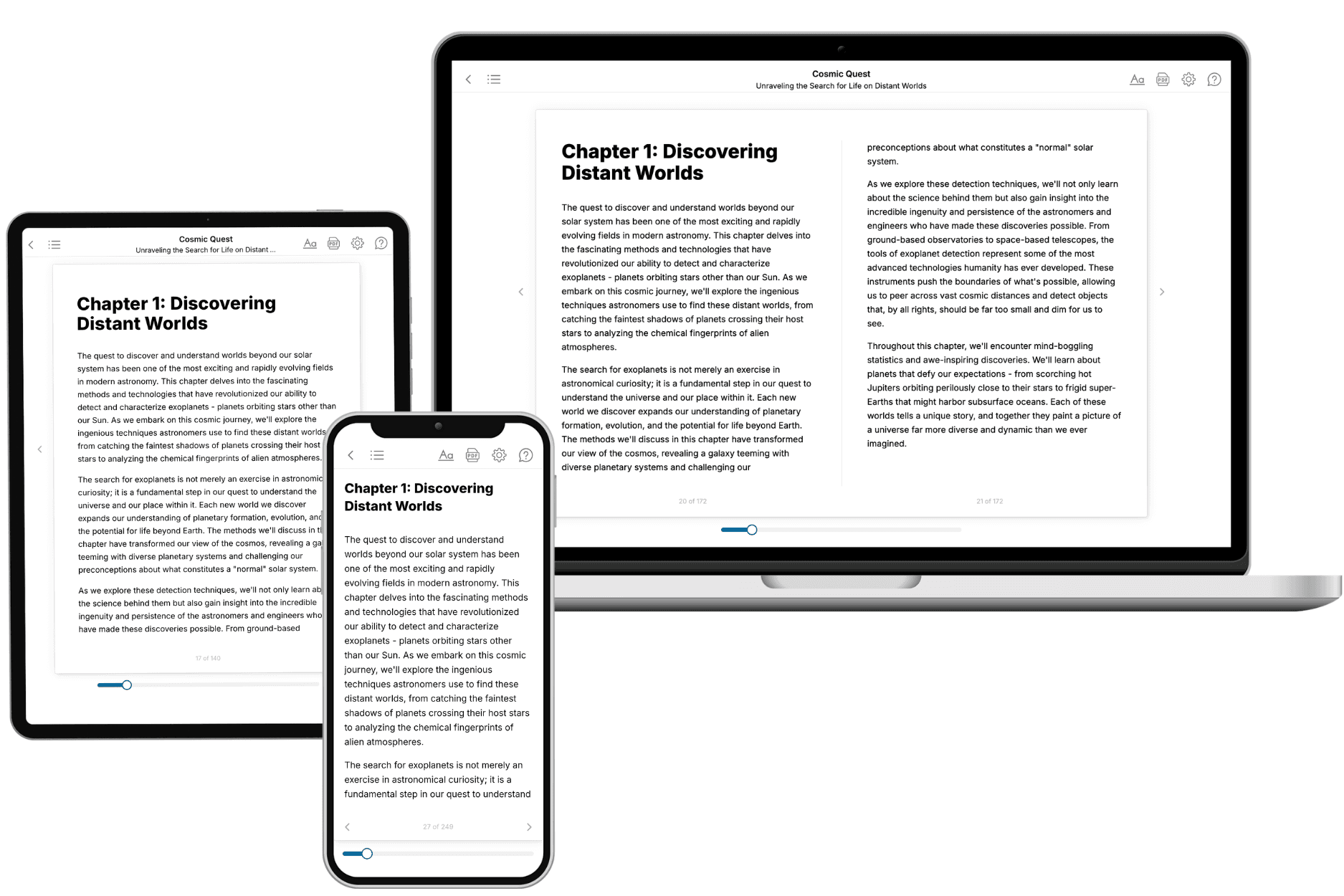
Your book is ready in 10 minutes. Read it online, download as EPUB or PDF, or send to Kindle.

Frequently asked questions
- What is TailoredRead?
TailoredRead creates complete, full-length nonfiction ebooks, written specifically for you. Tell us what you want to learn and why, and TailoredRead writes you a complete ebook on it, with charts, tables, and diagrams throughout. Read it online, on Kindle, or on any e-reader, or download it as a PDF or EPUB. Every book is written fresh the day you order it.
- How is the book tailored to me?
Before anything is written, you answer a few short questions about your goals, your background, and the topics you care about. Your book is then planned around your answers: written at your level, focused on your goals, and covering the topics you chose, instead of the one-size-fits-all book a store sells everyone.
- Will it read like generic AI content?
No. Your book isn't a chat transcript: it's planned chapter by chapter before a single word is written, told in a clear book voice, and explains ideas visually with charts, tables, and diagrams. After writing, every book goes through an editorial pass that polishes chapters so the book reads consistent from start to finish. Judge for yourself: browse thousands of sample books on our Explore Books page.
- How accurate is the content?
Our AI first checks whether your subject needs live research. Niche and fast-moving subjects are researched before writing, and the book plan and chapters are grounded in what it finds. After writing, every book goes through a quality pass that checks its facts and consistency, and researched books list their sources in a Notes section at the back.
- How long is the book?
You choose the length: Comprehensive (250-300 pages), Detailed (150-200 pages), Essential (70-100 pages), or Short (30-50 pages).
- Does the book include visuals?
Yes. Every book includes visual elements such as timelines, checklists, step-by-step guides, decision trees, comparison tables, and matrices, and many include bar charts. A typical book includes dozens of these visual elements.
- Can I read it on Kindle? What formats can I download?
Yes. Every book can be read in our online reader or downloaded as a PDF or EPUB. The EPUB can be opened with Kindle, Apple Books, Kobo, and any e-reader. The Commercial and Author licenses also include an editable Word (DOCX) and Markdown download.
- How much does it cost?
About the price of a regular ebook. The exact price depends on your book's length and complexity, from $2 for the shortest books to $35 for the most comprehensive, and it's shown when you review your book, before you commit to anything. Each book is a one-time purchase, yours to keep, no subscription. Licenses that let you share, teach, or publish your book range from $35.99 to $49.99.
- Can I preview the book before purchasing?
Before you pay, you'll see what your book will cover: the title, a detailed description, the estimated length, and the complete chapter-by-chapter table of contents, so you know what you're getting before you decide. The full text itself is written after you purchase.
- How long does it take to create a book?
About 10 minutes. You can start reading the opening chapters while the rest is still being written.