The Indian Philosophy Mastery Blueprint
A Consultant's Guide to Core Concepts, Ethical Frameworks, and Practical Wisdom
Imagine having a clear, intellectually satisfying framework for understanding consciousness, reality, and your place within the larger cosmos.
238 pages11 chaptersDec 29, 2025Indian PhilosophyCreated by Sanjay
About this book
Picture yourself making decisions with greater clarity, grounded in timeless ethical principles rather than reactive impulses. Envision a daily practice that deepens your self-awareness while connecting you to profound philosophical traditions spanning millennia. This book provides exactly that—a comprehensive mastery blueprint for Indian philosophy designed specifically for the analytically-minded professional. You'll explore the foundational concepts of Vedanta non-dualism and Samkhya dualism, understand how karma shapes causality and decision-making, and discover practical meditation techniques rooted in philosophical principles. Each concept is explained with intellectual rigor while remaining accessible, with clear connections to how these ancient insights apply to modern challenges. You'll learn the philosophical history that contextualizes different schools of thought, master self-inquiry practices, and develop ethical frameworks that integrate wisdom into your professional and personal life. This is not abstract spirituality—it's a structured path to intellectual mastery and practical transformation.
Table of contents
- IntroductionWhy Indian Philosophy Matters for Modern Professionals, How to Use This Blueprint for Maximum Mastery, Navigating the Landscape of Indian Philosophical SchoolsRead below
- Chapter 1: Foundations of Indian Philosophical ThoughtThe Vedic Cosmology and Origins of Philosophical Inquiry, The Six Classical Schools: A Systematic Overview, Philosophical History Timeline and Evolution of Ideas
- Chapter 2: Understanding Consciousness and RealityConsciousness and Awareness: Definitions and Distinctions, Brahman and Self-Realization: The Ultimate Reality, Maya Illusion Theory: Perception and Reality
- Chapter 3: Vedanta Non-Dualism: The Path of AdvaitaAdvaita Vedanta Foundations and Core Principles, Upanishadic Wisdom Teachings and Sacred Texts, Self-Inquiry Nididhyasana: Direct Investigation of Reality
- Chapter 4: Samkhya Dualism: Matter and ConsciousnessSamkhya Philosophical Framework and Principles, Prakriti and Purusha Duality: The Dance of Matter and Spirit, Vaisheshika Atomism Theory and Material Reality
- Chapter 5: Karma, Causality, and Ethical Decision-MakingKarma and Causality Laws: Understanding Consequences, Ethical Frameworks from Philosophical Traditions, Decision-Making Frameworks Grounded in Philosophy
- Chapter 6: Buddhist Philosophy and Complementary PerspectivesBuddhist Philosophy Core Principles and Teachings, Mindfulness and Presence: Buddhist Contributions, Comparative Analysis: Buddhist and Hindu Perspectives
- Chapter 7: Logic, Epistemology, and Rational PhilosophyNyaya Logic Philosophy and Methods of Reasoning, Mimamsa Ritual Philosophy and Textual Interpretation, Epistemology: How We Know What We Know
- Chapter 8: Yoga Philosophy and IntegrationYoga Philosophy Integration and Eight-Fold Path, Chakra Meditation Systems and Energy Frameworks, Mantra Meditation Techniques and Sound Philosophy
- Chapter 9: The Bhagavad Gita: Philosophy in ActionBhagavad Gita Philosophy and Core Teachings, Jnana Wisdom Path: Knowledge as Liberation, Practical Application of Gita Wisdom
- Chapter 10: The Guru-Disciple Relationship and Knowledge TransmissionGuru-Disciple Relationships: Sacred Learning Dynamics, Knowledge Transmission Methods and Practices, Finding Guidance and Building Your Philosophical Community
- Chapter 11: Integrating Philosophy into Daily PracticeMeditation Basics and Establishing Daily Practice, Personal Application: Translating Concepts to Life, Spiritual Traditions and Choosing Your Path
- ConclusionYour Mastery Journey: Next Steps and Continued Growth
- Glossary of Key Terms
- Further Reading and Resources
Introduction
You stand at the intersection of two powerful traditions. On one side, you have the analytical frameworks, strategic thinking, and decision-making methodologies that define modern professional excellence. On the other, there exists a sophisticated philosophical tradition spanning over three thousand years, offering profound insights into consciousness, reality, ethics, and the nature of existence itself. Indian philosophy is not a relic of the past or a collection of mystical beliefs—it represents a rigorous intellectual tradition that has systematically investigated the fundamental questions of human experience with remarkable depth and precision.
This book bridges these two worlds. It recognizes that you bring analytical capabilities, intellectual curiosity, and a desire for frameworks that actually work in practice. You're not looking for vague spiritual platitudes or unexamined dogma. You want to understand the logical structure of these philosophical systems, evaluate their claims critically, and discover how ancient wisdom can inform modern challenges. The Indian philosophical tradition, when properly understood, offers exactly this: systematic methodologies for investigating consciousness, ethical frameworks grounded in causality, and practical techniques for developing self-awareness and clarity.
The journey ahead is both intellectually demanding and practically transformative. You'll encounter concepts that challenge conventional assumptions about the nature of self, reality, and causation. You'll explore competing philosophical schools that debated epistemology, logic, and metaphysics with sophistication rivaling any Western philosophical tradition. Most importantly, you'll discover that these aren't merely theoretical constructs—they're frameworks designed for application, offering concrete methodologies for meditation, ethical decision-making, and personal development. This introduction establishes the foundation for your mastery journey, clarifying why these teachings matter, how to approach this material effectively, and what landscape of ideas you'll be navigating.
Why Indian Philosophy Matters for Modern Professionals
The modern professional environment demands more than technical expertise and strategic thinking. You face complex ethical dilemmas where stakeholder interests conflict, where short-term gains compete with long-term sustainability, and where the consequences of decisions ripple across systems in unpredictable ways. Traditional business frameworks offer decision matrices and stakeholder analysis, but they often lack deeper grounding in how causality actually operates and what constitutes genuinely ethical action. Indian philosophy addresses precisely these gaps, offering frameworks that have been refined through millennia of debate, application, and systematic investigation.
Consider the concept of karma, often misunderstood in popular culture as cosmic reward and punishment. The philosophical understanding of karma is far more sophisticated—it represents a systematic analysis of causality, intention, and consequence. When you understand karma as a framework for analyzing how actions create conditions that inevitably produce results, you gain a powerful tool for strategic thinking. Every decision you make as a consultant or business leader sets conditions in motion. Some effects are immediate and visible; others unfold across years, shaping organizational culture, stakeholder relationships, and market dynamics. The karmic framework helps you think systematically about these cascading consequences, considering not just immediate outcomes but the conditions your actions create for future possibilities.
Beyond decision-making frameworks, Indian philosophy offers unprecedented insights into consciousness itself. Modern neuroscience has made remarkable progress mapping brain activity, but the subjective experience of awareness remains mysterious. How does consciousness arise? What is the relationship between awareness and thought? Can you observe your own mind systematically? Indian philosophical traditions developed sophisticated methodologies for investigating these questions through direct experience. The practice of self-inquiry in Advaita Vedanta, for instance, isn't meditation in the relaxation sense—it's a systematic investigation into the nature of the observer, the observed, and the process of observation itself.
This matters professionally because self-awareness is the foundation of effective leadership. When you understand how your mind constructs narratives, how emotions influence perception, and how identification with thoughts creates blind spots, you become dramatically more effective. You recognize when you're operating from reactive patterns versus conscious choice. You notice when ego-protection is driving decisions rather than genuine strategic thinking. You develop the capacity to hold multiple perspectives simultaneously without collapsing into confusion or rigid certainty. These aren't soft skills—they're cognitive capabilities that directly impact your effectiveness in complex, ambiguous environments.
The philosophical frameworks you'll encounter also provide intellectual satisfaction that many professionals find lacking in conventional business thinking. There's a coherence and depth to systems like Vedanta or Samkhya that addresses fundamental questions about existence, meaning, and purpose. You may have achieved external success while sensing that something essential is missing—a framework that integrates your professional life with deeper questions about consciousness, ethics, and what constitutes a life well-lived. Indian philosophy offers this integration without requiring you to abandon critical thinking or adopt beliefs that contradict your experience.
Perhaps most practically, these traditions offer concrete methodologies for developing capabilities that enhance every aspect of professional and personal life. Meditation techniques grounded in philosophical understanding aren't about stress reduction—they're systematic training in attention, awareness, and the capacity to observe mental processes without identification. Ethical frameworks derived from karma philosophy provide clear principles for navigating complex moral terrain. The concept of dharma—often translated as duty or righteousness—offers a sophisticated approach to understanding contextual ethics, where right action depends on your role, circumstances, and the larger systems you're embedded within.
The integration of these philosophical insights creates a multiplier effect. When you understand consciousness more clearly, your meditation practice deepens. When your meditation practice develops, your capacity for ethical discernment sharpens. When your ethical framework becomes more sophisticated, your decision-making improves. When your decisions align with deeper principles, you experience greater coherence between your actions and values. This isn't a linear process but a spiral of development where each element reinforces the others. The result is a form of mastery that transcends technical expertise—a way of being that brings clarity, effectiveness, and meaning to everything you do.
How to Use This Blueprint for Maximum Mastery
This book is structured as a progressive mastery blueprint, not a casual survey of interesting ideas. Each chapter builds on previous foundations, introducing concepts in a sequence designed to develop both intellectual understanding and practical capability. You can certainly skip ahead to topics that immediately interest you, but you'll gain maximum value by working through the material systematically. The early chapters establish foundational concepts—consciousness, reality, the major philosophical schools—that later chapters assume you understand. Without this foundation, advanced concepts like nididhyasana (profound meditation) or the subtleties of Samkhya dualism will remain abstract rather than becoming living frameworks you can apply.
Approach each chapter with both analytical rigor and openness to experiential investigation. The analytical component means engaging critically with the philosophical arguments presented. Don't accept claims simply because they're ancient or sound profound. Evaluate the logical structure of arguments, consider counterarguments, and test concepts against your own experience and observations. Indian philosophical traditions themselves developed through vigorous debate—the Nyaya school, for instance, created sophisticated logical frameworks specifically for evaluating philosophical claims. You honor these traditions by bringing critical thinking to the material, not by accepting everything uncritically.
The experiential component is equally essential. Many concepts in Indian philosophy can only be fully understood through direct investigation. You can read about the nature of consciousness, but until you actually observe your own awareness systematically through meditation, the concepts remain theoretical. You can study the philosophy of maya (illusion), but until you directly notice how your mind constructs narratives and projects them onto reality, the teaching stays abstract. This book provides both intellectual frameworks and practical exercises designed to move understanding from conceptual to experiential. Treat these exercises as seriously as you would any professional skill development—they require consistent practice and genuine engagement.
Create a structured learning environment for yourself. This might mean:
- Setting aside dedicated time for reading and reflection, ideally 30-60 minutes daily when your mind is fresh
- Keeping a philosophical journal where you work through concepts, record insights, and track how ideas connect
- Establishing a daily meditation practice, even if brief initially, to develop experiential understanding alongside intellectual knowledge
- Finding or creating a study group with others interested in serious philosophical investigation, providing accountability and diverse perspectives
- Revisiting challenging concepts multiple times rather than expecting immediate mastery—philosophical understanding deepens through repeated engagement
Pay special attention to the practical application sections in each chapter. These aren't optional add-ons but essential components of the mastery process. A framework you understand intellectually but never apply remains inert knowledge. The goal is integration—making these philosophical insights operational in your actual decision-making, relationships, and daily experience. When you encounter an application exercise, pause and actually do it rather than simply reading through. The difference between reading about self-inquiry and actually practicing self-inquiry is the difference between knowing about swimming and being able to swim.
Use the glossary and further reading sections strategically. Indian philosophy employs Sanskrit terminology that carries precise meanings often lost in translation. When you encounter a term like Brahman or prakriti, consult the glossary to ensure you're working with accurate definitions. The further reading recommendations point toward primary sources and scholarly works that allow you to go deeper into specific areas. You don't need to read everything listed, but having these resources available allows you to pursue particular interests as they emerge. Some readers will want to dive deeply into Vedanta texts; others will be drawn to Buddhist philosophy or the logical systems of Nyaya. Follow your genuine interest while maintaining the foundational understanding this book provides.
Recognize that philosophical mastery is a long-term developmental process, not a quick acquisition of information. You're not simply learning new concepts but developing new cognitive capabilities—the ability to observe consciousness directly, to think systematically about causality and ethics, to hold paradox without collapsing into simplistic resolution. These capabilities develop gradually through sustained engagement. You might read a chapter and feel you understand it intellectually, then return six months later after consistent practice and discover entirely new dimensions of meaning. This is normal and expected. The material is designed to reward repeated engagement, revealing deeper layers as your understanding and practice mature.
Finally, maintain a balance between intellectual understanding and practical application, between study and practice, between learning new material and integrating what you've already encountered. The temptation for analytically-minded professionals is to keep consuming new information without pausing for integration. Resist this tendency. After completing each chapter, spend time in reflection and practice before moving forward. Let the concepts settle, test them in your actual experience, and notice what questions arise. This rhythm of learning, practicing, and integrating creates genuine mastery rather than superficial familiarity with many concepts.
Navigating the Landscape of Indian Philosophical Schools
Indian philosophy is not a single unified system but a rich landscape of competing and complementary schools of thought. Understanding this landscape is essential for navigating the material ahead without confusion. The major division is between astika (orthodox) and nastika (heterodox) schools. Orthodox schools accept the authority of the Vedas, the ancient Sanskrit texts that form the foundation of Hindu tradition. Heterodox schools, including Buddhism and Jainism, reject Vedic authority and develop their own epistemological foundations. This distinction isn't about belief versus skepticism—both categories include sophisticated philosophical systems with rigorous logical frameworks.
The six classical orthodox schools, known as the Darshanas, each address different aspects of philosophical inquiry:
- Nyaya focuses on logic, epistemology, and methods of valid reasoning—essentially the philosophy of how we know what we know
- Vaisheshika develops an atomistic metaphysics, analyzing reality into fundamental categories and investigating the nature of material existence
- Samkhya presents a dualistic framework distinguishing consciousness (purusha) from matter (prakriti), offering a systematic cosmology
- Yoga provides practical methodologies for mental discipline and consciousness investigation, grounded in Samkhya metaphysics
- Mimamsa examines ritual, textual interpretation, and the philosophy of action, developing sophisticated hermeneutical principles
- Vedanta investigates the nature of ultimate reality, self, and consciousness, with multiple sub-schools offering different interpretations
These schools didn't develop in isolation but through centuries of debate, critique, and synthesis. A Nyaya logician might challenge a Vedanta metaphysical claim, forcing Vedanta philosophers to refine their arguments. A Buddhist philosopher might critique the Samkhya concept of a permanent self, leading to sophisticated responses about the nature of consciousness and identity. This dialectical process created increasingly refined philosophical positions, with each school developing responses to objections from competing perspectives. Understanding this dynamic helps you appreciate why certain concepts are defined with such precision—they emerged from rigorous intellectual combat.
Vedanta itself contains multiple sub-schools representing different interpretations of the Upanishads, the philosophical texts that conclude the Vedic corpus. The three major Vedanta schools are:
- Advaita Vedanta (non-dualism), associated with Adi Shankaracharya, argues that ultimate reality is non-dual consciousness and that apparent multiplicity is a product of ignorance
- Vishishtadvaita (qualified non-dualism), developed by Ramanuja, maintains that individual souls and the world are real but exist as modes or qualities of the ultimate reality
- Dvaita (dualism), articulated by Madhvacharya, asserts fundamental distinction between individual souls, the world, and the supreme reality
Buddhist philosophy represents a parallel tradition that shares some concerns with Hindu schools while diverging on fundamental points. Buddhism rejects the concept of a permanent self (atman) and ultimate reality (Brahman), instead proposing that all phenomena are impermanent, interdependent, and lacking inherent existence. Buddhist schools developed their own sophisticated epistemology, logic, and meditation methodologies. The relationship between Buddhist and Hindu philosophy is complex—sometimes complementary, sometimes contradictory. Both traditions offer valuable insights, and understanding their points of agreement and divergence deepens your philosophical sophistication.
As you navigate this landscape, you'll notice certain themes recurring across different schools. The nature of consciousness appears in virtually every system, though schools disagree about whether consciousness is fundamental or emergent, permanent or impermanent, singular or multiple. The problem of causality—how effects arise from causes—receives extensive treatment in multiple traditions, with different schools proposing various causal theories. The relationship between knowledge and liberation is another common concern: most Indian philosophical schools aren't pursuing knowledge for its own sake but as a means to freedom from suffering and limitation.
This practical orientation distinguishes Indian philosophy from much Western philosophy. While Western traditions often separate epistemology, metaphysics, and ethics into distinct domains, Indian philosophy tends to integrate these concerns. A metaphysical claim about the nature of reality has direct implications for how you should live and what practices lead to liberation. An epistemological investigation into valid knowledge isn't merely academic but aims at removing ignorance that causes suffering. This integration means that even highly abstract philosophical concepts have practical applications—a theme you'll encounter throughout this book.
Understanding the landscape also helps you recognize that apparent contradictions between schools often reflect different levels of analysis or different starting assumptions rather than simple errors. Samkhya dualism and Vedanta non-dualism seem incompatible—how can reality be both dual and non-dual? But Samkhya operates at the level of phenomenal experience, providing a framework for understanding the manifest world, while Advaita Vedanta investigates what underlies all phenomena. Both can be valid within their respective domains. Learning to hold multiple frameworks simultaneously, understanding their scope and limitations, represents an advanced form of philosophical thinking that this book will help you develop.
Finally, recognize that your journey through this landscape is not about choosing the "correct" school and rejecting others. Different frameworks illuminate different aspects of reality and serve different purposes. You might find Vedanta's investigation of consciousness most compelling for understanding awareness, while appreciating Samkhya's systematic analysis of material causation, and valuing Buddhist insights into impermanence and suffering. The goal is mastery of the philosophical terrain, not allegiance to a particular position. This comprehensive understanding allows you to draw on whichever framework best addresses the question or challenge you're facing, creating a flexible and sophisticated philosophical toolkit.
This is the end of the free sample. The full book has 11 chapters.
Want this book written for you?
Tell us your goals and background, and get your own version of this book, tailored by AI to you.


Benefits of AI-tailored books
- Read one book, not ten:
- all the Indian Philosophy knowledge you need, gathered into a single book.
- Save days of learning:
- tell us your goals, choose your topics, and the whole book is built around them.
- Learn effortlessly:
- Indian Philosophy book written for your specific background and expertise.
- Understand at a glance:
- includes charts, tables, timelines, checklists, decision trees, and more.
- Stay current:
- written the day you order it, not years ago.
- Trust what you read:
- every book is checked for accuracy, with real research when your subject needs it.
Create your unique book in 3 steps
- 1. Select your focus
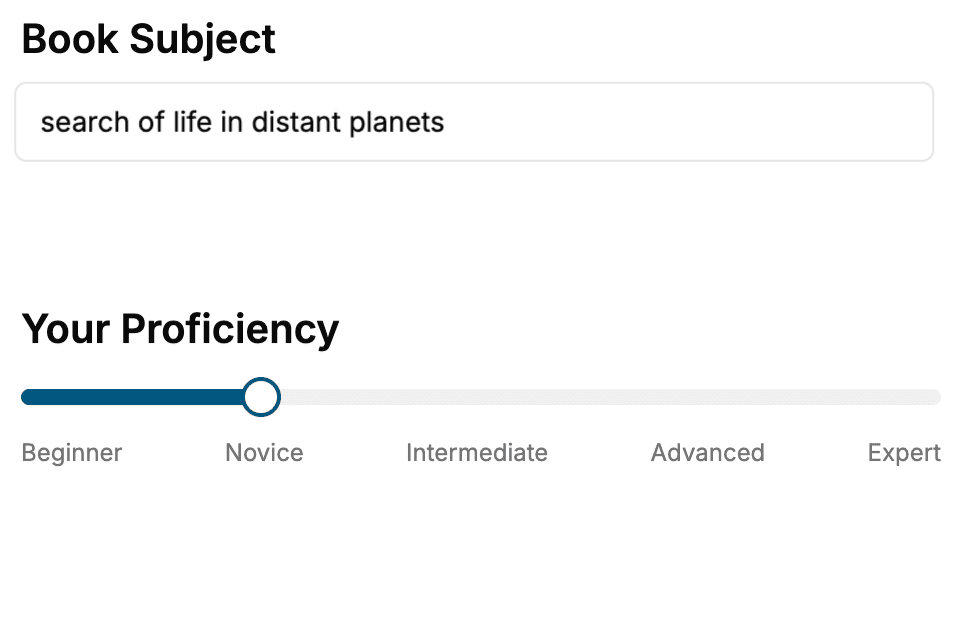
Select the focus of your Indian Philosophy book and share your background
- 2. Personalize your book
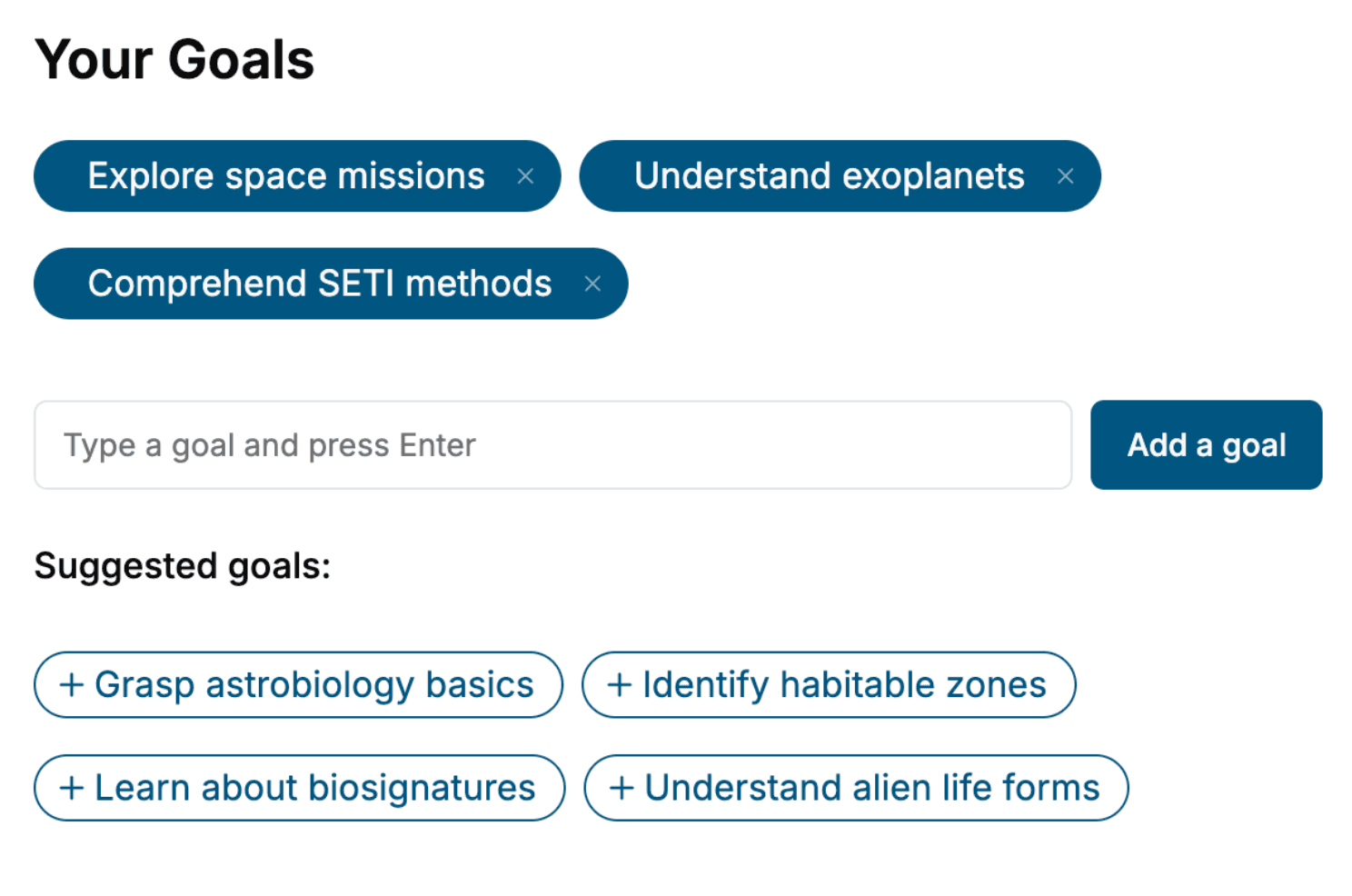
Specify your goals and choose sub-topics to include
- 3. Get your tailored book
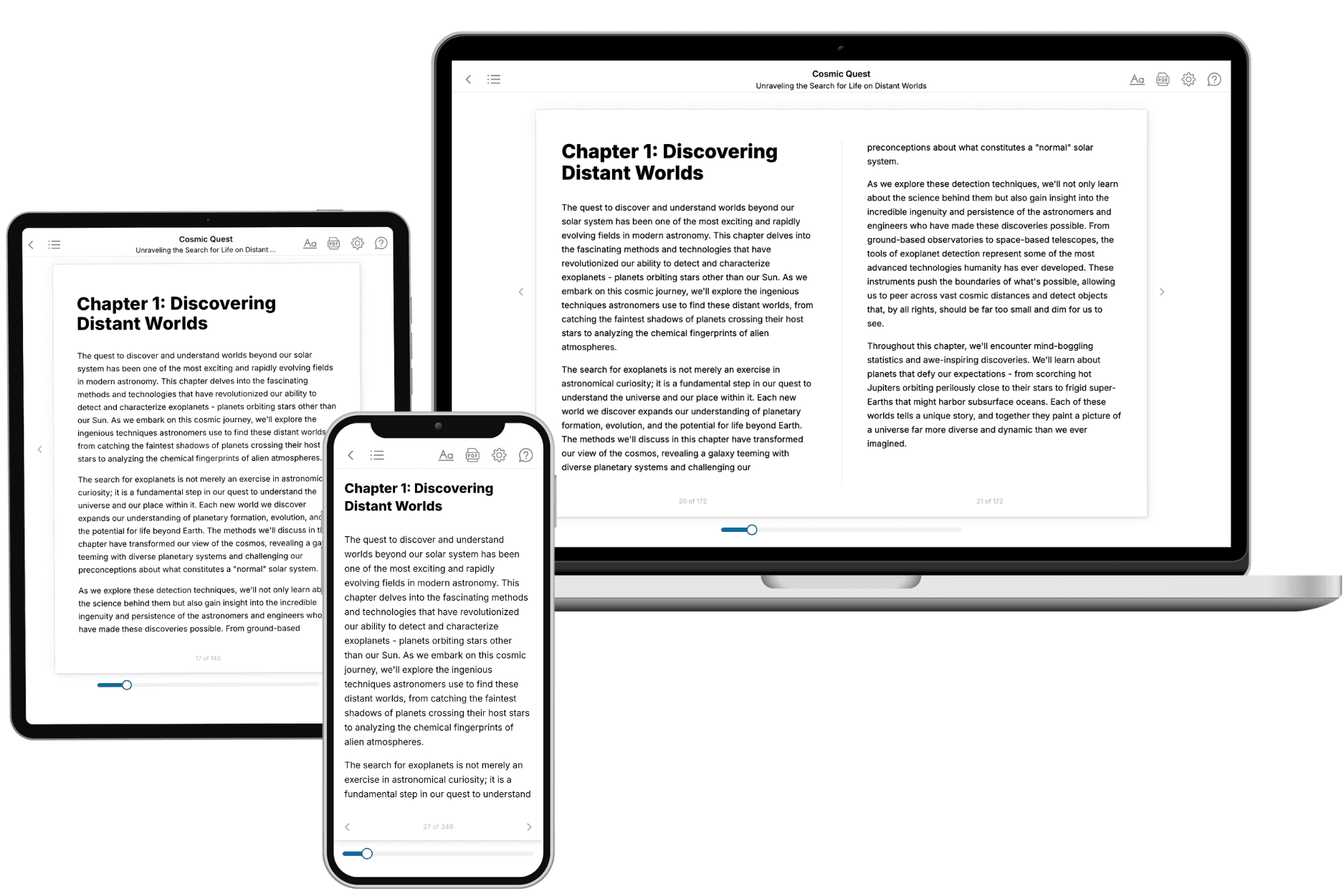
Your book is ready in 10 minutes. Read it online, download as EPUB or PDF, or send to Kindle.
Frequently asked questions
- What is TailoredRead?
TailoredRead creates complete, full-length nonfiction ebooks, written specifically for you. Tell us what you want to learn and why, and TailoredRead writes you a complete ebook on it, with charts, tables, and diagrams throughout. Read it online, on Kindle, or on any e-reader, or download it as a PDF or EPUB. Every book is written fresh the day you order it.
- How is the book tailored to me?
Before anything is written, you answer a few short questions about your goals, your background, and the topics you care about. Your book is then planned around your answers: written at your level, focused on your goals, and covering the topics you chose, instead of the one-size-fits-all book a store sells everyone.
- Will it read like generic AI content?
No. Your book isn't a chat transcript: it's planned chapter by chapter before a single word is written, told in a clear book voice, and explains ideas visually with charts, tables, and diagrams. After writing, every book goes through an editorial pass that polishes chapters so the book reads consistent from start to finish. Judge for yourself: browse thousands of sample books on our Explore Books page.
- How accurate is the content?
Our AI first checks whether your subject needs live research. Niche and fast-moving subjects are researched before writing, and the book plan and chapters are grounded in what it finds. After writing, every book goes through a quality pass that checks its facts and consistency, and researched books list their sources in a Notes section at the back.
- How long is the book?
You choose the length: Comprehensive (250-300 pages), Detailed (150-200 pages), Essential (70-100 pages), or Short (30-50 pages).
- Does the book include visuals?
Yes. Every book includes charts, tables, and diagrams: timelines, checklists, step-by-step guides, decision trees, comparison tables, matrices, and bar charts. A typical book includes dozens of these visual elements.
- Can I read it on Kindle? What formats can I download?
Yes. Every book can be read in our online reader or downloaded as a PDF or EPUB. The EPUB can be opened with Kindle, Apple Books, Kobo, and any e-reader. The Commercial and Author licenses also include an editable Word (DOCX) and Markdown download.
- How much does it cost?
About the price of a regular ebook. The exact price depends on your book's length and complexity, from $2 for the shortest books to $35 for the most comprehensive, and it's shown when you review your book, before you commit to anything. Each book is a one-time purchase, yours to keep, no subscription. Licenses that let you share, teach, or publish your book range from $35.99 to $49.99.
- Can I preview the book before purchasing?
Before you pay, you'll see what your book will cover: the title, a detailed description, the estimated length, and the complete chapter-by-chapter table of contents, so you know what you're getting before you decide. The full text itself is written after you purchase.
- How long does it take to create a book?
About 10 minutes. You can start reading the opening chapters while the rest is still being written.