Jazz Chord Progressions Mastery
Build Your Foundation and Create Sophisticated Harmonic Movement
Imagine confidently navigating any jazz standard, understanding exactly why each chord moves to the next, and having the tools to create your own sophisticated harmonic progressions.
191 pages9 chaptersJun 4, 2026Music Theory
About this book
This book bridges the gap between basic music theory and advanced jazz harmony, giving you a clear, practical framework for mastering chord progressions. You'll discover the underlying logic behind the progressions that define jazz—from the ubiquitous ii-V-I to complex reharmonization techniques used by jazz legends. Through clear explanations, real-world examples, and hands-on exercises, you'll learn how to analyze progressions, understand voice leading, and apply substitutions that add depth to your playing and composing. Whether you're a pianist, guitarist, bassist, or any instrumentalist, this book provides the knowledge you need to move beyond memorization and truly understand the harmonic language of jazz. You'll develop the ear and intuition to recognize patterns, anticipate chord changes, and create progressions that sound authentic and compelling.
Table of contents
- IntroductionWhy Jazz Harmony Matters, How to Use This Book, What You'll Learn and AccomplishRead below
- Chapter 1: Foundations of Jazz HarmonyEssential Music Theory Concepts, Building Chords: Triads and Seventh Chords, Understanding Functional Harmony
- Chapter 2: Voice Leading and Smooth TransitionsCore Principles of Voice Leading, Creating Smooth Chord Movement, Practical Voice Leading Exercises
- Chapter 3: Essential Jazz ProgressionsThe ii-V-I: The Foundation of Jazz, Blues Changes and Variations, Turnarounds and Bridge Progressions
- Chapter 4: Chord Substitutions and ReharmonizationTypes of Chord Substitutions, Tritone Substitution and Secondary Dominants, Reharmonization Techniques for Standards
- Chapter 5: Modal Interchange and Borrowed ChordsUnderstanding Modes in Jazz, Borrowed Chords and Modal Interchange, Applying Modes to Progressions
- Chapter 6: Rhythm Changes and Advanced SubstitutionsThe Structure of Rhythm Changes, Rhythm Substitutions and Variations, Advanced Reharmonization of Standards
- Chapter 7: Analyzing and Transcribing Jazz StandardsEffective Transcription Techniques, Analyzing Harmonic Movement, Learning from Jazz Masters
- Chapter 8: Creating Original ProgressionsPrinciples for Composing Progressions, Developing Harmonic Ideas, Testing and Refining Your Progressions
- Chapter 9: Practical Application Across InstrumentsProgressions for Piano and Keyboard, Progressions for Guitar, Progressions for Bass and Rhythm Section
- ConclusionYour Next Steps in Jazz Harmony, Continued Growth and Mastery
- Further Resources and Practice GuideRecommended Listening List, Progressive Practice Exercises, Glossary of Jazz Harmony Terms
Introduction
There is a moment that almost every musician knows. You are sitting at your instrument, listening to a jazz recording, and something in the harmony stops you cold. Maybe it is the way a chord resolves unexpectedly, or the way a progression seems to float before landing somewhere surprising and satisfying. You rewind, listen again, and think: how did they do that? That question is exactly where this book begins. Jazz harmony is not magic, and it is not reserved for a gifted few. It is a language, and like any language, it can be learned systematically.
Jazz chord progressions have a reputation for being complicated, and that reputation is not entirely undeserved. Compared to the straightforward I-IV-V patterns of folk or rock music, jazz harmony involves extended chords, chromatic movement, substitutions, and a level of harmonic sophistication that can feel overwhelming at first. But underneath all of that complexity, there is a clear and logical structure. The same handful of principles appear again and again across thousands of jazz standards, from bebop to bossa nova, from swing to fusion. Once you understand those principles, the complexity starts to make sense.
This book is designed for musicians who already have some foundation in music theory but want to go deeper into the harmonic world of jazz. You do not need to be a professional musician or a conservatory graduate. You do need to be curious, willing to practice, and ready to listen carefully. Whether you play piano, guitar, bass, or any other instrument, the concepts here apply directly to how you hear, analyze, and create music. The goal is not just to memorize progressions but to understand them well enough to use them freely and creatively.
Throughout these chapters, you will find clear explanations paired with real musical examples, practical exercises, and frameworks you can apply immediately. The approach is analytical but never dry. Jazz is living music, and the theory behind it should feel connected to actual sounds and real performances. Every concept introduced here is grounded in the music itself, drawing on the work of the players and composers who built this tradition over more than a century of innovation.
Why Jazz Harmony Matters
Jazz harmony is one of the most sophisticated harmonic systems in Western music. It draws from classical European harmony, African rhythmic traditions, and the blues, combining them into something entirely its own. Understanding jazz harmony does not just make you a better jazz musician. It expands your entire musical vocabulary, giving you tools that apply across genres, from R&B and soul to film scoring and contemporary pop.
Consider what happens when you understand why a chord progression works rather than just knowing that it works. You can adapt it. You can modify it. You can recognize it in a new context and respond to it in real time. This is the difference between a musician who has memorized a set of patterns and one who has internalized a harmonic language. The first musician is limited to what they have practiced before. The second can navigate almost any musical situation with confidence.
Jazz harmony also trains your ear in ways that other musical systems do not. Because jazz relies so heavily on tension and resolution, on chords that pull toward each other through specific voice-leading relationships, learning to hear these movements sharpens your musical perception dramatically. Musicians who study jazz harmony consistently report that their ability to hear and transcribe music improves across the board, not just in jazz contexts.[1]
There is also a practical, professional dimension to this. Jazz standards form a shared repertoire that musicians around the world use as a common language. Knowing the harmonic structure of these standards means you can sit in with musicians you have never met, communicate through the music, and create something together on the spot. That kind of fluency is enormously valuable, and it starts with understanding the progressions that underpin the repertoire.
Beyond the practical, there is something deeply satisfying about understanding beautiful music at a structural level. When you hear a tritone substitution resolve smoothly into a tonic chord, and you understand exactly what is happening harmonically, the music becomes even more compelling. Knowledge does not diminish the magic of jazz. It deepens it. You hear more, feel more, and connect more fully with what the musicians are doing.
Finally, jazz harmony matters because it is a creative tool. The musicians who shaped this tradition, from Duke Ellington and Thelonious Monk to Bill Evans and Herbie Hancock, were not just performers. They were harmonic innovators who used their deep understanding of chord relationships to create music that was genuinely new. That same creative potential is available to you once you have the foundational knowledge to work with.
A note on listening: Throughout this book, you will be encouraged to listen actively to recordings. This is not optional. Reading about harmony and hearing it are two different experiences, and you need both. Keep a playlist running alongside your reading, and return to recordings repeatedly as your understanding grows. You will hear things on the tenth listen that you completely missed on the first.
How to Use This Book
This book is structured to build your understanding progressively. Each chapter introduces concepts that depend on what came before, so working through the chapters in order is strongly recommended, especially if you are newer to jazz harmony. That said, if you already have solid grounding in certain areas, the chapters are written to be reasonably self-contained, and you can use the table of contents to navigate to the topics most relevant to your current needs.
Here is a quick overview of how the book is organized:
- Chapters 1 and 2 cover the foundational theory you need: chord construction, functional harmony, and voice leading. Even if you feel confident in these areas, a review is worthwhile because the jazz-specific framing here will set up everything that follows.
- Chapters 3 through 5 introduce the core progressions and techniques of jazz harmony, including the ii-V-I, blues changes, chord substitutions, and modal interchange. These are the heart of the book.
- Chapters 6 and 7 go deeper into advanced territory: rhythm changes, sophisticated reharmonization, and the analytical skills needed to learn from transcriptions of jazz masters.
- Chapters 8 and 9 shift toward application, helping you create original progressions and adapt everything you have learned to your specific instrument.
Each chapter includes explanations, musical examples, and practical exercises. The exercises are not decorative. They are the mechanism through which the concepts move from your head to your hands and ears. Skipping them will slow your progress significantly. Even if you cannot complete every exercise perfectly right away, attempting them is valuable because the struggle itself is part of the learning process.
You will also find that certain concepts appear more than once across different chapters. This is intentional. Harmonic ideas in jazz are interconnected, and seeing the same principle from multiple angles, in different contexts, is how deep understanding develops. When you encounter a familiar concept in a new chapter, treat it as an opportunity to reinforce and extend what you already know rather than as repetition.
A few practical suggestions for getting the most out of this material:
- Work at your instrument. Read with your instrument nearby and test every example as you encounter it. Hearing the chords you are reading about is essential.
- Keep a practice journal. Write down the progressions you are working on, the exercises you are practicing, and the observations you make while listening. This habit accelerates learning considerably.
- Be patient with yourself. Jazz harmony is genuinely complex. Some concepts will click immediately; others will take weeks of practice before they feel natural. That is completely normal.
- Listen constantly. The Further Resources section at the back of the book includes a recommended listening list. Use it. The recordings listed there are not just enjoyable; they are the living examples of everything discussed in these pages.
- Find other musicians to play with. Applying these concepts in a real musical context, even informally, accelerates your development faster than solo practice alone.
One more thing worth saying clearly: this book assumes you can read music notation and have a working understanding of major and minor scales, basic intervals, and simple chord structures. If those concepts feel shaky, spending a few weeks reviewing them before diving in will make everything here much more accessible. The goal is to build on your existing foundation, not to replace it.
The Further Resources section at the end of the book also includes a glossary of jazz harmony terms. If you encounter a word or concept that is unfamiliar, that glossary is a good first stop. It is designed to give you quick, clear definitions without requiring you to leave the flow of your reading for long.
What You'll Learn and Accomplish
By the time you finish this book, you will have a genuinely different relationship with jazz harmony. Not just more information, but a different way of hearing and thinking about music. That shift is the real goal here. Information without understanding is just memorization, and memorization without application is quickly forgotten. This book is designed to give you understanding that sticks because it is connected to real musical experience.
Here is a concrete picture of what you will be able to do after working through this material:
- Construct any jazz chord, from basic triads to complex extended voicings, and understand how each chord functions within a key.
- Recognize and play the ii-V-I progression in all twelve keys, understanding why it is the central building block of jazz harmony.
- Analyze the chord progressions of jazz standards and identify the harmonic techniques being used, including substitutions, secondary dominants, and modal interchange.
- Apply tritone substitutions and other reharmonization techniques to add sophistication to familiar progressions.
- Understand voice leading well enough to create smooth, professional-sounding chord movements on your instrument.
- Navigate rhythm changes and understand the harmonic logic behind one of jazz's most important formal structures.
- Create original chord progressions that sound authentically jazz-influenced and harmonically coherent.
- Transcribe and analyze recordings with greater accuracy and deeper harmonic insight.
These are not abstract goals. Each one corresponds to specific skills developed in specific chapters, through specific exercises. The path from where you are now to where you want to be is clear and walkable. It requires consistent practice and genuine engagement with the material, but it does not require any special talent beyond what you already have.
It is worth being honest about what this book will not do. It will not make you a jazz improviser on its own. Improvisation is a separate skill that requires its own dedicated study, though understanding harmony deeply will absolutely support your development as an improviser. This book also will not replace the experience of playing with other musicians, listening to thousands of hours of recordings, or working with a skilled teacher. Think of it as one essential component of a broader musical education, not a complete substitute for all the others.
What this book will do is give you a clear, organized, and practical framework for understanding jazz harmony at a level that most musicians never reach. Many players spend years playing jazz without ever fully understanding why the progressions work the way they do. They learn by imitation and repetition, which is valuable, but it leaves gaps. This book is designed to fill those gaps systematically, giving you the theoretical grounding to understand what you are hearing and the practical tools to apply that understanding in your own playing and composing.
The musicians who have shaped jazz history were not just gifted performers. They were deep thinkers about harmony, rhythm, and form. Duke Ellington studied harmony obsessively throughout his career. Bill Evans was known for his analytical approach to chord voicings and voice leading.[2] Thelonious Monk developed a harmonic vocabulary so distinctive that it remains immediately recognizable decades after his death. These musicians did not stumble onto their harmonic innovations by accident. They worked at them, thought about them, and practiced them with intention. That same intentional approach is what this book invites you to bring to your own musical development.
Jazz is a tradition built on both deep respect for what came before and a constant drive to push forward. Understanding the harmonic foundations of this tradition does not limit your creativity. It gives you the tools to participate in that ongoing conversation, to build on what the masters created, and eventually to add your own voice to it. That is the real promise of this book: not just knowledge, but the kind of understanding that opens doors.
A word of encouragement: If you have ever felt intimidated by jazz harmony, you are in good company. Almost every serious jazz musician has felt that way at some point. The complexity is real, but so is the logic underneath it. Every concept in this book was once unfamiliar to someone who later mastered it. The only difference between where you are now and where you want to be is time, practice, and the right guidance. You have the guidance in your hands. The rest is up to you.
One final thought before you begin. Jazz is ultimately about sound, not theory. The theory in this book is a means to an end, and that end is music that moves people. Keep that in mind as you work through these chapters. Every concept you learn should eventually find its way back to your instrument, to your ears, and to the music you make with other people. Theory that never becomes sound is just an intellectual exercise. Theory that becomes music is something else entirely. That transformation, from concept to sound to feeling, is what jazz harmony is really about.
This is the end of the free sample. The full book has 9 chapters.
Want this book written for you?
Tell us your goals and background, and get your own version of this book, tailored by AI to you.


Benefits of AI-tailored books
- Read one book, not ten:
- all the Music Theory knowledge you need, gathered into a single book.
- Save days of learning:
- tell us your goals, choose your topics, and the whole book is built around them.
- Learn effortlessly:
- Music Theory book written for your specific background and expertise.
- Understand at a glance:
- includes charts, tables, timelines, checklists, decision trees, and more.
- Stay current:
- written the day you order it, not years ago.
- Trust what you read:
- every book is checked for accuracy, with real research when your subject needs it.
Create your unique book in 3 steps
- 1. Select your focus
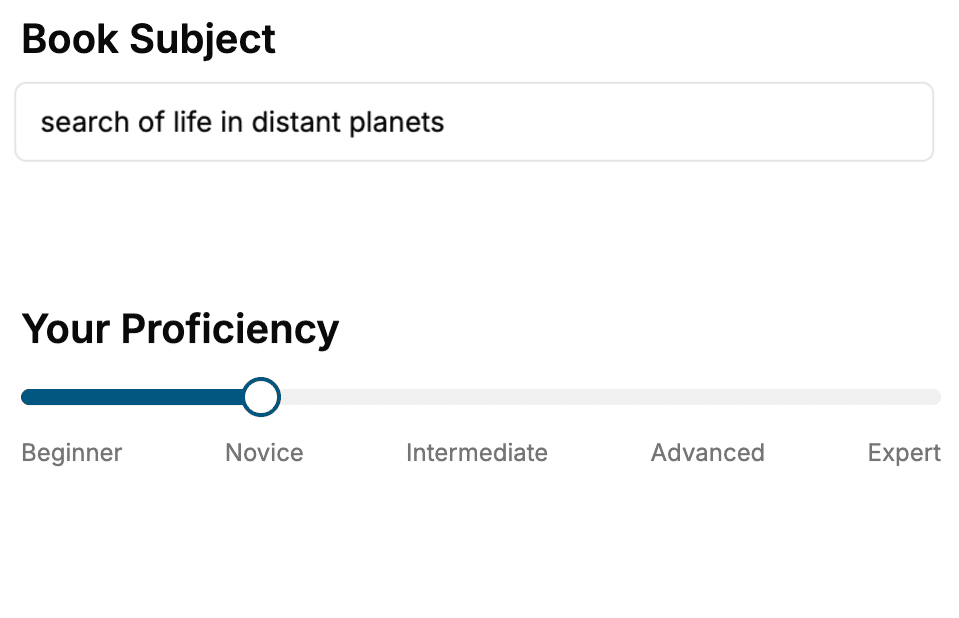
Select the focus of your Music Theory book and share your background
- 2. Personalize your book
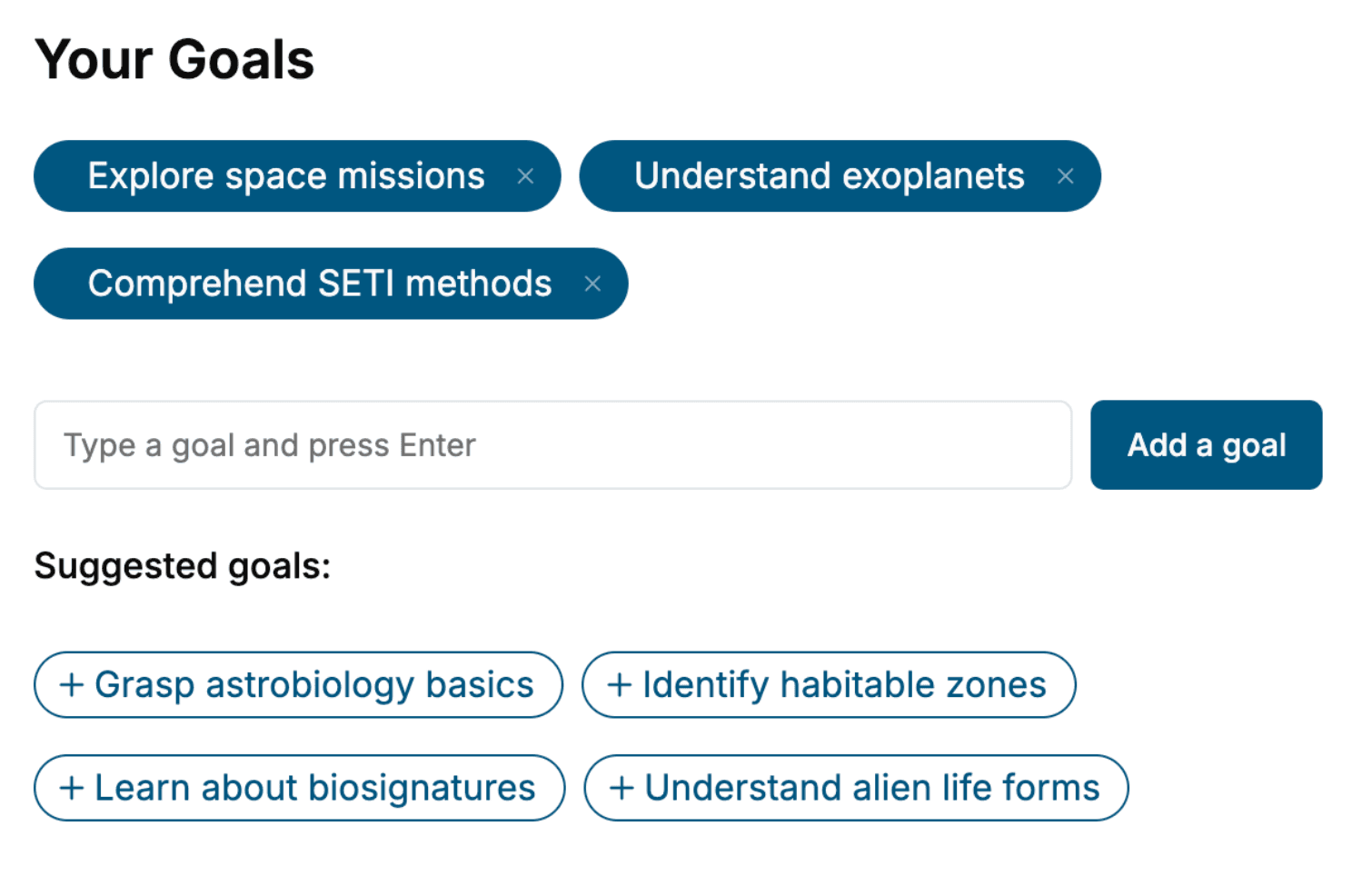
Specify your goals and choose sub-topics to include
- 3. Get your tailored book
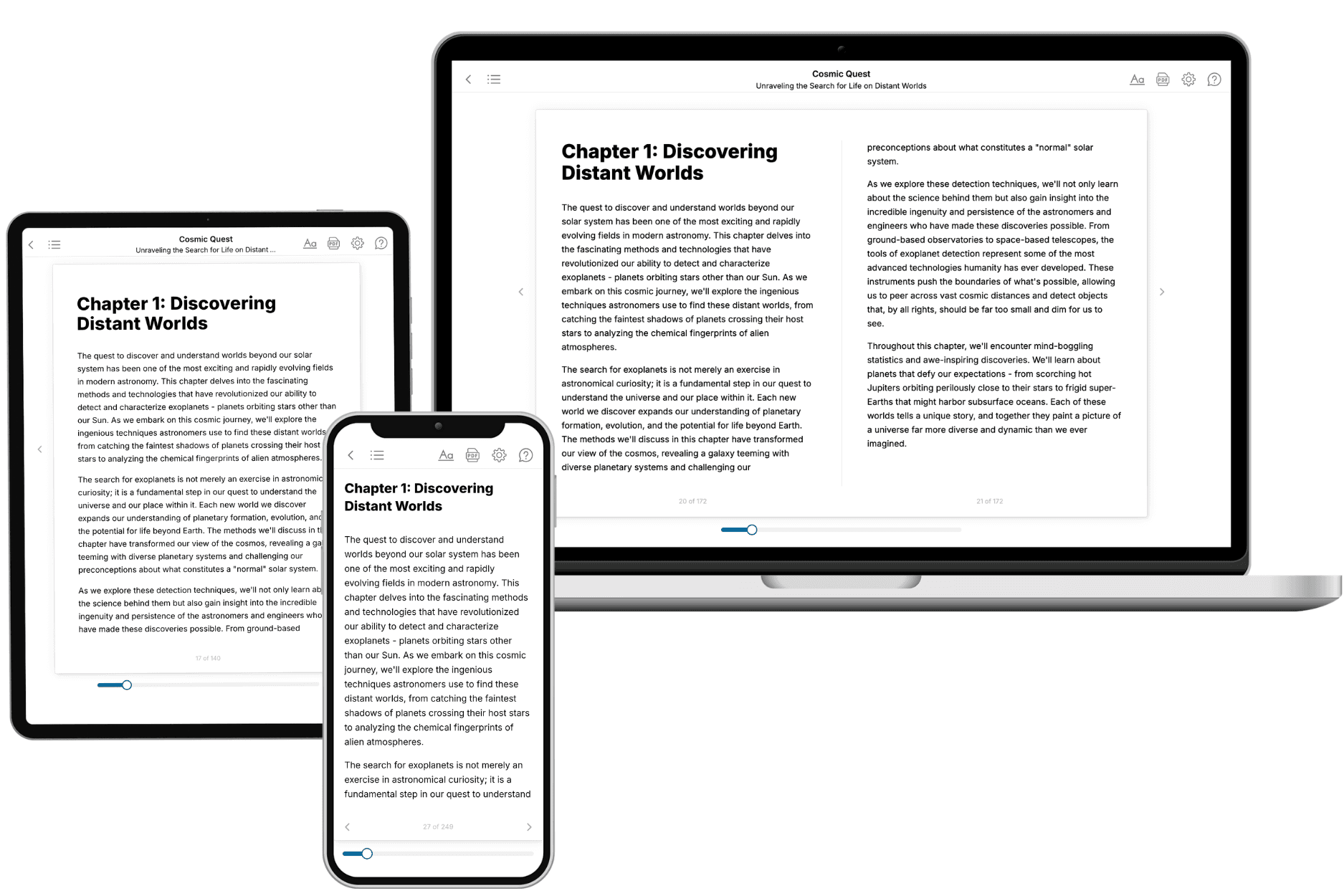
Your book is ready in 10 minutes. Read it online, download as EPUB or PDF, or send to Kindle.
Frequently asked questions
- What is TailoredRead?
TailoredRead creates complete, full-length nonfiction ebooks, written specifically for you. Tell us what you want to learn and why, and TailoredRead writes you a complete ebook on it, with charts, tables, and diagrams throughout. Read it online, on Kindle, or on any e-reader, or download it as a PDF or EPUB. Every book is written fresh the day you order it.
- How is the book tailored to me?
Before anything is written, you answer a few short questions about your goals, your background, and the topics you care about. Your book is then planned around your answers: written at your level, focused on your goals, and covering the topics you chose, instead of the one-size-fits-all book a store sells everyone.
- Will it read like generic AI content?
No. Your book isn't a chat transcript: it's planned chapter by chapter before a single word is written, told in a clear book voice, and explains ideas visually with charts, tables, and diagrams. After writing, every book goes through an editorial pass that polishes chapters so the book reads consistent from start to finish. Judge for yourself: browse thousands of sample books on our Explore Books page.
- How accurate is the content?
Our AI first checks whether your subject needs live research. Niche and fast-moving subjects are researched before writing, and the book plan and chapters are grounded in what it finds. After writing, every book goes through a quality pass that checks its facts and consistency, and researched books list their sources in a Notes section at the back.
- How long is the book?
You choose the length: Comprehensive (250-300 pages), Detailed (150-200 pages), Essential (70-100 pages), or Short (30-50 pages).
- Does the book include visuals?
Yes. Every book includes visual elements such as timelines, checklists, step-by-step guides, decision trees, comparison tables, and matrices, and many include bar charts. A typical book includes dozens of these visual elements.
- Can I read it on Kindle? What formats can I download?
Yes. Every book can be read in our online reader or downloaded as a PDF or EPUB. The EPUB can be opened with Kindle, Apple Books, Kobo, and any e-reader. The Commercial and Author licenses also include an editable Word (DOCX) and Markdown download.
- How much does it cost?
About the price of a regular ebook. The exact price depends on your book's length and complexity, from $2 for the shortest books to $35 for the most comprehensive, and it's shown when you review your book, before you commit to anything. Each book is a one-time purchase, yours to keep, no subscription. Licenses that let you share, teach, or publish your book range from $35.99 to $49.99.
- Can I preview the book before purchasing?
Before you pay, you'll see what your book will cover: the title, a detailed description, the estimated length, and the complete chapter-by-chapter table of contents, so you know what you're getting before you decide. The full text itself is written after you purchase.
- How long does it take to create a book?
About 10 minutes. You can start reading the opening chapters while the rest is still being written.