JSON Parsing Mastery
Build Robust Cross-Platform Applications with Confident Data Handling
How confident are you that your application will correctly handle malformed JSON, unexpected data types, and edge cases that your users will inevitably encounter?
207 pages9 chaptersMay 8, 2026Software Development
About this book
JSON parsing seems straightforward until it isn't—and that's when subtle bugs emerge that only appear in production. This book equips you with the knowledge and practical strategies to parse JSON reliably across any platform or language. You'll learn how to validate data before processing it, implement error handling that prevents cascading failures, optimize performance for large datasets, and ensure your application behaves consistently whether it's running on web, mobile, or backend systems. Through real-world examples and proven patterns, you'll discover how to move beyond basic parsing to building systems that are secure, efficient, and maintainable. Whether you're integrating third-party APIs, processing user input, or handling complex data structures, this guide provides the tools and confidence you need to handle JSON parsing like a professional.
Table of contents
- IntroductionWhy JSON Parsing Matters in Modern Development, Common Pitfalls and Why They Happen, What You'll Learn in This BookRead below
- Chapter 1: JSON Fundamentals and Data TypesUnderstanding JSON Structure and Syntax, JSON Data Types and Their Characteristics, Valid vs. Invalid JSON: Common Mistakes
- Chapter 2: Parsing Basics Across LanguagesNative Parsing Libraries in Popular Languages, How Parsing Works Under the Hood, Language-Specific Parsing Differences
- Chapter 3: Validation and Error HandlingValidating JSON Input Before Processing, Schema Validation and Type Checking, Graceful Error Recovery and Logging
- Chapter 4: Security Vulnerabilities and PreventionPreventing Injection Attacks Through Parsing, Protecting Against Denial-of-Service Attacks, Safe Data Handling and Sanitization
- Chapter 5: Performance Optimization TechniquesStreaming and Incremental Parsing, Memory-Efficient Parsing Strategies, Benchmarking and Profiling Your Parsers
- Chapter 6: Ensuring Cross-Platform ConsistencyUnderstanding Platform-Specific Behaviors, Testing JSON Parsing Across Platforms, Design Patterns for Consistent Parsing
- Chapter 7: Advanced Parsing TechniquesBuilding Custom Parsers for Specialized Needs, Handling Complex Nested Structures, Transforming and Mapping Parsed Data
- Chapter 8: Real-World Scenarios and Case StudiesParsing API Responses Reliably, Handling User-Generated JSON Input, Processing Large JSON Datasets Efficiently
- Chapter 9: Tools, Libraries, and FrameworksPopular JSON Parsing Libraries by Language, Choosing the Right Tool for Your Project, Automating Parsing with Code Generation
- ConclusionKey Takeaways and Best Practices, Your Path Forward
- Glossary
- Further Reading and Resources
Introduction
Every modern application talks to something. It talks to APIs, databases, configuration files, third-party services, and other systems. And almost all of those conversations happen in JSON. JavaScript Object Notation has become the universal language of data exchange, quietly powering everything from mobile apps to cloud infrastructure. It looks simple on the surface: a few curly braces, some key-value pairs, and you're done. But that simplicity is deceptive, and developers who treat JSON parsing as a solved problem tend to discover the hard way that it isn't.
The bugs that come from poor JSON handling are some of the most frustrating in software development. They don't always crash your application immediately. Instead, they silently corrupt data, cause unexpected behavior in edge cases, or only surface when a specific user sends a specific payload that nobody tested for. A missing field returns null instead of throwing an error. A number arrives as a string and breaks a calculation downstream. A deeply nested object from a third-party API changes its structure without warning, and suddenly your production system is failing in ways that are genuinely hard to trace back to their source.
This book exists because JSON parsing deserves more serious attention than most developers give it. The goal isn't to make you an expert in the JSON specification for its own sake. The goal is to make you the kind of developer who builds systems that handle real-world data gracefully, recover from unexpected inputs without cascading failures, and behave consistently whether they're running on a Node.js backend, a Python microservice, a Swift mobile app, or a Java enterprise system. That kind of reliability doesn't happen by accident. It comes from understanding the fundamentals deeply and applying proven patterns deliberately.
Whether you're integrating a payment API, processing user-submitted data, or building a data pipeline that handles millions of records, the principles in this book apply. You'll find concrete examples, practical code patterns, and actionable strategies throughout. The chapters build on each other, but each one also stands on its own if you need to jump to a specific topic. By the time you finish, JSON parsing won't feel like a chore or a source of anxiety. It will feel like a skill you genuinely own.
Why JSON Parsing Matters in Modern Development
JSON didn't become the dominant data format by accident. Before it gained widespread adoption in the mid-2000s, XML was the standard for data exchange. XML is powerful, but it's also verbose, complex to parse, and difficult to read at a glance. JSON offered a cleaner alternative: lightweight, human-readable, and natively compatible with JavaScript objects. As web APIs proliferated and REST architecture became the norm, JSON became the default choice for almost every new integration.[1]
Today, the scale of JSON usage is staggering. Major platforms like Twitter, GitHub, Stripe, and Google all expose their APIs primarily through JSON. Configuration tools like ESLint, TypeScript, and npm use JSON files to define project settings. NoSQL databases like MongoDB store documents in a JSON-like format called BSON. Even traditional relational databases like PostgreSQL now have native JSON column types. JSON is everywhere, and that means JSON parsing is a core skill for virtually every working developer, regardless of their specialization.
The stakes of getting parsing right have also grown significantly. In the early days of web development, a parsing error might break a small feature on a webpage. Today, a parsing failure in a financial services API could mean a failed transaction. A parsing bug in a healthcare data pipeline could mean incorrect patient records. A security flaw in how your application handles JSON input could expose your entire user database. The consequences of poor JSON handling scale with the importance of the systems that rely on it.
Consider a concrete example. A team building a ride-sharing app integrates a mapping API that returns route data as JSON. During development, the API always returns a duration field as an integer representing seconds. The team writes their parsing logic accordingly. Six months after launch, the API provider updates their response format so that duration can also be a floating-point number or, in some edge cases, a string like "unknown". The team's parser throws an unhandled exception. The app crashes for users in areas with poor GPS coverage. This is not a hypothetical scenario. It's the kind of thing that happens regularly in production systems.
Understanding JSON parsing deeply means understanding not just how to read data, but how to anticipate what can go wrong. It means knowing that JSON has no native date type, so dates arrive as strings and require careful conversion. It means knowing that JSON numbers have precision limits that can cause subtle errors when handling large integers. It means knowing that different languages map JSON types to their own native types in ways that don't always align perfectly, creating opportunities for type mismatches that are easy to miss in testing.
The good news is that most of these problems are entirely preventable. They require awareness, the right tools, and consistent habits. Developers who understand the full picture of JSON parsing write code that is more robust, easier to debug, and far less likely to surprise them in production. That understanding starts with recognizing that JSON parsing is a discipline, not just a function call.
There's also a performance dimension that becomes critical at scale. A startup processing a few hundred API calls per day can afford to be casual about parsing efficiency. A platform handling millions of requests per hour cannot. Choosing the wrong parsing strategy, loading entire large files into memory when streaming would work better, or failing to cache parsed results appropriately can turn a fast application into a slow one. Performance optimization in JSON parsing is a real engineering concern, and this book addresses it directly.
Common Pitfalls and Why They Happen
Most JSON parsing bugs fall into a surprisingly small number of categories. Understanding these categories upfront helps you recognize them quickly when they appear in your own code. The most common pitfalls aren't caused by carelessness. They're caused by reasonable assumptions that turn out to be wrong in specific circumstances. Knowing where those assumptions tend to break down is half the battle.
The first and most common pitfall is assuming the data will always match the expected structure. When you write code to parse a JSON response, you typically write it against a known example of that response. But real-world data sources are inconsistent. APIs add new fields, remove old ones, change types, or return entirely different structures depending on context. A field that's always present in successful responses might be absent in error responses. A field that's always a string in one API version might become an array in the next. Code that doesn't account for these variations will break.
Example: A developer parses a user profile API response and accesses
response.address.citydirectly. This works perfectly in testing because all test users have addresses. In production, users who haven't completed their profile haveaddressset tonull. Accessing.cityonnullthrows a runtime error. The fix is simple: check thataddressexists before accessing its properties. But the bug only appears in production because the test data was too clean.
The second major pitfall is type confusion between JSON types and language-native types. JSON has six data types: strings, numbers, booleans, arrays, objects, and null. Every programming language maps these to its own type system, and those mappings aren't always intuitive. In JavaScript, all JSON numbers become the same Number type, which uses 64-bit floating-point representation. This means integers larger than 2^53 lose precision silently. In Python, JSON integers map to Python's arbitrary-precision int, but JSON floats map to Python's float, which has its own precision limits. These differences cause bugs that are genuinely hard to spot.
A third common pitfall is inadequate error handling around the parsing step itself. Many developers write code that calls a parse function and immediately uses the result, without wrapping the call in any error handling. If the input is malformed JSON, the parser throws an exception. If that exception isn't caught, it propagates up the call stack and can crash the entire request handler or process. This is especially dangerous when parsing user-supplied input, because users can and do send malformed data, either accidentally or intentionally.
Encoding issues are another frequent source of problems. JSON is supposed to be UTF-8 encoded, but data coming from legacy systems, certain databases, or poorly configured APIs sometimes arrives in different encodings. A parser that expects UTF-8 and receives Latin-1 or Windows-1252 encoded data may fail silently, producing garbled strings, or fail loudly with a parsing error. Either way, the result is wrong. Encoding problems are particularly common when integrating with older enterprise systems or international data sources.
The table below summarizes the most common pitfalls and their typical causes:
- Missing or null fields: Assuming all fields are always present; not validating structure before access
- Type mismatches: Trusting that a field will always be the same type across all responses
- Unhandled parse errors: Not wrapping parse calls in try/catch or equivalent error handling
- Large number precision loss: Using standard JSON parsers for IDs or values that exceed floating-point precision
- Encoding problems: Receiving non-UTF-8 data and passing it directly to a UTF-8 parser
- Deeply nested access without guards: Chaining property access without checking intermediate values
- Date and time handling: Treating date strings as dates without explicit parsing and timezone handling
Why do these pitfalls happen so consistently? The core reason is that JSON looks simple. When something looks simple, developers naturally spend less time thinking about edge cases. A function call like JSON.parse(data) or json.loads(data) feels like it should just work. And most of the time, it does. The problem is that "most of the time" isn't good enough for production systems. The cases where it doesn't work are exactly the cases that cause incidents, user complaints, and late-night debugging sessions.
There's also a testing gap that contributes to these problems. Developers typically test their parsing code against well-formed, representative examples of the data they expect to receive. They rarely test against malformed inputs, missing fields, unexpected types, or extreme values. This means the code that handles the happy path is well-tested, but the code that handles real-world messiness is not. Building a habit of testing edge cases in JSON parsing is one of the highest-leverage improvements most development teams can make.
Security vulnerabilities represent a special category of pitfall that deserves its own mention. JSON parsing can be exploited in ways that aren't obvious. Deeply nested JSON structures can cause parsers to consume excessive memory or CPU, enabling denial-of-service attacks. Certain parser implementations have historically been vulnerable to prototype pollution attacks, where malicious JSON can modify the behavior of built-in objects in JavaScript. Understanding these risks and knowing how to mitigate them is an essential part of professional JSON handling.[2]
What You'll Learn in This Book
This book is organized to take you from a solid understanding of JSON fundamentals all the way through advanced techniques for handling complex, real-world scenarios. Each chapter builds on the previous ones, but the structure also allows you to jump directly to the topics most relevant to your current work. Here's a clear picture of what each part of the book covers and what you'll be able to do after reading it.
Chapter 1: JSON Fundamentals and Data Types starts at the foundation. Even if you've been working with JSON for years, this chapter will likely fill in gaps you didn't know you had. It covers the full JSON specification, the six data types and their precise behaviors, and the most common syntax mistakes that cause valid-looking JSON to fail parsing. Understanding these fundamentals prevents a whole class of bugs before they start.
Chapter 2: Parsing Basics Across Languages examines how JSON parsing works in the most widely used programming languages, including JavaScript, Python, Java, Go, and Swift. It explains what happens under the hood when a parser processes JSON text, and it highlights the specific differences between languages that can cause the same JSON to behave differently depending on where it's parsed. This chapter is especially valuable if you work in a polyglot environment or need to ensure consistency across services written in different languages.
Chapter 3: Validation and Error Handling addresses one of the most important and most neglected aspects of JSON parsing. You'll learn how to validate JSON input before processing it, how to use schema validation tools to enforce data contracts, and how to implement error recovery strategies that prevent a single bad payload from taking down your entire system. This chapter includes practical patterns for logging parsing errors in ways that make debugging faster and easier.
Chapter 4: Security Vulnerabilities and Prevention covers the security risks that come with JSON parsing and provides concrete strategies for mitigating them. Topics include injection attack prevention, protection against denial-of-service attacks through malicious payloads, and safe data sanitization practices. Security is not an optional concern in modern development, and this chapter treats it with the seriousness it deserves.
Chapter 5: Performance Optimization Techniques is where you'll learn how to handle JSON at scale. It covers streaming and incremental parsing for large datasets, memory-efficient strategies that prevent your application from running out of resources, and practical benchmarking techniques for measuring and improving parser performance. If you're building systems that process high volumes of data, this chapter will have a direct impact on your application's speed and cost.
The remaining chapters cover cross-platform consistency, advanced parsing techniques, real-world case studies, and the tools and libraries available across different ecosystems. Here's a quick summary of what those chapters deliver:
- Chapter 6 explores platform-specific behaviors and provides design patterns for ensuring your application parses JSON consistently whether it's running on web, mobile, or backend infrastructure.
- Chapter 7 dives into advanced techniques including building custom parsers, handling deeply nested structures, and transforming parsed data into the shapes your application needs.
- Chapter 8 presents real-world scenarios and case studies covering API integration, user-generated input, and large dataset processing, with specific examples and solutions.
- Chapter 9 surveys the most useful JSON parsing libraries across major languages, provides guidance on choosing the right tool for different situations, and introduces code generation approaches that can automate much of the parsing boilerplate.
Throughout the book, you'll find concrete code examples in multiple languages, practical frameworks you can apply immediately, and honest discussion of the tradeoffs involved in different approaches. The goal is not to give you a single "right way" to parse JSON, because no such universal answer exists. Different situations call for different strategies. The goal is to give you the knowledge and judgment to choose the right approach for your specific context.
By the end of this book, you'll be able to look at a JSON parsing problem and immediately identify the risks, choose an appropriate validation strategy, implement error handling that makes your system resilient, and optimize for performance when it matters. You'll understand why certain bugs happen and how to prevent them. You'll know which libraries to reach for in different languages and how to evaluate new tools as the ecosystem evolves. Most importantly, you'll have the confidence that comes from genuinely understanding a topic rather than just knowing enough to get by.
One thing worth setting expectations about: this book assumes you already have foundational programming knowledge and some experience working with JSON in at least one language. It doesn't spend time explaining what a variable is or how a function works. It does spend time on the nuances, edge cases, and professional-grade patterns that separate reliable production code from code that works most of the time. If you're an intermediate developer looking to level up your data handling skills, this is the right book for that goal.
The journey from "JSON parsing usually works for me" to "JSON parsing works reliably in every situation I encounter" is shorter than you might think. It requires the right knowledge, applied consistently. That's exactly what this book provides. Let's get started.
Notes
Introduction
This is the end of the free sample. The full book has 9 chapters.
Want this book written for you?
Tell us your goals and background, and get your own version of this book, tailored by AI to you.


Benefits of AI-tailored books
- Read one book, not ten:
- all the Software Development knowledge you need, gathered into a single book.
- Save days of learning:
- tell us your goals, choose your topics, and the whole book is built around them.
- Learn effortlessly:
- Software Development book written for your specific background and expertise.
- Understand at a glance:
- includes charts, tables, timelines, checklists, decision trees, and more.
- Stay current:
- written the day you order it, not years ago.
- Trust what you read:
- every book is checked for accuracy, with real research when your subject needs it.
Create your unique book in 3 steps
- 1. Select your focus
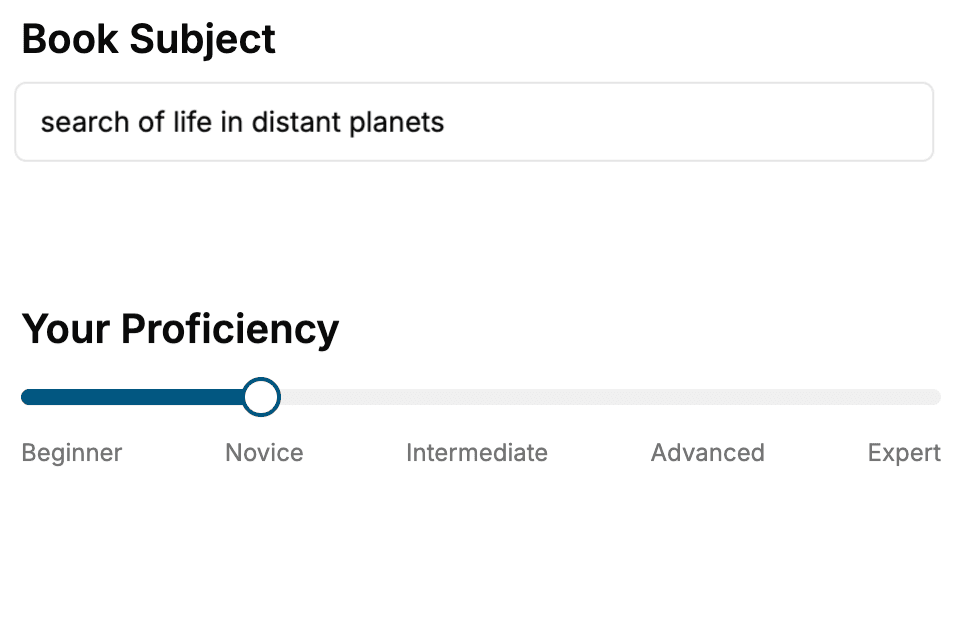
Select the focus of your Software Development book and share your background
- 2. Personalize your book
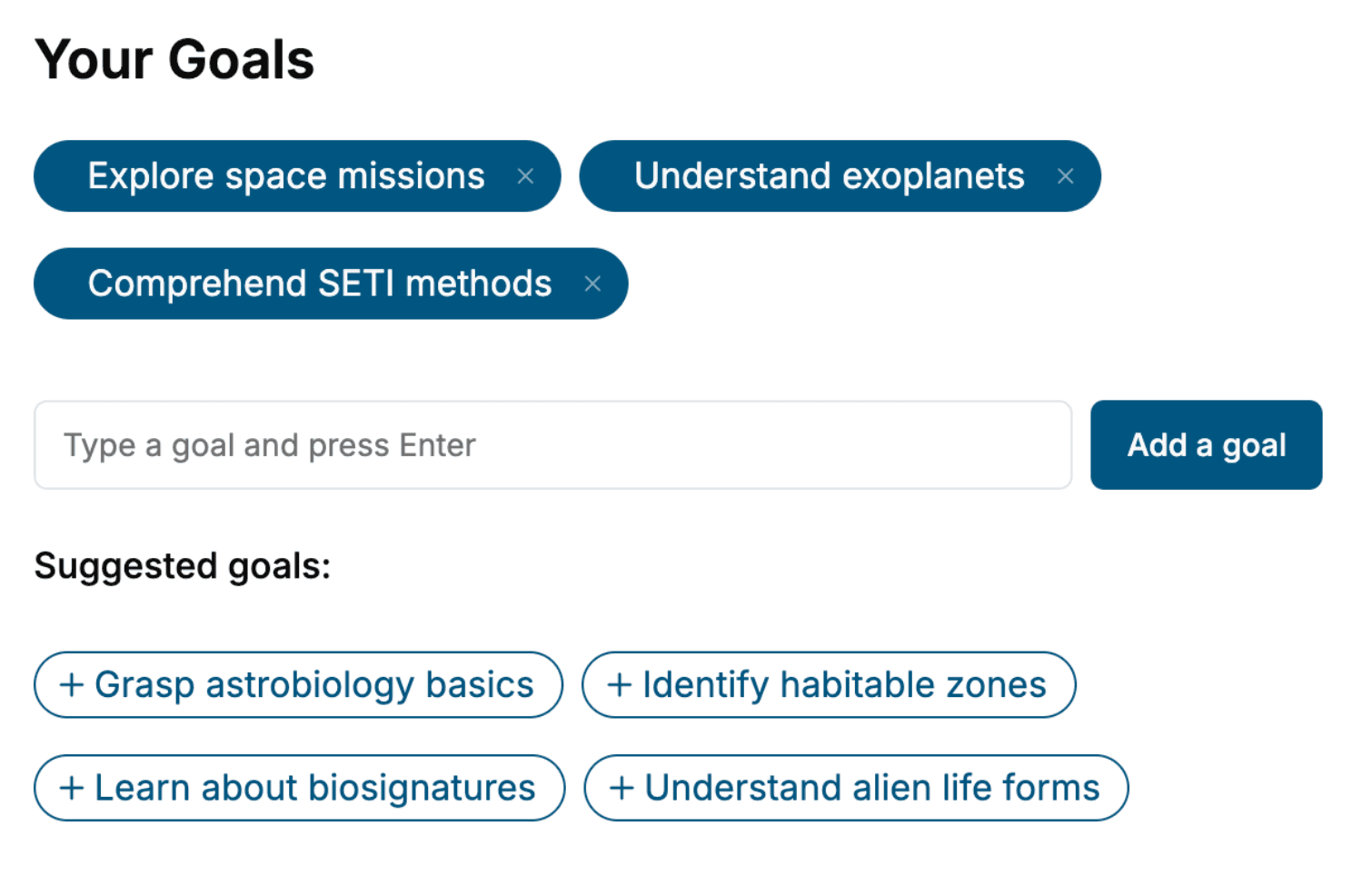
Specify your goals and choose sub-topics to include
- 3. Get your tailored book
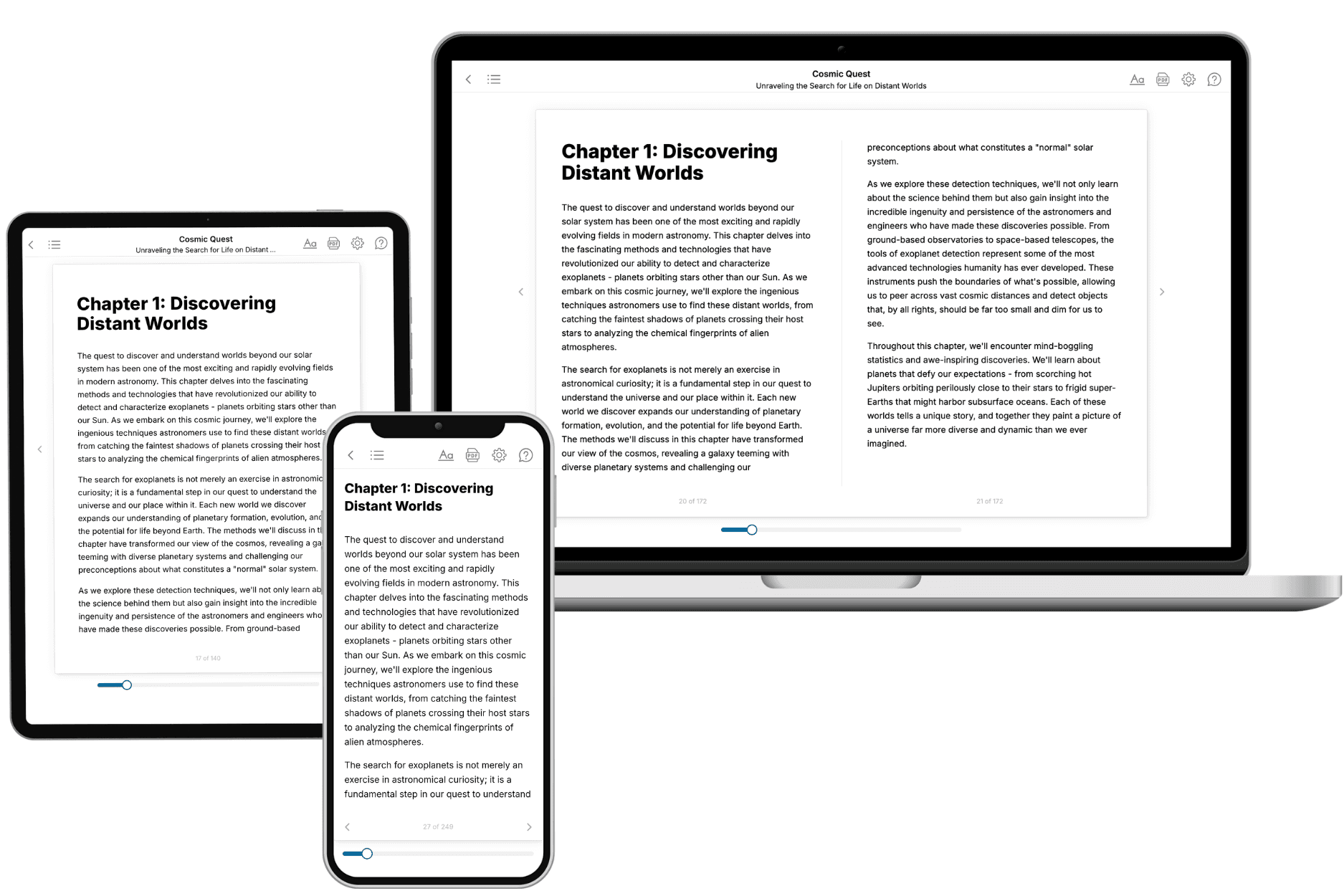
Your book is ready in 10 minutes. Read it online, download as EPUB or PDF, or send to Kindle.
Frequently asked questions
- What is TailoredRead?
TailoredRead creates complete, full-length nonfiction ebooks, written specifically for you. Tell us what you want to learn and why, and TailoredRead writes you a complete ebook on it, with charts, tables, and diagrams throughout. Read it online, on Kindle, or on any e-reader, or download it as a PDF or EPUB. Every book is written fresh the day you order it.
- How is the book tailored to me?
Before anything is written, you answer a few short questions about your goals, your background, and the topics you care about. Your book is then planned around your answers: written at your level, focused on your goals, and covering the topics you chose, instead of the one-size-fits-all book a store sells everyone.
- Will it read like generic AI content?
No. Your book isn't a chat transcript: it's planned chapter by chapter before a single word is written, told in a clear book voice, and explains ideas visually with charts, tables, and diagrams. After writing, every book goes through an editorial pass that polishes chapters so the book reads consistent from start to finish. Judge for yourself: browse thousands of sample books on our Explore Books page.
- How accurate is the content?
Our AI first checks whether your subject needs live research. Niche and fast-moving subjects are researched before writing, and the book plan and chapters are grounded in what it finds. After writing, every book goes through a quality pass that checks its facts and consistency, and researched books list their sources in a Notes section at the back.
- How long is the book?
You choose the length: Comprehensive (250-300 pages), Detailed (150-200 pages), Essential (70-100 pages), or Short (30-50 pages).
- Does the book include visuals?
Yes. Every book includes charts, tables, and diagrams: timelines, checklists, step-by-step guides, decision trees, comparison tables, matrices, and bar charts. A typical book includes dozens of these visual elements.
- Can I read it on Kindle? What formats can I download?
Yes. Every book can be read in our online reader or downloaded as a PDF or EPUB. The EPUB can be opened with Kindle, Apple Books, Kobo, and any e-reader. The Commercial and Author licenses also include an editable Word (DOCX) and Markdown download.
- How much does it cost?
About the price of a regular ebook. The exact price depends on your book's length and complexity, from $2 for the shortest books to $35 for the most comprehensive, and it's shown when you review your book, before you commit to anything. Each book is a one-time purchase, yours to keep, no subscription. Licenses that let you share, teach, or publish your book range from $35.99 to $49.99.
- Can I preview the book before purchasing?
Before you pay, you'll see what your book will cover: the title, a detailed description, the estimated length, and the complete chapter-by-chapter table of contents, so you know what you're getting before you decide. The full text itself is written after you purchase.
- How long does it take to create a book?
About 10 minutes. You can start reading the opening chapters while the rest is still being written.