The Kojosho Thread
Tracing a Martial Lineage Through War, Silence, and Revival
Every martial art carries a story about where it came from, and for Kojosho that story runs through Okinawa, a postwar world that tried to silence its practitioners, and a community of dojos spread across continents.
207 pages10 chaptersNov 13, 2026Martial ArtsCreated by Alan
About this book
This book invites you to follow that story carefully, one source at a time. You will meet the Kōjō family and the teachers who carried their practice forward, look closely at the naming debate between Kōjō-ryū and Kojosho, and see how the occupation-era bans on budo shaped who trained and how. Along the way you will explore the Okinawan te traditions and Chinese boxing roots that influenced the art, the two- and three-person drills that build its kata, and the qigong elements practiced in its training. The book also examines the difference between documented history and family memory, showing how to weigh archival records, oral accounts, and claims of lineage with fairness. Whether you practice Kojosho, study karate history, or simply wish to understand how a martial tradition survives change, you will leave with a clearer map of its past and a more thoughtful way to think about the sources that tell it.
Table of contents
- IntroductionWhy Lineage Matters to Practitioners, How to Read This Book Carefully, Scope and the Limits of the EvidenceRead below
- Chapter 1: Okinawan Roots of the ArtMartial Life in the Ryukyu Kingdom, Understanding the Okinawan Te Traditions, The Meiji Ban on Weapons, Itosu Anko and His Teaching Legacy
- Chapter 2: The Kōjō Family and Its PracticeKōjō Uekata in the Historical Record, Kōjō Kafu and His Naha Dojo, Kōjō Shigeru and the Family Thread
- Chapter 3: Kōjō-ryū or Kojosho: The Naming QuestionComparing the Two Names in Sources, Where the Name Kojosho May Have Come From, Why the Naming Debate Still Matters
- Chapter 4: Occupation, Restriction, and RevivalUS Occupation Policy Toward Budo, Dojos Reopening in Postwar Okinawa, Instructors Who Carried the Art Forward
- Chapter 5: Chinese Boxing and Qigong InfluencesFujian White Crane and Its Echoes, Animal Forms in Qigong Practice, Medical and Material Qigong Elements
- Chapter 6: Kata, Drills, and the Shape of TrainingTwo-Person Kata Drills Explained, Three-Person Kata Drills in Practice, The Structure of Kojosho Kempo Forms
- Chapter 7: Oral Tradition and Teaching TransmissionHow Oral Tradition Carries Karate Knowledge, Bunkai and the Question of Interpretation, Ryu-ha Succession and Its Protocols
- Chapter 8: Documentation, Archives, and AuthenticityJudging Archival Sources Critically, Evaluating Claims of Direct Lineage, Verifying Oral History Against Records
- Chapter 9: From Okinawa to the WorldContact Between Karate and the US Military, The International Kojosho Karate Federation, Comparing Teaching Across Global Dojos
- Chapter 10: Conclusion: Carrying the Thread ForwardHolding Tradition and Evidence Together, Open Questions for Future Research
- Further Reading and Resources
- Glossary
Introduction
A practitioner standing in an Albuquerque dojo, bowing before a class that traces its forms back through decades of practice, is holding two things at once: a set of movements that work, and a story about where those movements came from. The movements can be tested on the floor. The story cannot be tested the same way. It has to be read, compared, and questioned, the same way a historian questions a letter or a ledger. That is the work this book sets out to do with Kojosho Kempo, a system kept alive today through the International Kojosho Karate Federation and its decades of instruction, newsletters, and grading records.
Kojosho did not arrive with a tidy paper trail. Its claimed roots stretch to Chinese medical and martial figures, to a Kōjō family dojo once active in Fuzhou, and to a chain of teachers whose names appear more often in oral retelling than in independent documents. That is not unusual for an Okinawan martial art. Many systems now taught with confident lineage charts spent their early decades passed from teacher to student with no registry, no board, and no press. What is unusual about Kojosho is how openly its own federation has acknowledged the gaps, describing parts of its own history as oral tradition rather than settled fact.
This introduction sets the terms for everything that follows. It explains why lineage claims matter so much to people who practice a martial art, not just to historians who study one from a distance. It lays out how to read the chapters ahead, since this book moves between family history, organizational record, and comparative technique, and each kind of material calls for a different kind of trust. It also marks the edges of what can honestly be claimed here, because the Kojosho story includes real documentary gaps that no amount of enthusiasm should paper over.
None of this is meant to diminish Kojosho or the people who have trained in it, taught it, or kept it running across generations and continents. Separating documented fact from family memory is not an attack on a tradition. It is a form of respect, the same respect a serious student gives to a kata by drilling its structure until the meaning becomes clear rather than just performing the steps. The chapters ahead will apply that same discipline to Kojosho's history: slow down, look closely, name what is known, and name what is still open.
Why Lineage Matters to Practitioners
Ask any long-time karate practitioner why they care who taught their teacher, and the answer usually has nothing to do with vanity. Lineage is how a martial art explains its own reliability. If a technique traces back through a named chain of instructors, each of whom trained under the last, that chain is doing the same job a citation does in a research paper. It tells you where the knowledge came from and gives you a way to check it. When that chain has gaps, missing names, or a single unverified account standing in for decades of transmission, the technique itself may still work, but the claim about its origin becomes harder to defend.
Consider two practitioners learning the same two-person kata drill. One is told it was handed down from a named teacher in an unbroken line, with each generation documented in dojo records. The other is told it comes from an old family style,
with no clear account of who taught whom or when. Both drills might be identical in execution. But the first claim can be examined, questioned, and potentially confirmed or disproven, while the second asks for trust without offering the practitioner any way to verify it. Neither situation makes the movement less effective, but they ask something different of the student who wants to understand its history.
Lineage also carries weight because it shapes authority inside an organization. A teacher's right to award rank, to certify instructors, or to speak for a tradition often rests on their place in a claimed chain of transmission. This is where lineage stops being an abstract historical question and becomes a practical one. If a federation's founding story includes a Menkyo Kaiden, a license of full transmission, passed down through a short and specific list of names, then every certificate that federation issues today rests on that story being accurate. A gap in the record is not just a historical curiosity. It is a gap in the foundation of present-day authority.
The Kōjō family's own practice, and the separate question of what became of it after the Okinawan dojo associated with the family reportedly closed, sits at the center of this tension for Kojosho specifically. Other chapters in this book examine that family's documented history and the closure of their Okinawan teaching in detail. What matters here is the general pattern: when a living organization builds its identity on a family line, every practitioner inside that organization inherits a stake in how well that line can be verified.
There is a second, quieter reason lineage matters, and it has less to do with authority and more to do with meaning. Knowing that a drill was shaped by exposure to Fujian White Crane boxing, for example, changes how a student interprets its soft, circular deflections. Knowing that a form includes elements attributed to qigong practice changes how a student thinks about breath and internal structure during slow repetitions. Lineage is not just a credential. It is also a lens, and a distorted lens produces a distorted reading of the art's own techniques.
None of this means every Kojosho practitioner needs to become an archivist before stepping onto the floor. It means that curiosity about origin is not a distraction from training, it is part of training done well. A student who asks where a kata came from is asking the same kind of question as a student who asks why a stance is shaped a certain way. Both questions assume that the art has reasons, and that those reasons are worth uncovering rather than simply accepted.
The chapters that follow on the Kōjō family, on the naming dispute between Kōjō-ryū and Kojosho, and on the postwar revival carried out by individual instructors all return to this same question from different angles. Each one asks what can be verified, what remains oral tradition, and what practitioners today can reasonably conclude. Reading them with the stakes of lineage in mind, rather than as a dry historical exercise, is what makes the evidence worth the effort of weighing.
How to Read This Book Carefully
This book draws on several kinds of material that do not carry equal weight, and treating them as if they did would be a mistake. Some claims come from the International Kojosho Karate Federation's own newsletters and public pages, written by people with a direct stake in how the art's history is told. Others come from independent Okinawan sources describing a separate and largely dormant Kōjō-ryū, written by people with no connection to the American federation. Still others are oral accounts, passed through teachers like Fred Absher, Jack Gorick, and Kusaburo Matsu, with no independent paper trail behind them at all. Each of these deserves a different level of trust.
A useful habit, borrowed from how historians handle any contested record, is to ask three questions of every claim encountered in this book: who is making it, what would they gain or lose depending on how it is told, and does any source outside their own circle confirm it. A federation's newsletter describing its founder's training is not automatically false, but it is a single interested account until something independent lines up with it. An Okinawan forum describing a dormant dojo is not automatically true either, but it has less obvious motive to inflate the story. Holding both at arm's length, rather than picking the one that feels more flattering to the art, is the discipline this book asks of its reader.
It also helps to notice when a source says oral tradition
openly, because that phrase is doing real work. When the federation's own materials describe the Hua T'o origin story or the Matsu transmission account as oral tradition, they are telling readers, plainly, that these are not documented facts with paper backing. That honesty should be credited rather than skipped past. A reader who treats an acknowledged oral tradition as if it were a verified historical record is not being generous to the art, they are misreading what the art's own keepers have said about themselves.
Dates are another place to slow down. Historical dates attached to Okinawan martial figures, such as the appointment of a Kojo Pechin figure in the late seventeenth century, or the generations separating Kōjō Kafu from Kōjō Shigeru, often come from a single genealogical account rather than multiple independent records. A single account is not worthless. Family genealogies, temple records, and clan registers were taken seriously in Ryukyuan society and often preserved real information. But a single account is also not the same as a date confirmed by two unconnected sources, and this book tries to mark that difference rather than blur it.
A table can make this kind of source evaluation concrete, and the chapters on documentation and archival criticism later in this book return to it directly. For now, it is enough to hold a simple framework in mind while reading: a claim repeated only within one organization's own materials sits on weaker ground than a claim confirmed by an outside, independent account, and a claim explicitly labeled as oral tradition sits on different ground again than one presented as documented fact.
| Source Type | Example in This Book | How to Weigh It |
|---|---|---|
| Organization's own account | IKKF newsletters and federation pages | Treat as a first-person claim needing outside confirmation |
| Independent Okinawan sources | Kojo-ryu forum and historical pages | Useful as a check, but may reflect its own limited access |
| Oral tradition, labeled as such | Hua T'o origin, Matsu transmission story | Respect as tradition, do not treat as documented history |
| Multiple independent confirmations | Rare for Kojosho specifics | Highest confidence when it occurs |
Reading this way takes more patience than accepting a clean narrative, and Kojosho's story, like many martial lineages, would be easier to tell as a clean narrative. But a clean narrative built on a single unverified account is not actually easier to trust, it is only easier to repeat. This book chooses the slower path because the reader asking about lineage deserves an honest account of what is known, what is remembered, and what is still genuinely uncertain.
Keep in mind, too, that uncertainty is not evenly distributed across the book. Some chapters, particularly those dealing with documented Okinawan history such as the Satsuma invasion and its aftermath, or named teachers like Itosu Anko and Bushi Matsumura, rest on firmer ground than chapters dealing with the earliest claimed Chinese influences on Kojosho specifically. Noticing where a chapter shifts from documented history into family tradition is part of reading this book carefully, and each chapter tries to signal that shift rather than smooth it over.
Scope and the Limits of the Evidence
This book covers a specific and bounded set of questions. It traces the documented and oral history of Kojosho Kempo and its relationship, contested as that relationship is, to the Okinawan Kōjō-ryū tradition associated with the Kōjō family of Kumemura. It covers the Okinawan martial context that produced both, the disruption caused by occupation-era restrictions and the revival that individual instructors carried out afterward, the Chinese boxing and qigong material said to feed the Kojosho syllabus, and the kata and drills that make up its present-day curriculum. It also covers how the art moved from Okinawa through military contact networks to the United States and then outward through the federation that now sustains it.
It does not attempt to settle, once and for all, whether Kojosho and Kōjō-ryū are the same system wearing two names, descended from a shared root but separated by distance and interpretation, or two distinct traditions that have become linked mainly through shared surnames and geography. The chapter devoted to the naming question lays out the evidence on both sides as fully as the available sources allow, but it resists the temptation to hand down a final verdict the evidence does not support. Readers hoping for a tidy answer to this question may find that restraint frustrating. It is offered anyway, because a confident answer built on insufficient evidence would be worse than an honest open question.
Several specific claims recur across Kojosho's own literature and deserve a caution up front, since they return throughout the book. The story connecting the physician Hua T'o to the system's foundational exercises is presented by the federation itself as oral tradition, not documented history, and this book treats it the same way every time it appears. The account of Kusaburo Matsu's life and training is one the federation has itself noted lacks independent supporting evidence. Claims about a Fuzhou Kojo dojo and a direct Shaolin connection rest on the same oral and organizational sources, without independent confirmation found elsewhere. None of these cautions are meant to dismiss the stories. They are meant to keep the reader's trust calibrated to what the evidence can actually support.
The book is also limited by what source material was available to examine closely. Some materials referenced in passing by other researchers, including certain glossary documents and independent dojo websites, were not fully accessible during preparation, and this book does not assert claims drawn from them. Where a gap like this appears, the relevant chapter will say so plainly rather than filling the space with a confident-sounding guess. This is a deliberate choice, made because a book about evaluating evidence carefully would undercut its own argument if it quietly smoothed over its own evidentiary gaps.
A decision tree can make this approach concrete before diving into the chapters ahead. When a lineage claim appears anywhere in this book, whether about the Kōjō family, about Shingo Hayashi and the Tottori connection, or about the federation's own founding story, the same basic test applies: is the claim backed by an independent source, is it explicitly labeled as oral tradition, or does it come from a single interested party with no outside confirmation. The decision tree below shows how that test shapes the confidence this book assigns to a claim.
Evaluating a Kojosho Lineage Claim
- A lineage claim appears
- Check sources Confirmed by an independent, unconnected source
- Treat as well supported
- No independent record Explicitly labeled as oral tradition
- Respect as tradition, mark as unverified
- Only one account exists Reported only by one interested party
- Report with clear caution, flag the gap
- Check sources Confirmed by an independent, unconnected source
With that framework in place, the chapters ahead move roughly in chronological order, starting with the Ryukyu Kingdom's martial life and the Okinawan te traditions that preceded any named style, then following the Kōjō family's own documented and remembered history, the contested naming of Kojosho itself, the disruption and revival of the occupation years, the Chinese influences said to run through the syllabus, the internal structure of its kata and drills, and finally the mechanics of oral transmission, archival evaluation, and global spread that brought the art to where it stands today.
What ties all of these chapters together is not a single settled story but a shared method of reading one. Admiration for a martial tradition and a willingness to question its claimed history are not opposites, and this book treats them as partners throughout. The practitioner who finishes this book should come away with a clearer map of what is documented, what is remembered, and what remains genuinely open, and with the tools to keep asking good questions long after the last page.
This is the end of the free sample. The full book has 10 chapters.
Want this book written for you?
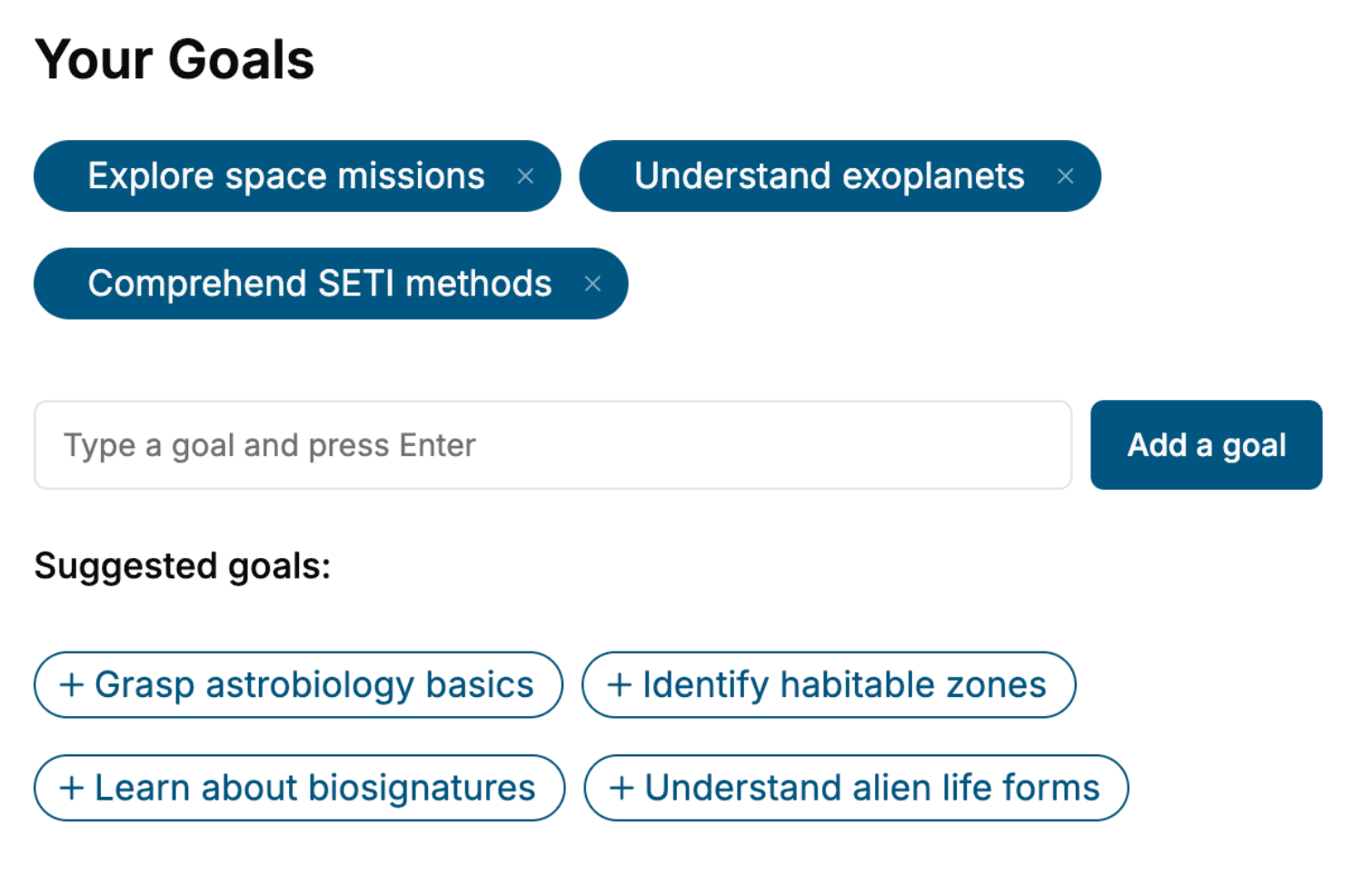
Tell us your goals and background, and get your own version of this book, tailored by AI to you.


Benefits of AI-tailored books
- Read one book, not ten:
- all the Martial Arts knowledge you need, gathered into a single book.
- Save days of learning:
- tell us your goals, choose your topics, and the whole book is built around them.
- Learn effortlessly:
- Martial Arts book written for your specific background and expertise.
- Understand at a glance:
- includes charts, tables, timelines, checklists, decision trees, and more.
- Stay current:
- written the day you order it, not years ago.
- Trust what you read:
- every book is checked for accuracy, with real research when your subject needs it.
Create your unique book in 3 steps
- 1. Select your focus
Select the focus of your Martial Arts book and share your background
- 2. Personalize your book
Specify your goals and choose sub-topics to include
- 3. Get your tailored book
Your book is ready in 10 minutes. Read it online, download as EPUB or PDF, or send to Kindle.

Frequently asked questions
- What is TailoredRead?
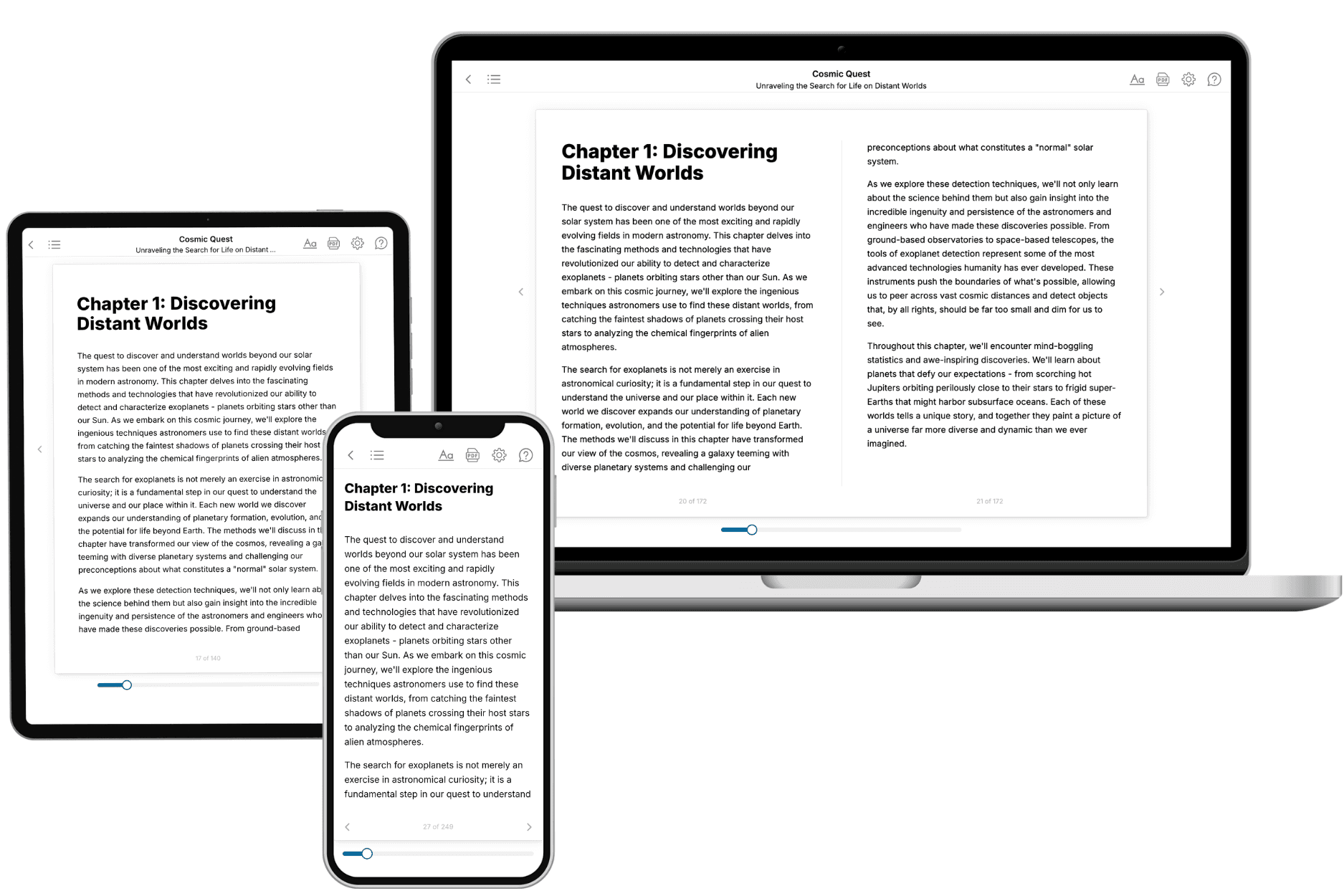
TailoredRead creates complete, full-length nonfiction ebooks, written specifically for you. Tell us what you want to learn and why, and TailoredRead writes you a complete ebook on it, with charts, tables, and diagrams throughout. Read it online, on Kindle, or on any e-reader, or download it as a PDF or EPUB. Every book is written fresh the day you order it.
- How is the book tailored to me?
Before anything is written, you answer a few short questions about your goals, your background, and the topics you care about. Your book is then planned around your answers: written at your level, focused on your goals, and covering the topics you chose, instead of the one-size-fits-all book a store sells everyone.
- Will it read like generic AI content?
No. Your book isn't a chat transcript: it's planned chapter by chapter before a single word is written, told in a clear book voice, and explains ideas visually with charts, tables, and diagrams. After writing, every book goes through an editorial pass that polishes chapters so the book reads consistent from start to finish. Judge for yourself: browse thousands of sample books on our Explore Books page.
- How accurate is the content?
Our AI first checks whether your subject needs live research. Niche and fast-moving subjects are researched before writing, and the book plan and chapters are grounded in what it finds. After writing, every book goes through a quality pass that checks its facts and consistency, and researched books list their sources in a Notes section at the back.
- How long is the book?
You choose the length: Comprehensive (250-300 pages), Detailed (150-200 pages), Essential (70-100 pages), or Short (30-50 pages).
- Does the book include visuals?
Yes. Every book includes visual elements such as timelines, checklists, step-by-step guides, decision trees, comparison tables, and matrices, and many include bar charts. A typical book includes dozens of these visual elements.
- Can I read it on Kindle? What formats can I download?
Yes. Every book can be read in our online reader or downloaded as a PDF or EPUB. The EPUB can be opened with Kindle, Apple Books, Kobo, and any e-reader. The Commercial and Author licenses also include an editable Word (DOCX) and Markdown download.
- How much does it cost?
About the price of a regular ebook. The exact price depends on your book's length and complexity, from $2 for the shortest books to $35 for the most comprehensive, and it's shown when you review your book, before you commit to anything. Each book is a one-time purchase, yours to keep, no subscription. Licenses that let you share, teach, or publish your book range from $35.99 to $49.99.
- Can I preview the book before purchasing?
Before you pay, you'll see what your book will cover: the title, a detailed description, the estimated length, and the complete chapter-by-chapter table of contents, so you know what you're getting before you decide. The full text itself is written after you purchase.
- How long does it take to create a book?
About 10 minutes. You can start reading the opening chapters while the rest is still being written.