The Labour Relations Investigator's Handbook
Master Evidence Gathering, Employment Law, and Workplace Dispute Resolution
Workplace investigations are high-stakes endeavors where incomplete evidence, procedural missteps, or misunderstanding employment law can expose organizations to legal liability while failing to achieve fairness.
207 pages10 chaptersFeb 22, 2026Employment Law
About this book
As a labour relations investigator, you navigate complex employment law, manage competing stakeholder interests, and must maintain credibility under scrutiny. This handbook provides a practical, evidence-based framework for conducting thorough investigations, gathering admissible evidence, understanding employment law frameworks, and resolving disputes fairly. You'll master interview techniques that uncover truth, learn to assess witness credibility, develop documentation practices that withstand legal review, and understand how collective bargaining agreements and labour standards shape your investigative approach. Whether handling harassment complaints, performance disputes, or discrimination allegations, this guide equips you with the skills, knowledge, and confidence to conduct investigations that are legally sound, ethically grounded, and genuinely fair to all parties involved.
Table of contents
- IntroductionWhy Workplace Investigations Matter, Your Role as an Investigator, How to Use This HandbookRead below
- Module 1: Legal Foundations and Employment Law FrameworksUnderstanding Employment Law Frameworks, Navigating Collective Bargaining Agreements, Labour Standards and Compliance Requirements, Analyzing Legal Precedents in Labour Disputes
- Module 2: Investigation Fundamentals and Best PracticesPlanning Your Investigation, Applying Labour Relations Best Practices, Maintaining Ethical Standards Throughout, Building and Protecting Professional Credibility
- Module 3: Evidence Gathering and DocumentationMastering Evidence Gathering Techniques, Establishing Documentation Standards, Handling Digital Evidence and Records
- Module 4: Interview Techniques and Witness AssessmentPreparing for Effective Interviews, Conducting Interviews for Investigators, Assessing Witness Credibility and Reliability, Managing Difficult Interview Scenarios
- Module 5: Workplace Fairness Assessment and AnalysisApplying Fairness Assessment Principles, Identifying Patterns and Systemic Issues, Evaluating Context and Mitigating Factors
- Module 6: Discrimination and Harassment InvestigationsHandling Discrimination Complaint Procedures, Conducting Workplace Harassment Investigations, Preventing Retaliation and Protecting Complainants
- Module 7: Grievance Handling and Performance DisputesManaging Grievance Handling Procedures, Investigating Performance Management Disputes, Determining Appropriate Remedial Actions
- Module 8: Conflict De-escalation and Dispute ResolutionApplying Conflict De-escalation Tactics, Improving Mediation and Arbitration Techniques, Developing Effective Resolution Strategies
- Module 9: Modern Workplace ConsiderationsNavigating Cross-cultural Labour Relations, Ensuring Remote Work Policy Compliance, Addressing Emerging Workplace Challenges
- Module 10: Case Studies and Practical ApplicationsAnalyzing a Discrimination Investigation, Analyzing a Performance Dispute Case, Analyzing a Harassment Investigation Case
- ConclusionKey Takeaways for Investigators, Continuing Your Professional Development
- Appendix: Investigation Templates and ChecklistsInvestigation Planning Checklist, Interview Documentation Template, Evidence Log Template
Introduction
Workplace investigations sit at the intersection of law, human behavior, and organizational fairness. When a complaint lands on your desk, whether it involves harassment, discrimination, a performance dispute, or a grievance under a collective bargaining agreement, the decisions you make in the next few hours and days will shape outcomes for real people. Careers, reputations, and workplace cultures hang in the balance. Getting it right is not optional. It is the entire point of the role.
This handbook was built for labour relations investigators who already understand the basics and are ready to go deeper. If you have a background in human resource management and have handled workplace matters before, you know that theory only takes you so far. What separates a competent investigator from a truly credible one is the ability to apply structured, evidence-based methods under pressure, while maintaining fairness to every party involved. That is exactly what this handbook is designed to help you do.
The field of labour relations is changing fast. Remote work has complicated evidence gathering and witness access. Increasingly diverse workplaces demand cross-cultural sensitivity. Digital communications have become the primary source of documentary evidence in many investigations. Employment law continues to evolve, and collective bargaining agreements add layers of procedural obligation that can make or break a case. This handbook addresses all of these realities directly, with practical frameworks you can apply immediately.
Before diving into the chapters ahead, this introduction gives you three essential foundations. First, it explains why workplace investigations matter so much, both for organizations and for the individuals caught up in them. Second, it defines your role as an investigator with clarity and honesty, including the tensions and ethical demands that come with it. Third, it shows you how to use this handbook most effectively, so you can find what you need when you need it and build your skills in a logical sequence.
Module Outcomes: By the end of this introduction, you will be able to:
- Explain why rigorous workplace investigations are essential for legal compliance, organizational health, and individual fairness
- Describe the core responsibilities and ethical obligations of a labour relations investigator
- Identify the key tensions investigators face and understand how to navigate them professionally
- Navigate this handbook strategically to match your current learning needs and professional challenges
- Approach the rest of this handbook with a clear sense of purpose and a practical mindset
When to use this module: Return to this introduction whenever you feel uncertain about your role, your purpose, or your approach to a particularly complex investigation. It serves as a grounding reference, reminding you of the principles that should guide every decision you make throughout an investigation. New investigators should read it carefully before anything else. Experienced investigators will find it useful as a reset when a case feels especially difficult or politically charged.
Why Workplace Investigations Matter
Lesson Outcomes: After completing this lesson, you will be able to:
- Articulate the legal, organizational, and human stakes involved in workplace investigations
- Explain how poor investigations create liability and erode trust
- Describe the broader impact of investigations on workplace culture and employee confidence
Every workplace investigation begins with a complaint, a concern, or an incident that someone decided was serious enough to report. That act of reporting takes courage. Employees who come forward with complaints about harassment, discrimination, or unfair treatment are often taking a significant personal risk. They are trusting that the organization, and specifically the investigator assigned to their case, will take their concern seriously and handle it fairly. When that trust is honored, it strengthens the entire workplace. When it is broken, the damage can be lasting and severe.
From a legal standpoint, the stakes of a workplace investigation are substantial. Organizations that fail to investigate complaints promptly and thoroughly expose themselves to significant legal liability. In many jurisdictions, an employer's failure to conduct a reasonable investigation into a harassment or discrimination complaint can be treated as evidence of negligence or bad faith in subsequent legal proceedings.[1] Courts and arbitrators regularly examine the quality of an investigation when assessing whether an employer met its duty of care. A poorly documented, biased, or incomplete investigation can turn a manageable complaint into a costly legal dispute.
Beyond legal liability, investigations have a direct impact on organizational culture. Employees watch how complaints are handled, even when they are not directly involved. When they see that a complaint was taken seriously, investigated fairly, and resolved with appropriate action, it signals that the organization's stated values are real. When they see complaints dismissed, buried, or handled carelessly, it signals the opposite. Research consistently shows that perceived fairness in organizational processes, what researchers call procedural justice, is one of the strongest predictors of employee trust, engagement, and retention.[2]
Consider a concrete example. A mid-sized manufacturing company receives a harassment complaint from a line worker against a shift supervisor. The HR team assigns an investigator who conducts only two brief interviews, accepts the supervisor's denial at face value, and closes the case within a week with no findings. Six months later, three more complaints emerge against the same supervisor. The original complainant has left the company. A union grievance is filed. The organization now faces not only the new complaints but also scrutiny of why the first investigation failed. What began as a manageable situation has become a significant legal and reputational problem, entirely because the first investigation was inadequate.
Investigations also matter because they are often the only formal mechanism available to employees who have experienced serious harm at work. For many workers, especially those in non-unionized environments or in roles with limited power, a workplace investigation is their primary avenue for having their experience acknowledged and addressed. This is not a bureaucratic exercise. It is, for the people involved, a process that can determine whether they feel safe returning to work, whether they receive appropriate remedies, and whether the behavior that harmed them is allowed to continue.
It is also worth acknowledging that investigations matter for respondents, the people accused of misconduct. A fair investigation protects them from unfounded allegations and ensures that any findings against them are based on solid evidence and a rigorous process. Investigators who approach their work with genuine impartiality serve everyone in the workplace, not just complainants. This dual obligation to fairness is one of the defining features of the investigator's role and one of its most demanding aspects.
Finally, investigations generate data. Patterns of complaints, recurring issues in specific departments, or systemic gaps in policy enforcement often become visible only when investigation records are analyzed over time. A well-documented investigation contributes to an organization's ability to identify and address root causes of workplace conflict, not just individual incidents. This systemic value is often overlooked, but it is one of the most powerful arguments for investing in high-quality investigative practice.
Practice Tasks:
- Think of a workplace investigation you have been involved in or observed. Write a brief assessment of how well it addressed the legal, cultural, and human dimensions described in this lesson. What was done well? What was missing?
- Review your organization's current complaint handling policy. Identify at least two areas where the policy could be strengthened to better protect complainants, respondents, or the integrity of the investigation process.
- Research one publicly reported case in which an employer faced legal consequences for a flawed workplace investigation. Summarize the key procedural failures and what a better approach might have looked like.
Key Takeaways:
- Workplace investigations carry significant legal, organizational, and human stakes that demand rigorous, fair practice
- Poor investigations create legal liability and signal to employees that the organization's values are not genuine
- Procedural justice, the perception that processes are fair, is a powerful driver of employee trust and engagement
- Investigations serve both complainants and respondents; impartiality is a core obligation, not an optional standard
- Well-documented investigations generate organizational data that can help identify and address systemic workplace issues
Your Role as an Investigator
Lesson Outcomes: After completing this lesson, you will be able to:
- Define the core responsibilities of a labour relations investigator with precision
- Identify the key tensions inherent in the investigator role and describe strategies for managing them
- Explain the ethical obligations that govern investigator conduct throughout a case
- Recognize the boundaries of the investigator role and understand when to escalate or seek support
The role of a labour relations investigator is often misunderstood, even by the people who hold it. Some investigators see themselves primarily as fact-finders, neutral gatherers of information who simply report what they discover. Others see themselves as advocates for the organization, tasked with managing risk and protecting the employer's interests. Neither framing is fully accurate, and both can lead to serious problems. The investigator's role is more demanding and more nuanced than either description suggests.
At its core, your job as an investigator is to conduct a thorough, impartial inquiry into a workplace matter and to produce findings that are grounded in evidence, consistent with applicable law and policy, and defensible under scrutiny. You are not a judge, a therapist, a disciplinary officer, or an advocate for any party. You gather evidence, assess credibility, analyze facts against relevant standards, and report your findings. What happens after your report, whether discipline is imposed, a grievance is resolved, or a policy is changed, is typically the responsibility of others. Understanding this boundary is essential to doing your job well and protecting your own professional integrity.
One of the most persistent tensions in the investigator role is the pressure to reach a particular conclusion. This pressure can come from many directions. Senior leaders may want a complaint resolved quickly and quietly. A union may push for findings that support a grievance. A respondent's manager may advocate strongly for their employee. Complainants and their supporters may expect a finding in their favor. Navigating these pressures without compromising your impartiality is one of the most challenging aspects of the role, and it requires both strong ethical grounding and practical strategies for maintaining independence.
A useful framework for thinking about investigator independence is the concept of structural impartiality. This means building independence into your process, not just your mindset. Practical steps include:
- Documenting your methodology before you begin, so your approach cannot be accused of being shaped by the outcome
- Disclosing any potential conflicts of interest to your supervisor or the relevant authority before accepting an assignment
- Keeping detailed records of every decision you make during the investigation and the reasoning behind it
- Applying the same evidentiary standards to all parties, regardless of their seniority or organizational standing
- Seeking a second opinion or peer review when a case involves particularly complex credibility assessments
Your ethical obligations as an investigator extend beyond impartiality. Confidentiality is a foundational requirement. Information gathered during an investigation must be shared only on a need-to-know basis, and you must be explicit with all participants about the limits of confidentiality. You cannot promise absolute confidentiality to witnesses, because you may be required to disclose information in legal proceedings or to decision-makers who need it to act on your findings. But you can and must commit to protecting sensitive information from unnecessary disclosure and to treating all participants with dignity and respect.
Competence is another core ethical obligation. Taking on an investigation that exceeds your expertise, whether because it involves complex legal questions, specialized technical evidence, or a type of misconduct you have not handled before, is an ethical risk as well as a practical one. Knowing when to seek legal counsel, bring in a subject matter expert, or escalate to a more senior investigator is a sign of professional maturity, not weakness. The most credible investigators are those who are honest about the limits of their knowledge and proactive about filling gaps.
The investigator role also carries a duty of care toward all participants in the process. Investigations are stressful for everyone involved. Complainants may be reliving traumatic experiences. Respondents face the anxiety of an uncertain outcome. Witnesses may fear retaliation or feel caught between competing loyalties. While your job is not to provide emotional support, you do have a responsibility to conduct the process in a way that minimizes unnecessary harm. This means being clear about the process and timeline, communicating promptly when there are delays, and treating every person you interact with as a professional deserving of respect.
Finally, it is worth being honest about the emotional demands of this work. Labour relations investigations regularly involve difficult subject matter, including allegations of harassment, discrimination, bullying, and other forms of serious misconduct. Investigators who handle these cases without adequate support or reflection risk burnout, secondary trauma, and erosion of the empathy that makes them effective. Building in regular debriefs, whether with a supervisor, a trusted colleague, or a professional support resource, is not a luxury. It is a professional necessity.
The investigator who believes their job is simply to find facts is only half right. The other half of the job is ensuring that the process of finding those facts is itself fair, transparent, and defensible. Both halves matter equally.
Practice Tasks:
- Write a one-page personal statement of your investigator role, describing your core responsibilities, your ethical commitments, and the boundaries of your authority. Review it with a colleague or supervisor and refine it based on their feedback.
- Identify a past or hypothetical situation where you felt pressure to reach a particular conclusion in an investigation. Map out the sources of that pressure and draft a response strategy that would allow you to maintain impartiality while managing the stakeholder relationship professionally.
- Review your organization's conflict of interest policy as it applies to investigators. Identify any gaps and draft a brief proposal for strengthening it.
- Reflect on the emotional demands of your investigative work over the past year. What support structures do you currently have in place? What additional resources would help you sustain your effectiveness and wellbeing?
Key Takeaways:
- The investigator's role is to conduct a thorough, impartial inquiry and produce evidence-based findings, not to advocate for any party or manage organizational risk
- Structural impartiality means building independence into your process through documentation, disclosure, and consistent evidentiary standards
- Confidentiality, competence, and duty of care are core ethical obligations that govern every aspect of investigator conduct
- Knowing the limits of your expertise and escalating appropriately is a mark of professional credibility, not weakness
- The emotional demands of investigative work require proactive support strategies to sustain long-term effectiveness
- Every participant in an investigation deserves to be treated with dignity and respect, regardless of their role in the matter
How to Use This Handbook
Lesson Outcomes: After completing this lesson, you will be able to:
- Navigate the handbook's structure to find relevant content quickly for specific investigative challenges
- Identify which chapters are most relevant to your current professional development priorities
- Apply the handbook's frameworks and templates to real investigations in a practical, structured way
- Use the appendix resources as working tools, not just reference material
This handbook is designed to be used, not just read. It is organized to support both sequential learning and targeted reference, depending on what you need at any given moment. If you are new to formal labour relations investigations or are building a more systematic approach to your practice, reading the chapters in order will give you a coherent, progressive framework. If you are an experienced investigator facing a specific challenge, you can go directly to the relevant chapter and find practical guidance without needing to read everything that precedes it.
Here is a brief map of the handbook's structure to help you navigate it effectively:
- Chapter 1: Legal Foundations and Employment Law Frameworks covers the legal landscape that shapes every investigation, including employment law principles, collective bargaining agreements, labour standards, and how to analyze legal precedents. Start here if you need to strengthen your legal literacy or are working in a new jurisdiction.
- Chapter 2: Investigation Fundamentals and Best Practices addresses how to plan and structure an investigation, apply labour relations best practices, maintain ethical standards, and build professional credibility. This chapter is essential reading for anyone who wants to develop a more rigorous and defensible investigative methodology.
- Chapter 3: Evidence Gathering and Documentation provides detailed guidance on collecting, preserving, and documenting evidence, including digital evidence. Return to this chapter whenever you are dealing with complex evidentiary questions or need to strengthen your documentation practices.
- Chapter 4: Interview Techniques and Witness Assessment covers the full arc of the interview process, from preparation through credibility assessment and managing difficult scenarios. This is one of the most practically intensive chapters in the handbook and is worth revisiting regularly.
- Chapter 5: Workplace Fairness Assessment and Analysis provides frameworks for evaluating fairness, identifying patterns, and analyzing context and mitigating factors. Use this chapter when you are working through complex cases where the facts are not straightforward.
- Chapter 6: Discrimination and Harassment Investigations addresses the specific procedural and substantive requirements of these high-stakes complaint types, including retaliation prevention. This chapter is essential for anyone handling human rights complaints.
- Chapter 7: Grievance Handling and Performance Disputes covers the procedural requirements of grievance processes and the specific challenges of performance-related investigations, including how to determine appropriate remedial actions.
- Chapter 8: Conflict De-escalation and Dispute Resolution provides practical tools for de-escalating workplace conflict and facilitating resolution before or instead of formal investigation. Use this chapter when early intervention is possible or when mediation is part of your mandate.
- Chapter 9: Modern Workplace Considerations addresses cross-cultural competence, remote work compliance, and emerging challenges that are reshaping the investigative landscape. This chapter is particularly relevant for investigators working in diverse or distributed organizations.
- Chapter 10: Case Studies and Practical Applications brings the handbook's frameworks to life through detailed analysis of three realistic investigation scenarios. Work through these case studies actively, applying the tools from earlier chapters before reading the analysis.
The appendix at the end of the handbook contains three working tools: an investigation planning checklist, an interview documentation template, and an evidence log template. These are not decorative additions. They are designed to be used directly in your investigations. The planning checklist will help you ensure you have covered all necessary steps before beginning a formal inquiry. The interview template provides a consistent structure for documenting witness accounts. The evidence log gives you a systematic way to track and organize all materials gathered during an investigation. Adapt these tools to your organization's specific requirements, but use them as your starting point.
Throughout the handbook, you will find several recurring features designed to make the content as practical as possible. Concrete examples appear in most lessons, drawn from realistic workplace scenarios that illustrate how principles apply in practice. Practice tasks at the end of each lesson give you specific actions to take, either in your current work or through structured reflection. Key takeaways summarize the most important points from each lesson in a format you can review quickly before or after an investigation. And footnotes point you toward research, legal sources, and professional standards that support the guidance provided.
A note on legal content: this handbook provides general frameworks and principles drawn from employment law and labour relations practice. It does not constitute legal advice, and it cannot substitute for jurisdiction-specific legal counsel. Employment law varies significantly across countries, states, provinces, and sectors. Collective bargaining agreements add further layers of specificity. When a case raises complex legal questions, always consult with qualified legal counsel. The frameworks in this handbook will help you ask better questions and understand the answers, but they are not a replacement for professional legal guidance.
One of the most effective ways to use this handbook is to treat it as a companion to your active caseload. When you are assigned a new investigation, review the relevant chapters before you begin. When you encounter a challenge you have not faced before, use the index and chapter structure to find targeted guidance. When you complete an investigation, reflect on what went well and what you would do differently, and use the handbook to identify specific skills or frameworks to develop further. This kind of active, iterative engagement with the material will accelerate your professional growth far more than a single cover-to-cover reading.
Finally, consider sharing this handbook with colleagues and using it as a basis for team learning. Labour relations investigations are rarely solo endeavors. Building a shared vocabulary and a common set of standards within your team or organization will strengthen the quality and consistency of investigations across the board. The frameworks and tools in this handbook are designed to be taught, discussed, and refined through collective practice. The more actively you engage with them, the more value you will extract from them.
Practice Tasks:
- Skim the table of contents and identify the three chapters most relevant to a current or recent investigation challenge you have faced. Write a brief note on why each chapter is relevant and what specific question you hope it will help you answer.
- Download or print the three appendix templates and adapt them to your organization's specific context, terminology, and procedural requirements. Share the adapted versions with at least one colleague for feedback.
- Identify one area of your investigative practice where you feel least confident. Map that area to the relevant chapter or chapters in this handbook and commit to a specific timeline for working through that content.
- Set up a simple reflection log where you record one insight from each chapter as you work through the handbook. Review the log after completing the book and identify the three insights that have had the most practical impact on your work.
Key Takeaways:
- This handbook supports both sequential learning and targeted reference, depending on your current needs and experience level
- The appendix templates are working tools designed to be used directly in investigations, not just reference material
- Legal content in this handbook provides general frameworks and principles, not jurisdiction-specific legal advice; always consult qualified legal counsel for complex legal questions
- Active, iterative engagement with the handbook, tied to your real caseload, will produce far greater professional growth than passive reading
- Sharing the handbook's frameworks with colleagues and using them as a basis for team learning strengthens investigative quality and consistency across your organization
- Reflection and self-assessment are built into the handbook's structure; use the practice tasks and key takeaways to make your learning concrete and actionable
This is the end of the free sample. The full book has 10 chapters.
Want this book written for you?
Tell us your goals and background, and get your own version of this book, tailored by AI to you.


Benefits of AI-tailored books
- Read one book, not ten:
- all the Employment Law knowledge you need, gathered into a single book.
- Save days of learning:
- tell us your goals, choose your topics, and the whole book is built around them.
- Learn effortlessly:
- Employment Law book written for your specific background and expertise.
- Understand at a glance:
- includes charts, tables, timelines, checklists, decision trees, and more.
- Stay current:
- written the day you order it, not years ago.
- Trust what you read:
- every book is checked for accuracy, with real research when your subject needs it.
Create your unique book in 3 steps
- 1. Select your focus
Select the focus of your Employment Law book and share your background
- 2. Personalize your book
Specify your goals and choose sub-topics to include
- 3. Get your tailored book
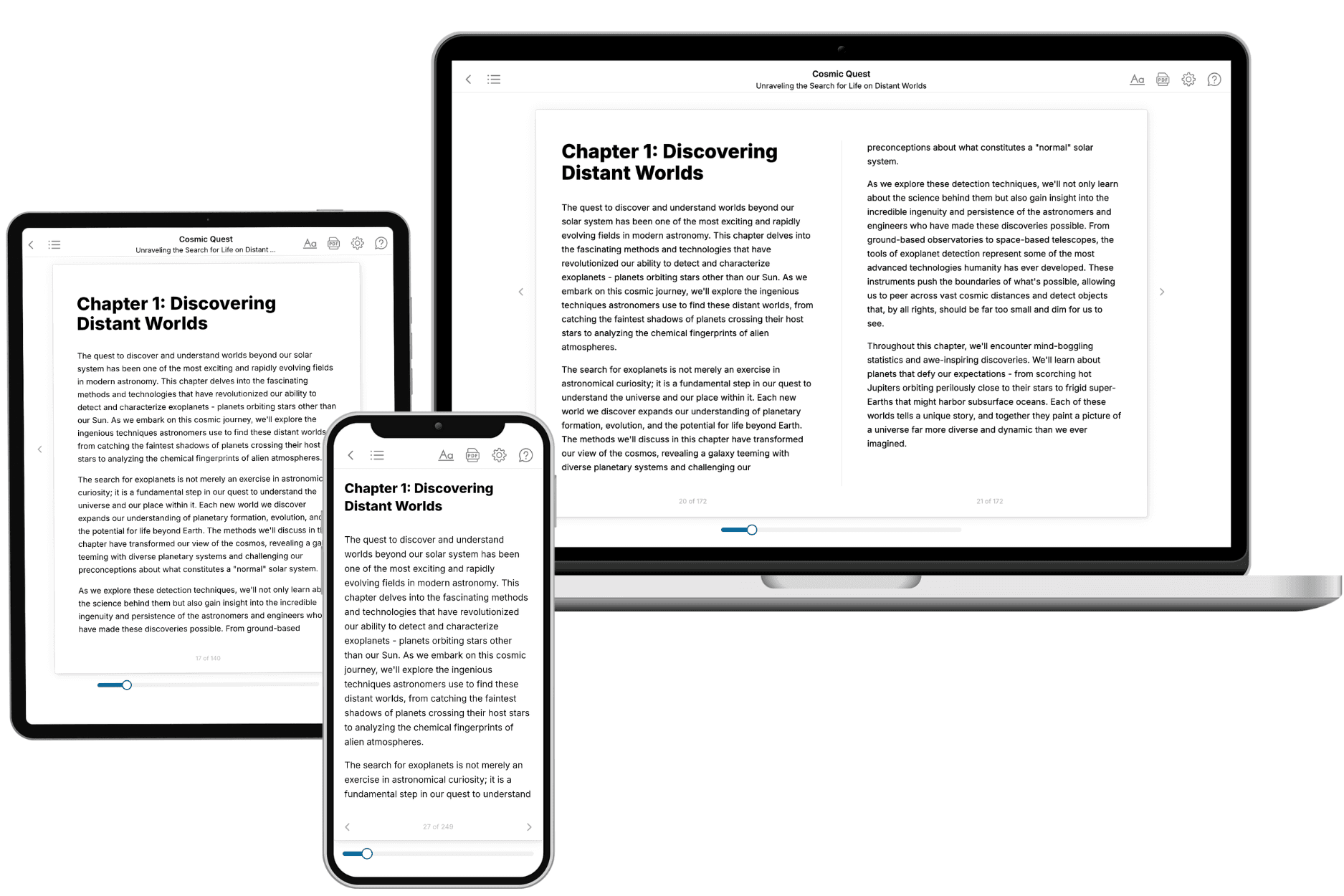
Your book is ready in 10 minutes. Read it online, download as EPUB or PDF, or send to Kindle.

Frequently asked questions
- What is TailoredRead?
TailoredRead creates complete, full-length nonfiction ebooks, written specifically for you. Tell us what you want to learn and why, and TailoredRead writes you a complete ebook on it, with charts, tables, and diagrams throughout. Read it online, on Kindle, or on any e-reader, or download it as a PDF or EPUB. Every book is written fresh the day you order it.
- How is the book tailored to me?
Before anything is written, you answer a few short questions about your goals, your background, and the topics you care about. Your book is then planned around your answers: written at your level, focused on your goals, and covering the topics you chose, instead of the one-size-fits-all book a store sells everyone.
- Will it read like generic AI content?
No. Your book isn't a chat transcript: it's planned chapter by chapter before a single word is written, told in a clear book voice, and explains ideas visually with charts, tables, and diagrams. After writing, every book goes through an editorial pass that polishes chapters so the book reads consistent from start to finish. Judge for yourself: browse thousands of sample books on our Explore Books page.
- How accurate is the content?
Our AI first checks whether your subject needs live research. Niche and fast-moving subjects are researched before writing, and the book plan and chapters are grounded in what it finds. After writing, every book goes through a quality pass that checks its facts and consistency, and researched books list their sources in a Notes section at the back.
- How long is the book?
You choose the length: Comprehensive (250-300 pages), Detailed (150-200 pages), Essential (70-100 pages), or Short (30-50 pages).
- Does the book include visuals?
Yes. Every book includes charts, tables, and diagrams: timelines, checklists, step-by-step guides, decision trees, comparison tables, matrices, and bar charts. A typical book includes dozens of these visual elements.
- Can I read it on Kindle? What formats can I download?
Yes. Every book can be read in our online reader or downloaded as a PDF or EPUB. The EPUB can be opened with Kindle, Apple Books, Kobo, and any e-reader. The Commercial and Author licenses also include an editable Word (DOCX) and Markdown download.
- How much does it cost?
About the price of a regular ebook. The exact price depends on your book's length and complexity, from $2 for the shortest books to $35 for the most comprehensive, and it's shown when you review your book, before you commit to anything. Each book is a one-time purchase, yours to keep, no subscription. Licenses that let you share, teach, or publish your book range from $35.99 to $49.99.
- Can I preview the book before purchasing?
Before you pay, you'll see what your book will cover: the title, a detailed description, the estimated length, and the complete chapter-by-chapter table of contents, so you know what you're getting before you decide. The full text itself is written after you purchase.
- How long does it take to create a book?
About 10 minutes. You can start reading the opening chapters while the rest is still being written.