LangChain Mastery
Advanced Techniques for Building Intelligent AI Agents
Elevate your AI development skills to new heights with "LangChain Mastery: Advanced Techniques for Building Intelligent AI Agents." This comprehensive guide is tailored for experienced software engineers ready to push the boundaries of AI agent creation.
517 pages30 chaptersEnglishApr 24, 2025Artificial IntelligenceCreated by Chris
About this book
Dive deep into the intricacies of LangChain as you learn to architect complex agent systems, optimize performance, and implement cutting-edge NLP enhancements. You'll master the art of designing multi-agent ecosystems, crafting custom LLM tools, and integrating sophisticated memory systems that take your AI agents from simple chatbots to intelligent assistants capable of nuanced reasoning and data processing. Throughout this book, you'll gain hands-on experience with advanced concepts such as prompt engineering, API integration, and vector databases. You'll explore the latest in conversational AI, semantic search, and knowledge graph implementation. With a focus on ethical AI principles and scalable design patterns, you'll be equipped to develop AI applications that are not only powerful but also responsible and sustainable.
Table of contents
- IntroductionThe Current AI Landscape, LangChain: A Brief Overview, How to Use This Book, Prerequisites and SetupRead below
- Chapter 1: Foundations of Agent ArchitectureCore Components of AI Agents, Types of Agents in LangChain, The Agent Lifecycle, Common Architecture Patterns
- Chapter 2: Optimizing LangChain for PerformanceKey Performance Metrics, Caching Strategies, Parallel Processing Techniques, Efficient Resource Management
- Chapter 3: Developing Custom LLM ToolsAnatomy of a LangChain Tool, Integrating Custom Tools with Agents, Optimizing Tool Performance, Testing and Debugging Custom Tools
- Chapter 4: Implementing Advanced Agent Memory SystemsTypes of Agent Memory, Persistent Memory Strategies, Context Management in Conversations, Efficient Memory Retrieval Techniques
- Chapter 5: Designing Multi-Agent SystemsAgent Collaboration Frameworks, Task Distribution and Load Balancing, Conflict Resolution Between Agents, Implementing Swarm Intelligence
- Chapter 6: Advanced NLP Techniques for AgentsSentiment Analysis in Agent Responses, Named Entity Recognition and Extraction, Automated Text Summarization, Natural Language Generation Techniques
- Chapter 7: Building Sophisticated ChatbotsDesigning Natural Conversation Flows, Implementing Context Awareness, Chatbot Personality Modeling, Handling Multi-turn Dialogues
- Chapter 8: Seamless API Integration for AgentsCreating Efficient API Wrappers, Data Transformation and Normalization, Robust Error Handling in API Calls, Implementing Rate Limiting and Quotas
- Chapter 9: Mastering Prompt EngineeringStructuring Effective Prompts, Context Injection Techniques, Optimizing Prompts for Specific Tasks, Implementing Few-shot Learning in Prompts
- Chapter 10: Scaling LangChain ProjectsDesigning Distributed Agent Systems, Load Balancing Strategies, Scaling Databases for Large-scale Operations, Cloud Deployment Best Practices
- Chapter 11: Automating Code Generation with AIAI-powered Code Generation Techniques, Implementing Intelligent Code Completion, AI-assisted Code Refactoring, Automated Test Case Generation
- Chapter 12: Implementing Ethical AI PrinciplesDetecting and Mitigating Bias in AI Agents, Ensuring Transparency in AI Decision-making, Protecting User Privacy in AI Systems, Developing Ethical Guidelines for AI Development
- Chapter 13: Optimizing Agent PerformanceAdvanced Performance Profiling Techniques, Identifying and Resolving Bottlenecks, Strategies for Optimizing Response Time, Benchmarking Against Industry Standards
- Chapter 14: Developing Full-scale AI ApplicationsDesigning Scalable AI Application Architecture, Integrating AI Agents with Frontend Frameworks, Building Robust Backend Services for AI Apps, Deployment Strategies for AI Applications
- Chapter 15: Advanced LangChain Design PatternsComposing Complex Chains, Asynchronous Processing Patterns, Implementing Robust Error Recovery, Effective State Management in Chains
- Chapter 16: Advanced Data Processing for AI AgentsAutomated Data Cleaning Techniques, Advanced Feature Extraction Methods, Data Augmentation Strategies, Real-time Data Processing Architectures
- Chapter 17: Implementing Advanced Agent ReasoningLogical Inference Engines for Agents, Probabilistic Reasoning Techniques, Advanced Decision-making Algorithms, Generating Explanations for Agent Decisions
- Chapter 18: Creating Intelligent AI AssistantsImplementing Task Planning and Execution, Integrating Domain-specific Knowledge, User Modeling and Personalization, Designing Proactive Assistance Features
- Chapter 19: Advanced LLM Fine-tuning TechniquesPreparing High-quality Fine-tuning Datasets, Hyperparameter Optimization Strategies, Leveraging Transfer Learning in Fine-tuning, Advanced Evaluation Metrics for Fine-tuned Models
- Chapter 20: Comprehensive AI Documentation StrategiesBest Practices for AI Code Documentation, Documenting AI Models and Their Behavior, Creating Clear and Concise API Documentation, Version Control for AI Projects
- Chapter 21: Leveraging Vector Databases in AI SystemsEfficient Vector Indexing Techniques, Implementing Fast Similarity Search, Integrating Vector Databases with LangChain, Scaling Vector Databases for Large Datasets
- Chapter 22: Advanced Retrieval Augmentation TechniquesQuery Expansion and Reformulation, Context Ranking and Selection Algorithms, Implementing Hybrid Retrieval Systems, Dynamic Retrieval Based on Conversation Context
- Chapter 23: Implementing Knowledge Graphs for AI AgentsAutomated Knowledge Graph Construction, Efficient Knowledge Graph Querying, Reasoning Over Knowledge Graphs, Maintaining and Updating Knowledge Graphs
- Chapter 24: Building Advanced Semantic Search SystemsAdvanced Text Embedding Techniques, Semantic Query Understanding, Implementing Semantic Ranking Algorithms, Multi-modal Semantic Search
- Chapter 25: Developing Sophisticated Conversational AIAdvanced Dialogue Management Systems, Improving Intent Recognition Accuracy, Long-term Context Tracking in Conversations, Implementing Multi-lingual Conversational AI
- Chapter 26: Applying Reinforcement Learning to AgentsIntegrating RL Frameworks with LangChain, Designing Effective Reward Functions, Policy Optimization Techniques for Agents, Multi-agent Reinforcement Learning
- Chapter 27: Leveraging Advanced Transformer ModelsSelecting the Right Transformer Model, Techniques for Efficient Model Inference, Model Compression and Quantization, Designing Custom Transformer Architectures
- Chapter 28: Designing Natural Language User InterfacesImplementing Voice-based Interfaces, Creating Multimodal Interaction Systems, Developing Adaptive NL Interfaces, Ensuring Accessibility in NL Interfaces
- Chapter 29: Architecting Distributed Agent SystemsInter-agent Communication Protocols, Distributed Task Allocation Strategies, Implementing Consensus Algorithms, Building Fault-tolerant Agent Systems
- Chapter 30: Advanced AI Testing StrategiesAutomated Test Case Generation for AI, Validating Complex Agent Behaviors, Implementing Adversarial Testing, Continuous Monitoring and Testing in Production
- ConclusionFuture Trends in AI Agent Development, The Importance of Continuous Learning
- AppendixAdditional Resources and Tools, Glossary of Key Terms
Introduction
Welcome to "LangChain Mastery: Advanced Techniques for Building Intelligent AI Agents." This book is your comprehensive guide to elevating your AI development skills and pushing the boundaries of what's possible with LangChain. As an experienced software engineer with a strong foundation in computer science, you're about to embark on a journey that will transform your approach to building sophisticated, ethical, and high-performance AI agents.
In recent years, the field of artificial intelligence has experienced unprecedented growth and innovation. The emergence of powerful language models and frameworks has opened up new possibilities for creating intelligent systems that can understand, reason, and interact in ways that were once the realm of science fiction. LangChain stands at the forefront of this revolution, providing developers with the tools and flexibility to create AI agents that can tackle complex tasks, engage in natural language interactions, and integrate seamlessly with a wide array of data sources and APIs.
Throughout this book, you'll delve deep into the intricacies of LangChain, mastering advanced concepts and techniques that will set your AI projects apart. From architecting sophisticated agent systems to optimizing performance, implementing cutting-edge NLP enhancements, and designing multi-agent ecosystems, you'll gain the knowledge and skills needed to create AI applications that are not just powerful, but also responsible and scalable.
As we progress through the chapters, you'll find that this book is not just about theory – it's a practical guide filled with hands-on examples, best practices, and real-world applications. You'll learn how to craft custom LLM tools, integrate advanced memory systems, and leverage the latest in conversational AI and semantic search. Moreover, you'll gain insights into crucial aspects of AI development, such as prompt engineering, API integration, and the implementation of vector databases and knowledge graphs.
One of the core principles underlying this book is the importance of ethical AI development. As you enhance your technical skills, you'll also learn how to integrate ethical considerations into every stage of your AI projects, ensuring that the agents you create are not only intelligent but also aligned with principles of fairness, transparency, and user privacy.
The Current AI Landscape
The artificial intelligence landscape is evolving at a breakneck pace, with new breakthroughs and technologies emerging almost daily. As we delve into the world of advanced AI agent development, it's crucial to understand the current state of the field and the trends shaping its future. This context will not only help you appreciate the significance of the techniques you'll learn but also enable you to anticipate and adapt to future developments in AI.
At the heart of recent AI advancements are large language models (LLMs) such as GPT (Generative Pre-trained Transformer) series, BERT (Bidirectional Encoder Representations from Transformers), and their variants. These models have demonstrated remarkable capabilities in natural language understanding and generation, setting new benchmarks in tasks ranging from text completion and summarization to question answering and code generation. The impact of these models extends far beyond academic research, with practical applications emerging in industries as diverse as healthcare, finance, education, and customer service[1].
Alongside the development of more powerful models, there's been a growing focus on making AI more accessible and easier to integrate into various applications. This is where frameworks like LangChain come into play, bridging the gap between state-of-the-art AI models and practical, real-world applications. LangChain provides a flexible and intuitive interface for building AI agents that can leverage the power of LLMs while also integrating with external data sources, APIs, and tools.
Another significant trend in the AI landscape is the shift towards more specialized and task-specific models. While general-purpose language models continue to grow in size and capability, there's an increasing recognition of the value of models fine-tuned for specific domains or tasks. This trend aligns well with the LangChain philosophy, which emphasizes the ability to create custom tools and adapt models to specific use cases.
The concept of AI agents – autonomous or semi-autonomous systems that can perceive their environment, make decisions, and take actions to achieve specific goals – is gaining prominence. These agents are becoming more sophisticated, capable of handling complex tasks, engaging in multi-turn dialogues, and even collaborating with other agents or human users. The development of such agents presents both exciting opportunities and significant challenges, particularly in areas like decision-making, task planning, and ethical behavior.
Ethical considerations and responsible AI development have also moved to the forefront of the AI landscape. As AI systems become more powerful and pervasive, there's a growing awareness of the need to address issues such as bias, fairness, transparency, and privacy. Regulatory frameworks are evolving to keep pace with these technological advancements, making it essential for AI developers to incorporate ethical principles into their work from the ground up[2].
The integration of AI with other cutting-edge technologies is another key trend shaping the landscape. The combination of AI with technologies like blockchain, Internet of Things (IoT), and edge computing is opening up new possibilities for decentralized and privacy-preserving AI systems. Similarly, the intersection of AI with fields like robotics and augmented reality is pushing the boundaries of what's possible in human-AI interaction.
As you embark on your journey to master LangChain and advanced AI agent development, keep in mind that you're entering a field that's not just rapidly evolving but also increasingly impactful on society. The skills and knowledge you'll gain from this book will position you at the forefront of this exciting and transformative field, enabling you to create AI systems that are not only technologically advanced but also responsible and beneficial to society.
LangChain: A Brief Overview
LangChain is a powerful and flexible framework designed to simplify the process of building applications with large language models (LLMs). It provides a set of tools, components, and interfaces that enable developers to create sophisticated AI agents capable of performing a wide range of tasks. At its core, LangChain aims to bridge the gap between the raw capabilities of LLMs and the practical requirements of real-world applications.
The framework is built around several key concepts and components:
- Chains: These are sequences of calls to language models or other utilities. Chains allow you to combine multiple operations, creating more complex and powerful workflows.
- Agents: These are autonomous entities that can use language models to determine which actions to take and in what order. Agents can use tools, maintain memory, and make decisions based on their observations.
- Memory: This component allows agents to maintain state and context across interactions, enabling more coherent and context-aware responses.
- Prompts: These are structured inputs to language models. LangChain provides utilities for managing and optimizing prompts to get the best results from LLMs.
- Tools: These are functions that agents can use to interact with external systems or perform specific tasks.
One of the key strengths of LangChain is its modularity and extensibility. It's designed to be flexible enough to accommodate a wide range of use cases, from simple chatbots to complex, multi-agent systems capable of reasoning and problem-solving. This flexibility allows developers to start with basic implementations and gradually build up to more sophisticated applications as their needs evolve.
LangChain supports integration with various LLMs, including popular models like GPT-3, GPT-4, and others. This means you can leverage the strengths of different models depending on your specific requirements. Moreover, LangChain is not tied to any particular LLM provider, giving you the freedom to switch between models or even use your own custom models.
Another significant feature of LangChain is its support for connecting LLMs with external data sources and APIs. This capability allows you to create AI agents that can access and process real-world data, making them more useful and relevant for practical applications. Whether you need to query a database, call a web API, or interact with a local file system, LangChain provides the tools to seamlessly integrate these operations into your AI workflows.
LangChain also emphasizes the importance of prompt engineering and management. It offers utilities for creating, storing, and optimizing prompts, which is crucial for getting the best performance out of language models. This focus on prompts aligns with the growing recognition in the AI community of the critical role that well-crafted prompts play in the effectiveness of LLM-based applications.
As you progress through this book, you'll explore these concepts in depth and learn how to leverage the full power of LangChain to create advanced AI agents. You'll discover how to combine these components in novel ways, optimize their performance, and adapt them to a wide range of use cases. By mastering LangChain, you'll be well-equipped to tackle complex AI development challenges and create cutting-edge applications that push the boundaries of what's possible with language models.
How to Use This Book
"LangChain Mastery: Advanced Techniques for Building Intelligent AI Agents" is designed to be a comprehensive guide that takes you from a solid foundation in AI and software engineering to mastery of advanced LangChain techniques. To get the most out of this book, it's important to understand its structure and how to approach the material effectively.
The book is organized into 30 chapters, each focusing on a specific aspect of AI agent development using LangChain. While the chapters build on each other to some extent, they are also designed to be relatively self-contained, allowing you to focus on the topics most relevant to your current projects or interests. Here's a suggested approach to using this book effectively:
1. Sequential Reading: If you're new to LangChain or looking for a comprehensive understanding of advanced AI agent development, it's recommended to read the book sequentially from start to finish. This approach will provide you with a structured learning path, ensuring that you have a solid grasp of fundamental concepts before moving on to more advanced topics.
2. Topic-Based Exploration: If you're already familiar with LangChain basics and are looking to deepen your knowledge in specific areas, feel free to jump to the chapters that interest you most. The table of contents and chapter introductions will help you identify the most relevant sections for your needs.
3. Hands-On Practice: Throughout the book, you'll find numerous code examples, exercises, and projects. It's crucial to engage with these practical elements actively. Set up a development environment and work through the examples, modifying and experimenting with the code to deepen your understanding.
4. Reflection and Application: After each chapter, take some time to reflect on how the concepts and techniques you've learned could apply to your own projects or challenges. Consider how you might implement or adapt these ideas in your work.
5. Revisiting and Reference: As you progress in your AI development journey, you may find it valuable to revisit certain chapters or use the book as a reference. The detailed table of contents and index will help you quickly locate specific information when you need it.
6. Engaging with Additional Resources: Throughout the book, you'll find references to additional resources, research papers, and tools. Don't hesitate to explore these to deepen your understanding or stay up-to-date with the latest developments in the field.
7. Community Engagement: Consider joining online communities or forums related to LangChain and AI development. Sharing your experiences, asking questions, and engaging in discussions can enhance your learning and provide valuable insights.
Remember, mastering advanced AI agent development is an ongoing process that requires practice, experimentation, and continuous learning. This book is designed to be a comprehensive guide and a valuable resource throughout your journey, but the real learning happens when you apply these concepts to real-world problems and projects.
As you work through the book, keep in mind the ethical considerations discussed in various chapters. Responsible AI development is not just an add-on but should be integrated into every stage of your work. Always consider the potential impacts and implications of the AI systems you're building.
Lastly, don't be discouraged if you find some concepts challenging at first. AI and machine learning are complex fields, and it's normal to need time to fully grasp advanced topics. Persistence, practice, and patience are key to mastering these skills. Remember that every expert was once a beginner, and with dedication and consistent effort, you'll be able to create sophisticated AI agents that can make a real impact in the world.
Prerequisites and Setup
Before diving into the advanced techniques covered in this book, it's important to ensure that you have the necessary background knowledge and technical setup. This section will outline the prerequisites for getting the most out of "LangChain Mastery" and guide you through the process of setting up your development environment.
Knowledge Prerequisites:
- Python Programming: A strong command of Python is essential. You should be comfortable with object-oriented programming, functional programming concepts, and Python's standard library.
- Machine Learning Basics: Familiarity with fundamental machine learning concepts, including supervised and unsupervised learning, model evaluation, and basic neural network architectures.
- Natural Language Processing (NLP): A basic understanding of NLP concepts such as tokenization, embeddings, and language models.
- Web Development: Basic knowledge of web technologies (HTML, CSS, JavaScript) and RESTful APIs will be helpful for certain chapters.
- Software Engineering Practices: Familiarity with version control (Git), testing methodologies, and software design patterns.
Technical Setup:
- Python Environment: Install Python 3.8 or later. We recommend using a virtual environment tool like venv or conda to manage dependencies.
- LangChain Installation: Install LangChain using pip:
pip install langchain - Additional Libraries: Install other required libraries:
pip install numpy pandas scikit-learn torch transformers - IDE or Text Editor: Choose an IDE or text editor you're comfortable with. Popular options include PyCharm, Visual Studio Code, or Jupyter Notebooks for interactive development.
- API Keys: Some chapters will require API keys for various services (e.g., OpenAI, Hugging Face). Sign up for these services in advance and keep your API keys handy.
- Git: Install Git for version control and to clone example repositories.
- Docker (Optional): Some advanced topics may benefit from using Docker for containerization.
Getting Started:
Once you have your environment set up, follow these steps to get started:
- Clone the book's companion repository:
git clone https://github.com/langchain-mastery/examples.git - Navigate to the cloned directory and install additional requirements:
cd examples pip install -r requirements.txt - Test your setup by running the provided verification script:
This script will check that all necessary libraries are installed and functioning correctly.python verify_setup.py
If you encounter any issues during setup, consult the troubleshooting guide in the repository's README file or seek help from the LangChain community forums.
Staying Updated:
The field of AI and the LangChain framework itself are rapidly evolving. To ensure you're working with the latest information and examples:
- Regularly check the book's companion website for errata and updates.
- Join the LangChain community on platforms like GitHub and Discord to stay informed about new features and best practices.
- Consider subscribing to relevant AI and machine learning newsletters or following key figures in the field on social media platforms.
By ensuring you have the right knowledge base and a properly configured development environment, you'll be well-prepared to tackle the advanced concepts and hands-on exercises presented in this book. Remember, the key to mastering these technologies is consistent practice and experimentation. Don't hesitate to modify the provided examples and apply the concepts to your own projects as you progress through the book.
This is the end of the free sample. The full book has 30 chapters.
Want this book written for you?
Tell us your goals and background, and get your own version of this book, tailored by AI to you.


Benefits of AI-tailored books
- Read one book, not ten:
- all the Artificial Intelligence knowledge you need, gathered into a single book.
- Save days of learning:
- tell us your goals, choose your topics, and the whole book is built around them.
- Learn effortlessly:
- Artificial Intelligence book written for your specific background and expertise.
- Understand at a glance:
- includes charts, tables, timelines, checklists, decision trees, and more.
- Stay current:
- written the day you order it, not years ago.
- Trust what you read:
- every book is checked for accuracy, with real research when your subject needs it.
Create your unique book in 3 steps
- 1. Select your focus
Select the focus of your Artificial Intelligence book and share your background
- 2. Personalize your book
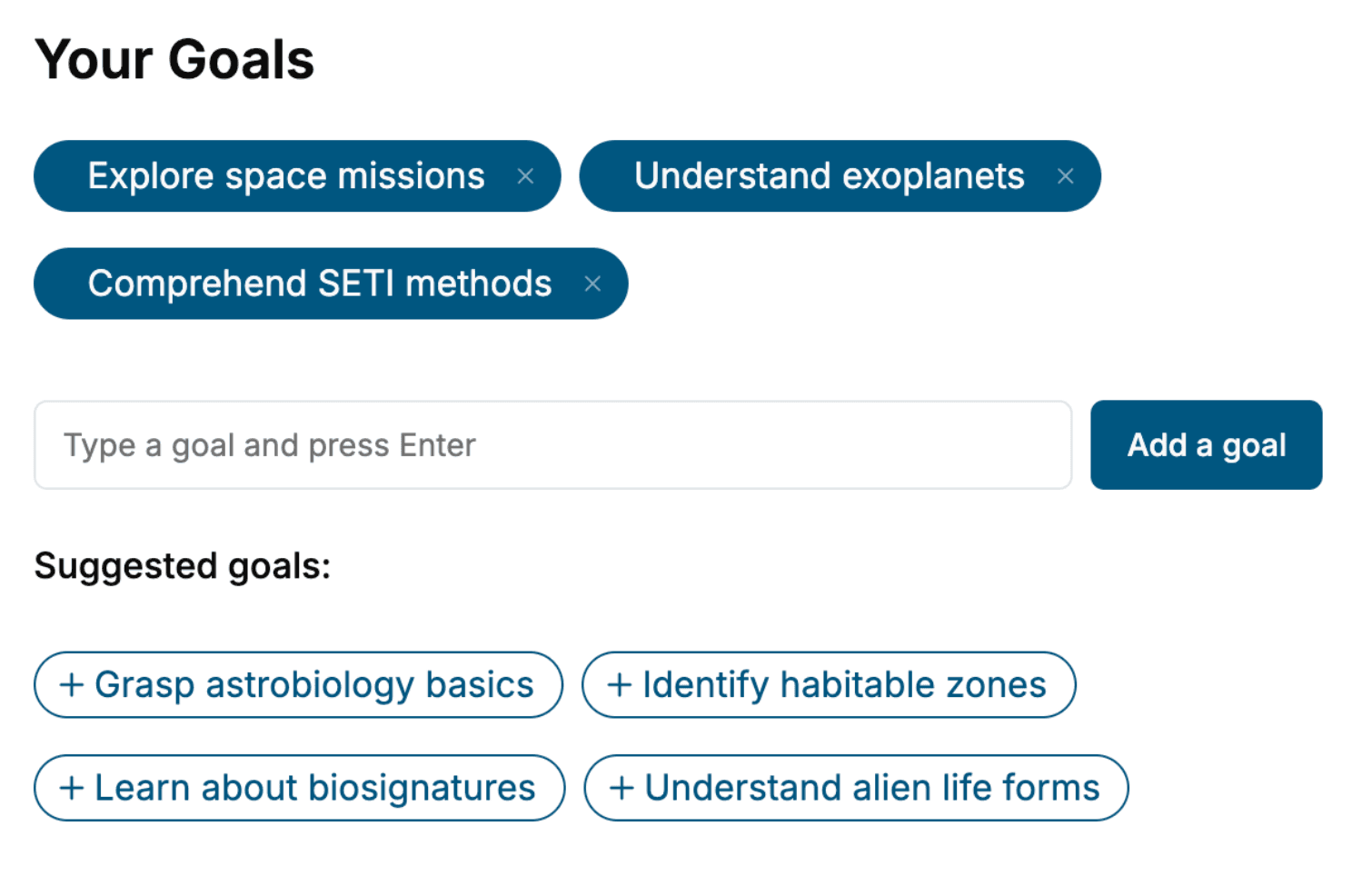
Specify your goals and choose sub-topics to include
- 3. Get your tailored book
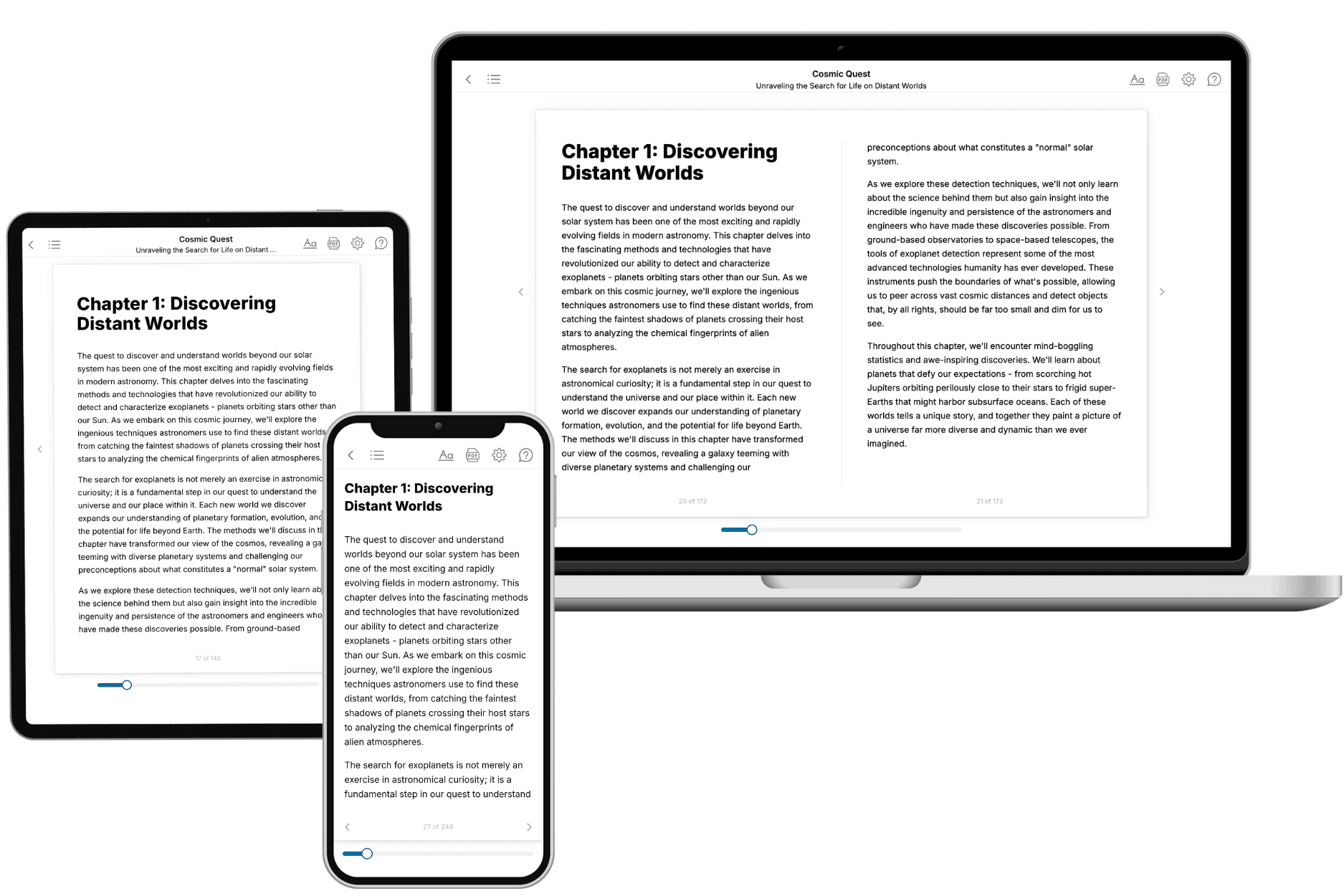
Your book is ready in 10 minutes. Read it online, download as EPUB or PDF, or send to Kindle.

Frequently asked questions
- What is TailoredRead?
TailoredRead creates complete, full-length nonfiction ebooks, written specifically for you. Tell us what you want to learn and why, and TailoredRead writes you a complete ebook on it, with charts, tables, and diagrams throughout. Read it online, on Kindle, or on any e-reader, or download it as a PDF or EPUB. Every book is written fresh the day you order it.
- How is the book tailored to me?
Before anything is written, you answer a few short questions about your goals, your background, and the topics you care about. Your book is then planned around your answers: written at your level, focused on your goals, and covering the topics you chose, instead of the one-size-fits-all book a store sells everyone.
- Will it read like generic AI content?
No. Your book isn't a chat transcript: it's planned chapter by chapter before a single word is written, told in a clear book voice, and explains ideas visually with charts, tables, and diagrams. After writing, every book goes through an editorial pass that polishes chapters so the book reads consistent from start to finish. Judge for yourself: browse thousands of sample books on our Explore Books page.
- How accurate is the content?
Our AI first checks whether your subject needs live research. Niche and fast-moving subjects are researched before writing, and the book plan and chapters are grounded in what it finds. After writing, every book goes through a quality pass that checks its facts and consistency, and researched books list their sources in a Notes section at the back.
- How long is the book?
You choose the length: Comprehensive (250-300 pages), Detailed (150-200 pages), Essential (70-100 pages), or Short (30-50 pages).
- Does the book include visuals?
Yes. Every book includes charts, tables, and diagrams: timelines, checklists, step-by-step guides, decision trees, comparison tables, matrices, and bar charts. A typical book includes dozens of these visual elements.
- Can I read it on Kindle? What formats can I download?
Yes. Every book can be read in our online reader or downloaded as a PDF or EPUB. The EPUB can be opened with Kindle, Apple Books, Kobo, and any e-reader. The Commercial and Author licenses also include an editable Word (DOCX) and Markdown download.
- How much does it cost?
About the price of a regular ebook. The exact price depends on your book's length and complexity, from $2 for the shortest books to $35 for the most comprehensive, and it's shown when you review your book, before you commit to anything. Each book is a one-time purchase, yours to keep, no subscription. Licenses that let you share, teach, or publish your book range from $35.99 to $49.99.
- Can I preview the book before purchasing?
Before you pay, you'll see what your book will cover: the title, a detailed description, the estimated length, and the complete chapter-by-chapter table of contents, so you know what you're getting before you decide. The full text itself is written after you purchase.
- How long does it take to create a book?
About 10 minutes. You can start reading the opening chapters while the rest is still being written.