The Language of Algebra
Master Mathematical Notation to Unlock Intermediate Algebra Success
Stop feeling lost when you encounter algebraic symbols and expressions.
238 pages11 chaptersNov 3, 2025Algebra
About this book
This book teaches you to read, interpret, and confidently use mathematical notation—the essential language of intermediate algebra. You'll discover that notation isn't arbitrary or confusing; it's a logical system designed to communicate mathematical ideas precisely. Through clear explanations, practical examples, and guided practice, you'll learn what each symbol means, why it matters, and how to use it correctly in problem-solving. Whether you're struggling with variables, confused by exponents, or uncertain about order of operations, this book breaks down the notation barriers that hold many students back. By mastering this foundational skill, you'll approach algebra with greater confidence, make fewer careless errors, and actually understand what you're doing—not just following steps. Your path to algebra success starts with speaking its language fluently.
Table of contents
- IntroductionWhy Notation Matters More Than You Think, Notation as a Language, Not a Mystery, How to Use This Book for Maximum BenefitRead below
- Chapter 1: The Foundation: Understanding Symbols and Their PurposeWhat Is Mathematical Notation and Why Does It Exist?, Symbols as Shortcuts: From Words to Symbols, Context Determines Meaning: The Same Symbol, Different Uses, Universal Conventions: How Mathematicians Agree on Meaning
- Chapter 2: Variables: Representing the UnknownWhat Is a Variable and What Does It Represent?, Variable Notation: Letters, Subscripts, and Conventions, Variables in Expressions: Reading and Interpreting, Working with Multiple Variables: Relationships and Clarity
- Chapter 3: Coefficients and Terms: Building Blocks of ExpressionsUnderstanding Coefficients: The Numbers That Multiply Variables, Implicit Coefficients: When the Number Is Hidden, Terms and Like Terms: Recognizing What Can Be Combined, Reading Complex Terms: Putting Coefficients and Variables Together
- Chapter 4: Exponents and Powers: Notation for Repeated MultiplicationExponent Basics: What the Superscript Really Means, Exponent Notation: Reading and Writing Powers Correctly, Special Exponents: Zero, One, and Negative Powers, Exponents with Variables: Understanding Variable Powers
- Chapter 5: Operations and Operators: The Actions Behind the SymbolsBasic Operators: Addition, Subtraction, Multiplication, Division, Multiplication Notation: Why We Don't Always Use the × Symbol, Division Notation: Fractions, Slashes, and Obelus, Order of Operations: How Notation Tells You What to Do First
- Chapter 6: Parentheses, Brackets, and Grouping SymbolsThe Purpose of Grouping Symbols: Changing the Order, Parentheses: The Most Common Grouping Symbol, Nested Grouping: When Symbols Go Inside Symbols, Brackets and Braces: When and Why They're Used
- Chapter 7: Equations and Inequalities: Notation for RelationshipsThe Equals Sign: What It Really Means, Inequality Symbols: Greater Than, Less Than, and More, Reading Equations: Translating Notation into Words, Compound Inequalities: Combining Multiple Relationships
- Chapter 8: Fractions and Rational Expressions: Notation for Parts and RatiosFraction Notation: Numerator, Denominator, and What They Mean, Rational Expressions: Fractions with Variables, Complex Fractions: Fractions Within Fractions, Interpreting Fraction Bars: Grouping and Division
- Chapter 9: Radicals and Roots: Notation for Inverse OperationsThe Radical Symbol: What It Represents, Index and Radicand: The Parts of a Radical, Square Roots and Beyond: Different Types of Radicals, Radicals with Variables: Interpreting Variable Expressions Under Radicals
- Chapter 10: Putting It All Together: Reading Complex ExpressionsA Strategy for Decoding Any Expression, Multi-Symbol Expressions: Breaking Down Complexity, Common Notation Mistakes and How to Avoid Them, Practice: Reading and Interpreting Complex Expressions
- Chapter 11: From Words to Notation: Translating Problems into SymbolsTranslation Basics: Key Words and Their Symbols, From Phrase to Expression: Building Algebraic Notation, Word Problems to Equations: Creating Notation from Context, Avoiding Translation Errors: Common Pitfalls and Solutions
- Conclusion: Your Notation Mastery JourneyWhat You've Learned and How It Changes Your Algebra, Next Steps: Continuing Your Mathematical Growth
- Glossary of Mathematical Notation and Terms
- Quick Reference Guide: Notation at a Glance
Introduction
You've probably experienced that sinking feeling when you look at an algebra problem and the symbols seem to blur together into an incomprehensible mess. Maybe you understand the basic math concepts, but when variables, exponents, and parentheses combine, everything becomes confusing. You're not alone in this struggle, and more importantly, the problem isn't your mathematical ability. The real issue is that nobody properly taught you to read the language that algebra is written in. Mathematical notation is exactly that—a language with its own vocabulary, grammar, and syntax. Just as you wouldn't expect to read French without learning what the words mean, you can't truly understand algebra without learning what the symbols mean and how they work together.
This book takes a fundamentally different approach to algebra instruction. Instead of throwing formulas at you and expecting you to memorize procedures, we're going to slow down and examine the notation itself. You'll learn what each symbol represents, why mathematicians chose that particular notation, and how symbols combine to express mathematical relationships. This foundation might seem basic, but it's the missing piece that prevents many students from progressing beyond mechanical problem-solving. When you understand notation deeply, algebra transforms from a collection of arbitrary rules into a logical system that makes sense. You'll recognize patterns more quickly, make fewer careless errors, and actually understand what you're calculating rather than just following steps blindly.
Throughout this book, you'll find clear explanations paired with practical examples that show notation in action. Each chapter builds on the previous one, gradually increasing in complexity while always connecting new concepts to what you already know. You'll see common mistakes highlighted so you can avoid them, and you'll get strategies for decoding even complicated expressions. By the end, you'll have the confidence to approach any intermediate algebra problem knowing that you can read and interpret what's being asked. This isn't about becoming a mathematical genius overnight—it's about removing the notation barrier that's been holding you back and giving you the tools to succeed in algebra and beyond.
Why Notation Matters More Than You Think
Consider this scenario: a student looks at the expression 3x² and interprets it as "three times x, then square the result," calculating (3x)² instead. Another student sees 2(x + 5) and writes 2x + 5, forgetting to distribute the multiplication. These aren't conceptual failures or lack of mathematical ability—they're notation reading errors. The students didn't understand what the symbols were telling them to do. These mistakes cascade through problems, leading to wrong answers even when the student knows the underlying math concepts. This is why notation mastery isn't optional or secondary—it's the foundation that everything else rests on. Without it, you're trying to build a house on sand.
Mathematical notation serves as the precise communication system that allows mathematicians worldwide to share ideas without ambiguity. When you write x + 3 = 7, every mathematician on Earth interprets this identically, regardless of their native language. This universality is powerful, but it requires that everyone follows the same conventions and understands the same meanings. The notation isn't arbitrary—each symbol and convention exists for specific reasons, usually to make expressions clearer, more compact, or less ambiguous. When you understand these reasons, notation stops feeling like a random collection of rules and starts making intuitive sense. You begin to see why multiplication is written next to variables without a symbol, why exponents sit as superscripts, and why parentheses are essential for grouping.
The practical impact of notation fluency extends far beyond getting correct answers on homework. When you can read notation fluently, you recognize problem types faster because you see the structural patterns in expressions. You make connections between different topics because you notice how similar notation appears in different contexts. You communicate your mathematical thinking more clearly, both in written work and when asking for help. Perhaps most importantly, you reduce cognitive load—instead of struggling to decode what symbols mean, you can focus your mental energy on the actual problem-solving. This is similar to reading in your native language: once you're fluent, you don't think about individual letters or words; you simply absorb meaning. Mathematical fluency works the same way.
Research in mathematics education consistently shows that notation difficulties create significant barriers to learning[1]. Students who struggle with notation often develop math anxiety, not because they can't do math, but because they can't understand what's being asked. They feel lost and frustrated, which leads to avoidance and falling further behind. Breaking this cycle requires addressing notation directly and systematically. When students gain notation confidence, their overall mathematical confidence increases dramatically. They start to see themselves as capable of doing algebra, which becomes a self-fulfilling prophecy. The notation barrier, once removed, opens doors to mathematical understanding that previously seemed locked.
Your current relationship with mathematical notation probably falls somewhere on a spectrum. Perhaps you can handle basic expressions but get confused when complexity increases. Maybe you've memorized what certain symbols mean but don't understand why they're used that way. Or possibly you've developed workarounds and tricks that get you through problems without truly understanding the notation. Wherever you are on this spectrum, this book will meet you there and move you forward. The goal isn't perfection—it's progress toward genuine understanding. Every notation concept you master makes the next one easier, creating a positive momentum that builds throughout your mathematical journey.
Think about the difference between tourists using a phrasebook and fluent speakers of a language. Tourists can communicate basic needs by looking up phrases, but they miss nuances, struggle with anything unexpected, and can't engage in real conversation. Fluent speakers understand the underlying structure of the language, allowing them to create new sentences, understand variations, and communicate complex ideas. Your goal with mathematical notation should be fluency, not phrasebook knowledge. This book will help you move from looking up what symbols mean to genuinely understanding the language of algebra. That shift—from memorization to comprehension—is what transforms struggling students into confident problem-solvers.
The investment you make in understanding notation pays dividends throughout your mathematical education and beyond. Algebra is the gateway to higher mathematics, including trigonometry, calculus, and statistics. It's also essential for many fields including science, engineering, economics, and computer programming. In all these areas, the notation becomes more complex and specialized, but it builds on the same foundational principles you'll learn in this book. Master these fundamentals now, and you'll find advanced topics much more accessible. Struggle with notation now, and every subsequent course becomes harder than it needs to be. The choice is clear: invest time in understanding notation deeply, and reap the benefits for years to come.
Notation as a Language, Not a Mystery
When you learned to read English, you started with individual letters, then combined them into words, then learned how words form sentences with specific meanings. Mathematical notation works exactly the same way. Individual symbols are like letters, expressions are like words, and equations are like sentences. Just as "cat" and "act" use the same letters but mean different things because of their arrangement, 3x and x³ use the same symbols but mean completely different things because of their arrangement. Understanding this parallel helps demystify notation—it's not magic or arbitrary, it's a structured communication system with learnable rules. Once you accept this framework, notation becomes much less intimidating.
Every language has grammar rules that govern how elements combine to create meaning. In English, word order matters: "dog bites man" means something different from "man bites dog." Mathematical notation has similar structural rules. The position of symbols determines meaning—2³ means "two cubed" while 3² means "three squared." The order of operations provides grammatical rules for reading expressions: you evaluate exponents before multiplication, multiplication before addition. These aren't arbitrary restrictions designed to confuse you; they're conventions that ensure everyone interprets expressions the same way. When you understand the grammar of mathematical notation, you can parse even complex expressions systematically.
Languages also have vocabulary—words that represent specific concepts. Mathematical notation has vocabulary too: symbols that represent specific operations, relationships, or quantities. The plus sign + means addition, the equals sign = means equivalence, and the variable x represents an unknown quantity. Just as you build your English vocabulary gradually, learning new words as you need them, you'll build your mathematical vocabulary throughout this book. Some symbols you already know; others will be new. The key is understanding that each symbol has a specific, consistent meaning. There's no mystery or hidden complexity—just vocabulary to learn, exactly as you've done with every other language you've encountered.
One crucial difference between natural languages and mathematical notation is precision. In English, words often have multiple meanings depending on context, and sentences can be ambiguous. "I saw her duck" could mean you observed her waterfowl or watched her lower her head. Mathematical notation deliberately avoids this ambiguity. Each symbol has a precise meaning, and expressions have exactly one correct interpretation when you follow the conventions. This precision is actually helpful—once you know the rules, there's no guessing or interpretation required. The expression 2x + 3 means exactly one thing: multiply two by x, then add three. No ambiguity, no alternative readings, no confusion. This precision makes mathematics clearer than natural language once you're fluent in the notation.
Languages evolve over time, and mathematical notation has evolved too. The symbols we use today weren't handed down from ancient times—they were developed, refined, and standardized over centuries. The equals sign = was introduced in 1557 by Robert Recorde, who chose two parallel lines because "no two things can be more equal"[2]. The multiplication symbol × appeared in 1631, but mathematicians later preferred writing variables next to each other because × looks too much like the letter x. Understanding this history helps you see that notation choices are logical and purposeful, not random. Each symbol exists because it solved a communication problem or made expressions clearer.
The language analogy extends to learning strategies as well. You wouldn't try to learn French by memorizing the entire dictionary before reading any sentences. Instead, you'd learn basic vocabulary and grammar, then practice reading simple texts, gradually building complexity. The same approach works for mathematical notation. You'll start with fundamental symbols and simple expressions, then progressively work with more complex combinations. Each chapter introduces new notation elements and shows how they combine with what you already know. This scaffolded approach prevents overwhelm and builds genuine understanding rather than superficial memorization. You're not just learning symbols—you're learning to think in the language of algebra.
Perhaps the most empowering aspect of viewing notation as a language is recognizing that fluency is achievable through practice. Nobody expects to read a foreign language fluently after one lesson, and you shouldn't expect instant notation mastery either. Fluency develops through repeated exposure, practice, and application. The more you work with notation, the more natural it becomes. Initially, you'll need to consciously think about what each symbol means and how they combine. With practice, this becomes automatic—you'll look at 3x² + 2x - 5 and immediately understand its structure without conscious effort. This automaticity frees your mind to focus on problem-solving rather than symbol-decoding. The path to fluency requires patience and practice, but it's absolutely achievable for anyone willing to put in the effort.
Understanding notation as a language also helps you develop better learning strategies. When you encounter unfamiliar notation, you can apply the same strategies you'd use with an unfamiliar word in English: look for context clues, break it into familiar parts, or look up the definition. You can practice notation reading separately from problem-solving, just as you might practice vocabulary separately from writing essays. You can even create your own "translation exercises," converting between words and symbols to build fluency. These metacognitive strategies—thinking about how you learn—make you a more effective and independent learner. You're not just passively receiving information; you're actively building a skill that will serve you throughout your mathematical journey.
How to Use This Book for Maximum Benefit
This book is structured to build your notation understanding systematically, starting with foundational concepts and progressively adding complexity. Each chapter focuses on a specific aspect of mathematical notation, from basic symbols to complex expressions. The chapters are designed to be read in order because later concepts build on earlier ones. However, if you're already comfortable with certain topics, you can skim those chapters and focus more attention on areas where you need strengthening. The key is ensuring you truly understand each concept before moving forward. Notation understanding is cumulative—gaps in foundational knowledge will create problems later, so resist the temptation to rush through material that seems easy at first glance.
Each chapter follows a consistent structure designed to maximize learning. You'll start with clear explanations of what notation means and why it exists. Then you'll see concrete examples showing the notation in action, including both correct usage and common mistakes to avoid. Throughout each chapter, you'll find practical tips for reading and interpreting notation accurately. The examples aren't just abstract demonstrations—they're the kinds of expressions you'll actually encounter in algebra problems. Pay close attention to these examples, and try to understand not just what they show, but why they work that way. Active engagement with examples, rather than passive reading, dramatically improves retention and understanding.
To get maximum benefit from this book, approach it with a notebook and pencil in hand. Don't just read passively—write out the examples yourself, create your own similar examples, and practice translating between words and symbols. When you encounter a new notation concept, write it down in your own words to ensure you understand it. Create a personal reference sheet of symbols and their meanings that you can review regularly. This active learning approach engages your brain more deeply than simply reading. The physical act of writing reinforces memory, and creating your own examples forces you to think about concepts rather than just recognizing them. Your notebook becomes a personalized study guide tailored to your specific learning needs.
As you work through each chapter, test your understanding by covering up explanations and trying to interpret expressions on your own. When you see an example, pause before reading the explanation and ask yourself: What does this notation mean? How would I read this aloud? What operations are being indicated? Then check your interpretation against the explanation provided. This self-testing approach, called retrieval practice, is one of the most effective learning strategies according to cognitive science research[3]. It reveals gaps in your understanding immediately, when you can still address them, rather than discovering problems later during a test or homework assignment.
Pay special attention to the sections highlighting common mistakes. These aren't included to discourage you—they're there because these specific errors are extremely common, and recognizing them helps you avoid making them yourself. When you see a common mistake explained, think about whether you've made that error before or might be prone to making it. Understanding why an error occurs and how to prevent it is often more valuable than simply seeing correct examples. Create a personal "watch out" list of mistakes you're particularly prone to making, and review this list regularly. Self-awareness about your error patterns is a powerful tool for improvement.
The book includes various types of content to support different learning styles and needs:
- Conceptual explanations that help you understand the "why" behind notation
- Concrete examples showing notation in realistic contexts
- Common mistakes highlighted to help you avoid typical errors
- Reading strategies for interpreting complex expressions
- Translation exercises converting between words and symbols
- Quick reference sections summarizing key notation elements
Set a sustainable pace for working through this book. Notation mastery isn't achieved through cramming or rushing. It's better to thoroughly understand one chapter per week than to skim through the entire book in a few days. Give yourself time to absorb concepts, practice with them, and let understanding solidify before moving to the next topic. If you're using this book alongside an algebra course, coordinate your reading with your coursework. When your class covers equations, read the equations chapter. When you're working with exponents, review that chapter. This coordination reinforces learning by providing multiple exposures to concepts in different contexts. The repetition and varied application strengthen your understanding and retention.
Create opportunities to apply what you're learning immediately. As you learn new notation concepts, look for them in your algebra homework, textbook examples, or online resources. Practice reading expressions aloud, translating word problems into notation, and explaining notation meanings to others. Teaching or explaining concepts to someone else is one of the most powerful learning techniques available—it forces you to organize your understanding and identify gaps in your knowledge. If you don't have someone to explain concepts to, try explaining them to yourself out loud or in writing. This self-explanation process deepens understanding significantly.
Use the glossary and quick reference guide at the end of the book as ongoing resources, not just final summaries. When you encounter notation you're unsure about, look it up immediately rather than guessing or skipping over it. Building the habit of checking notation meanings when uncertain prevents the accumulation of misconceptions. Keep the quick reference guide accessible when doing homework or studying—there's no shame in looking up notation, and doing so reinforces memory through repeated exposure. Over time, you'll need to reference these resources less frequently as notation becomes automatic, but they remain valuable tools throughout your learning journey.
Finally, be patient and compassionate with yourself throughout this process. Learning mathematical notation is genuinely challenging, and everyone progresses at different rates. You'll have moments of confusion and frustration—that's completely normal and doesn't indicate inability. When you struggle with a concept, that struggle is actually part of the learning process. Your brain is working to create new connections and understanding. Take breaks when needed, return to difficult concepts multiple times, and celebrate small victories along the way. Every notation element you master is genuine progress, even if it seems small. The cumulative effect of these small victories is transformation from notation confusion to notation confidence. Trust the process, stay consistent, and you'll be amazed at how much your understanding grows.
Notes
Introduction
- 1. D. Tall and S. Vinner, "Concept image and concept definition in mathematics with particular reference to limits and continuity," Educational Studies in Mathematics, 1981
- 2. R. Recorde, The Whetstone of Witte, London: Jhon Kyngstone, 1557
- 3. H. L. Roediger and A. C. Butler, "The critical role of retrieval practice in long-term retention," Trends in Cognitive Sciences, 2011
This is the end of the free sample. The full book has 11 chapters.
Want this book written for you?
Tell us your goals and background, and get your own version of this book, tailored by AI to you.


Benefits of AI-tailored books
- Read one book, not ten:
- all the Algebra knowledge you need, gathered into a single book.
- Save days of learning:
- tell us your goals, choose your topics, and the whole book is built around them.
- Learn effortlessly:
- Algebra book written for your specific background and expertise.
- Understand at a glance:
- includes charts, tables, timelines, checklists, decision trees, and more.
- Stay current:
- written the day you order it, not years ago.
- Trust what you read:
- every book is checked for accuracy, with real research when your subject needs it.
Create your unique book in 3 steps
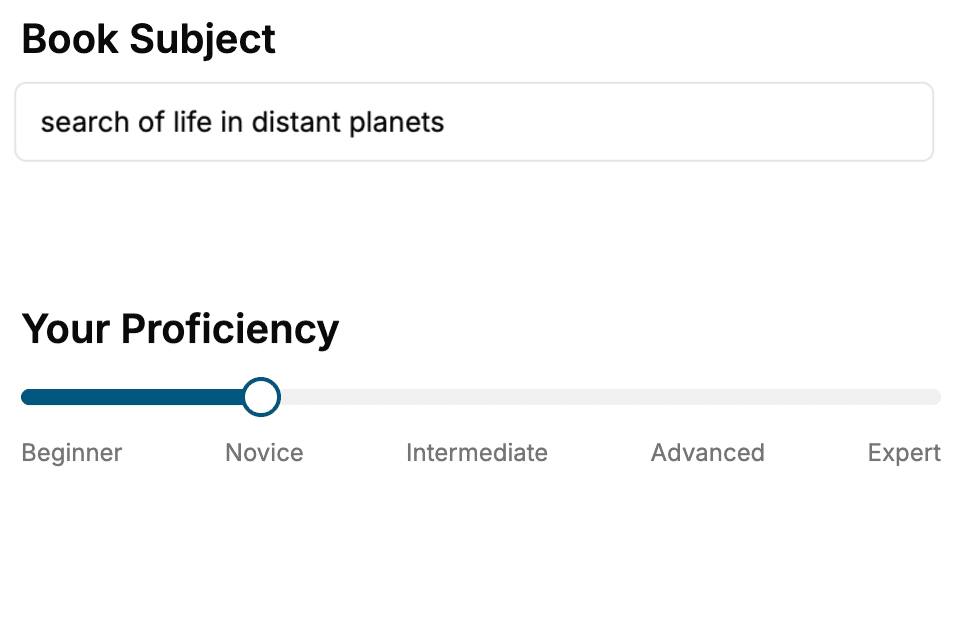
- 1. Select your focus
Select the focus of your Algebra book and share your background
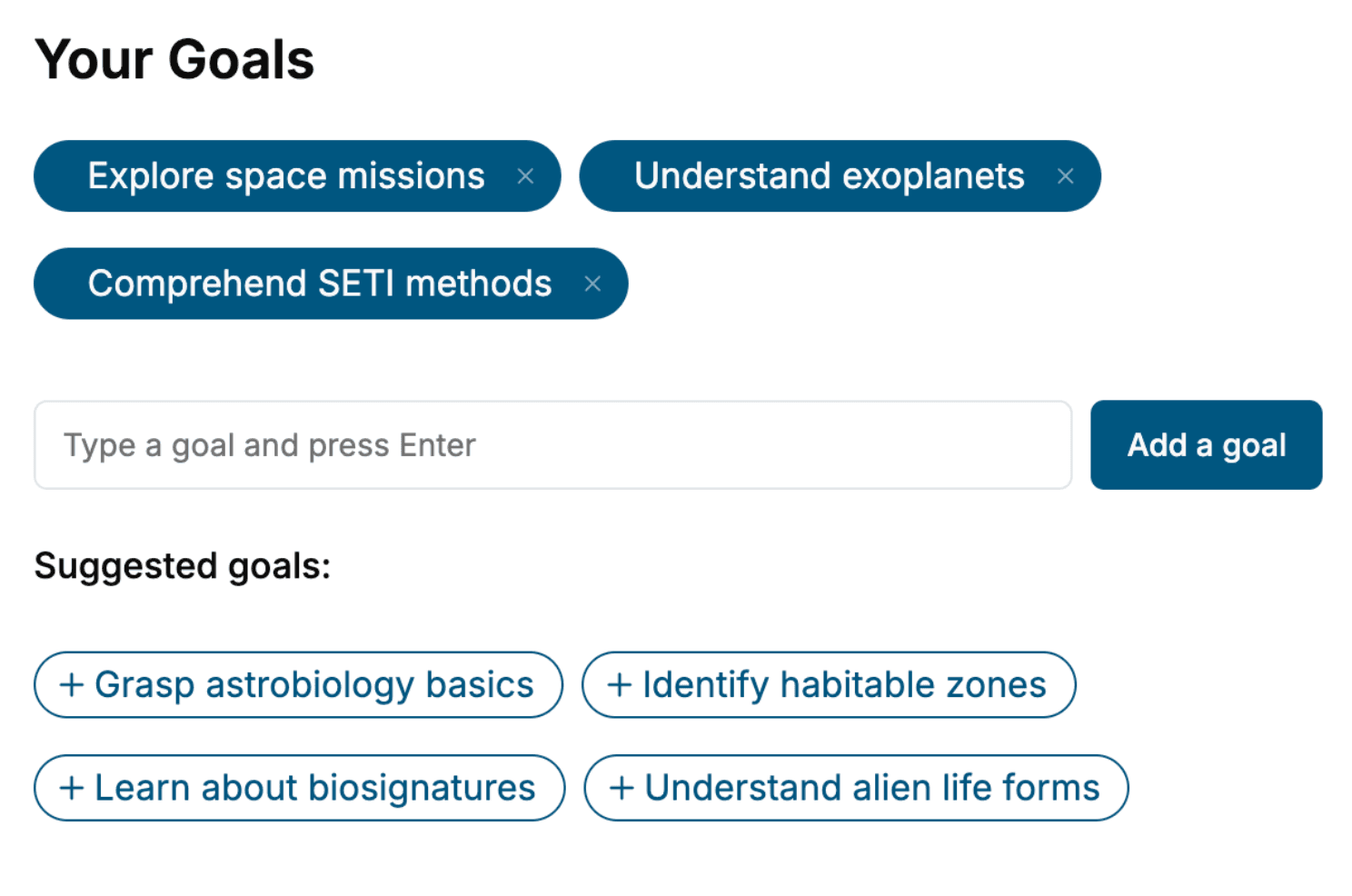
- 2. Personalize your book
Specify your goals and choose sub-topics to include
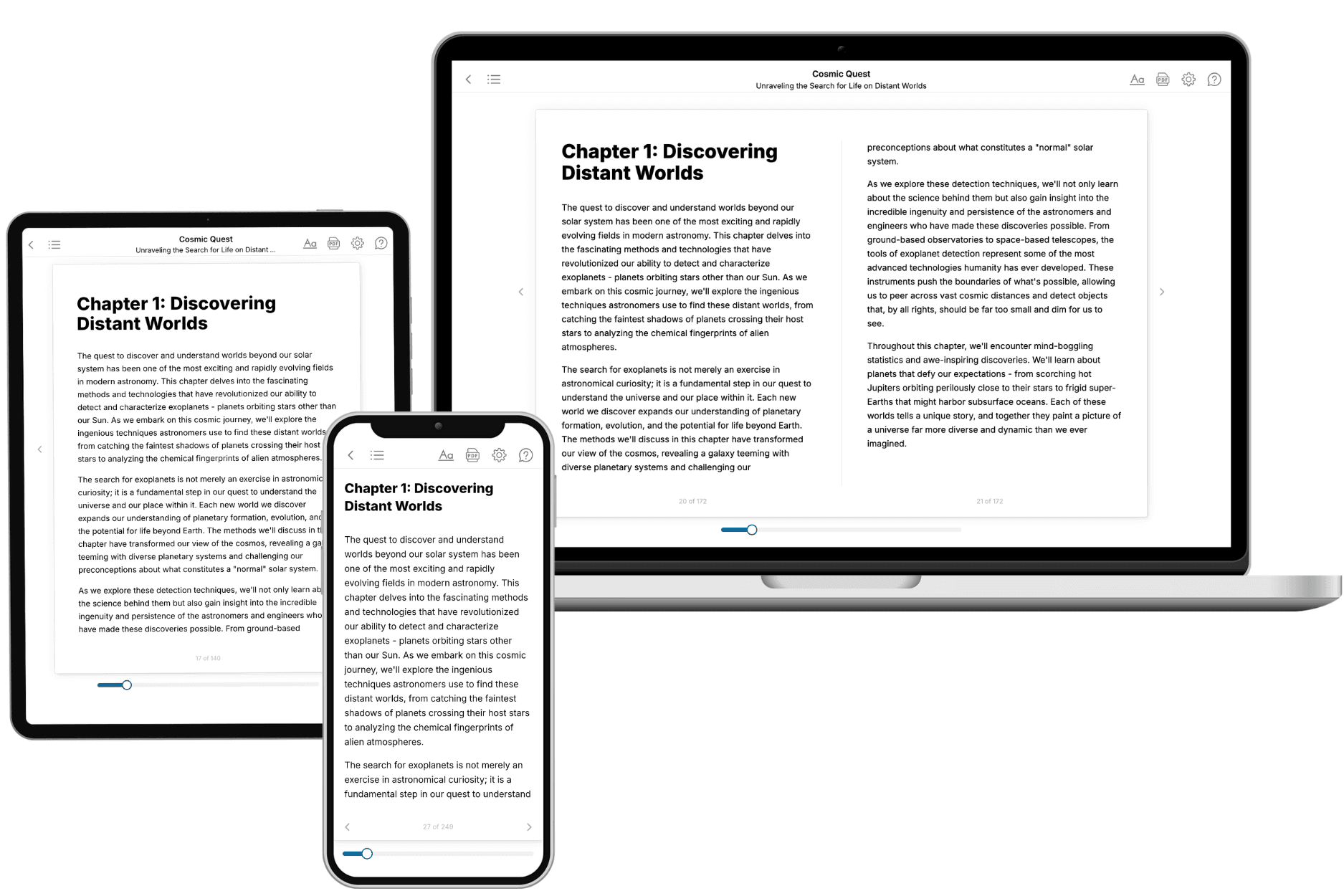
- 3. Get your tailored book
Your book is ready in 10 minutes. Read it online, download as EPUB or PDF, or send to Kindle.
Frequently asked questions
- What is TailoredRead?
TailoredRead creates complete, full-length nonfiction ebooks, written specifically for you. Tell us what you want to learn and why, and TailoredRead writes you a complete ebook on it, with charts, tables, and diagrams throughout. Read it online, on Kindle, or on any e-reader, or download it as a PDF or EPUB. Every book is written fresh the day you order it.
- How is the book tailored to me?
Before anything is written, you answer a few short questions about your goals, your background, and the topics you care about. Your book is then planned around your answers: written at your level, focused on your goals, and covering the topics you chose, instead of the one-size-fits-all book a store sells everyone.
- Will it read like generic AI content?
No. Your book isn't a chat transcript: it's planned chapter by chapter before a single word is written, told in a clear book voice, and explains ideas visually with charts, tables, and diagrams. After writing, every book goes through an editorial pass that polishes chapters so the book reads consistent from start to finish. Judge for yourself: browse thousands of sample books on our Explore Books page.
- How accurate is the content?
Our AI first checks whether your subject needs live research. Niche and fast-moving subjects are researched before writing, and the book plan and chapters are grounded in what it finds. After writing, every book goes through a quality pass that checks its facts and consistency, and researched books list their sources in a Notes section at the back.
- How long is the book?
You choose the length: Comprehensive (250-300 pages), Detailed (150-200 pages), Essential (70-100 pages), or Short (30-50 pages).
- Does the book include visuals?
Yes. Every book includes charts, tables, and diagrams: timelines, checklists, step-by-step guides, decision trees, comparison tables, matrices, and bar charts. A typical book includes dozens of these visual elements.
- Can I read it on Kindle? What formats can I download?
Yes. Every book can be read in our online reader or downloaded as a PDF or EPUB. The EPUB can be opened with Kindle, Apple Books, Kobo, and any e-reader. The Commercial and Author licenses also include an editable Word (DOCX) and Markdown download.
- How much does it cost?
About the price of a regular ebook. The exact price depends on your book's length and complexity, from $2 for the shortest books to $35 for the most comprehensive, and it's shown when you review your book, before you commit to anything. Each book is a one-time purchase, yours to keep, no subscription. Licenses that let you share, teach, or publish your book range from $35.99 to $49.99.
- Can I preview the book before purchasing?
Before you pay, you'll see what your book will cover: the title, a detailed description, the estimated length, and the complete chapter-by-chapter table of contents, so you know what you're getting before you decide. The full text itself is written after you purchase.
- How long does it take to create a book?
About 10 minutes. You can start reading the opening chapters while the rest is still being written.