About this book
This book begins with the journey most new sellers take: moving from a rough idea to a working store that can accept real orders. You will read it as a patient guide written for someone who is starting from the beginning. Its chapters follow a clear sequence, covering how an online store operates, how to research products and suppliers, how to choose a business name and domain, and how to select a platform and build your storefront one step at a time. You will also learn how to add products with strong descriptions and photographs, set up payment processing, write fair return policies, and understand where dropshipping fits. Later chapters explain how to create a business Facebook page, run advertising on Facebook and Instagram, use AI tools to support your growth, and track expenses and profit. The book closes with a final checklist and a launch plan, so you can open your store with a clear head and a steady process to follow after the first sale.
Table of contents
- IntroductionWhy Starting an Online Store Makes Sense, How to Use This Book Step by StepRead below
- Chapter 1: How an Online Store Actually WorksThe Parts of Every Online Store, Following a Customer from Visit to Delivery, Comparing Common Online Business Models
- Chapter 2: Researching Markets and Planning Your BusinessResearching Demand and Competitors, Writing a Lean Startup Plan, Estimating Startup Costs and Break-Even
- Chapter 3: Deciding What to Sell and Finding SuppliersChoosing Products with Real Demand, Finding and Vetting Wholesale Suppliers, Understanding How Dropshipping Works
- Chapter 4: Naming Your Business and Securing a DomainChoosing a Memorable Business Name, Purchasing and Protecting a Domain Name, Structure, EIN, Licenses, and Permits
- Chapter 5: Choosing a Platform and Building Your StoreComparing Ecommerce Platforms, Building Your Store Step by Step, Designing Clear Navigation and Pages
- Chapter 6: Adding Products, Descriptions, and PhotographsAdding Products and Organizing Categories, Writing Honest and Useful Descriptions, Taking Photographs That Build Trust
- Chapter 7: Payments, Shipping, and Return PoliciesSetting Up Secure Payment Processing, Shipping and Order Fulfillment Basics, Writing a Clear and Fair Return Policy
- Chapter 8: Marketing on Facebook and InstagramCreating Your Business Facebook Page, Running Advertising on Facebook and Instagram, Advertising Truthfully Under FTC Guidance
- Chapter 9: Using AI Tools and Tracking MoneyUsing AI Tools to Support Daily Work, Tracking Expenses, Income, and Profit, Keeping Records for Taxes and Compliance
- Chapter 10: Launching Your Store with ConfidenceRunning the Final Pre-Launch Checklist, Launching and Handling Your First Orders, Reviewing Results and Improving Operations
- ConclusionYour Next Steps as a Store Owner
- Further Reading and Resources
- Glossary
Introduction
A teenager with two hundred dollars in savings and a laptop can open a store that accepts credit cards from customers on the other side of the country by the end of the week. That is not a promise of easy money. It is simply a description of what the tools now allow. The hard part was never the technology. The hard part is knowing which steps come first, which ones can wait, and which ones will cost real money if skipped. This book exists to answer those questions in order, one decision at a time.
Most people who try to start a store online do not fail because the idea was bad. They fail because they bought a domain name before checking whether anyone wanted the product, or they picked a supplier before writing a single sentence of a plan, or they launched ads before the store could even process a payment. Each of those mistakes is avoidable. Each one shows up later in this book as a specific chapter with a specific fix, not as vague advice to do your research
and hope for the best.
The approach here is sequential on purpose. You will not be asked to build a storefront before understanding the value proposition you are offering a customer. You will not be asked to run a Facebook ad before the store behind that ad can actually fulfill an order. Skipping ahead feels productive in the moment, but it usually means redoing work later, after money has already been spent. Reading the chapters in order costs you a little patience now and saves you a lot of money later.
None of this requires a business degree, a wealthy relative, or a warehouse. It requires a willingness to follow a process, check facts against official sources instead of guesswork, and treat the first version of the store as a starting point rather than a finished product. The two sections ahead explain why now is a reasonable time to begin and exactly how to move through the rest of this book without getting lost or overwhelmed.
Why Starting an Online Store Makes Sense
Opening a physical shop used to require a lease, a build-out, insurance, and enough cash reserves to survive months before the first real sale. An online store flips that order. The upfront cost of a storefront is now measured in a monthly software fee rather than a security deposit on a commercial lease. That difference matters most to someone just starting out, because it means a bad first guess about a product does not sink the whole venture. You can test, adjust, and try again without having signed a five-year lease you cannot walk away from.
The barrier that remains is not money. It is knowledge. Someone with no experience can now access the same payment processors, the same shipping carriers, and the same advertising platforms that an established retailer uses. What that beginner usually lacks is a map of how all those pieces connect, and in what order to turn them on. A business structure chosen incorrectly, a return policy left vague, or a product description that overstates what an item does can each create problems that outlast the excitement of opening day. The map matters as much as the tools.
Consider two people who both decide, on the same afternoon, to sell the same kind of product. The first buys a domain, picks a platform, and starts listing items within a few hours, driven by enthusiasm. The second spends a week checking whether people actually search for that product, what competitors charge, and what it would cost to ship one unit before any customer ever sees a page. Six months later, the second person has a far better sense of what is working and why, because every choice was made against a baseline instead of a guess. Speed without a baseline is just a faster way to lose money.
This is why the chapter on demand validation and the lean startup plan comes so early in this book, well before anything about building a storefront. A plan does not need to be fifty pages long or written for a bank loan officer. It needs to answer a small number of honest questions: who is the customer, what will they pay, what will it cost to get the product to them, and how many units need to sell before the business breaks even. Those answers change how every later chapter gets applied to your specific situation.
The break-even point deserves particular attention here because it is the single most practical test available to a new seller. It is the number of sales required to cover every fixed and variable cost before a single dollar counts as profit. A product that sounds exciting but requires selling thousands of units a month to break even is a much harder business than a less exciting product that breaks even at a few dozen sales. Running that calculation before spending on inventory or ads turns a feeling into a number you can actually evaluate.
Government support for this kind of planning already exists and costs nothing to use. The U.S. Small Business Administration maintains guidance specifically aimed at people writing a business plan for the first time, and it gets updated periodically to reflect current practice.[1] Similar public resources exist for tax questions through the Internal Revenue Service and for advertising rules through the Federal Trade Commission, both of which show up again in later chapters. None of these require a lawyer or an accountant to access, only the discipline to check the primary source instead of relying on secondhand advice from a forum post.
It also helps to be honest about what starting an online store will not do. It will not generate income overnight, it will not run itself without attention, and it will not forgive a product nobody wants simply because the website looks polished. Treating the first few months as a test phase, rather than a guaranteed launch into profit, keeps expectations realistic. A store that loses money in its first month while you learn what customers actually respond to is not a failure. A store that loses money every month for a year with no change in approach usually is.
The reason this moment specifically makes sense has less to do with any single technology breakthrough and more to do with how many of the hard parts have already been solved by someone else. Payment processing, order tracking, inventory syncing, and customer messaging used to each require custom software. Today they come bundled into a single monthly subscription on most ecommerce platforms. That means the energy a beginner has available can go toward the parts that actually require judgment: choosing the right product, writing honest descriptions, and building trust with strangers who have never bought from you before.
There is also a practical argument for starting small and local in ambition even though the store itself is global in reach. A store selling to a narrow, well-defined group of customers with a specific need tends to outperform a store trying to be everything to everyone. This is sometimes described as a niche, though the term matters less than the underlying logic: a smaller, clearer promise to a smaller, clearer audience is easier to deliver on, easier to advertise honestly, and easier to measure. The later chapter on choosing products with real demand returns to this point with specific methods for testing whether a niche is viable before committing money to it.
None of this means the process is risk-free. Inventory can sit unsold, advertising spend can disappear without producing a single sale, and a supplier can turn out to be unreliable after the first order arrives late or damaged. The chapters ahead on vetting wholesale suppliers and understanding dropshipping address these risks directly, with specific questions to ask before money changes hands. The goal is not to eliminate risk entirely, which is not possible in any business, but to replace guesswork with a checklist wherever a checklist can help.
One advantage specific to this moment is the availability of AI tools for tasks that used to require hiring help or spending hours on repetitive work. Drafting a first version of a product description, organizing a spreadsheet of expenses, or answering a routine customer question can now happen faster with the right prompt and a review step, rather than from a blank page every time. That chapter later in the book treats these tools as assistants that still require a human check, not as a replacement for understanding your own business. Used carelessly, they can also introduce errors into a storefront just as easily as they save time.
It is also worth recognizing that starting an online store is one of the few business paths where the cost of a mistake made early is usually recoverable. A wrong product choice can be corrected by changing the catalog. A wrong price can be adjusted the same day. A poorly written description can be rewritten in minutes. Compare that to a physical retail lease signed for a location that turns out to have no foot traffic, which can take years and significant money to exit. The flexibility of an online store is not a reason to skip planning, but it is a reason the planning pays off quickly once it is done.
A realistic timeline helps set expectations before moving further. Market research and a lean plan might take one to two weeks of evenings and weekends for someone working another job. Choosing a name, securing a domain, and completing legal setup might take another week, much of it spent waiting on confirmations rather than active work. Building the store and adding the first batch of products, with careful descriptions and photographs, is usually the longest stretch, and rushing it tends to show up later as returns and customer complaints. None of these estimates are fixed, but they are a far more honest picture than the idea of a store appearing overnight.
The order of operations in this book reflects a simple principle: spend money only after the step that comes before it has been reasonably validated. Do not buy a domain before you have tested whether the product category has demand. Do not pay for a supplier's minimum order before you have calculated whether the margin supports your shipping costs. Do not run paid advertising before the store can accept a payment and ship an order reliably. Each later chapter builds on the assumption that the chapter before it has actually been completed, not skimmed.
Legal and tax obligations deserve early mention here precisely because they depend entirely on your specific activity and location, something no book can determine for you in advance. A sole proprietor selling handmade goods from one state faces different registration requirements than someone forming a limited liability company to sell wholesale electronics across the country. The chapter on business structure, an EIN, and licenses explains the general categories and points to where to verify the specific requirements that apply to you, through official state and federal sources rather than secondhand summaries.
Consumer protection rules are another area where the general shape is consistent even though specific requirements can vary. The FTC Endorsement Guides, which govern how businesses must disclose paid promotions and truthful claims, were revised in recent years to keep pace with how advertising actually happens on social platforms.[2] That update is covered in full when this book reaches advertising on Facebook and Instagram, but it is worth knowing from the start that truthful marketing is not just good ethics. It is a legal requirement with real consequences for ignoring it.
Record keeping is the least glamorous part of running a store and the part most often neglected by beginners, which is exactly why it gets its own dedicated chapter later. The IRS publishes specific guidance on what records a small business needs to retain and for how long, through resources such as IRS Publication 583, which was revised at the end of 2024 to reflect current filing practice.[3] Treating this as a habit from the first sale, rather than a scramble before tax season, saves an enormous amount of stress later.
Taken together, the case for starting now is not that the market is uniquely favorable this year over any other, since that claim cannot be verified and would not hold up anyway. The case is that the tools required to run an online store responsibly, from payment processing to record keeping to advertising guidance, are more accessible and better documented than they have ever been for a first-time business owner. What remains is the discipline to use them in the right order, which is exactly what the rest of this book provides.
The section that follows explains how to actually move through that order, chapter by chapter, so that the work you put into reading translates directly into the work you put into building.
How to Use This Book Step by Step
This book is organized so that each chapter assumes the one before it has already been done, not just read. That distinction matters more than it might seem. Reading the chapter on choosing products with real demand without actually running the demand checks it describes means arriving at the supplier chapter with no real basis for choosing a product. The value of a step-by-step book comes from treating each chapter as a set of tasks, not a set of facts to absorb passively.
A useful way to work through this material is to keep a single running document, whether a notebook or a simple spreadsheet, that collects the decisions made at each stage. That document should hold your draft value proposition, your break-even calculation, your shortlisted business names, your chosen platform, and eventually your pre-launch checklist. By the time you reach the final chapter on launching with confidence, this document becomes the actual plan you follow on launch day, built piece by piece rather than written all at once under pressure.
The first chapter, covering how an online store actually works, exists to build a shared vocabulary before any decisions get made. It explains the parts of every store, from the storefront a customer sees to the fulfillment process they never see, and it compares common business models including wholesale and dropshipping. Skipping this chapter because it feels like background information is a common mistake. The vocabulary introduced there, such as fulfillment and product listing, gets used without re-explanation in every chapter afterward.
The second chapter moves into research and planning, and it is the chapter most likely to feel like it is slowing you down when it is actually speeding you up. The temptation at this stage is to skip ahead to something that feels more like real
business building, such as picking a name or a platform. Resist that temptation. The lean plan and break-even analysis built here are the foundation that every later financial decision rests on, including how much inventory to order and how much you can afford to spend on advertising.
The third chapter addresses what to sell and who to buy it from, two decisions that are more connected than they first appear. A product that looks promising on paper can become unworkable once you discover the minimum order quantity a wholesale supplier requires, or the shipping delay built into a dropshipping arrangement. Work through this chapter with actual supplier conversations, not just browsing websites, because the real terms of a deal often only surface once you ask direct questions about minimum orders, lead times, and return handling.
The fourth chapter, on naming the business and securing a domain, often gets more emotional weight than it deserves. A name does not need to be perfect, only clear, available, and free of obvious conflicts with existing trademarks. This chapter also covers the legal setup, including business structure, an EIN, and any licenses or permits, which depend entirely on your location and activity. Treat the guidance here as a starting checklist of questions to verify with official sources, not as a substitute for checking your specific state and local requirements.
The fifth and sixth chapters move into the actual construction of the store, first choosing an ecommerce platform and building the basic structure, then populating it with products, descriptions, and photographs. This is usually the most time-consuming stretch of the whole process, and it is tempting to rush the product descriptions in particular, since writing them well takes real effort. Resist that urge. A rushed description is the single most common cause of returns later, because customers buy based on what the page promised rather than what the product actually delivers.
The seventh chapter covers payments, shipping, and return policies, three operational pieces that must all work correctly before the store can safely accept its first order. A store with excellent products and marketing but an unclear return policy, or a payment gateway that has not been properly tested, can lose a customer's trust in a single transaction. Treat this chapter as a testing phase: place a test order yourself if your platform allows it, and walk through the return process as if you were the customer, before any real money moves through the system.
The eighth chapter turns outward, toward marketing through a Facebook Business Page and paid advertising on Facebook and Instagram. This is also where the FTC Endorsement Guides return in more detail, covering what truthful advertising actually requires when working with any kind of promotion or endorsement. A common beginner error here is to launch ads before the store itself has been tested end to end, which means paying to send traffic to a store that is not yet ready to convert that traffic into a sale.
The ninth chapter addresses two topics that might seem unrelated at first glance: using AI tools day to day, and tracking expenses, income, and taxes. They belong together because both are about making the ongoing operation of the business more manageable once the initial launch work is done. The profit and loss tracking introduced here should start from the very first sale, not from some later point once the business feels established. Waiting to start tracking makes the eventual catch-up work far harder than keeping pace from day one.
The tenth and final numbered chapter brings everything together into a pre-launch checklist, a plan for launch day itself, and a structured way to review results afterward. This chapter works best when treated literally, as a checklist to run through item by item rather than a general sense of readiness. A store that feels ready but has not been checked against a specific list is far more likely to launch with a broken link, a missing tax setting, or an unanswered question about shipping than one that has been checked systematically.
Throughout the book, certain terms are used consistently so that cross-referencing earlier material stays simple. Terms such as value proposition, demand validation, and pre-launch checklist mean the same thing wherever they appear, and later chapters will point back to the chapter that first explained a concept rather than re-explaining it from scratch. If a term feels unfamiliar partway through, the glossary at the end of the book is built specifically to be a quick reference without needing to reread an entire earlier chapter.
It helps to think of this book less like a novel to finish and more like a workbook to work through at your own pace, even if that pace is slower than a single weekend. Some readers will complete the research and planning chapters in a few evenings. Others will need several weeks, particularly if supplier conversations or legal verification take time to resolve. Neither pace is wrong. What matters is that each stage is genuinely completed, with real decisions made and recorded, before moving to the next one.
There will be moments where a step depends on information specific to your location or your product category that this book cannot provide in full, such as the exact license required in your city or the specific tax treatment of your state. In those cases, the book points you toward the correct type of official source, whether that is a state government website, the Small Business Administration, or the IRS, rather than guessing at an answer that might not apply to your situation. Verifying these details yourself is not extra work the book is pushing onto you unfairly. It is the only way to get an answer that is actually correct for your specific case.
A practical habit worth adopting from the start is reviewing the key messages at the start of this introduction again once you reach the later chapters that expand on them. Each key message is a compressed version of an argument that gets fully developed later, and rereading them after finishing a relevant chapter is a quick way to check whether the main point actually landed. If a key message still feels unclear after finishing its chapter, that is a sign to slow down and revisit the worked examples in that chapter rather than pushing forward.
Expect to make adjustments as you go. The product you start researching in the market research chapter may not be the product you end up launching, once supplier conversations or break-even math rule it out. That is not a failure of the process. It is the process working as intended, catching a weak idea before money has been spent on it rather than after. Treat early chapters as a space for testing and discarding ideas freely, since the cost of changing your mind on paper is close to zero.
Budget your time realistically against your own circumstances, whether you are working through this book alongside a full-time job, school, or other responsibilities. There is no fixed deadline attached to opening a store, and a rushed launch built on skipped research tends to cost more time in the long run through returns, refunds, and advertising spent on the wrong audience. A slower, more deliberate path through these chapters is not a sign of hesitation. It is the more reliable route to a store that can actually sustain itself past the first few sales.
Keep in mind that nothing in this book guarantees a particular outcome, income level, or timeline, because no book honestly can. What it offers instead is a consistent process: research before spending, test before scaling, and track everything along the way so that decisions are based on actual numbers rather than optimism. Every chapter that follows adds one more piece to that process, building toward the moment you open the store to real customers with a plan already in place for what happens next.
The next chapter begins that process in earnest, by breaking down exactly how an online store works as a connected system, so that every later chapter has something solid to build on.
Notes
Introduction
- 1. U.S. Small Business Administration, "Write Your Business Plan," U.S. Small Business Administration, 2025
- 2. Federal Trade Commission, "FTC's Endorsement Guides," Federal Trade Commission, 2023
- 3. Internal Revenue Service, "Publication 583, Starting a Business and Keeping Records," Internal Revenue Service, 2024
This is the end of the free sample. The full book has 10 chapters.
Want this book written for you?
Tell us your goals and background, and get your own version of this book, tailored by AI to you.


Benefits of AI-tailored books
- Read one book, not ten:
- all the knowledge you need, gathered into a single book.
- Save days of learning:
- tell us your goals, choose your topics, and the whole book is built around them.
- Learn effortlessly:
- a book written for your specific background and expertise.
- Understand at a glance:
- includes charts, tables, timelines, checklists, decision trees, and more.
- Stay current:
- written the day you order it, not years ago.
- Trust what you read:
- every book is checked for accuracy, with real research when your subject needs it.
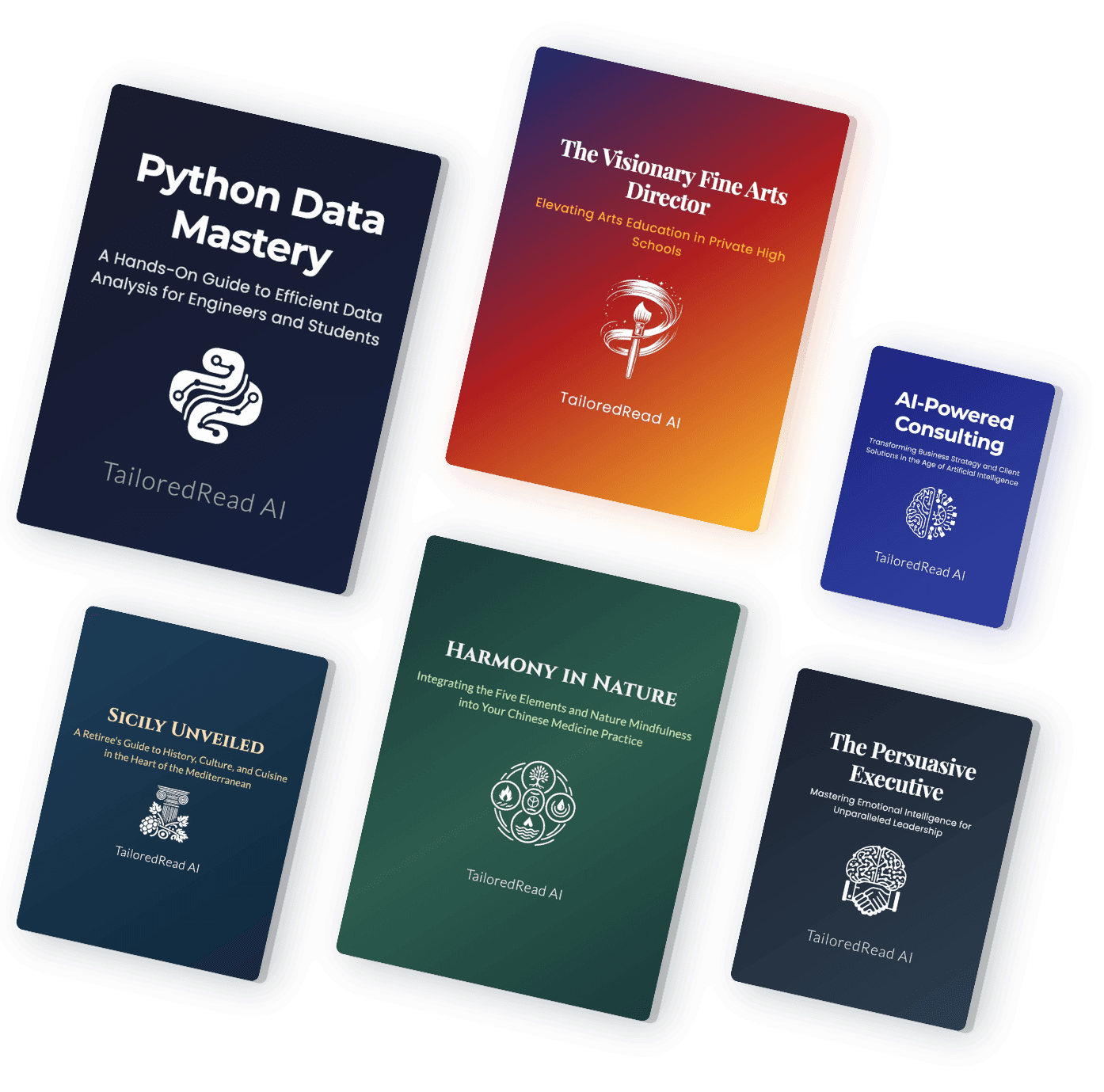
Create your unique book in 3 steps
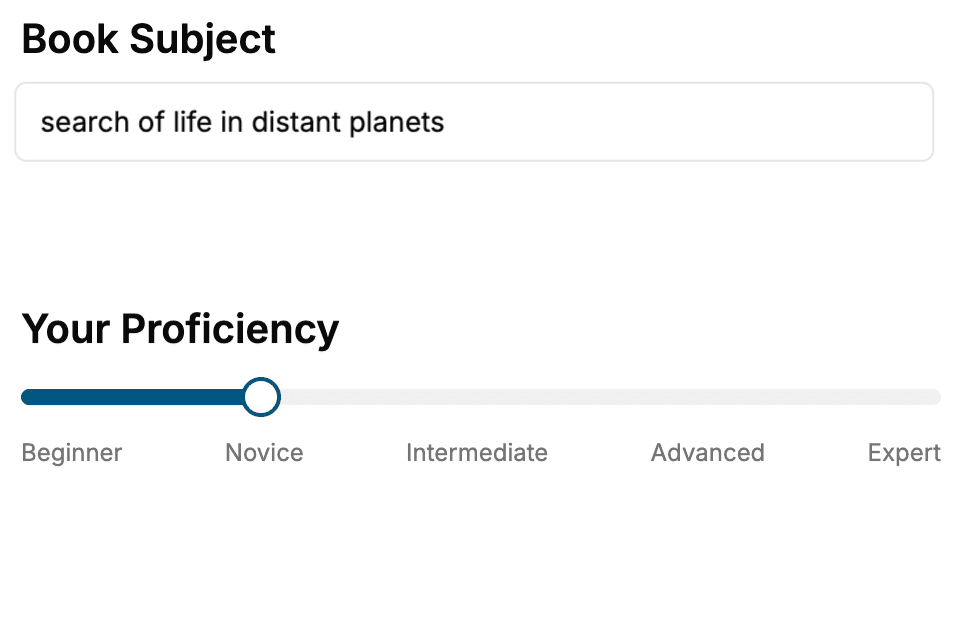
- 1. Pick a subject
Select what you want to learn and share your background
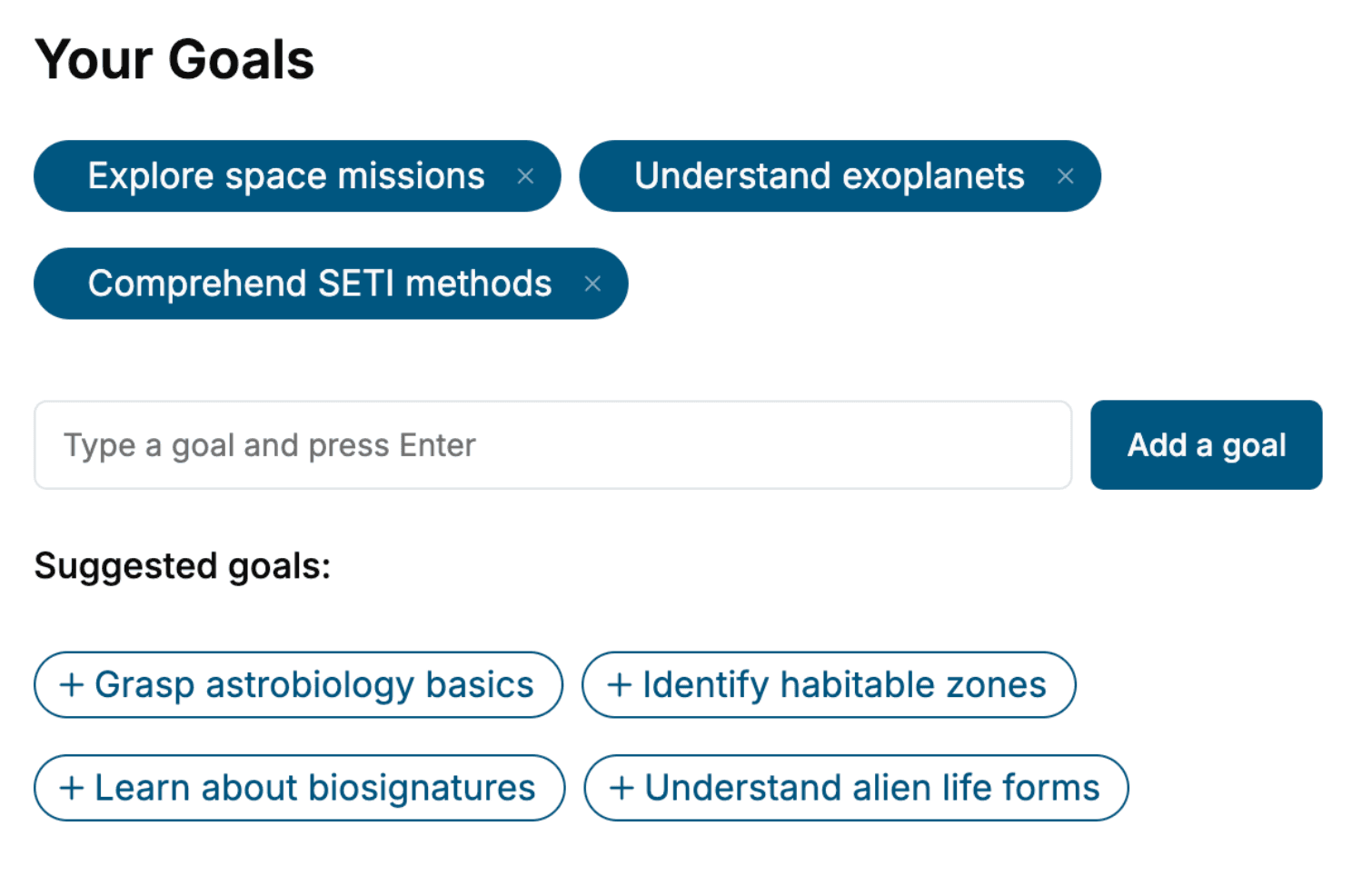
- 2. Personalize your book
Specify your goals and choose sub-topics to include
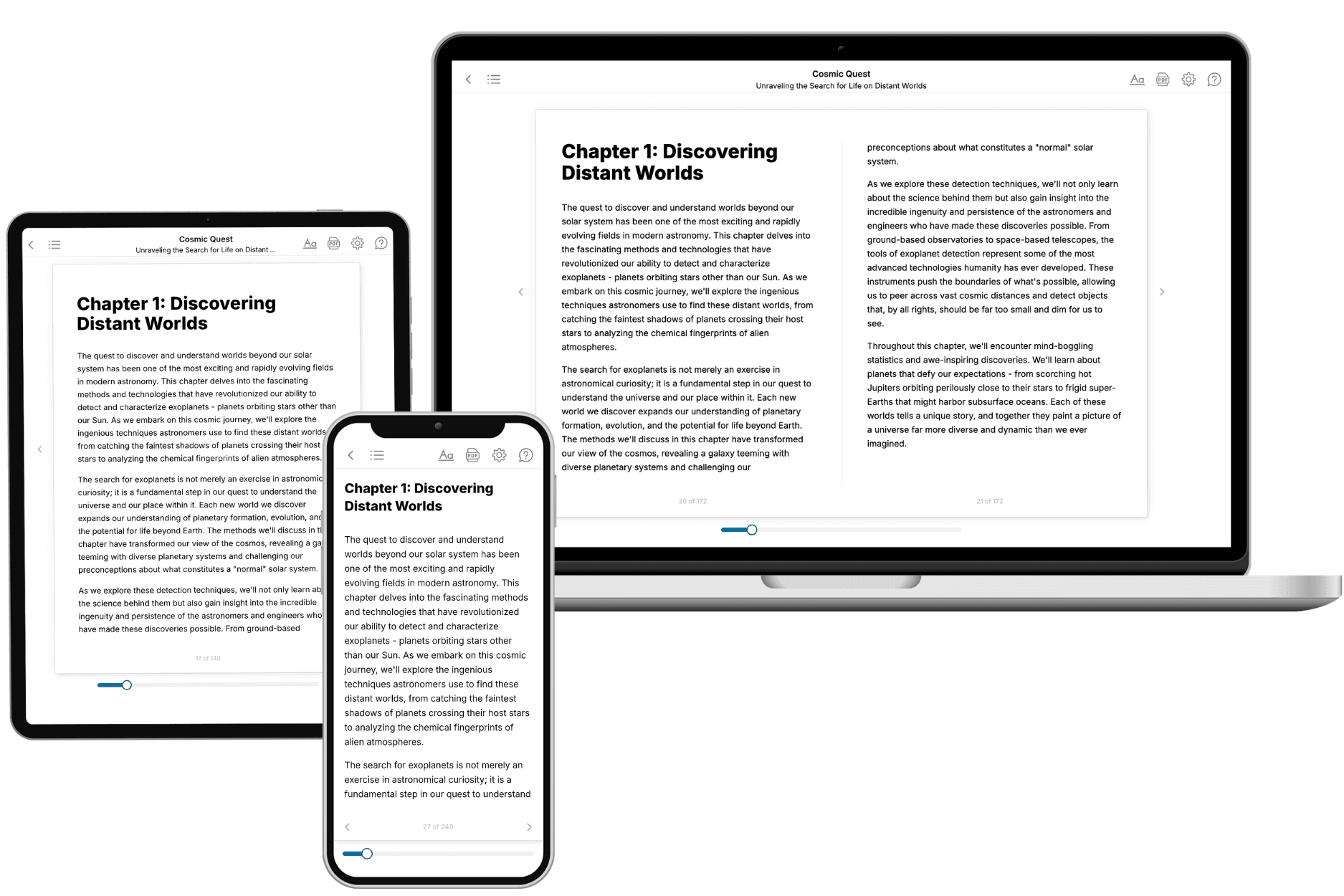
- 3. Get your tailored book
Your book is ready in 10 minutes. Read it online, download as EPUB or PDF, or send to Kindle.
Frequently asked questions
- What is TailoredRead?
TailoredRead creates complete, full-length nonfiction ebooks, written specifically for you. Tell us what you want to learn and why, and TailoredRead writes you a complete ebook on it, with charts, tables, and diagrams throughout. Read it online, on Kindle, or on any e-reader, or download it as a PDF or EPUB. Every book is written fresh the day you order it.
- How is the book tailored to me?
Before anything is written, you answer a few short questions about your goals, your background, and the topics you care about. Your book is then planned around your answers: written at your level, focused on your goals, and covering the topics you chose, instead of the one-size-fits-all book a store sells everyone.
- Will it read like generic AI content?
No. Your book isn't a chat transcript: it's planned chapter by chapter before a single word is written, told in a clear book voice, and explains ideas visually with charts, tables, and diagrams. After writing, every book goes through an editorial pass that polishes chapters so the book reads consistent from start to finish. Judge for yourself: browse thousands of sample books on our Explore Books page.
- How accurate is the content?
Our AI first checks whether your subject needs live research. Niche and fast-moving subjects are researched before writing, and the book plan and chapters are grounded in what it finds. After writing, every book goes through a quality pass that checks its facts and consistency, and researched books list their sources in a Notes section at the back.
- How long is the book?
You choose the length: Comprehensive (250-300 pages), Detailed (150-200 pages), Essential (70-100 pages), or Short (30-50 pages).
- Does the book include visuals?
Yes. Every book includes visual elements such as timelines, checklists, step-by-step guides, decision trees, comparison tables, and matrices, and many include bar charts. A typical book includes dozens of these visual elements.
- Can I read it on Kindle? What formats can I download?
Yes. Every book can be read in our online reader or downloaded as a PDF or EPUB. The EPUB can be opened with Kindle, Apple Books, Kobo, and any e-reader. The Commercial and Author licenses also include an editable Word (DOCX) and Markdown download.
- How much does it cost?
About the price of a regular ebook. The exact price depends on your book's length and complexity, from $2 for the shortest books to $35 for the most comprehensive, and it's shown when you review your book, before you commit to anything. Each book is a one-time purchase, yours to keep, no subscription. Licenses that let you share, teach, or publish your book range from $35.99 to $49.99.
- Can I preview the book before purchasing?
Before you pay, you'll see what your book will cover: the title, a detailed description, the estimated length, and the complete chapter-by-chapter table of contents, so you know what you're getting before you decide. The full text itself is written after you purchase.
- How long does it take to create a book?
10 minutes. You can start reading the opening chapters while the rest is still being written.