About this book
It needs a clear idea, honest numbers, and a sequence of practical steps you can follow. This book walks you through every stage, from identifying a business that fits your skills and interests to launching it for less than five hundred dollars. You will learn how to test whether an idea can make a profit, write a simple business plan you can actually use, choose between a sole proprietorship, LLC, partnership or corporation, and register with your state and local authorities. You will get a free EIN directly from the IRS, open a business bank account, set up basic bookkeeping, understand the tax and insurance obligations that apply to you, and build a professional identity with a logo, domain name and affordable website. Pricing, invoicing, marketing on social media, and finding your first ten customers are covered in plain language. Along the way you will find checklists, budget worksheets, sample plans and a 30-day launch schedule you can use right away. Written for readers who are learning as they go, this book gives you the confidence to start, operate and grow a small business that works.
Table of contents
- IntroductionWhy Starting Small Works Better, How to Use This BookRead below
- Chapter 1: Choosing and Testing Your Business IdeaMatching Skills, Interests and Budget, Low-Cost Business Opportunities Worth Considering, Researching Customers and Competitors, Checking Whether an Idea Can Make Money
- Chapter 2: Planning, Funding and Legal SetupWriting a Simple Business Plan, Startup Costs, Funding and Avoiding Debt Traps, Choosing Between Sole Proprietorships, LLCs and Corporations
- Chapter 3: Registering, Banking and Managing MoneyRegistering Your Business, EIN and Licenses, Banking, Bookkeeping, Insurance and Business Taxes
- Chapter 4: Building Your Brand, Pricing and Winning CustomersBuilding a Professional Brand and Website on a Budget, Pricing, Invoicing and Finding Your First Ten Customers, Your Step-by-Step 30-Day Launch Plan
- Conclusion
Introduction
A woman named Carla spent eleven years as a hotel housekeeper before she started cleaning three Airbnb units on weekends for extra cash. She charged forty dollars a unit, used her own supplies, and told no one it was a business.
Eight months later she had twelve regular clients, a simple spreadsheet, and more income from cleaning than from her full-time job. She never wrote a formal plan, never took a loan, and never rented an office. What she did was start with the tools she already had and let paying customers tell her whether the idea worked. That is the model this book follows, and it works for far more than cleaning.
Most guidance aimed at new entrepreneurs assumes resources that a typical reader does not have: tens of thousands of dollars in savings, a business degree, or a network of investors willing to write checks. That assumption shuts out exactly the people most likely to benefit from running their own business, including people supporting a family on an hourly wage, people between jobs, and people with a skill nobody taught them to monetize. This book starts from a different assumption. It assumes a few hundred dollars, a high school education, self-taught skills, and a willingness to follow a sequence of steps in order.
The sequence matters as much as the information. A reader who skips from an exciting idea straight to a website and business cards, without first checking whether the numbers add up, often spends money before discovering the idea cannot turn a profit. A reader who researches for a year without ever registering anything or talking to a potential customer never finds out either. Both patterns are common, and both are avoidable. The chapters ahead move in a specific order: choose and test an idea, plan and fund it modestly, complete the legal and financial setup, then build a brand and go find paying customers within thirty days.
None of this requires guessing. Every stage includes simple math, checklists, and worksheets designed so a reader with no bookkeeping background can still make an informed decision. Checking profit potential, for example, is covered in detail later using nothing more than multiplication and subtraction. Choosing a legal structure, covered in a later chapter, is explained as a trade-off between paperwork, liability, and taxes rather than as a mystery requiring a lawyer. The goal throughout is confidence built on understanding, not confidence borrowed from someone else's success story.
By the end of this book, the plan is not to hand over a theory of entrepreneurship. It is to hand over a business that is registered, banked, priced, and in front of its first ten customers.
Why Starting Small Works Better
Small businesses that survive their first five years tend to share one trait: they started with modest costs and modest expectations, then grew as evidence of demand appeared. Businesses that fail early often share the opposite trait. Their owners invested heavily before confirming that customers would actually pay. The U.S. Small Business Administration has tracked business survival for decades and consistently finds that roughly half of new businesses close within five years, with undercapitalization and poor cash management cited among the leading causes[1]. Starting small is not a consolation prize. It is a risk-management strategy.
Consider two people who both want to sell handmade candles. The first takes out a five-thousand-dollar personal loan, rents a small retail space, orders bulk inventory in a dozen scents, and prints glossy packaging before selling a single candle. The second buys fifty dollars of wax and wicks, makes twenty candles in three scents, and sells them at a neighborhood market over two weekends. The second person learns within a month which scents sell, what price customers accept, and whether they enjoy the work at all. The first person learns the same things, but only after the loan payment is already due.
Small starts also protect something harder to replace than money: motivation. A failed thousand-dollar experiment stings but rarely ends a person's willingness to try again. A failed twenty-thousand-dollar experiment, especially one financed with debt, can take years to recover from financially and emotionally. Keeping the first version of a business cheap means the downside of being wrong is a bad weekend, not a bad decade. That asymmetry, small possible loss against meaningful possible gain, is the same logic investors use when they diversify a portfolio instead of betting everything on one stock.
Starting small also forces a kind of discipline that bigger budgets hide. When there is no money for a logo designer, the owner learns to make one in a free tool. When there is no money for paid ads, the owner learns to ask neighbors and coworkers directly for business. Those low-cost skills, direct outreach, careful pricing, personal relationships with early customers, tend to be the same skills that keep a business alive once it grows. A business that learns to win its first customer through a cold conversation on a doorstep usually has an owner who can win the hundredth customer too.
None of this means a business should stay small forever, or that bigger investment is never appropriate. It means the order of operations matters. Proving that an idea works, on a small scale, with real paying customers, should come before committing serious money. A food truck owner who first sold tacos from a folding table at a flea market for two months, then used that track record and saved cash to buy a used truck, is in a far stronger position than one who bought the truck first and hoped customers would show up. The lesson is sequencing, not permanent frugality.
The checklist below summarizes the core reasons a small, tested start beats a large, untested one, and it is worth returning to whenever a bigger expense starts to feel tempting before any customer has paid.
Signs a Small Start Is the Right Move
- You have not yet sold to a single paying stranger, only friends or family
- The idea has not been tested with real customers for at least a few weeks
- Covering the cost would require a loan, a credit card balance, or dipping into emergency savings
- You are unsure which price, product variation, or customer type performs best
- You could run a scaled-down version for under five hundred dollars
Startup costs are explored in full detail in a later chapter, including how to build a realistic budget and avoid debt traps. The principle introduced here is simpler and more immediate: treat the first version of any business as an experiment, not a launch. An experiment is allowed to be small, imperfect, and temporary. Thinking of it that way removes much of the pressure that stops people from starting at all, because an experiment that teaches something valuable has succeeded even if it does not immediately generate a profit.
There is also a practical financial argument for starting small that goes beyond psychology. Every dollar spent before the first sale is a dollar that must be earned back before the business is actually profitable. A business that spends two hundred dollars to get started needs to recover only two hundred dollars before every additional sale is pure profit. A business that spends ten thousand dollars needs fifty times that in revenue just to break even, and every month spent reaching that point is a month of risk. Lower startup costs mean a shorter, less stressful road to the point where the business supports itself.
Low startup costs also change what counts as success in the first few months. A business that spent two hundred dollars can call itself a success after making four hundred dollars in sales, a realistic target for many side businesses within a few weeks. A business that spent ten thousand dollars needs a far larger and slower-arriving milestone before anyone, including the owner, would call it profitable. Early wins matter because they build the confidence and cash flow needed to keep going, and small starts make early wins achievable.
Starting small is also compatible with keeping a full-time job or other income during the testing phase, which removes the pressure to succeed immediately that causes many owners to panic and make poor decisions. Carla kept her housekeeping job for the entire eight months described earlier. She was not betting her family's rent on the cleaning business succeeding by a certain date. That safety net let her raise prices when demand was strong, turn away a difficult client without financial fear, and generally make decisions based on what was good for the business rather than what was necessary for survival that week.
A frequent objection to starting small is that it looks unprofessional, that customers expect a polished website, a registered company name, and a slick logo from day one. In practice, most early customers care far more about reliability, price, and whether the work gets done well than about polish. A landscaper who shows up on time with a borrowed truck and does excellent work wins repeat business faster than one with a branded van who shows up late. Professional polish can and should be added once revenue supports it, a sequence covered in the chapter on building a brand and website on a budget.
Small starts also make it easier to pivot. An idea tested on a small scale can change direction in a week. A bakery that planned to sell wedding cakes but discovers through its first few orders that customers actually want everyday birthday cakes can simply adjust its offerings and signage. A business that has already signed a long commercial lease built around wedding cake display cases has a much harder, costlier pivot ahead of it. Flexibility is cheapest to buy early, before money is locked into fixed costs.
The table below compares the two approaches directly, across the factors that matter most to someone deciding how to begin.
| Factor | Small, Tested Start | Large, Upfront Start |
|---|---|---|
| Typical initial spend | Under $500 | $5,000 or more |
| Risk if the idea fails | A few hundred dollars and some time | Debt, savings loss, possible years to recover |
| Speed to first customer feedback | Days to a few weeks | Often months, after setup is complete |
| Ability to change direction | Easy, little sunk cost | Hard, locked into leases or inventory |
| Pressure to generate immediate income | Low, if other income continues | High, loan or lease payments begin right away |
It is also worth noting that starting small does not mean thinking small about where the business could eventually go. Many well-known companies, including ones that now employ thousands of people, began with a founder testing a product on a tiny scale before any outside funding appeared. The point of starting small is sequencing a safe, informative first step, not capping future ambition. A reader with a genuinely large vision loses nothing by proving the core idea cheaply first and everything by skipping that proof.
One useful mental exercise before committing money to any idea is to imagine the smallest possible version of it that could still produce one real sale to a real stranger. For a photography business, that might mean offering a single discounted portrait session to a neighbor rather than buying new lenses and renting a studio. For a consulting business, it might mean offering one hour of paid advice to a former coworker rather than building a full website first. Naming that smallest version makes the next step concrete instead of overwhelming.
This smallest-version exercise also reveals which costs are genuinely necessary and which were assumed necessary out of habit or comparison to competitors. A new photographer might assume a five-hundred-dollar lens is required, only to discover their phone camera produces results a first paying client is perfectly happy with. Spending can always increase once a client relationship and revenue justify it. Spending that happens before any client exists is spending based on guesswork rather than evidence, and guesswork is an expensive way to make decisions.
Finally, starting small builds a track record that makes every later step easier. A business with three months of real sales, even modest ones, has something to show a bank when opening a business account, something to describe in a simple business plan, and something to point to when asking a friend for a referral. A business that exists only as an idea has none of that. The small start is not a detour on the way to a real business. It is how a real business begins.
The subchapters and chapters that follow build directly on this foundation. Matching a business idea to the reader's actual skills and budget, covered in the next chapter, only works if the goal is a small, testable first version rather than an ambitious final form. Checking profit potential with simple math depends on real numbers from a small test, not estimates from a business that has never sold anything. Every later recommendation, from legal structure to pricing to the thirty-day launch plan, assumes the reader is building something modest first and expanding only once it proves itself.
With that principle in place, the practical question becomes how to use this book most effectively, since a sequence of steps only helps if followed in the right order and at the right pace.
How to Use This Book
This book is built to be used in order, not sampled at random, because each chapter depends on decisions made in the one before it. The choice of business idea, covered first, determines what kind of business plan makes sense. The business plan and legal structure, covered next, determine how registration and banking should be handled. Registration and banking determine how pricing and invoicing get set up correctly. Skipping ahead to pricing before confirming the idea has real profit potential risks building a beautiful price list for a business that cannot survive. Reading in sequence avoids that trap.
That said, the book is also designed so each chapter stands on its own once its prerequisites are met. Someone who already has a tested idea and just needs help with the legal structure or banking can jump directly to those chapters without rereading earlier material, because canonical terms and concepts are explained the first time they appear and used consistently afterward. A reader returning to the pricing chapter months after launch, for example, does not need to reread the chapter on choosing an idea to make sense of it.
Each chapter follows a similar internal pattern: it introduces a concept in plain language, works through a specific example using realistic numbers or situations, and then provides a tool, a checklist, a worksheet, a comparison table, or a short list of steps, that turns the concept into something actionable. The intent is that no chapter leaves a reader only understanding an idea intellectually. Each one should leave the reader able to do something specific afterward: fill out a worksheet, make a phone call, file a form, or write a price list.
A note on pacing: this book is not meant to be read and fully implemented in a single sitting. Some steps, like waiting for a state to process a business registration or an EIN confirmation to arrive, take days on their own schedule regardless of how quickly the reader works. Other steps, like testing a business idea with a handful of real customers, deliberately take a few weeks because useful data about demand cannot be rushed. Treat the thirty-day launch plan in the final chapter as a guide to pacing the overall project, not a demand to finish everything described in this book within a month.
Throughout the book, specific tools appear repeatedly: checklists for confirming a step is complete, decision trees for choosing between options like legal structures, worked examples with real numbers for pricing and profit calculations, and callout boxes highlighting definitions, warnings, or key takeaways. These are not decoration. They are meant to be used directly, printed out if helpful, and filled in with the reader's own numbers and decisions rather than left as abstract illustrations.
One recurring tool deserves early explanation because it appears in several later chapters: the simple profit potential calculation. It asks three questions about any business idea: what price can realistically be charged, what does it cost to deliver one sale, and how many sales are realistically achievable in a given month. Multiplying price minus cost by expected volume gives a rough monthly profit estimate before any money is spent. This calculation, covered in full in the chapter on checking whether an idea can make money, is referenced again when discussing pricing strategy and the thirty-day launch plan, so understanding it early pays off throughout the book.
Another recurring theme is the distinction between what is legally required and what is optional polish. New business owners often struggle to tell these apart, and that confusion is expensive. An EIN from the IRS is free and takes minutes to obtain directly from the government, yet paid services exist that charge fifty dollars or more to file the same free form on a reader's behalf, often through websites designed to look official. Recognizing this kind of business scam, covered specifically in a later chapter, protects money that should go toward the business itself rather than toward unnecessary fees.
Warning: A common scam to recognize early
Any website offering to obtain an EIN for a fee is selling something the IRS provides for free in minutes at its own official site. The same pattern applies to some state business registration services and to unsolicited mail claiming a filing is overdue. When a form is marked as free by a government agency, paying a third party for the identical form is money lost, not money saved.
Several chapters include worksheets meant to be filled in by hand or in a simple spreadsheet rather than read passively. The business plan chapter includes a one-page plan template. The startup costs chapter includes a budget worksheet listing common expense categories with blank spaces for the reader's own numbers. The thirty-day launch plan includes a day-by-day checklist. These are meant to become working documents, revised as real numbers replace estimates, not reference material to glance at once and set aside.
Exercises appear at key points to turn reading into action before moving to the next section. An exercise might ask the reader to list three potential customers by name and contact one within the week, or to calculate profit potential for two different business ideas side by side. These exercises are intentionally small and specific, because a vague instruction like research your market
is far less likely to get done than a specific one like call three people this week and ask what they currently pay for this service.
Where terms might be unfamiliar, this book uses a consistent vocabulary rather than switching between synonyms that mean roughly the same thing. Terms like sole proprietorship, LLC, EIN, registered agent, cash flow, and independent contractor are used the same way every time they appear, with their meaning explained clearly the first time. A reader who encounters registered agent
in the registration chapter and again in a later chapter will find it means the same thing both times, which matters because business terminology that shifts meaning across sources is one of the most common sources of confusion for first-time owners.
It helps to think of this book less like a novel read once and more like a manual kept within reach during the first year of a business. Many readers will complete the idea-testing and planning chapters in a single stretch of a week or two, then pause while registration paperwork processes, then return to the banking and bookkeeping chapter once a business bank account is ready to open. Others will read the entire book first for orientation, then return chapter by chapter while actually performing each step. Both approaches work, as long as the underlying sequence of real-world actions, test the idea, plan it, register it, fund and price it, launch it, happens in that order.
A final practical suggestion: keep a single notebook or document dedicated to this business from the very first chapter onward. Record the business idea being tested, the results of early customer conversations, the numbers from the profit potential calculation, the chosen legal structure and the reasoning behind it, and every account, license, and registration number as it is obtained. This running record becomes invaluable later, both for the reader's own reference and for anyone, an accountant, a bank, a potential business partner, who later needs to understand how the business was built. Few new owners keep this kind of record from day one, and most who skip it regret it within the first year.
The chapters ahead assume no prior business background, but they do assume a willingness to do the work between reading sessions, whether that means calling three potential customers, filling out a worksheet, or filing a form online. Reading about pricing strategy without ever setting a price for a real product does not build a business. Reading about the first ten customers without ever contacting a single real person does not either. The information in this book is a map, but the walking is still the reader's own.
With the overall approach and structure in place, the next chapter turns to the first real decision every aspiring owner has to make: which business idea actually fits their own skills, interests, and budget, and how to know, before spending a dollar, whether that idea has a realistic chance of making money.
Notes
Introduction
- 1. U.S. Small Business Administration, "Frequently Asked Questions About Small Business," U.S. Small Business Administration, 2023
This is the end of the free sample. The full book has 4 chapters.
Want this book written for you?
Tell us your goals and background, and get your own version of this book, tailored by AI to you.


Benefits of AI-tailored books
- Read one book, not ten:
- all the knowledge you need, gathered into a single book.
- Save days of learning:
- tell us your goals, choose your topics, and the whole book is built around them.
- Learn effortlessly:
- a book written for your specific background and expertise.
- Understand at a glance:
- includes charts, tables, timelines, checklists, decision trees, and more.
- Stay current:
- written the day you order it, not years ago.
- Trust what you read:
- every book is checked for accuracy, with real research when your subject needs it.
Create your unique book in 3 steps
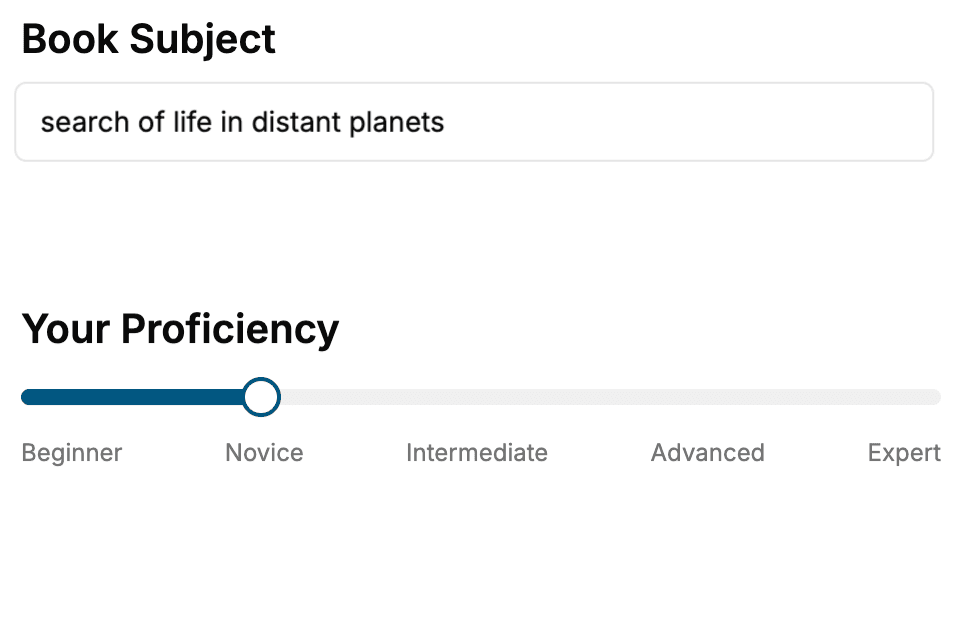
- 1. Pick a subject
Select what you want to learn and share your background
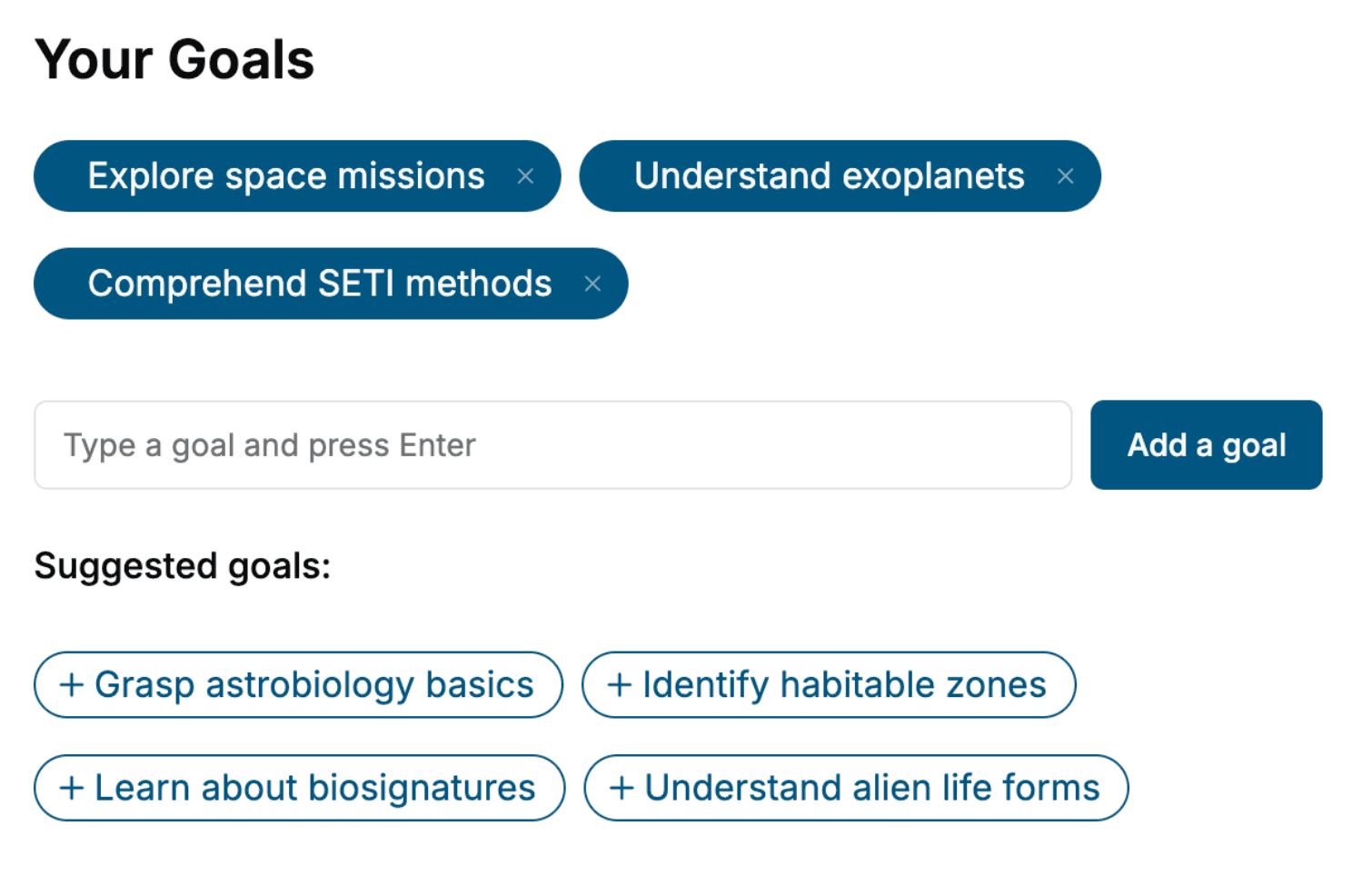
- 2. Personalize your book
Specify your goals and choose sub-topics to include
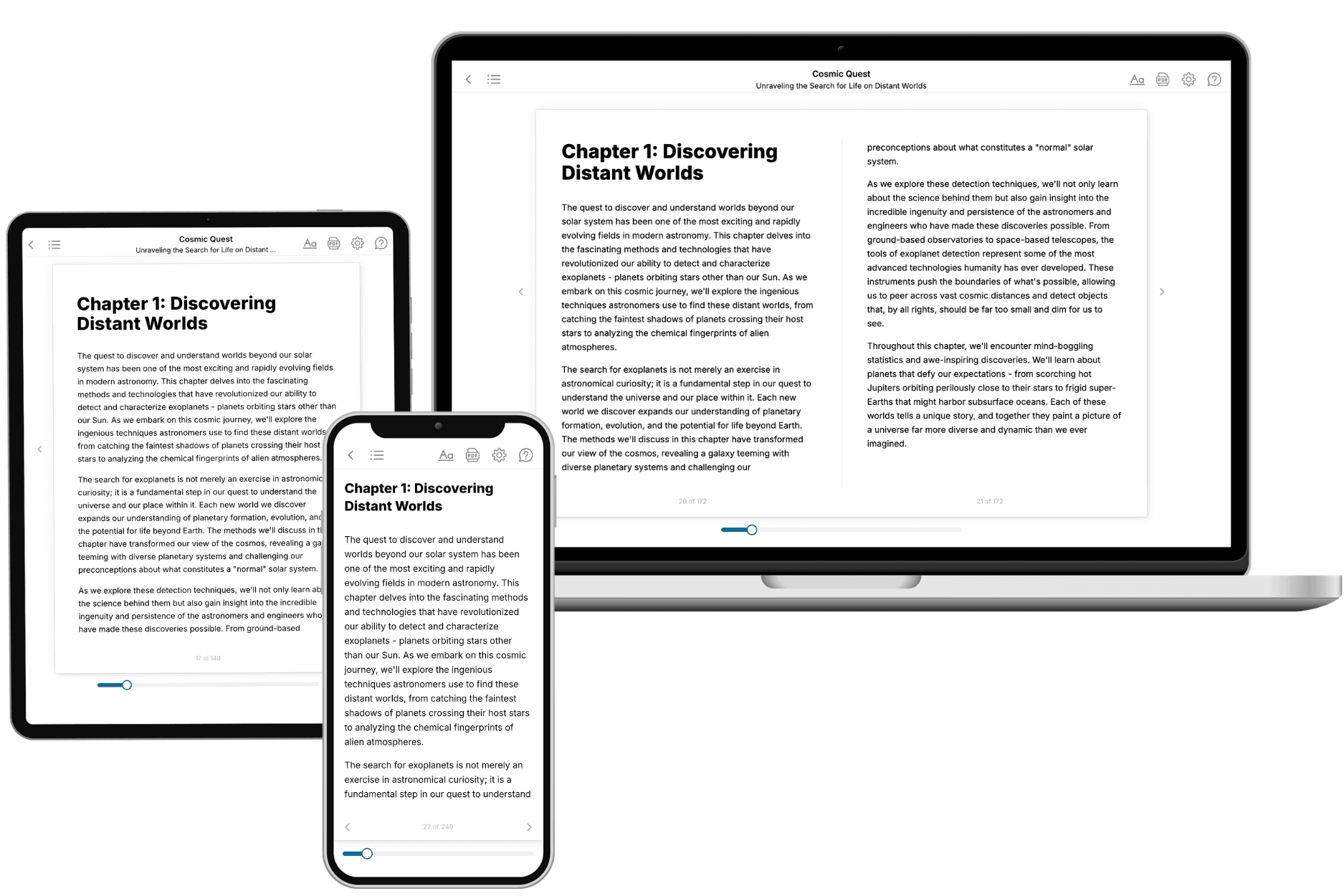
- 3. Get your tailored book
Your book is ready in 10 minutes. Read it online, download as EPUB or PDF, or send to Kindle.
Frequently asked questions
- What is TailoredRead?
TailoredRead creates complete, full-length nonfiction ebooks, written specifically for you. Tell us what you want to learn and why, and TailoredRead writes you a complete ebook on it, with charts, tables, and diagrams throughout. Read it online, on Kindle, or on any e-reader, or download it as a PDF or EPUB. Every book is written fresh the day you order it.
- How is the book tailored to me?
Before anything is written, you answer a few short questions about your goals, your background, and the topics you care about. Your book is then planned around your answers: written at your level, focused on your goals, and covering the topics you chose, instead of the one-size-fits-all book a store sells everyone.
- Will it read like generic AI content?
No. Your book isn't a chat transcript: it's planned chapter by chapter before a single word is written, told in a clear book voice, and explains ideas visually with charts, tables, and diagrams. After writing, every book goes through an editorial pass that polishes chapters so the book reads consistent from start to finish. Judge for yourself: browse thousands of sample books on our Explore Books page.
- How accurate is the content?
Our AI first checks whether your subject needs live research. Niche and fast-moving subjects are researched before writing, and the book plan and chapters are grounded in what it finds. After writing, every book goes through a quality pass that checks its facts and consistency, and researched books list their sources in a Notes section at the back.
- How long is the book?
You choose the length: Comprehensive (250-300 pages), Detailed (150-200 pages), Essential (70-100 pages), or Short (30-50 pages).
- Does the book include visuals?
Yes. Every book includes visual elements such as timelines, checklists, step-by-step guides, decision trees, comparison tables, and matrices, and many include bar charts. A typical book includes dozens of these visual elements.
- Can I read it on Kindle? What formats can I download?
Yes. Every book can be read in our online reader or downloaded as a PDF or EPUB. The EPUB can be opened with Kindle, Apple Books, Kobo, and any e-reader. The Commercial and Author licenses also include an editable Word (DOCX) and Markdown download.
- How much does it cost?
About the price of a regular ebook. The exact price depends on your book's length and complexity, from $5 for the shortest books to $35 for the most comprehensive, and it's shown when you review your book, before you commit to anything. Each book is a one-time purchase, yours to keep, no subscription. Licenses that let you share, teach, or publish your book range from $35.99 to $49.99.
- Can I preview the book before purchasing?
Before you pay, you'll see what your book will cover: the title, a detailed description, the estimated length, and the complete chapter-by-chapter table of contents, so you know what you're getting before you decide. The full text itself is written after you purchase.
- How long does it take to create a book?
10 minutes. You can start reading the opening chapters while the rest is still being written.