Leading With Purpose
A Practical Path to Stronger Nonprofit Leadership and Funding
Many nonprofit leaders assume that a compelling mission is enough to attract the money, people, and board support the work requires.
191 pages10 chaptersNov 27, 2026Nonprofit
About this book
In practice, organizations with powerful missions often struggle with inconsistent revenue, disengaged board members, and programs whose results are hard to prove. This book is written for leaders who already have the drive and the education to run a serious organization and now want the operating systems to match. Inside, you will find a practical framework for building the fundraising, governance, and measurement foundations that sustain an organization over many years. The chapters move from clarifying your leadership role and strategic direction to building major gift and recurring donor programs, recruiting and retaining volunteers, writing grant proposals that persuade, designing logic models, and forecasting budgets with confidence. Each section offers tools you can apply immediately, along with guidance on how to bring your board and team along. Whether you are preparing your first major gifts program or tightening an established operation, this book helps you turn good intentions into a durable, measurable, and well-funded organization.
Table of contents
- IntroductionWhy Leadership Determines Nonprofit Results, How to Use This Book EffectivelyRead below
- Chapter 1: Leading as a Nonprofit CEO and FounderMoving From Founder to Executive Leader, Daily Habits of Effective Nonprofit Leaders, Building Accountability Across Your Team
- Chapter 2: Building a Strategic Plan That WorksClarifying Mission, Vision, and Core Values, Choosing Priorities You Can Actually Fund, Translating Strategy Into Annual Budgets
- Chapter 3: Strengthening Board GovernanceDefining Clear Roles for Every Board Member, Board Giving, Asking, and Networking Responsibilities, Running Effective and Decisive Board Meetings
- Chapter 4: Fundraising Foundations and Donor StrategyDesigning a Donor Pipeline From Prospect to Renewal, Engaging Donors Beyond the Gift Ask, Thanking, Reporting, and Stewarding Donor Trust
- Chapter 5: Launching a Major Gifts ProgramIdentifying and Researching Major Gift Prospects, Cultivation and Solicitation Conversations That Close
- Chapter 6: Building a Recurring Donor BaseDesigning Monthly Giving Programs That Retain, Developing Corporate Partnership Strategies
- Chapter 7: Measuring Impact and Crafting Your StoryDesigning Logic Models for Your Programs, Evaluating Program Outcomes With Practical Methods, Crafting a Compelling Impact Story
- Chapter 8: Volunteers, Outreach, and Stakeholder InputBuilding a Volunteer Recruitment Funnel, Retaining and Managing Volunteers Well, Using Stakeholder Engagement Surveys Wisely
- Chapter 9: Writing Grant Proposals That PersuadeStructuring a Grant Proposal Funders Trust, Using Evidence and Outcomes to Strengthen Requests
- Chapter 10: Financial Stewardship and Budget ForecastingForecasting Nonprofit Budgets With Realistic Scenarios, Keeping Financial Oversight Transparent and Sound
- ConclusionSustaining Momentum Beyond This Book
Introduction
A nonprofit executive director sits down in January to plan the year ahead and finds three separate spreadsheets: one for donations, one for grant deadlines, and one for volunteer sign-ups. None of them talk to each other. The board chair asks how the major donor renewals are going, and the honest answer is that nobody tracked which donors gave last year versus the year before. This scene plays out in thousands of organizations every budget cycle, not because the people running them lack intelligence or commitment, but because they were never handed a system. A founder who built an organization around a mission and a lot of personal energy eventually hits a ceiling that charisma alone cannot clear.
The gap is rarely about caring enough. Most nonprofit leaders care intensely about the people their work serves, and that intensity is often what got the organization off the ground in the first place. The gap is about infrastructure: the Donor Pipeline that turns a first-time gift into a decade of support, the Logic Model that connects daily activities to measurable outcomes, the Board Governance structure that turns well-meaning volunteers into an effective oversight body. Without these systems, growth depends entirely on the founder's personal network and personal stamina, both of which run out. With them, growth becomes something the organization can sustain even as leadership changes.
This book treats a nonprofit the way an experienced operator treats a company: as a set of interlocking systems that either reinforce each other or quietly work against each other. A grant proposal that overpromises results the Program Evaluation cannot back up will eventually damage funder trust. A board recruited for prestige rather than defined roles will show up to meetings and contribute little beyond polite nodding. A recurring giving program launched without a clear Financial Stewardship process behind it will leak donors as fast as it gains them. Each chapter in this book addresses one piece of that system, but the pieces are designed to connect, the same way a Strategic Plan only matters once it is translated into a real budget.
None of the ideas here require the reader to abandon the mission-first instincts that likely brought them into this work. The goal is the opposite: protecting the mission by giving it a sturdier operating base. An organization that runs out of cash mid-year cannot serve anyone. A board that burns out its most capable members cannot provide oversight. A volunteer program that loses ninety percent of its recruits within six months cannot build the community capacity the mission depends on. Strategic rigor is not a betrayal of mission-driven values. It is what lets those values survive contact with real-world constraints like budget cycles, staff turnover, and donor fatigue.
The chapters ahead move in a deliberate sequence, starting with the leader and the plan, then moving outward to the board, the donors, the volunteers, and the money. That sequence mirrors how a serious operating system actually gets built in a working organization: leadership clarity first, strategic direction second, and then the fundraising, governance, and measurement practices that make the strategy real. The two subchapters that follow set up the thinking behind that sequence and explain how to get the most out of the chapters that come after it.
Why Leadership Determines Nonprofit Results
Two organizations can serve the same population, chase the same grants, and operate in the same city, yet produce wildly different results over five years. The difference usually traces back to leadership behavior rather than external circumstances like local wealth or government funding levels. A leader who treats fundraising as a series of disconnected asks will burn through donor goodwill. A leader who treats it as a long-term relationship process, consistent with the idea that fundraising compounds rather than resets each year, builds a donor base that grows in both size and loyalty. The organizational chart on paper may look identical between two nonprofits. The daily decisions of the person at the top rarely are.
Leadership in a nonprofit context carries a structural tension that a for-profit CEO does not face in the same way. A business leader answers primarily to shareholders focused on return. A nonprofit leader answers to a board, to donors, to staff, to the community served, and often to a funder's reporting requirements, all at once. These stakeholders do not always want the same thing. A board member focused on financial conservatism may resist a program expansion that a major donor is eager to fund. Reconciling those tensions without losing momentum is a leadership skill, not an accident of good luck, and it becomes more important as an organization grows past its founding stage.
Consider how differently two founders might respond to a funding shortfall discovered three months into the fiscal year. One treats it as an emergency requiring frantic asks to anyone willing to answer the phone, a pattern that damages relationships with donors who feel used rather than engaged. The other has already built a Budget Forecasting habit that models optimistic, expected, and conservative revenue scenarios each quarter, so the shortfall was visible months earlier and triggered a calm, planned response instead of a scramble. The second founder is not smarter. The second founder built a system that caught the problem early enough to solve it with options still on the table.
Leadership quality also shows up in how an organization treats its board. A founder who sees the board as a legal formality to manage around will recruit members for their names rather than their roles, skip substantive discussion of risk and strategy, and resent the board's oversight function instead of using it. A founder who treats the board as a genuine governance partner, with clearly defined responsibilities around giving, fundraising, and oversight, gets a group of people who can open doors, catch blind spots, and share the burden of leadership. The research on nonprofit board engagement consistently finds that unclear role expectations are one of the leading causes of board disengagement, a pattern explored in depth in the chapter on Board Governance[1].
The same pattern holds for staff and volunteers. A leader who assumes that mission alignment alone will keep a team motivated is relying on something that fades under the pressure of long hours and modest pay, which are common realities in this sector. A leader who builds real accountability structures, clear expectations, regular check-ins, visible recognition, keeps that same team engaged far longer, because people stay where they feel both purpose and competence are being supported. This distinction matters enormously for an organization's ability to retain institutional knowledge, since nonprofit staff turnover already runs higher on average than turnover in many for-profit sectors.
Credibility is the currency that connects leadership to funding. Donors, grant officers, and board members are constantly, if informally, evaluating whether the person running the organization can be trusted with resources. That judgment is built from small, repeated signals: does the annual report match the numbers in the audited financials, does the impact story hold up against the actual Program Evaluation data, does the leader follow through on commitments made in a cultivation meeting. A single broken promise to a major donor can undo years of careful relationship-building, which is one reason Donor Stewardship gets treated as a discipline in this book rather than an afterthought tacked onto the end of a campaign.
Strategic leadership also means resisting the temptation to chase every opportunity that appears. A founder who says yes to every grant opportunity, every partnership request, and every new program idea ends up running five mediocre initiatives instead of two excellent ones. This scattering effect is especially dangerous for smaller organizations with limited staff capacity, where each new commitment draws time and attention away from the core work the Strategic Plan identified as the real priority. Leadership discipline, in this sense, is less about doing more and more about choosing well, a theme that returns directly in the chapter on choosing strategic priorities you can actually fund.
The data available on nonprofit sustainability tends to confirm this pattern at scale. Organizations with diversified, well-managed revenue streams, meaning a mix of individual donors, Recurring Donor support, grants, and Corporate Partnership income, weather economic downturns and funding cuts far better than organizations dependent on a single large funder or an annual gala. That diversification does not happen by accident. It happens because a leader deliberately built multiple fundraising channels over several years rather than relying on whichever source produced results most easily in year one. The leadership choice to invest in that diversification early pays off exactly when the organization needs it most, often years later during an unexpected funding crisis.
None of this suggests that nonprofit leadership is primarily about financial management. It is primarily about keeping a clear line between the mission and the systems that fund and sustain it. A leader who can articulate why the organization exists, translate that purpose into a workable Logic Model, and then build the fundraising and governance infrastructure to support it, is doing the actual work of nonprofit leadership. Everything else, the spreadsheets, the board packets, the donor database, exists to serve that core act of connecting purpose to sustained impact. Leaders who lose sight of that connection tend to produce busy organizations rather than effective ones.
The chapters that follow are built around this understanding of leadership as the thread connecting every operational system in the book. A weak board undermines fundraising. A vague strategic plan produces an unfocused budget. A missing logic model makes the impact story impossible to tell convincingly to a funder. Strengthening leadership is therefore not a soft, separate topic from the harder operational chapters on budgets, grants, and donor pipelines. It is the capacity that makes those operational chapters usable at all, which is why this book begins with leadership before it moves into any specific fundraising or governance tool.
How to Use This Book Effectively
This book is organized to be read in sequence the first time through, because each chapter builds on assumptions set up in the one before it. The chapter on strategic planning assumes a leader who has already clarified their own role and habits. The chapter on board fundraising roles assumes a governance structure has been at least roughly defined. Reading out of order the first time risks applying a tool, such as a major gifts program, before the underlying pipeline and board support that make it effective are in place. After the first full read, the organization is built to function as a reference, something to revisit chapter by chapter as specific problems arise during the year.
Each chapter is designed to be applied, not just read and set aside. Many include frameworks meant for direct use in a planning meeting: a table comparing options, a checklist for a board meeting agenda, a decision tree for choosing which fundraising channel to prioritize next. These tools work best when they are brought into an actual meeting rather than left in the book. Printing out the Volunteer Recruitment Funnel framework and walking a program team through it produces a different result than simply reading the chapter alone, because the team gets to apply the ideas to the organization's actual numbers and actual gaps.
A practical way to use this book is to keep a running notebook, physical or digital, organized by the same structure as the chapters: leadership, strategy, governance, fundraising, major gifts, recurring donors, impact, volunteers, grants, and finance. After each chapter, write down two or three specific actions tied to the organization's real situation rather than general reactions to the reading. For example, after the chapter on donor pipelines, the entry might read: identify which twenty donors gave in each of the past three years and build a renewal schedule for them before the next fiscal quarter begins. Specific, dated actions turn reading into operational change far more reliably than general impressions do.
The book assumes a reader with some existing nonprofit experience, someone comfortable with concepts like a budget cycle, a grant cycle, and a board meeting, but who wants sharper systems rather than a first introduction to the sector. Because of that assumption, definitions of basic terms are kept brief, and the emphasis stays on implementation detail: how to structure a Moves Management process, not what moves management means in the abstract. Readers newer to the sector may want to slow down on chapters covering governance and fundraising fundamentals, since those chapters assume comfort with concepts that an experienced board member or development director would already use daily.
Several chapters are best worked through with the board rather than alone. The chapter on board governance, in particular, produces far better results when the executive director brings its frameworks directly into a board retreat or a dedicated governance session, rather than implementing changes unilaterally and informing the board afterward. A board that helps design its own roles and expectations is far more likely to follow through on them than a board handed a finished document. The same applies to the strategic planning chapter, where the priorities chosen work best when board members have weighed in on the tradeoffs before the plan is finalized.
Other chapters are better worked through with staff. The chapters on grant proposals, program evaluation, and the logic model benefit from input by whoever runs programs day to day, since that person usually has the clearest view of what data already exists and what would need to be collected from scratch. A leader who tries to build a logic model alone, without input from program staff, often ends up with a document that looks tidy on paper but does not match how the program actually operates, which causes problems later when a funder asks a pointed question about implementation.
The structured tools scattered through the book, tables, checklists, decision trees, step-by-step frameworks, are meant to be adapted rather than copied exactly. An organization with three staff members cannot run the same Moves Management process as one with a dedicated major gifts officer, and a checklist designed for a national nonprofit will need trimming for a local one. Treat every framework as a starting draft to be edited against the organization's actual size, budget, and capacity, rather than a rigid template that must be followed without modification.
Some ideas in this book will take longer than a single budget year to fully implement, and that is expected rather than a sign of falling behind. Building a mature Recurring Donor base, for instance, is described in the book as a multi-year effort, not a single campaign. The same is true of a fully developed Major Gift program, which typically requires a year or more of relationship-building before the first significant gift closes. Readers should treat the timeline suggestions in each chapter as realistic planning horizons rather than benchmarks to rush past, since rushing often produces shallow relationships that collapse under pressure later.
It helps to revisit specific chapters at predictable points in the organizational calendar rather than only once at the start. The budget forecasting chapter is most useful about two months before the new fiscal year begins, when revenue assumptions for the coming year are still flexible. The grant proposal chapter earns a second pass just before a major application deadline, as a checklist against the draft already written. The board governance chapter pairs naturally with an annual board self-assessment, a practice many governance experts recommend precisely because roles and expectations tend to drift quietly over the course of a year without a deliberate check-in[2].
Finally, treat the cross-references between chapters as intentional connective tissue rather than repetition. When the chapter on impact measurement references the logic model built earlier in the book, or when the chapter on grant proposals points back to the evidence generated by program evaluation, that is a reminder that these systems are not separate departments competing for attention. They are stages of one continuous process that starts with a clear mission and ends with a funder, a donor, or a board member seeing proof that the mission is being delivered. Reading the book with that continuity in mind, rather than as ten unrelated topics, is what turns it from a reference manual into an actual operating system for the organization.
This is the end of the free sample. The full book has 10 chapters.
Want this book written for you?
Tell us your goals and background, and get your own version of this book, tailored by AI to you.


Benefits of AI-tailored books
- Read one book, not ten:
- all the Nonprofit knowledge you need, gathered into a single book.
- Save days of learning:
- tell us your goals, choose your topics, and the whole book is built around them.
- Learn effortlessly:
- Nonprofit book written for your specific background and expertise.
- Understand at a glance:
- includes charts, tables, timelines, checklists, decision trees, and more.
- Stay current:
- written the day you order it, not years ago.
- Trust what you read:
- every book is checked for accuracy, with real research when your subject needs it.
Create your unique book in 3 steps
- 1. Select your focus
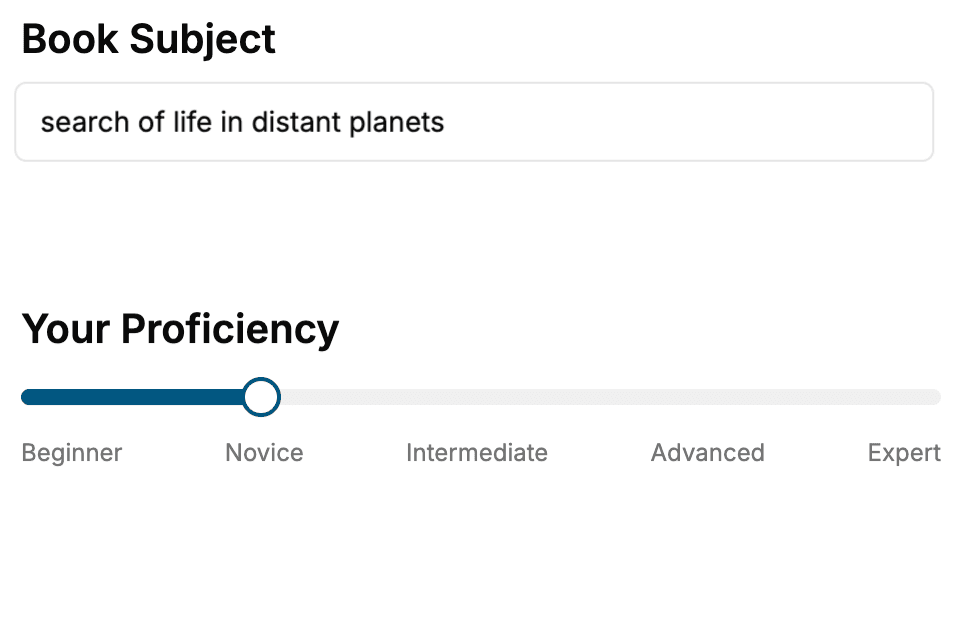
Select the focus of your Nonprofit book and share your background
- 2. Personalize your book
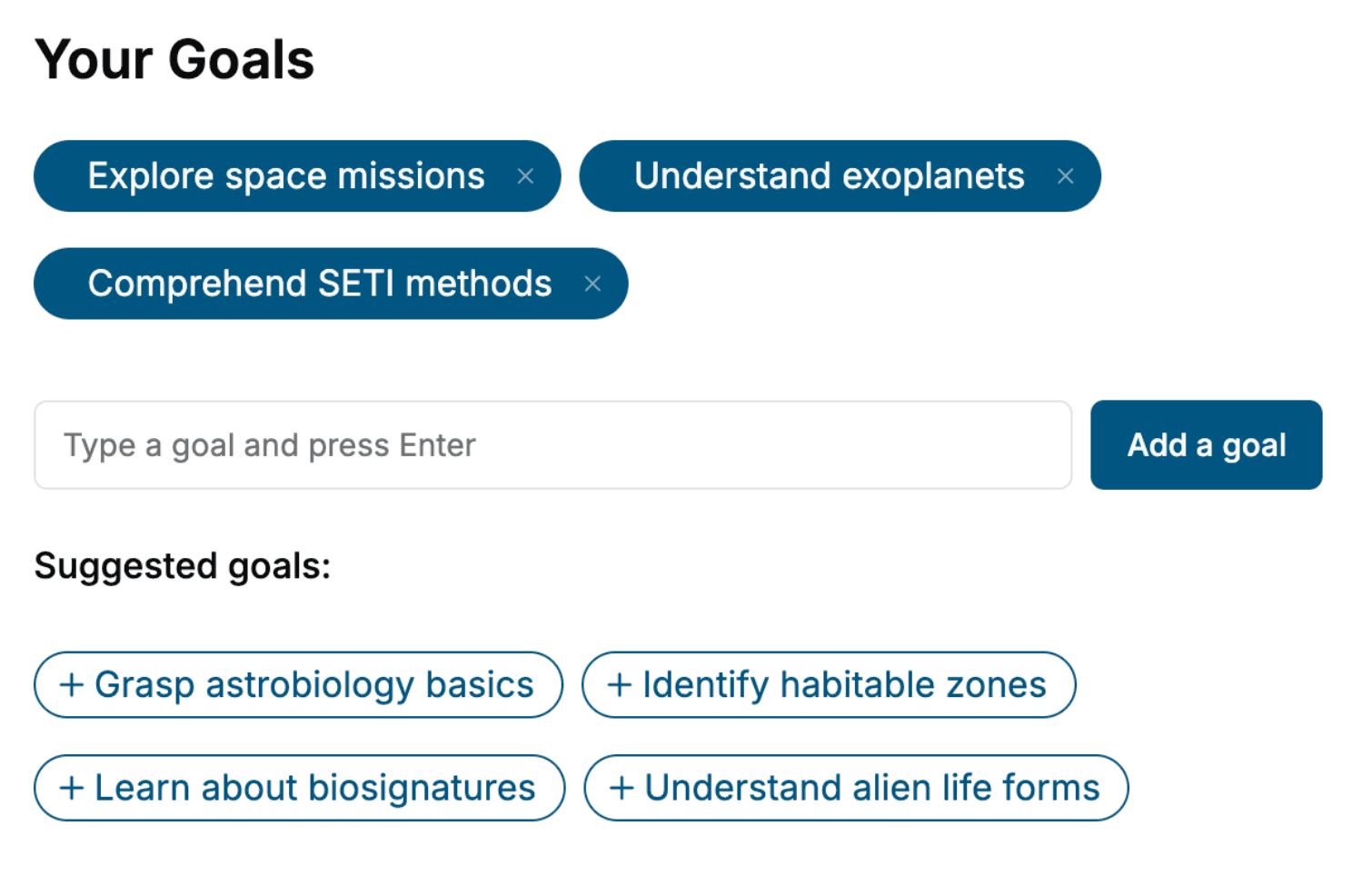
Specify your goals and choose sub-topics to include
- 3. Get your tailored book
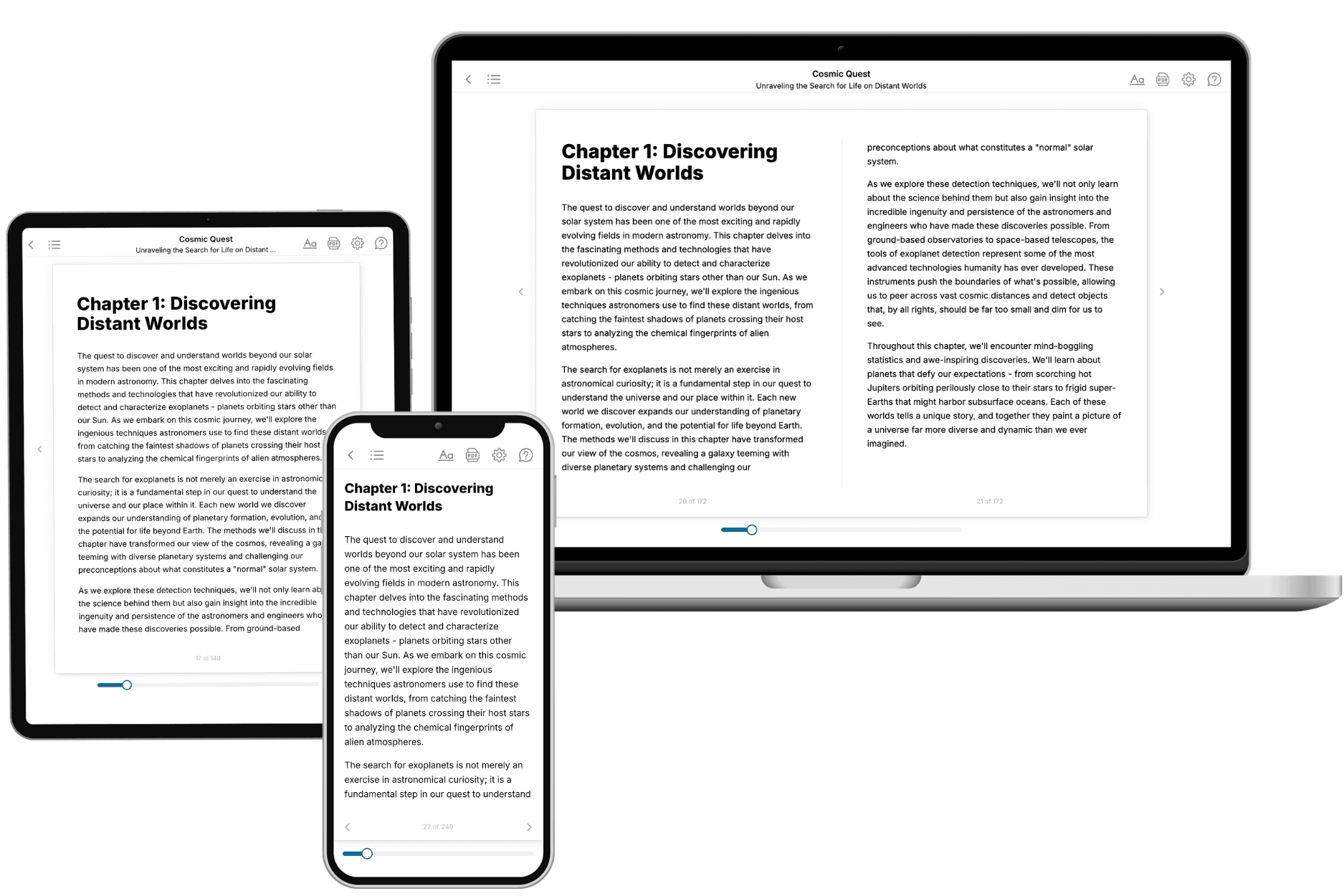
Your book is ready in 10 minutes. Read it online, download as EPUB or PDF, or send to Kindle.
Frequently asked questions
- What is TailoredRead?
TailoredRead creates complete, full-length nonfiction ebooks, written specifically for you. Tell us what you want to learn and why, and TailoredRead writes you a complete ebook on it, with charts, tables, and diagrams throughout. Read it online, on Kindle, or on any e-reader, or download it as a PDF or EPUB. Every book is written fresh the day you order it.
- How is the book tailored to me?
Before anything is written, you answer a few short questions about your goals, your background, and the topics you care about. Your book is then planned around your answers: written at your level, focused on your goals, and covering the topics you chose, instead of the one-size-fits-all book a store sells everyone.
- Will it read like generic AI content?
No. Your book isn't a chat transcript: it's planned chapter by chapter before a single word is written, told in a clear book voice, and explains ideas visually with charts, tables, and diagrams. After writing, every book goes through an editorial pass that polishes chapters so the book reads consistent from start to finish. Judge for yourself: browse thousands of sample books on our Explore Books page.
- How accurate is the content?
Our AI first checks whether your subject needs live research. Niche and fast-moving subjects are researched before writing, and the book plan and chapters are grounded in what it finds. After writing, every book goes through a quality pass that checks its facts and consistency, and researched books list their sources in a Notes section at the back.
- How long is the book?
You choose the length: Comprehensive (250-300 pages), Detailed (150-200 pages), Essential (70-100 pages), or Short (30-50 pages).
- Does the book include visuals?
Yes. Every book includes visual elements such as timelines, checklists, step-by-step guides, decision trees, comparison tables, and matrices, and many include bar charts. A typical book includes dozens of these visual elements.
- Can I read it on Kindle? What formats can I download?
Yes. Every book can be read in our online reader or downloaded as a PDF or EPUB. The EPUB can be opened with Kindle, Apple Books, Kobo, and any e-reader. The Commercial and Author licenses also include an editable Word (DOCX) and Markdown download.
- How much does it cost?
About the price of a regular ebook. The exact price depends on your book's length and complexity, from $5 for the shortest books to $35 for the most comprehensive, and it's shown when you review your book, before you commit to anything. Each book is a one-time purchase, yours to keep, no subscription. Licenses that let you share, teach, or publish your book range from $35.99 to $49.99.
- Can I preview the book before purchasing?
Before you pay, you'll see what your book will cover: the title, a detailed description, the estimated length, and the complete chapter-by-chapter table of contents, so you know what you're getting before you decide. The full text itself is written after you purchase.
- How long does it take to create a book?
10 minutes. You can start reading the opening chapters while the rest is still being written.