Living with Persistent Depressive Disorder
Understanding, Managing, and Reclaiming Your Life from Chronic Depression
This comprehensive guide walks you through understanding Persistent Depressive Disorder—a chronic form of depression that affects millions yet remains widely misunderstood.
191 pages9 chaptersApr 17, 2026Depression
About this book
You'll discover what distinguishes PDD from other depressive conditions, how it develops, and why traditional approaches sometimes fall short. The book explores the biological, psychological, and social factors that contribute to PDD, then transitions into practical, evidence-based strategies you can implement immediately. From cognitive-behavioral techniques to medication management, lifestyle optimization, and building a supportive network, you'll learn how to address PDD from multiple angles. You'll also discover how to navigate relationships, maintain productivity, and develop resilience during difficult periods. Whether you're newly diagnosed, supporting someone with PDD, or seeking deeper understanding, this book provides the knowledge and tools to move from surviving to genuinely managing your condition and reclaiming meaningful aspects of your life.
Table of contents
- IntroductionWhy This Book Matters, How to Use This Guide, What to Expect on Your JourneyRead below
- Chapter 1: Understanding Persistent Depressive DisorderDefining Persistent Depressive Disorder, How PDD Differs from Other Forms of Depression, Prevalence and Life Impact, Common Misconceptions About PDD
- Chapter 2: Recognizing Symptoms and Getting DiagnosedEmotional and Cognitive Symptoms, Physical and Behavioral Symptoms, The Diagnostic Process, Seeking Professional Help
- Chapter 3: Causes and Risk FactorsBiological and Genetic Factors, Psychological and Cognitive Factors, Environmental and Social Factors
- Chapter 4: Evidence-Based Treatment ApproachesPsychotherapy: Finding the Right Approach, Medication Management and Considerations, Combining Therapies for Maximum Effectiveness, Alternative and Complementary Treatments
- Chapter 5: Breaking Negative Cognitive PatternsUnderstanding Depressive Thinking Patterns, Practical Cognitive Restructuring Techniques, Mindfulness and Acceptance Strategies
- Chapter 6: Building a Sustainable Daily RoutineCreating Structure and Routine, Sleep, Nutrition, and Physical Health, Behavioral Activation and Meaningful Activity, Managing Energy and Preventing Burnout
- Chapter 7: Relationships and Building Your Support NetworkCommunicating with Loved Ones, Building Your Professional Support Team, Accessing Community Resources and Groups
- Chapter 8: Managing Work and ProductivityNavigating Workplace Challenges, Disclosure and Workplace Accommodations, Practical Productivity Strategies
- Chapter 9: Navigating Setbacks and Building ResilienceUnderstanding Setbacks as Part of Recovery, Crisis Management and Safety Planning, Building Long-Term Resilience
- ConclusionMoving Forward with Hope and Purpose
- Resources and Further Support
Introduction
There is a particular kind of exhaustion that comes not from a single hard week or a difficult season, but from years of carrying a weight that never fully lifts. You wake up most mornings feeling flat, unmotivated, or quietly hopeless, and you have felt this way for so long that it has started to feel like just who you are. You function. You go to work, maintain relationships, and handle responsibilities. But underneath all of it, something is persistently, stubbornly wrong. If this sounds familiar, you are not alone, and you are not imagining it.
What you may be experiencing is Persistent Depressive Disorder, or PDD, a chronic form of depression that affects an estimated 1.5 to 3 percent of adults in the United States at any given time.[1] Unlike major depressive episodes, which tend to arrive with dramatic intensity and then recede, PDD is quieter and more persistent. It can last for years, sometimes decades, and because it rarely reaches the dramatic lows associated with major depression, it often goes unrecognized, undiagnosed, and untreated. Many people with PDD spend years assuming their low mood is simply a personality trait or a natural response to life's difficulties.
This book exists to change that. It is a practical, evidence-based guide designed to help you understand what PDD actually is, how it develops, and most importantly, what you can do about it. The chapters ahead cover everything from the biology of chronic depression to the daily habits, therapeutic tools, and relationship strategies that support long-term recovery. Whether you have just received a diagnosis, have been managing this condition for years, or are trying to understand what someone you love is going through, this guide is built to meet you where you are and give you something genuinely useful to work with.
One thing worth saying clearly at the start: PDD is a real, recognized medical condition. It is not a character flaw, a lack of willpower, or a failure to be grateful for what you have. It has identifiable biological, psychological, and social roots, and it responds to treatment. Recovery from PDD is rarely fast or linear, but it is absolutely possible. Thousands of people have learned to manage this condition effectively and have reclaimed meaningful, satisfying lives. The knowledge and tools in this book are drawn from that same body of research and clinical experience.
Why This Book Matters
Despite how common PDD is, it remains one of the most misunderstood and underserved mental health conditions. Part of the problem is visibility. Major depressive disorder gets significant attention in public health campaigns, media coverage, and clinical training. PDD, by contrast, tends to fly under the radar. Its symptoms are less dramatic, its onset is gradual, and its chronic nature means that many people have simply adapted their lives around it without ever naming what they are dealing with.
The consequences of this gap are significant. Research consistently shows that people with PDD wait longer before seeking help than those with major depression, often by several years.[2] When they do seek help, they are sometimes told they are simply stressed, anxious, or going through a rough patch. Some are prescribed treatments designed for acute depression that do not fully address the chronic nature of PDD. Others receive no treatment at all. The result is years of unnecessary suffering and a condition that becomes harder to treat the longer it goes unaddressed.
There is also a cultural dimension to this problem. In many communities, chronic low mood is normalized or even romanticized. Phrases like "that's just how I am" or "I've always been a pessimist" are often used to describe what is, in clinical terms, a treatable depressive condition. This normalization is not harmless. It delays help-seeking, reinforces shame, and allows a manageable condition to quietly erode quality of life over years and decades.
This book matters because it takes PDD seriously on its own terms. It does not treat chronic depression as a lesser version of major depression or as something you simply have to live with. It presents PDD as what it actually is: a distinct clinical condition with its own patterns, challenges, and treatment considerations. The strategies in this guide are not generic mental health advice repurposed for a different audience. They are specifically chosen and framed for the realities of living with a condition that is chronic, persistent, and often invisible to the people around you.
Beyond the clinical picture, this book also addresses the lived experience of PDD. What does it feel like to manage relationships when you are chronically low? How do you stay productive at work when motivation is consistently hard to access? How do you explain your condition to people who have never experienced it? These are not abstract questions. They are the daily challenges that shape life with PDD, and they deserve direct, practical answers.
Finally, this book matters because hope is not a luxury when it comes to mental health treatment. It is a clinical necessity. Research on depression treatment consistently shows that a person's belief in the possibility of improvement is one of the strongest predictors of treatment engagement and outcome.[3] This guide is written with the conviction that understanding your condition more clearly, and having a concrete plan for addressing it, is one of the most powerful things you can do to begin moving forward.
PDD is not a life sentence. It is a condition that responds to the right combination of understanding, treatment, and consistent effort. The goal of this book is to give you all three.
How to Use This Guide
This book is designed to be both a cover-to-cover read and a practical reference you return to over time. If you are new to PDD, reading from the beginning will give you the foundational understanding you need before moving into the more practical chapters. If you are already familiar with the basics and are looking for specific tools, you can navigate directly to the chapters most relevant to your current situation.
Here is a brief overview of how the book is organized, so you can find what you need quickly:
- Chapters 1 and 2 cover the fundamentals: what PDD is, how it differs from other forms of depression, what its symptoms look like, and how it is diagnosed. These chapters are especially useful if you are newly diagnosed or still trying to understand whether PDD fits your experience.
- Chapter 3 explores the causes and risk factors behind PDD, including biological, psychological, and environmental contributors. Understanding why PDD develops can reduce self-blame and help you identify the factors most relevant to your own situation.
- Chapter 4 covers evidence-based treatment options in detail, including psychotherapy approaches, medication considerations, and how to combine different treatments effectively.
- Chapters 5 and 6 move into practical daily management, covering cognitive restructuring techniques, mindfulness strategies, routine-building, sleep, nutrition, and behavioral activation.
- Chapters 7 and 8 address the relational and professional dimensions of living with PDD, including how to communicate with loved ones, build a support network, and manage work and productivity.
- Chapter 9 focuses on setbacks, resilience, and long-term recovery, including crisis management and safety planning.
Throughout the book, you will find practical exercises, frameworks, and examples drawn from real clinical scenarios. These are not just illustrations. They are tools you can use directly. When you encounter an exercise or a reflection prompt, consider pausing to actually engage with it rather than reading past it. The difference between understanding a concept and applying it is where real change happens.
It is also worth noting what this book is not. It is not a substitute for professional mental health care. PDD is a clinical condition, and the most effective path forward almost always involves working with a qualified therapist, psychiatrist, or other mental health professional. This guide is designed to complement that professional support, not replace it. Think of it as a resource that helps you get more out of your treatment, understand your condition more deeply, and take meaningful action between sessions.
If you are currently in a mental health crisis or experiencing thoughts of self-harm or suicide, please reach out to a crisis resource immediately. In the United States, you can contact the 988 Suicide and Crisis Lifeline by calling or texting 988. You can also visit the Crisis Text Line at crisistextline.org or text HOME to 741741. Your safety is the first priority, and help is available right now.
For everyone else, the best way to use this book is with patience and self-compassion. You do not need to implement every strategy at once. You do not need to read it perfectly or have all the answers immediately. Start where you are, take what is useful, and return to the rest when you are ready. Recovery from PDD is a process, and this book is meant to be a companion along that process, not a test you have to pass.
Consider keeping a journal alongside this book. Many of the exercises and reflection prompts work best when you write your responses down rather than just thinking through them. Writing creates a record of your progress, helps you notice patterns over time, and gives you something concrete to bring to therapy sessions. A simple notebook works perfectly well for this purpose.
What to Expect on Your Journey
One of the most important things to understand about recovering from PDD is that it does not look like flipping a switch. There is no single moment where the fog lifts and everything becomes clear. Instead, recovery from chronic depression tends to look more like a gradual brightening, with good days becoming slightly more frequent, difficult days becoming slightly less intense, and the overall baseline of your mood slowly shifting upward over time. This is not a dramatic narrative, but it is a real and meaningful one.
Research on PDD treatment outcomes gives genuine reason for optimism. Studies show that with appropriate treatment, including psychotherapy, medication, or a combination of both, a significant majority of people with PDD experience meaningful symptom reduction.[4] The challenge is that treatment for PDD often takes longer to show results than treatment for acute depression, and it requires more sustained effort. Knowing this in advance helps you set realistic expectations and avoid the discouragement that comes from expecting faster progress than the condition typically allows.
You should also expect setbacks. This is not pessimism. It is an honest description of how chronic conditions work. There will be weeks where symptoms worsen, where the strategies you have been using feel less effective, or where life circumstances make everything harder. These periods are not signs that treatment has failed or that recovery is impossible. They are a normal part of the process, and the later chapters of this book will give you specific tools for navigating them without losing the ground you have gained.
What you can realistically expect from engaging seriously with this material and with professional treatment includes:
- A clearer understanding of your own symptom patterns and triggers
- Practical tools for managing low mood, low energy, and negative thinking on a daily basis
- Better communication skills for explaining your experience to the people in your life
- A more informed relationship with your treatment team, including better questions to ask and clearer goals to work toward
- Gradual improvement in your overall quality of life, even if full symptom remission takes time
- Greater self-compassion and reduced shame around your condition
What you should not expect is perfection. PDD has a way of activating very high standards and harsh self-criticism, and it is easy to turn a recovery guide into another arena for self-judgment. If you miss a day of journaling, skip an exercise, or have a week where you do not implement any of the strategies in this book, that is not failure. That is being human while managing a chronic condition. The goal is not to execute a perfect recovery plan. The goal is to gradually build a life that supports your wellbeing, one small, sustainable step at a time.
It is also worth acknowledging that reading about PDD can sometimes bring up difficult emotions. Learning that you have been living with a clinical condition for years, or recognizing yourself clearly in a description of depressive symptoms, can feel validating and painful at the same time. Both responses are completely normal. Validation can feel like relief after years of wondering what was wrong. Pain can come from recognizing how much the condition has cost you. If strong emotions come up as you read, give yourself permission to pause, process, and return when you are ready.
The journey ahead is not easy, but it is navigable. People with PDD build fulfilling careers, maintain loving relationships, pursue meaningful goals, and experience genuine joy. The condition shapes their experience, but it does not define the limits of what is possible. The chapters ahead are built on the evidence, the clinical experience, and the real-world stories that demonstrate this every day. The work starts here, and it is absolutely worth doing.
You do not have to feel better to start. You just have to start. The feeling better comes from the starting.
One final note before you move into the first chapter: be honest with yourself as you read. The most useful thing you can bring to this material is not optimism or determination, though both are helpful. It is honesty. Honest recognition of your symptoms, your patterns, your challenges, and your strengths. That honesty is the foundation everything else is built on, and it is already a form of courage. The fact that you are here, reading this, is evidence that some part of you believes things can be different. That belief is worth trusting.
Notes
Introduction
- 1. American Psychiatric Association, Diagnostic and Statistical Manual of Mental Disorders, Fifth Edition, Text Revision (DSM-5-TR), American Psychiatric Publishing, 2022
- 2. D. Rhebergen and R. Graham, "The re-labelling of dysthymic disorder to persistent depressive disorder in DSM-5," Current Opinion in Psychiatry, 2014
- 3. C. R. Snyder and others, "Hope as a psychotherapeutic foundation of common factors, placebos, and expectancies," M. A. Hubble, B. L. Duncan, & S. D. Miller, The Heart and Soul of Change. American Psychological Association, 1999
- 4. P. Cuijpers and others, "Adding psychotherapy to antidepressant medication in depression and anxiety disorders," World Psychiatry, 2014
This is the end of the free sample. The full book has 9 chapters.
Want this book written for you?
Tell us your goals and background, and get your own version of this book, tailored by AI to you.


Benefits of AI-tailored books
- Read one book, not ten:
- all the Depression knowledge you need, gathered into a single book.
- Save days of learning:
- tell us your goals, choose your topics, and the whole book is built around them.
- Learn effortlessly:
- Depression book written for your specific background and expertise.
- Understand at a glance:
- includes charts, tables, timelines, checklists, decision trees, and more.
- Stay current:
- written the day you order it, not years ago.
- Trust what you read:
- every book is checked for accuracy, with real research when your subject needs it.
Create your unique book in 3 steps
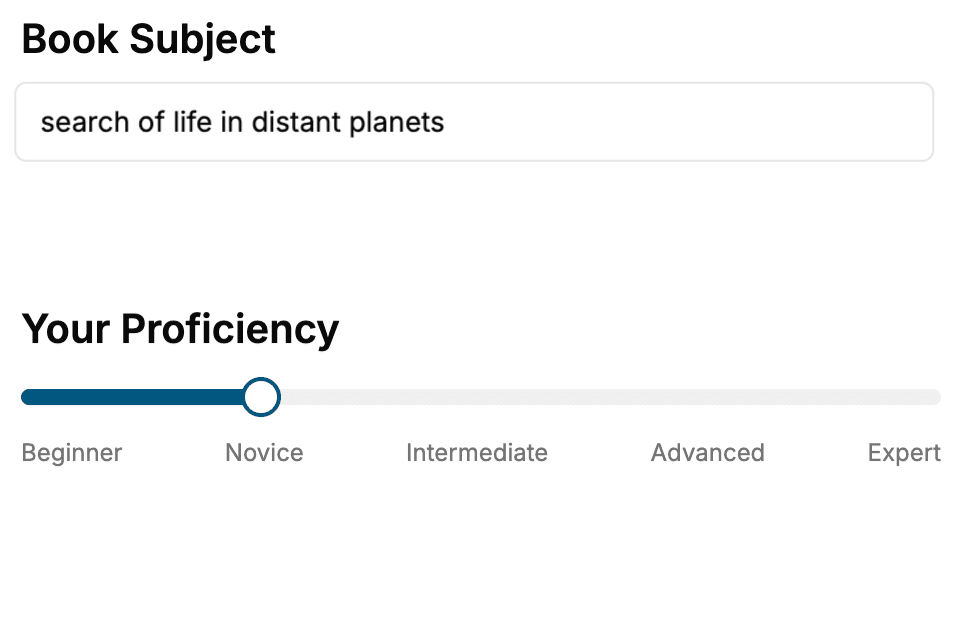
- 1. Select your focus
Select the focus of your Depression book and share your background
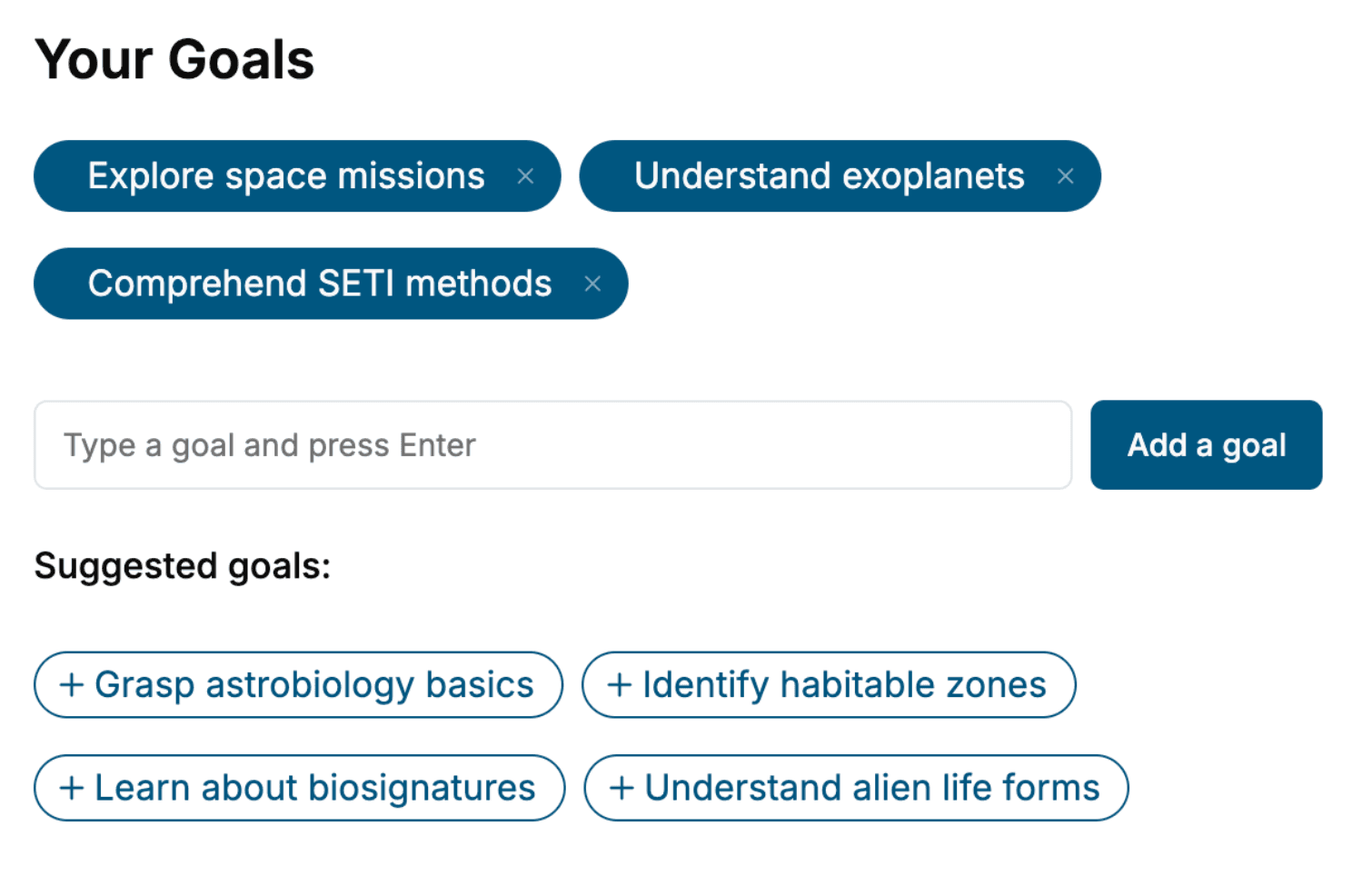
- 2. Personalize your book
Specify your goals and choose sub-topics to include
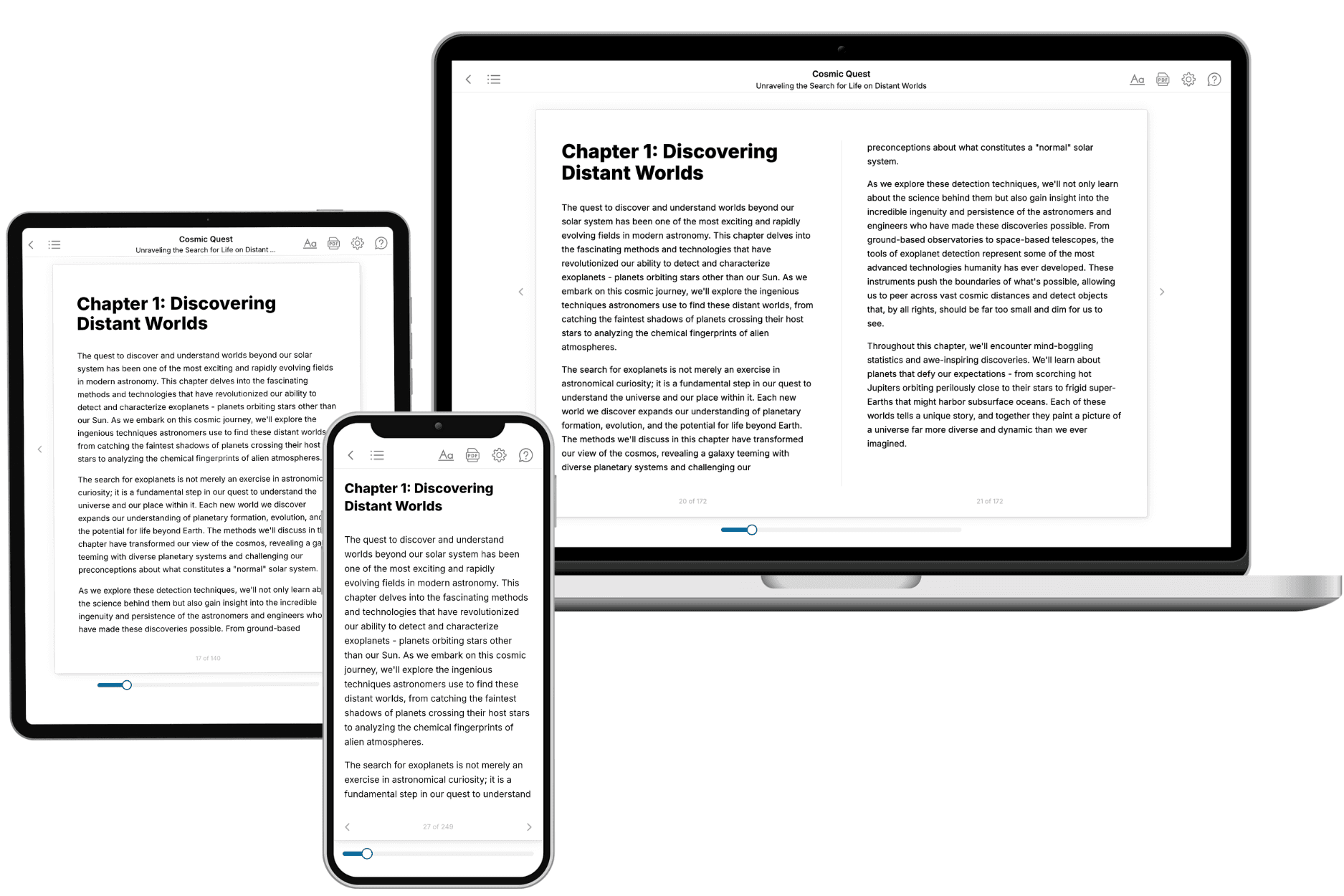
- 3. Get your tailored book
Your book is ready in 10 minutes. Read it online, download as EPUB or PDF, or send to Kindle.
Frequently asked questions
- What is TailoredRead?
TailoredRead creates complete, full-length nonfiction ebooks, written specifically for you. Tell us what you want to learn and why, and TailoredRead writes you a complete ebook on it, with charts, tables, and diagrams throughout. Read it online, on Kindle, or on any e-reader, or download it as a PDF or EPUB. Every book is written fresh the day you order it.
- How is the book tailored to me?
Before anything is written, you answer a few short questions about your goals, your background, and the topics you care about. Your book is then planned around your answers: written at your level, focused on your goals, and covering the topics you chose, instead of the one-size-fits-all book a store sells everyone.
- Will it read like generic AI content?
No. Your book isn't a chat transcript: it's planned chapter by chapter before a single word is written, told in a clear book voice, and explains ideas visually with charts, tables, and diagrams. After writing, every book goes through an editorial pass that polishes chapters so the book reads consistent from start to finish. Judge for yourself: browse thousands of sample books on our Explore Books page.
- How accurate is the content?
Our AI first checks whether your subject needs live research. Niche and fast-moving subjects are researched before writing, and the book plan and chapters are grounded in what it finds. After writing, every book goes through a quality pass that checks its facts and consistency, and researched books list their sources in a Notes section at the back.
- How long is the book?
You choose the length: Comprehensive (250-300 pages), Detailed (150-200 pages), Essential (70-100 pages), or Short (30-50 pages).
- Does the book include visuals?
Yes. Every book includes charts, tables, and diagrams: timelines, checklists, step-by-step guides, decision trees, comparison tables, matrices, and bar charts. A typical book includes dozens of these visual elements.
- Can I read it on Kindle? What formats can I download?
Yes. Every book can be read in our online reader or downloaded as a PDF or EPUB. The EPUB can be opened with Kindle, Apple Books, Kobo, and any e-reader. The Commercial and Author licenses also include an editable Word (DOCX) and Markdown download.
- How much does it cost?
About the price of a regular ebook. The exact price depends on your book's length and complexity, from $2 for the shortest books to $35 for the most comprehensive, and it's shown when you review your book, before you commit to anything. Each book is a one-time purchase, yours to keep, no subscription. Licenses that let you share, teach, or publish your book range from $35.99 to $49.99.
- Can I preview the book before purchasing?
Before you pay, you'll see what your book will cover: the title, a detailed description, the estimated length, and the complete chapter-by-chapter table of contents, so you know what you're getting before you decide. The full text itself is written after you purchase.
- How long does it take to create a book?
About 10 minutes. You can start reading the opening chapters while the rest is still being written.