London's Best Cocktail Bars
Your Complete Guide to the City's Most Iconic Venues, Hidden Gems, and Mixology Masters
Most visitors to London assume the best cocktail bars are impossible to access without connections or months of advance planning.
191 pages8 chaptersAug 17, 2026Cocktails
About this book
In reality, London's world-class cocktail scene is more accessible than ever—you just need to know where to look and how to navigate it. This guide cuts through the hype and provides a practical roadmap to experiencing London's most exceptional bars, from legendary establishments like The American Bar at The Savoy to cutting-edge mixology labs pushing the boundaries of cocktail innovation. You'll discover how the city's cocktail culture evolved from 1930s classics to today's sustainable, experimental scene. Learn which neighborhoods offer the best experiences for your style, how to secure reservations at top-ranked venues, and what makes each bar's philosophy unique. Whether you're seeking a speakeasy adventure, a refined hotel bar experience, or a neighborhood gem where locals gather, this guide reveals the stories, techniques, and insider knowledge that transform a good night out into an unforgettable London experience.
Table of contents
- IntroductionWhy London's Cocktail Scene Matters, How to Use This Guide, What You'll Discover in These PagesRead below
- Chapter 1: The Evolution of London's Cocktail CultureThe American Bar at The Savoy: Where It All Began, Speakeasy Heritage and the 1940s Influence, The Modern Cocktail Renaissance: 2018 to Today
- Chapter 2: Understanding London's Five Bar StylesExperimental Mixology Labs: Innovation and Precision, Classic Cocktail Bars: Honoring Time-Tested Recipes, Speakeasy-Themed Bars: Authentic Prohibition Atmosphere, Neighborhood Gems: Consistency Without Reservations
- Chapter 3: Hotel Bars and Refined SophisticationThe Connaught Bar: Mayfair Excellence, Understanding Bespoke Service and Personalization, Navigating Hotel Bar Culture and Expectations
- Chapter 4: Neighborhood Guide: Where to Find Your Perfect BarShoreditch and Old Street: Innovation and Experimentation, Bethnal Green: Eclectic Creativity and House Creations, Soho and West End: Intimate Speakeasies and Classics, South Bank and Mayfair: Sophistication and Riverside Views
- Chapter 5: The Top-Ranked Bars: Archive & Myth and Satan's WhiskersArchive & Myth: The Current Pinnacle (9.3/10 Rating), Satan's Whiskers: London's Best Cocktail Bar, Other Essential Top-Ranked Venues
- Chapter 6: Sustainability and Modern Cocktail EthicsHow London Bars Are Leading Sustainability, Seasonal Produce and Custom Distillates, Making Ethical Choices as a Cocktail Consumer
- Chapter 7: Mastering the Cocktail Experience: Techniques and TerminologyUnderstanding House Creations and Signature Drinks, Pre-Batched Cocktails and Tap Service Innovation, Developing Your Palate and Appreciating Craft
- Chapter 8: Planning Your London Cocktail AdventureSecuring Reservations and Access Strategies, Best Times to Visit and Seasonal Offerings, Budget Planning and Value Across Price Points
- ConclusionBeginning Your London Cocktail Journey, The Future of London's Cocktail Scene
- Glossary of Cocktail Terms and Bar Terminology
- Further Reading and Resources
Introduction
A glass touches the bar top at exactly the right moment, the ice already melted into the perfect dilution, the citrus oil still hanging in the air above the rim. That small piece of choreography, repeated thousands of times a night across a single city, is the real story behind London's reputation as a cocktail capital. It isn't one bar or one bartender. It's a dense, overlapping network of venues, each with its own philosophy, competing and collaborating in equal measure, that has turned drinking well into something close to a civic art form.
For someone standing on a London street corner with a phone full of "best bars" lists and no clear sense of where to start, that density can feel less like an opportunity and more like a wall. Should the evening start in Mayfair or Shoreditch? Is a reservation required, or can a walk-in still get a seat? Does a bar with a 9-point rating actually deliver a better night than a neighborhood spot with no ranking at all? These aren't trivial questions. They determine whether an evening becomes a memory worth repeating or a mediocre drink in an overhyped room.
This guide exists to answer those questions with specifics rather than vague enthusiasm. It treats London's cocktail scene the way a good bartender treats a request for "something strong but not too strong": as a problem that deserves a precise, tailored answer. Instead of a single ranked list, expect a working map of styles, neighborhoods, and standout venues, paired with the practical mechanics of getting a seat, choosing a drink, and understanding what makes it good.
The chapters ahead move from history to philosophy to geography to logistics, building a full picture piece by piece. The evolution of the city's cocktail culture, the five distinct bar styles now shaping it, the hotel bar tradition, the neighborhood breakdown, the current top-ranked venues, the sustainability movement, the vocabulary and technique behind the craft, and the planning tools to pull it all together, each gets its own dedicated treatment later in the book. This introduction sets the terms for that journey.
None of this requires industry connections or years of prior experience. It requires a willingness to ask a bartender a direct question, a bit of planning ahead of a Friday night, and an openness to trying a bar style that might not have been the first instinct. That's the whole premise: London's best cocktails are genuinely accessible, once the map makes sense.
Why London's Cocktail Scene Matters
London holds one of the largest concentrations of internationally recognized cocktail bars anywhere in the world, with well over two dozen venues appearing on global best-bar rankings in a single year. That density is unusual. Most cities that produce a handful of world-class bars struggle to sustain a second tier beneath them. London instead has multiple tiers, stacked deep, spread across neighborhoods that would each be considered a destination on their own in most other cities.
Scale alone wouldn't matter without variety, and this is where London separates itself further. A city can have many good bars that all do the same thing well, which gets repetitive fast. London instead supports experimental labs pushing technique and flavor into new territory, alongside classic cocktail bars fiercely loyal to century-old recipes, alongside speakeasy-themed rooms built around atmosphere and theater, alongside unpretentious neighborhood bars, alongside hotel bars built on decades of refined service. Later chapters unpack each of these styles in depth, but the point here is simpler: no single mood or craving goes unmet.
That variety has a direct practical benefit for a visitor. A traveler chasing precision and novelty can spend an entire trip in experimental labs and never repeat an experience. Someone who wants comfort, familiarity, and a perfectly balanced classic can stay almost entirely within traditional venues. A couple wanting drama and intimacy can seek out speakeasy-style rooms tucked behind unmarked doors. The city doesn't force a single definition of what a "great cocktail night" looks like, and that flexibility is part of why it keeps drawing comparisons to the world's best drinking cities.
Consider a simple scenario: two friends land in London for a long weekend, one who wants an Old Fashioned made exactly the way it was made a century ago, the other who wants to taste something that has never existed before that week. In most cities, one of them compromises. In London, they can split up for an hour, meet back at a third bar for dinner-hour drinks, and both walk away satisfied. That kind of built-in flexibility is rare, and it's a large part of why the scene rewards deeper exploration rather than a single famous stop.
History also does real work here, even if the deep dive belongs to a later chapter. The roots of the city's cocktail identity reach back nearly a century, to hotel bars that treated mixed drinks as serious craft long before that was fashionable, and that lineage still shapes how newer bars think about technique and service today. A bartender at a cutting-edge lab in Shoreditch will often reference the same foundational recipes as a bartender in a wood-paneled hotel bar in Mayfair, just interpreted through a very different lens. That shared foundation, running underneath wildly different surface styles, gives the whole scene a coherence that pure novelty alone couldn't produce.
Rankings matter too, though they should be read as a starting point rather than gospel. Independent guides and global lists regularly place London bars at or near the top of their categories, and the city maintains one of the largest footprints of any location on the most closely watched global list of best bars. That kind of sustained recognition, across multiple independent rating bodies with different methodologies, is a stronger signal than any single "best of" headline. It suggests the excellence is structural, not a fluke tied to one trendy opening.
What that recognition doesn't capture, though, is texture: the difference between a bar that wins awards and a bar that actually suits a particular evening's mood. A highly rated experimental lab might be the wrong choice for someone who just wants a quiet conversation over a familiar drink. A famous hotel bar might feel stiff to someone looking for a loud, playful night out. Part of the work this guide does, across the neighborhood and bar-style chapters ahead, is translating rankings into practical fit, so a five-star reputation actually becomes a five-star night for the specific person walking through the door.
The financial commitment involved also deserves early acknowledgment. Cocktails at top-tier London venues sit at a real price point, and a night hopping between several acclaimed bars adds up quickly. That's not a reason to avoid them, but it is a reason to plan with intention rather than wandering in blind. Later material on budgeting across price points exists precisely because value in this scene isn't only about spending less. It's about spending well, matching the venue and the drink to what will actually be memorable rather than defaulting to whatever ranks highest on a list.
Accessibility is the other half of the picture, and it's more encouraging than most first-time visitors expect. While a handful of the most talked-about venues do require advance planning, a large share of London's excellent bars operate on a walk-in basis, especially earlier in the evening or on weeknights. The neighborhood-gem category in particular tends to reward spontaneity over scheduling. That means a scene with a reputation for exclusivity is, in practice, far more open to casual discovery than the hype suggests.
It also matters that this scene keeps moving. A bar that tops a ranking one year can shift position the next, not because it got worse, but because the competitive bar keeps rising across the whole city and beyond it. That kind of churn at the top is a sign of a healthy, competitive ecosystem rather than instability. It means the "best bar in London" is a genuinely contested title most years, not a settled fact, and that contest is part of what keeps standards climbing across every tier of the scene.
Sustainability has become another dimension of why this scene commands attention, not just for cocktail quality but for how that quality gets produced. A growing number of London's most respected bars have built their reputations partly on reducing waste, sourcing seasonally, and rethinking how spirits and garnishes get made in the first place. That shift reflects a broader change in what "world-class" means in the drinks world: technique and ethics increasingly travel together, and a later chapter dedicated to this movement traces exactly how far it has gone.
None of this means every bar in London is worth visiting, or that hype always matches reality. Plenty of average bars ride a wave of social media attention without the craft to back it up. Learning to tell the difference, between a bar with a manufactured buzz and one with a genuine, sustained reputation among independent critics and repeat locals, is itself a skill this guide aims to build. That skill pays off well beyond London, too, in any city with a serious drinking culture.
Ultimately, the case for London's cocktail scene rests less on any single superlative and more on breadth held together by consistent craft. A city can be famous for one legendary bar and still be a disappointing place to drink more broadly. London's advantage is that the excellence doesn't stop at the top of the list. It runs deep enough that a visitor with no plan and no reservations can still, with the right instincts, end up somewhere genuinely excellent on their very first night.
How to Use This Guide
This book is built to be read in more than one order, depending on what a particular trip or evening calls for. Read front to back, it builds a complete education: history first, then bar styles, then hotel culture, then neighborhoods, then the current top venues, then sustainability, then technique, then logistics. Read that way, each chapter adds context that makes the next one land harder, and by the final planning chapter, every recommendation will feel earned rather than arbitrary.
But not everyone has time for a cover-to-cover read before a trip, and the structure supports selective use just as well. Someone with a flight in three days and zero cocktail background can skip straight to the bar-styles chapter to figure out what kind of experience they actually want, then jump to the neighborhood chapter to find where that style clusters, then finish with the planning chapter to lock in logistics. That's a perfectly valid path through the material, and the chapters are written to stand on their own for exactly this kind of targeted use.
A useful way to think about the book's shape is as three layers stacked on top of each other. The first layer is context: where this scene came from, what philosophies drive it, what "good" even means here. The second layer is the map: which bars, in which neighborhoods, doing what. The third layer is execution: how to actually get in the door, order well, and spend money wisely. Skipping the first layer entirely is possible but not advisable, because it's the difference between picking a bar because it's famous and picking one because it actually fits.
For the reader who already has some cocktail knowledge, moderate familiarity with classics, some awareness of major bar names, this guide is calibrated to add depth rather than repeat basics. Expect specific detail on what separates an experimental mixology lab's approach to flavor from a classic bar's devotion to ratio and balance, rather than a beginner's explanation of what a cocktail is. Vocabulary and technique get a dedicated deep dive of their own later, for anyone who wants to sharpen their palate and their ordering vocabulary further.
Cross-references appear throughout rather than repeated explanations. When a later chapter mentions a bar style, a neighborhood, or a specific technique already covered elsewhere, it will point back to that earlier material rather than re-explaining it from scratch. This keeps each chapter focused and avoids the padding that comes from restating the same ideas under different headings. Following those pointers when curiosity strikes is an efficient way to build a fuller picture without losing the thread of whatever chapter is currently in hand.
Specific venues get treated at two different altitudes throughout the book, and it helps to know which altitude a given passage is operating at. Some mentions are illustrative, using a well-known bar as an example of a broader style or trend. Others are destination-focused, profiling a venue in enough depth to plan an actual visit around it. The chapter dedicated to the current top-ranked bars operates almost entirely at that second altitude, while the bar-styles and neighborhood chapters mix both, using named venues as anchors for broader categories.
A practical habit worth adopting while reading: keep a running shortlist. Every chapter will surface at least one or two venues or neighborhoods that spark real interest, and the natural instinct is to trust memory to hold onto them until the planning chapter near the end. That rarely works well in practice. A simple running list, built chapter by chapter, turns the planning chapter from a cold start into a straightforward exercise of narrowing down options that already feel personal.
Budget-consciousness should shape how this guide gets read, not just how the eventual trip gets planned. A reader working with a tighter budget will get more immediate value from the neighborhood-gems material and the walk-in-friendly venues than from lingering on the most exclusive hotel bar profiles, however tempting those pages are. The dedicated budget-planning material later in the book addresses this directly, but it helps to read with that filter active from the very first chapter rather than retrofitting it at the end.
Timing matters as much as venue selection, and this guide treats the two as inseparable. A bar that's nearly impossible to get into on a Saturday night can be a relaxed, easy visit on a Tuesday. Seasonal menu changes can make a return visit to the same bar feel like a genuinely new experience. These timing dynamics get their own focused treatment later, but keep them in mind while reading the venue-heavy chapters too, since the "best" bar for a given night often depends as much on when as on where.
The glossary near the end of the book is designed as a standing reference rather than a one-time read. Terms introduced in the bar-styles and technique chapters, things like custom distillates, pre-batched service, or the vocabulary around palate development, get fuller definitions there for quick lookup. Flipping back to it whenever an unfamiliar term appears, rather than pushing through with partial understanding, will make the denser chapters land more clearly.
Treat the rankings and ratings referenced throughout, including the specific standings discussed in the chapter on current top venues, as a snapshot rather than a permanent hierarchy. This industry moves quickly, and a bar's position on any given list can shift within a year. What stays reliable across those shifts is the underlying reasoning behind why a bar earns recognition in the first place, consistency, technique, hospitality, and that reasoning is what this guide focuses on teaching, rather than treating any single ranking as a fixed destination.
Finally, resist the temptation to treat this as a checklist to complete in one trip. London's cocktail scene rewards repeat visits and slow discovery far more than a single exhausting crawl through every "must-visit" venue. A better approach is picking two or three venues per evening, spread across a trip or across return visits, giving each bar enough time to actually be experienced rather than rushed through. The guide is structured to support that pace, chapter by chapter, rather than pushing toward a single frantic itinerary.
However this book gets used, whether read start to finish on a long flight or picked apart chapter by chapter in the days before a trip, the goal stays the same: turning a famously dense and sometimes intimidating scene into something navigable, personal, and genuinely enjoyable to explore.
What You'll Discover in These Pages
The chapters ahead trace a path that starts in the past and ends with a drink actually in hand. Early material establishes how London's cocktail identity took shape, tracing the line from foundational hotel bar traditions through the influences that shaped mid-century drinking culture and into the wave of creativity that has defined the last several years. That history isn't trivia. It explains why certain bars still lean hard into tradition while others push aggressively toward the experimental, and why both approaches are treated as legitimate expressions of the same underlying craft rather than competing camps.
From there, the guide builds a working taxonomy of the five bar styles now active across the city. Each style gets defined not just by mood or décor but by philosophy: what the bartenders are actually trying to achieve, and what a guest should expect to feel by the time the glass is empty. This taxonomy becomes the backbone for much of what follows, since neighborhoods, top-ranked venues, and even the technique chapter later all get discussed partly in terms of which style they represent.
Hotel bars earn a dedicated chapter of their own, separate from the broader style taxonomy, because the experience they offer runs on different rules entirely. Service pacing, staff training, the unhurried formality of ordering, all of it reflects decades of hospitality tradition distinct from the newer, faster-paced bar scene elsewhere in the city. That chapter also tackles the practical question of etiquette directly, since walking into a refined hotel bar without knowing the unwritten expectations can make an otherwise excellent night feel awkward.
Geography gets its own extended treatment, because in a city this large, neighborhood really does shape experience. The guide walks through the distinct character of several key areas, covering what kind of bars cluster there and why, so a decision about where to spend an evening can be made based on atmosphere and travel logistics rather than guesswork. A neighborhood known for innovation and one known for eclectic house creations offer fundamentally different nights out, even if both are within a short taxi ride of each other.
A dedicated chapter profiles the current pinnacle of the scene in depth, examining what specifically has earned certain venues their standing among independent critics and global rankings. Rather than treating a high rating as self-explanatory, that chapter breaks down the actual reasoning: what's distinct about a given venue's approach to ingredients, technique, or service that separates it from the rest of an already excellent field. A handful of other essential venues round out that picture, since the very top of any ranking rarely tells the whole story of where the best drinks in the city are being made.
Sustainability gets treated as a serious throughline rather than a footnote, reflecting how central it has become to how the best bars now operate. Expect concrete detail on how certain venues have restructured sourcing around seasonal produce, built custom distillates rather than relying purely on commercial spirits, and pursued zero-waste practices in ways that actually affect flavor and quality, not just marketing. That material also gives practical guidance on how a guest can support and recognize these practices without needing any specialized expertise.
Technique and language get unpacked in enough depth to change how a visit actually feels from the inside. Understanding what separates a bar's signature house creation from a straightforward classic, or recognizing the craft behind pre-batched and tap-served cocktails rather than assuming they're a shortcut, shifts a guest from passive consumer to genuinely engaged participant. Palate development gets attention too, with practical suggestions for how repeated, attentive tasting builds the vocabulary to describe and request exactly what a particular evening calls for.
The final major chapter turns all of that context into logistics. Reservation strategies get broken down by venue type, since a walk-in-friendly neighborhood bar and a heavily booked top-ranked venue require completely different approaches. Timing gets treated seriously too, covering how day of the week, season, and even hour can change both access and the menu itself. Budget planning closes that chapter out, offering a framework for spreading spending across an evening or a trip so that value, not just cost, drives each decision.
Across all of these chapters, expect a consistent commitment to specificity over generic praise. Rather than describing a bar as simply "excellent" or a neighborhood as simply "vibrant," the material aims to explain what specifically produces that impression, whether it's a particular approach to ice, a distinct house philosophy on garnish, or a neighborhood's particular mix of late-night energy and daytime calm. That specificity is what turns a guidebook into something actually useful on the ground, rather than a collection of pleasant but unusable adjectives.
Real venues appear throughout by name, not as a promotional gesture but because concrete examples teach faster than abstractions. A described philosophy of "seasonal, ingredient-driven creativity" means little in the abstract. Attached to a specific bar's actual approach, it becomes something a reader can recognize, seek out, and compare against other venues claiming similar values. Expect that pattern repeated across nearly every chapter: a concept introduced, then immediately grounded in a named, visitable example.
The guide also makes space for disagreement and nuance rather than presenting a single "correct" hierarchy of taste. A venue praised heavily in the top-ranked chapter might not suit every reader's preferences, and the style taxonomy in particular is designed to help identify that mismatch before a wasted evening happens. Excellence in this scene isn't singular. A quiet, tradition-bound classic bar and a boundary-pushing experimental lab can both represent the best of what London offers, just for very different kinds of evenings.
By the closing chapters, the aim is for the abstract idea of "London's cocktail scene" to have dissolved into something much more concrete: specific bars, specific neighborhoods, specific techniques, and a specific plan for using all of it. The concluding material steps back to look at where this scene seems to be heading next, but the practical payoff arrives well before that, in the planning chapter's tools for turning everything learned into an actual night out.
What follows, then, isn't a ranked countdown or a superficial highlight reel. It's a structured education in a genuinely world-class drinking culture, built so that by the final page, walking into any bar in this city, however unfamiliar, comes with enough context to order well, appreciate what's being made, and know exactly why it's good.
This is the end of the free sample. The full book has 8 chapters.
Want this book written for you?
Tell us your goals and background, and get your own version of this book, tailored by AI to you.


Benefits of AI-tailored books
- Read one book, not ten:
- all the Cocktails knowledge you need, gathered into a single book.
- Save days of learning:
- tell us your goals, choose your topics, and the whole book is built around them.
- Learn effortlessly:
- Cocktails book written for your specific background and expertise.
- Understand at a glance:
- includes charts, tables, timelines, checklists, decision trees, and more.
- Stay current:
- written the day you order it, not years ago.
- Trust what you read:
- every book is checked for accuracy, with real research when your subject needs it.
Create your unique book in 3 steps
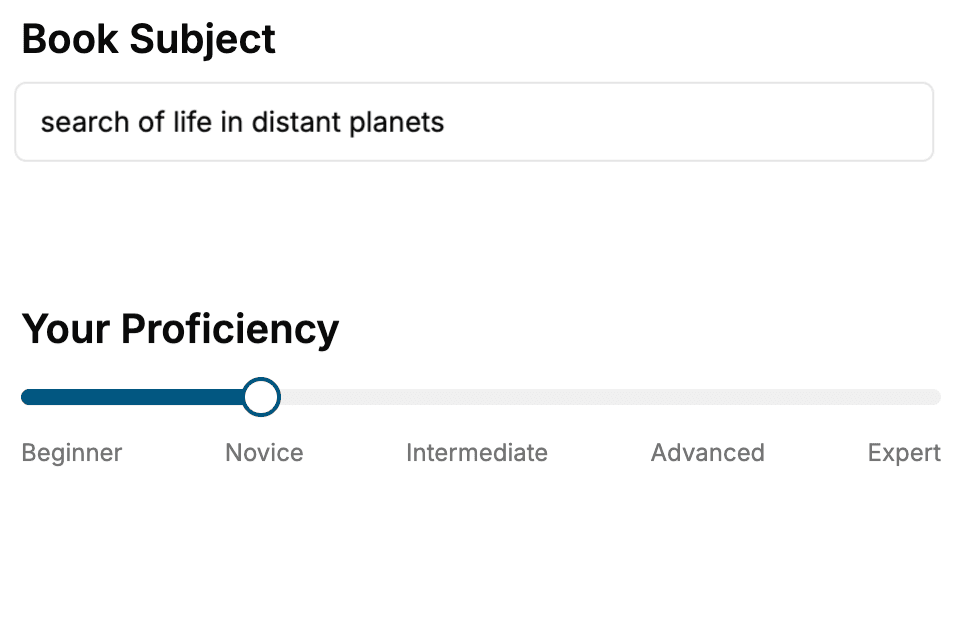
- 1. Select your focus
Select the focus of your Cocktails book and share your background
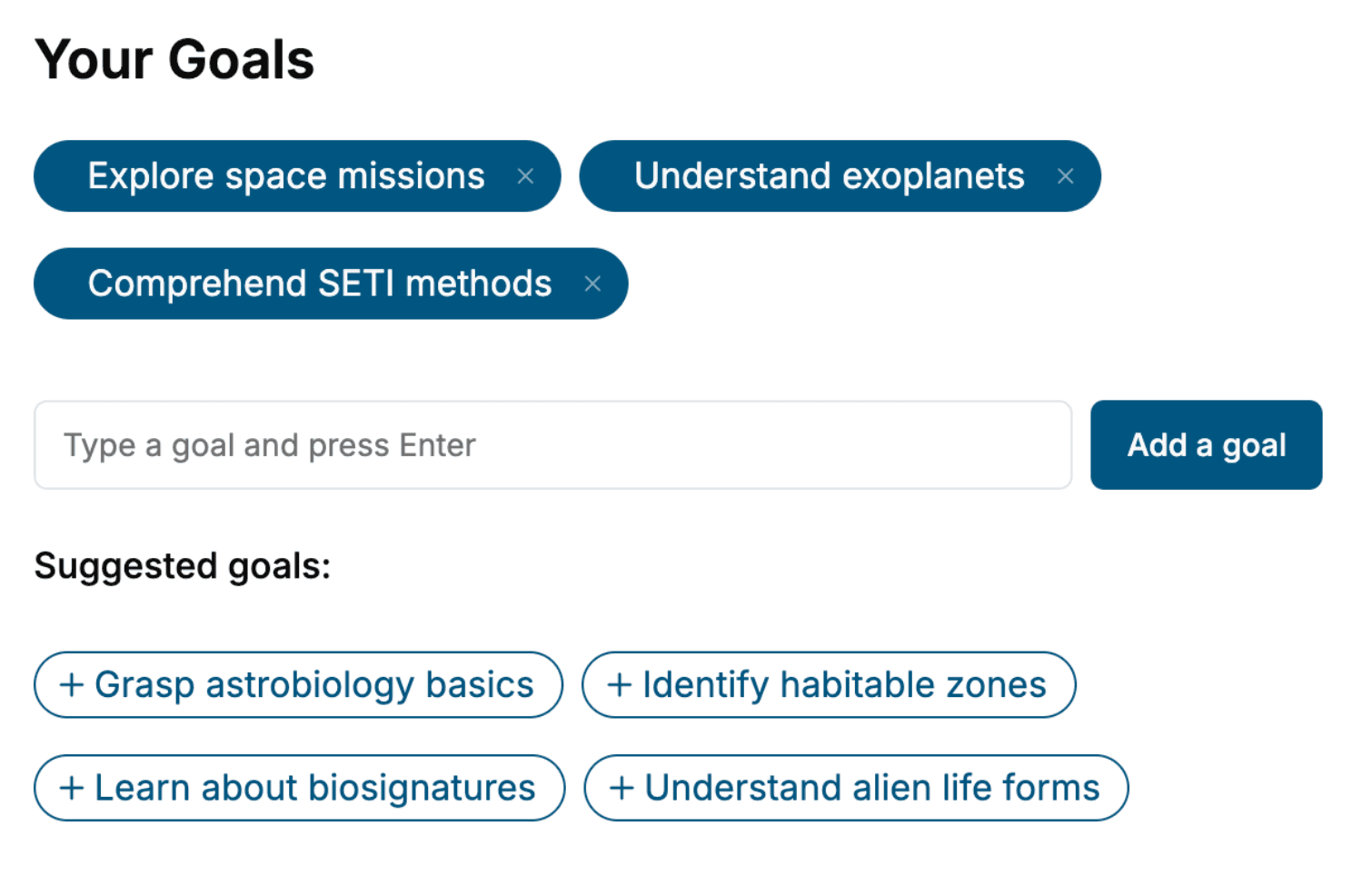
- 2. Personalize your book
Specify your goals and choose sub-topics to include
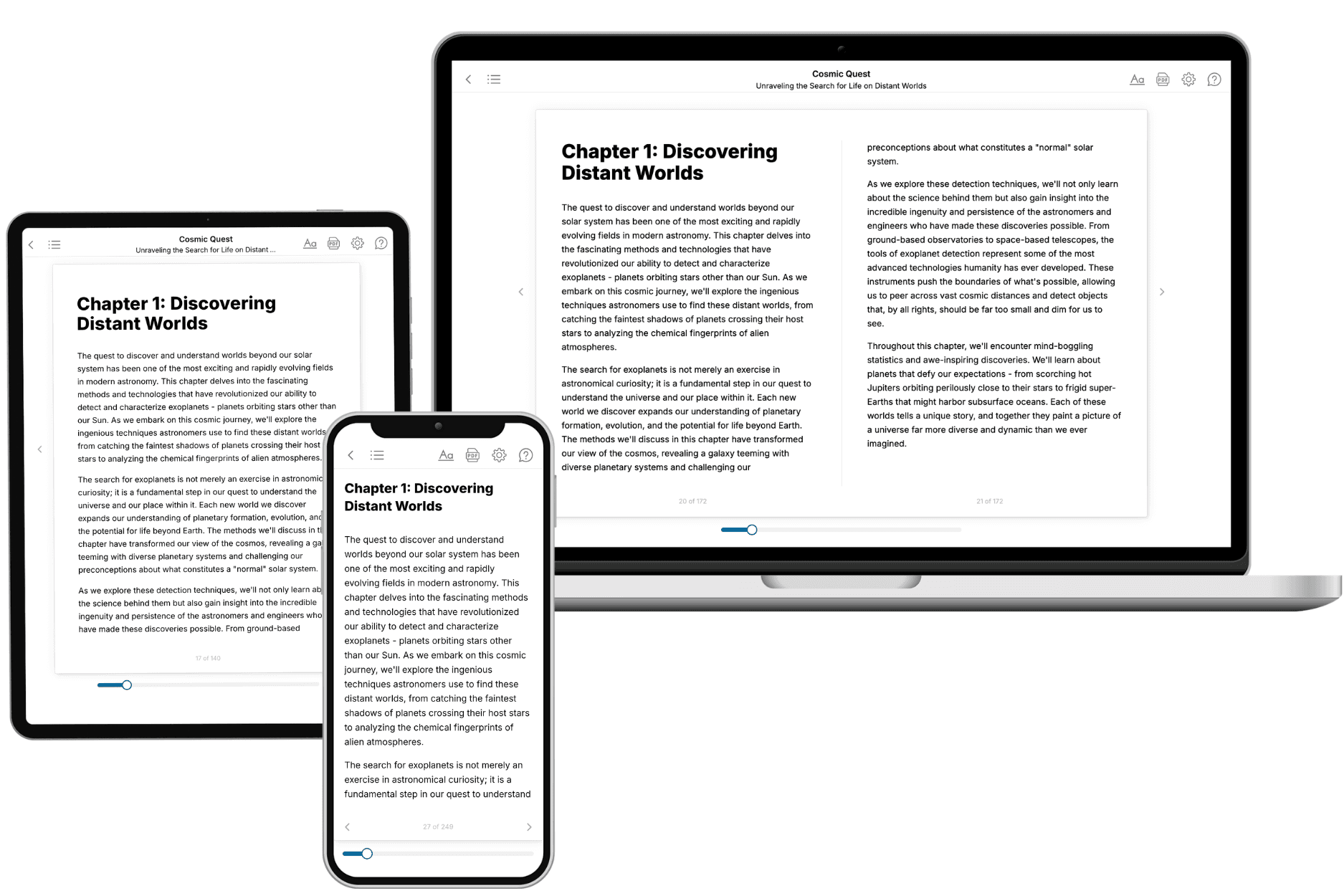
- 3. Get your tailored book
Your book is ready in 10 minutes. Read it online, download as EPUB or PDF, or send to Kindle.
Frequently asked questions
- What is TailoredRead?
TailoredRead creates complete, full-length nonfiction ebooks, written specifically for you. Tell us what you want to learn and why, and TailoredRead writes you a complete ebook on it, with charts, tables, and diagrams throughout. Read it online, on Kindle, or on any e-reader, or download it as a PDF or EPUB. Every book is written fresh the day you order it.
- How is the book tailored to me?
Before anything is written, you answer a few short questions about your goals, your background, and the topics you care about. Your book is then planned around your answers: written at your level, focused on your goals, and covering the topics you chose, instead of the one-size-fits-all book a store sells everyone.
- Will it read like generic AI content?
No. Your book isn't a chat transcript: it's planned chapter by chapter before a single word is written, told in a clear book voice, and explains ideas visually with charts, tables, and diagrams. After writing, every book goes through an editorial pass that polishes chapters so the book reads consistent from start to finish. Judge for yourself: browse thousands of sample books on our Explore Books page.
- How accurate is the content?
Our AI first checks whether your subject needs live research. Niche and fast-moving subjects are researched before writing, and the book plan and chapters are grounded in what it finds. After writing, every book goes through a quality pass that checks its facts and consistency, and researched books list their sources in a Notes section at the back.
- How long is the book?
You choose the length: Comprehensive (250-300 pages), Detailed (150-200 pages), Essential (70-100 pages), or Short (30-50 pages).
- Does the book include visuals?
Yes. Every book includes charts, tables, and diagrams: timelines, checklists, step-by-step guides, decision trees, comparison tables, matrices, and bar charts. A typical book includes dozens of these visual elements.
- Can I read it on Kindle? What formats can I download?
Yes. Every book can be read in our online reader or downloaded as a PDF or EPUB. The EPUB can be opened with Kindle, Apple Books, Kobo, and any e-reader. The Commercial and Author licenses also include an editable Word (DOCX) and Markdown download.
- How much does it cost?
About the price of a regular ebook. The exact price depends on your book's length and complexity, from $2 for the shortest books to $35 for the most comprehensive, and it's shown when you review your book, before you commit to anything. Each book is a one-time purchase, yours to keep, no subscription. Licenses that let you share, teach, or publish your book range from $35.99 to $49.99.
- Can I preview the book before purchasing?
Before you pay, you'll see what your book will cover: the title, a detailed description, the estimated length, and the complete chapter-by-chapter table of contents, so you know what you're getting before you decide. The full text itself is written after you purchase.
- How long does it take to create a book?
About 10 minutes. You can start reading the opening chapters while the rest is still being written.