London Unbound
A Writer's Journey Through Hidden Gems and Literary Landscapes
Picture yourself strolling along the Thames at twilight, notebook in hand, as the city's hidden stories unfold before you.
83 pages4 chaptersAug 20, 2025Travel GuideCreated by M.
About this book
London Unbound is your passport to the soul of the city, revealing a tapestry of secret gardens, quirky museums, and literary landmarks that lie just beyond the tourist trail. This guide is crafted for the discerning traveler who craves more than mere sightseeing. You'll discover themed walking routes that weave through the fabric of London's rich history and vibrant present. From the whispers of Shakespeare in centuries-old pubs to the avant-garde art scenes tucked away in repurposed warehouses, each page offers a new perspective on the city's multifaceted character. Delve into the world of London after dark, where the city's pulse changes and new adventures await. Uncover the urban planning marvels that have shaped London's evolution, and gain insights that will inform your own creative projects. With London Unbound as your companion, you'll capture the essence of the city in ways that go far beyond the typical tourist experience, equipping you with the knowledge and inspiration to craft compelling travel narratives and unforgettable walking tours.
Table of contents
- Chapter 1: Literary London: Words Written in StonePortals to the Past: Famous Bookshops, In the Footsteps of Giants: Authors' Haunts, Stories Set in Stone: Literary LandmarksRead below
- Chapter 2: Hidden London: Secrets of the CityUrban Oases: Secret Gardens, Curiosity Cabinets: Quirky Museums, Whispers of the Past: Hidden Histories
- Chapter 3: London by Foot: A Walker's ParadiseAlong the Lifeblood: Riverside Walks, Stories in Steps: Themed Walking Routes, The City's Canvas: Urban Planning Marvels
- Chapter 4: Nocturnal London: The City After DarkMoonlit Marvels: Night-time Attractions, Curtain Up: Evening Cultural Scene
- Conclusion
Chapter 1: Literary London: Words Written in Stone
London, a city steeped in literary history, has long been a muse for writers and a haven for book lovers. Its streets, buildings, and hidden corners are imbued with the essence of countless stories, both real and imagined. As you embark on your journey to uncover the literary treasures of this magnificent city, you'll find that London's literary heritage is not just preserved in museums and libraries, but is very much alive in its bustling streets, cozy pubs, and tranquil gardens. This chapter will guide you through the literary landscape of London, revealing the places where words have left an indelible mark on the city's stone and spirit.
From the moment you step onto London's streets, you're walking in the footsteps of literary giants. The city has been home to some of the world's most renowned authors, from William Shakespeare and Charles Dickens to Virginia Woolf and T.S. Eliot. Their presence can still be felt in the places they frequented, the homes they lived in, and the locations that inspired their most famous works. As you explore these literary landmarks, you'll gain a deeper understanding of how London has shaped literature and how literature, in turn, has shaped London.
But London's literary scene is not just about the past. The city continues to be a vibrant hub for contemporary writers, with numerous literary events, readings, and festivals taking place throughout the year. Independent bookshops, each with its own unique character, dot the cityscape, offering havens for bibliophiles and aspiring writers alike. These spaces serve not only as repositories of books but as community centers where ideas are exchanged and new literary voices are nurtured.
As you delve into Literary London, you'll discover that the city's relationship with literature is complex and multifaceted. It's a place where the weight of literary history is palpable, yet innovation and creativity continue to thrive. You'll find inspiration in unexpected places, from centuries-old pubs where literary societies once gathered to modern cafes where today's writers tap away at their laptops. The city's diverse neighborhoods each offer their own literary flavor, from the bohemian charm of Bloomsbury to the gritty realism of the East End.
This chapter will equip you with the knowledge and insights needed to create compelling content for your travel blog and develop engaging walking tours that bring London's literary heritage to life. You'll learn how to weave together the threads of history, architecture, and literature to create narratives that captivate your audience. Whether you're interested in tracing the steps of a favorite author, exploring the settings of beloved novels, or uncovering little-known literary anecdotes, you'll find plenty of material to fuel your creativity.
As we explore Literary London together, keep in mind that the city's literary landscape is constantly evolving. While we'll visit many well-known sites, be prepared to venture off the beaten path and make your own discoveries. The true essence of Literary London often lies in the quiet corners and hidden gems that reveal themselves to the curious explorer. So, sharpen your pencil, open your notebook, and prepare to be inspired by the words written in stone across this magnificent city.
Portals to the Past: Famous Bookshops
London's bookshops are more than mere retail spaces; they are portals to other worlds, repositories of knowledge, and sanctuaries for the written word. These establishments have played a crucial role in shaping the city's literary landscape, serving as meeting points for intellectuals, havens for readers, and launching pads for aspiring writers. As you explore these literary landmarks, you'll find that each bookshop has its own unique character, history, and atmosphere, offering a glimpse into different facets of London's rich literary heritage.
One cannot discuss London's famous bookshops without mentioning Hatchards, the oldest bookshop in the United Kingdom. Established in 1797 on Piccadilly, Hatchards has been a fixture of London's literary scene for over two centuries. As you step through its doors, you're walking into a piece of living history. The shop's wooden shelves, winding staircases, and cozy nooks create an atmosphere that transports you back in time. Hatchards has held Royal Warrants since 1893, a testament to its enduring quality and prestige. Over the years, it has welcomed countless literary luminaries through its doors, from Lord Byron to Oscar Wilde[1]. Today, Hatchards continues to be a haven for book lovers, offering an expertly curated selection of titles across multiple floors. When developing your literary walking tour, consider including Hatchards as a stop, highlighting its historical significance and inviting your participants to browse its shelves, perhaps in search of a rare first edition or a signed copy by a favorite author.
Moving eastward, you'll find another iconic London bookshop: Foyles. Founded in 1903 by brothers William and Gilbert Foyle, this bookstore on Charing Cross Road has grown from humble beginnings to become one of the world's most famous bookshops. For much of the 20th century, Foyles was known for its eccentric management style and labyrinthine layout, which often left customers bewildered but enchanted. In 2014, Foyles moved to a new, larger location just a few doors down from its original site. The new store, while more modern and user-friendly, still retains the sense of adventure and discovery that has always been Foyles' hallmark. With its five floors of books, a gallery, auditorium, and cafe, Foyles is not just a bookshop but a cultural destination. When crafting content for your travel blog, consider sharing the story of Foyles' transformation and how it reflects the evolving nature of bookselling in the digital age. Encourage your readers to explore the store's various sections, attend one of its frequent author events, or simply soak in the atmosphere of this book lover's paradise.
For those interested in more specialized literary fare, London offers a wealth of niche bookshops. One such gem is Persephone Books in Bloomsbury, which specializes in neglected fiction and non-fiction by mid-twentieth century (mostly) women writers. The shop itself is a visual delight, with its distinctive grey jackets and patterned endpapers. Persephone Books not only sells books but also publishes them, bringing forgotten classics back into print. This unique approach to bookselling and publishing offers an interesting angle for your travel blog, highlighting how independent bookshops can play a crucial role in preserving and promoting literary heritage.
No exploration of London's famous bookshops would be complete without a visit to Daunt Books on Marylebone High Street. While Daunt now has several branches across London, the Marylebone shop is the original and most spectacular. Housed in an Edwardian building with long oak galleries, skylights, and William Morris prints, Daunt Books is renowned for its travel section, where books are arranged by country. This geographical organization invites browsing and discovery, making it an ideal spot for travel writers and literary explorers. The shop's aesthetic appeal and unique layout make it a popular spot for Instagram-worthy photos, which could be a useful tip for your blog readers looking to capture the essence of Literary London.
For those interested in the intersection of literature and counterculture, a visit to Housmans Bookshop in King's Cross is a must. Established in 1945, Housmans specializes in books, magazines, and periodicals of radical interest and progressive politics. It has been a hub for alternative thinkers and activists for decades, hosting talks, book launches, and other events. Including Housmans in your literary tour of London can provide a different perspective on the city's literary scene, showcasing how bookshops can serve as centers for social and political discourse.
As you explore these famous bookshops, pay attention to the details that make each one unique. Notice the way books are displayed, the types of customers browsing the shelves, and the overall ambiance of each shop. These observations can add depth and color to your travel writing, helping your readers to visualize and almost smell the musty scent of old books or hear the creak of wooden floorboards underfoot. Consider interviewing shop owners or long-time employees for insider anecdotes that can bring these literary spaces to life in your blog posts or walking tour narratives.
Remember that these bookshops are not just tourist attractions but living, breathing parts of London's literary ecosystem. They continue to play a vital role in nurturing new talent, preserving literary traditions, and fostering a love of reading. When developing your walking tours, consider how you can incorporate these shops not just as points of interest, but as active participants in the literary experience. Perhaps you could arrange for a short reading or book signing at one of the shops as part of your tour, or include a challenge for tour participants to find a specific book or author in one of the more labyrinthine stores.
Finally, as you craft your content about London's famous bookshops, don't forget to highlight the importance of supporting these independent businesses. In an age of online retail and e-books, physical bookshops face numerous challenges. Encourage your readers to purchase a book or two during their visits, not just as souvenirs, but as a way of contributing to the preservation of these literary institutions. Each book bought from these shops is not just a memento of a trip to London, but a piece of the city's ongoing literary story.
London's famous bookshops offer more than just books; they provide a tangible connection to the city's literary past and present. As portals to other worlds and times, they invite exploration, discovery, and inspiration. By incorporating these literary landmarks into your travel writing and walking tours, you'll be able to offer your audience a rich, multifaceted experience of Literary London, one that goes beyond mere sightseeing to engage with the living, breathing culture of books and ideas that continues to thrive in the heart of this great city.
In the Footsteps of Giants: Authors' Haunts
London has long been a magnet for literary talent, drawing writers from across the globe with its vibrant culture, rich history, and endless sources of inspiration. As you explore the city, you'll find that many of its streets, buildings, and public spaces are steeped in literary significance, having played host to some of the world's most renowned authors. These authors' haunts - the places where they lived, worked, socialized, and found inspiration - offer a unique window into the lives and minds of literary giants, as well as the London of their time. By tracing their footsteps, you can gain deeper insights into their works and the city that shaped them, providing rich material for your travel blog and walking tours.
Let's begin our journey in Bloomsbury, a neighborhood synonymous with literary London. In the early 20th century, Bloomsbury was home to the influential group of writers, intellectuals, and artists known as the Bloomsbury Group. At the heart of this circle was Virginia Woolf, one of the most important modernist writers of the 20th century. Woolf lived at 46 Gordon Square from 1904 to 1907, and the house became a gathering place for the Bloomsbury Group. Today, you can see a blue plaque commemorating Woolf's residence. As you stand outside this Georgian townhouse, imagine the lively discussions and creative collaborations that took place within its walls. For your walking tour, you might encourage participants to read a passage from one of Woolf's novels, such as "Mrs. Dalloway," which vividly depicts London streets, while standing in this spot[2].
Not far from Gordon Square, you'll find the British Museum, a favorite haunt of countless writers throughout history. Karl Marx spent many hours in the museum's Reading Room, researching and writing "Das Kapital." Charles Dickens, Sir Arthur Conan Doyle, and Bram Stoker were also frequent visitors. While the original Reading Room is no longer accessible to the public, you can still visit the magnificent Great Court, redesigned by Norman Foster in 2000. In your blog, you might explore how the museum has inspired writers over the centuries, from the antiquities that fired the imagination of poets like Keats to the vast collection of world literature that continues to draw scholars and writers today.
Moving southward, we come to Fleet Street, long associated with the newspaper industry and a popular haunt for journalists and writers. While the street is no longer the center of British journalism, its literary connections remain strong. One of the most famous literary landmarks here is Ye Olde Cheshire Cheese, a pub rebuilt shortly after the Great Fire of London in 1666. This atmospheric tavern has been frequented by numerous literary figures over the centuries, including Samuel Johnson, Charles Dickens, Mark Twain, and Sir Arthur Conan Doyle. As you step into the dark, wood-paneled interior, you can almost hear the echoes of heated debates and witty exchanges that must have taken place here. For your walking tour, consider incorporating some of the colorful anecdotes associated with the pub, such as the tale of its resident parrot, which allegedly could recite lines from Shakespeare.
No exploration of authors' haunts in London would be complete without a visit to the South Bank, particularly the area around Shakespeare's Globe. While the current Globe is a reconstruction, it stands close to the site of the original theater where many of Shakespeare's plays were first performed. As you walk along the Thames path, you're treading the same ground that Shakespeare would have walked, drawing inspiration from the bustling life of the river and the city. In your blog, you might discuss how the South Bank of Shakespeare's time was a vibrant, sometimes notorious area, home to theaters, bear-baiting pits, and taverns. Today, it remains a cultural hub, with the National Theatre, Tate Modern, and numerous performance spaces continuing the area's artistic legacy.
For fans of more recent literature, a trip to King's Cross Station is a must. While the station has long been a feature in London literature, it gained new fame as the departure point for the Hogwarts Express in J.K. Rowling's Harry Potter series. The station now features a Platform 9¾ photo opportunity, complete with a trolley disappearing into the wall. While this is undoubtedly a popular tourist spot, it's worth including in your literary tour as an example of how contemporary literature can leave its mark on the city's landscape. In your blog, you might explore how Rowling's depiction of London in the Harry Potter books has influenced perceptions of the city for a new generation of readers.
Venturing into East London, you'll find yourself in the territory of many contemporary British writers. The area around Brick Lane and Spitalfields has been immortalized in the works of authors like Monica Ali ("Brick Lane") and Peter Ackroyd ("Hawksmoor"). These streets, with their rich immigrant history and constantly evolving character, offer a different perspective on literary London. As you walk through this area, point out how the diverse communities and urban landscapes have inspired writers to explore themes of identity, belonging, and the changing face of the city.
Don't forget to include some of London's beautiful parks in your exploration of authors' haunts. Regent's Park, for instance, was a favorite of Elizabeth Barrett Browning and Robert Browning during their courtship. The park's Queen Mary's Gardens, with its thousands of roses, provides a romantic backdrop for reciting some of their love poetry. Hyde Park, meanwhile, has connections to authors as diverse as J.M. Barrie (creator of Peter Pan) and George Orwell. In your blog, you might discuss how these green spaces have provided respite and inspiration for writers amidst the bustle of the city.
As you research and visit these authors' haunts, look for the unexpected connections and overlaps between different writers and eras. For example, the house at 48 Doughty Street, now the Charles Dickens Museum, is just a short walk from the flat where Sylvia Plath lived in the 1960s. These juxtapositions can provide interesting talking points for your walking tours, illustrating how London's literary heritage is layered and interconnected.
Remember to engage all the senses as you explore these locations. What would the authors have seen, heard, or smelled as they walked these streets or sat in these rooms? How has the sensory landscape of the city changed, and how has it remained the same? These details can help bring your writing to life and make your walking tours more immersive.
Finally, as you craft your content about authors' haunts, consider the broader historical and social context of each location. How did the London of Shakespeare's time differ from that of Virginia Woolf's or Zadie Smith's? How have changes in the city's architecture, demographics, and culture influenced its literature over time? By weaving these threads together, you can create a rich tapestry that illustrates not just the lives of individual authors, but the evolving story of London itself as a literary capital.
In tracing the footsteps of literary giants through London, you're not just visiting static historical sites, but engaging with a living literary tradition that continues to shape and be shaped by the city. These authors' haunts serve as bridges between past and present, between the written word and the physical world. By exploring them deeply and creatively, you can offer your blog readers and tour participants a unique and inspiring journey through the heart of Literary London.
Stories Set in Stone: Literary Landmarks
London's streets, buildings, and public spaces are not merely the backdrop against which great literature has been created; they are often characters in their own right, playing pivotal roles in countless stories. The city's literary landmarks - places that have been immortalized in literature or that commemorate significant literary events and figures - offer a unique way to experience London through the lens of its rich literary heritage. As you explore these sites, you'll find that they bridge the gap between the imagined worlds of books and the tangible reality of the city, providing a wealth of material for your travel blog and walking tours.
One of the most iconic literary landmarks in London is Baker Street, forever associated with Sir Arthur Conan Doyle's legendary detective, Sherlock Holmes. While 221B Baker Street, Holmes' fictional address, didn't exist when Doyle was writing, today you'll find the Sherlock Holmes Museum at this location. The museum, designed to replicate Holmes' Victorian-era rooms as described in the stories, offers visitors a chance to step into the world of the great detective. As you stand outside the museum, with its iconic door and gaslit lamps, you can almost imagine Holmes and Watson rushing out to solve their latest case. In your blog, you might discuss how Doyle's descriptions of London, particularly its foggy, gas-lit streets, have shaped perceptions of Victorian London for generations of readers. For your walking tour, consider incorporating some of Holmes' deductive methods, encouraging participants to observe and deduce details about the modern Baker Street area[3].
Moving eastward, we come to the City of London, where you'll find another significant literary landmark: the George Inn on Borough High Street. This coaching inn, the last galleried inn in London, has a long association with Charles Dickens. Dickens mentioned it in "Little Dorrit," and it's believed he frequented the inn. Today, you can still enjoy a pint in the same rooms where Dickens might have sat, soaking in the atmosphere of old London. The inn's galleried structure, with its wooden beams and uneven floors, provides a tangible link to the London of Dickens' time. In your blog, you might explore how such historic inns served as gathering places for travelers and locals alike, fostering the exchange of stories and news that often found their way into literature.
Not far from the George Inn, you'll find another important Dickensian landmark: the site of the Marshalsea Prison. While the prison itself no longer stands, you can visit a small garden on the site and see a plaque commemorating its history. The Marshalsea played a significant role in Dickens' life and work; his father was imprisoned there for debt, and the prison features prominently in "Little Dorrit." Standing on this spot, you can reflect on how Dickens' early experiences shaped his writing and his lifelong concern with social justice. For your walking tour, you might read a passage from "Little Dorrit" describing the prison, inviting participants to imagine the grim reality of debtors' prisons in 19th century London.
Crossing the Thames, we come to the South Bank and the recreation of Shakespeare's Globe Theatre. While not the original structure, this faithful reconstruction offers visitors a chance to experience Shakespeare's plays as they might have been staged in his time. The Globe is more than just a theatre; it's a living monument to Shakespeare's enduring influence on literature and drama. In your blog, you could discuss how the design of the theatre, with its open-air structure and standing-room pit, influenced the way Shakespeare wrote his plays. For your walking tour, consider attending a performance at the Globe, allowing your participants to fully immerse themselves in the Shakespearean experience.
Heading west along the river, you'll reach another significant literary landmark: Poets' Corner in Westminster Abbey. This area of the abbey serves as a memorial to many of Britain's greatest writers, including Geoffrey Chaucer, William Shakespeare, Jane Austen, the Brontë sisters, and many others. Some are buried here, while others are commemorated with plaques or statues. Standing amidst these memorials, you're surrounded by centuries of literary history. In your blog, you might explore the criteria for inclusion in Poets' Corner and how it reflects changing literary tastes and values over time. For your walking tour, you could challenge participants to find the memorials of specific authors, using clues from their works.
Venturing into Bloomsbury, you'll find a wealth of literary landmarks associated with the Bloomsbury Group. One of the most significant is the former home of Virginia Woolf at 46 Gordon Square, now marked with a blue plaque. While the interior is not open to the public, standing outside this Georgian townhouse allows you to imagine the literary salons and intellectual discussions that took place within. Nearby, you'll find the Bloomsbury Square Gardens, which feature in Woolf's novel "Mrs. Dalloway." In your blog, you might discuss how the Bloomsbury area, with its quiet squares and elegant architecture, provided both a physical setting and a cultural milieu for the modernist literature of the early 20th century.
For fans of more recent literature, a visit to Platform 9¾ at King's Cross Station is a must. This fictional platform, made famous by J.K. Rowling's Harry Potter series, has been brought to life with a trolley appearing to disappear into the wall between platforms 9 and 10. While this is undoubtedly a popular tourist attraction, it's also a testament to the power of contemporary literature to reshape our perception of familiar places. In your blog, you could explore how Rowling's depiction of London, blending real locations with magical elements, has created a new layer of literary geography in the city.
Don't overlook the city's many blue plaques, which mark the homes and significant locations associated with notable figures, including many writers. These plaques offer a way to discover literary connections throughout the city, often in unexpected places. For example, you might stumble upon the plaque marking T.S. Eliot's flat in Kensington or the house where George Orwell lived while writing "1984" in Canonbury Square. These plaques can serve as waypoints for your literary walking tour, allowing you to weave together the stories of different authors and eras as you move through the city.
As you explore these literary landmarks, pay attention to how they interact with the modern city around them. How has the London of Dickens or Woolf changed, and how has it remained the same? How do contemporary Londoners engage with these literary spaces? These observations can add depth to your blog posts and provide interesting discussion points for your walking tours.
Remember that literary landmarks aren't always grand or obvious. Sometimes, they're hidden in plain sight, like the steps of St. Paul's Cathedral where William Wordsworth stood to compose his sonnet "Composed upon Westminster Bridge." Or they might be everyday places that have been transformed by their literary associations, like the pubs and cafes where writers gathered to work and socialize. Uncovering these less obvious landmarks can add an element of discovery and insider knowledge to your blog and tours.
Finally, as you write about these landmarks and incorporate them into your tours, consider how they collectively tell the story of London's literary history. From Chaucer to Shakespeare, from Dickens to Woolf, from Orwell to Rowling, these landmarks trace the evolution of English literature and the city itself. By connecting these dots, you can offer your readers and tour participants a comprehensive view of London as a literary capital, a place where stories have been set in stone for centuries and continue to be written today.
Notes
Chapter 1: Literary London: Words Written in Stone
- 1. Hatchards. (n.d.). Our History
- 2. V. Woolf, Mrs. Dalloway, Hogarth Press, 1925
- 3. A. C. Doyle, The Sherlock Holmes Stories, Various publishers, 1887
This is the end of the free sample. The full book has 4 chapters.
Want this book written for you?
Tell us your goals and background, and get your own version of this book, tailored by AI to you.


Benefits of AI-tailored books
- Read one book, not ten:
- all the Travel Guide knowledge you need, gathered into a single book.
- Save days of learning:
- tell us your goals, choose your topics, and the whole book is built around them.
- Learn effortlessly:
- Travel Guide book written for your specific background and expertise.
- Understand at a glance:
- includes charts, tables, timelines, checklists, decision trees, and more.
- Stay current:
- written the day you order it, not years ago.
- Trust what you read:
- every book is checked for accuracy, with real research when your subject needs it.
Create your unique book in 3 steps
- 1. Select your focus
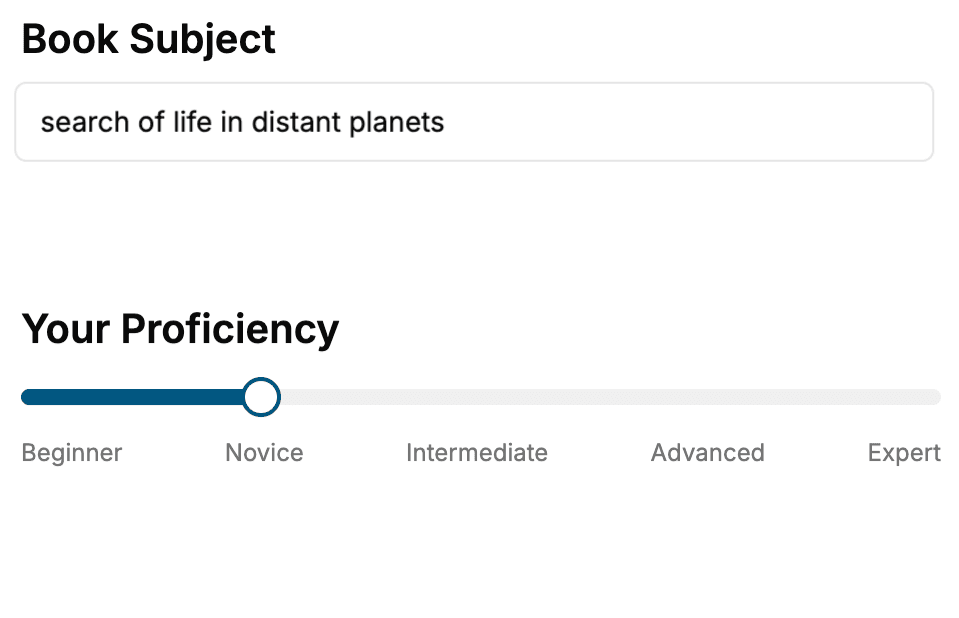
Select the focus of your Travel Guide book and share your background
- 2. Personalize your book
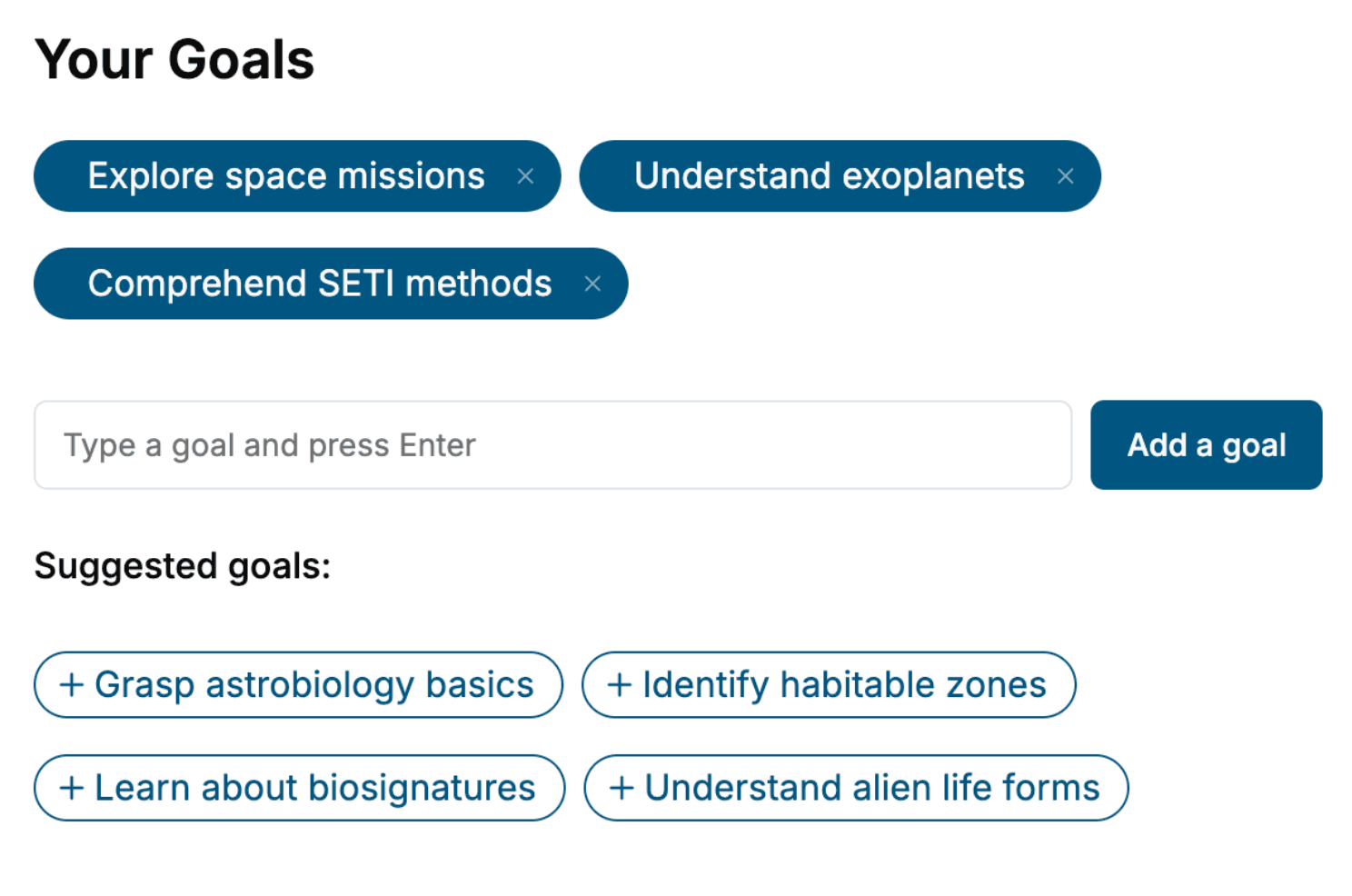
Specify your goals and choose sub-topics to include
- 3. Get your tailored book
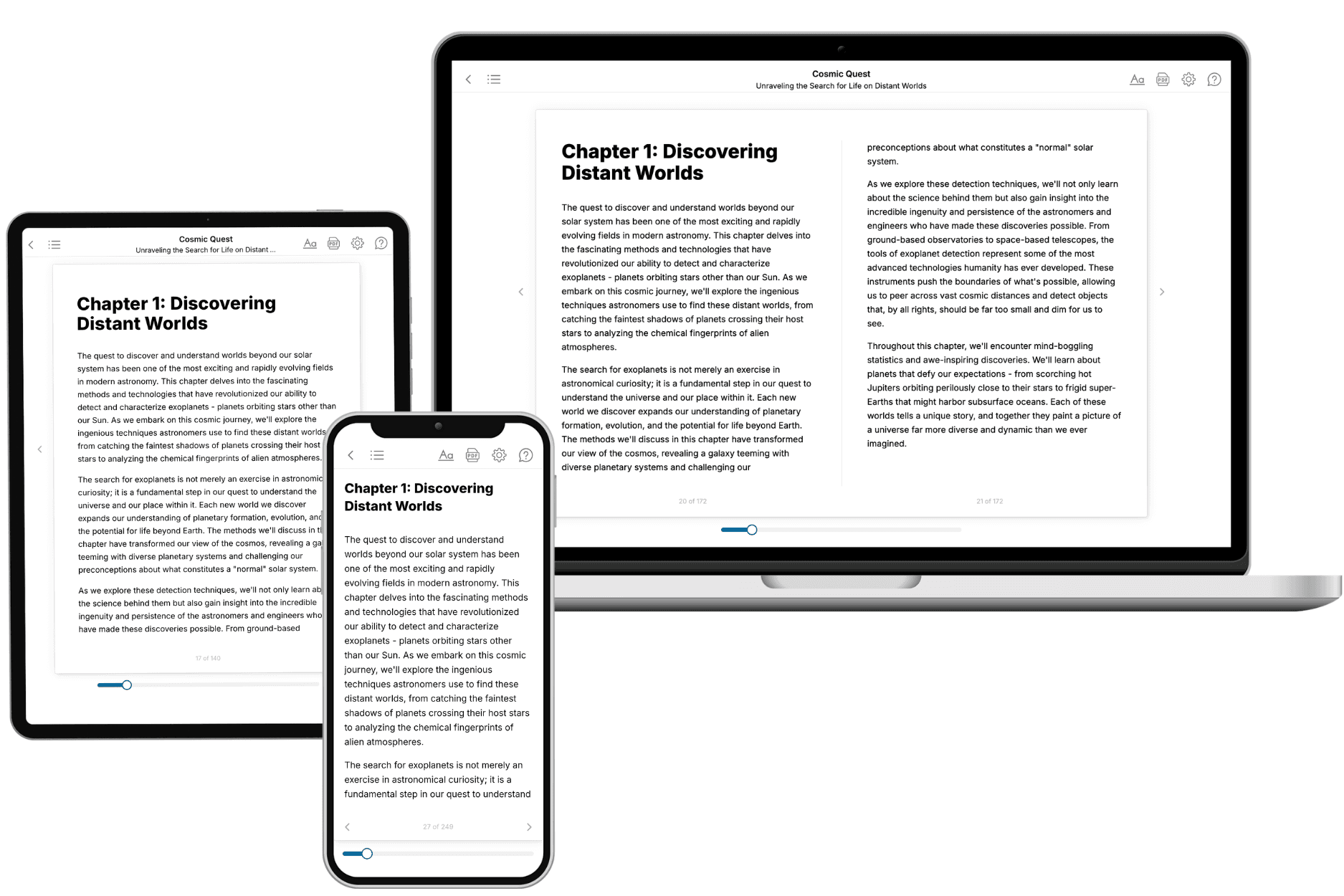
Your book is ready in 10 minutes. Read it online, download as EPUB or PDF, or send to Kindle.
Frequently asked questions
- What is TailoredRead?
TailoredRead creates complete, full-length nonfiction ebooks, written specifically for you. Tell us what you want to learn and why, and TailoredRead writes you a complete ebook on it, with charts, tables, and diagrams throughout. Read it online, on Kindle, or on any e-reader, or download it as a PDF or EPUB. Every book is written fresh the day you order it.
- How is the book tailored to me?
Before anything is written, you answer a few short questions about your goals, your background, and the topics you care about. Your book is then planned around your answers: written at your level, focused on your goals, and covering the topics you chose, instead of the one-size-fits-all book a store sells everyone.
- Will it read like generic AI content?
No. Your book isn't a chat transcript: it's planned chapter by chapter before a single word is written, told in a clear book voice, and explains ideas visually with charts, tables, and diagrams. After writing, every book goes through an editorial pass that polishes chapters so the book reads consistent from start to finish. Judge for yourself: browse thousands of sample books on our Explore Books page.
- How accurate is the content?
Our AI first checks whether your subject needs live research. Niche and fast-moving subjects are researched before writing, and the book plan and chapters are grounded in what it finds. After writing, every book goes through a quality pass that checks its facts and consistency, and researched books list their sources in a Notes section at the back.
- How long is the book?
You choose the length: Comprehensive (250-300 pages), Detailed (150-200 pages), Essential (70-100 pages), or Short (30-50 pages).
- Does the book include visuals?
Yes. Every book includes visual elements such as timelines, checklists, step-by-step guides, decision trees, comparison tables, and matrices, and many include bar charts. A typical book includes dozens of these visual elements.
- Can I read it on Kindle? What formats can I download?
Yes. Every book can be read in our online reader or downloaded as a PDF or EPUB. The EPUB can be opened with Kindle, Apple Books, Kobo, and any e-reader. The Commercial and Author licenses also include an editable Word (DOCX) and Markdown download.
- How much does it cost?
About the price of a regular ebook. The exact price depends on your book's length and complexity, from $2 for the shortest books to $35 for the most comprehensive, and it's shown when you review your book, before you commit to anything. Each book is a one-time purchase, yours to keep, no subscription. Licenses that let you share, teach, or publish your book range from $35.99 to $49.99.
- Can I preview the book before purchasing?
Before you pay, you'll see what your book will cover: the title, a detailed description, the estimated length, and the complete chapter-by-chapter table of contents, so you know what you're getting before you decide. The full text itself is written after you purchase.
- How long does it take to create a book?
About 10 minutes. You can start reading the opening chapters while the rest is still being written.