The Lowcountry Guide
Discover the Hidden Charm, Rich History, and Natural Beauty of South Carolina's Coastal Treasure
Many travelers visit South Carolina's Lowcountry expecting a typical beach vacation, only to discover a region far richer and more complex than anticipated.
176 pages8 chaptersApr 5, 2026South Carolina Travel Guide
About this book
The challenge lies in navigating between well-worn tourist paths and authentic local experiences, understanding a layered history that shaped America itself, and appreciating a unique culture that remains vibrant today. This guide moves beyond surface-level recommendations to reveal what makes the Lowcountry truly special. You'll explore Charleston's historic neighborhoods and hidden courtyards, discover the Gullah communities and Sea Islands that preserve centuries-old traditions, and understand the ecological significance of salt marshes and barrier islands. Learn where locals actually eat, which historic sites offer genuine insight into the region's complex past, and how to experience the Lowcountry's natural beauty responsibly. Whether you're planning your first visit or returning to explore deeper, this guide provides the context, practical information, and insider perspective needed to experience the Lowcountry authentically.
Table of contents
- IntroductionWhat Makes the Lowcountry Unique, How to Use This Guide, Best Times to VisitRead below
- Chapter 1: Understanding the LowcountryGeography and Climate, Cultural Heritage and Gullah Traditions, A Complex History: From Colonial Times to Today
- Chapter 2: Charleston: The Heart of the LowcountryExploring the Historic District, Neighborhoods Beyond the Tourist Trail, Museums and Historic Sites, The Dining and Food Scene
- Chapter 3: The Sea Islands and Gullah CountryUnderstanding Gullah Culture and History, St. Helena Island and Penn Center, Daufuskie Island and Isolation, Edisto Island: Beaches and Heritage
- Chapter 4: Beaufort and the Coastal TownsBeaufort's Historic Charm, Lady's Island and Hunting Island, Small Towns Worth Exploring
- Chapter 5: Hilton Head Island and BlufftonHilton Head Island: Resort Culture and Beyond, Beaches and Outdoor Recreation, Bluffton: The Artsy Alternative
- Chapter 6: The Natural EnvironmentSalt Marshes and Coastal Ecology, Wildlife and Birdwatching, Outdoor Activities and Conservation
- Chapter 7: Lowcountry Cuisine and Food CultureCulinary Traditions and Influences, Signature Dishes and Where to Find Them, Local Restaurants and Farmers Markets
- Chapter 8: Practical Planning and LogisticsGetting Around the Region, Accommodations and Lodging Options, Budgeting and Cost Considerations
- ConclusionExperiencing the Lowcountry Authentically
- Further Resources and References
Introduction
There is a moment that happens to almost every visitor to South Carolina's Lowcountry. You're driving across a causeway at dusk, the road barely rising above the water on either side, and the marsh grass catches the last light of the day in shades of gold and copper that don't seem real. A great blue heron stands motionless at the water's edge. The air smells like salt and pluff mud, that rich, earthy scent that locals either love immediately or grow to love over time. In that moment, you understand that this place is genuinely different from anywhere else in America.
The Lowcountry is a region that resists easy definition. It stretches roughly from the ACE Basin south of Charleston down through Beaufort County and into the Sea Islands near the Georgia border, covering a patchwork of barrier islands, tidal rivers, salt marshes, and historic towns that have been shaped by centuries of complicated, often painful, and always fascinating history. Charleston anchors the region as its cultural and commercial heart, but the Lowcountry extends far beyond the city's famous church steeples and cobblestone streets. Beaufort, Bluffton, Hilton Head, Edisto Island, and dozens of smaller communities each carry their own distinct character and their own piece of the larger story.
What makes this region so compelling is the way its past and present exist side by side without apology. Antebellum plantation houses stand near Gullah communities whose residents are direct descendants of enslaved Africans who built those same estates. Civil War battlefields sit within sight of luxury golf resorts. A shrimper heading out before dawn passes kayakers launching for a morning paddle through the same tidal creeks his grandfather worked. The Lowcountry holds all of this simultaneously, and understanding that layered complexity is what separates a meaningful visit from a forgettable one.
This guide was written to help you move past the surface. You'll find practical information about where to go, where to eat, and where to stay, but you'll also find the context that makes those experiences matter. The history here is not background noise. It is the main event, and engaging with it honestly will transform how you see everything from a bowl of she-crab soup to a basket woven from sweetgrass. The goal is not to overwhelm you with facts but to give you enough understanding that the Lowcountry can speak for itself.
What Makes the Lowcountry Unique
The term Lowcountry refers both to a geographic reality and a cultural identity. Geographically, it describes the flat coastal plain of South Carolina, a landscape defined by its proximity to water in every direction. The land sits barely above sea level, threaded through with tidal creeks, rivers, and estuaries. Salt marshes cover hundreds of thousands of acres, forming one of the most productive ecosystems on the Atlantic coast. This is not dramatic mountain scenery or sweeping desert vistas. The beauty here is quieter, more intimate, and it rewards patience.[1]
Culturally, the Lowcountry is defined above all by the Gullah Geechee people, the descendants of enslaved West and Central Africans who were brought to the Sea Islands and coastal plantations beginning in the late seventeenth century. Because the Sea Islands were geographically isolated and because the region's rice and indigo plantations required specialized agricultural knowledge that enslaved Africans from specific regions possessed, a distinct African-influenced culture took root here and survived in ways it did not elsewhere in the American South. The Gullah language, cuisine, spiritual practices, and artistic traditions remain alive today, making the Lowcountry one of the most significant sites of African American cultural preservation in the United States.[2]
The region's colonial and antebellum history adds another layer of complexity. Charleston was one of the wealthiest cities in colonial America, and that wealth was built almost entirely on the labor of enslaved people working rice, indigo, and later cotton plantations. The city's magnificent architecture, its refined food culture, and its reputation for gracious hospitality all have roots in that brutal economic system. Engaging with this history honestly is not about guilt or politics. It is about accuracy, and the Lowcountry's most thoughtful historic sites and cultural institutions are increasingly committed to telling the full story.
The natural environment is a third defining element. The Lowcountry's salt marshes, barrier islands, and tidal rivers support extraordinary biodiversity. Bottlenose dolphins feed in the shallows. Loggerhead sea turtles nest on the beaches from May through October. Hundreds of bird species use the region as a year-round habitat or a critical stop on the Atlantic Flyway migration route. The ACE Basin, a protected area covering roughly 350,000 acres between the Ashepoo, Combahee, and Edisto rivers, is one of the largest undeveloped estuaries on the East Coast and a genuine conservation success story.[3]
Food is the fourth pillar of Lowcountry identity, and it is impossible to overstate how seriously people here take it. Lowcountry cuisine is a direct expression of the region's history and ecology. Dishes like shrimp and grits, red rice, Frogmore stew, and hoppin' John reflect centuries of African, European, and Caribbean culinary exchange, with Gullah cooks playing a central and often uncredited role in developing the flavors that define the region. Eating well in the Lowcountry means understanding where the food comes from and who developed the techniques that make it taste the way it does.
Finally, the Lowcountry has a pace and atmosphere that is genuinely its own. This is not a region that rushes. The heat and humidity of summer enforce a certain slowness, and even in the cooler months, life here moves at a rhythm that feels deliberate rather than lazy. Locals are generally warm and forthcoming with visitors who show genuine curiosity and respect. The best experiences in the Lowcountry tend to come from conversations, from following a recommendation down an unmarked road, or from sitting still long enough to let the marsh reveal itself. That quality of attention is something this guide hopes to encourage.
How to Use This Guide
This guide is organized to give you both depth and flexibility. It begins with a foundational chapter on the Lowcountry's geography, culture, and history, because that context genuinely changes how you experience everything that follows. If you're tempted to skip straight to the destination chapters, consider reading at least the sections on Gullah culture and the region's historical background first. Twenty minutes of reading will make a full day of sightseeing significantly more meaningful.
The destination chapters move roughly from north to south, beginning with Charleston and working down through the Sea Islands, Beaufort, and Hilton Head. Each chapter covers the major attractions but also highlights lesser-known spots that reward the traveler willing to venture off the main road. The goal throughout is to give you enough information to make informed choices without scripting your entire trip. The Lowcountry is best experienced with some room for spontaneity.
Here is a quick overview of how the guide is structured:
- Chapter 1 covers the foundational geography, climate, Gullah culture, and historical context that shapes everything else in the region.
- Chapters 2 through 5 are destination-focused, covering Charleston, the Sea Islands, Beaufort and the coastal towns, and Hilton Head and Bluffton.
- Chapter 6 focuses on the natural environment, including salt marshes, wildlife, and responsible outdoor recreation.
- Chapter 7 dives into Lowcountry cuisine, covering culinary traditions, signature dishes, and where to find the best local food.
- Chapter 8 handles practical logistics including transportation, accommodations, and budgeting.
Throughout the guide, you'll find specific recommendations marked with context about why they matter, not just what they are. A restaurant recommendation, for example, will tell you what makes it worth your time and what to order, not just the address. A historic site recommendation will explain what you'll actually learn there and whether it's worth a half-day or just an hour. This approach is intentional. The Lowcountry has no shortage of things to do, and the challenge is not finding options but choosing wisely among them.
Practical details like hours, prices, and contact information change frequently, so this guide focuses on the information that stays relevant over time: the character of a place, the experience it offers, and the context that makes it meaningful. For current hours and reservations, a quick check of the venue's website or a phone call before you visit is always the right move. This is especially true for smaller, locally owned businesses and cultural sites that may have seasonal schedules.
A note on terminology: this guide uses the term Gullah to refer to the culture and people of the South Carolina Sea Islands, and Gullah Geechee when referring to the broader cultural corridor that extends from North Carolina through Florida. Both terms are used by community members themselves, though preferences vary. The guide also uses the word enslaved rather than slave when referring to people held in bondage, a choice that reflects current scholarly and journalistic practice and that acknowledges the humanity of the people being described.
Finally, this guide encourages you to spend money in ways that support the communities you're visiting. That means eating at locally owned restaurants rather than chains, buying sweetgrass baskets directly from Gullah artisans rather than from souvenir shops, and choosing locally owned accommodations when possible. The Lowcountry's authentic culture is maintained by real people whose livelihoods depend on visitors who engage thoughtfully. Your choices as a traveler have a direct impact on whether that culture continues to thrive.
Best Times to Visit
The Lowcountry is a year-round destination, but the experience varies dramatically by season, and choosing the right time to visit can make an enormous difference in both comfort and authenticity. The short answer is that spring (March through May) and fall (September through November) offer the best combination of weather, manageable crowds, and genuine local atmosphere. Summer brings heat, humidity, and peak tourism. Winter is mild by national standards but can be quiet to the point of limiting your options.
Spring is widely considered the best time to visit the Lowcountry. Temperatures typically range from the mid-60s to the low 80s Fahrenheit, the azaleas and wisteria bloom in spectacular fashion across Charleston's historic gardens, and the crowds have not yet reached their summer peak. The Spoleto Festival USA, one of the most celebrated performing arts festivals in the country, takes place in Charleston in late May and early June, drawing visitors from around the world for two weeks of theater, opera, dance, and music.[4] If you plan to visit during Spoleto, book accommodations at least three to four months in advance.
Summer (June through August) is the peak tourist season, and it comes with real trade-offs. The heat is genuine, with temperatures regularly reaching the low to mid-90s and humidity that makes it feel hotter. Afternoon thunderstorms are common and can be intense. Mosquitoes and no-see-ums are a serious consideration, particularly near the marshes and in wooded areas. On the positive side, summer is when the beaches are at their most active, sea turtle nesting season is underway, and the region's full range of water-based activities is available. If you visit in summer, plan outdoor activities for early morning, take a long midday break, and return to outdoor exploration in the late afternoon.
A practical summer tip: the best time to visit popular Charleston attractions like Rainbow Row or the Battery is before 9 a.m. The light is beautiful, the temperature is bearable, and you'll have the streets largely to yourself before the tour groups arrive.
Fall rivals spring as the ideal visiting season. September and October bring cooling temperatures, lower humidity, and a noticeable thinning of the tourist crowds. The marshes take on their most dramatic colors in October and November, shifting from summer green to gold and amber. Fall is also shrimping season, which means the freshest possible local shrimp at restaurants and markets throughout the region. One important caveat: the Atlantic hurricane season runs from June through November, with peak activity in September. While direct hits on the Lowcountry are relatively rare, tropical storms can disrupt travel plans, so travel insurance is worth considering for fall visits.
Winter (December through February) is the Lowcountry's quiet season, and it has genuine appeal for a certain kind of traveler. Temperatures are mild by most standards, typically ranging from the low 40s at night to the low 60s during the day, though cold snaps can push temperatures below freezing for short periods. The crowds are minimal, hotel rates drop significantly, and you'll have a much better chance of experiencing the region as locals do rather than as a tourist destination. Charleston's restaurant scene remains fully active in winter, and the city's historic sites are far more pleasant to explore without summer heat and crowds. The trade-off is that some seasonal businesses, particularly on the outer islands, may have reduced hours or close entirely.
Here is a quick seasonal summary to help with planning:
- March to May (Spring): Best weather, blooming gardens, Spoleto Festival in late May. Book early for festival dates.
- June to August (Summer): Peak crowds and heat, best beach conditions, sea turtle nesting, full activity calendar. Plan around midday heat.
- September to November (Fall): Excellent weather, fewer crowds, fresh shrimp season, beautiful marsh colors. Watch hurricane forecasts in September.
- December to February (Winter): Quiet, mild, lowest prices, most authentic local atmosphere. Some seasonal businesses may be closed.
Beyond seasons, consider timing your visit around specific local events that offer genuine cultural insight. The Gullah Festival in Beaufort, held each May, is one of the most important celebrations of Gullah Geechee culture in the country. The Beaufort Water Festival in July is a beloved local tradition that draws more residents than tourists. The Charleston Wine and Food Festival in March showcases the region's extraordinary culinary scene. These events are not manufactured tourist experiences. They are occasions when the Lowcountry's communities celebrate themselves, and attending them as a respectful visitor offers a window into local life that no historic house tour can match.[5]
One final consideration: if your primary goal is to experience Gullah culture and the Sea Islands authentically, avoid the peak summer weeks when the most popular sites are crowded and the experience can feel rushed. A visit to Penn Center on St. Helena Island or a sweetgrass basket market on Highway 17 is far more meaningful when you have time to talk with the people there, ask questions, and listen. That kind of unhurried engagement is the heart of what makes the Lowcountry worth visiting in the first place, and it is most available when the crowds are thinnest.
Notes
Introduction
- 1. South Carolina Department of Natural Resources. 'South Carolina's Coastal Zone.' SCDNR, Columbia, SC.
- 2. Opala, "Joseph A. 'The Gullah," and the Sierra Leone-American Connection.' USAID, 1987
- 3. ACE Basin National Estuarine Research Reserve. 'About the ACE Basin.' NOAA, 2023.
- 4. Spoleto Festival USA. 'About Spoleto.' spoletousa.org, 2024.
- 5. Gullah Festival of South Carolina. 'About the Festival.' gullahfestival.org, 2024.
This is the end of the free sample. The full book has 8 chapters.
Want this book written for you?
Tell us your goals and background, and get your own version of this book, tailored by AI to you.


Benefits of AI-tailored books
- Read one book, not ten:
- all the South Carolina Travel Guide knowledge you need, gathered into a single book.
- Save days of learning:
- tell us your goals, choose your topics, and the whole book is built around them.
- Learn effortlessly:
- South Carolina Travel Guide book written for your specific background and expertise.
- Understand at a glance:
- includes charts, tables, timelines, checklists, decision trees, and more.
- Stay current:
- written the day you order it, not years ago.
- Trust what you read:
- every book is checked for accuracy, with real research when your subject needs it.
Create your unique book in 3 steps
- 1. Select your focus
Select the focus of your South Carolina Travel Guide book and share your background
- 2. Personalize your book
Specify your goals and choose sub-topics to include
- 3. Get your tailored book
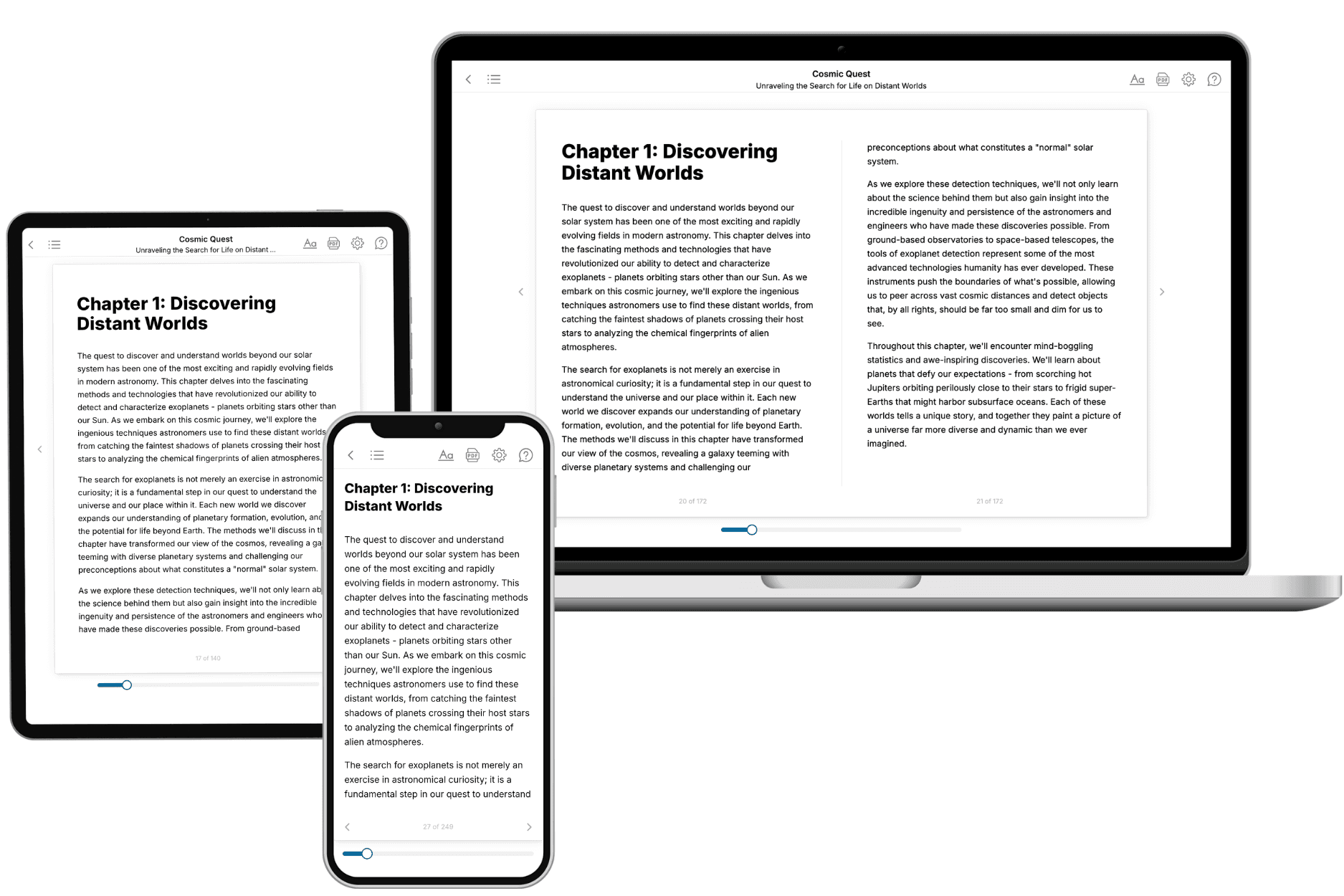
Your book is ready in 10 minutes. Read it online, download as EPUB or PDF, or send to Kindle.
Frequently asked questions
- What is TailoredRead?
TailoredRead creates complete, full-length nonfiction ebooks, written specifically for you. Tell us what you want to learn and why, and TailoredRead writes you a complete ebook on it, with charts, tables, and diagrams throughout. Read it online, on Kindle, or on any e-reader, or download it as a PDF or EPUB. Every book is written fresh the day you order it.
- How is the book tailored to me?
Before anything is written, you answer a few short questions about your goals, your background, and the topics you care about. Your book is then planned around your answers: written at your level, focused on your goals, and covering the topics you chose, instead of the one-size-fits-all book a store sells everyone.
- Will it read like generic AI content?
No. Your book isn't a chat transcript: it's planned chapter by chapter before a single word is written, told in a clear book voice, and explains ideas visually with charts, tables, and diagrams. After writing, every book goes through an editorial pass that polishes chapters so the book reads consistent from start to finish. Judge for yourself: browse thousands of sample books on our Explore Books page.
- How accurate is the content?
Our AI first checks whether your subject needs live research. Niche and fast-moving subjects are researched before writing, and the book plan and chapters are grounded in what it finds. After writing, every book goes through a quality pass that checks its facts and consistency, and researched books list their sources in a Notes section at the back.
- How long is the book?
You choose the length: Comprehensive (250-300 pages), Detailed (150-200 pages), Essential (70-100 pages), or Short (30-50 pages).
- Does the book include visuals?
Yes. Every book includes visual elements such as timelines, checklists, step-by-step guides, decision trees, comparison tables, and matrices, and many include bar charts. A typical book includes dozens of these visual elements.
- Can I read it on Kindle? What formats can I download?
Yes. Every book can be read in our online reader or downloaded as a PDF or EPUB. The EPUB can be opened with Kindle, Apple Books, Kobo, and any e-reader. The Commercial and Author licenses also include an editable Word (DOCX) and Markdown download.
- How much does it cost?
About the price of a regular ebook. The exact price depends on your book's length and complexity, from $2 for the shortest books to $35 for the most comprehensive, and it's shown when you review your book, before you commit to anything. Each book is a one-time purchase, yours to keep, no subscription. Licenses that let you share, teach, or publish your book range from $35.99 to $49.99.
- Can I preview the book before purchasing?
Before you pay, you'll see what your book will cover: the title, a detailed description, the estimated length, and the complete chapter-by-chapter table of contents, so you know what you're getting before you decide. The full text itself is written after you purchase.
- How long does it take to create a book?
About 10 minutes. You can start reading the opening chapters while the rest is still being written.