The Lucid Dreamer's Edge
Master Your Dreams to Unlock Creativity, Innovation, and Peak Performance
Most people believe lucid dreaming is either a rare gift or an impractical fantasy.
191 pages9 chaptersJul 26, 2026Dreams
About this book
The truth is far more empowering: lucid dreaming is a trainable skill that can become your personal innovation lab. During lucid dreams, your brain operates in a unique state where conscious awareness meets subconscious creativity—a mental environment where breakthrough ideas emerge naturally and complex problems dissolve into elegant solutions. This book reveals the science-backed methods used by researchers and innovators to reliably induce lucid dreams and harness them for creative problem-solving, enhanced cognitive flexibility, and peak mental performance. You'll discover how to optimize your sleep architecture, master proven induction techniques like MILD, stabilize your dreams once inside them, and capture insights that transform your waking work. Whether you're seeking creative breakthroughs, better sleep quality, or cognitive enhancement, this practical guide combines cutting-edge neuroscience with step-by-step protocols you can implement tonight.
Table of contents
- IntroductionWhy Lucid Dreaming Matters for Your Creative and Professional Life, The Science Behind Lucid Dreaming: What Neuroscience Reveals, What You'll Learn and How to Use This BookRead below
- Chapter 1: The Lucid Dreaming Landscape: History, Research, and Modern ApplicationsCelia Green's Pioneering Research: Establishing Lucid Dreaming as Science, Stephen LaBerge and the MILD Technique: From Theory to Proof, Contemporary Research: Therapeutic Uses and Performance Enhancement
- Chapter 2: Sleep Architecture and REM Optimization: Building Your FoundationUnderstanding Sleep Debt and Recovery Protocols, REM Sleep Enhancement Strategies for Lucid Dream Frequency, Assessing and Improving Your Current Sleep Architecture
- Chapter 3: Dream Recall Mastery: The Essential First StepMindfulness Practices for Enhanced Dream Recall, The Dream Journal: Capturing and Analyzing Your Dreams, Accelerating Dream Recall: From Fragments to Full Narratives
- Chapter 4: Induction Techniques: Your Practical Toolkit for Lucid DreamsMILD Technique Implementation: Step-by-Step Protocol, Wake Back To Bed (WBTB): Strategic Sleep Interruption for Lucidity, Targeted Lucidity Reactivation (TLR): Latest Home-Based Methods
- Chapter 5: Stabilization and Control: Mastering Your Lucid DreamsStabilization Techniques: Preventing Premature Awakening, Developing Volitional Control Within Your Dreams, Extending Dream Duration for Deeper Exploration
- Chapter 6: Lucid Dreaming for Creative Breakthrough and InnovationSubconscious Pattern Recognition: How Dreams Solve Problems, Divergent Thinking Enhancement Through Lucid Dream Practice, Breakthrough Insight Capture: From Dream to Waking Application
- Chapter 7: Goal Setting and Intention: Directing Your Lucid DreamsLucid Dream Goal Setting: Defining Your Dream Objectives, Prospective Memory Training: Remembering Your Intentions, Pre-Sleep Intention Protocol for Focused Dream Work
- Chapter 8: Hardware, Tools, and Technology: Modern Lucid Dreaming DevicesWearable Sleep Trackers and Their Role in Lucid Dream Induction, Sensory Cue Devices: Light and Sound Technology for Lucidity, AI-Driven Sleep Stage Detection: The Next Generation of Tools
- Chapter 9: Individual Variation and Optimization: Why Some People Lucid Dream MoreNatural Frequency Differences: Understanding Individual Variation, Personalizing Your Practice: Finding Your Optimal Approach, Troubleshooting Common Barriers to Lucid Dream Success
- Conclusion: Building Your Lucid Dreaming PracticeIntegration Strategy: Making Lucid Dreaming Part of Your Life, Long-Term Benefits and Continued Growth
- Glossary of Key Terms
Introduction
Most nights, you spend roughly two hours in a mental state that neuroscience still finds remarkable: a brain nearly as active as when you're wide awake, generating vivid experiences that feel completely real, while your body stays safely still. That state is REM Sleep, and it is the biological stage where Lucid Dreaming becomes possible. The question is not whether your brain is capable of it. The question is whether you know how to use it.
Lucid Dreaming is the experience of becoming consciously aware that you are dreaming while the dream is still happening. That awareness, once triggered, opens a door. You can observe the dream, interact with it, and in many cases direct it toward specific goals. Researchers have confirmed this is a real, measurable phenomenon, not a metaphor or a spiritual claim. The brain activity during a verified lucid dream is distinct and detectable, and trained practitioners can signal their awareness to researchers in real time using pre-agreed eye movements.
This book is built for someone who already understands the basics and wants to go further. You may have had a spontaneous lucid dream or two. You may have read about the topic and tried a few techniques without consistent results. What you need now is a structured, science-grounded approach that connects sleep biology, cognitive training, and practical tools into a coherent system. That is exactly what the chapters ahead provide. Each one addresses a specific layer of the skill, from the physiological foundation of your sleep to the moment you capture a breakthrough insight and bring it back into your waking work.
The structure of this book follows the natural sequence of building the skill. You do not start with advanced induction techniques. You start with the conditions that make those techniques work, then move through the stages of practice in the order that actually produces results. Think of it as a curriculum rather than a collection of tips. Every chapter builds on the one before it, and every concept introduced has a practical application you can test the same night.
Why Lucid Dreaming Matters for Your Creative and Professional Life
The standard case for Lucid Dreaming focuses on the experience itself: the thrill of flying, the novelty of a controllable dream world. That framing undersells it significantly. The more compelling case is cognitive. During REM Sleep, the brain processes emotional memories, consolidates learning, and makes associative connections between ideas that the waking mind tends to keep separate. Lucid Dreaming lets you be present and intentional during that process, rather than a passive passenger.
Consider what that means for creative work. When you are stuck on a problem during the day, your prefrontal cortex keeps pulling you back to familiar solutions. It is efficient but conservative. During REM Sleep, that same region partially disengages, and the brain's associative networks run more freely. Subconscious Pattern Recognition, the brain's ability to find non-obvious connections across stored information, operates at a higher rate. A lucid dreamer who enters this state with a specific problem in mind can observe and interact with that process directly.
This is not a theoretical benefit. Across history, a number of well-documented creative breakthroughs have been attributed to dream states, from scientific insights to artistic compositions. What Lucid Dreaming adds is the ability to do this deliberately, repeatedly, and with a specific goal rather than waiting for a lucky accident. The chapter on creative breakthrough and innovation explores this in depth, including how to frame problems before sleep and how to capture what emerges.
For professional performance, the implications extend beyond creativity. Lucid dreaming practice has been studied in the context of skill rehearsal, emotional regulation, and anxiety management. Athletes and performers have used dream-state rehearsal to mentally practice complex sequences. Researchers have examined its potential for managing recurring nightmares, which is particularly relevant for anyone whose sleep quality is disrupted by stress or anxiety. Better sleep quality, in turn, directly supports cognitive performance, decision-making, and sustained attention during waking hours.
There is also a metacognitive dimension worth naming. Developing a consistent Lucid Dreaming practice requires you to build habits around self-awareness, intention-setting, and reflective journaling. Those habits do not stay confined to your sleep. People who practice regularly often report improvements in daytime mindfulness, a stronger ability to notice their own mental states, and a more deliberate relationship with their attention. The skill trains the mind in ways that extend well beyond the dream itself.
None of this requires extraordinary talent or unusual brain chemistry. Individual Variation in natural lucid dream frequency is real, and some people find the skill easier to develop than others. But the research is clear that it is trainable across a wide range of people, using techniques that can be practiced at home without specialized equipment. The barriers are mostly informational, not biological. You need the right framework, the right sequence of practice, and the patience to build the skill systematically.
Lucid Dreaming is not about escaping reality. It is about using a naturally occurring mental state more deliberately, the same way a skilled meditator uses attention training to change how they experience waking life.
The chapters ahead are designed to give you that framework in full. By the time you finish, you will have a complete picture of how to build the skill from the ground up, how to direct it toward specific goals, and how to integrate what you discover into your waking creative and professional life.
The Science Behind Lucid Dreaming: What Neuroscience Reveals
Lucid Dreaming spent decades on the margins of science, associated more with spiritual traditions and anecdotal reports than with rigorous research. That changed when researchers developed a method to verify the phenomenon objectively. The key insight was that while the body is largely paralyzed during REM Sleep, the eyes continue to move. A dreamer who becomes lucid can execute a pre-agreed sequence of deliberate eye movements, which researchers can detect on an electrooculogram. This Eye-Signal Verification method transformed lucid dreaming from a subjective claim into a measurable event.
Once verification was possible, the neuroscience could begin in earnest. Brain imaging studies of lucid dreamers have identified a distinctive pattern of neural activity. Compared to ordinary dreaming, lucid dreaming shows increased activation in regions associated with self-awareness and metacognition, particularly areas of the prefrontal cortex that are normally suppressed during REM Sleep. This is why the experience feels so different from a regular dream: a portion of the brain's self-monitoring capacity has come back online while the dream state continues.
Sleep Architecture matters enormously here. A typical night of sleep cycles through several stages, with REM periods becoming longer and more intense in the second half of the night. The final REM period, often occurring in the hour or two before natural waking, tends to be the richest in vivid, complex dreaming. This is not a coincidence. It is a biological pattern that induction techniques like Wake Back To Bed are specifically designed to exploit. Understanding your own Sleep Architecture is not just background knowledge; it is a practical tool for timing your practice.
The neuroscience of Lucid Dreaming also intersects with what researchers know about memory consolidation and learning. REM Sleep is when the brain replays and integrates experiences from the day, strengthening neural pathways and connecting new information to existing knowledge. Sleep Debt, the accumulated deficit from insufficient sleep, disrupts this process significantly. A person carrying substantial Sleep Debt will have fragmented, lower-quality REM periods, which reduces both the vividness of dreams and the likelihood of achieving lucidity. This is why the chapter on Sleep Architecture and REM Optimization comes before the induction techniques. The foundation has to be solid first.
Recent research has pushed the field further, particularly in the area of home-based induction. Work by Karen Konkoly and colleagues at Northwestern University has demonstrated that Targeted Lucidity Reactivation, a method using external sensory cues delivered during REM Sleep, can reliably increase lucid dream frequency outside of a laboratory setting. Prototype systems like LuciEntry have taken this further, using real-time AI-Driven Sleep Stage Detection to time sensory cues with precision. These developments matter because they make the science accessible. You no longer need a sleep lab to benefit from what researchers have learned.
Pharmacological research has also identified compounds that influence lucid dream frequency. Acetylcholinesterase inhibitors, which increase the availability of acetylcholine in the brain, appear to enhance REM Sleep intensity and have been associated with higher rates of lucid dreaming in some studies. This is an active area of research, and the chapter on the history and landscape of the field covers it in appropriate context. The point here is simply that the neuroscience is real, specific, and growing. Lucid Dreaming is not a belief system. It is a cognitive phenomenon with a measurable biological basis.
What neuroscience cannot yet fully explain is why some people achieve lucidity far more easily than others. Individual Variation in baseline lucid dream frequency is well-documented, but the underlying mechanisms remain an open question. Factors like working memory capacity, general dream recall ability, and certain personality traits associated with absorption and fantasy-proneness have been proposed as contributors. The chapter on Individual Variation explores this in detail and provides a framework for identifying where you sit on the spectrum and how to adjust your practice accordingly.
The practical takeaway from all of this is straightforward. Lucid Dreaming is a skill with a biological substrate, trainable methods, and measurable outcomes. The science gives you a map. The techniques give you a path. What you bring is the consistency to follow it.
What You'll Learn and How to Use This Book
This book is organized as a progressive skill-building curriculum. Each chapter addresses one layer of the practice, and the sequence is deliberate. Jumping ahead to induction techniques before addressing Sleep Architecture and Dream Recall is one of the most common reasons people plateau early. The chapters are ordered to prevent that mistake and to give each new skill the foundation it needs to actually work.
Here is a brief map of what each part of the book covers:
- The Lucid Dreaming Landscape covers the history and research that established this as a legitimate field of study, from Celia Green's foundational work at the Institute of Psychophysical Research through Stephen LaBerge's development of the MILD Technique and Eye-Signal Verification, to the current generation of therapeutic and performance applications.
- Sleep Architecture and REM Optimization addresses the biological foundation. You will learn how Sleep Debt accumulates and how to recover from it, how to identify and improve your own sleep patterns, and which specific habits most reliably increase the quality and duration of your REM periods.
- Dream Recall Mastery covers the prerequisite skill that most beginners underestimate. Without reliable Dream Recall, you cannot build a consistent lucid dreaming practice. This chapter provides a complete Dream Journal protocol and specific techniques for accelerating recall from fragments to full narratives.
- Induction Techniques provides step-by-step implementation of the three primary methods: the MILD Technique, Wake Back To Bed, and Targeted Lucidity Reactivation. Each technique is explained with enough detail to implement immediately, along with common mistakes and how to avoid them.
- Stabilization and Control addresses what happens once you achieve lucidity. Dream Stabilization techniques prevent premature awakening, and Volitional Dream Control methods allow you to direct the experience toward specific goals rather than simply observing it.
- Creative Breakthrough and Innovation is where the practice connects directly to your waking work. This chapter covers Subconscious Pattern Recognition, Divergent Thinking enhancement, and the Insight Capture protocols that translate dream discoveries into actionable ideas.
- Goal Setting and Intention covers the cognitive bridge between waking intention and in-dream execution. Lucid Dream Goal Setting, Prospective Memory training, and the Pre-Sleep Intention Protocol are the tools that make your practice purposeful rather than random.
- Hardware, Tools, and Technology surveys the current ecosystem of Wearable Sleep Trackers, Sensory Cue Devices, and AI-Driven Sleep Stage Detection systems, with practical guidance on how to evaluate and integrate them into your practice.
- Individual Variation and Optimization helps you understand why your experience may differ from what you read about, how to personalize your approach based on your own patterns, and how to diagnose and work through the most common barriers to progress.
The most effective way to use this book is sequentially, at least on the first pass. Read through the full text before making major changes to your sleep routine or practice. This gives you a complete picture of how the pieces fit together, which makes each individual technique more effective when you apply it. After that first read, the book works well as a reference. Each chapter is self-contained enough to revisit when you need to troubleshoot a specific aspect of your practice.
A few practical notes on implementation. First, keep a notebook or a notes app within reach of your bed before you start. Dream Recall is time-sensitive, and the habit of capturing dreams immediately upon waking is foundational to everything else. Second, expect a ramp-up period. Most people who practice consistently begin seeing results within one to two weeks, but the timeline varies. Individual Variation is real, and the chapter on optimization will help you calibrate your expectations and your approach.
Third, and perhaps most importantly, treat this as an experiment rather than a performance. Lucid dreaming practice responds poorly to anxiety and pressure. The mental state that supports lucidity is relaxed, curious, and open. If a particular technique is not working after a genuine effort, that is information, not failure. The troubleshooting sections throughout the book are there precisely because no single approach works identically for everyone.
The goal of this book is not to give you a single lucid dream. It is to give you a reliable, repeatable practice that you can sustain and deepen over time. A single lucid dream is interesting. A consistent practice is transformative. The difference between the two is not talent. It is the quality of the system you build and the consistency with which you apply it.
What follows is that system, built from the current state of sleep neuroscience, validated induction research, and the practical experience of people who have developed this skill to a high level. The science is solid. The techniques are tested. The only variable left is your willingness to show up for the practice, night after night, and see what your sleeping mind is actually capable of.
This is the end of the free sample. The full book has 9 chapters.
Want this book written for you?
Tell us your goals and background, and get your own version of this book, tailored by AI to you.


Benefits of AI-tailored books
- Read one book, not ten:
- all the Dreams knowledge you need, gathered into a single book.
- Save days of learning:
- tell us your goals, choose your topics, and the whole book is built around them.
- Learn effortlessly:
- Dreams book written for your specific background and expertise.
- Understand at a glance:
- includes charts, tables, timelines, checklists, decision trees, and more.
- Stay current:
- written the day you order it, not years ago.
- Trust what you read:
- every book is checked for accuracy, with real research when your subject needs it.
Create your unique book in 3 steps
- 1. Select your focus
Select the focus of your Dreams book and share your background
- 2. Personalize your book
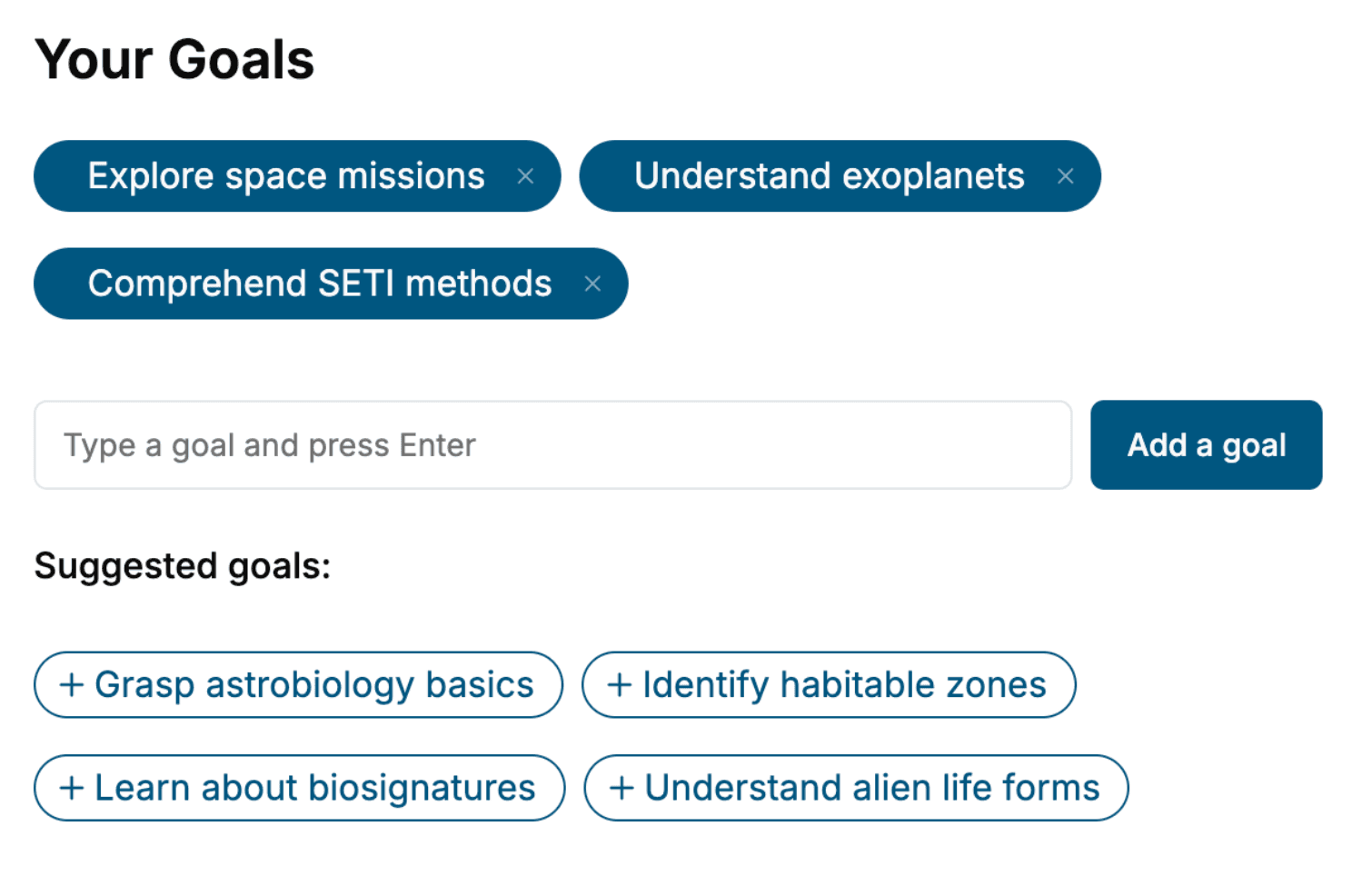
Specify your goals and choose sub-topics to include
- 3. Get your tailored book
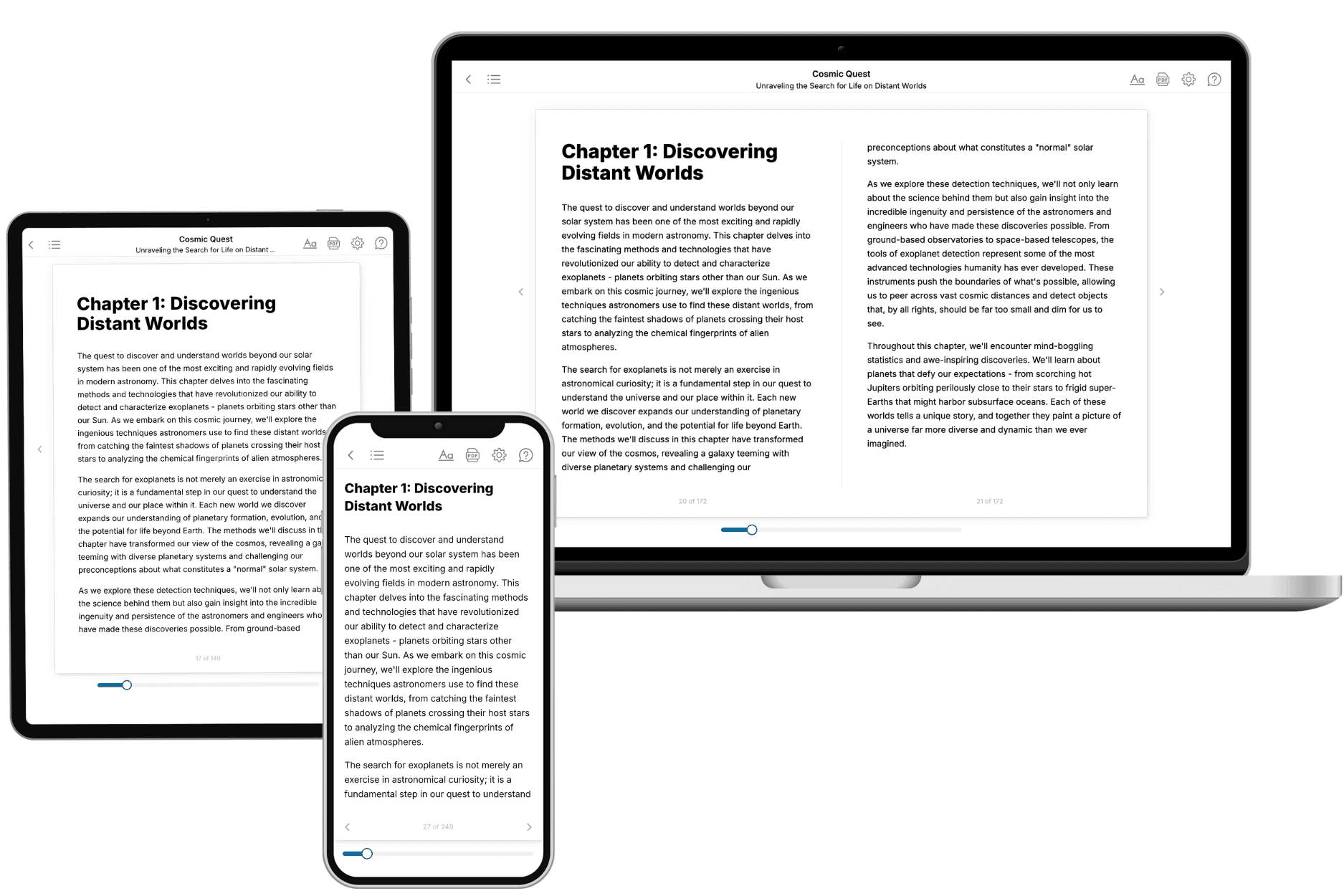
Your book is ready in 10 minutes. Read it online, download as EPUB or PDF, or send to Kindle.

Frequently asked questions
- What is TailoredRead?
TailoredRead creates complete, full-length nonfiction ebooks, written specifically for you. Tell us what you want to learn and why, and TailoredRead writes you a complete ebook on it, with charts, tables, and diagrams throughout. Read it online, on Kindle, or on any e-reader, or download it as a PDF or EPUB. Every book is written fresh the day you order it.
- How is the book tailored to me?
Before anything is written, you answer a few short questions about your goals, your background, and the topics you care about. Your book is then planned around your answers: written at your level, focused on your goals, and covering the topics you chose, instead of the one-size-fits-all book a store sells everyone.
- Will it read like generic AI content?
No. Your book isn't a chat transcript: it's planned chapter by chapter before a single word is written, told in a clear book voice, and explains ideas visually with charts, tables, and diagrams. After writing, every book goes through an editorial pass that polishes chapters so the book reads consistent from start to finish. Judge for yourself: browse thousands of sample books on our Explore Books page.
- How accurate is the content?
Our AI first checks whether your subject needs live research. Niche and fast-moving subjects are researched before writing, and the book plan and chapters are grounded in what it finds. After writing, every book goes through a quality pass that checks its facts and consistency, and researched books list their sources in a Notes section at the back.
- How long is the book?
You choose the length: Comprehensive (250-300 pages), Detailed (150-200 pages), Essential (70-100 pages), or Short (30-50 pages).
- Does the book include visuals?
Yes. Every book includes charts, tables, and diagrams: timelines, checklists, step-by-step guides, decision trees, comparison tables, matrices, and bar charts. A typical book includes dozens of these visual elements.
- Can I read it on Kindle? What formats can I download?
Yes. Every book can be read in our online reader or downloaded as a PDF or EPUB. The EPUB can be opened with Kindle, Apple Books, Kobo, and any e-reader. The Commercial and Author licenses also include an editable Word (DOCX) and Markdown download.
- How much does it cost?
About the price of a regular ebook. The exact price depends on your book's length and complexity, from $2 for the shortest books to $35 for the most comprehensive, and it's shown when you review your book, before you commit to anything. Each book is a one-time purchase, yours to keep, no subscription. Licenses that let you share, teach, or publish your book range from $35.99 to $49.99.
- Can I preview the book before purchasing?
Before you pay, you'll see what your book will cover: the title, a detailed description, the estimated length, and the complete chapter-by-chapter table of contents, so you know what you're getting before you decide. The full text itself is written after you purchase.
- How long does it take to create a book?
About 10 minutes. You can start reading the opening chapters while the rest is still being written.