The Madoff Deception
Inside the Greatest Fraud in Wall Street History
Imagine understanding exactly how one man deceived thousands of intelligent investors, evaded regulators for decades, and orchestrated a $65 billion fraud that shook the global economy.
222 pages12 chaptersOct 18, 2025Fraud Biography
About this book
You'll gain unprecedented insight into the mechanics, psychology, and systemic failures that enabled the largest Ponzi scheme in history. This comprehensive examination takes you inside Bernard Madoff's operation, revealing how he built an empire on lies, maintained the illusion of legitimacy, and why even sophisticated institutions fell victim to his deception. You'll discover the warning signs that were missed, the regulatory breakdowns that allowed the fraud to flourish, and the devastating human cost when the scheme finally collapsed. Through detailed analysis of the scheme's construction, the investigation that exposed it, and the aftermath that continues to reverberate through the financial world, you'll develop a deeper understanding of white-collar crime's complexities. You'll learn to recognize the patterns of deception, understand the psychological tactics fraudsters employ, and appreciate why preventing such schemes requires vigilance at every level. This is the definitive account of a scandal that changed how we think about trust, oversight, and the dark side of ambition.
Table of contents
- IntroductionDecember 11, 2008: The Day the Illusion Shattered, The Scope and Impact of the Fraud, Why This Story Still Matters TodayRead below
- Chapter 1: The Making of Bernie MadoffFrom Queens to Wall Street, Building a Legitimate Trading Operation, Cultivating Respect and Influence, When and Why the Fraud Began
- Chapter 2: Anatomy of a Ponzi SchemeWhat Makes a Ponzi Scheme Work, The Structure of Madoff's Operation, The Split-Strike Conversion Strategy Myth, Creating Convincing Fabrications
- Chapter 3: The Illusion of LegitimacyThe Power of Exclusivity and Selectivity, Impossibly Consistent Returns, Leveraging Social Networks and Trust, The Trappings of Success
- Chapter 4: The VictimsIndividual Investors and Retirees, Charities and Foundations, Sophisticated Institutions, Feeder Funds and Enablers
- Chapter 5: Red Flags and Missed OpportunitiesEarly Skeptics and Their Concerns, Harry Markopolos and His Persistent Warnings, Mathematical and Operational Impossibilities, Why the Warnings Were Ignored
- Chapter 6: Regulatory FailuresMultiple SEC Investigations That Found Nothing, Institutional Limitations and Resource Gaps, The Knowledge Deficit Problem, A Culture of Deference to Industry Elites
- Chapter 7: The UnravelingThe 2008 Financial Crisis as Catalyst, The Flood of Redemption Requests, Madoff's Confession to His Sons, Arrest and Initial Aftermath
- Chapter 8: The Investigation and ProsecutionUncovering the Full Scope of the Fraud, Building the Criminal Case, The Guilty Plea and Sentencing
- Chapter 9: The Psychology of White-Collar CrimeUnderstanding the White-Collar Criminal Mindset, Rationalization and Moral Disengagement, Narcissism and Entitlement, Why Intelligent People Fall for Fraud
- Chapter 10: Recovery and RestitutionIrving Picard and the Trustee's Mission, Clawback Lawsuits and Legal Battles, Tracing and Recovering Assets, The Distribution Process and Its Challenges
- Chapter 11: Systemic Impact and ReformsRegulatory Reforms Post-Madoff, Changes in the Investment Industry, The Shift in Trust and Due Diligence
- Chapter 12: Lessons and Protective MeasuresHow to Recognize Potential Fraud Schemes, Essential Due Diligence Practices, Critical Questions Every Investor Should Ask, Institutional Safeguards and Best Practices
- ConclusionThe Enduring Legacy of the Madoff Scandal, The Need for Continued Vigilance, Final Reflections on Trust and Accountability
Introduction
The story of Bernard Madoff represents more than just another tale of greed and deception on Wall Street. It stands as the most extensive and devastating fraud in modern history, a scheme so audacious in its scope and so successful in its execution that it fundamentally challenged our understanding of trust, oversight, and human vulnerability. For nearly five decades, Madoff operated a fraud that eventually reached approximately sixty-five billion dollars in claimed account balances, destroying the savings of thousands of individuals, decimating charitable organizations, and shaking confidence in the entire system designed to protect investors. This wasn't a brief con or a hastily constructed scheme that collapsed under its own weight within months or years. Instead, it was a carefully maintained illusion that survived market crashes, regulatory investigations, and persistent warnings from skeptics who recognized the mathematical impossibilities at its core.
What makes the Madoff case particularly compelling is not simply the magnitude of the fraud, though that alone would warrant examination. Rather, it's the convergence of factors that allowed such a scheme to flourish for so long despite numerous opportunities for detection. Madoff wasn't operating in the shadows of the economy or targeting unsophisticated victims who lacked resources to verify his claims. He occupied a position of prominence and respect within the industry, serving on advisory boards, helping to develop trading systems, and cultivating relationships with regulators themselves. His victims included experienced professionals, due diligence experts, and institutions with sophisticated risk management departments. The fraud succeeded not because people failed to look, but because they looked and saw exactly what Madoff wanted them to see—a track record of success, an aura of exclusivity, and the reassurance that comes from seeing others trust and profit from the same relationship.
Understanding how this happened requires examining not just the mechanics of the fraud itself, but the psychological, social, and institutional dynamics that created an environment where such deception could thrive. It demands that we confront uncomfortable truths about cognitive biases, the limitations of regulatory systems, and the ways in which reputation and social proof can override rational skepticism. The Madoff scandal serves as a case study in how intelligent, cautious people can be deceived when the right combination of factors aligns. It reveals the gap between the oversight we assume exists and the reality of resource-constrained agencies facing sophisticated operators. Most importantly, it demonstrates that the lessons learned from this catastrophe remain urgently relevant today, as the fundamental vulnerabilities that Madoff exploited continue to exist in various forms throughout the financial system and beyond.
This examination of the Madoff deception aims to provide you with a comprehensive understanding of how the scheme was constructed, why it succeeded for so long, and what ultimately brought it down. You'll discover the warning signs that existed throughout the fraud's operation and why they were consistently dismissed or overlooked. You'll explore the psychological profiles of both the perpetrator and his victims, gaining insight into the human factors that make such schemes possible. You'll learn about the regulatory failures that allowed the fraud to continue despite multiple investigations, and the reforms that emerged in response to these systemic weaknesses. Throughout this journey, the focus remains on extracting practical knowledge that can help you recognize similar patterns, ask better questions, and understand the complex interplay of trust and verification that defines modern society.
December 11, 2008: The Day the Illusion Shattered
The morning of December 11, 2008, began like countless others in the Madoff household, with no outward indication that this day would mark the end of a fraud that had consumed nearly half a century. Bernard Madoff, then seventy years old, had maintained his deception through market booms and crashes, through regulatory scrutiny and skeptical inquiries, through technological revolutions and industry transformations. But the financial crisis that had gripped the global economy since September had created an impossible situation even for someone as skilled at deception as Madoff. Redemption requests were flooding in as investors sought to withdraw funds to cover losses elsewhere or simply to move to safer ground during the market turmoil. The scheme that had always required new money to pay existing investors was facing a liquidity crisis that no amount of fabricated statements or reassuring phone calls could solve.
What happened that day has been reconstructed through court documents, testimony, and interviews with those involved. Madoff called his sons, Mark and Andrew, who worked in the legitimate trading operation of his firm but were kept separate from the advisory business where the fraud occurred. He told them he wanted to distribute bonuses early that year, which immediately struck them as suspicious given the financial crisis and the firm's situation. When they pressed him for explanation, Madoff's carefully constructed facade finally crumbled. He admitted that the investment advisory business, the operation that managed billions for thousands of clients, was all just one big lie
and that he was finished.
The sons, shocked and horrified, consulted with a lawyer and then did what their father had never expected—they reported him to federal authorities.
The confession revealed a fraud of staggering proportions. The investment advisory business that Madoff had built his reputation on, the exclusive operation that sophisticated investors competed to access, had been entirely fraudulent for decades. There were no actual investments, no sophisticated trading strategies, no split-strike conversion positions generating steady returns. Instead, there was simply a bank account where new investor money came in and was used to pay redemptions and fabricated returns to existing investors. The statements showing consistent gains, the trade confirmations, the regulatory filings—all were elaborate fictions created to maintain the illusion. When investigators later examined the firm's records, they found that Madoff had stopped executing actual trades for advisory clients years earlier, possibly as far back as the early 1990s or even earlier, though the fraud's true starting point remains debated.
Federal agents arrested Madoff at his Manhattan apartment the morning after his confession to his sons. The arrest was swift and decisive, with FBI Agent Theodore Cacioppi later recounting that Madoff immediately acknowledged his guilt, stating I paid investors with money that wasn't there.
[1] There was no attempt to deny the fraud, no claim of misunderstanding or accounting error. Madoff knew exactly what he had done and that the game was finally over. The news spread rapidly through the financial world, initially met with disbelief by many who had trusted Madoff for years or decades. How could someone so respected, so established, so thoroughly vetted by regulators and due diligence professionals, have been operating a fraud of this magnitude?
The timing of the collapse was not coincidental. The 2008 financial crisis had created a perfect storm that made continuing the fraud impossible. As markets plummeted and credit froze, investors across the spectrum sought to reduce risk and increase liquidity. For Madoff's operation, this meant redemption requests that far exceeded the available cash. Unlike a legitimate investment manager who could sell securities to meet redemptions, Madoff had no actual investments to liquidate. He needed new investor money to pay those seeking to withdraw, but the crisis had also dried up the flow of new investments. The mathematical impossibility at the heart of every Ponzi scheme—the requirement for perpetual growth to sustain the illusion—had finally caught up with him. The scheme that had survived the 1987 crash, the dot-com bubble burst, and numerous other market disruptions could not survive the combination of massive redemptions and the absence of new money that characterized late 2008.
The immediate aftermath was chaotic. Investors who had believed their accounts held billions in value suddenly faced the reality that their money was gone. Some had invested their entire life savings with Madoff. Others had built charitable foundations on what they thought were secure, growing assets. Institutions that had conducted extensive due diligence before investing discovered that their processes had failed to detect the fraud. The Securities Investor Protection Corporation (SIPC), which insures brokerage accounts, faced claims far exceeding anything in its history. Questions immediately arose about how this could have happened, who else might have been involved, and why the numerous warning signs had been ignored for so long. The arrest on December 11, 2008, was not an ending but rather the beginning of a process of discovery, prosecution, recovery, and reform that would continue for years.
That single day in December represents a dividing line in financial history. Before December 11, 2008, Bernard Madoff was a respected elder statesman of Wall Street, a pioneer in electronic trading, a trusted advisor to wealthy individuals and institutions. After that day, his name became synonymous with fraud, deception, and the catastrophic failure of oversight systems. The illusion that had been so carefully maintained for decades shattered completely in a matter of hours. Yet the questions raised by that shattering—about trust, verification, regulatory effectiveness, and human vulnerability to deception—remain as relevant today as they were in that moment of revelation. Understanding what happened that day and in the decades leading up to it provides essential insights into how sophisticated fraud operates and why preventing it requires constant vigilance at every level.
The Scope and Impact of the Fraud
The numbers associated with the Madoff fraud are difficult to comprehend in their magnitude. When the scheme collapsed, client statements showed balances totaling approximately sixty-five billion dollars. This figure represented what investors believed they had—their original investments plus the fabricated returns that Madoff had credited to their accounts over the years. However, determining the actual losses proved far more complex than simply accepting this number. The trustee appointed to liquidate the firm and recover assets for victims, Irving Picard, calculated that the actual cash that had flowed into Madoff's operation over the decades was approximately seventeen billion dollars. The difference between these figures represents the fictional profits that existed only on paper, the returns that Madoff had invented to maintain the illusion of a successful investment strategy.
The scope of victimization extended across multiple dimensions of society and geography. Individual investors ranged from working professionals who had entrusted their retirement savings to Madoff, to wealthy individuals who had invested millions. Many victims had concentrated their entire net worth with Madoff, lured by the consistent returns and the perceived safety of investing with such a respected figure. Some had been clients for decades, watching their statements show steady growth year after year, never suspecting that none of it was real. The psychological impact on these individuals was devastating—not just the financial loss, but the betrayal of trust and the realization that their financial security had been an illusion. Elderly victims faced the prospect of returning to work or depending on family support. Families saw inheritances they had planned to leave their children evaporate overnight.
Charitable organizations and foundations suffered particularly severe consequences. Many had invested their endowments with Madoff, believing they were ensuring the long-term sustainability of their missions. When the fraud was revealed, these organizations faced existential crises. Some were forced to close entirely, unable to continue operations without the assets they thought they possessed. Others had to dramatically scale back their activities, cutting programs and staff. The ripple effects extended to the communities and causes these organizations served. Consider the specific examples that emerged in the aftermath:
- The Picower Foundation, one of the largest charitable foundations in the United States, was forced to close after discovering its assets were tied up in the Madoff fraud
- Yeshiva University lost approximately one hundred million dollars, forcing budget cuts and program reductions
- Hadassah, the Women's Zionist Organization of America, lost ninety million dollars, severely impacting its healthcare and educational missions
- Numerous smaller family foundations that had been funding scholarships, medical research, and community programs simply ceased to exist
Institutional investors, including banks, hedge funds, and feeder funds, also suffered massive losses. These were sophisticated entities with professional investment teams, risk management departments, and due diligence processes. Yet they too failed to detect the fraud. Some had invested directly with Madoff, while others had created feeder funds that channeled client money to his operation, collecting fees for providing access to his exclusive investment strategy. When the scheme collapsed, these institutions faced not only financial losses but also reputational damage and potential liability. Questions arose about whether they had conducted adequate due diligence, whether they should have recognized the warning signs, and whether they had properly disclosed the risks to their own clients. Several faced lawsuits from their investors seeking to recover losses.
The geographic reach of the fraud was truly global. While Madoff operated from New York, his victims spanned continents. European banks and investors had significant exposure. Wealthy individuals from Latin America, Asia, and the Middle East had entrusted funds to him. This international dimension complicated recovery efforts, as assets and victims were scattered across multiple jurisdictions with different legal systems and bankruptcy procedures. It also highlighted how reputation and social networks transcend borders—Madoff's victims often came to him through personal referrals and trusted intermediaries, creating chains of trust that extended around the world. The collapse of the scheme sent shockwaves through international markets and raised questions about cross-border regulatory cooperation and oversight.
Beyond the direct financial losses, the fraud had broader economic and social impacts. The collapse came at the height of the 2008 financial crisis, adding to the sense of systemic failure and eroding public confidence in financial institutions and regulators. It raised questions about whether other frauds might be operating undetected, leading to increased scrutiny of investment managers and redemptions from other funds. The revelation that someone as prominent as Madoff could operate such a massive fraud for so long suggested deep problems with oversight and due diligence practices throughout the industry. This loss of confidence had real economic consequences, as investors became more cautious and regulatory agencies faced pressure to demonstrate they could prevent similar schemes.
The human cost extended beyond financial metrics. Families were torn apart by the scandal. Madoff's own sons, who reported him to authorities, faced intense scrutiny and suspicion about whether they had known about the fraud. Mark Madoff died by suicide in 2010, on the second anniversary of his father's arrest. Andrew Madoff died of cancer in 2014, having spent his final years dealing with the aftermath of his father's crimes. Victims experienced not just financial devastation but also psychological trauma—depression, anxiety, and in some cases, suicide. Relationships were damaged as some victims had encouraged friends and family to invest with Madoff, creating guilt and resentment. The social fabric of communities, particularly in certain affluent circles where Madoff had been deeply embedded, was fundamentally altered by the revelation that someone they had trusted and celebrated had been deceiving them for decades.
Understanding the full scope and impact of the Madoff fraud requires looking beyond the dollar figures to see the human dimensions of the catastrophe. It was not simply a matter of money lost and recovered, though those aspects were certainly significant. It was a betrayal that shattered assumptions about trust, expertise, and the reliability of systems designed to protect investors. The impact continues to reverberate years after the scheme's collapse, in the lives of victims still seeking full recovery, in the reforms implemented to prevent similar frauds, and in the collective memory of what happens when deception, systemic failures, and human vulnerability converge. The scope of this fraud—in its duration, its magnitude, and its reach—makes it a defining case study in understanding how sophisticated deception operates and why preventing it requires vigilance at every level of society.
Why This Story Still Matters Today
More than a decade after Bernard Madoff's arrest, the story of his fraud remains urgently relevant for multiple reasons that extend far beyond historical interest. The fundamental vulnerabilities that Madoff exploited—cognitive biases, trust in reputation, gaps in oversight, and the human desire to believe in exclusive opportunities—have not disappeared. While specific reforms have been implemented in response to the scandal, new technologies and evolving market structures create fresh opportunities for deception. Understanding the Madoff case provides a framework for recognizing patterns of fraud that continue to emerge in different forms. The lessons learned from this catastrophe are not merely about avoiding Ponzi schemes specifically, but about developing a more sophisticated understanding of how deception operates at scale and why intelligent, cautious people can still fall victim to it.
The story matters because Ponzi schemes continue to emerge with disturbing regularity. Since Madoff's arrest, numerous other frauds have been uncovered, some involving billions of dollars and thousands of victims. These schemes often share common characteristics with Madoff's operation—promises of consistent returns, an aura of exclusivity, reliance on personal relationships and referrals, and resistance to transparency. By understanding how Madoff's fraud worked and why it succeeded for so long, you develop pattern recognition skills that can help identify similar schemes before becoming a victim. The specific investment strategy may differ, the technology may be more modern, but the underlying dynamics of deception remain remarkably consistent. Each new fraud that emerges demonstrates that the lessons of the Madoff case have not been fully absorbed by investors, regulators, or the industry.
The regulatory failures revealed by the Madoff scandal continue to have implications for how oversight systems function today. The Securities and Exchange Commission (SEC) conducted multiple investigations of Madoff's operation over the years but failed to detect the fraud despite receiving detailed warnings about mathematical impossibilities in his claimed returns. These failures stemmed from resource constraints, expertise gaps, and a culture that was reluctant to challenge respected industry figures. While reforms have been implemented since 2008, regulatory agencies still face many of the same fundamental challenges—limited budgets, difficulty attracting and retaining staff with cutting-edge industry knowledge, and the reality that sophisticated operators will always seek to stay one step ahead of oversight. Understanding what went wrong in the Madoff case helps you appreciate both the importance of regulation and its inherent limitations, leading to more realistic expectations about what oversight can and cannot accomplish.
The psychological dimensions of the Madoff case offer insights that extend well beyond the realm of financial fraud. The cognitive biases that made Madoff's victims vulnerable—confirmation bias, authority bias, social proof, and the sunk cost fallacy—operate in countless other contexts. Understanding how these biases functioned in the Madoff case can help you recognize when they might be influencing your own decisions in various aspects of life. The story illustrates how intelligent, educated people can make catastrophically poor decisions when the right combination of psychological factors aligns. It demonstrates that expertise in one domain does not necessarily translate to immunity from deception in another. These lessons about human psychology and decision-making under uncertainty have applications far beyond investing, touching on how we evaluate information, assess risk, and decide whom to trust in an increasingly complex world.
The case also matters because it reveals important truths about the nature of trust in modern society. We necessarily rely on trust in countless interactions—we trust that professionals have the expertise they claim, that institutions function as they represent, that regulatory systems provide meaningful oversight. The Madoff fraud demonstrates what happens when that trust is systematically exploited and when the verification mechanisms we assume exist prove inadequate. This doesn't mean we should abandon trust entirely, which would make modern life impossible, but rather that we need more sophisticated frameworks for deciding when to trust and how to verify. The balance between trust and skepticism, between efficiency and security, between access and due diligence—these tensions revealed by the Madoff case remain central to how we navigate contemporary society.
From a practical standpoint, the story matters because it provides concrete lessons about due diligence and risk management that you can apply immediately. The warning signs that existed throughout Madoff's operation—the impossibly consistent returns, the secretive operations, the unusual custody arrangements, the resistance to transparency—form a checklist of red flags that should trigger heightened scrutiny in any investment opportunity. The questions that skeptics asked but that most investors failed to pursue provide a template for the kind of inquiry that can protect against fraud. The specific practices that might have detected the fraud earlier offer guidance for both individual investors and institutions seeking to strengthen their protective measures. These practical applications make the Madoff story not just a cautionary tale but an educational resource with immediate utility.
The story also illuminates the ongoing tension between innovation and oversight in financial markets. Madoff was a genuine innovator in electronic trading and market structure, and this legitimate success provided cover for his fraudulent advisory business. This pattern—where genuine innovation or expertise in one area creates credibility that extends to other activities—continues to play out in modern markets. Consider how this dynamic operates today:
- Cryptocurrency and blockchain technology have created new opportunities for both legitimate innovation and fraudulent schemes that exploit public confusion about complex technologies
- Alternative investment strategies and complex financial instruments can make it difficult for investors to distinguish between sophisticated legitimate approaches and deceptive practices
- The speed of technological change often outpaces regulatory adaptation, creating windows of opportunity for fraud
- The prestige associated with certain educational backgrounds, previous successes, or industry positions can create halos of credibility that discourage appropriate skepticism
Finally, the Madoff story matters because it forces us to confront uncomfortable questions about complicity, willful blindness, and the gradual erosion of ethical boundaries. Some of Madoff's victims may have suspected something was wrong but chose not to ask too many questions as long as the returns kept coming. Some intermediaries may have recognized red flags but found it more profitable to ignore them. Some regulators may have been reluctant to challenge a powerful industry figure. These dynamics of complicity and willful blindness extend far beyond financial fraud—they appear in corporate scandals, institutional abuse, and various forms of systemic dysfunction. Understanding how they operated in the Madoff case provides insight into how similar patterns might be operating in other contexts, and why preventing catastrophic failures requires individuals at every level to act on their concerns rather than deferring to authority or going along with the crowd.
The enduring relevance of the Madoff scandal lies not in the specific details of split-strike conversion strategies or the particular regulatory failures of the mid-2000s, but in the timeless patterns of human behavior, institutional dynamics, and systemic vulnerabilities that it revealed. As long as people seek returns on their investments, as long as trust remains a necessary component of economic activity, as long as regulatory resources remain finite, and as long as cognitive biases influence human decision-making, the lessons of the Madoff case will remain applicable. This story serves as a permanent reminder that vigilance cannot be outsourced entirely to others, that reputation is not a substitute for verification, and that the most dangerous frauds are often those that seem most legitimate on the surface. By understanding this case in depth, you equip yourself not just to avoid similar schemes, but to think more critically about trust, risk, and verification in all aspects of life where these factors play a role.
Notes
Introduction
- 1. United States Attorney's Office, Southern District of New York, Criminal Information, USA v. Bernard L. Madoff (2009)
This is the end of the free sample. The full book has 12 chapters.
Want this book written for you?
Tell us your goals and background, and get your own version of this book, tailored by AI to you.


Benefits of AI-tailored books
- Read one book, not ten:
- all the Fraud Biography knowledge you need, gathered into a single book.
- Save days of learning:
- tell us your goals, choose your topics, and the whole book is built around them.
- Learn effortlessly:
- Fraud Biography book written for your specific background and expertise.
- Understand at a glance:
- includes charts, tables, timelines, checklists, decision trees, and more.
- Stay current:
- written the day you order it, not years ago.
- Trust what you read:
- every book is checked for accuracy, with real research when your subject needs it.
Create your unique book in 3 steps
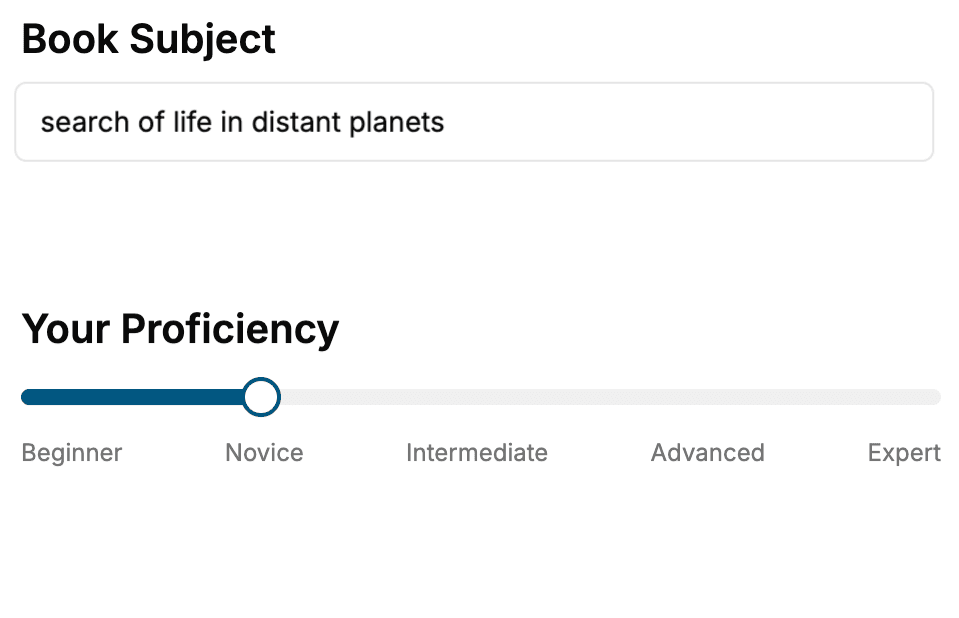
- 1. Select your focus
Select the focus of your Fraud Biography book and share your background
- 2. Personalize your book
Specify your goals and choose sub-topics to include
- 3. Get your tailored book
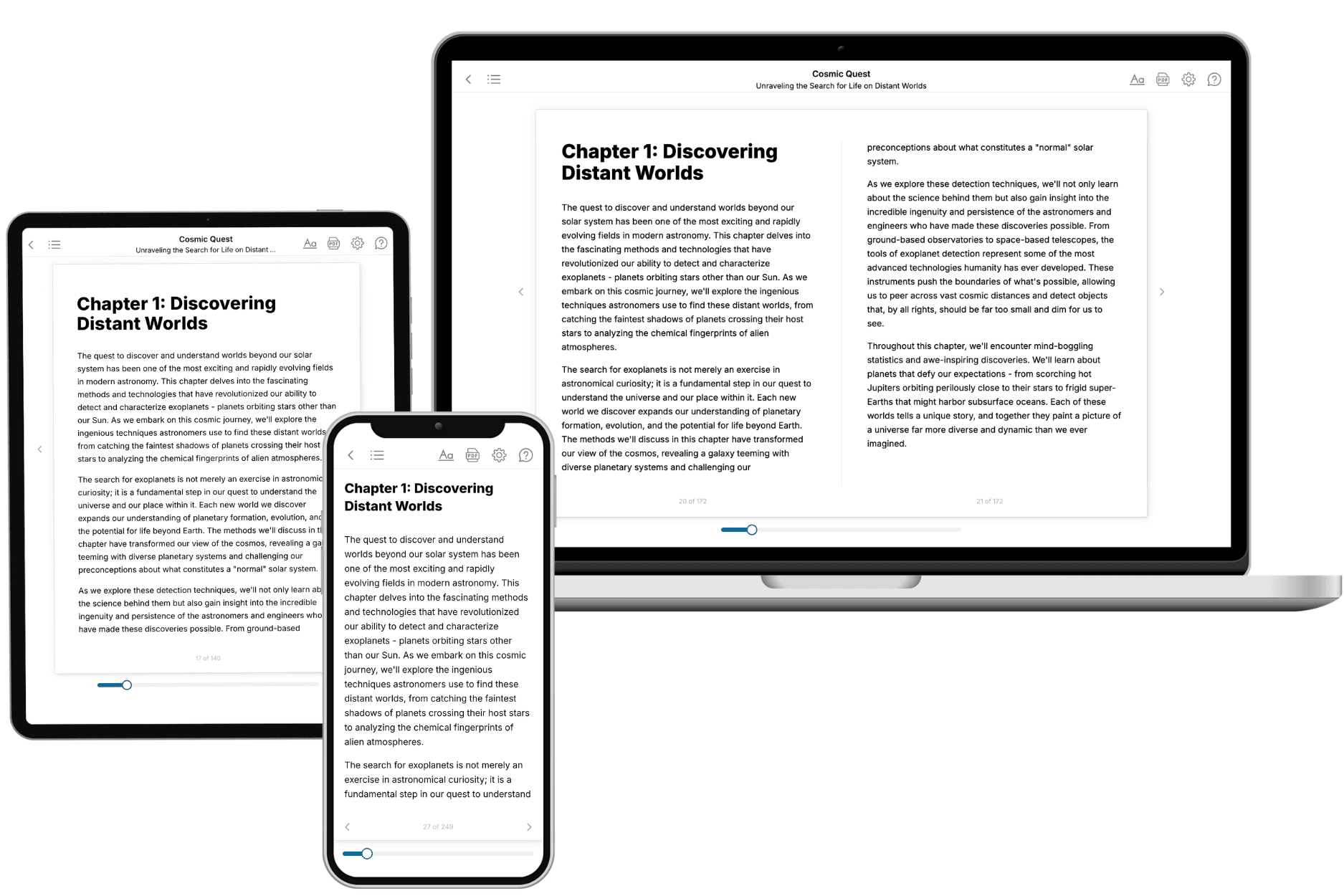
Your book is ready in 10 minutes. Read it online, download as EPUB or PDF, or send to Kindle.

Frequently asked questions
- What is TailoredRead?
TailoredRead creates complete, full-length nonfiction ebooks, written specifically for you. Tell us what you want to learn and why, and TailoredRead writes you a complete ebook on it, with charts, tables, and diagrams throughout. Read it online, on Kindle, or on any e-reader, or download it as a PDF or EPUB. Every book is written fresh the day you order it.
- How is the book tailored to me?
Before anything is written, you answer a few short questions about your goals, your background, and the topics you care about. Your book is then planned around your answers: written at your level, focused on your goals, and covering the topics you chose, instead of the one-size-fits-all book a store sells everyone.
- Will it read like generic AI content?
No. Your book isn't a chat transcript: it's planned chapter by chapter before a single word is written, told in a clear book voice, and explains ideas visually with charts, tables, and diagrams. After writing, every book goes through an editorial pass that polishes chapters so the book reads consistent from start to finish. Judge for yourself: browse thousands of sample books on our Explore Books page.
- How accurate is the content?
Our AI first checks whether your subject needs live research. Niche and fast-moving subjects are researched before writing, and the book plan and chapters are grounded in what it finds. After writing, every book goes through a quality pass that checks its facts and consistency, and researched books list their sources in a Notes section at the back.
- How long is the book?
You choose the length: Comprehensive (250-300 pages), Detailed (150-200 pages), Essential (70-100 pages), or Short (30-50 pages).
- Does the book include visuals?
Yes. Every book includes charts, tables, and diagrams: timelines, checklists, step-by-step guides, decision trees, comparison tables, matrices, and bar charts. A typical book includes dozens of these visual elements.
- Can I read it on Kindle? What formats can I download?
Yes. Every book can be read in our online reader or downloaded as a PDF or EPUB. The EPUB can be opened with Kindle, Apple Books, Kobo, and any e-reader. The Commercial and Author licenses also include an editable Word (DOCX) and Markdown download.
- How much does it cost?
About the price of a regular ebook. The exact price depends on your book's length and complexity, from $2 for the shortest books to $35 for the most comprehensive, and it's shown when you review your book, before you commit to anything. Each book is a one-time purchase, yours to keep, no subscription. Licenses that let you share, teach, or publish your book range from $35.99 to $49.99.
- Can I preview the book before purchasing?
Before you pay, you'll see what your book will cover: the title, a detailed description, the estimated length, and the complete chapter-by-chapter table of contents, so you know what you're getting before you decide. The full text itself is written after you purchase.
- How long does it take to create a book?
About 10 minutes. You can start reading the opening chapters while the rest is still being written.