Mastering Backtracking Algorithms
A Practical Guide to Efficient Problem-Solving in Computer Science
Solve complex computational problems with confidence using backtracking algorithms.
269 pages13 chaptersJan 1, 2025Algorithms
About this book
This book offers a deep dive into the world of backtracking, equipping you with the knowledge and skills to tackle challenging scenarios in algorithm design and implementation. You'll explore the core principles of backtracking, learn how to apply them to various problem domains, and master techniques for optimizing your solutions. Through hands-on examples and real-world applications, you'll gain practical experience in implementing backtracking algorithms across different programming languages and paradigms. By the end of this book, you'll have a solid foundation in backtracking techniques, enabling you to approach complex problems with a powerful problem-solving toolkit at your disposal.
Table of contents
- IntroductionWhat is Backtracking?, The Importance of Backtracking in Computer Science, Book Overview and How to Use ItRead below
- Chapter 1: Foundations of BacktrackingRecursive Problem-Solving Approach, Understanding the State Space Tree, Core Principles of Backtracking, Identifying Decision Points and Constraints
- Chapter 2: Basic Implementation of Backtracking AlgorithmsRecursive Structure of Backtracking, Defining Base Cases and Termination Conditions, Making and Unmaking Choices, Checking for Valid Solutions
- Chapter 3: Classic Backtracking ProblemsThe N-Queens Problem, Sudoku Solver, Maze Solving, Subset Sum Problem
- Chapter 4: Optimization Techniques for BacktrackingPruning the Search Space, Variable and Value Ordering Heuristics, Constraint Propagation, Using Bitwise Operations for Efficiency
- Chapter 5: Advanced Backtracking ConceptsIterative Deepening, Dancing Links Algorithm, Conflict-Driven Learning, Parallel Backtracking Algorithms
- Chapter 6: Backtracking in Combinatorial OptimizationThe Traveling Salesman Problem, Graph Coloring, 0/1 Knapsack Problem, Job Scheduling with Deadlines
- Chapter 7: Backtracking in Artificial IntelligenceConstraint Satisfaction Problems, Game Playing Algorithms, Automated Reasoning and Theorem Proving, AI Planning and Scheduling
- Chapter 8: Data Structures for Efficient BacktrackingStack-Based Implementation, Tree Representations of State Space, Using Hash Tables for Memoization, Priority Queues in Best-First Search
- Chapter 9: Implementing Backtracking in Different Programming LanguagesBacktracking in Python, Backtracking in Java, Backtracking in C++, Functional Programming Approaches to Backtracking
- Chapter 10: Real-World Applications of BacktrackingCryptography and Code Breaking, Bioinformatics Sequence Alignment, Computer Vision and Image Processing, Network Routing Algorithms
- Chapter 11: Hybrid Algorithms: Combining Backtracking with Other TechniquesBacktracking with Dynamic Programming, Backtracking with Branch and Bound, Incorporating Heuristics in Backtracking, Combining Backtracking with Local Search
- Chapter 12: Performance Analysis and OptimizationTime Complexity Analysis of Backtracking Algorithms, Space Complexity and Memory Management, Profiling Tools for Backtracking Algorithms, Strategies for Optimizing Backtracking Performance
- Chapter 13: Advanced Topics in BacktrackingRandomized Backtracking Algorithms, Distributed Backtracking in Cloud Environments, Quantum Backtracking Algorithms, Future Directions and Open Problems
- Conclusion
- Glossary
- Further Reading
Introduction
Welcome to the world of backtracking algorithms, a powerful and versatile technique that forms the backbone of many advanced problem-solving strategies in computer science. As you embark on this journey to master backtracking algorithms, you're taking a significant step towards enhancing your problem-solving skills and expanding your algorithmic toolkit. This introduction will lay the foundation for your exploration of backtracking, providing you with a clear understanding of what backtracking is, why it's important in computer science, and how this book will guide you through its intricacies.
Backtracking is more than just a programming technique; it's a way of thinking about problems that allows you to systematically explore possibilities, make decisions, and efficiently find solutions to complex computational challenges. Whether you're a computer science student looking to deepen your understanding of algorithms or a professional seeking to enhance your problem-solving capabilities, the concepts and techniques you'll learn in this book will prove invaluable in your journey through the field of computer science.
Throughout this book, you'll encounter a wide range of problems that can be elegantly solved using backtracking. From classic puzzles like the N-Queens problem and Sudoku solvers to more advanced applications in artificial intelligence and optimization, backtracking reveals itself as a versatile tool applicable across various domains of computer science. By the time you reach the end of this book, you'll not only understand the theoretical underpinnings of backtracking but also be able to implement and optimize backtracking algorithms in real-world scenarios.
As we delve into the world of backtracking, remember that mastering this technique is not just about memorizing algorithms or code snippets. It's about developing a mindset that allows you to break down complex problems into manageable decisions, explore solution spaces efficiently, and implement elegant recursive solutions. The skills you'll gain from understanding and applying backtracking will serve you well beyond the specific problems discussed in this book, enhancing your overall ability to tackle challenging computational tasks.
So, prepare to embark on an exciting journey through the landscape of backtracking algorithms. Let's begin by exploring what backtracking is, why it's so important in computer science, and how this book will guide you towards mastery of this powerful problem-solving technique.
What is Backtracking?
Backtracking is a general algorithm for finding all (or some) solutions to some computational problems, notably constraint satisfaction problems, that incrementally builds candidates to the solutions, and abandons each partial candidate ("backtracks") as soon as it determines that the candidate cannot possibly be completed to a valid solution[1]. At its core, backtracking is an algorithmic technique that considers searching every possible combination in order to solve a computational problem. It's a refined brute force approach that systematically searches for a solution to a problem among all available options.
To understand backtracking, it's helpful to visualize it as exploring a tree of possibilities. Imagine you're trying to find your way through a maze. You start at the entrance and make choices at each intersection. If you reach a dead end, you backtrack to the last intersection where you made a choice and try a different path. This process continues until you either find the exit or exhaust all possibilities. This analogy captures the essence of how backtracking works in solving computational problems.
The key components of a backtracking algorithm include:
- Choice: At each step, the algorithm makes a choice from a set of available options.
- Constraint: There are problem-specific rules that limit the choices available.
- Goal: A clear condition that defines when a solution has been found.
One of the defining features of backtracking is its ability to eliminate large subsets of possible solutions without explicitly examining every possibility. This is achieved through the use of bounding functions that determine whether a partial solution can potentially lead to a full solution. If a partial solution violates the problem constraints or cannot possibly lead to a valid solution, the algorithm "backtracks," abandoning that path and exploring other possibilities.
Backtracking algorithms typically use recursion to implement their logic, though iterative implementations are also possible. The recursive nature of backtracking aligns well with the process of exploring a tree of possibilities, where each recursive call represents a deeper level in the tree, and backtracking occurs when a recursive call returns without finding a solution.
To illustrate the concept, let's consider a simple example: generating all possible binary strings of length n. Here's a high-level description of how a backtracking algorithm might approach this problem:
- Start with an empty string.
- For each position in the string (from left to right):
- Try placing a '0' in the current position.
- Recursively generate all possibilities for the remaining positions.
- Try placing a '1' in the current position.
- Recursively generate all possibilities for the remaining positions.
- When all positions are filled, add the generated string to the list of solutions.
While this example is straightforward, backtracking can be applied to much more complex problems. In fact, many problems that seem intractable at first glance become manageable when approached with a well-designed backtracking algorithm. Problems like solving Sudoku puzzles, finding Hamiltonian paths in graphs, or solving constraint satisfaction problems all benefit from the systematic exploration that backtracking provides.
It's important to note that while backtracking can be a powerful tool, it's not always the most efficient solution for every problem. In some cases, especially when the solution space is very large, backtracking algorithms can have exponential time complexity. However, for many problems, especially those with constraints that allow for effective pruning of the search space, backtracking can be remarkably efficient compared to naive brute-force approaches.
As you progress through this book, you'll learn how to identify problems suitable for backtracking, how to design effective backtracking algorithms, and how to optimize them for better performance. You'll see how backtracking can be combined with other techniques like dynamic programming or branch and bound to create even more powerful problem-solving tools. By mastering backtracking, you'll add a versatile and powerful technique to your algorithmic repertoire, enabling you to tackle a wide range of complex computational problems with confidence and efficiency.
The Importance of Backtracking in Computer Science
Backtracking stands as a cornerstone technique in computer science, playing a crucial role in solving a wide array of complex problems that would otherwise be intractable. Its importance stems from its ability to efficiently explore large solution spaces, making it an indispensable tool in various domains of computer science and software engineering. Understanding the significance of backtracking is key to appreciating its wide-ranging applications and its impact on algorithmic problem-solving.
One of the primary reasons backtracking is so important is its ability to solve combinatorial problems efficiently. Many real-world problems involve finding a combination or permutation that satisfies certain constraints. Without backtracking, solving these problems would often require examining every possible combination, which quickly becomes infeasible as the problem size grows. Backtracking allows us to intelligently prune large portions of the search space, dramatically reducing the number of combinations we need to examine[2].
In the realm of artificial intelligence and machine learning, backtracking plays a vital role in various algorithms and problem-solving techniques. For instance, in game-playing algorithms, backtracking is used to explore possible moves and their consequences, allowing computers to make strategic decisions in complex games like chess or Go. In constraint satisfaction problems, which are ubiquitous in AI applications, backtracking is often the go-to method for finding solutions that satisfy a set of interrelated constraints.
Backtracking's importance extends to the field of automated reasoning and theorem proving. In these domains, backtracking algorithms are used to explore logical deductions and prove mathematical theorems. The ability to systematically explore possibilities while efficiently pruning invalid paths makes backtracking an essential technique in developing powerful automated reasoning systems.
In software development and testing, backtracking algorithms are often employed in tools for program analysis and verification. For example, symbolic execution, a technique used to analyze the behavior of software under all possible inputs, often relies on backtracking to explore different execution paths through a program. This application of backtracking is crucial for identifying bugs, security vulnerabilities, and ensuring software reliability.
The optimization capabilities of backtracking make it a valuable tool in operations research and management science. Many optimization problems, such as resource allocation, scheduling, and logistics planning, can be effectively solved using backtracking techniques. By systematically exploring different configurations and backtracking from suboptimal choices, these algorithms can find optimal or near-optimal solutions to complex real-world problems.
Backtracking also plays a significant role in cryptography and security. Many cryptographic algorithms and attacks involve searching through large key spaces or exploring possible decryptions. Backtracking techniques can be used to efficiently search these spaces, making it relevant both for designing secure cryptographic systems and for analyzing their vulnerabilities.
In the field of bioinformatics, backtracking algorithms are used for sequence alignment, protein folding prediction, and other computational biology problems. The ability to explore different configurations of biological molecules while respecting physical and chemical constraints makes backtracking an important technique in this rapidly evolving field.
From an educational perspective, studying backtracking is crucial for developing strong problem-solving skills in computer science. The process of designing and implementing backtracking algorithms encourages systematic thinking, helps in understanding recursion, and provides insights into efficient search strategies. These skills are transferable to many other areas of computer science and software development.
Moreover, backtracking serves as a bridge between theoretical computer science and practical problem-solving. It provides a concrete example of how algorithmic techniques can be applied to solve real-world problems, demonstrating the power of computational thinking. Understanding backtracking helps in appreciating the broader landscape of algorithmic problem-solving techniques and their applications.
The versatility of backtracking is another key aspect of its importance. While it's a powerful technique on its own, backtracking can also be combined with other algorithmic paradigms to create even more effective solutions. For example, combining backtracking with dynamic programming or heuristic search can lead to algorithms that are both complete (guaranteed to find a solution if one exists) and efficient in practice.
As we move towards more complex computational challenges, the importance of backtracking in computer science continues to grow. In areas like quantum computing and advanced AI systems, variations of backtracking algorithms are being explored to solve problems that are beyond the capabilities of classical computing methods. Understanding the fundamentals of backtracking provides a solid foundation for engaging with these cutting-edge developments in computer science.
In conclusion, the importance of backtracking in computer science cannot be overstated. Its ability to efficiently solve complex combinatorial problems, its applications across various domains of computer science and related fields, its role in developing problem-solving skills, and its potential for integration with other algorithmic techniques make it an essential topic for any serious student or practitioner of computer science. As you delve deeper into the world of backtracking through this book, you'll gain not just a powerful problem-solving tool, but also a deeper understanding of algorithmic thinking and its applications in tackling real-world computational challenges.
Book Overview and How to Use It
"Mastering Backtracking Algorithms: A Practical Guide to Efficient Problem-Solving in Computer Science" is designed to take you on a comprehensive journey through the world of backtracking algorithms. This book is structured to provide a logical progression from fundamental concepts to advanced applications, ensuring that you build a solid foundation before tackling more complex topics. Whether you're a computer science student looking to deepen your understanding of algorithms or a professional seeking to enhance your problem-solving skills, this book offers valuable insights and practical knowledge.
The book is organized into 13 chapters, each focusing on a specific aspect of backtracking algorithms. Here's an overview of what you can expect from each section:
- Foundations of Backtracking: This chapter lays the groundwork, introducing you to the core principles of backtracking, recursive problem-solving approaches, and the concept of state space trees.
- Basic Implementation of Backtracking Algorithms: Here, you'll learn how to structure backtracking algorithms, define base cases, and implement the fundamental mechanics of making and unmaking choices.
- Classic Backtracking Problems: This chapter introduces you to iconic problems like the N-Queens puzzle and Sudoku, providing hands-on experience with implementing backtracking solutions.
- Optimization Techniques for Backtracking: You'll explore methods to enhance the efficiency of backtracking algorithms, including pruning techniques and heuristics.
- Advanced Backtracking Concepts: This section delves into more sophisticated backtracking techniques, such as iterative deepening and parallel backtracking algorithms.
- Backtracking in Combinatorial Optimization: You'll see how backtracking can be applied to solve complex optimization problems in various domains.
- Backtracking in Artificial Intelligence: This chapter explores the application of backtracking in AI, including constraint satisfaction problems and game-playing algorithms.
- Data Structures for Efficient Backtracking: Learn about the data structures that can enhance the performance of backtracking algorithms.
- Implementing Backtracking in Different Programming Languages: This practical chapter guides you through implementing backtracking algorithms in Python, Java, C++, and functional programming languages.
- Real-World Applications of Backtracking: Discover how backtracking is used in fields like cryptography, bioinformatics, and network routing.
- Hybrid Algorithms: Combining Backtracking with Other Techniques: Explore how backtracking can be integrated with other algorithmic paradigms for even more powerful problem-solving approaches.
- Performance Analysis and Optimization: Learn how to analyze and optimize the performance of your backtracking algorithms.
- Advanced Topics in Backtracking: The final chapter looks at cutting-edge developments in backtracking, including quantum backtracking algorithms and future directions in the field.
To get the most out of this book, it's recommended that you approach it sequentially, especially if you're new to backtracking. Each chapter builds upon the knowledge from previous chapters, gradually increasing in complexity. However, if you're already familiar with basic backtracking concepts, you may choose to focus on specific chapters that align with your interests or needs.
Throughout the book, you'll find:
- Code Examples: Practical implementations of algorithms in various programming languages.
- Exercises: Problems to solve that reinforce the concepts covered in each chapter.
- Case Studies: Real-world applications of backtracking to help you understand its practical relevance.
- Diagrams and Illustrations: Visual aids to help clarify complex concepts and algorithm flows.
To maximize your learning:
- Active Reading: Don't just passively read the text. Try to understand each concept deeply and think about how you might apply it to problems you've encountered.
- Hands-On Practice: Implement the algorithms yourself. Coding the examples and solving the exercises will significantly enhance your understanding.
- Experimentation: Once you understand an algorithm, try modifying it or applying it to different problems. This will help you develop a deeper intuition for backtracking.
- Reflection: After each chapter, take some time to reflect on what you've learned. Try to connect the new concepts with your existing knowledge and think about potential applications.
- Utilize Resources: Make use of the provided code repositories, additional reading suggestions, and online resources mentioned throughout the book.
Remember, mastering backtracking algorithms is not just about memorizing procedures, but about developing a problem-solving mindset. As you progress through the book, you'll find yourself thinking more systematically about complex problems and seeing opportunities to apply backtracking in various scenarios.
The book also includes a comprehensive glossary of terms related to backtracking and algorithmic problem-solving. Refer to this section whenever you encounter unfamiliar terminology. Additionally, the "Further Reading" section at the end of the book provides resources for those who wish to explore certain topics in more depth.
Finally, don't hesitate to revisit earlier chapters as you progress. Often, the advanced concepts will shed new light on the fundamentals, deepening your understanding. The iterative nature of learning complex topics like backtracking means that each pass through the material can bring new insights.
By the time you complete this book, you'll have gained not just knowledge of backtracking algorithms, but a powerful set of problem-solving tools that will serve you well in your computer science journey. Whether you're aiming to excel in algorithm design, tackle complex optimization problems, or innovate in AI and machine learning, the skills you develop here will be invaluable. So, let's begin this exciting journey into the world of backtracking algorithms, where each step back can lead to a giant leap forward in solving complex computational challenges.
This is the end of the free sample. The full book has 13 chapters.
Want this book written for you?
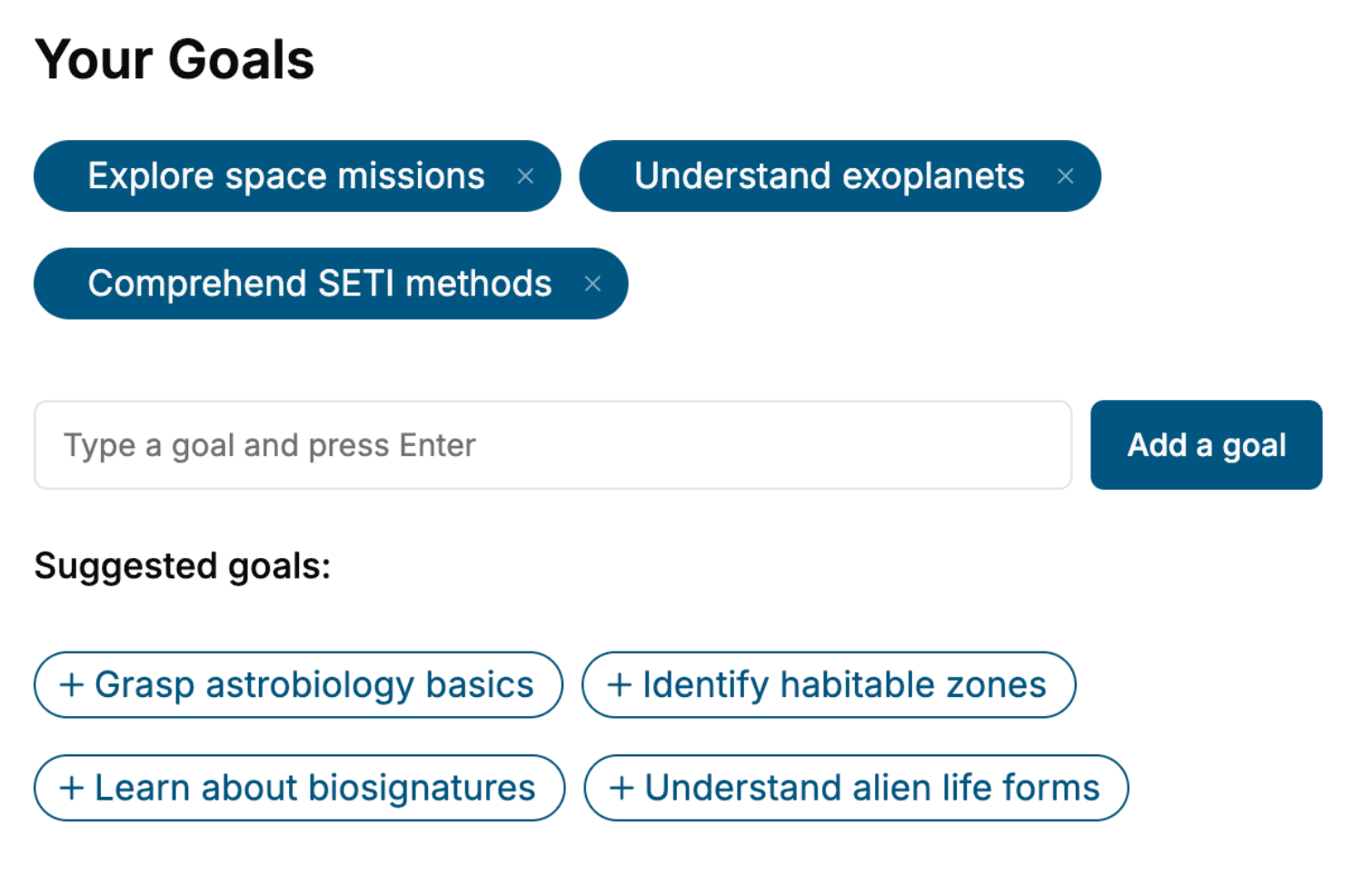
Tell us your goals and background, and get your own version of this book, tailored by AI to you.


Benefits of AI-tailored books
- Read one book, not ten:
- all the Algorithms knowledge you need, gathered into a single book.
- Save days of learning:
- tell us your goals, choose your topics, and the whole book is built around them.
- Learn effortlessly:
- Algorithms book written for your specific background and expertise.
- Understand at a glance:
- includes charts, tables, timelines, checklists, decision trees, and more.
- Stay current:
- written the day you order it, not years ago.
- Trust what you read:
- every book is checked for accuracy, with real research when your subject needs it.
Create your unique book in 3 steps
- 1. Select your focus
Select the focus of your Algorithms book and share your background
- 2. Personalize your book
Specify your goals and choose sub-topics to include
- 3. Get your tailored book
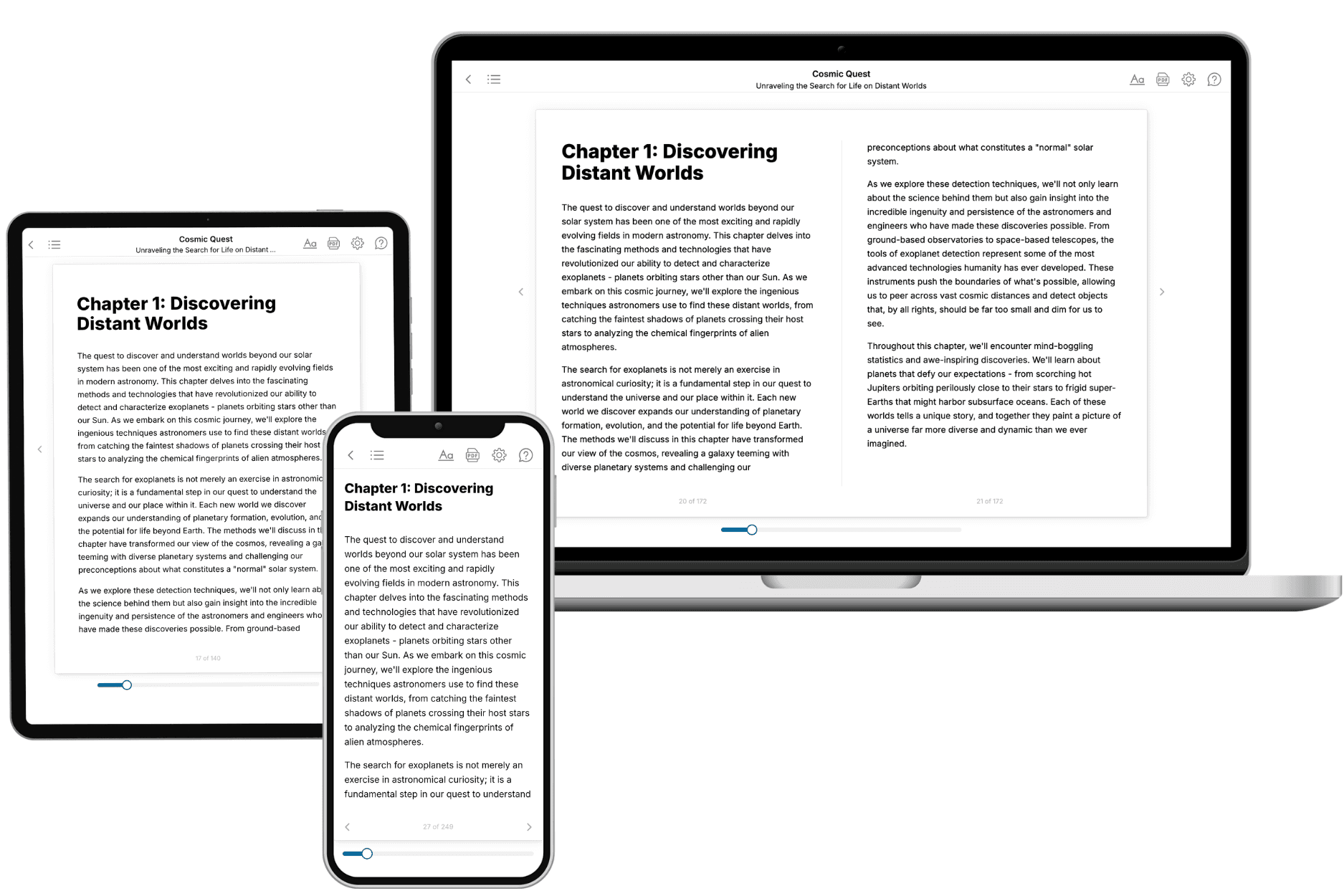
Your book is ready in 10 minutes. Read it online, download as EPUB or PDF, or send to Kindle.

Frequently asked questions
- What is TailoredRead?
TailoredRead creates complete, full-length nonfiction ebooks, written specifically for you. Tell us what you want to learn and why, and TailoredRead writes you a complete ebook on it, with charts, tables, and diagrams throughout. Read it online, on Kindle, or on any e-reader, or download it as a PDF or EPUB. Every book is written fresh the day you order it.
- How is the book tailored to me?
Before anything is written, you answer a few short questions about your goals, your background, and the topics you care about. Your book is then planned around your answers: written at your level, focused on your goals, and covering the topics you chose, instead of the one-size-fits-all book a store sells everyone.
- Will it read like generic AI content?
No. Your book isn't a chat transcript: it's planned chapter by chapter before a single word is written, told in a clear book voice, and explains ideas visually with charts, tables, and diagrams. After writing, every book goes through an editorial pass that polishes chapters so the book reads consistent from start to finish. Judge for yourself: browse thousands of sample books on our Explore Books page.
- How accurate is the content?
Our AI first checks whether your subject needs live research. Niche and fast-moving subjects are researched before writing, and the book plan and chapters are grounded in what it finds. After writing, every book goes through a quality pass that checks its facts and consistency, and researched books list their sources in a Notes section at the back.
- How long is the book?
You choose the length: Comprehensive (250-300 pages), Detailed (150-200 pages), Essential (70-100 pages), or Short (30-50 pages).
- Does the book include visuals?
Yes. Every book includes visual elements such as timelines, checklists, step-by-step guides, decision trees, comparison tables, and matrices, and many include bar charts. A typical book includes dozens of these visual elements.
- Can I read it on Kindle? What formats can I download?
Yes. Every book can be read in our online reader or downloaded as a PDF or EPUB. The EPUB can be opened with Kindle, Apple Books, Kobo, and any e-reader. The Commercial and Author licenses also include an editable Word (DOCX) and Markdown download.
- How much does it cost?
About the price of a regular ebook. The exact price depends on your book's length and complexity, from $2 for the shortest books to $35 for the most comprehensive, and it's shown when you review your book, before you commit to anything. Each book is a one-time purchase, yours to keep, no subscription. Licenses that let you share, teach, or publish your book range from $35.99 to $49.99.
- Can I preview the book before purchasing?
Before you pay, you'll see what your book will cover: the title, a detailed description, the estimated length, and the complete chapter-by-chapter table of contents, so you know what you're getting before you decide. The full text itself is written after you purchase.
- How long does it take to create a book?
About 10 minutes. You can start reading the opening chapters while the rest is still being written.