Mastering Big O
A Practical Guide to Algorithm Efficiency and Runtime Analysis
Imagine writing code that not only works but performs at its peak efficiency.
300 pages15 chaptersDec 8, 2024Algorithm Analysis
About this book
Picture yourself confidently tackling complex programming challenges, armed with the knowledge to analyze and optimize your algorithms. This is the power of understanding Big O Notation. "Mastering Big O" is your key to unlocking the world of algorithm efficiency. You'll dive deep into the principles of runtime analysis, learning how to evaluate and improve the performance of your code. From basic concepts to advanced techniques, this book guides you through the intricacies of Big O Notation with clarity and precision. You'll discover how to apply Big O analysis to real-world programming scenarios, enabling you to make informed decisions about algorithm selection and optimization. Through practical examples and exercises, you'll develop the skills to identify performance bottlenecks and implement efficient solutions. Whether you're a computer science student looking to excel in your studies or a professional programmer aiming to enhance your skills, "Mastering Big O" equips you with the tools to write faster, more efficient code. Get ready to elevate your programming expertise and tackle algorithmic challenges with confidence.
Table of contents
- IntroductionThe Importance of Big O Notation, Book Overview and How to Use It, Prerequisites and AssumptionsRead below
- Chapter 1: Foundations of Algorithm AnalysisWhat is an Algorithm?, Why Efficiency Matters, Measuring Algorithm Performance, Introduction to Big O Notation
- Chapter 2: Understanding Big O NotationFormal Definition and Notation, Asymptotic Analysis, Upper Bounds and Worst-Case Scenarios, Simplifying Big O Expressions
- Chapter 3: Common Time ComplexitiesConstant Time - O(1), Logarithmic Time - O(log n), Linear Time - O(n), Linearithmic Time - O(n log n), Quadratic Time - O(n²), Exponential Time - O(2^n)
- Chapter 4: Analyzing Loops and Nested StructuresSingle Loops and Linear Time, Nested Loops and Polynomial Time, Loops with Varying Increments, Analyzing Algorithms with Multiple Inputs
- Chapter 5: Analyzing Recursive AlgorithmsBasics of Recursive Algorithms, Recurrence Relations, The Master Theorem, Examples of Recursive Algorithm Analysis
- Chapter 6: Space Complexity AnalysisIntroduction to Space Complexity, Analyzing Memory Usage, Stack Space in Recursive Algorithms, Time-Space Tradeoffs
- Chapter 7: Amortized AnalysisIntroduction to Amortized Analysis, The Aggregate Method, The Accounting Method, The Potential Method
- Chapter 8: Big O and Data StructuresArrays and Linked Lists, Stacks and Queues, Trees and Graphs, Hash Tables
- Chapter 9: Analyzing Sorting AlgorithmsBubble, Insertion, and Selection Sort, Merge Sort and Quick Sort, Heap Sort, Linear-time Sorting Algorithms
- Chapter 10: Search Algorithms and Their ComplexityLinear Search, Binary Search, Depth-First Search (DFS), Breadth-First Search (BFS)
- Chapter 11: Advanced Topics in Big O AnalysisNP-Completeness and Complexity Classes, Approximation Algorithms, Randomized Algorithms, Online Algorithms
- Chapter 12: Algorithm Optimization TechniquesCode Profiling and Benchmarking, Algorithm Design Strategies, Choosing the Right Data Structure, Parallel Processing and Distributed Algorithms
- Chapter 13: Real-World Applications of Big O AnalysisDatabase Query Optimization, Network Protocols and Routing Algorithms, Machine Learning Algorithm Efficiency, Case Studies: Optimizing Large-Scale Systems
- Chapter 14: Big O in Technical InterviewsCommon Big O Interview Questions, Problem-Solving Strategies, Optimizing Code on the Spot, Communicating Your Thought Process
- Chapter 15: Future Trends in Algorithm AnalysisQuantum Computing and Complexity, AI and Machine Learning Algorithms, Big Data and Scalability Challenges, Emerging Computational Paradigms
- ConclusionKey Takeaways, The Importance of Continuous Learning
- Glossary
- Further Reading
Introduction
Welcome to "Mastering Big O: A Practical Guide to Algorithm Efficiency and Runtime Analysis." This book is designed to be your comprehensive guide to understanding and applying Big O Notation, a fundamental concept in computer science that plays a crucial role in analyzing and optimizing algorithm efficiency. Whether you're a computer science student looking to deepen your understanding or a professional programmer aiming to enhance your skills, this book will equip you with the knowledge and tools to write more efficient and scalable code.
In today's rapidly evolving technological landscape, the ability to analyze and optimize algorithms is more important than ever. As data sets grow larger and computational tasks become more complex, the efficiency of your code can make the difference between a program that runs in seconds and one that takes hours or even days. Understanding Big O Notation is not just an academic exercise; it's a practical skill that will empower you to make informed decisions about algorithm selection, identify performance bottlenecks, and implement efficient solutions in your day-to-day programming tasks.
Throughout this book, you'll explore the principles of runtime analysis, learn how to evaluate the performance of various algorithms, and discover techniques for optimizing your code. We'll cover a wide range of topics, from the basics of algorithm analysis to advanced concepts like amortized analysis and NP-completeness. By the end of this journey, you'll have a solid foundation in Big O Notation and the confidence to tackle complex algorithmic challenges in your studies or professional work.
The Importance of Big O Notation
Big O Notation is more than just a mathematical concept; it's a powerful tool that forms the backbone of algorithm analysis in computer science. Its importance cannot be overstated, as it provides a standardized way to describe the efficiency of algorithms and compare their performance across different scenarios. By understanding Big O Notation, you gain the ability to predict how an algorithm will behave as the input size grows, allowing you to make informed decisions about which algorithms to use in various situations.
One of the primary reasons Big O Notation is so crucial is its role in scalability. In the real world, programs often need to handle increasingly large datasets or perform more complex computations as they evolve. An algorithm that works well for small inputs might become painfully slow or even unusable when faced with larger inputs. Big O Notation helps you anticipate these scaling issues before they become problems, allowing you to design more robust and future-proof solutions from the outset.
Consider, for example, a search algorithm. A linear search (O(n)) might be perfectly acceptable for a small array of a few hundred elements. However, as the array grows to millions or billions of elements, the linear search becomes impractical. Understanding Big O Notation would lead you to consider more efficient alternatives like binary search (O(log n)) or hash-based searches (O(1) on average), which scale much better for large datasets. This kind of foresight can save countless hours of optimization work down the line and prevent potential system failures due to performance issues.
Moreover, Big O Notation is not just about time complexity; it also encompasses space complexity. In an era where cloud computing and distributed systems are prevalent, understanding how your algorithms consume memory is just as important as knowing how fast they run. Big O analysis of space complexity helps you balance the trade-offs between time and space, ensuring that your algorithms are not just fast, but also memory-efficient.
From a professional development standpoint, a strong grasp of Big O Notation is often a key differentiator in technical interviews and job performance. Many top tech companies include algorithm efficiency questions as part of their interview process, using them to gauge a candidate's problem-solving skills and understanding of fundamental computer science concepts. Being able to quickly analyze and optimize algorithms can set you apart in these high-stakes situations.
Furthermore, the analytical thinking skills you develop while studying Big O Notation have broad applications beyond just algorithm analysis. The ability to break down complex problems, identify patterns, and think about efficiency translates well to many aspects of software development and system design. Whether you're architecting a new system, debugging performance issues, or making decisions about technology adoption, the mindset fostered by understanding Big O will serve you well.
It's also worth noting that Big O Notation is not just relevant to traditional software development. As fields like data science, machine learning, and artificial intelligence continue to grow, the importance of efficient algorithms becomes even more pronounced. Many machine learning algorithms, for instance, need to process vast amounts of data, and their efficiency can be the difference between a model that trains in hours versus one that takes weeks. Understanding the complexity of these algorithms helps data scientists and AI researchers make informed choices about model selection and optimization strategies.
Lastly, Big O Notation provides a common language for discussing algorithm efficiency among programmers, researchers, and computer scientists. This shared vocabulary facilitates clearer communication about performance characteristics and trade-offs, both in academic settings and in professional environments. Being fluent in this language allows you to engage more effectively with the broader computer science community, read and understand academic papers, and contribute to discussions about algorithm design and optimization.
In summary, Big O Notation is a fundamental concept that touches nearly every aspect of computer science and software development. Its importance lies not just in its mathematical rigor, but in its practical applications to real-world programming challenges. By mastering Big O Notation, you'll be better equipped to write efficient, scalable code, solve complex problems, and advance your career in the ever-evolving field of technology.
Book Overview and How to Use It
"Mastering Big O" is structured to provide a comprehensive and practical understanding of Big O Notation and its applications in algorithm analysis. The book is designed to be both a learning tool and a reference guide, suitable for readers with varying levels of experience in computer science and programming. To get the most out of this book, it's helpful to understand its structure and how to approach the material effectively.
The book is divided into 15 chapters, each focusing on a specific aspect of Big O Notation and algorithm analysis. We begin with the foundations, gradually building up to more complex topics and real-world applications. Here's a brief overview of what you can expect:
- Chapters 1-3 lay the groundwork, introducing the concept of algorithms, the importance of efficiency, and the basics of Big O Notation.
- Chapters 4-7 delve deeper into analyzing different types of algorithms, including loops, recursive algorithms, and space complexity.
- Chapters 8-10 apply Big O analysis to common data structures and algorithms, such as sorting and searching.
- Chapters 11-13 explore advanced topics and real-world applications of Big O analysis.
- Chapters 14-15 focus on practical aspects like interview preparation and future trends in algorithm analysis.
To make the most of this book, consider the following approach:
1. Sequential Reading: If you're new to Big O Notation or want a comprehensive review, start from the beginning and work your way through the chapters sequentially. Each chapter builds on the concepts introduced in previous ones, providing a structured learning path.
2. Hands-On Practice: Throughout the book, you'll find code examples and exercises. Don't just read these passively; implement the code yourself, run it, and experiment with modifications. Active engagement with the material will significantly enhance your understanding and retention.
3. Focus on Concepts, Not Just Formulas: While mathematical notation is an important part of Big O analysis, focus on understanding the underlying concepts. The goal is to develop an intuition for algorithm efficiency, not just to memorize formulas.
4. Real-World Connections: As you read, try to connect the concepts to your own programming experiences. Think about algorithms you've implemented in the past and how you might analyze or optimize them using the techniques you're learning.
5. Use as a Reference: Once you've gone through the book, don't hesitate to use it as a reference. The detailed table of contents and index will help you quickly find information on specific topics when you need it in your work or studies.
6. Engage with Additional Resources: At the end of each chapter, you'll find suggestions for further reading and online resources. Take advantage of these to deepen your understanding or explore areas of particular interest.
7. Apply to Your Projects: As you progress through the book, look for opportunities to apply what you're learning to your own coding projects. This practical application will reinforce your understanding and demonstrate the real-world value of Big O analysis.
8. Review and Reflect: After each chapter, take some time to review the key points and reflect on how they fit into the bigger picture of algorithm analysis. This reflection will help solidify your understanding and prepare you for the more advanced topics that follow.
9. Collaborate and Discuss: If possible, find a study group or coding partner to discuss the concepts you're learning. Explaining ideas to others and hearing different perspectives can greatly enhance your understanding.
10. Patience and Persistence: Some concepts in algorithm analysis can be challenging, especially if you're encountering them for the first time. Be patient with yourself and persistent in your studies. Understanding will come with practice and application.
Remember, the goal of this book is not just to teach you about Big O Notation, but to help you develop a mindset for analyzing and optimizing algorithms. As you work through the material, you'll find that this analytical approach becomes second nature, influencing how you think about and approach programming challenges.
By the end of this book, you should feel confident in your ability to analyze the efficiency of algorithms, make informed decisions about algorithm selection, and optimize your code for better performance. Whether you're preparing for technical interviews, working on large-scale software projects, or simply striving to be a better programmer, the skills you develop through this book will serve you well in your computer science journey.
Prerequisites and Assumptions
"Mastering Big O" is designed to be accessible to a wide range of readers, from computer science students to professional programmers. However, to get the most out of this book, there are certain prerequisites and assumptions about your background knowledge. Understanding these will help you gauge whether you're ready to dive in or if you might need to brush up on some foundational concepts first.
First and foremost, this book assumes a basic understanding of programming concepts and experience with at least one programming language. While the examples in the book are primarily in Python due to its readability and widespread use, the concepts are language-agnostic and can be applied to any programming language. If you're comfortable with fundamental programming constructs such as variables, loops, functions, and basic data structures (like arrays and lists), you should be well-prepared for the material in this book.
Here's a more detailed breakdown of the assumed knowledge and skills:
1. Programming Fundamentals: You should be familiar with basic programming concepts such as variables, data types, control structures (if-else statements, loops), functions, and basic input/output operations. If you've taken an introductory programming course or have some practical coding experience, you likely meet this prerequisite.
2. Basic Data Structures: A fundamental understanding of common data structures like arrays, linked lists, stacks, and queues is beneficial. While we'll review these concepts in the context of Big O analysis, prior exposure will make the material more accessible.
3. Elementary Algebra: The book uses some basic mathematical notation and concepts. You should be comfortable with algebraic expressions, functions, and basic graph interpretation. Calculus is not required, but a general understanding of the concept of limits can be helpful for grasping some of the more advanced topics.
4. Logical Thinking: Much of algorithm analysis involves breaking down problems and thinking through logical steps. While this is a skill you'll develop further through the book, having a foundation in logical and analytical thinking will be advantageous.
5. Basic Complexity Concepts: While we'll start with the basics, having some prior exposure to the idea of algorithm efficiency or runtime complexity can be helpful. If you've ever thought about why one algorithm might be "faster" than another, you're on the right track.
6. Development Environment: To follow along with the code examples and complete the exercises, you should have access to a development environment where you can write and run code. This could be as simple as a text editor and a command-line interface, or an integrated development environment (IDE) of your choice.
It's important to note that while these prerequisites provide a solid foundation, the book is designed to be self-contained and explanatory. We'll review key concepts as needed and provide additional resources for topics that might require more background. If you find that you're struggling with certain foundational concepts, don't be discouraged. The "Further Reading" sections at the end of each chapter can guide you to resources for strengthening your understanding of prerequisite topics.
Additionally, this book assumes a certain level of motivation and willingness to engage with challenging concepts. Algorithm analysis can be abstract at times, and developing a deep understanding often requires patience and practice. We assume that you're ready to tackle complex ideas, work through examples, and apply concepts to real-world scenarios.
If you're coming from a non-computer science background, such as mathematics, physics, or engineering, you may find that your analytical skills transfer well to the study of algorithms. While you might need to spend some extra time familiarizing yourself with programming concepts, your experience with mathematical thinking will likely be an asset.
For professional programmers looking to deepen their understanding of algorithm efficiency, this book assumes that you have practical coding experience but may not have had formal training in algorithm analysis. The material is presented in a way that bridges the gap between practical coding knowledge and theoretical computer science concepts.
Lastly, it's worth mentioning what this book does not assume or require:
- Advanced mathematics beyond basic algebra
- Expertise in any specific programming language
- Prior experience with formal algorithm analysis
- Knowledge of advanced computer science topics beyond the scope of algorithm efficiency
If you find that you're missing some of the assumed knowledge, don't let that deter you. The book is designed to be accessible and includes explanations and resources to help fill in any gaps. The most important prerequisites are curiosity, persistence, and a willingness to think deeply about how algorithms work and how to make them more efficient.
By starting with these assumptions and prerequisites in mind, you'll be well-prepared to embark on your journey through the world of Big O Notation and algorithm analysis. Remember, the goal is not just to understand the concepts, but to develop a new way of thinking about code efficiency that you can apply in your studies or professional work. With dedication and practice, you'll find that the skills you develop through this book will become an invaluable part of your programming toolkit.
This is the end of the free sample. The full book has 15 chapters.
Want this book written for you?
Tell us your goals and background, and get your own version of this book, tailored by AI to you.


Benefits of AI-tailored books
- Read one book, not ten:
- all the Algorithm Analysis knowledge you need, gathered into a single book.
- Save days of learning:
- tell us your goals, choose your topics, and the whole book is built around them.
- Learn effortlessly:
- Algorithm Analysis book written for your specific background and expertise.
- Understand at a glance:
- includes charts, tables, timelines, checklists, decision trees, and more.
- Stay current:
- written the day you order it, not years ago.
- Trust what you read:
- every book is checked for accuracy, with real research when your subject needs it.
Create your unique book in 3 steps
- 1. Select your focus
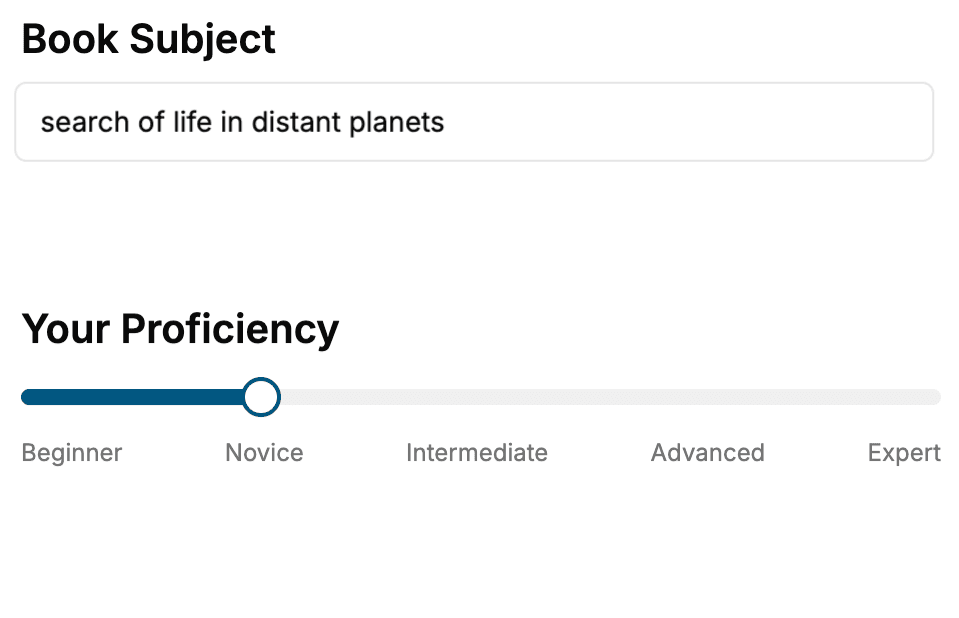
Select the focus of your Algorithm Analysis book and share your background
- 2. Personalize your book
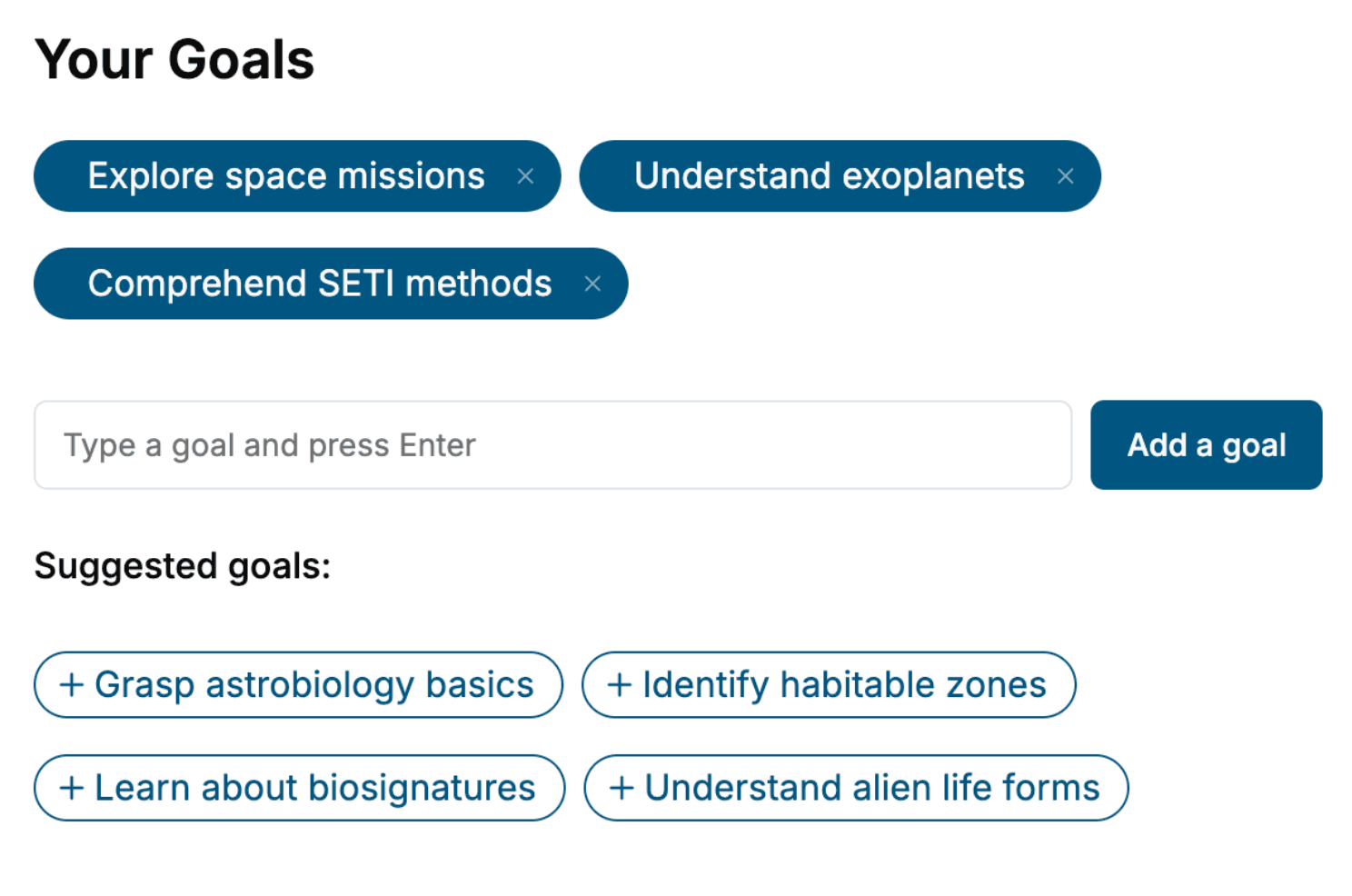
Specify your goals and choose sub-topics to include
- 3. Get your tailored book
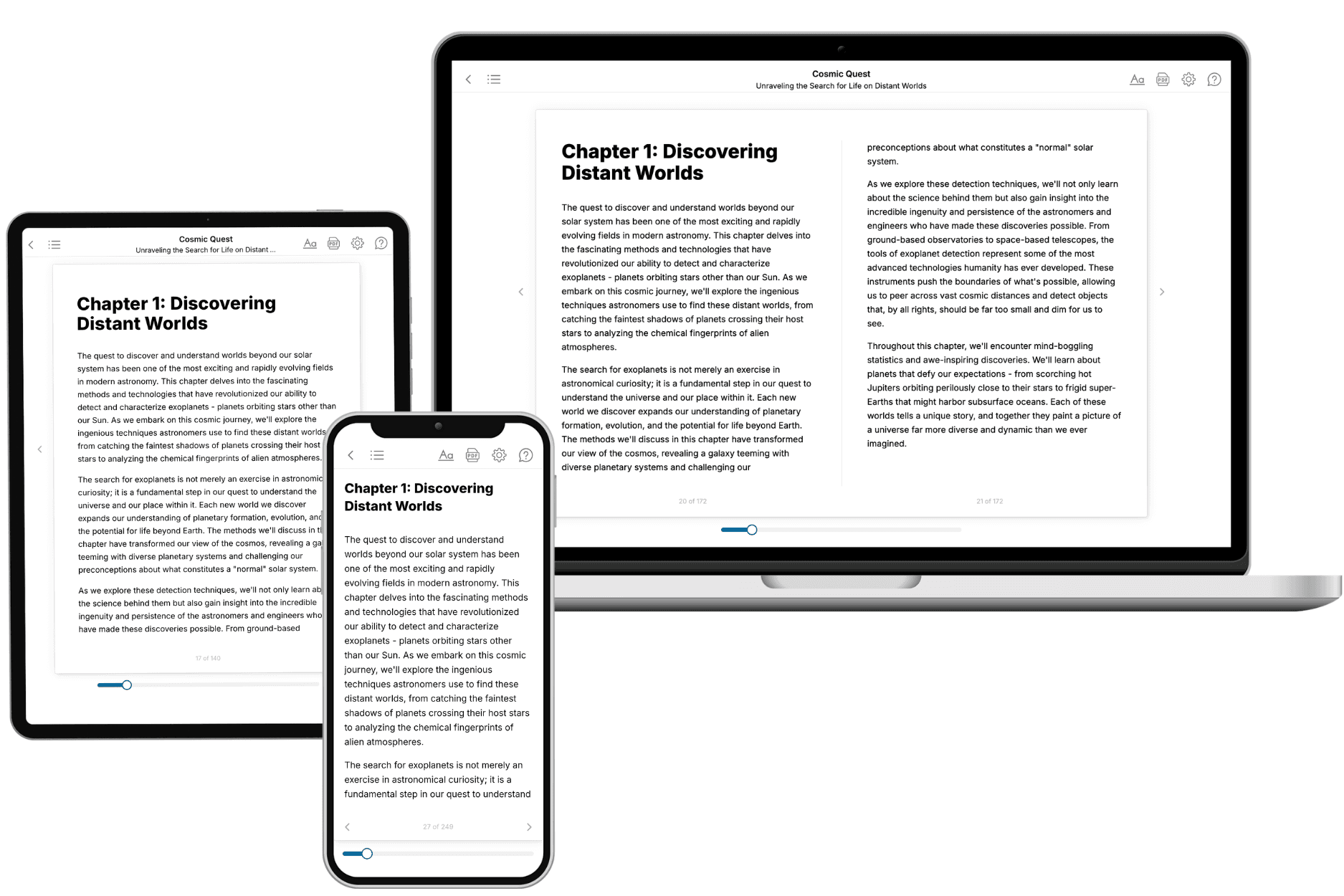
Your book is ready in 10 minutes. Read it online, download as EPUB or PDF, or send to Kindle.
Frequently asked questions
- What is TailoredRead?
TailoredRead creates complete, full-length nonfiction ebooks, written specifically for you. Tell us what you want to learn and why, and TailoredRead writes you a complete ebook on it, with charts, tables, and diagrams throughout. Read it online, on Kindle, or on any e-reader, or download it as a PDF or EPUB. Every book is written fresh the day you order it.
- How is the book tailored to me?
Before anything is written, you answer a few short questions about your goals, your background, and the topics you care about. Your book is then planned around your answers: written at your level, focused on your goals, and covering the topics you chose, instead of the one-size-fits-all book a store sells everyone.
- Will it read like generic AI content?
No. Your book isn't a chat transcript: it's planned chapter by chapter before a single word is written, told in a clear book voice, and explains ideas visually with charts, tables, and diagrams. After writing, every book goes through an editorial pass that polishes chapters so the book reads consistent from start to finish. Judge for yourself: browse thousands of sample books on our Explore Books page.
- How accurate is the content?
Our AI first checks whether your subject needs live research. Niche and fast-moving subjects are researched before writing, and the book plan and chapters are grounded in what it finds. After writing, every book goes through a quality pass that checks its facts and consistency, and researched books list their sources in a Notes section at the back.
- How long is the book?
You choose the length: Comprehensive (250-300 pages), Detailed (150-200 pages), Essential (70-100 pages), or Short (30-50 pages).
- Does the book include visuals?
Yes. Every book includes visual elements such as timelines, checklists, step-by-step guides, decision trees, comparison tables, and matrices, and many include bar charts. A typical book includes dozens of these visual elements.
- Can I read it on Kindle? What formats can I download?
Yes. Every book can be read in our online reader or downloaded as a PDF or EPUB. The EPUB can be opened with Kindle, Apple Books, Kobo, and any e-reader. The Commercial and Author licenses also include an editable Word (DOCX) and Markdown download.
- How much does it cost?
About the price of a regular ebook. The exact price depends on your book's length and complexity, from $2 for the shortest books to $35 for the most comprehensive, and it's shown when you review your book, before you commit to anything. Each book is a one-time purchase, yours to keep, no subscription. Licenses that let you share, teach, or publish your book range from $35.99 to $49.99.
- Can I preview the book before purchasing?
Before you pay, you'll see what your book will cover: the title, a detailed description, the estimated length, and the complete chapter-by-chapter table of contents, so you know what you're getting before you decide. The full text itself is written after you purchase.
- How long does it take to create a book?
About 10 minutes. You can start reading the opening chapters while the rest is still being written.