Mastering Compiler Construction
A Comprehensive Guide to Building Modern Programming Languages
Elevate your programming skills to new heights with "Mastering Compiler Construction." This comprehensive guide empowers you to design and implement your own programming language, equipping you with the tools and knowledge to create powerful source-to-source compilers.
284 pages14 chaptersJan 9, 2025Software DevelopmentCreated by Dave
About this book
Dive deep into the intricacies of semantic analysis, type systems, memory management, and metaprogramming, gaining a thorough understanding of these critical components in language design. You'll explore cutting-edge compiler construction tools and frameworks, learning how to leverage them effectively in your projects. With a focus on practical application, this book bridges the gap between theory and implementation, enabling you to bring your programming language ideas to life. Whether you're looking to innovate in language design or enhance existing compilers, "Mastering Compiler Construction" provides the insights and techniques you need. By the end of this journey, you'll possess the expertise to craft efficient, expressive, and robust programming languages that push the boundaries of what's possible in software development.
Table of contents
- IntroductionOverview of Compiler Construction, Structure of the Book, Prerequisites and Assumptions, Goals and ObjectivesRead below
- Chapter 1: Fundamentals of Compiler DesignCompiler Architecture, Overview of Compilation Phases, Front-end vs. Back-end, Importance of Intermediate Representations
- Chapter 2: Lexical Analysis and TokenizationRegular Expressions and Finite Automata, Designing a Lexer, Lexer Generation Tools, Error Handling in Lexical Analysis
- Chapter 3: Syntax Analysis and ParsingContext-Free Grammars, Top-Down Parsing Techniques, Bottom-Up Parsing Techniques, Parser Generation Tools, Error Recovery in Parsing
- Chapter 4: Advanced Semantic AnalysisSymbol Tables and Scoping, Type Checking and Inference, Static Analysis Techniques, Semantic Error Detection and Reporting
- Chapter 5: Designing Type SystemsFundamentals of Type Theory, Static vs. Dynamic Typing, Type Inference Algorithms, Advanced Type System Features, Implementing a Type System
- Chapter 6: Intermediate Code GenerationTypes of Intermediate Representations, Three-Address Code, Static Single Assignment (SSA) Form, IR-Level Optimizations
- Chapter 7: Code Optimization TechniquesLocal Optimizations, Global Optimizations, Loop Optimizations, Data Flow Analysis, Balancing Optimization and Compilation Time
- Chapter 8: Code Generation and Target ArchitecturesInstruction Selection, Register Allocation, Code Emission Strategies, Target-Specific Optimizations
- Chapter 9: Memory Management in CompilersStack Allocation, Heap Management Techniques, Garbage Collection Algorithms, Memory-Related Optimizations
- Chapter 10: Metaprogramming and ReflectionConcepts of Metaprogramming, Macro Systems and Preprocessing, Reflection Mechanisms, Runtime Code Generation
- Chapter 11: Source-to-Source CompilationFundamentals of Transpilation, AST Transformation Techniques, Source Mapping and Debugging, Language Interoperability
- Chapter 12: Modern Compiler Construction ToolsLLVM Compiler Infrastructure, ANTLR for Parser Generation, Yacc and Bison, Compiler-Compilers and Meta-Tools
- Chapter 13: Designing a New Programming LanguageDefining Language Goals and Features, Syntax Design Principles, Semantics and Type System Design, Designing a Standard Library, Language Evolution and Versioning
- Chapter 14: Building Your Compiler: A Practical ApproachProject Planning and Architecture, Implementing the Front-end, Implementing the Back-end, Testing and Validation Strategies, Performance Tuning and Optimization
- Conclusion
- Appendix
- Glossary
Introduction
Welcome to "Mastering Compiler Construction: A Comprehensive Guide to Building Modern Programming Languages." This book is designed to be your definitive resource for understanding the intricacies of compiler construction and equipping you with the knowledge and skills necessary to design and implement your own programming language. As an experienced developer with a strong background in electronics and computing, you are embarking on an exciting journey that will challenge you to apply your expertise in new and innovative ways.
The field of compiler construction is both vast and complex, encompassing a wide range of topics from theoretical computer science to practical software engineering. It is a discipline that requires a deep understanding of programming language theory, algorithms, data structures, and system architecture. By mastering these concepts and techniques, you will gain the ability to create powerful tools that can transform the way developers write and interact with code.
Throughout this book, we will explore the fundamental principles and advanced techniques used in modern compiler design. You will learn how to build each component of a compiler, from lexical analysis and parsing to semantic analysis and code generation. We will delve into the intricacies of type systems, memory management, and optimization techniques that are crucial for creating efficient and reliable programming languages. Additionally, we will examine cutting-edge topics such as metaprogramming and source-to-source compilation, which open up new possibilities for language interoperability and code transformation.
As you progress through the chapters, you will not only gain theoretical knowledge but also practical experience through hands-on examples and case studies. By the end of this book, you will have the skills and confidence to design your own programming language and create a source-to-source compiler that can bring your ideas to life. Whether you're looking to innovate in language design, enhance existing compilers, or simply deepen your understanding of how programming languages work under the hood, this book will provide you with the insights and techniques you need to succeed.
Let's begin our exploration of compiler construction by examining the key components and concepts that form the foundation of this fascinating field.
Overview of Compiler Construction
Compiler construction is a fundamental aspect of computer science that bridges the gap between high-level programming languages and machine code. At its core, a compiler is a complex software tool that translates source code written in a high-level language into a lower-level language, typically machine code or assembly, that can be executed directly by a computer's hardware. This process of translation is crucial for enabling programmers to write code in human-readable languages while still harnessing the full power and efficiency of computer hardware.
The importance of compilers in modern computing cannot be overstated. They serve as the backbone of software development, enabling the creation of sophisticated applications, operating systems, and even other programming languages. Without compilers, developers would be forced to write code directly in machine language, a tedious and error-prone process that would severely limit the complexity and scale of software projects. Compilers not only translate code but also perform crucial optimizations that improve the performance, efficiency, and sometimes even the security of the resulting programs.
The process of compilation is typically divided into several distinct phases, each responsible for a specific aspect of the translation process. These phases include:
- Lexical Analysis: Breaking down the source code into a stream of tokens
- Syntax Analysis (Parsing): Analyzing the structure of the code and creating an abstract syntax tree
- Semantic Analysis: Checking for semantic correctness and gathering type information
- Intermediate Code Generation: Creating an intermediate representation of the program
- Optimization: Improving the intermediate code for better performance
- Code Generation: Producing the final target code (e.g., machine code or assembly)
Each of these phases plays a crucial role in the compilation process, and understanding how they work together is essential for designing and implementing effective compilers. Throughout this book, we will explore each of these phases in detail, examining the algorithms, data structures, and techniques used to implement them efficiently.
One of the key challenges in compiler construction is balancing the need for correctness with the desire for optimization. A compiler must faithfully translate the semantics of the source language while also striving to generate efficient code for the target machine. This often involves making complex trade-offs and decisions based on a deep understanding of both the source language and the target architecture.
Another important aspect of modern compiler design is modularity and reusability. Many compilers are built using a multi-pass architecture, where each phase of compilation is implemented as a separate module. This approach allows for greater flexibility and easier maintenance, as well as the possibility of reusing components across different compiler projects. For example, the front-end of a compiler (responsible for lexical and syntax analysis) can often be reused for multiple target architectures, while the back-end (responsible for code generation and optimization) can be swapped out to support different platforms.
As you embark on your journey to design a new programming language and create a source-to-source compiler, it's important to keep in mind that compiler construction is both an art and a science. While there are well-established principles and techniques that form the foundation of compiler design, there is also significant room for creativity and innovation. The choices you make in language design and compiler implementation can have far-reaching effects on the usability, performance, and adoption of your language.
Throughout this book, we will explore not only the technical aspects of compiler construction but also the design principles and best practices that lead to successful programming languages. We will examine case studies of both well-established and emerging languages, analyzing the decisions made by their designers and the impact of those choices on the language's ecosystem.
By the end of this overview, you should have a solid understanding of the role of compilers in modern computing and the key components involved in their construction. In the following sections, we will delve deeper into the structure of this book and the specific goals and objectives we aim to achieve. Let's continue our exploration of the fascinating world of compiler construction.
Structure of the Book
"Mastering Compiler Construction" is organized to provide a comprehensive and logical progression through the various aspects of compiler design and implementation. The structure of this book is carefully crafted to build your knowledge and skills incrementally, starting with fundamental concepts and gradually moving towards more advanced topics and practical applications. This approach ensures that you develop a solid foundation before tackling the complexities of designing your own programming language and implementing a source-to-source compiler.
The book is divided into several major sections, each focusing on a crucial aspect of compiler construction. Here's an overview of how the content is structured:
- Fundamentals of Compiler Design
- Front-end Compilation
- Semantic Analysis and Type Systems
- Intermediate Representations and Optimizations
- Back-end Compilation and Code Generation
- Advanced Topics in Compiler Construction
- Practical Language Design and Compiler Implementation
We begin with the "Fundamentals of Compiler Design," which lays the groundwork for understanding the overall architecture of compilers and the various phases involved in the compilation process. This section provides a high-level overview of compiler components and introduces key concepts that will be explored in greater depth throughout the book.
The "Front-end Compilation" section delves into the initial stages of the compilation process, covering lexical analysis and syntax analysis (parsing). You'll learn about regular expressions, finite automata, context-free grammars, and various parsing techniques. This section also introduces you to popular tools and frameworks used for implementing lexers and parsers.
Moving on to "Semantic Analysis and Type Systems," we explore the crucial role of semantic analysis in ensuring the correctness and meaning of programs. This section covers symbol tables, scoping rules, type checking, and type inference. You'll gain a deep understanding of type theory and learn how to design and implement sophisticated type systems for your programming language.
The "Intermediate Representations and Optimizations" section focuses on the heart of the compiler, where the source program is transformed into an intermediate representation (IR) that facilitates analysis and optimization. You'll learn about different types of IRs, such as three-address code and static single assignment (SSA) form, and explore various optimization techniques that can significantly improve the performance of compiled code.
In the "Back-end Compilation and Code Generation" section, we examine the final stages of compilation, where the optimized intermediate representation is transformed into executable code for the target machine. This section covers instruction selection, register allocation, and code emission strategies. You'll also learn about target-specific optimizations and how to generate efficient code for different architectures.
The "Advanced Topics in Compiler Construction" section introduces you to cutting-edge concepts and techniques in compiler design. This includes memory management strategies, garbage collection algorithms, metaprogramming, reflection, and source-to-source compilation. These advanced topics will equip you with the knowledge to create innovative language features and powerful development tools.
Finally, the "Practical Language Design and Compiler Implementation" section brings together all the concepts and techniques you've learned to guide you through the process of designing your own programming language and implementing a compiler for it. This section provides a hands-on approach, walking you through the steps of defining language goals, designing syntax and semantics, and building a complete compiler using modern tools and frameworks.
Throughout the book, you'll find numerous examples, code snippets, and case studies that illustrate key concepts and demonstrate practical applications. Each chapter concludes with exercises and projects that challenge you to apply what you've learned and deepen your understanding of compiler construction principles.
By structuring the book in this way, we aim to provide a comprehensive and practical guide that not only teaches you the theory behind compiler construction but also equips you with the skills to design and implement your own programming language and compiler. As you progress through the chapters, you'll build a solid foundation of knowledge and gain hands-on experience that will prepare you for the challenges of creating innovative language tools and technologies.
Now that you have an overview of the book's structure, let's examine the prerequisites and assumptions we've made about your background and experience, which will help you make the most of this learning journey.
Prerequisites and Assumptions
"Mastering Compiler Construction" is designed for experienced developers who are looking to deepen their understanding of programming languages and compiler technology. While we strive to make the content accessible, there are certain prerequisites and assumptions about your background that will help you get the most out of this book. Understanding these prerequisites will allow you to focus on the new concepts and techniques specific to compiler construction, rather than struggling with fundamental programming concepts.
First and foremost, we assume that you have a strong foundation in computer science and software development. Your background in electronics and computing, including a BA in electronics and an MSc in computing, provides an excellent basis for the topics we'll be covering. However, it's important to note that compiler construction draws on various areas of computer science, so a broad understanding of the field is beneficial.
Here are the key prerequisites and assumptions we've made about your knowledge and experience:
- Programming Proficiency: You should be comfortable programming in at least one high-level language, preferably an object-oriented language like Java, C++, or Python. Familiarity with multiple programming paradigms (e.g., functional, imperative) is a plus.
- Data Structures and Algorithms: A solid understanding of fundamental data structures (e.g., arrays, linked lists, trees, graphs) and algorithms (e.g., sorting, searching, graph traversal) is essential.
- Discrete Mathematics: Familiarity with concepts from discrete mathematics, including set theory, graph theory, and formal languages, will be helpful in understanding compiler theory.
- Computer Architecture: Basic knowledge of computer architecture, including instruction set architectures and memory hierarchies, is important for understanding code generation and optimization techniques.
- Theory of Computation: Some exposure to formal language theory, automata theory, and computability will be beneficial, especially when discussing parsing techniques and language design.
- Software Engineering Principles: Understanding of software design patterns, modular programming, and version control systems will be valuable when implementing compiler components.
While not strictly required, familiarity with the following topics can enhance your learning experience:
- Functional Programming: Concepts from functional programming, such as higher-order functions and immutability, are often useful in compiler implementation.
- Logic Programming: Understanding logic programming paradigms can provide insights into type inference and static analysis techniques.
- Formal Methods: Exposure to formal specification and verification techniques can be helpful when discussing type systems and program analysis.
- Parallel and Distributed Computing: Knowledge in this area can be beneficial when exploring advanced optimization techniques and code generation for modern architectures.
It's important to note that while we assume a strong technical background, we don't expect you to be an expert in compiler construction itself. The book is designed to guide you from foundational concepts to advanced techniques, regardless of your prior experience with compilers. If you find that you need to brush up on any of the prerequisite topics, we recommend reviewing relevant resources before diving into the more complex sections of the book.
Throughout the book, we'll introduce new concepts and techniques specific to compiler construction, building upon your existing knowledge. We'll provide clear explanations and examples to help you understand how these new ideas relate to your prior experience in software development. When introducing particularly advanced or specialized topics, we'll provide additional background information and references to help you grasp the material.
If you find that certain sections of the book are challenging, don't be discouraged. Compiler construction is a complex field, and it's normal to need time to fully grasp some of the more advanced concepts. We encourage you to work through the examples and exercises provided, as hands-on practice is often the best way to solidify your understanding.
Remember that learning compiler construction is an iterative process. As you progress through the book, you may find it helpful to revisit earlier chapters with your new knowledge, gaining deeper insights into the foundational concepts. This iterative approach to learning will help you develop a comprehensive understanding of compiler construction and prepare you for designing and implementing your own programming language.
With these prerequisites and assumptions in mind, you're well-prepared to embark on this journey into the world of compiler construction. In the next section, we'll outline the specific goals and objectives of this book, giving you a clear roadmap for what you'll achieve by the time you complete your study.
Goals and Objectives
"Mastering Compiler Construction" is designed with clear goals and objectives to ensure that you gain a comprehensive understanding of compiler theory and practice, and develop the skills necessary to design and implement your own programming language and compiler. By the end of this book, you will have acquired a set of powerful tools and techniques that will enable you to innovate in the field of programming languages and compiler technology.
The primary goal of this book is to empower you to create a source-to-source compiler for a new programming language of your design. This overarching goal encompasses several key objectives that we will work towards throughout the book:
- Develop a deep understanding of compiler architecture and components
- Master the techniques for implementing each phase of compilation
- Gain proficiency in designing and implementing type systems
- Learn advanced optimization techniques for improving code performance
- Explore modern compiler construction tools and frameworks
- Understand the principles of programming language design
- Acquire practical skills in building and testing compilers
Let's examine each of these objectives in more detail to understand what you can expect to achieve by the end of this book.
1. Develop a deep understanding of compiler architecture and components: You will gain a comprehensive view of how compilers are structured and how their various components interact. This includes understanding the division between front-end and back-end compilation, the role of intermediate representations, and how different compiler phases work together to transform source code into executable programs.
2. Master the techniques for implementing each phase of compilation: You will learn how to implement each major phase of compilation, including lexical analysis, parsing, semantic analysis, intermediate code generation, optimization, and code generation. For each phase, you will understand the underlying theories, algorithms, and data structures, as well as practical implementation strategies.
3. Gain proficiency in designing and implementing type systems: Type systems are crucial for ensuring program correctness and enabling compiler optimizations. You will learn the principles of type theory, explore different types of type systems (e.g., static vs. dynamic, strong vs. weak), and gain hands-on experience in implementing type checking and inference algorithms.
4. Learn advanced optimization techniques for improving code performance: Optimization is a key aspect of modern compilers. You will study a wide range of optimization techniques, from simple local optimizations to sophisticated global and interprocedural optimizations. You'll also learn how to balance optimization efforts with compilation time and resource usage.
5. Explore modern compiler construction tools and frameworks: The landscape of compiler construction tools is constantly evolving. You will become familiar with popular tools and frameworks such as LLVM, ANTLR, and Yacc/Bison, understanding their strengths and how to leverage them in your compiler projects.
6. Understand the principles of programming language design: Creating a new programming language requires more than just technical knowledge of compilers. You will learn about the principles of language design, including considerations for syntax, semantics, type systems, and standard libraries. You'll explore how different design choices impact the usability, performance, and expressiveness of a language.
7. Acquire practical skills in building and testing compilers: Throughout the book, you will work on practical exercises and projects that reinforce theoretical concepts. By the end, you will have experience in building compiler components, integrating them into a complete system, and rigorously testing and validating your compiler's output.
In addition to these primary objectives, the book aims to achieve several secondary goals:
- Develop critical thinking skills for solving complex problems in compiler design
- Foster an appreciation for the role of compilers in modern software development
- Encourage innovation in programming language design and implementation
- Prepare you for advanced research or professional work in compiler technology
By achieving these goals and objectives, you will be well-equipped to tackle challenging projects in compiler construction and programming language design. Whether you aim to create a domain-specific language for a particular industry, optimize existing compilers for better performance, or contribute to cutting-edge research in programming language theory, the knowledge and skills you gain from this book will provide a solid foundation for your endeavors.
As you progress through the book, keep these goals in mind. Each chapter and section is designed to contribute to one or more of these objectives, building your knowledge and skills incrementally. By the time you reach the final chapters, where you'll be designing your own language and implementing a source-to-source compiler, you'll have all the tools and understanding necessary to bring your ideas to life.
Remember that learning compiler construction is a journey, and while this book provides a comprehensive guide, your own curiosity and experimentation will be key to fully mastering the field. We encourage you to explore beyond the contents of the book, apply the concepts to your own projects, and stay engaged with the latest developments in compiler technology.
With these goals and objectives clearly defined, you're ready to embark on your journey through the fascinating world of compiler construction. Let's begin by diving into the fundamentals of compiler design in the next chapter.
This is the end of the free sample. The full book has 14 chapters.
Want this book written for you?
Tell us your goals and background, and get your own version of this book, tailored by AI to you.


Benefits of AI-tailored books
- Read one book, not ten:
- all the Software Development knowledge you need, gathered into a single book.
- Save days of learning:
- tell us your goals, choose your topics, and the whole book is built around them.
- Learn effortlessly:
- Software Development book written for your specific background and expertise.
- Understand at a glance:
- includes charts, tables, timelines, checklists, decision trees, and more.
- Stay current:
- written the day you order it, not years ago.
- Trust what you read:
- every book is checked for accuracy, with real research when your subject needs it.
Create your unique book in 3 steps
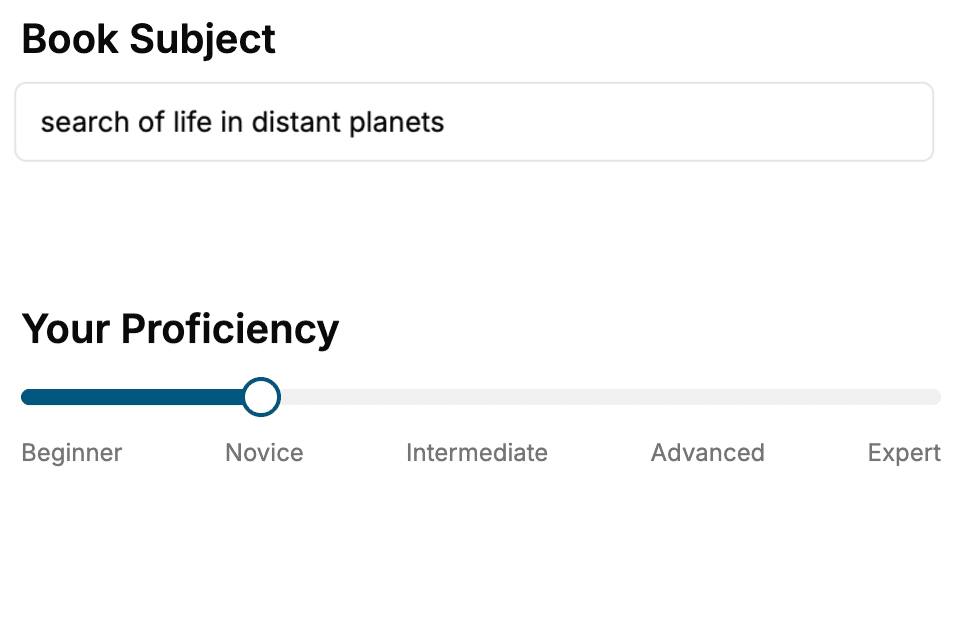
- 1. Select your focus
Select the focus of your Software Development book and share your background
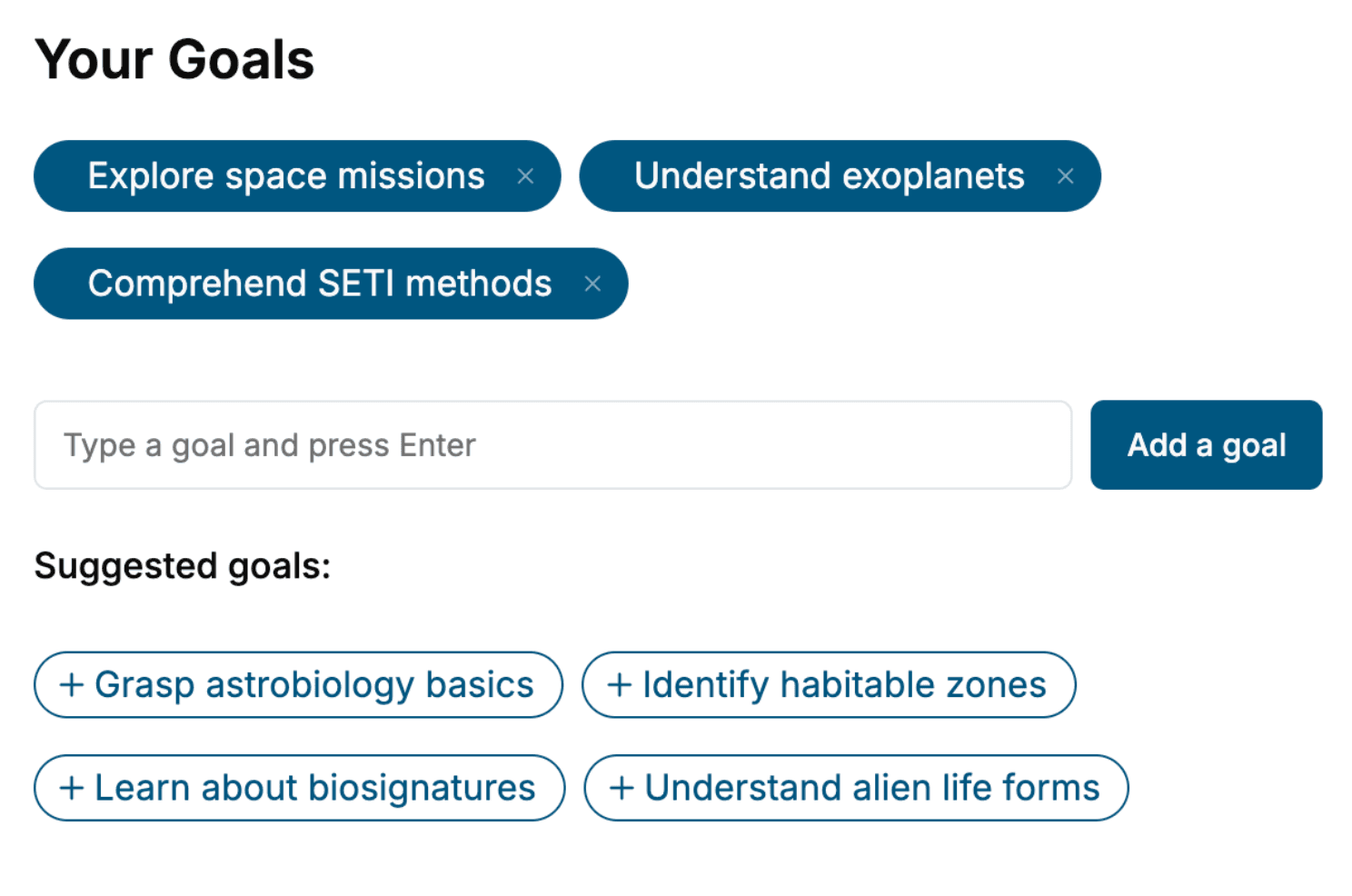
- 2. Personalize your book
Specify your goals and choose sub-topics to include
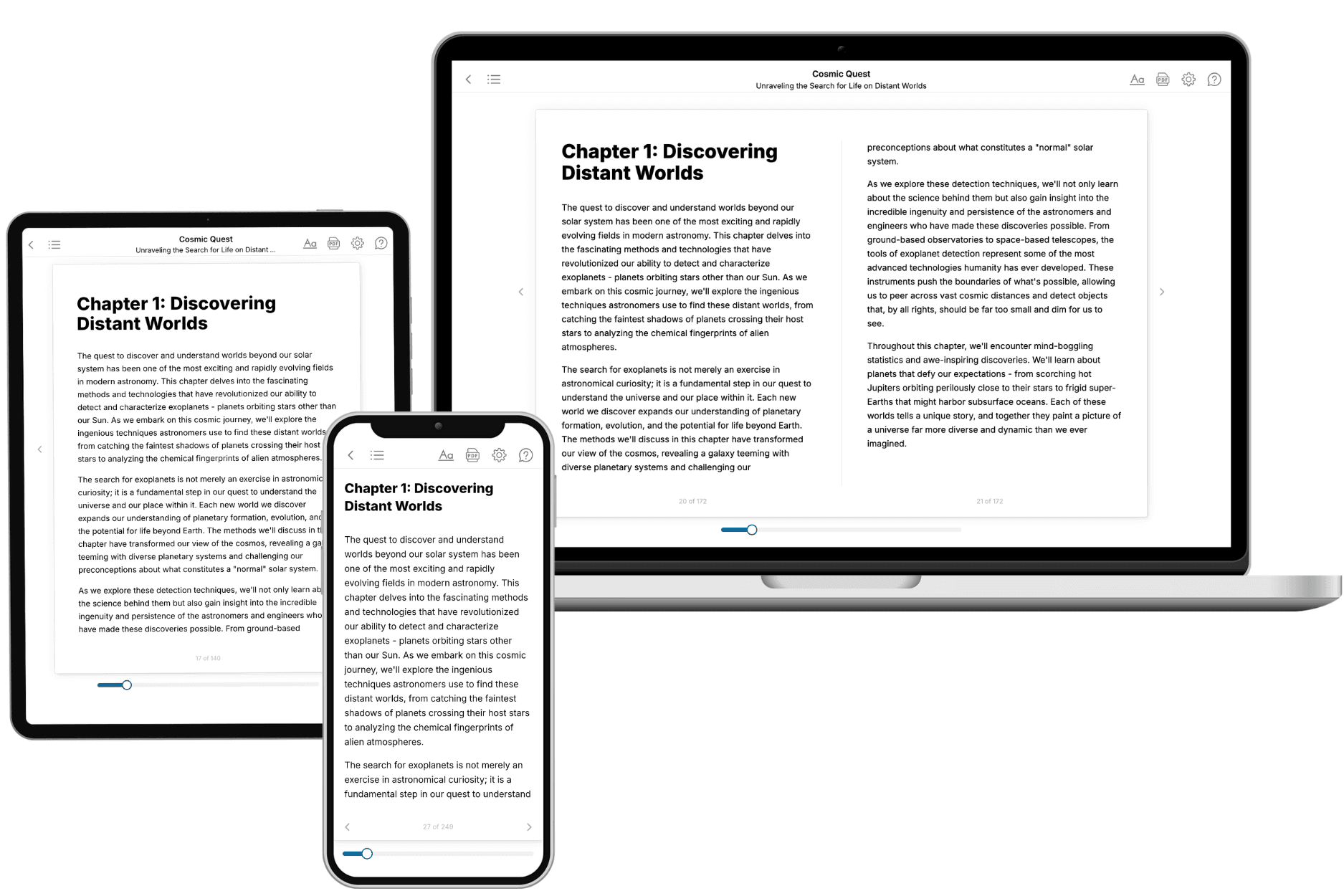
- 3. Get your tailored book
Your book is ready in 10 minutes. Read it online, download as EPUB or PDF, or send to Kindle.
Frequently asked questions
- What is TailoredRead?
TailoredRead creates complete, full-length nonfiction ebooks, written specifically for you. Tell us what you want to learn and why, and TailoredRead writes you a complete ebook on it, with charts, tables, and diagrams throughout. Read it online, on Kindle, or on any e-reader, or download it as a PDF or EPUB. Every book is written fresh the day you order it.
- How is the book tailored to me?
Before anything is written, you answer a few short questions about your goals, your background, and the topics you care about. Your book is then planned around your answers: written at your level, focused on your goals, and covering the topics you chose, instead of the one-size-fits-all book a store sells everyone.
- Will it read like generic AI content?
No. Your book isn't a chat transcript: it's planned chapter by chapter before a single word is written, told in a clear book voice, and explains ideas visually with charts, tables, and diagrams. After writing, every book goes through an editorial pass that polishes chapters so the book reads consistent from start to finish. Judge for yourself: browse thousands of sample books on our Explore Books page.
- How accurate is the content?
Our AI first checks whether your subject needs live research. Niche and fast-moving subjects are researched before writing, and the book plan and chapters are grounded in what it finds. After writing, every book goes through a quality pass that checks its facts and consistency, and researched books list their sources in a Notes section at the back.
- How long is the book?
You choose the length: Comprehensive (250-300 pages), Detailed (150-200 pages), Essential (70-100 pages), or Short (30-50 pages).
- Does the book include visuals?
Yes. Every book includes charts, tables, and diagrams: timelines, checklists, step-by-step guides, decision trees, comparison tables, matrices, and bar charts. A typical book includes dozens of these visual elements.
- Can I read it on Kindle? What formats can I download?
Yes. Every book can be read in our online reader or downloaded as a PDF or EPUB. The EPUB can be opened with Kindle, Apple Books, Kobo, and any e-reader. The Commercial and Author licenses also include an editable Word (DOCX) and Markdown download.
- How much does it cost?
About the price of a regular ebook. The exact price depends on your book's length and complexity, from $2 for the shortest books to $35 for the most comprehensive, and it's shown when you review your book, before you commit to anything. Each book is a one-time purchase, yours to keep, no subscription. Licenses that let you share, teach, or publish your book range from $35.99 to $49.99.
- Can I preview the book before purchasing?
Before you pay, you'll see what your book will cover: the title, a detailed description, the estimated length, and the complete chapter-by-chapter table of contents, so you know what you're getting before you decide. The full text itself is written after you purchase.
- How long does it take to create a book?
About 10 minutes. You can start reading the opening chapters while the rest is still being written.