Mastering Constraint Programming
Techniques and Applications in Satisfiability and Algorithmic Problem Solving
Your journey into the world of constraint programming begins here.
300 pages15 chaptersFeb 17, 2025Computer Science and Algorithms
About this book
This book will guide you through the intricacies of this powerful problem-solving paradigm, equipping you with the knowledge and skills to tackle complex computational challenges. As you delve into the pages, you'll discover how constraint programming seamlessly integrates with satisfiability problems and algorithmic design. You'll learn to model real-world scenarios using constraints, explore cutting-edge solving techniques, and uncover the art of efficiently representing and manipulating constraints. From the foundations to advanced concepts, this book will enhance your problem-solving toolkit, enabling you to approach computational puzzles with a new perspective. You'll gain insights into the theoretical underpinnings of constraint programming and its practical applications in areas such as scheduling, planning, and optimization. By the end of this journey, you'll be adept at leveraging constraint programming to solve intricate problems, optimize algorithms, and push the boundaries of what's computationally possible. Whether you're looking to enhance your professional skills or satisfy your intellectual curiosity, this book will be your definitive guide to mastering the art and science of constraint programming.
Table of contents
- IntroductionWhat is Constraint Programming?, The Importance of Constraint Programming in Computer Science, Book Overview and How to Use It, Prerequisites and Assumed KnowledgeRead below
- Chapter 1: Foundations of Constraint ProgrammingBasic Concepts and Terminology, Constraint Satisfaction Problems (CSPs), Types of Constraints, Constraint Programming Paradigms
- Chapter 2: Modeling with ConstraintsProblem Formulation and Analysis, Identifying Variables and Domains, Formulating Constraints, Advanced Modeling Techniques
- Chapter 3: Constraint Propagation TechniquesArc Consistency, Path Consistency, Global Constraints and Their Propagators, Consistency Algorithms and Their Complexity
- Chapter 4: Search Strategies in Constraint ProgrammingBacktracking Search, Variable Ordering Heuristics, Value Ordering Heuristics, Local Search Techniques
- Chapter 5: Optimization in Constraint ProgrammingDefining Objective Functions, Branch and Bound Algorithms, Multi-Objective Optimization, Large Neighborhood Search
- Chapter 6: Constraint Programming and SatisfiabilityOverview of Satisfiability (SAT), Relationship Between CP and SAT, Encoding CP Problems as SAT, Hybrid CP-SAT Approaches
- Chapter 7: Advanced Constraint Programming TechniquesSymmetry Breaking, Nogood Learning and Clause Learning, Lazy Clause Generation, Constraint Acquisition and Learning
- Chapter 8: Constraint Modeling Languages and ToolsMiniZinc: A High-Level Modeling Language, Google OR-Tools for Constraint Programming, Gecode: A C++ Constraint Solving Framework, Choco Solver: A Java Library for Constraint Programming
- Chapter 9: Constraint-Based SchedulingTypes of Scheduling Problems, Modeling Time and Resource Constraints, Constraint-Based Scheduling Algorithms, Real-World Scheduling Applications
- Chapter 10: Constraint-Based PlanningBasics of Planning Problems, Representing Plans with Constraints, Search Strategies for Planning, Temporal and Resource-Constrained Planning
- Chapter 11: Configuration Problems and Constraint ProgrammingModeling Configuration Problems, Product Configuration, Service Configuration, Dynamic Reconfiguration
- Chapter 12: Constraint Programming in BioinformaticsSequence Alignment Problems, Protein Structure Prediction, Gene Regulation Networks, Drug Design and Discovery
- Chapter 13: Integrating Constraint Programming with Machine LearningSynergies Between CP and Machine Learning, Constraint Acquisition from Data, Machine Learning for CP Heuristics, Neural Constraint Satisfaction and Optimization
- Chapter 14: Distributed Constraint ProgrammingDistributed Constraint Satisfaction Problems, Agent-Based Constraint Programming, Parallel Constraint Solving Techniques, Privacy-Preserving Constraint Solving
- Chapter 15: Future Directions in Constraint ProgrammingQuantum Constraint Programming, Explainable Constraint Programming, Constraint Programming for Big Data, Emerging Applications and Challenges
- ConclusionKey Takeaways, Continuing Your Constraint Programming Journey
- Glossary
- Further Reading
Introduction
Welcome to the fascinating world of constraint programming, a powerful paradigm that has revolutionized problem-solving in computer science and beyond. As you embark on this journey through "Mastering Constraint Programming: Techniques and Applications in Satisfiability and Algorithmic Problem Solving," you are about to discover a set of tools and techniques that will transform the way you approach complex computational challenges. This introduction will lay the groundwork for your exploration, providing you with a clear understanding of what constraint programming is, why it's important, how to navigate this book, and what foundational knowledge will serve you best as you delve deeper into the subject.
What is Constraint Programming?
Constraint programming (CP) is a paradigm for solving combinatorial problems that has its roots in artificial intelligence and computer science. At its core, CP is about expressing problems in terms of decision variables and the constraints that govern their possible values. This approach allows for a natural and intuitive representation of complex problems, making it possible to solve them efficiently using specialized algorithms and techniques.
The fundamental idea behind constraint programming is to separate the statement of the problem from the method used to solve it. This separation of concerns allows problem-solvers to focus on accurately modeling the problem domain without getting bogged down in the intricacies of solution algorithms. Once a problem is expressed as a set of variables and constraints, powerful constraint solvers can be employed to find solutions that satisfy all the constraints.
In constraint programming, a problem is typically formulated as a Constraint Satisfaction Problem (CSP). A CSP consists of three main components: a set of variables, each with a domain of possible values, and a set of constraints that specify allowable combinations of values for subsets of variables. The goal is to find an assignment of values to all variables that satisfies all the constraints. This framework is remarkably flexible and can be used to model a wide variety of problems, from simple puzzles to complex real-world scenarios in areas such as scheduling, planning, and design.
One of the key strengths of constraint programming is its ability to handle problems with a large search space efficiently. Traditional algorithmic approaches might struggle with the combinatorial explosion of possibilities in such problems, but CP employs sophisticated techniques to prune the search space and quickly focus on promising areas. These techniques include constraint propagation, which uses the constraints to reduce the domains of variables, and intelligent search strategies that guide the exploration of the solution space.
Constraint programming is not just a theoretical construct; it has found widespread application in industry and academia. From optimizing supply chains to designing integrated circuits, from scheduling airline crews to solving complex mathematical puzzles, CP has proven its worth time and again. Its success lies in its ability to tackle problems that are difficult to solve using traditional programming methods, often finding solutions faster and more efficiently than alternative approaches.
As you progress through this book, you'll discover that constraint programming is more than just a set of algorithms or a programming paradigm. It's a way of thinking about problems that encourages clarity of thought and elegance of expression. By breaking down complex problems into their constituent constraints, CP allows you to build models that are not only solvable but also understandable and maintainable. This clarity of expression is one of the reasons why CP has become an essential tool in the arsenal of computer scientists, operations researchers, and problem-solvers across various disciplines.
In the following chapters, you'll delve deep into the mechanics of constraint programming, learning how to model problems, apply various solving techniques, and leverage CP in conjunction with other paradigms like satisfiability (SAT) solving. You'll explore advanced concepts such as global constraints, which encapsulate complex relationships between variables, and learn about the latest developments in the field, including the integration of CP with machine learning techniques.
As you embark on this journey, keep in mind that constraint programming is a field that rewards both theoretical understanding and practical application. The concepts you'll learn are not just academic exercises; they are powerful tools that can be applied to solve real-world problems. Throughout this book, you'll encounter numerous examples and case studies that illustrate how CP principles can be put into practice, giving you the skills and confidence to apply these techniques to your own challenges.
Constraint programming represents a unique blend of mathematics, computer science, and problem-solving intuition. It offers a fresh perspective on how to approach complex problems, often revealing elegant solutions that might be overlooked by more traditional methods. As you explore the world of CP, you'll develop a new set of problem-solving skills that will serve you well in your professional endeavors and intellectual pursuits.
The Importance of Constraint Programming in Computer Science
Constraint programming has emerged as a critical paradigm in computer science, offering a powerful approach to solving complex problems that arise in various domains. Its importance stems from its ability to bridge the gap between problem specification and solution, providing a framework that is both expressive and efficient. In an era where computational challenges are becoming increasingly intricate, the role of constraint programming in advancing the field of computer science cannot be overstated.
One of the primary reasons for the significance of constraint programming is its declarative nature. Unlike imperative programming paradigms that focus on how to solve a problem step by step, CP allows you to describe what the problem is in terms of constraints. This high-level approach to problem-solving aligns closely with human thought processes, making it easier to translate real-world problems into computational models. As a result, constraint programming has become an invaluable tool for tackling problems that are difficult to express or solve using traditional algorithmic methods.
The versatility of constraint programming is another factor that underscores its importance in computer science. CP techniques can be applied to a wide range of problems, from classical computer science challenges like graph coloring and satisfiability to practical applications in scheduling, planning, and optimization. This breadth of applicability has led to the integration of CP principles into various subfields of computer science, including artificial intelligence, operations research, and software engineering. The ability of CP to handle diverse problem domains makes it an essential part of a computer scientist's toolkit, enabling the development of flexible and robust solutions to complex challenges.
In the realm of algorithm design and analysis, constraint programming has made significant contributions. The development of efficient constraint propagation algorithms and search strategies has not only advanced the field of CP itself but has also influenced broader areas of algorithmic research. Concepts from constraint programming, such as consistency techniques and intelligent backtracking, have found applications in other problem-solving paradigms, leading to improvements in areas like SAT solving and mixed integer programming. This cross-pollination of ideas demonstrates the far-reaching impact of CP on the landscape of computational problem-solving.
The importance of constraint programming is further highlighted by its role in addressing NP-hard problems. Many real-world optimization and decision problems fall into this category, where finding an optimal solution becomes computationally intractable as the problem size increases. CP offers a practical approach to tackling such problems by combining efficient search techniques with problem-specific knowledge encoded as constraints. This ability to find good solutions to hard problems in reasonable time frames has made CP an indispensable tool in various industries, from logistics and manufacturing to finance and telecommunications.
In the context of software development, constraint programming has emerged as a powerful paradigm for creating flexible and maintainable systems. By separating the problem specification (constraints) from the solution method, CP enables the development of modular and reusable code. This separation of concerns aligns well with modern software engineering principles, facilitating the creation of systems that can adapt to changing requirements with minimal modifications to the core problem model. As software systems become increasingly complex, the declarative nature of CP offers a scalable approach to managing and solving intricate computational challenges.
The integration of constraint programming with other areas of computer science has led to innovative hybrid approaches that leverage the strengths of multiple paradigms. For instance, the combination of CP with machine learning techniques has opened up new avenues for automated problem-solving and optimization. Machine learning algorithms can be used to learn effective heuristics for CP solvers, while CP can provide a structured framework for incorporating domain knowledge into learning systems. This synergy between CP and other fields is pushing the boundaries of what's possible in artificial intelligence and automated reasoning.
From an educational perspective, constraint programming offers a valuable framework for teaching problem-solving skills to computer science students. The process of modeling problems as CSPs encourages systematic thinking and helps develop a deep understanding of problem structures. Learning CP techniques equips students with a powerful set of tools for approaching complex problems, fostering creativity and analytical skills that are valuable across various areas of computer science and beyond.
The importance of constraint programming in computer science is also evident in its impact on research and innovation. CP continues to be an active area of study, with ongoing developments in theory, algorithms, and applications. Research in CP has led to breakthroughs in solving previously intractable problems and has inspired new directions in computational thinking. As the field evolves, it continues to address emerging challenges in areas such as big data, cloud computing, and quantum computing, ensuring its relevance in the ever-changing landscape of computer science.
In conclusion, the importance of constraint programming in computer science lies in its unique blend of expressiveness, efficiency, and versatility. It provides a powerful framework for modeling and solving complex problems, influences algorithm design and analysis, addresses NP-hard challenges, enhances software development practices, and drives innovation across various subfields of computer science. As you delve deeper into the world of constraint programming through this book, you'll gain not just technical knowledge but also a new perspective on problem-solving that will enrich your understanding of computer science as a whole.
Book Overview and How to Use It
"Mastering Constraint Programming: Techniques and Applications in Satisfiability and Algorithmic Problem Solving" is designed to be your comprehensive guide to the world of constraint programming. This book is structured to take you on a journey from the fundamental concepts of CP to advanced techniques and real-world applications. Whether you're a computer science professional looking to expand your problem-solving toolkit or an advanced student seeking to deepen your understanding of algorithmic approaches, this book is tailored to meet your needs.
The book is organized into fifteen chapters, each focusing on a specific aspect of constraint programming. The chapters are designed to build upon each other, gradually increasing in complexity and depth. However, they are also written to be relatively self-contained, allowing you to focus on specific topics of interest if you prefer a non-linear approach to learning. Here's a brief overview of what you can expect from each section of the book:
1. Foundations of Constraint Programming: This chapter lays the groundwork for your CP journey, introducing basic concepts, terminology, and the fundamental principles of constraint satisfaction problems. It's essential to grasp these foundations as they form the basis for all subsequent chapters.
2. Modeling with Constraints: Here, you'll learn the art of translating real-world problems into the language of constraints. This chapter is crucial for developing your ability to think in terms of CP and is a skill you'll refine throughout the book.
3. Constraint Propagation Techniques: This chapter delves into the core algorithms that make CP efficient, including arc consistency and global constraints. Understanding these techniques is vital for appreciating how CP solvers work under the hood.
4. Search Strategies in Constraint Programming: You'll explore various methods for navigating the solution space, including backtracking and local search techniques. This knowledge is essential for tackling large and complex problems effectively.
5. Optimization in Constraint Programming: Building on previous chapters, you'll learn how to move beyond satisfaction problems to optimization, a key aspect of many real-world applications.
6. Constraint Programming and Satisfiability: This chapter bridges CP with the closely related field of SAT solving, providing insights into how these paradigms can complement each other.
7. Advanced Constraint Programming Techniques: Here, you'll encounter cutting-edge methods that push the boundaries of what's possible with CP, including symmetry breaking and nogood learning.
8. Constraint Modeling Languages and Tools: This practical chapter introduces you to popular CP software, enabling you to start implementing CP solutions in real-world scenarios.
9-12. Application Domains: These chapters cover specific areas where CP excels, including scheduling, planning, configuration, and bioinformatics. They provide concrete examples of how CP principles are applied in various fields.
13. Integrating Constraint Programming with Machine Learning: This forward-looking chapter explores the exciting intersection of CP and ML, showcasing how these fields can enhance each other.
14. Distributed Constraint Programming: As problems scale, distributed approaches become crucial. This chapter introduces techniques for solving CP problems across multiple agents or computers.
15. Future Directions in Constraint Programming: The book concludes with a look at emerging trends and potential future developments in the field, inspiring you to continue your CP journey beyond these pages.
To get the most out of this book, it's recommended to start with the foundational chapters and work your way through sequentially. Each chapter builds on the knowledge from previous ones, helping you develop a comprehensive understanding of CP. However, if you're already familiar with certain aspects of CP, feel free to jump to chapters that interest you most or align with your current projects or research areas.
Throughout the book, you'll find numerous examples, case studies, and code snippets that illustrate the concepts being discussed. It's highly encouraged to work through these examples, implementing and experimenting with the code on your own. Practical experience is invaluable in cementing your understanding of CP principles.
At the end of each chapter, you'll find a set of exercises and discussion questions. These are designed to reinforce your learning and encourage deeper reflection on the material. Attempting these exercises will help solidify your grasp of the concepts and prepare you for applying CP techniques to real-world problems.
The book also includes a comprehensive glossary and a curated list of further reading materials. These resources are invaluable for clarifying terminology and exploring topics in greater depth. Don't hesitate to refer back to these sections as you progress through the book.
Remember, mastering constraint programming is not just about understanding the theory but also about developing the intuition to apply these techniques effectively. As you work through the book, try to relate the concepts to problems you've encountered in your own work or studies. This active engagement with the material will enhance your learning and help you develop practical CP skills.
Finally, constraint programming is an evolving field with new developments emerging regularly. While this book provides a solid foundation, it's encouraged to stay curious and continue exploring beyond its pages. The further reading section and the discussion of future directions in the final chapter can serve as springboards for your ongoing journey in the world of constraint programming.
Prerequisites and Assumed Knowledge
"Mastering Constraint Programming" is designed for computer science professionals and advanced students who already have a solid foundation in programming and algorithms. While the book aims to be as self-contained as possible, certain prerequisites will greatly enhance your ability to grasp and apply the concepts presented. This section outlines the assumed knowledge and skills that will serve you well as you embark on your journey through constraint programming.
First and foremost, a strong background in computer science fundamentals is essential. This includes a thorough understanding of data structures and algorithms. You should be comfortable with concepts such as arrays, lists, trees, graphs, and hash tables. Familiarity with algorithmic complexity analysis (Big O notation) is also crucial, as it will help you appreciate the efficiency considerations in constraint programming techniques. If you need to brush up on these topics, classic texts like "Introduction to Algorithms" by Cormen, Leiserson, Rivest, and Stein can be valuable resources[1].
A solid grounding in discrete mathematics is highly beneficial for understanding the theoretical underpinnings of constraint programming. Key areas include set theory, logic, combinatorics, and graph theory. These mathematical foundations provide the language and tools for expressing and analyzing constraint satisfaction problems. If you find yourself needing to strengthen your knowledge in these areas, "Discrete Mathematics and Its Applications" by Kenneth Rosen is an excellent resource[2].
Programming proficiency is a must for implementing and experimenting with the concepts presented in this book. While the principles of constraint programming are language-agnostic, examples and code snippets in this book will primarily use Python and C++. Familiarity with at least one of these languages is recommended. Python is chosen for its readability and the availability of constraint programming libraries like OR-Tools, while C++ is often used in performance-critical CP applications. If you need to improve your skills in these languages, resources like "Python Crash Course" by Eric Matthes for Python or "C++ Primer" by Stanley Lippman, Josée Lajoie, and Barbara Moo for C++ can be helpful[3][4].
An understanding of basic artificial intelligence concepts can provide valuable context for constraint programming. Familiarity with search algorithms (e.g., depth-first search, breadth-first search), heuristics, and problem representation in AI will give you a head start in grasping CP techniques. If you need to reinforce your knowledge in this area, "Artificial Intelligence: A Modern Approach" by Stuart Russell and Peter Norvig is a comprehensive resource[5].
While not strictly necessary, exposure to related fields such as operations research, linear programming, or satisfiability (SAT) solving can provide valuable perspectives that enhance your understanding of constraint programming. These fields share common goals and sometimes overlapping techniques with CP. If you're interested in exploring these connections, "Introduction to Operations Research" by Frederick S. Hillier and Gerald J. Lieberman offers a good overview of operations research techniques[6].
It's important to note that while these prerequisites are recommended, they are not absolute requirements. The book is written with the intention of being accessible to a wide range of readers with varying backgrounds. Key concepts will be explained as they are introduced, and efforts have been made to provide intuitive explanations alongside formal definitions. If you find yourself struggling with certain foundational concepts, don't be discouraged. The references provided in this section and the further reading suggestions throughout the book can help you fill any knowledge gaps.
Additionally, a curious and problem-solving mindset is perhaps the most crucial prerequisite. Constraint programming often requires creative thinking and the ability to approach problems from multiple angles. As you work through the book, you'll develop not just technical knowledge but also the intuition and problem-solving skills that are hallmarks of effective constraint programmers.
Remember that learning is an iterative process. You may find it beneficial to revisit earlier chapters or explore additional resources as you progress through the book and your understanding deepens. The field of constraint programming is vast and continually evolving, and this book aims to provide you with a solid foundation upon which you can build your expertise.
Lastly, while not a prerequisite, having specific problems or domains in mind where you might apply constraint programming can greatly enhance your learning experience. Throughout the book, try to relate the concepts and techniques to challenges you've encountered in your work or studies. This practical connection will not only make the learning more engaging but also help you see the immediate applicability of constraint programming in solving real-world problems.
Notes
Introduction
- 1. T. H. Cormen and others, Introduction to Algorithms (3rd ed.), MIT Press, 2009
- 2. K. H. Rosen, Discrete Mathematics and Its Applications (8th ed.), McGraw-Hill Education, 2018
- 3. E. Matthes, Python Crash Course (2nd ed.), No Starch Press, 2019
- 4. S. B. Lippman and others, C++ Primer (5th ed.), Addison-Wesley Professional, 2012
- 5. S. Russell and P. Norvig, Artificial Intelligence: A Modern Approach (4th ed.), Pearson, 2020
- 6. F. S. Hillier and G. J. Lieberman, Introduction to Operations Research (11th ed.), McGraw-Hill Education, 2021
This is the end of the free sample. The full book has 15 chapters.
Want this book written for you?
Tell us your goals and background, and get your own version of this book, tailored by AI to you.


Benefits of AI-tailored books
- Read one book, not ten:
- all the Computer Science and Algorithms knowledge you need, gathered into a single book.
- Save days of learning:
- tell us your goals, choose your topics, and the whole book is built around them.
- Learn effortlessly:
- Computer Science and Algorithms book written for your specific background and expertise.
- Understand at a glance:
- includes charts, tables, timelines, checklists, decision trees, and more.
- Stay current:
- written the day you order it, not years ago.
- Trust what you read:
- every book is checked for accuracy, with real research when your subject needs it.
Create your unique book in 3 steps
- 1. Select your focus
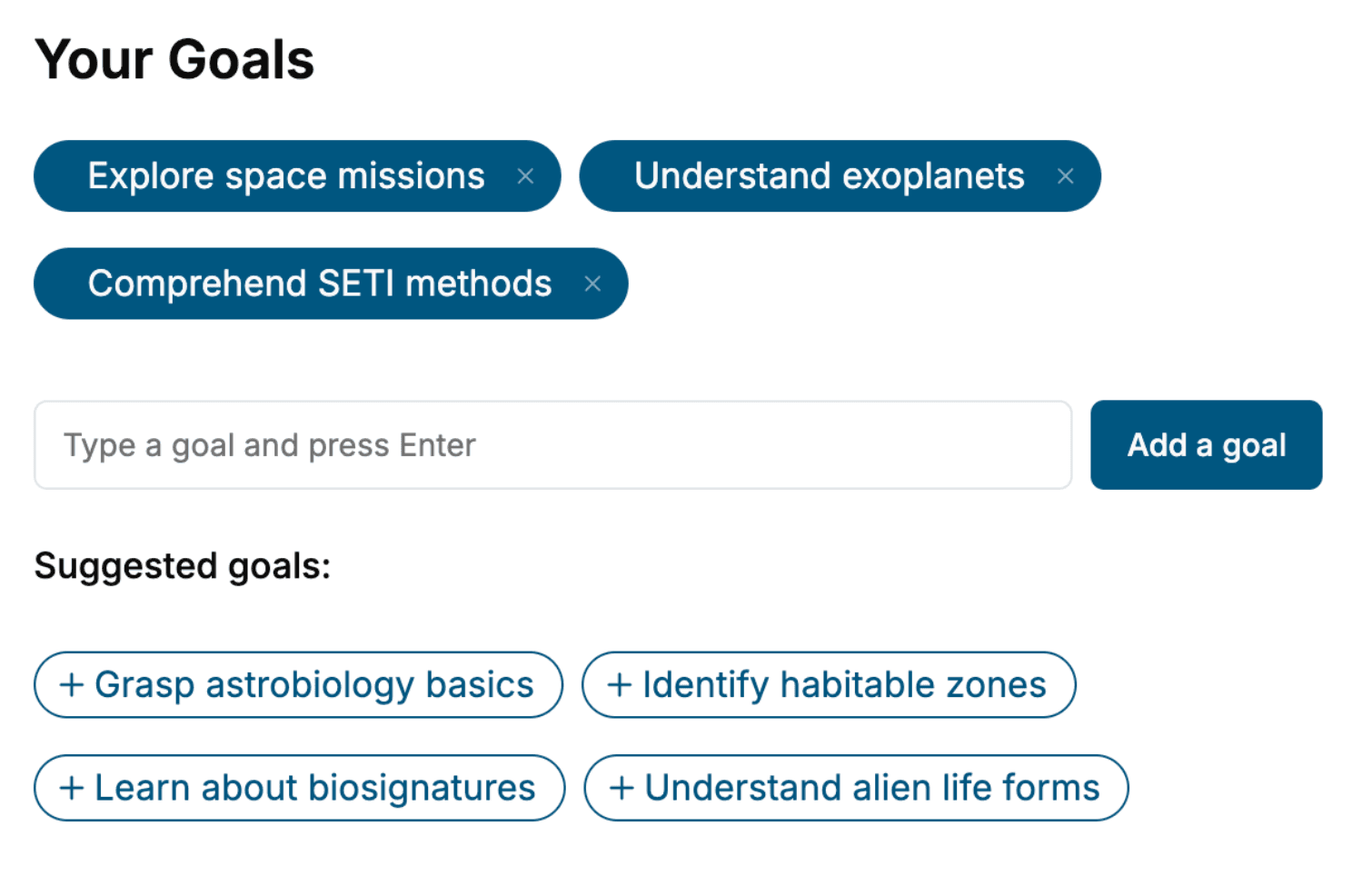
Select the focus of your Computer Science and Algorithms book and share your background
- 2. Personalize your book
Specify your goals and choose sub-topics to include
- 3. Get your tailored book
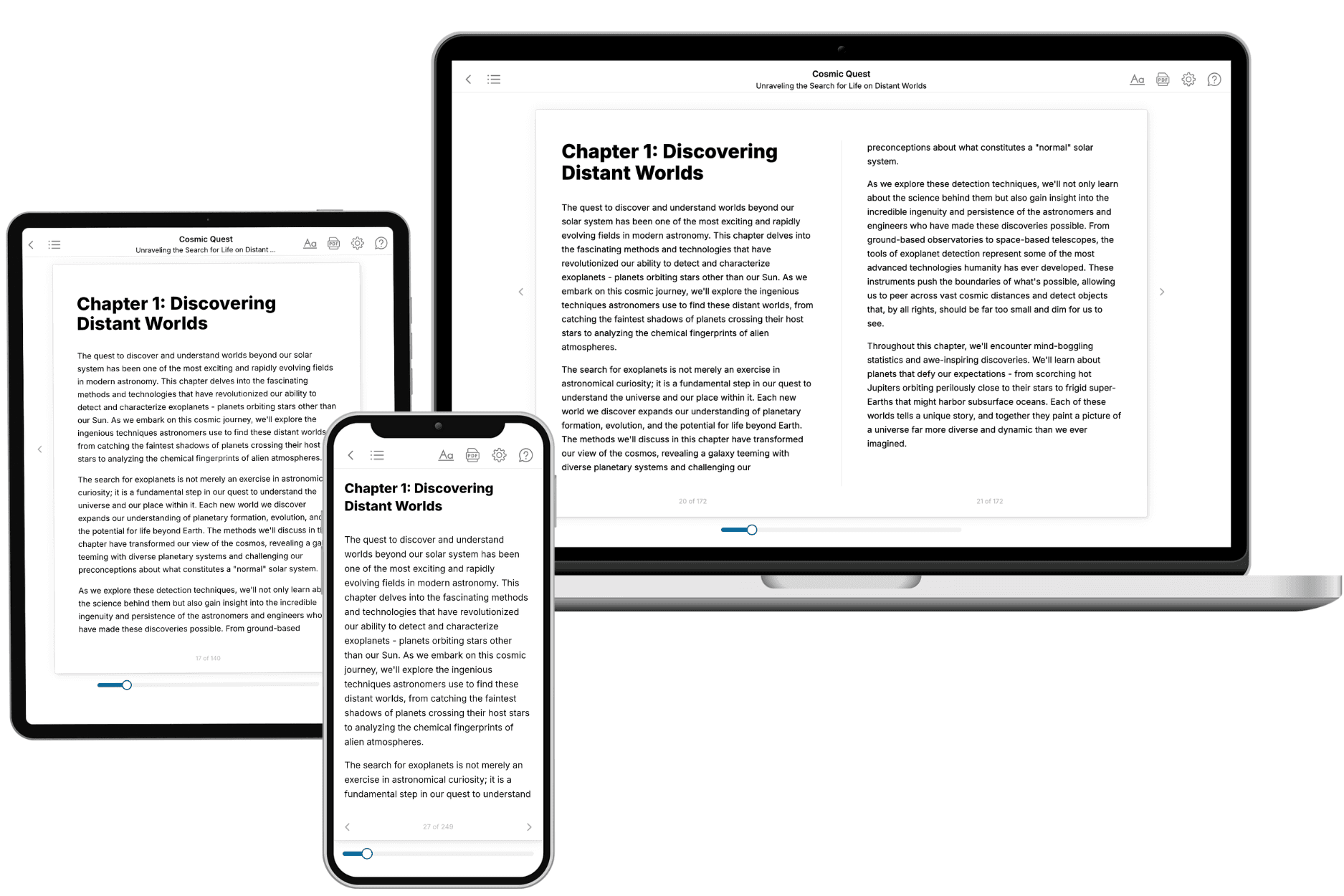
Your book is ready in 10 minutes. Read it online, download as EPUB or PDF, or send to Kindle.

Frequently asked questions
- What is TailoredRead?
TailoredRead creates complete, full-length nonfiction ebooks, written specifically for you. Tell us what you want to learn and why, and TailoredRead writes you a complete ebook on it, with charts, tables, and diagrams throughout. Read it online, on Kindle, or on any e-reader, or download it as a PDF or EPUB. Every book is written fresh the day you order it.
- How is the book tailored to me?
Before anything is written, you answer a few short questions about your goals, your background, and the topics you care about. Your book is then planned around your answers: written at your level, focused on your goals, and covering the topics you chose, instead of the one-size-fits-all book a store sells everyone.
- Will it read like generic AI content?
No. Your book isn't a chat transcript: it's planned chapter by chapter before a single word is written, told in a clear book voice, and explains ideas visually with charts, tables, and diagrams. After writing, every book goes through an editorial pass that polishes chapters so the book reads consistent from start to finish. Judge for yourself: browse thousands of sample books on our Explore Books page.
- How accurate is the content?
Our AI first checks whether your subject needs live research. Niche and fast-moving subjects are researched before writing, and the book plan and chapters are grounded in what it finds. After writing, every book goes through a quality pass that checks its facts and consistency, and researched books list their sources in a Notes section at the back.
- How long is the book?
You choose the length: Comprehensive (250-300 pages), Detailed (150-200 pages), Essential (70-100 pages), or Short (30-50 pages).
- Does the book include visuals?
Yes. Every book includes charts, tables, and diagrams: timelines, checklists, step-by-step guides, decision trees, comparison tables, matrices, and bar charts. A typical book includes dozens of these visual elements.
- Can I read it on Kindle? What formats can I download?
Yes. Every book can be read in our online reader or downloaded as a PDF or EPUB. The EPUB can be opened with Kindle, Apple Books, Kobo, and any e-reader. The Commercial and Author licenses also include an editable Word (DOCX) and Markdown download.
- How much does it cost?
About the price of a regular ebook. The exact price depends on your book's length and complexity, from $2 for the shortest books to $35 for the most comprehensive, and it's shown when you review your book, before you commit to anything. Each book is a one-time purchase, yours to keep, no subscription. Licenses that let you share, teach, or publish your book range from $35.99 to $49.99.
- Can I preview the book before purchasing?
Before you pay, you'll see what your book will cover: the title, a detailed description, the estimated length, and the complete chapter-by-chapter table of contents, so you know what you're getting before you decide. The full text itself is written after you purchase.
- How long does it take to create a book?
About 10 minutes. You can start reading the opening chapters while the rest is still being written.