Mastering Decorators in JavaScript
A Practical Guide to ES2017 and Beyond
Decorators represent one of JavaScript's most elegant solutions for writing cleaner, more maintainable code.
207 pages10 chaptersMay 1, 2026JavaScript
About this book
This guide walks you through everything you need to know about this powerful feature, from foundational concepts to advanced real-world applications. You'll discover how decorators enable you to separate concerns, reduce boilerplate, and build more expressive code. Whether you're working with TypeScript, Angular, or exploring experimental JavaScript features, you'll learn practical patterns that immediately improve your development workflow. Each chapter builds on previous concepts, providing clear examples and hands-on patterns you can apply to your own projects. By the end, you'll understand not just how decorators work, but when and why to use them effectively in your applications.
Table of contents
- IntroductionWhy Decorators Matter in Modern JavaScript, What You'll Learn in This Book, How to Use This GuideRead below
- Chapter 1: Understanding Decorator FundamentalsThe Decorator Pattern and Its Origins, How Decorators Differ from Other Design Patterns, Decorator Syntax and Basic Structure
- Chapter 2: Working with Class DecoratorsCreating and Applying Class Decorators, Understanding Constructor and Parameters, Practical Class Decorator Examples
- Chapter 3: Mastering Method DecoratorsCreating Method Decorators, Working with Property Descriptors, Common Method Decorator Patterns
- Chapter 4: Property and Accessor DecoratorsImplementing Property Decorators, Decorating Getters and Setters, Validation and Transformation Patterns
- Chapter 5: Parameter Decorators and Advanced TechniquesUnderstanding Parameter Decorators, Working with Metadata and Reflection, Real-World Parameter Decorator Applications
- Chapter 6: Composing and Combining DecoratorsApplying Multiple Decorators, Understanding Execution Order, Advanced Composition Patterns
- Chapter 7: Real-World Decorator PatternsLogging, Caching, and Performance Monitoring, Validation and Authentication Decorators, Dependency Injection and Service Patterns
- Chapter 8: Decorators in TypeScript and FrameworksTypeScript Decorator Configuration and Features, Decorators in Angular Applications, Decorator Patterns Across Popular Frameworks
- Chapter 9: Advanced Metaprogramming with DecoratorsUsing Reflect API with Decorators, Combining Decorators with Proxies, Creating and Managing Custom Metadata
- Chapter 10: Testing and Debugging Decorated CodeTesting Strategies for Decorated Classes and Methods, Debugging Decorator Execution and Side Effects, Performance Implications and Optimization
- ConclusionKey Takeaways and Best Practices, Your Next Steps in Mastering Decorators
- Appendix: Decorator Specification and ResourcesTC39 Proposal Stages and Evolution, Browser Support and Transpilation, Further Learning Resources and References
Introduction
There's a moment in every developer's journey when the code they're writing starts to feel repetitive in a way that's hard to ignore. You find yourself copying the same logging logic into method after method, rewriting the same validation checks across multiple classes, or scattering authentication guards throughout your codebase. The logic works, but something feels off. The code is doing too many things at once, and the important business logic is buried under layers of boilerplate. That feeling is a signal worth paying attention to.
Decorators are JavaScript's answer to that problem. At their core, decorators are a metaprogramming feature that lets you attach reusable behavior to classes, methods, properties, and parameters without modifying their underlying implementation. Instead of weaving cross-cutting concerns directly into your code, you annotate your classes and methods with small, focused decorator functions. The result is code that reads more clearly, behaves more predictably, and is far easier to maintain over time.
If you've worked with Angular, you've already seen decorators in action. @Component, @Injectable, and @Input are all decorators, and they're a big part of what makes Angular code so expressive and organized. TypeScript has supported decorators for years, and the TC39 committee has been working to bring a standardized decorator proposal to native JavaScript. Understanding how decorators work at a fundamental level gives you a significant advantage, whether you're building Angular applications, working in TypeScript, or preparing for the feature's eventual native adoption across JavaScript environments.[1]
This book is designed to take you from a solid understanding of ES6+ JavaScript to confident, practical mastery of decorators. Each chapter builds on the last, moving from foundational concepts through increasingly advanced patterns. Along the way, you'll find concrete code examples, real-world use cases, and clear explanations of the decisions behind each pattern. The goal isn't just to show you what decorators look like. It's to help you understand when and why to reach for them, and how to use them in ways that genuinely improve your code.
Why Decorators Matter in Modern JavaScript
Modern JavaScript applications are complex. A single method in a production codebase might need to log its execution time, validate its inputs, check user permissions, handle errors gracefully, and cache its results. If you implement all of that logic directly inside the method, the actual purpose of the method gets lost in the noise. This is what software engineers call a cross-cutting concern: a piece of functionality that applies across many parts of an application but doesn't belong to any single one of them.
Decorators give you a clean, declarative way to handle cross-cutting concerns. Instead of embedding logging logic inside every method, you write a single @log decorator and apply it wherever you need it. The method itself stays focused on its core responsibility. This separation of concerns is one of the most important principles in software design, and decorators make it genuinely practical to apply at the method and class level in JavaScript.
Consider a real-world example: an e-commerce API where dozens of route handlers need to verify that the requesting user is authenticated. Without decorators, each handler contains an authentication check at the top. With a
@requiresAuthdecorator, the intent is declared in a single line above the method, and the implementation lives in one place. When the authentication logic needs to change, you update one decorator instead of hunting through dozens of methods.
The impact on code readability is significant. When a developer reads a class decorated with @Injectable, @Singleton, or @Validated, they immediately understand the class's role and behavior without reading through its implementation. Decorators act as a form of self-documenting code. They communicate intent at a glance, which is especially valuable in large teams where developers frequently read code written by others.
Decorators also reduce the risk of bugs introduced by repetition. Every time you copy and paste a pattern, you create an opportunity for inconsistency. One copy gets updated, another doesn't. One implementation handles an edge case, another misses it. Centralizing behavior in a decorator eliminates that risk. The logic runs the same way every time it's applied, because it comes from a single source of truth.
The broader JavaScript ecosystem has already embraced decorators heavily. Angular's entire component model is built on them. NestJS, a popular Node.js framework, uses decorators for routing, validation, and dependency injection. TypeORM and MikroORM use them to define database entities and relationships. Class-validator, one of the most widely used validation libraries, is built entirely around property decorators.[2] Understanding decorators isn't just an academic exercise. It's a practical skill that unlocks a large portion of the modern JavaScript ecosystem.
It's also worth understanding where decorators sit in the JavaScript specification process. The TC39 committee, which governs JavaScript's evolution, uses a staged proposal process to evaluate new features. Decorators have been through multiple iterations and reached Stage 3 of that process, meaning the specification is stable enough for implementors to begin building support.[3] This book covers both the TypeScript decorator implementation (which many developers use today) and the evolving TC39 standard, so you'll understand both the current landscape and where the language is heading.
Perhaps most importantly, decorators encourage a style of programming that scales well. Small, focused decorator functions are easy to test in isolation. They're easy to compose. They're easy to reason about. As your application grows, having behavior centralized in decorators rather than scattered across your codebase becomes increasingly valuable. The investment in learning decorators pays dividends at every scale, from small projects to large enterprise applications.
What You'll Learn in This Book
This book covers decorators comprehensively, moving from foundational theory to advanced real-world patterns. Each chapter is designed to build on the previous one, so by the time you reach the more complex topics, you'll have the context needed to understand them fully. Here's a clear picture of what each part of the book covers and what you'll be able to do after reading it.
Chapter 1: Understanding Decorator Fundamentals starts at the beginning. Before writing a single decorator, you need to understand the decorator pattern as a design concept, where it comes from, and how it differs from other patterns like mixins or inheritance. This chapter also introduces the basic syntax and structure of decorators in JavaScript, giving you a solid mental model to build on.
Chapters 2 through 5 cover each type of decorator in depth:
- Class decorators (Chapter 2): How to modify or extend class behavior at the constructor level, with practical examples like adding metadata, enforcing singleton patterns, and registering classes automatically.
- Method decorators (Chapter 3): How to wrap or replace method behavior using property descriptors, with patterns for logging, timing, memoization, and error handling.
- Property and accessor decorators (Chapter 4): How to intercept property access and assignment, with patterns for validation, transformation, and computed properties.
- Parameter decorators (Chapter 5): How to annotate method parameters with metadata, and how frameworks like Angular use this for dependency injection.
Chapter 6: Composing and Combining Decorators addresses one of the most important and often misunderstood aspects of working with decorators: what happens when you apply multiple decorators to the same target. You'll learn the exact execution order, understand why it matters, and see patterns for composing decorators in ways that are predictable and maintainable.
Chapter 7: Real-World Decorator Patterns is where theory meets practice. This chapter walks through complete, production-ready implementations of the most common decorator use cases:
- Logging and performance monitoring
- Result caching and memoization
- Input validation and data transformation
- Authentication and authorization guards
- Dependency injection and service registration
Chapter 8: Decorators in TypeScript and Frameworks covers the practical realities of using decorators in the tools most developers actually work with. You'll learn how to configure TypeScript for decorator support, understand the differences between TypeScript's decorator implementation and the TC39 proposal, and see how Angular, NestJS, and other frameworks use decorators as a core part of their architecture.
Chapter 9: Advanced Metaprogramming with Decorators goes deeper into the JavaScript runtime. You'll learn how to use the Reflect API to store and retrieve metadata, how to combine decorators with Proxy objects for dynamic behavior, and how to build systems that use metadata to drive runtime decisions. This is the chapter for developers who want to understand how frameworks like Angular actually work under the hood.
Chapter 10: Testing and Debugging Decorated Code addresses the practical challenges that come with decorators. How do you test a decorator in isolation? How do you debug unexpected behavior when multiple decorators are applied? What are the performance implications of heavy decorator use? This chapter provides concrete strategies and tools for each of these challenges.
By the end of this book, you'll be able to write decorators from scratch, apply them confidently in real projects, understand how popular frameworks use them internally, and make informed decisions about when decorators are the right tool for a given problem. That last point matters as much as the rest. Decorators are powerful, but like any tool, they're most effective when used with good judgment.
How to Use This Guide
This guide is written for intermediate JavaScript developers who are comfortable with ES6+ features like classes, arrow functions, destructuring, and modules. You don't need prior experience with decorators, but you should be familiar with the concept of higher-order functions, since decorators are built on that foundation. If you've worked with TypeScript before, even at a basic level, some of the examples will feel familiar. If you haven't, don't worry. TypeScript-specific concepts are explained as they appear.
The chapters are designed to be read in order, especially the first six. Each one introduces concepts that later chapters build on. If you skip straight to Chapter 7 without reading the earlier material, some of the patterns will make sense on the surface but you'll miss the reasoning behind them. That reasoning is what helps you adapt patterns to your own situations rather than just copying them. That said, once you've read through the book once, it works well as a reference. The chapter and section structure makes it easy to find specific patterns when you need them.
Every code example in this book is written to be runnable. Most examples use TypeScript with the experimentalDecorators flag enabled, which is the most common environment for decorator usage today. Where relevant, differences between the TypeScript implementation and the TC39 proposal are clearly noted. To follow along with the examples, you'll need:
- Node.js (version 16 or later recommended)
- TypeScript (version 4.x or 5.x)
- A
tsconfig.jsonwith"experimentalDecorators": trueand"emitDecoratorMetadata": true - A code editor with TypeScript support (VS Code works well)
The best way to learn from this book is to type out the examples rather than copy-paste them. That might sound like old-fashioned advice, but it holds up. When you type code, you notice details you'd skim over when reading. You'll catch the moment a decorator function returns another function, or the exact shape of a property descriptor object. Those details are where the real understanding lives. After typing each example, try modifying it. Change a parameter, add a condition, combine it with another decorator. Experimentation is how the concepts move from your short-term memory into genuine understanding.
Each chapter ends with patterns and examples that are intentionally practical. These aren't toy examples invented to illustrate a point. They're patterns drawn from real codebases and popular frameworks. When you see a logging decorator or a validation decorator in this book, it's written the way you'd actually write it in a production project, not a simplified version that glosses over the important details. That means some examples are more complex than strictly necessary to demonstrate the concept. That complexity is intentional. It prepares you for what you'll encounter in real work.
If you're working through this book as part of a team or study group, the chapters on composition (Chapter 6) and testing (Chapter 10) are especially good for discussion. Decorator composition order is a topic that surprises many developers the first time they encounter it, and talking through the examples with others helps solidify the mental model. The testing chapter also raises questions about code design that are worth debating: when should behavior live in a decorator versus in the class itself, and how does that decision affect testability?
A note on the specification landscape: decorators in JavaScript have a complicated history. The TypeScript implementation that most developers use today differs in some ways from the TC39 Stage 3 proposal. This book covers both, clearly labeling which specification each example targets. The goal is to give you a complete picture of the current state of decorators, not to pretend the complexity doesn't exist. Understanding the differences between implementations will help you make better decisions about which approach to use in your own projects and how to migrate as the standard evolves.[4]
Finally, approach this material with patience. Decorators involve some concepts that take time to fully internalize, particularly around execution order, property descriptors, and metadata reflection. If something doesn't click immediately, that's normal. Move forward, see how the concept is used in practice, and come back to the explanation later. The practical examples often make the theory clearer than the theory itself does. By the time you finish this book, the concepts that seemed abstract at the start will feel natural and obvious. That shift in perspective is exactly what mastery feels like.
With that, it's time to get started. The first chapter builds the conceptual foundation you need before writing any decorator code. It covers the decorator pattern as a design concept, its origins in object-oriented programming, and how JavaScript's implementation relates to that broader tradition. Understanding where decorators come from makes it much easier to understand what they're trying to accomplish, and that understanding will serve you well throughout everything that follows.
This is the end of the free sample. The full book has 10 chapters.
Want this book written for you?
Tell us your goals and background, and get your own version of this book, tailored by AI to you.


Benefits of AI-tailored books
- Read one book, not ten:
- all the JavaScript knowledge you need, gathered into a single book.
- Save days of learning:
- tell us your goals, choose your topics, and the whole book is built around them.
- Learn effortlessly:
- JavaScript book written for your specific background and expertise.
- Understand at a glance:
- includes charts, tables, timelines, checklists, decision trees, and more.
- Stay current:
- written the day you order it, not years ago.
- Trust what you read:
- every book is checked for accuracy, with real research when your subject needs it.
Create your unique book in 3 steps
- 1. Select your focus
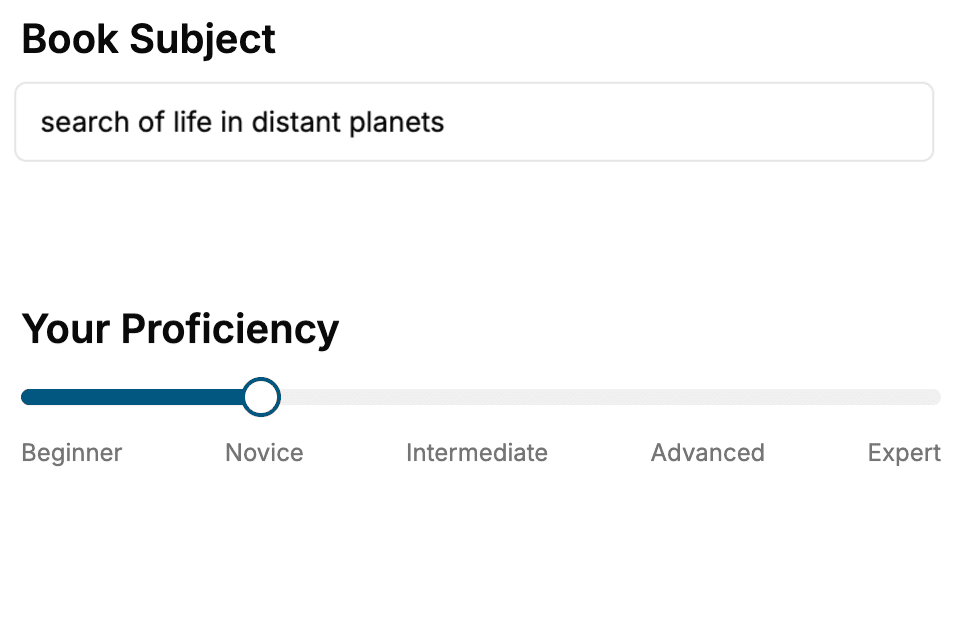
Select the focus of your JavaScript book and share your background
- 2. Personalize your book
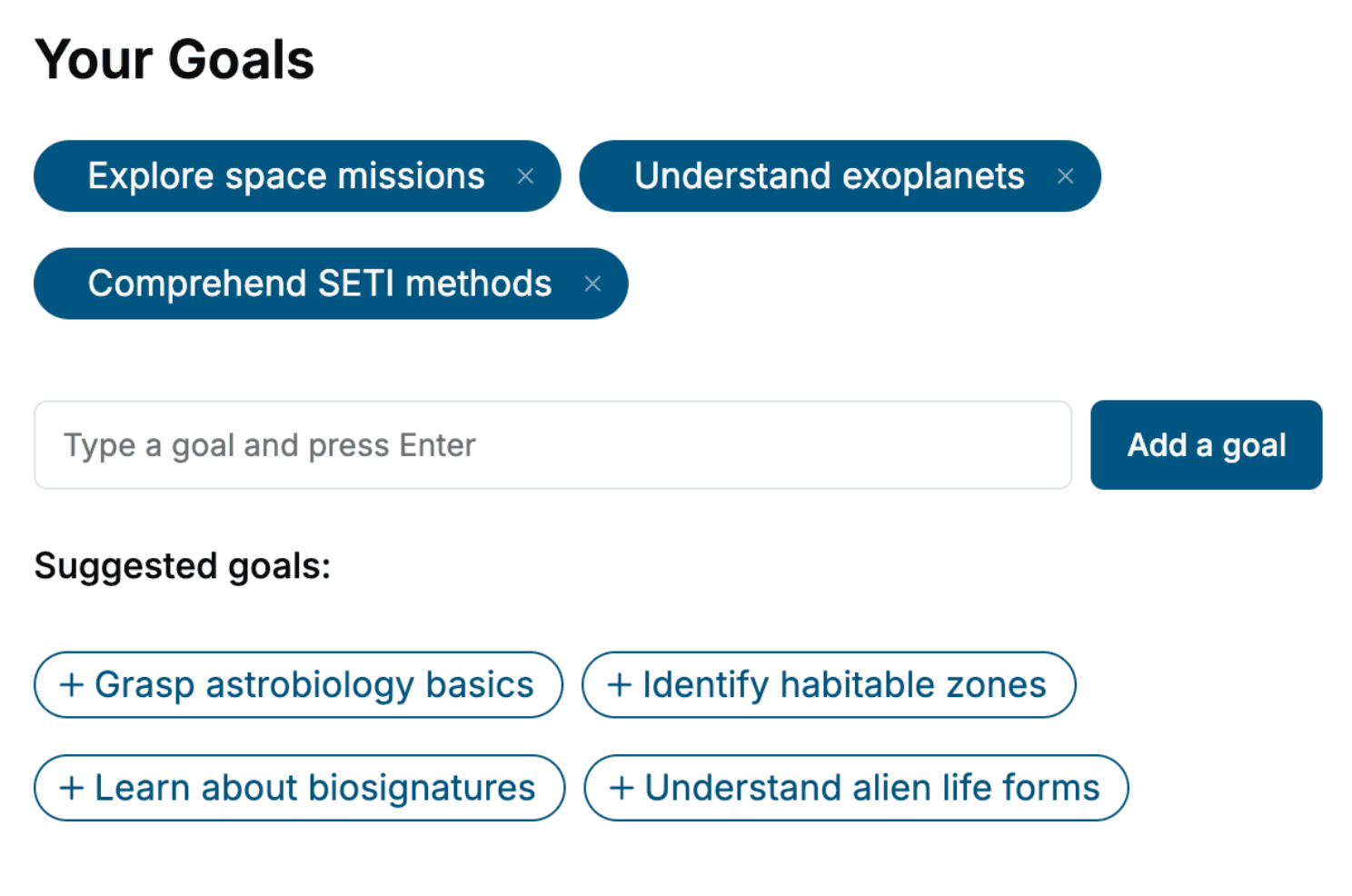
Specify your goals and choose sub-topics to include
- 3. Get your tailored book
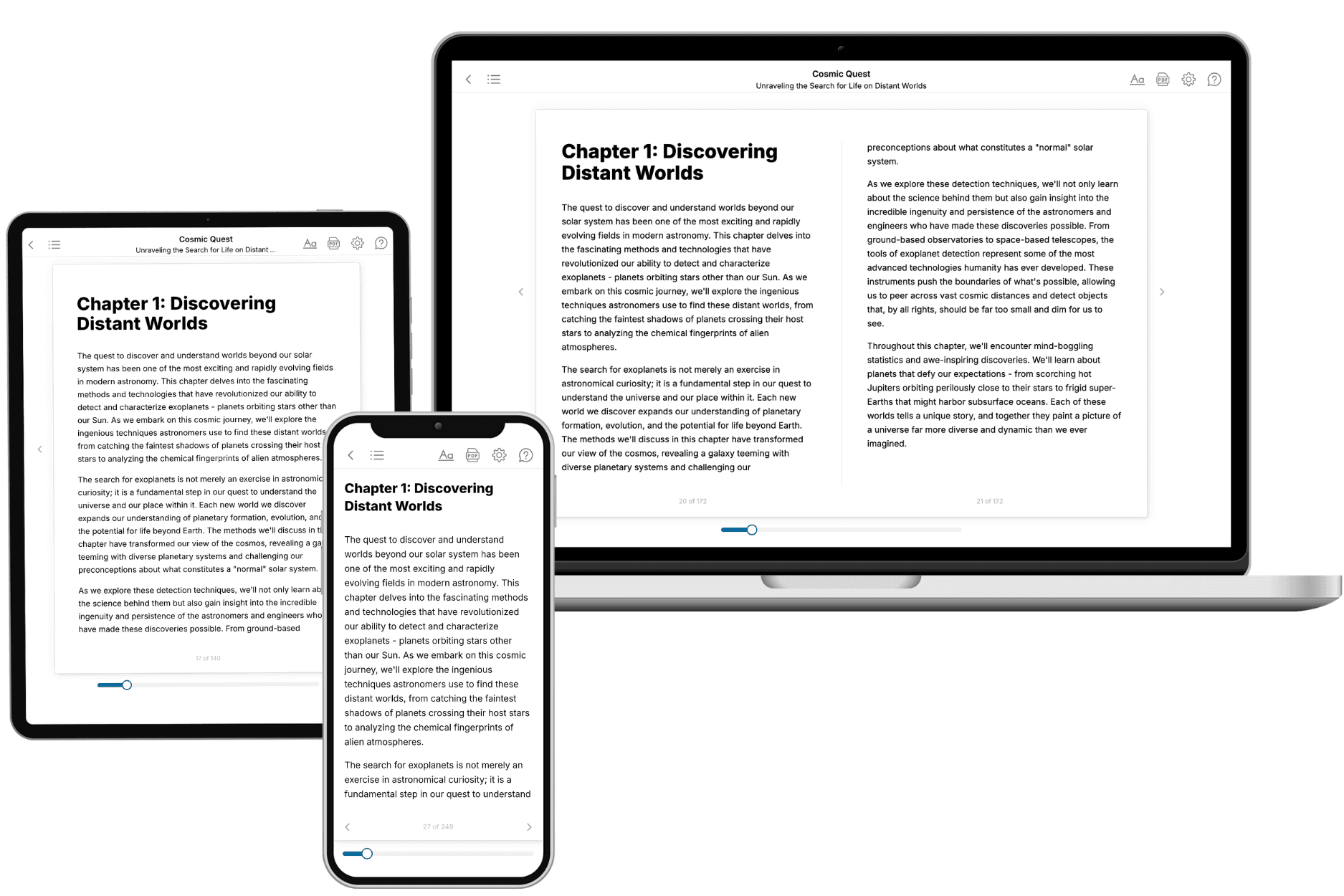
Your book is ready in 10 minutes. Read it online, download as EPUB or PDF, or send to Kindle.
Frequently asked questions
- What is TailoredRead?
TailoredRead creates complete, full-length nonfiction ebooks, written specifically for you. Tell us what you want to learn and why, and TailoredRead writes you a complete ebook on it, with charts, tables, and diagrams throughout. Read it online, on Kindle, or on any e-reader, or download it as a PDF or EPUB. Every book is written fresh the day you order it.
- How is the book tailored to me?
Before anything is written, you answer a few short questions about your goals, your background, and the topics you care about. Your book is then planned around your answers: written at your level, focused on your goals, and covering the topics you chose, instead of the one-size-fits-all book a store sells everyone.
- Will it read like generic AI content?
No. Your book isn't a chat transcript: it's planned chapter by chapter before a single word is written, told in a clear book voice, and explains ideas visually with charts, tables, and diagrams. After writing, every book goes through an editorial pass that polishes chapters so the book reads consistent from start to finish. Judge for yourself: browse thousands of sample books on our Explore Books page.
- How accurate is the content?
Our AI first checks whether your subject needs live research. Niche and fast-moving subjects are researched before writing, and the book plan and chapters are grounded in what it finds. After writing, every book goes through a quality pass that checks its facts and consistency, and researched books list their sources in a Notes section at the back.
- How long is the book?
You choose the length: Comprehensive (250-300 pages), Detailed (150-200 pages), Essential (70-100 pages), or Short (30-50 pages).
- Does the book include visuals?
Yes. Every book includes charts, tables, and diagrams: timelines, checklists, step-by-step guides, decision trees, comparison tables, matrices, and bar charts. A typical book includes dozens of these visual elements.
- Can I read it on Kindle? What formats can I download?
Yes. Every book can be read in our online reader or downloaded as a PDF or EPUB. The EPUB can be opened with Kindle, Apple Books, Kobo, and any e-reader. The Commercial and Author licenses also include an editable Word (DOCX) and Markdown download.
- How much does it cost?
About the price of a regular ebook. The exact price depends on your book's length and complexity, from $2 for the shortest books to $35 for the most comprehensive, and it's shown when you review your book, before you commit to anything. Each book is a one-time purchase, yours to keep, no subscription. Licenses that let you share, teach, or publish your book range from $35.99 to $49.99.
- Can I preview the book before purchasing?
Before you pay, you'll see what your book will cover: the title, a detailed description, the estimated length, and the complete chapter-by-chapter table of contents, so you know what you're getting before you decide. The full text itself is written after you purchase.
- How long does it take to create a book?
About 10 minutes. You can start reading the opening chapters while the rest is still being written.