Mastering Divide and Conquer
A Practical Guide to Efficient Algorithm Design
Think divide and conquer algorithms are only for sorting and searching?
300 pages15 chaptersDec 30, 2024Algorithms
About this book
Think again. This powerful technique is far more versatile than you might realize. In "Mastering Divide and Conquer," you'll discover how this fundamental approach can revolutionize your problem-solving skills across a wide range of computational challenges. From the basics to advanced applications, this book takes you on a journey through the world of divide and conquer algorithms. You'll learn how to break down complex problems into manageable subproblems, solve them efficiently, and combine the results to tackle even the most daunting computational tasks. With real-world examples and hands-on exercises, you'll gain practical experience in applying divide and conquer strategies to various domains. Whether you're optimizing database queries or developing cutting-edge machine learning algorithms, this book equips you with the tools to design elegant, efficient solutions that scale.
Table of contents
- IntroductionWhat is Divide and Conquer?, The Importance of Divide and Conquer in Algorithm Design, Book Overview and How to Use ItRead below
- Chapter 1: Foundations of Divide and ConquerProblem-Solving Strategies in Computer Science, The Divide and Conquer Principle, Recursive Thinking and Its Importance, Introduction to Algorithm Analysis
- Chapter 2: Anatomy of a Divide and Conquer AlgorithmThe Divide Step: Breaking Down the Problem, The Conquer Step: Solving Subproblems, The Combine Step: Merging Solutions, Identifying and Handling Base Cases
- Chapter 3: Classic Divide and Conquer AlgorithmsMerge Sort: Dividing to Sort, Quicksort: A Fast Sorting Algorithm, Binary Search: Efficient Searching in Sorted Arrays, Strassen's Matrix Multiplication
- Chapter 4: Analyzing Divide and Conquer AlgorithmsUnderstanding Recurrence Relations, The Master Theorem and Its Applications, Time Complexity Analysis, Space Complexity Considerations
- Chapter 5: Advanced Divide and Conquer TechniquesMulti-way Divide and Conquer, Parallel Divide and Conquer Algorithms, Randomized Divide and Conquer Approaches, Hybrid Algorithms: Combining Paradigms
- Chapter 6: Divide and Conquer in Computational GeometryThe Closest Pair Problem, Constructing Convex Hulls, Voronoi Diagrams and Delaunay Triangulations, Geometric Intersection Problems
- Chapter 7: Divide and Conquer in Numerical AlgorithmsThe Fast Fourier Transform (FFT), Karatsuba Algorithm for Integer Multiplication, Newton's Method and Divide and Conquer, Adaptive Quadrature for Numerical Integration
- Chapter 8: Divide and Conquer in Graph AlgorithmsSolving Graph Connectivity Problems, Divide and Conquer Approaches to Shortest Paths, Maximum Flow Algorithms, Graph Matching Problems
- Chapter 9: Divide and Conquer in String AlgorithmsEfficient String Matching Algorithms, The Longest Common Subsequence Problem, Fast Palindrome Detection, Constructing and Using Suffix Arrays
- Chapter 10: Divide and Conquer in Optimization ProblemsBinary Space Partitioning, The Skyline Problem, Maximum Subarray Problem, General Optimization Techniques Using Divide and Conquer
- Chapter 11: Divide and Conquer in Parallel ComputingUnderstanding Parallel Architectures, Parallelizing Divide and Conquer Algorithms, Load Balancing in Parallel Divide and Conquer, Case Studies in Parallel Divide and Conquer
- Chapter 12: Divide and Conquer in External Memory AlgorithmsThe External Memory Model, External Sorting Algorithms, External Searching and Indexing, I/O-Efficient Divide and Conquer Strategies
- Chapter 13: Divide and Conquer in Machine LearningDecision Trees and Random Forests, Clustering Algorithms Using Divide and Conquer, Dimensionality Reduction Techniques, Ensemble Methods and Boosting
- Chapter 14: Real-World Applications of Divide and ConquerImage Processing and Computer Vision, Data Compression Algorithms, Cryptographic Algorithms, Scientific Computing and Simulations
- Chapter 15: Future Directions and Emerging TrendsDivide and Conquer in Quantum Computing, Tackling Big Data with Divide and Conquer, Artificial Intelligence and Divide and Conquer, Open Problems and Research Opportunities
- Conclusion
- Glossary
- Further Reading
Introduction
In the realm of computer science and algorithm design, few strategies are as powerful and versatile as divide and conquer. This fundamental approach to problem-solving has revolutionized the way we tackle complex computational challenges, offering elegant solutions that are both efficient and scalable. As you embark on this journey to master divide and conquer algorithms, you're about to unlock a world of possibilities that will transform your approach to algorithm design and enhance your problem-solving skills in ways you might not have imagined.
Divide and conquer is not just a technique; it's a mindset that encourages you to break down seemingly insurmountable problems into manageable pieces. By doing so, you'll discover that even the most daunting computational tasks can be conquered with grace and efficiency. This introduction serves as your gateway to understanding the essence of divide and conquer, its significance in the broader context of algorithm design, and how this book will guide you through its intricacies and applications.
As we delve deeper into the world of divide and conquer, you'll find that this strategy extends far beyond the classic examples of sorting and searching that you might be familiar with. From computational geometry to machine learning, from parallel computing to cryptography, divide and conquer permeates various domains of computer science and beyond. By mastering this technique, you'll not only enhance your ability to design efficient algorithms but also gain insights into problem-solving strategies that can be applied across diverse fields.
Throughout this book, we'll explore the theoretical foundations of divide and conquer, analyze its efficiency, and examine its practical applications. You'll learn how to identify problems that are well-suited for this approach, how to design and implement divide and conquer algorithms, and how to optimize them for various scenarios. Whether you're a student looking to deepen your understanding of algorithms or a professional seeking to sharpen your problem-solving skills, this book will provide you with the knowledge and tools to excel in the art of divide and conquer.
What is Divide and Conquer?
At its core, divide and conquer is a problem-solving paradigm that breaks down a complex problem into smaller, more manageable subproblems. This approach follows a simple yet powerful principle: divide the problem, conquer the subproblems, and then combine the solutions. The elegance of this method lies in its recursive nature, where each subproblem is treated as a smaller instance of the original problem, often leading to efficient and elegant solutions.
The divide and conquer strategy typically consists of three main steps:
- Divide: Break the original problem into smaller subproblems that are similar in nature to the original problem but of a reduced size.
- Conquer: Recursively solve these subproblems. If the subproblems are small enough, solve them directly as base cases.
- Combine: Merge the solutions of the subproblems to create a solution to the original problem.
One of the key advantages of divide and conquer is its ability to reduce the time complexity of algorithms. Many divide and conquer algorithms achieve logarithmic or linearithmic time complexities, which are significantly more efficient than their brute-force counterparts. For instance, the classic merge sort algorithm, which employs divide and conquer, has a time complexity of O(n log n), a substantial improvement over the O(n^2) complexity of simpler sorting algorithms like bubble sort or insertion sort[1].
Another significant aspect of divide and conquer is its natural fit for parallel processing. Since the subproblems created by the divide step are often independent of each other, they can be solved concurrently on different processors or cores. This parallelism can lead to substantial speedups in multi-core or distributed computing environments, making divide and conquer particularly relevant in today's era of parallel and distributed systems.
The versatility of divide and conquer extends beyond traditional algorithmic problems. It has found applications in various domains of computer science and beyond. In image processing, divide and conquer techniques are used for tasks such as image compression and feature detection. In machine learning, decision trees and random forests employ a divide and conquer approach to split the feature space and make predictions. Even in the realm of scientific computing, divide and conquer methods are used to solve complex numerical problems efficiently.
However, it's important to note that divide and conquer is not a one-size-fits-all solution. Its effectiveness depends on the nature of the problem and how well it can be divided into subproblems. Some problems may not have a natural way to be divided, or the cost of combining solutions might outweigh the benefits of division. Understanding when and how to apply divide and conquer is as crucial as knowing the technique itself.
As you progress through this book, you'll gain a deeper understanding of these concepts and learn to recognize patterns where divide and conquer can be effectively applied. You'll also develop the skills to analyze the efficiency of divide and conquer algorithms and compare them with alternative approaches. This knowledge will empower you to make informed decisions about algorithm design and implementation in your future projects and research endeavors.
In the following sections, we'll explore the importance of divide and conquer in algorithm design and provide an overview of how this book will guide you through mastering this powerful technique. By the end of this journey, you'll have a comprehensive understanding of divide and conquer, equipped with the tools to tackle a wide range of computational challenges with confidence and creativity.
The Importance of Divide and Conquer in Algorithm Design
The significance of divide and conquer in algorithm design cannot be overstated. This paradigm has revolutionized the way we approach complex problems in computer science, offering a systematic method for creating efficient and elegant solutions. Understanding the importance of divide and conquer is crucial for any aspiring computer scientist or software engineer, as it provides a powerful tool for tackling a wide array of computational challenges.
One of the primary reasons for the importance of divide and conquer is its ability to significantly reduce the time complexity of algorithms. Many problems that would be computationally expensive to solve using brute-force methods can be efficiently addressed using divide and conquer techniques. For example, the problem of finding the closest pair of points in a two-dimensional space has a naive solution with O(n^2) time complexity. However, using a divide and conquer approach, this can be reduced to O(n log n), making it feasible to solve for much larger datasets[2].
Divide and conquer also plays a crucial role in developing algorithms that are not only efficient but also easy to understand and implement. The recursive nature of divide and conquer algorithms often leads to clean, modular code that closely mirrors the problem-solving process. This clarity and structure make divide and conquer algorithms easier to debug, maintain, and optimize, which is invaluable in real-world software development scenarios.
Furthermore, divide and conquer is inherently suited for parallel processing, which is increasingly important in the age of multi-core processors and distributed computing. Many divide and conquer algorithms can be naturally parallelized, as the subproblems created in the divide step can often be solved independently. This characteristic makes divide and conquer particularly relevant for developing scalable solutions that can take full advantage of modern hardware architectures.
The versatility of divide and conquer extends its importance across various domains of computer science. In areas such as computational geometry, divide and conquer techniques have led to breakthrough algorithms for problems like constructing Voronoi diagrams and computing convex hulls. In the field of data structures, divide and conquer principles underpin the design of efficient data structures like balanced binary search trees and segment trees, which are fundamental to many advanced algorithms.
In the realm of numerical algorithms, divide and conquer has enabled the development of fast algorithms for fundamental operations. The Fast Fourier Transform (FFT), a divide and conquer algorithm, revolutionized signal processing and is now ubiquitous in applications ranging from digital audio to image compression. Similarly, Strassen's algorithm for matrix multiplication, another divide and conquer approach, broke the long-standing belief that matrix multiplication required Ω(n^3) time, opening new avenues for research in algebraic algorithms[3].
The importance of divide and conquer also lies in its role as a problem-solving framework that encourages critical thinking and creative approaches to algorithm design. By learning to apply divide and conquer principles, you develop the ability to break down complex problems into manageable parts, a skill that is valuable not only in computer science but in many other fields as well. This approach to problem-solving can lead to innovative solutions and can help in tackling problems that might seem insurmountable at first glance.
Moreover, understanding divide and conquer is crucial for grasping more advanced algorithmic concepts. Many sophisticated algorithms and data structures build upon divide and conquer principles. For instance, the study of divide and conquer provides a solid foundation for understanding more complex paradigms like dynamic programming and greedy algorithms. It also serves as a stepping stone to advanced topics in algorithm analysis, such as amortized analysis and randomized algorithms.
In the context of algorithm design, divide and conquer often leads to optimal or near-optimal solutions for many problems. The ability to design such efficient algorithms is a key skill in computer science, particularly in areas where performance is critical. Whether you're working on optimizing database queries, developing high-performance scientific simulations, or creating algorithms for real-time systems, the principles of divide and conquer will be invaluable in your toolkit.
Lastly, the importance of divide and conquer extends to its applications in emerging fields of computer science. In machine learning and artificial intelligence, divide and conquer principles are used in ensemble methods like random forests and in the design of efficient neural network architectures. In big data processing, divide and conquer strategies are essential for developing algorithms that can handle massive datasets by distributing the workload across multiple machines.
As you progress through this book, you'll gain a deeper appreciation for the importance of divide and conquer in algorithm design. You'll see how this paradigm can be applied to solve a wide range of problems efficiently and elegantly. By mastering divide and conquer, you'll not only enhance your problem-solving skills but also gain a powerful perspective on algorithm design that will serve you well throughout your career in computer science and beyond.
Book Overview and How to Use It
"Mastering Divide and Conquer: A Practical Guide to Efficient Algorithm Design" is structured to provide you with a comprehensive understanding of divide and conquer algorithms, from foundational concepts to advanced applications. This book is designed to be both a thorough learning resource and a practical reference guide, suitable for computer science students and professionals alike. To get the most out of this book, it's important to understand its structure and how to approach the material effectively.
The book is organized into 15 chapters, each focusing on a specific aspect of divide and conquer algorithms. Here's a brief overview of the book's structure:
- Foundations of Divide and Conquer
- Anatomy of a Divide and Conquer Algorithm
- Classic Divide and Conquer Algorithms
- Analyzing Divide and Conquer Algorithms
- Advanced Divide and Conquer Techniques
- Divide and Conquer in Computational Geometry
- Divide and Conquer in Numerical Algorithms
- Divide and Conquer in Graph Algorithms
- Divide and Conquer in String Algorithms
- Divide and Conquer in Optimization Problems
- Divide and Conquer in Parallel Computing
- Divide and Conquer in External Memory Algorithms
- Divide and Conquer in Machine Learning
- Real-World Applications of Divide and Conquer
- Future Directions and Emerging Trends
To make the most of this book, consider the following approach:
- Start with the foundations: Even if you're familiar with divide and conquer, review the first few chapters to ensure a solid understanding of the core concepts.
- Practice actively: Each chapter includes examples and exercises. Work through these diligently to reinforce your understanding.
- Implement the algorithms: Don't just read about the algorithms; implement them yourself. Coding the algorithms will deepen your understanding and help you internalize the concepts.
- Analyze and experiment: Use the analysis techniques provided to evaluate the efficiency of the algorithms you implement. Experiment with different input sizes and types to see how the algorithms perform in practice.
- Connect the dots: Look for connections between different algorithms and techniques. Understanding these relationships will help you develop a more intuitive grasp of divide and conquer principles.
- Explore applications: Pay special attention to the chapters on real-world applications and emerging trends. These will help you see the broader relevance of divide and conquer beyond theoretical computer science.
- Use as a reference: After your initial read-through, keep this book handy as a reference. The detailed explanations and analyses will be valuable when you encounter similar problems in your work or studies.
Each chapter is designed to be self-contained, allowing you to focus on specific topics of interest. However, the chapters build upon each other, so reading them in order is recommended for a comprehensive understanding. The book includes numerous examples, case studies, and practical exercises to help you apply the concepts you're learning. Don't skip these – they're crucial for developing your problem-solving skills and intuition for algorithm design.
Throughout the book, you'll find in-depth analyses of algorithm efficiency, including time and space complexity considerations. These analyses are essential for understanding why divide and conquer algorithms are often more efficient than their alternatives. Pay close attention to these sections, as they'll help you develop the critical thinking skills necessary for designing and optimizing algorithms in real-world scenarios.
The later chapters of the book delve into advanced topics and applications of divide and conquer in various domains of computer science. These chapters will show you how the principles you've learned can be applied to solve complex problems in areas like machine learning, parallel computing, and big data processing. Even if you're not currently working in these fields, understanding these applications will broaden your perspective and may inspire new approaches to problems in your area of expertise.
As you progress through the book, you'll encounter increasingly complex algorithms and concepts. Don't be discouraged if you find some topics challenging – this is a natural part of the learning process. Take your time with difficult sections, revisit earlier chapters if necessary, and don't hesitate to seek additional resources or discussions with peers to clarify your understanding.
Remember that mastering divide and conquer is not just about memorizing algorithms, but about developing a problem-solving mindset. As you work through the book, try to internalize the thought process behind divide and conquer. Ask yourself how you might apply these principles to problems you encounter in your own work or studies.
Finally, the book concludes with a chapter on future directions and emerging trends in divide and conquer algorithms. This forward-looking section will give you insights into ongoing research and potential future applications of divide and conquer techniques. Use this chapter as a springboard for further exploration and to stay abreast of developments in the field.
By the end of this book, you should have a comprehensive understanding of divide and conquer algorithms, the ability to analyze and implement them effectively, and the skills to apply these techniques to a wide range of computational problems. Whether you're preparing for technical interviews, working on algorithm-intensive projects, or pursuing research in computer science, the knowledge and skills you gain from this book will be invaluable.
Remember, mastering divide and conquer is a journey. Take your time, practice regularly, and don't hesitate to revisit chapters as needed. With dedication and consistent effort, you'll develop a deep understanding of this powerful algorithmic paradigm and significantly enhance your problem-solving capabilities in computer science.
This is the end of the free sample. The full book has 15 chapters.
Want this book written for you?
Tell us your goals and background, and get your own version of this book, tailored by AI to you.


Benefits of AI-tailored books
- Read one book, not ten:
- all the Algorithms knowledge you need, gathered into a single book.
- Save days of learning:
- tell us your goals, choose your topics, and the whole book is built around them.
- Learn effortlessly:
- Algorithms book written for your specific background and expertise.
- Understand at a glance:
- includes charts, tables, timelines, checklists, decision trees, and more.
- Stay current:
- written the day you order it, not years ago.
- Trust what you read:
- every book is checked for accuracy, with real research when your subject needs it.
Create your unique book in 3 steps
- 1. Select your focus
Select the focus of your Algorithms book and share your background
- 2. Personalize your book
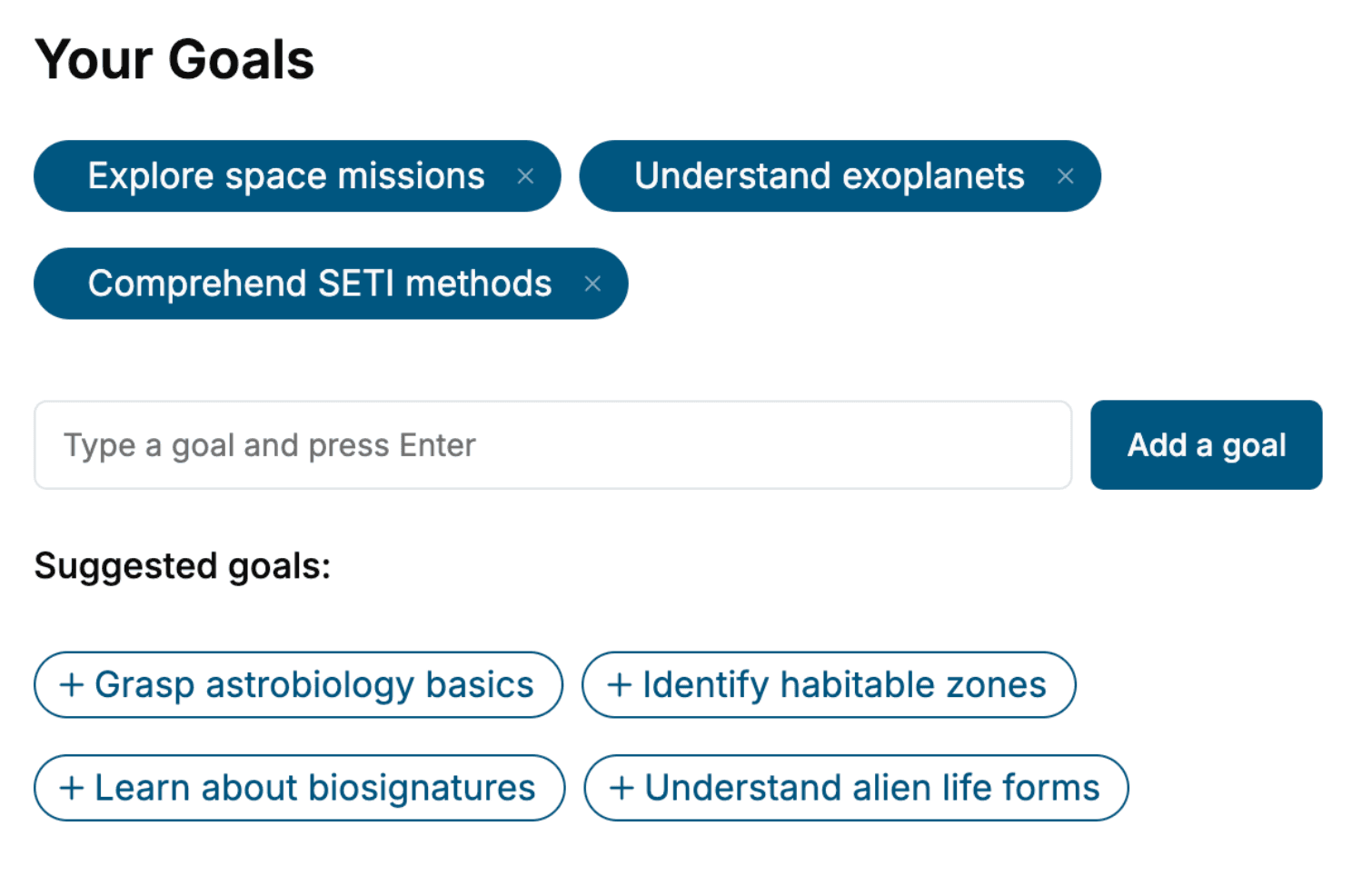
Specify your goals and choose sub-topics to include
- 3. Get your tailored book
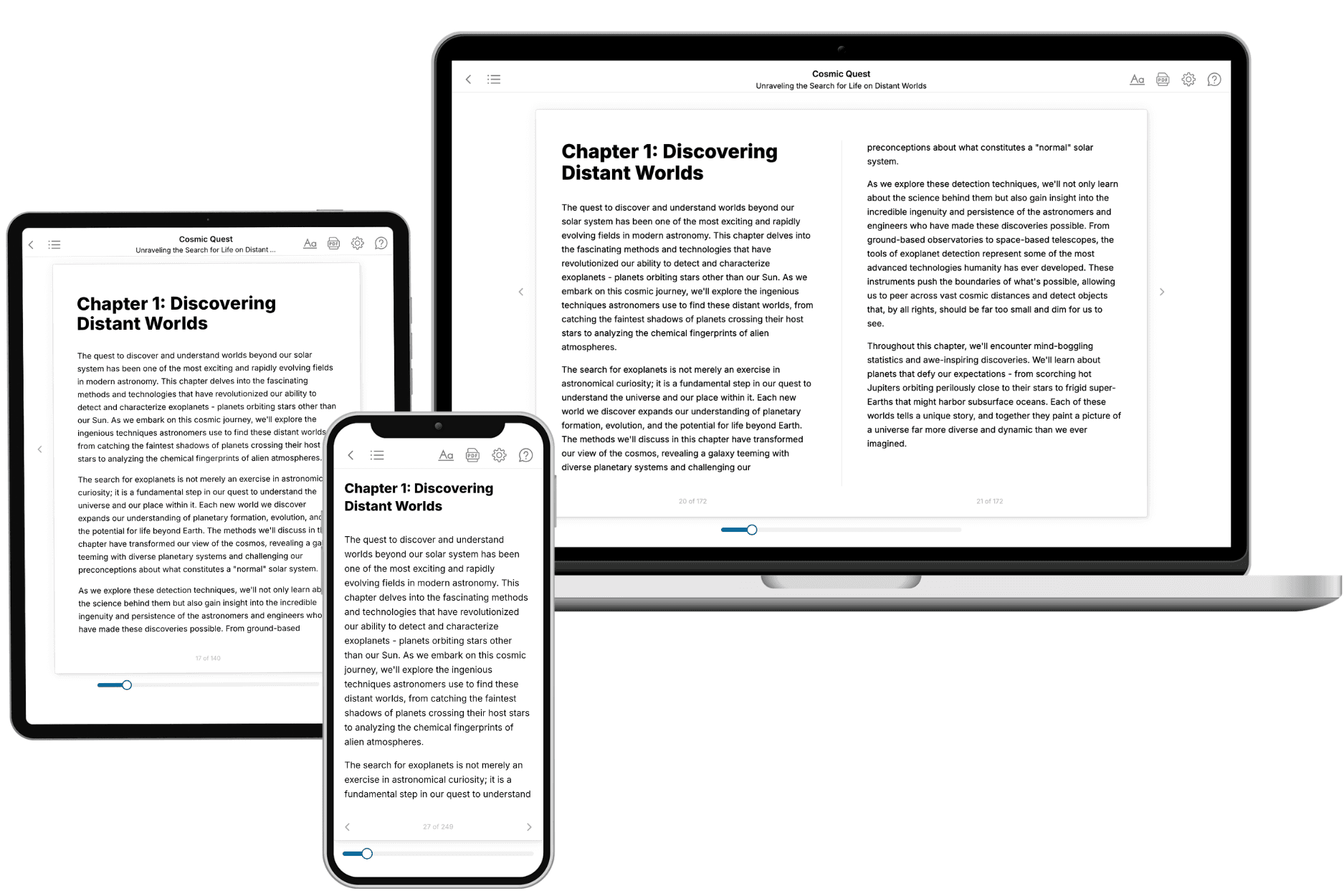
Your book is ready in 10 minutes. Read it online, download as EPUB or PDF, or send to Kindle.

Frequently asked questions
- What is TailoredRead?
TailoredRead creates complete, full-length nonfiction ebooks, written specifically for you. Tell us what you want to learn and why, and TailoredRead writes you a complete ebook on it, with charts, tables, and diagrams throughout. Read it online, on Kindle, or on any e-reader, or download it as a PDF or EPUB. Every book is written fresh the day you order it.
- How is the book tailored to me?
Before anything is written, you answer a few short questions about your goals, your background, and the topics you care about. Your book is then planned around your answers: written at your level, focused on your goals, and covering the topics you chose, instead of the one-size-fits-all book a store sells everyone.
- Will it read like generic AI content?
No. Your book isn't a chat transcript: it's planned chapter by chapter before a single word is written, told in a clear book voice, and explains ideas visually with charts, tables, and diagrams. After writing, every book goes through an editorial pass that polishes chapters so the book reads consistent from start to finish. Judge for yourself: browse thousands of sample books on our Explore Books page.
- How accurate is the content?
Our AI first checks whether your subject needs live research. Niche and fast-moving subjects are researched before writing, and the book plan and chapters are grounded in what it finds. After writing, every book goes through a quality pass that checks its facts and consistency, and researched books list their sources in a Notes section at the back.
- How long is the book?
You choose the length: Comprehensive (250-300 pages), Detailed (150-200 pages), Essential (70-100 pages), or Short (30-50 pages).
- Does the book include visuals?
Yes. Every book includes visual elements such as timelines, checklists, step-by-step guides, decision trees, comparison tables, and matrices, and many include bar charts. A typical book includes dozens of these visual elements.
- Can I read it on Kindle? What formats can I download?
Yes. Every book can be read in our online reader or downloaded as a PDF or EPUB. The EPUB can be opened with Kindle, Apple Books, Kobo, and any e-reader. The Commercial and Author licenses also include an editable Word (DOCX) and Markdown download.
- How much does it cost?
About the price of a regular ebook. The exact price depends on your book's length and complexity, from $2 for the shortest books to $35 for the most comprehensive, and it's shown when you review your book, before you commit to anything. Each book is a one-time purchase, yours to keep, no subscription. Licenses that let you share, teach, or publish your book range from $35.99 to $49.99.
- Can I preview the book before purchasing?
Before you pay, you'll see what your book will cover: the title, a detailed description, the estimated length, and the complete chapter-by-chapter table of contents, so you know what you're getting before you decide. The full text itself is written after you purchase.
- How long does it take to create a book?
About 10 minutes. You can start reading the opening chapters while the rest is still being written.