Mastering Fourier Transform
A Practical Guide for Signal Processing and Computer Science Applications
Embark on a journey to unlock the power of Fourier Transform in the realms of signal processing and computer science.
284 pages13 chaptersDec 4, 2024Signal Processing
About this book
This comprehensive guide bridges the gap between theory and practice, offering you a deep dive into the fundamental concepts and advanced applications of Fourier Transform. From the basics of signal decomposition to the intricacies of fast Fourier Transform algorithms, you'll gain a solid foundation that will elevate your problem-solving skills. Discover how this mathematical tool revolutionizes data analysis, image processing, and algorithm optimization across various domains of computer science and engineering. Whether you're tackling complex signal processing challenges or seeking to optimize your algorithms, "Mastering Fourier Transform" equips you with the knowledge and techniques to excel. With practical examples, intuitive explanations, and hands-on exercises, you'll learn to harness the full potential of Fourier Transform in your projects and research. Get ready to transform your understanding and become a Fourier Transform expert!
Table of contents
- IntroductionThe Importance of Fourier Transform in Modern Technology, Overview of the Book's Contents, How to Use This Book EffectivelyRead below
- Chapter 1: Foundations of Fourier TransformHistorical Context and Development, Mathematical Basis of Fourier Transform, Time and Frequency Domains, Continuous Fourier Transform
- Chapter 2: Discrete Fourier Transform (DFT)Basics of DFT, Sampling Theorem and Aliasing, Properties of DFT, Implementing DFT in Code
- Chapter 3: Fast Fourier Transform (FFT)Introduction to FFT, Cooley-Tukey FFT Algorithm, Radix-2 FFT Implementation, Optimizing FFT Algorithms
- Chapter 4: Signal Analysis with Fourier TransformSpectral Analysis Techniques, Windowing Functions and Their Effects, Dealing with Spectral Leakage and Resolution, Power Spectrum Estimation
- Chapter 5: Filtering TechniquesTypes of Filters: Low-pass, High-pass, Band-pass, FIR Filter Design Using Fourier Transform, IIR Filters and Their Characteristics, Adaptive Filtering Techniques
- Chapter 6: Image Processing Applications2D Fourier Transform for Images, Image Filtering in the Frequency Domain, Image Compression Techniques, Feature Extraction Using Fourier Transform
- Chapter 7: Audio Signal ProcessingAnalyzing Audio Signals with Fourier Transform, Creating Audio Effects in the Frequency Domain, Fourier Transform in Speech Recognition, Music Analysis and Processing
- Chapter 8: Communication SystemsModulation Techniques and Fourier Analysis, Channel Equalization, Orthogonal Frequency-Division Multiplexing (OFDM), Fourier Transform in Wireless Communication Protocols
- Chapter 9: Advanced Topics in Fourier TransformShort-Time Fourier Transform (STFT), Wavelet Transform and Its Relation to Fourier Transform, Fractional Fourier Transform, Multidimensional Fourier Transform
- Chapter 10: Numerical Methods and OptimizationNumerical Accuracy in Fourier Transform Computations, Parallel Computing for Fourier Transform, GPU Acceleration Techniques, Optimization Strategies for Large-Scale Problems
- Chapter 11: Fourier Transform in Machine LearningFeature Engineering with Fourier Transform, Fourier Transform in Convolutional Neural Networks, Time Series Analysis and Prediction, Spectral Clustering and Graph Analysis
- Chapter 12: Real-World Applications and Case StudiesMedical Imaging and Diagnostics, Radar and Sonar Systems, Seismic Data Analysis, Astronomical Signal Processing, Financial Market Analysis
- Chapter 13: Future Directions and Emerging TrendsQuantum Computing and Fourier Transform, Integration with Artificial Intelligence, Fourier Transform in Edge Computing, Future Challenges and Research Opportunities
- ConclusionKey Takeaways, Continuing Your Fourier Transform Journey
- AppendixMathematical Proofs and Derivations, Code Examples and Implementations
- Glossary
- Further Reading
Introduction
Welcome to "Mastering Fourier Transform: A Practical Guide for Signal Processing and Computer Science Applications." This book is designed to be your comprehensive companion in understanding and applying the powerful mathematical tool known as the Fourier Transform. Whether you're a computer science student, an engineering professional, or a curious mind seeking to deepen your knowledge in signal processing and algorithms, this guide will take you on a journey through the fascinating world of frequency analysis and its myriad applications.
The Fourier Transform stands as one of the most important mathematical techniques in the fields of signal processing, data analysis, and algorithm design. Named after the French mathematician and physicist Joseph Fourier, this transform has revolutionized how we analyze and manipulate signals, images, and data across various domains. Its ability to decompose complex signals into simple sinusoidal components has made it an indispensable tool in modern technology, from the smartphones in your pocket to the advanced imaging systems in hospitals.
Throughout this book, you'll discover how the Fourier Transform bridges the gap between the time domain, where signals are typically observed, and the frequency domain, where they can be analyzed and manipulated with remarkable efficiency. This dual perspective is at the heart of many signal processing techniques and forms the foundation for numerous algorithms you'll encounter in your studies or professional work.
As we embark on this exploration, it's important to note that while the mathematics behind the Fourier Transform can be complex, the concepts and applications are both fascinating and practical. This book aims to strike a balance between theoretical understanding and practical application, ensuring that you not only grasp the underlying principles but also learn how to apply them in real-world scenarios.
In the following chapters, you'll be introduced to the fundamental concepts, delve into advanced techniques, and explore cutting-edge applications of the Fourier Transform. From the basics of signal decomposition to the intricacies of fast Fourier Transform algorithms, from image compression to speech recognition, and from wireless communication protocols to machine learning applications, this book covers a wide spectrum of topics that showcase the versatility and power of this mathematical tool.
The Importance of Fourier Transform in Modern Technology
The Fourier Transform has become an integral part of modern technology, playing a crucial role in numerous fields and applications that shape our daily lives. Its importance cannot be overstated, as it provides a fundamental framework for analyzing and processing signals in various forms. At its core, the Fourier Transform allows us to view complex signals through the lens of frequency components, offering insights that are often hidden in the time domain representation.
One of the most significant areas where the Fourier Transform has made a profound impact is in digital signal processing (DSP). In the realm of audio technology, it forms the basis for a wide range of applications, from noise reduction in hearing aids to the creation of immersive sound experiences in virtual reality systems. The ability to analyze audio signals in the frequency domain enables engineers to design sophisticated filters, enhance audio quality, and implement various effects that would be challenging or impossible to achieve in the time domain alone.
In the field of telecommunications, the Fourier Transform is the cornerstone of modern wireless communication systems. It enables the efficient use of the electromagnetic spectrum through techniques like Orthogonal Frequency-Division Multiplexing (OFDM), which is used in 4G and 5G networks, Wi-Fi, and digital television broadcasting. By allowing multiple signals to be transmitted simultaneously on different frequencies, the Fourier Transform has dramatically increased the capacity and reliability of our communication infrastructure[1].
Image and video processing is another domain where the Fourier Transform has revolutionized technology. In medical imaging, techniques such as Magnetic Resonance Imaging (MRI) and Computed Tomography (CT) rely heavily on Fourier analysis to reconstruct detailed images of the human body from raw sensor data. In the realm of digital photography and video, the Fourier Transform enables efficient compression algorithms like JPEG and MPEG, which have made it possible to store and transmit high-quality visual content with minimal data usage.
The impact of the Fourier Transform extends to the world of computer graphics and animation as well. It plays a crucial role in various rendering techniques, texture synthesis, and motion capture processing. In the film industry, visual effects artists use Fourier-based algorithms for tasks such as removing camera shake from footage or creating realistic water simulations.
In the rapidly evolving field of artificial intelligence and machine learning, the Fourier Transform continues to prove its worth. It is used in feature extraction for image and speech recognition tasks, time series analysis for predictive modeling, and even in optimizing the performance of convolutional neural networks. The ability to represent data in the frequency domain often leads to more efficient and accurate machine learning models across various applications.
The Fourier Transform's importance is also evident in scientific research and engineering disciplines. In astronomy, it helps in analyzing signals from distant stars and galaxies, uncovering information about their composition and motion. In seismology, Fourier analysis of earthquake waves provides crucial data for understanding the Earth's structure and predicting seismic activity. Engineers use Fourier techniques in structural analysis, vibration control, and the design of everything from buildings to spacecraft.
Even in fields that might seem far removed from signal processing, such as finance, the Fourier Transform finds applications. It is used in analyzing market trends, detecting patterns in stock prices, and developing trading algorithms. The ability to decompose complex time series data into its frequency components can reveal cyclical patterns and trends that are not immediately apparent in the raw data.
As we move towards an increasingly data-driven world, the importance of the Fourier Transform in data analysis and compression cannot be overstated. With the exponential growth of data generation and the need for efficient storage and transmission, Fourier-based techniques continue to play a vital role in managing and extracting value from vast amounts of information.
In conclusion, the Fourier Transform's importance in modern technology is pervasive and multifaceted. Its ability to bridge the gap between time and frequency domains has opened up new possibilities in signal processing, communication, imaging, and data analysis. As you delve deeper into this book, you'll gain a greater appreciation for how this mathematical tool underpins many of the technologies we rely on daily and continues to drive innovation across numerous fields. Understanding the Fourier Transform is not just an academic exercise; it's a key to unlocking the potential of current and future technologies that shape our world.
Overview of the Book's Contents
"Mastering Fourier Transform" is structured to provide you with a comprehensive understanding of the Fourier Transform, starting from its fundamental principles and progressing to advanced applications and cutting-edge research areas. The book is divided into thirteen chapters, each focusing on a specific aspect of Fourier Transform theory and practice. This carefully crafted structure ensures that you build a solid foundation before moving on to more complex topics, allowing for a gradual and thorough learning experience.
Chapter 1, "Foundations of Fourier Transform," sets the stage by introducing you to the historical context and mathematical basis of the Fourier Transform. You'll explore the fundamental concepts of time and frequency domains, and gain an understanding of the continuous Fourier Transform. This chapter provides the essential groundwork for all subsequent discussions and applications.
In Chapter 2, "Discrete Fourier Transform (DFT)," you'll delve into the digital realm, learning about the DFT and its properties. This chapter covers crucial topics such as the sampling theorem and aliasing, which are essential for understanding the limitations and practical applications of digital signal processing. You'll also get hands-on experience by implementing the DFT in code, bridging the gap between theory and practice.
Chapter 3 introduces you to the "Fast Fourier Transform (FFT)," a pivotal algorithm that revolutionized digital signal processing by dramatically reducing the computational complexity of the DFT. You'll learn about the Cooley-Tukey FFT algorithm, implement the Radix-2 FFT, and explore optimization techniques that make the FFT practical for real-time applications.
The next few chapters focus on practical applications of the Fourier Transform. Chapter 4, "Signal Analysis with Fourier Transform," covers spectral analysis techniques, windowing functions, and methods for dealing with spectral leakage and resolution. Chapter 5 delves into "Filtering Techniques," where you'll learn about various types of filters and their design using Fourier Transform principles.
Chapters 6 and 7 explore the Fourier Transform's applications in image and audio processing, respectively. You'll learn about 2D Fourier Transforms for image analysis, compression techniques, and feature extraction. In the audio domain, you'll discover how to analyze and manipulate audio signals, create effects, and apply Fourier techniques to speech recognition and music analysis.
Chapter 8 focuses on "Communication Systems," where you'll see how the Fourier Transform underpins modern communication technologies. Topics include modulation techniques, channel equalization, and the principles behind Orthogonal Frequency-Division Multiplexing (OFDM) used in wireless protocols.
As you progress, Chapter 9 introduces "Advanced Topics in Fourier Transform," including the Short-Time Fourier Transform (STFT), wavelet transforms, and multidimensional Fourier Transforms. These topics extend your understanding beyond the basics and prepare you for cutting-edge applications.
Chapter 10 addresses "Numerical Methods and Optimization," focusing on the practical aspects of implementing Fourier Transform algorithms efficiently. You'll learn about numerical accuracy considerations, parallel computing techniques, and GPU acceleration, equipping you with the skills to tackle large-scale problems.
In Chapter 11, you'll explore the intersection of "Fourier Transform and Machine Learning," discovering how frequency domain techniques can enhance feature engineering, convolutional neural networks, time series analysis, and spectral clustering.
Chapter 12 brings theory into practice with "Real-World Applications and Case Studies." You'll see how the Fourier Transform is applied in diverse fields such as medical imaging, radar systems, seismic analysis, astronomy, and even financial market analysis.
The final chapter, "Future Directions and Emerging Trends," looks ahead to the cutting edge of Fourier Transform research and applications. You'll gain insights into how this mathematical tool is evolving with quantum computing, artificial intelligence, and edge computing, and learn about future challenges and research opportunities in the field.
Throughout the book, you'll find practical examples, code snippets, and exercises that reinforce the concepts and help you develop hands-on skills. The appendix provides additional mathematical proofs, derivations, and code implementations for those who wish to delve deeper into specific topics.
By the end of this book, you'll have gained a comprehensive understanding of the Fourier Transform, its applications, and its implementation in various domains of computer science and engineering. You'll be well-equipped to apply this knowledge to your own projects, research, and problem-solving endeavors in signal processing and related fields.
How to Use This Book Effectively
To get the most out of "Mastering Fourier Transform," it's important to approach the material with a strategic and engaged mindset. This book is designed to be both a comprehensive guide and a practical resource, catering to readers with varying levels of prior knowledge in signal processing and computer science. Here are some tips and strategies to help you use this book effectively and maximize your learning experience.
First and foremost, it's crucial to read the chapters sequentially, especially if you're new to the subject of Fourier Transform. The book is structured to build your knowledge progressively, with each chapter laying the groundwork for the next. Even if you're familiar with some concepts, reviewing the earlier chapters can help solidify your understanding and ensure you're well-prepared for the more advanced topics.
As you read, take an active approach to learning. Don't just passively consume the information; engage with it. Take notes, summarize key concepts in your own words, and try to think of real-world examples where the principles could be applied. This active engagement will help reinforce your understanding and make the material more memorable.
Pay special attention to the mathematical formulas and derivations presented throughout the book. While it might be tempting to skip over the math, understanding these foundations is crucial for a deep grasp of the Fourier Transform. Take the time to work through the equations step by step. If you encounter difficulties, don't hesitate to consult additional resources or seek help from peers or mentors.
The code examples and implementations provided in the book are not just for illustration; they're meant to be interactive learning tools. Set up a development environment on your computer and type out the code examples yourself. Experiment with the code, modify parameters, and observe how the outputs change. This hands-on approach will give you practical experience and intuition about how Fourier Transform algorithms work in real-world scenarios.
Each chapter concludes with exercises and problems. Don't skip these! They are designed to reinforce your understanding and challenge you to apply the concepts in new ways. Attempt to solve these problems on your own before looking at any provided solutions. The process of working through challenges is often where the deepest learning occurs.
As you progress through the book, make connections between different chapters and concepts. The Fourier Transform has wide-ranging applications, and you'll often find that ideas from one area can provide insights into another. Try to draw these connections explicitly, perhaps by creating mind maps or summary sheets that link related concepts across chapters.
Take advantage of the real-world case studies and examples presented throughout the book. These provide context for the theoretical concepts and demonstrate how the Fourier Transform is applied in various industries and scientific fields. Consider how these applications might relate to your own work or interests, and think about potential projects where you could apply what you're learning.
Don't rush through the material. Signal processing and the mathematics of Fourier Transform can be complex topics that require time to digest fully. It's better to progress slowly and understand deeply than to rush through and only grasp the surface level. If you find a particular section challenging, take a break, review prerequisite material, or seek additional explanations before moving on.
Supplement your reading with external resources. While this book aims to be comprehensive, the field of signal processing is vast. Use the references and further reading suggestions provided to explore topics that particularly interest you in more depth. Online courses, video tutorials, and academic papers can provide alternative explanations and perspectives that might help clarify difficult concepts.
Consider forming a study group or finding a learning partner. Discussing the material with others can help clarify your understanding, expose you to different perspectives, and motivate you to stay on track with your learning goals. Explaining concepts to others is also an excellent way to reinforce your own understanding.
As you work through the book, try to apply the concepts to your own projects or areas of interest. Whether it's analyzing audio files, processing images, or working with time-series data, finding personal applications for the material will make your learning more relevant and engaging.
Keep in mind that mastering the Fourier Transform is an ongoing process. Even after completing the book, continue to practice and apply what you've learned. Stay updated with new developments in the field by following relevant journals, attending conferences, or participating in online communities focused on signal processing and computer science.
Finally, don't be discouraged if you find some topics challenging. The Fourier Transform is a sophisticated mathematical tool with deep implications across many fields. It's normal to struggle with certain concepts initially. Persistence, practice, and patience are key to mastering this powerful technique.
By following these strategies and fully engaging with the material presented in "Mastering Fourier Transform," you'll be well on your way to becoming proficient in this essential area of signal processing and computer science. Remember, the journey of learning is just as important as the destination. Enjoy the process of discovery and the new perspectives that understanding the Fourier Transform will bring to your work and studies.
Notes
Introduction
- 1. J. G. Proakis and M. Salehi, Digital Communications (5th ed.), McGraw-Hill, 2008
This is the end of the free sample. The full book has 13 chapters.
Want this book written for you?
Tell us your goals and background, and get your own version of this book, tailored by AI to you.


Benefits of AI-tailored books
- Read one book, not ten:
- all the Signal Processing knowledge you need, gathered into a single book.
- Save days of learning:
- tell us your goals, choose your topics, and the whole book is built around them.
- Learn effortlessly:
- Signal Processing book written for your specific background and expertise.
- Understand at a glance:
- includes charts, tables, timelines, checklists, decision trees, and more.
- Stay current:
- written the day you order it, not years ago.
- Trust what you read:
- every book is checked for accuracy, with real research when your subject needs it.
Create your unique book in 3 steps
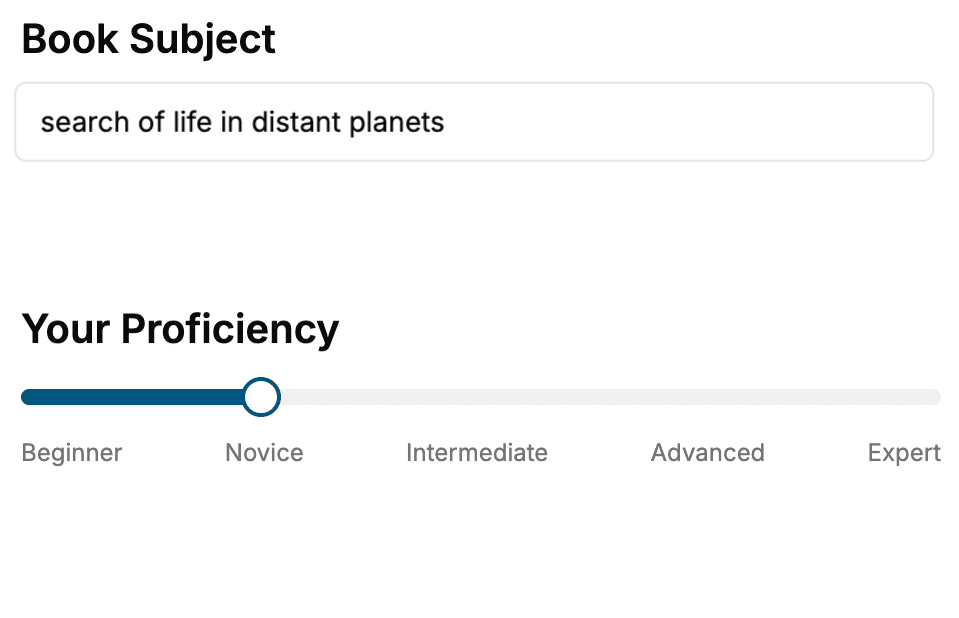
- 1. Select your focus
Select the focus of your Signal Processing book and share your background
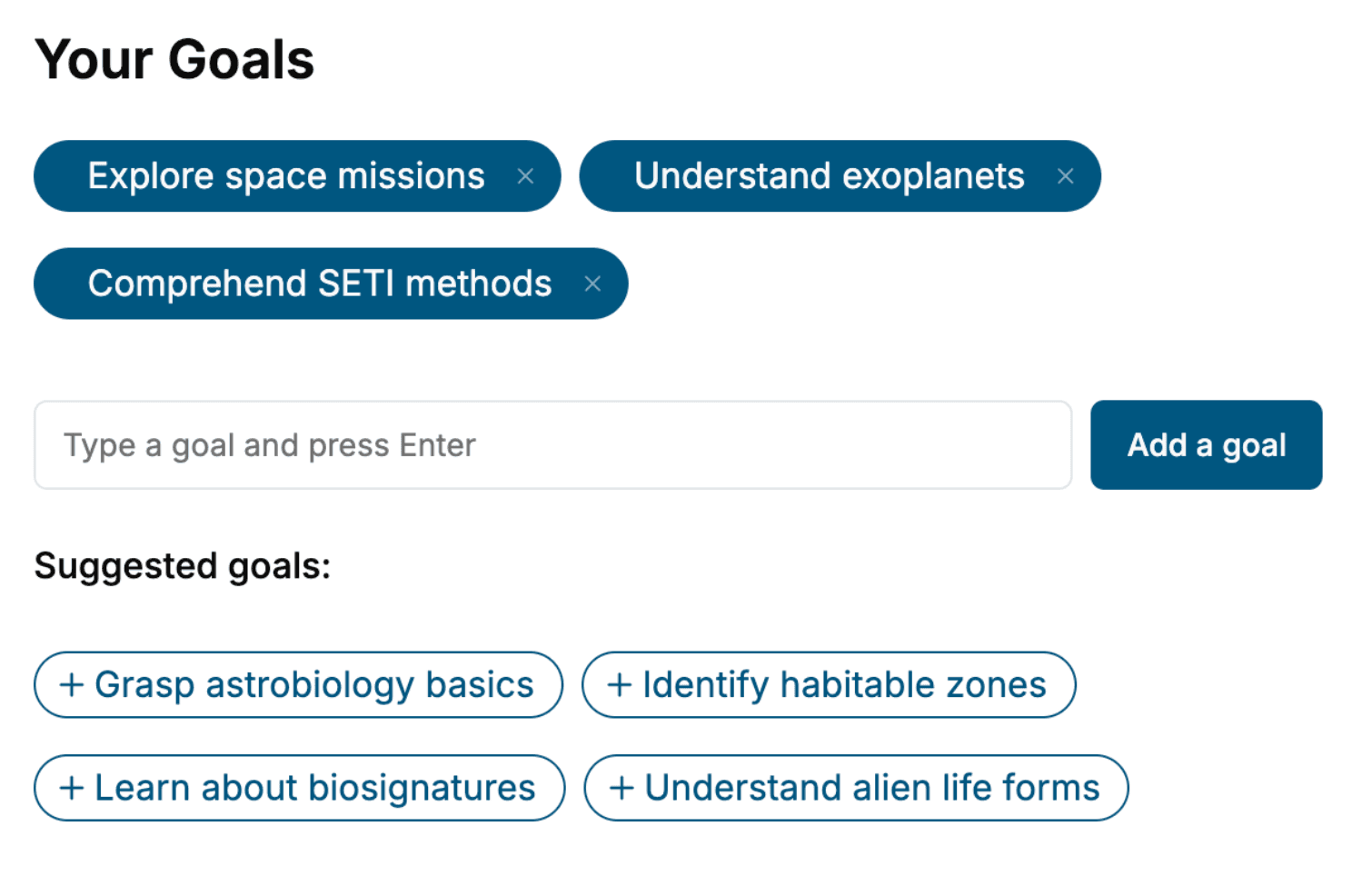
- 2. Personalize your book
Specify your goals and choose sub-topics to include
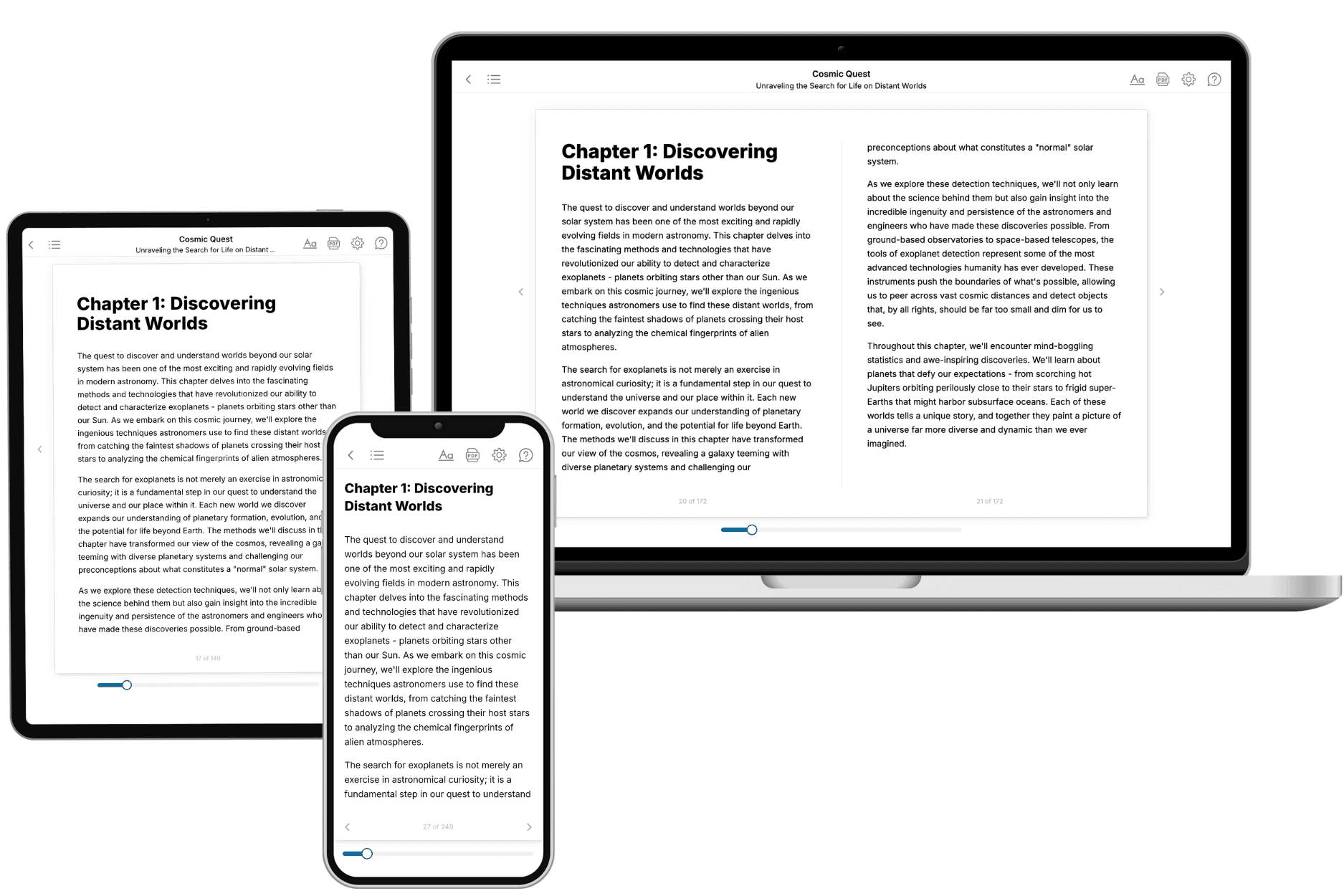
- 3. Get your tailored book
Your book is ready in 10 minutes. Read it online, download as EPUB or PDF, or send to Kindle.
Frequently asked questions
- What is TailoredRead?
TailoredRead creates complete, full-length nonfiction ebooks, written specifically for you. Tell us what you want to learn and why, and TailoredRead writes you a complete ebook on it, with charts, tables, and diagrams throughout. Read it online, on Kindle, or on any e-reader, or download it as a PDF or EPUB. Every book is written fresh the day you order it.
- How is the book tailored to me?
Before anything is written, you answer a few short questions about your goals, your background, and the topics you care about. Your book is then planned around your answers: written at your level, focused on your goals, and covering the topics you chose, instead of the one-size-fits-all book a store sells everyone.
- Will it read like generic AI content?
No. Your book isn't a chat transcript: it's planned chapter by chapter before a single word is written, told in a clear book voice, and explains ideas visually with charts, tables, and diagrams. After writing, every book goes through an editorial pass that polishes chapters so the book reads consistent from start to finish. Judge for yourself: browse thousands of sample books on our Explore Books page.
- How accurate is the content?
Our AI first checks whether your subject needs live research. Niche and fast-moving subjects are researched before writing, and the book plan and chapters are grounded in what it finds. After writing, every book goes through a quality pass that checks its facts and consistency, and researched books list their sources in a Notes section at the back.
- How long is the book?
You choose the length: Comprehensive (250-300 pages), Detailed (150-200 pages), Essential (70-100 pages), or Short (30-50 pages).
- Does the book include visuals?
Yes. Every book includes charts, tables, and diagrams: timelines, checklists, step-by-step guides, decision trees, comparison tables, matrices, and bar charts. A typical book includes dozens of these visual elements.
- Can I read it on Kindle? What formats can I download?
Yes. Every book can be read in our online reader or downloaded as a PDF or EPUB. The EPUB can be opened with Kindle, Apple Books, Kobo, and any e-reader. The Commercial and Author licenses also include an editable Word (DOCX) and Markdown download.
- How much does it cost?
About the price of a regular ebook. The exact price depends on your book's length and complexity, from $2 for the shortest books to $35 for the most comprehensive, and it's shown when you review your book, before you commit to anything. Each book is a one-time purchase, yours to keep, no subscription. Licenses that let you share, teach, or publish your book range from $35.99 to $49.99.
- Can I preview the book before purchasing?
Before you pay, you'll see what your book will cover: the title, a detailed description, the estimated length, and the complete chapter-by-chapter table of contents, so you know what you're getting before you decide. The full text itself is written after you purchase.
- How long does it take to create a book?
About 10 minutes. You can start reading the opening chapters while the rest is still being written.