Mastering Fourier Transform
Unlocking the Power of Signal Processing in Computer Science and Algorithms
Dive into the fascinating world of Fourier Transform and discover how this powerful mathematical tool can revolutionize your approach to signal processing and data analysis.
284 pages14 chaptersFeb 16, 2025Computer Science and Algorithms
About this book
As you progress through this book, you'll unravel the intricacies of Fourier Transform properties, gaining a deep understanding of their applications in computer science and algorithms. Your journey begins with the fundamental concepts, gradually building to advanced techniques and real-world applications. You'll explore the elegant mathematics behind Fourier Transform, learning how to harness its properties to solve complex problems in signal processing, image analysis, and data compression. By the time you finish this book, you'll have gained a solid foundation in Fourier Transform properties, equipped with the knowledge and skills to apply these concepts in various computational tasks. You'll be able to optimize algorithms, enhance data analysis techniques, and tackle challenging problems in computer science with newfound confidence and expertise.
Table of contents
- IntroductionThe Importance of Fourier Transform in Computer Science, Overview of the Book, Prerequisites and Mathematical Background, How to Use This BookRead below
- Chapter 1: Foundations of Fourier TransformHistorical Context and Development, Basic Concepts and Definitions, Continuous Fourier Transform, Discrete Fourier Transform
- Chapter 2: Key Properties of Fourier TransformLinearity Property, Time Shifting Property, Frequency Shifting Property, Scaling Property, Time Reversal Property
- Chapter 3: Duality and Convolution TheoremsThe Duality Principle, Convolution Theorem, Applications of Duality in Signal Processing, Efficient Convolution Using Fourier Transform
- Chapter 4: Parseval's Theorem and Energy ConservationExplanation of Parseval's Theorem, Energy Conservation in Time and Frequency Domains, Applications in Signal Power Analysis, Practical Examples and Calculations
- Chapter 5: Symmetry Properties of Fourier TransformEven and Odd Functions, Real and Imaginary Parts of the Transform, Conjugate Symmetry Property, Applications of Symmetry in Algorithm Optimization
- Chapter 6: Sampling Theorem and Discrete-Time Fourier TransformNyquist-Shannon Sampling Theorem, Aliasing and Its Prevention, Discrete-Time Fourier Transform (DTFT), Applications in Digital Signal Processing
- Chapter 7: Fast Fourier Transform (FFT) AlgorithmsThe Need for Fast Algorithms, Cooley-Tukey FFT Algorithm, Radix-2 FFT Implementation, Other FFT Variants and Optimizations, Complexity Analysis of FFT Algorithms
- Chapter 8: Windowing Techniques in Fourier AnalysisThe Need for Windowing, Common Window Functions, Spectral Leakage and Its Mitigation, Window Selection Criteria
- Chapter 9: Two-Dimensional Fourier TransformTheory of 2D Fourier Transform, Separability Property, 2D Fast Fourier Transform, Applications in Image Processing
- Chapter 10: Fourier Series and Its Relationship to Fourier TransformIntroduction to Fourier Series, Convergence of Fourier Series, Relationship Between Fourier Series and Transform, Applications of Fourier Series in Computer Science
- Chapter 11: Signal Compression Using Fourier TransformBasics of Signal Compression, Compression in the Frequency Domain, Lossy vs. Lossless Compression Techniques, Fourier-based Compression Algorithms
- Chapter 12: Spectral Analysis and Feature ExtractionIntroduction to Spectral Analysis, Power Spectral Density Estimation, Feature Extraction in the Frequency Domain, Applications in Pattern Recognition
- Chapter 13: Filtering Techniques Using Fourier TransformTypes of Filters: Low-pass, High-pass, Band-pass, Filter Design in the Frequency Domain, FIR and IIR Filters, Adaptive Filtering Techniques, Applications in Noise Reduction and Signal Enhancement
- Chapter 14: Advanced Topics and Future DirectionsIntroduction to Wavelets, Fractional Fourier Transform, Fourier Transform in Quantum Computing, Future Research Directions
- ConclusionKey Takeaways, Future Applications of Fourier Transform in Computer Science
- Glossary
- Further Reading
Introduction
Welcome to "Mastering Fourier Transform: Unlocking the Power of Signal Processing in Computer Science and Algorithms." This book is designed to be your comprehensive guide to understanding and applying Fourier Transform properties in the realm of computer science and algorithms. As you embark on this journey, you'll discover how this powerful mathematical tool can revolutionize your approach to signal processing, data analysis, and problem-solving in various computational tasks.
The Fourier Transform stands as one of the most fundamental and versatile tools in mathematics and engineering, with far-reaching applications across numerous fields. In the context of computer science, it serves as a cornerstone for many advanced algorithms and techniques, particularly in areas such as signal processing, image analysis, data compression, and spectral analysis. By mastering the properties and applications of Fourier Transform, you'll gain a significant advantage in tackling complex problems and developing efficient solutions in your work or studies.
Throughout this book, we'll explore the elegant mathematics behind Fourier Transform, unraveling its intricacies and demonstrating how to harness its properties effectively. From the fundamental concepts to advanced techniques and real-world applications, each chapter is designed to build upon your knowledge progressively, ensuring a solid foundation in this critical area of study.
Whether you're a computer science student looking to deepen your understanding of signal processing algorithms, an engineering professional seeking to enhance your problem-solving skills, or a curious learner fascinated by the intersection of mathematics and computer science, this book is tailored to meet your needs. By the time you reach the final pages, you'll be equipped with the knowledge and skills to apply Fourier Transform concepts confidently in various computational tasks, optimizing algorithms, enhancing data analysis techniques, and approaching challenging problems with newfound expertise.
The Importance of Fourier Transform in Computer Science
The Fourier Transform plays a pivotal role in modern computer science, serving as a fundamental tool that bridges the gap between theoretical concepts and practical applications. Its importance cannot be overstated, as it provides a powerful framework for analyzing and manipulating signals in various domains. In the field of computer science, where efficient data processing and algorithm design are paramount, the Fourier Transform offers a unique perspective that can lead to innovative solutions and optimized performance.
One of the primary reasons for the Fourier Transform's significance in computer science is its ability to convert signals between the time and frequency domains. This transformation allows for a different representation of data, often revealing patterns and characteristics that are not immediately apparent in the original form. For instance, in signal processing applications, analyzing a signal in the frequency domain can provide insights into its composition, helping to identify dominant frequencies, noise components, or hidden periodicities. This capability is crucial in areas such as audio processing, where isolating specific frequency components can lead to more effective noise reduction or sound enhancement techniques.
In the realm of algorithm design, the Fourier Transform's properties offer elegant solutions to complex problems. The convolution theorem, for example, allows for the simplification of certain operations by transforming them from the time domain to the frequency domain. This principle is extensively used in digital signal processing and image processing algorithms, where operations like filtering can be performed more efficiently in the frequency domain. The Fast Fourier Transform (FFT) algorithm, a computationally efficient method for calculating the Discrete Fourier Transform, has revolutionized signal processing by dramatically reducing the time complexity of these operations from O(n²) to O(n log n). This improvement has made real-time processing of large datasets feasible, enabling applications ranging from speech recognition to radar systems.
The Fourier Transform's applications extend far beyond traditional signal processing. In the field of data compression, techniques based on Fourier analysis form the foundation for many lossy compression algorithms. By representing data in the frequency domain and discarding less significant components, these algorithms can achieve substantial reductions in data size while maintaining acceptable quality. This principle is employed in various multimedia compression standards, including JPEG for images and MP3 for audio, which have become ubiquitous in digital communications and storage.
In computer graphics and image processing, the Fourier Transform provides powerful tools for manipulating and analyzing visual data. Techniques such as image filtering, edge detection, and feature extraction often rely on frequency domain representations obtained through Fourier analysis. Moreover, the 2D Fourier Transform enables efficient processing of images and plays a crucial role in applications like medical imaging, where it's used in techniques such as Magnetic Resonance Imaging (MRI) and Computed Tomography (CT) scans.
The importance of Fourier Transform in computer science also extends to emerging fields such as machine learning and artificial intelligence. In these domains, spectral analysis techniques derived from Fourier theory are used for feature extraction and pattern recognition. For instance, in speech recognition systems, the Mel-frequency cepstral coefficients (MFCCs), which are based on the Fourier Transform, are widely used to extract relevant features from audio signals. Similarly, in time series analysis and forecasting, Fourier-based methods provide valuable tools for decomposing complex signals and identifying underlying trends and seasonal patterns.
Furthermore, the principles of Fourier analysis have found applications in quantum computing, a cutting-edge field at the intersection of computer science and quantum physics. The Quantum Fourier Transform (QFT) is a fundamental building block in many quantum algorithms, including Shor's algorithm for factoring large numbers, which has significant implications for cryptography and information security.
As computer science continues to evolve and intersect with other disciplines, the Fourier Transform remains a versatile and indispensable tool. Its ability to provide alternative representations of data, simplify complex operations, and reveal hidden patterns makes it an essential component in the toolkit of any computer scientist or engineer working on signal processing, data analysis, or algorithm design. By mastering the principles and applications of Fourier Transform, you'll be well-equipped to tackle a wide range of challenges in modern computing and contribute to innovative solutions in various domains.
In the subsequent chapters of this book, we'll delve deeper into the specific properties and applications of Fourier Transform, providing you with a comprehensive understanding of this powerful mathematical tool and its relevance to computer science. From the fundamental concepts to advanced techniques and real-world case studies, you'll gain the knowledge and skills necessary to leverage Fourier Transform effectively in your work and studies, unlocking new possibilities in signal processing, algorithm design, and data analysis.
Overview of the Book
This book is structured to provide a comprehensive and systematic exploration of Fourier Transform properties and their applications in computer science and algorithms. Each chapter is designed to build upon the knowledge gained in previous sections, gradually increasing in complexity while maintaining a clear focus on practical applications. The content is carefully crafted to cater to readers with an intermediate knowledge of mathematics and signal processing, aiming to deepen your understanding and enhance your problem-solving skills in this crucial area of study.
We begin our journey with the foundational concepts of Fourier Transform in Chapter 1, "Foundations of Fourier Transform." This chapter provides the historical context and development of Fourier analysis, introducing you to the basic concepts and definitions that form the bedrock of our study. We'll explore both the Continuous Fourier Transform and the Discrete Fourier Transform, establishing a solid theoretical base for the more advanced topics to follow. This foundation is essential for understanding the subsequent chapters and will help you appreciate the elegance and power of Fourier analysis in various applications.
Chapter 2, "Key Properties of Fourier Transform," delves into the fundamental properties that make Fourier Transform such a versatile tool in signal processing and algorithm design. We'll examine the linearity property, which allows for the analysis of complex signals as combinations of simpler ones, and explore time-shifting, frequency-shifting, scaling, and time-reversal properties. These properties are not just theoretical constructs but powerful tools that you'll learn to apply in practical problem-solving scenarios throughout your career in computer science and engineering.
In Chapter 3, "Duality and Convolution Theorems," we explore two of the most important and widely-used principles in Fourier analysis. The duality principle, which establishes a profound connection between the time and frequency domains, opens up new avenues for signal analysis and manipulation. The convolution theorem, a cornerstone of signal processing, demonstrates how complex operations in the time domain can be simplified to multiplication in the frequency domain. We'll discuss the practical implications of these theorems and provide examples of their applications in various computational tasks.
Chapter 4 focuses on "Parseval's Theorem and Energy Conservation," a fundamental principle that relates the energy of a signal in the time domain to its energy in the frequency domain. This theorem has far-reaching implications for signal power analysis and provides a deeper understanding of the relationship between different representations of a signal. Through practical examples and calculations, you'll learn how to apply Parseval's theorem in real-world scenarios, gaining insights that are crucial for many signal processing applications.
The book continues with Chapter 5, "Symmetry Properties of Fourier Transform," where we explore the elegant symmetries inherent in Fourier analysis. Understanding these symmetries is key to efficient algorithm design and optimization in many areas of computer science. We'll examine even and odd functions, the properties of real and imaginary parts of the transform, and the important concept of conjugate symmetry. You'll learn how to leverage these symmetry properties to simplify calculations and improve the efficiency of your algorithms.
Chapter 6, "Sampling Theorem and Discrete-Time Fourier Transform," bridges the gap between continuous and discrete signal processing. We'll delve into the Nyquist-Shannon sampling theorem, a fundamental principle that underpins all of digital signal processing. You'll learn about the critical concepts of aliasing and how to prevent it, as well as gain a thorough understanding of the Discrete-Time Fourier Transform (DTFT) and its applications in digital signal processing.
One of the most practically important topics in Fourier analysis is covered in Chapter 7, "Fast Fourier Transform (FFT) Algorithms." Here, we explore the algorithms that have revolutionized signal processing by dramatically reducing the computational complexity of Fourier transforms. We'll focus on the Cooley-Tukey FFT algorithm and its variants, providing detailed implementations and complexity analyses. This chapter is crucial for understanding how Fourier transforms are actually computed in real-world applications, from smartphones to supercomputers.
Chapter 8, "Windowing Techniques in Fourier Analysis," addresses the practical challenges of applying Fourier analysis to finite-duration signals. You'll learn about various window functions, their characteristics, and how to select the appropriate window for different applications. This knowledge is essential for mitigating spectral leakage and improving the accuracy of spectral analysis in real-world scenarios.
In Chapter 9, we extend our study to two dimensions with "Two-Dimensional Fourier Transform." This chapter is particularly relevant for image processing applications, exploring the theory of 2D Fourier transforms, the important property of separability, and the implementation of 2D Fast Fourier Transforms. You'll gain insights into how these techniques are applied in various image processing tasks, from filtering to compression.
Chapter 10, "Fourier Series and Its Relationship to Fourier Transform," provides a deeper theoretical understanding by exploring the connections between Fourier series and Fourier transforms. This chapter will enhance your appreciation of the mathematical foundations of Fourier analysis and its applications in representing periodic signals.
The practical applications of Fourier transform in data compression are the focus of Chapter 11, "Signal Compression Using Fourier Transform." Here, we'll explore how Fourier analysis is used to develop both lossy and lossless compression techniques, with a particular focus on frequency domain compression methods. This knowledge is crucial for understanding modern data compression algorithms used in various digital media formats.
Chapter 12, "Spectral Analysis and Feature Extraction," delves into the powerful analytical tools provided by Fourier analysis. You'll learn about power spectral density estimation and how to extract meaningful features from signals in the frequency domain. These techniques have wide-ranging applications, from speech recognition to scientific data analysis.
In Chapter 13, "Filtering Techniques Using Fourier Transform," we explore one of the most common applications of Fourier analysis in signal processing. You'll learn about different types of filters, filter design in the frequency domain, and advanced topics like adaptive filtering. This chapter provides practical knowledge that is directly applicable in many areas of signal processing and data analysis.
Finally, Chapter 14, "Advanced Topics and Future Directions," looks beyond traditional Fourier analysis to emerging areas of research and application. We'll introduce wavelets, explore the fractional Fourier transform, and discuss the role of Fourier analysis in quantum computing. This chapter will give you a glimpse into the cutting-edge developments in the field and potential future applications of Fourier analysis in computer science.
Throughout the book, we emphasize practical implementation and real-world applications. Each chapter includes code examples, case studies, and exercises designed to reinforce your understanding and help you apply the concepts to solve real problems. By the end of this book, you'll have gained not just theoretical knowledge, but practical skills that you can immediately apply in your work or studies in computer science, engineering, or related fields.
Prerequisites and Mathematical Background
To make the most of this book and fully grasp the concepts presented, it's important to have a solid foundation in certain mathematical and computer science areas. While the book is designed to be accessible to a wide range of readers, having a background in the following areas will significantly enhance your understanding and ability to apply the concepts discussed:
1. Calculus: A strong grasp of calculus is essential for understanding the mathematical foundations of Fourier Transform. You should be comfortable with concepts such as limits, derivatives, and integrals, including multivariable calculus. Familiarity with complex numbers and Euler's formula (e^(ix) = cos(x) + i*sin(x)) is particularly important, as these are fundamental to many aspects of Fourier analysis. Additionally, an understanding of infinite series and their convergence will be helpful when discussing Fourier series.
2. Linear Algebra: Many of the concepts in Fourier analysis can be elegantly expressed and understood through the lens of linear algebra. A good understanding of vectors, matrices, eigenvalues, and eigenvectors will be beneficial. Concepts such as vector spaces and linear transformations provide a powerful framework for understanding the properties of Fourier Transform.
3. Probability and Statistics: While not strictly necessary for understanding the core concepts of Fourier Transform, a background in probability and statistics will be helpful when discussing topics such as spectral analysis, noise reduction, and signal estimation. Concepts like random variables, probability distributions, and statistical measures (mean, variance, correlation) often come into play when dealing with real-world signals.
4. Signal Processing Basics: Familiarity with fundamental concepts in signal processing will provide valuable context for the applications of Fourier Transform. This includes understanding of signals and systems, sampling, quantization, and basic filtering operations. Knowledge of time-domain and frequency-domain representations of signals will be particularly useful.
5. Programming Skills: While this book focuses on the theoretical aspects and applications of Fourier Transform, having programming experience will be beneficial for implementing the algorithms and techniques discussed. Familiarity with a scientific computing environment such as MATLAB, Python (with NumPy and SciPy), or Julia will be helpful for following the code examples and completing the exercises provided throughout the book.
6. Algorithms and Data Structures: A basic understanding of algorithm analysis, complexity theory (Big O notation), and fundamental data structures will be useful, especially when discussing the computational aspects of Fourier Transform algorithms like the Fast Fourier Transform (FFT).
7. Complex Analysis: While not strictly necessary, some familiarity with complex analysis can provide deeper insights into certain aspects of Fourier theory. Concepts such as complex integration and residue theory sometimes appear in advanced treatments of Fourier analysis.
If you find that your background in any of these areas is not as strong as you'd like, don't be discouraged. The book is written with the intent of being as self-contained as possible, and efforts have been made to review or introduce key concepts as they become relevant. Additionally, the Further Reading section at the end of the book provides resources for strengthening your understanding in these prerequisite areas.
Remember, learning is an ongoing process, and you may find yourself revisiting earlier chapters or seeking additional resources as you progress through the book. This is a natural part of deepening your understanding of a complex and powerful mathematical tool like the Fourier Transform. Embrace the challenge, and you'll find that the effort invested in mastering these concepts will pay dividends in your ability to solve complex problems in signal processing, data analysis, and algorithm design.
How to Use This Book
To get the most out of "Mastering Fourier Transform: Unlocking the Power of Signal Processing in Computer Science and Algorithms," it's important to approach the material in a structured and engaged manner. This book is designed to be both a comprehensive textbook and a practical guide, suitable for self-study or as a companion to a formal course. Here are some suggestions on how to effectively use this book to enhance your understanding and application of Fourier Transform concepts:
1. Sequential Reading: While it may be tempting to jump directly to topics of immediate interest, the book is structured to build knowledge progressively. Start from the beginning and work your way through the chapters sequentially. Each chapter builds upon concepts introduced in previous sections, ensuring a solid foundation as you advance to more complex topics.
2. Active Reading: Engage with the material actively rather than passively. Take notes, highlight key concepts, and write summaries of each section in your own words. This active engagement will help reinforce your understanding and make it easier to review the material later.
3. Work Through Examples: Throughout the book, you'll find numerous examples illustrating the application of Fourier Transform concepts. Don't just read these examples; work through them step-by-step, ensuring you understand each stage of the process. Try to predict the next steps or results before reading ahead.
4. Practice with Exercises: Each chapter concludes with a set of exercises designed to reinforce the concepts covered. Attempt these exercises without referring to the solutions first. These problems are carefully crafted to deepen your understanding and help you apply the concepts to real-world scenarios. If you struggle with an exercise, review the relevant sections of the chapter before looking at the solution.
5. Implement the Algorithms: The book includes code snippets and algorithm descriptions for various Fourier Transform techniques. Implement these algorithms yourself using your preferred programming language or environment. Experiment with different inputs and parameters to gain a practical understanding of how these algorithms behave.
6. Visualize the Concepts: Fourier analysis often involves abstract mathematical concepts that can be difficult to grasp intuitively. Whenever possible, try to visualize the concepts using graphs, diagrams, or software tools. Many of the book's figures can be reproduced using common scientific computing environments, which can help reinforce your understanding.
7. Connect with Applications: As you progress through the book, constantly think about how the concepts you're learning can be applied to real-world problems. The "Applications" sections in each chapter provide a starting point, but don't hesitate to explore beyond these examples. Consider how Fourier Transform techniques might be applied in your own field of study or work.
8. Use Additional Resources: While this book aims to be comprehensive, you may sometimes find it helpful to consult additional resources. The "Further Reading" section at the end of the book provides references to other texts, research papers, and online resources that can offer alternative explanations or deeper dives into specific topics.
9. Form Study Groups: If possible, form a study group with colleagues or classmates who are also interested in mastering Fourier Transform concepts. Discussing the material, working through problems together, and explaining concepts to others can significantly enhance your understanding.
10. Revisit and Review: Learning complex mathematical concepts often requires multiple passes. Don't hesitate to revisit earlier chapters as you progress through the book. You may find that concepts that were initially challenging become clearer as you gain a broader perspective on Fourier analysis.
11. Apply to Your Own Projects: As you progress through the book, think about how you can apply Fourier Transform techniques to your own projects or research. Try to implement a Fourier Transform-based solution to a problem you're currently working on, or design a small project that utilizes the concepts you've learned.
12. Patience and Persistence: Remember that mastering Fourier Transform concepts takes time and effort. Don't get discouraged if you find some topics challenging at first. With persistence and practice, you'll gradually build a deep understanding of this powerful mathematical tool.
13. Explore the Online Resources: Check the book's website or accompanying online platform for additional resources such as interactive demonstrations, video explanations, or updated code examples. These can provide valuable supplementary material to enhance your learning experience.
14. Keep a Learning Journal: Maintain a journal where you record key insights, challenging concepts, and ideas for potential applications. This can serve as a valuable reference and help you track your progress as you work through the book.
By following these guidelines and actively engaging with the material, you'll be well on your way to mastering Fourier Transform concepts and their applications in computer science and algorithms. Remember, the goal is not just to understand the theory, but to develop the skills to apply these powerful techniques to solve real-world problems in signal processing, data analysis, and beyond. Embrace the learning process, and you'll find that the effort invested in mastering Fourier Transform will open up new possibilities in your work and studies.
This is the end of the free sample. The full book has 14 chapters.
Want this book written for you?
Tell us your goals and background, and get your own version of this book, tailored by AI to you.


Benefits of AI-tailored books
- Read one book, not ten:
- all the Computer Science and Algorithms knowledge you need, gathered into a single book.
- Save days of learning:
- tell us your goals, choose your topics, and the whole book is built around them.
- Learn effortlessly:
- Computer Science and Algorithms book written for your specific background and expertise.
- Understand at a glance:
- includes charts, tables, timelines, checklists, decision trees, and more.
- Stay current:
- written the day you order it, not years ago.
- Trust what you read:
- every book is checked for accuracy, with real research when your subject needs it.
Create your unique book in 3 steps
- 1. Select your focus
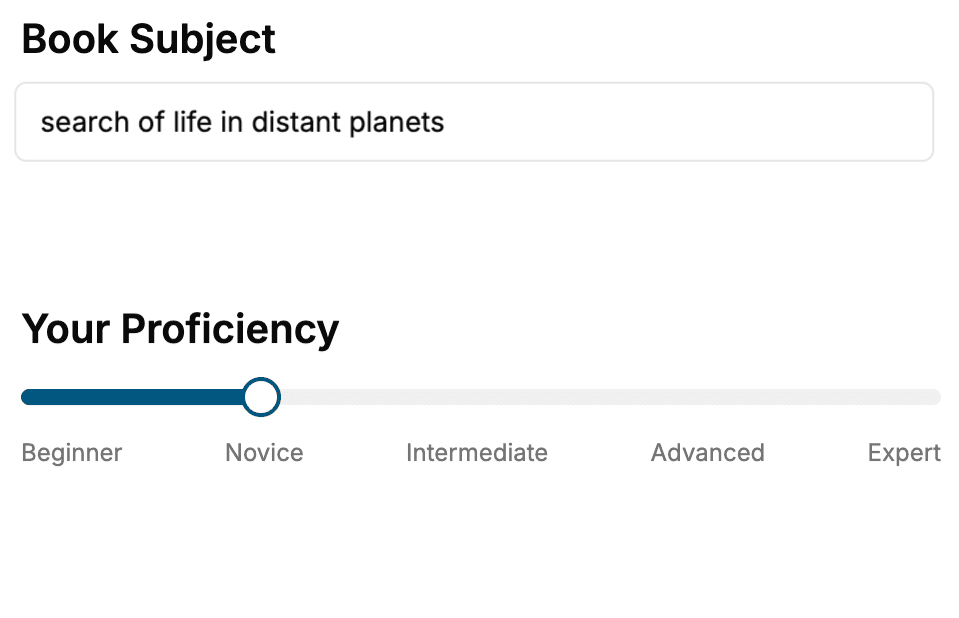
Select the focus of your Computer Science and Algorithms book and share your background
- 2. Personalize your book
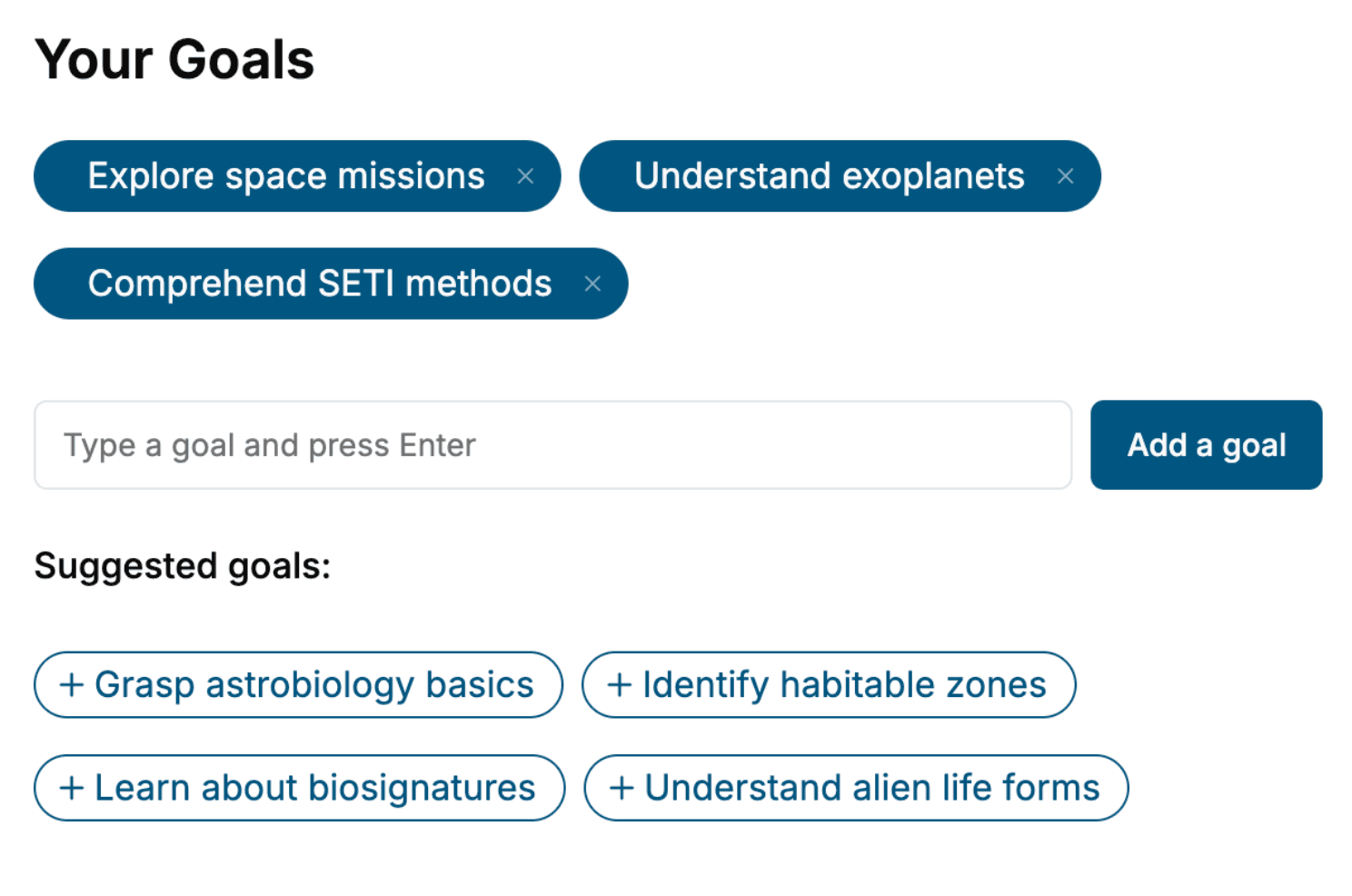
Specify your goals and choose sub-topics to include
- 3. Get your tailored book
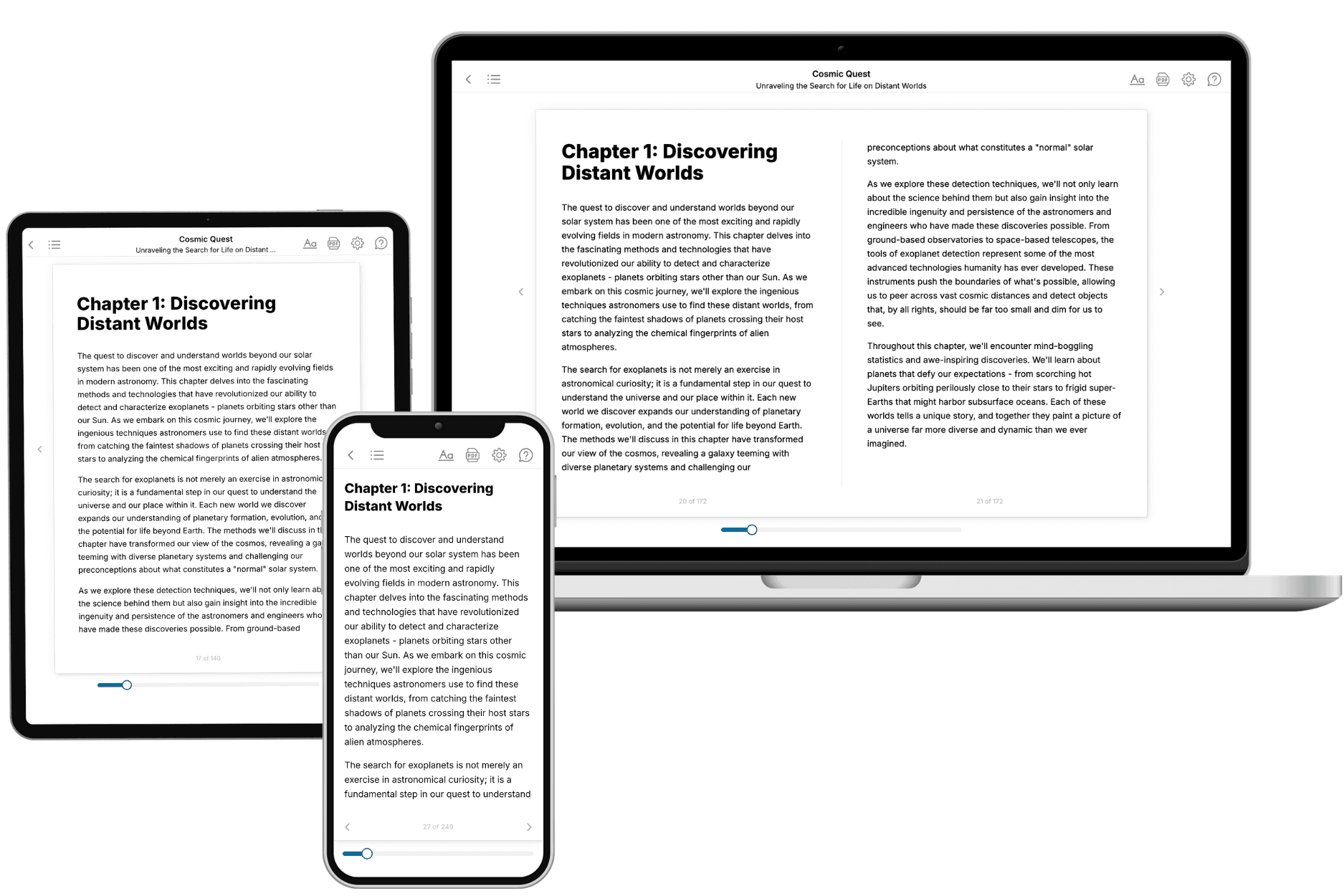
Your book is ready in 10 minutes. Read it online, download as EPUB or PDF, or send to Kindle.
Frequently asked questions
- What is TailoredRead?
TailoredRead creates complete, full-length nonfiction ebooks, written specifically for you. Tell us what you want to learn and why, and TailoredRead writes you a complete ebook on it, with charts, tables, and diagrams throughout. Read it online, on Kindle, or on any e-reader, or download it as a PDF or EPUB. Every book is written fresh the day you order it.
- How is the book tailored to me?
Before anything is written, you answer a few short questions about your goals, your background, and the topics you care about. Your book is then planned around your answers: written at your level, focused on your goals, and covering the topics you chose, instead of the one-size-fits-all book a store sells everyone.
- Will it read like generic AI content?
No. Your book isn't a chat transcript: it's planned chapter by chapter before a single word is written, told in a clear book voice, and explains ideas visually with charts, tables, and diagrams. After writing, every book goes through an editorial pass that polishes chapters so the book reads consistent from start to finish. Judge for yourself: browse thousands of sample books on our Explore Books page.
- How accurate is the content?
Our AI first checks whether your subject needs live research. Niche and fast-moving subjects are researched before writing, and the book plan and chapters are grounded in what it finds. After writing, every book goes through a quality pass that checks its facts and consistency, and researched books list their sources in a Notes section at the back.
- How long is the book?
You choose the length: Comprehensive (250-300 pages), Detailed (150-200 pages), Essential (70-100 pages), or Short (30-50 pages).
- Does the book include visuals?
Yes. Every book includes charts, tables, and diagrams: timelines, checklists, step-by-step guides, decision trees, comparison tables, matrices, and bar charts. A typical book includes dozens of these visual elements.
- Can I read it on Kindle? What formats can I download?
Yes. Every book can be read in our online reader or downloaded as a PDF or EPUB. The EPUB can be opened with Kindle, Apple Books, Kobo, and any e-reader. The Commercial and Author licenses also include an editable Word (DOCX) and Markdown download.
- How much does it cost?
About the price of a regular ebook. The exact price depends on your book's length and complexity, from $2 for the shortest books to $35 for the most comprehensive, and it's shown when you review your book, before you commit to anything. Each book is a one-time purchase, yours to keep, no subscription. Licenses that let you share, teach, or publish your book range from $35.99 to $49.99.
- Can I preview the book before purchasing?
Before you pay, you'll see what your book will cover: the title, a detailed description, the estimated length, and the complete chapter-by-chapter table of contents, so you know what you're getting before you decide. The full text itself is written after you purchase.
- How long does it take to create a book?
About 10 minutes. You can start reading the opening chapters while the rest is still being written.