Mastering Functional Programming
From Mathematical Foundations to Practical Applications
Many programmers believe that functional programming is an academic curiosity with little practical value, or that it's too abstract and mathematical to be useful in real-world software development.
284 pages16 chaptersOct 3, 2025Functional Programming
About this book
This misconception has kept countless developers from discovering one of the most powerful and elegant approaches to writing software. Functional programming isn't just another programming paradigm—it's a fundamentally different way of thinking about computation that can transform how you approach problem-solving. By embracing immutability, pure functions, and mathematical rigor, you'll write code that's more reliable, easier to test, and simpler to understand. You'll discover how concepts from lambda calculus and formal language theory translate into practical programming techniques that eliminate bugs before they happen. This comprehensive guide takes you from the theoretical foundations of functional programming through hands-on applications in modern software development. You'll explore how functional languages handle everything from basic data manipulation to complex algorithmic challenges, learning to think recursively and compositionally. Whether you're working with Haskell, Lisp, ML, or applying functional concepts in multi-paradigm languages, you'll gain the deep understanding needed to leverage these powerful tools effectively. By the end of this book, you'll not only understand the 'what' and 'how' of functional programming, but more importantly, the 'why'—giving you the confidence to choose the right approach for any programming challenge you face.
Table of contents
- IntroductionThe Paradigm Shift to Functional Thinking, Why Functional Programming Matters, How This Book Is Organized, What You Need to KnowRead below
- Chapter 1: Mathematical FoundationsLambda Calculus Fundamentals, Formal Systems and Computation, Set Theory and Functions, Logic and Proof Systems
- Chapter 2: Core Functional Programming ConceptsPure Functions and Referential Transparency, Immutability and Data Structures, First-Class Functions, Function Composition and Pipelines
- Chapter 3: Formal Language TheoryGrammars and Formal Languages, The Chomsky Hierarchy, Parsing Theory and Algorithms, Language Recognition and Automata
- Chapter 4: Type Systems and Type TheoryType System Fundamentals, Polymorphism and Generic Types, Type Inference Algorithms, Advanced Type Systems and Dependent Types
- Chapter 5: Higher-Order FunctionsUnderstanding Higher-Order Functions, Map, Filter, and Reduce Patterns, Currying and Partial Application, Combinators and Point-Free Style
- Chapter 6: Recursion and Recursive PatternsRecursion Theory and Principles, Tail Recursion and Optimization, Structural Recursion on Data Types, Mutual Recursion and Complex Patterns
- Chapter 7: Functional Data StructuresPersistent Data Structures, Lists, Trees, and Hierarchical Data, Structural Sharing and Efficiency, Algebraic Data Types and Pattern Matching
- Chapter 8: Lazy Evaluation and StreamsLazy Evaluation Fundamentals, Infinite Data Structures, Stream Processing and Pipelines, Memoization and Caching Strategies
- Chapter 9: Monads and FunctorsCategory Theory Foundations, Functors and Mappable Structures, Monads and Computational Contexts, Common Monads and Their Applications
- Chapter 10: Pattern Matching and DestructuringPattern Matching Fundamentals, Destructuring Complex Data, Guards and Conditional Patterns, Pattern Compilation and Optimization
- Chapter 11: Functional Algorithm DesignDivide and Conquer Strategies, Dynamic Programming in Functional Style, Graph Algorithms and Tree Traversals, Sorting and Searching Algorithms
- Chapter 12: Parsing and Language ProcessingParser Combinators and Monadic Parsing, Lexical Analysis and Tokenization, Syntax Analysis and AST Construction, Semantic Analysis and Type Checking
- Chapter 13: Concurrency and ParallelismFunctional Approaches to Concurrency, Parallel Algorithms and Data Parallelism, Actor Model and Message Passing, Software Transactional Memory and Coordination
- Chapter 14: Functional Language LandscapePure Functional Languages, Multi-Paradigm and Hybrid Languages, Domain-Specific Functional Languages, Language Design and Evolution
- Chapter 15: Practical Applications and Case StudiesCompiler and Interpreter Design, Data Processing and Transformation, Symbolic Computation and Computer Algebra, Artificial Intelligence and Machine Learning Applications
- Chapter 16: Performance and OptimizationComplexity Analysis in Functional Programs, Optimization Techniques and Transformations, Memory Management and Garbage Collection, Profiling and Debugging Functional Code
- ConclusionKey Takeaways and Insights, Future Directions in Functional Programming
Introduction
Programming is fundamentally about solving problems, but the way you approach those problems shapes not only your solutions but your entire thinking process. For decades, most programmers have learned to think imperatively—telling the computer exactly what to do, step by step, modifying variables and managing state throughout their programs. This approach works, but it comes with hidden costs that become apparent only when programs grow in complexity. Bugs creep in through unexpected state changes, testing becomes difficult when functions depend on global conditions, and reasoning about program behavior requires mentally tracking numerous moving parts simultaneously.
Functional programming offers a radically different approach—one that treats computation as the evaluation of mathematical functions rather than the execution of sequential commands. Instead of telling the computer how to do something, you describe what you want to achieve using function composition, immutable data, and declarative expressions. This shift from imperative to functional thinking eliminates entire categories of bugs while making programs more predictable, testable, and easier to reason about. The mathematical foundations underlying functional programming provide rigorous principles that guide design decisions and ensure correctness.
The journey from imperative to functional thinking requires more than learning new syntax or memorizing function names. It demands a fundamental rewiring of how you conceptualize problems and solutions. You'll discover that many programming challenges become simpler when approached functionally, while others reveal elegant mathematical structures that were hidden beneath layers of imperative complexity. This transformation in thinking extends beyond any single programming language—once you understand functional principles deeply, you'll find yourself applying them even in traditionally imperative contexts, writing cleaner and more reliable code regardless of the paradigm.
This book bridges the gap between functional programming theory and practical application, providing you with both the mathematical understanding and hands-on experience needed to master this powerful paradigm. You'll explore the formal foundations that make functional programming work, from lambda calculus to type theory, while simultaneously learning how these abstract concepts translate into concrete programming techniques. By the end of this journey, you'll possess not just knowledge of functional programming, but the deep understanding necessary to choose the right approach for any computational challenge you encounter.
The Paradigm Shift to Functional Thinking
The transition from imperative to functional programming represents one of the most significant conceptual shifts you can make as a programmer. In imperative programming, you focus on how to accomplish tasks through explicit sequences of operations that modify program state. Variables change values, loops iterate through collections, and conditional statements alter the flow of execution. This approach mirrors how we often think about real-world processes—first do this, then do that, check if something happened, and respond accordingly. However, this seemingly natural approach introduces complexity that grows exponentially with program size.
Functional programming inverts this perspective by emphasizing what you want to compute rather than how to compute it. Instead of modifying variables, you create new values through function application. Rather than iterating with loops, you transform data using higher-order functions like map, filter, and reduce. This declarative approach eliminates the need to track changing state, making programs more predictable and easier to understand. Consider the difference between imperatively summing a list of numbers versus functionally reducing them—the functional approach expresses the mathematical concept directly without the machinery of iteration variables and accumulation logic.
The mathematical nature of functional programming provides a solid foundation for reasoning about program correctness. When functions are pure—producing the same output for the same input without side effects—you can reason about them using algebraic principles. Function composition becomes mathematical composition, allowing you to build complex operations from simple, well-understood components. This mathematical rigor enables powerful optimization techniques and formal verification methods that are difficult or impossible to apply to imperative code. The compiler can safely rearrange, eliminate, or parallelize computations because the mathematical properties guarantee equivalence.
Perhaps most importantly, functional thinking changes how you decompose problems. Instead of breaking problems into sequences of steps, you identify the data transformations needed to convert inputs into outputs. This perspective often reveals elegant solutions that were obscured by imperative complexity. For example, parsing a configuration file becomes a series of transformations from raw text to tokens to abstract syntax trees to validated configuration objects, each step implemented as a pure function that can be tested and reasoned about independently.
The paradigm shift also affects how you handle errors and edge cases. Rather than using exceptions or error codes that disrupt program flow, functional programming employs algebraic data types like Maybe and Either that make error handling explicit in the type system. This approach forces you to consider all possible outcomes at compile time, eliminating entire classes of runtime errors. The type system becomes your ally in ensuring correctness rather than an obstacle to overcome.
Embracing functional thinking requires patience and practice, as it challenges deeply ingrained programming habits. You'll initially find yourself translating imperative solutions into functional equivalents, but gradually you'll begin thinking functionally from the start. This transformation is profound—many programmers report that learning functional programming fundamentally changed how they approach all programming problems, regardless of the language or paradigm they're using. The clarity and elegance of functional solutions become addictive once you experience their power firsthand.
The shift to functional thinking also reveals the deep connections between programming and mathematics. Concepts from abstract algebra, category theory, and formal logic find direct application in everyday programming tasks. This mathematical foundation provides a vocabulary for discussing and reasoning about programs that transcends specific languages or implementations. Understanding these connections not only makes you a better functional programmer but also deepens your appreciation for the theoretical underpinnings of all computation.
Modern software development increasingly embraces functional concepts, even in traditionally imperative languages. JavaScript's array methods, Python's list comprehensions, and Java's streams API all reflect functional influence. Understanding functional programming principles allows you to leverage these features effectively and recognize when functional approaches offer advantages over imperative alternatives. The paradigm shift to functional thinking thus enhances your effectiveness across the entire spectrum of programming languages and domains.
Why Functional Programming Matters
The compelling case for functional programming rests on its ability to eliminate entire categories of bugs that plague traditional imperative programs. When functions are pure and data is immutable, you cannot have race conditions, null pointer exceptions from unexpected state changes, or subtle bugs caused by action-at-a-distance effects. These guarantees aren't just theoretical—they translate directly into more reliable software that behaves predictably under all conditions. Studies have shown that functional programs typically have significantly lower defect rates than their imperative counterparts, particularly as program complexity increases[1].
Testing functional code is fundamentally simpler because pure functions depend only on their inputs and produce deterministic outputs. You don't need to set up complex test fixtures, mock global state, or worry about test order dependencies. Each function can be tested in isolation with simple input-output assertions. This simplicity extends to property-based testing, where you can specify mathematical properties that should hold for all inputs and let the testing framework generate thousands of test cases automatically. The mathematical nature of functional code makes it amenable to formal verification techniques that can prove correctness properties mathematically.
Concurrency and parallelism become dramatically easier in functional programming because immutable data eliminates the need for locks, mutexes, and other synchronization primitives. When data cannot be modified, multiple threads can safely access it simultaneously without coordination. Pure functions can be executed in parallel without concern for interference, enabling automatic parallelization optimizations that would be impossible in imperative code. This advantage becomes increasingly important as hardware continues to evolve toward more parallel architectures, from multi-core processors to distributed computing systems.
The modularity and composability of functional programs lead to more maintainable codebases. Functions compose naturally through mathematical composition, allowing you to build complex operations from simple, well-tested components. This composability extends to entire program architectures—functional programs often exhibit clean separation of concerns where data transformation logic is isolated from side effects and I/O operations. The resulting code is easier to understand, modify, and extend because changes to one component don't ripple through the entire system unpredictably.
Functional programming's emphasis on immutability and pure functions aligns perfectly with modern software engineering practices. Version control systems work better with functional code because changes are localized and don't depend on hidden state. Code reviews become more effective because reviewers can reason about functions in isolation without understanding the entire system state. Debugging is simplified because you can examine function inputs and outputs without worrying about when or in what context the function was called. These practical benefits compound over time, making functional codebases more sustainable and easier to work with as teams and projects grow.
The mathematical foundations of functional programming provide powerful abstraction mechanisms that enable code reuse at a higher level than traditional object-oriented approaches. Concepts like functors, monads, and algebraic data types capture common computational patterns that appear across diverse problem domains. Once you understand these abstractions, you can recognize and apply them in contexts far removed from their original mathematical origins. This leads to more general, reusable solutions that work across different data types and problem domains.
Performance characteristics of functional programs are often misunderstood, with many developers assuming that immutability and function calls create unacceptable overhead. Modern functional language implementations use sophisticated optimization techniques like tail call optimization, lazy evaluation, and structural sharing that often result in performance comparable to or better than imperative alternatives. The predictable execution model of functional programs also makes them easier to optimize, both manually and automatically. Compiler optimizations that would be unsafe in imperative code become routine in functional languages.
Perhaps most importantly, functional programming enhances your problem-solving capabilities by providing new ways to think about computational problems. The emphasis on data transformation and function composition often reveals elegant solutions that were hidden by imperative complexity. Many algorithms become clearer when expressed functionally, and the mathematical nature of functional programming connects your programming work to centuries of mathematical insight and technique. This connection to mathematical thinking makes you a more effective programmer regardless of the paradigm you ultimately choose for any particular project.
The growing adoption of functional programming concepts across the software industry reflects their practical value. Major technology companies increasingly use functional languages for critical systems, and functional features continue to be added to mainstream programming languages. Understanding functional programming is becoming essential for staying current with modern software development practices and for taking advantage of the most powerful tools and techniques available to contemporary programmers.
How This Book Is Organized
This book follows a carefully designed progression that builds your understanding from mathematical foundations through practical applications. The structure reflects the reality that functional programming is deeply rooted in mathematical theory, but this theory serves practical purposes in real-world software development. Each chapter builds upon previous concepts while introducing new ideas that expand your functional programming toolkit. The organization allows you to develop both theoretical understanding and practical skills simultaneously, ensuring that abstract concepts are always grounded in concrete applications.
The journey begins with mathematical foundations in Chapter 1, where you'll explore lambda calculus, formal systems, set theory, and logic. These topics might seem abstract, but they provide the conceptual framework that makes functional programming coherent and powerful. Understanding lambda calculus, for example, gives you insight into how function application and variable binding work at the most fundamental level. This mathematical grounding pays dividends throughout the rest of the book as you encounter concepts that build directly on these foundations. The chapter includes practical exercises that demonstrate how these mathematical concepts translate into programming techniques.
Chapters 2 and 3 establish the core concepts of functional programming and formal language theory. You'll learn about pure functions, immutability, first-class functions, and function composition—the building blocks of functional programming. The formal language theory chapter connects functional programming to the broader field of computer science, showing how parsing and language processing naturally fit the functional paradigm. These chapters include extensive examples and exercises that help you internalize functional thinking patterns and begin applying them to real programming problems.
The middle section of the book, Chapters 4 through 10, dives deep into the essential techniques and patterns of functional programming:
- Type Systems and Type Theory - Understanding how types provide safety and expressiveness
- Higher-Order Functions - Mastering functions that operate on other functions
- Recursion and Recursive Patterns - Thinking recursively instead of iteratively
- Functional Data Structures - Working with immutable, persistent data
- Lazy Evaluation and Streams - Handling infinite data and improving performance
- Monads and Functors - Understanding computational contexts and category theory
- Pattern Matching - Destructuring data elegantly and safely
Chapters 11 and 12 focus on algorithmic thinking in functional programming. You'll learn how classic algorithms translate into functional form and often become clearer and more elegant in the process. The parsing and language processing chapter shows how functional programming excels at tasks involving symbolic manipulation and transformation. These chapters demonstrate that functional programming isn't just about different syntax—it's about fundamentally different and often superior approaches to algorithmic problem-solving.
The later chapters, 13 through 16, address advanced topics and practical concerns. Concurrency and parallelism in functional programming reveal how immutability and pure functions eliminate the complexity that makes concurrent programming difficult in imperative languages. The language landscape chapter helps you understand the ecosystem of functional programming languages and choose the right tool for different tasks. Practical applications and case studies show functional programming in action across diverse domains, from compiler construction to data processing to artificial intelligence.
The final chapters on performance and optimization address common concerns about functional programming efficiency. You'll learn that modern functional languages are highly optimized and that functional programming often enables optimizations that are impossible in imperative code. The book concludes by synthesizing the key insights and looking toward future developments in functional programming, helping you continue your learning journey beyond this book.
Throughout the book, examples progress from simple illustrations to complex, real-world scenarios. Early chapters use mathematical examples and simple data transformations to illustrate concepts clearly. Later chapters tackle substantial programming challenges like building parsers, implementing algorithms, and designing concurrent systems. This progression ensures that you develop both the foundational understanding and practical skills needed to apply functional programming effectively in your own projects.
Each chapter includes exercises ranging from theoretical problems that deepen your understanding to practical programming challenges that build your skills. The exercises are designed to reinforce key concepts while encouraging you to explore beyond the material presented in the text. Solutions and additional resources are provided to support your learning process and help you verify your understanding as you progress through the material.
What You Need to Know
This book assumes you have solid programming experience in at least one mainstream programming language and are comfortable with fundamental computer science concepts. You should understand basic data structures like arrays, lists, and trees, and be familiar with common algorithms like sorting and searching. Experience with object-oriented programming is helpful but not required—in fact, some object-oriented habits may need to be unlearned as you embrace functional thinking. The key prerequisite is programming maturity: the ability to understand complex code, reason about program behavior, and learn new programming concepts independently.
Mathematical background requirements are modest but important. You should be comfortable with basic discrete mathematics, including set theory, logic, and proof techniques. High school algebra and some exposure to mathematical notation will suffice for most of the book, though deeper mathematical background will enhance your appreciation of the theoretical foundations. The book explains mathematical concepts as they arise, but familiarity with mathematical thinking—the ability to work with abstract concepts and formal definitions—will help you grasp the material more quickly and deeply.
No prior functional programming experience is required, though any exposure to functional concepts will be helpful. If you've used higher-order functions in JavaScript, list comprehensions in Python, or LINQ in C#, you've already encountered functional programming ideas. The book starts from first principles and builds up systematically, so beginners can follow along while experienced functional programmers can deepen their understanding of the theoretical foundations underlying familiar concepts.
You'll need access to a functional programming language to work through the examples and exercises. The book uses multiple languages to illustrate different concepts, but you can follow along with any modern functional language. Recommended options include:
- Haskell - Pure functional language excellent for learning concepts
- Scheme or Racket - Simple syntax makes concepts clear
- ML or OCaml - Practical functional languages with strong type systems
- Clojure - Functional Lisp on the JVM with practical focus
- F# - Functional-first language with .NET integration
The book's examples are designed to be language-agnostic where possible, focusing on concepts rather than syntax. When language-specific features are discussed, multiple implementations are often provided to show how the same concept appears across different functional languages. This approach helps you understand the underlying principles rather than memorizing particular syntactic forms, making the knowledge transferable across the functional programming landscape.
Some chapters delve into advanced topics like category theory and type theory that require mathematical sophistication. These sections are clearly marked, and the essential practical content is accessible without deep mathematical background. However, investing time in understanding the mathematical foundations will pay dividends in your functional programming journey. The mathematical concepts aren't just academic curiosities—they provide powerful tools for reasoning about and designing functional programs.
Programming environment setup is straightforward for most functional languages, but some require specific tools or configurations. The book provides guidance on setting up development environments, including editors with functional programming support, interactive development tools, and debugging utilities. Modern functional languages offer excellent tooling that makes the development experience smooth and productive, often superior to what you might be accustomed to in imperative languages.
Time commitment varies depending on your background and goals. Reading through the book casually will give you a good overview of functional programming concepts and their applications. Working through all the examples and exercises will provide deep, practical understanding that you can apply immediately in your programming work. The book is designed to serve both purposes—as a comprehensive introduction for serious study and as a reference for ongoing functional programming work.
Most importantly, approach this material with an open mind and willingness to think differently about programming problems. Functional programming challenges many assumptions about how programs should be structured and how problems should be solved. Some concepts may seem strange or impractical at first, but persist through the initial discomfort. The rewards of functional programming—more reliable code, clearer thinking about problems, and elegant solutions to complex challenges—justify the initial investment in learning this powerful paradigm.
Notes
Introduction
- 1. John Hughes, "Why Functional Programming Matters," The Computer Journal, 1989
This is the end of the free sample. The full book has 16 chapters.
Want this book written for you?
Tell us your goals and background, and get your own version of this book, tailored by AI to you.


Benefits of AI-tailored books
- Read one book, not ten:
- all the Functional Programming knowledge you need, gathered into a single book.
- Save days of learning:
- tell us your goals, choose your topics, and the whole book is built around them.
- Learn effortlessly:
- Functional Programming book written for your specific background and expertise.
- Understand at a glance:
- includes charts, tables, timelines, checklists, decision trees, and more.
- Stay current:
- written the day you order it, not years ago.
- Trust what you read:
- every book is checked for accuracy, with real research when your subject needs it.
Create your unique book in 3 steps
- 1. Select your focus
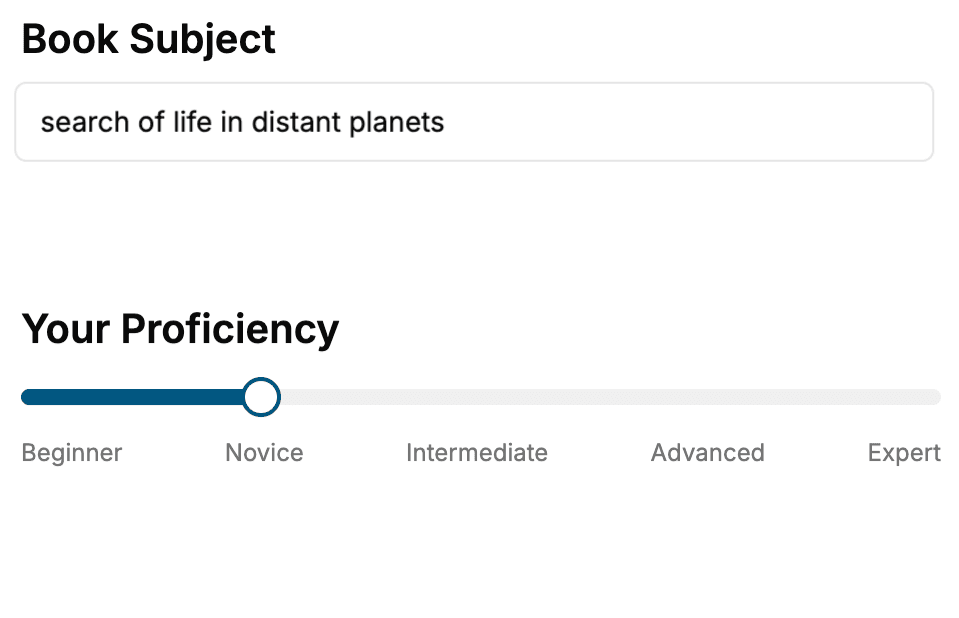
Select the focus of your Functional Programming book and share your background
- 2. Personalize your book
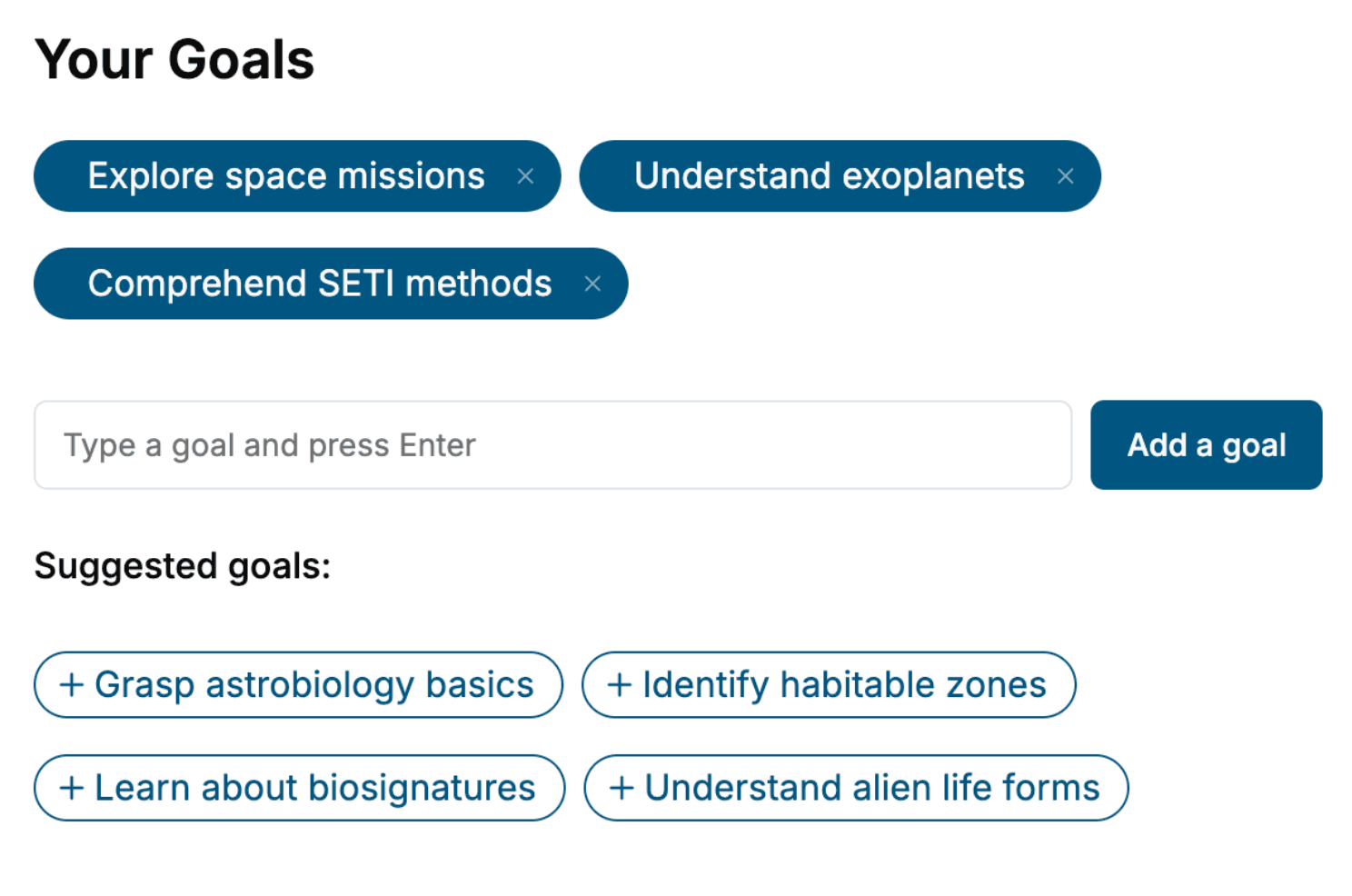
Specify your goals and choose sub-topics to include
- 3. Get your tailored book
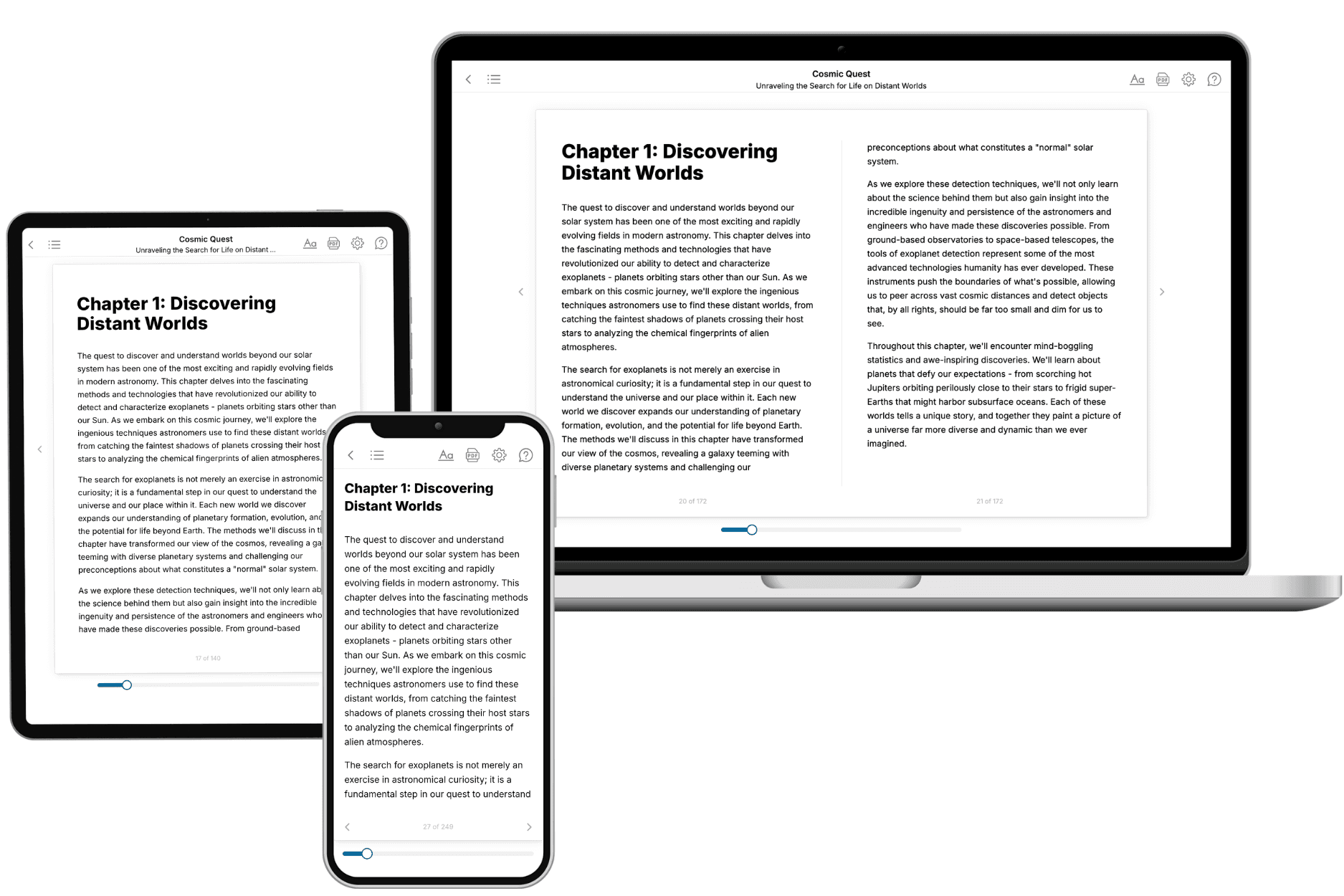
Your book is ready in 10 minutes. Read it online, download as EPUB or PDF, or send to Kindle.
Frequently asked questions
- What is TailoredRead?
TailoredRead creates complete, full-length nonfiction ebooks, written specifically for you. Tell us what you want to learn and why, and TailoredRead writes you a complete ebook on it, with charts, tables, and diagrams throughout. Read it online, on Kindle, or on any e-reader, or download it as a PDF or EPUB. Every book is written fresh the day you order it.
- How is the book tailored to me?
Before anything is written, you answer a few short questions about your goals, your background, and the topics you care about. Your book is then planned around your answers: written at your level, focused on your goals, and covering the topics you chose, instead of the one-size-fits-all book a store sells everyone.
- Will it read like generic AI content?
No. Your book isn't a chat transcript: it's planned chapter by chapter before a single word is written, told in a clear book voice, and explains ideas visually with charts, tables, and diagrams. After writing, every book goes through an editorial pass that polishes chapters so the book reads consistent from start to finish. Judge for yourself: browse thousands of sample books on our Explore Books page.
- How accurate is the content?
Our AI first checks whether your subject needs live research. Niche and fast-moving subjects are researched before writing, and the book plan and chapters are grounded in what it finds. After writing, every book goes through a quality pass that checks its facts and consistency, and researched books list their sources in a Notes section at the back.
- How long is the book?
You choose the length: Comprehensive (250-300 pages), Detailed (150-200 pages), Essential (70-100 pages), or Short (30-50 pages).
- Does the book include visuals?
Yes. Every book includes visual elements such as timelines, checklists, step-by-step guides, decision trees, comparison tables, and matrices, and many include bar charts. A typical book includes dozens of these visual elements.
- Can I read it on Kindle? What formats can I download?
Yes. Every book can be read in our online reader or downloaded as a PDF or EPUB. The EPUB can be opened with Kindle, Apple Books, Kobo, and any e-reader. The Commercial and Author licenses also include an editable Word (DOCX) and Markdown download.
- How much does it cost?
About the price of a regular ebook. The exact price depends on your book's length and complexity, from $2 for the shortest books to $35 for the most comprehensive, and it's shown when you review your book, before you commit to anything. Each book is a one-time purchase, yours to keep, no subscription. Licenses that let you share, teach, or publish your book range from $35.99 to $49.99.
- Can I preview the book before purchasing?
Before you pay, you'll see what your book will cover: the title, a detailed description, the estimated length, and the complete chapter-by-chapter table of contents, so you know what you're getting before you decide. The full text itself is written after you purchase.
- How long does it take to create a book?
About 10 minutes. You can start reading the opening chapters while the rest is still being written.