Mastering High-Order Functions
Elevate Your JavaScript Skills with ES5 Techniques
JavaScript's true power often eludes even experienced developers.
269 pages13 chaptersJan 6, 2025JavaScript
About this book
You've likely encountered situations where your code feels clunky, repetitive, or just not quite right. High-order functions are the key to unlocking a new level of programming prowess, allowing you to write more elegant, efficient, and maintainable code. This book delves deep into the world of high-order functions in ES5, providing you with the knowledge and tools to transform your JavaScript programming. You'll learn how to harness these powerful constructs to create more flexible and reusable code, reduce complexity, and solve common programming challenges with ease. From mastering the basics to exploring advanced techniques, each chapter builds upon the last, guiding you through real-world examples and practical exercises. By the end of this journey, you'll possess the skills to confidently implement high-order functions in your projects, elevating your code quality and your value as a developer.
Table of contents
- IntroductionWhat Are High-Order Functions?, The Importance of High-Order Functions in JavaScript, Book Overview and How to Use ItRead below
- Chapter 1: Foundations of High-Order FunctionsFunctions as First-Class Objects in JavaScript, Passing Functions as Arguments, Returning Functions from Functions, Function Composition
- Chapter 2: Built-in High-Order Functions in ES5The map() Function, The filter() Function, The reduce() Function, The forEach() Function, The some() and every() Functions
- Chapter 3: Creating Custom High-Order FunctionsDesign Principles for High-Order Functions, Simple Custom High-Order Function Examples, Complex Custom High-Order Function Examples, Best Practices and Common Pitfalls
- Chapter 4: Closures and High-Order FunctionsUnderstanding Closures, How Closures Enable High-Order Functions, Practical Applications of Closures in High-Order Functions, Common Closure Gotchas and How to Avoid Them
- Chapter 5: Functional Programming with High-Order FunctionsPrinciples of Functional Programming, Pure Functions and Immutability, Advanced Function Composition Techniques, Point-Free Style Programming
- Chapter 6: Advanced Array ManipulationChaining Array Methods, Flattening Nested Arrays, Grouping and Categorizing Data, Creating Custom Array Iterators
- Chapter 7: Asynchronous Programming with High-Order FunctionsWorking with Callbacks, Introduction to Promises, Promise Chaining and Composition, Common Asynchronous Patterns
- Chapter 8: Error Handling in High-Order FunctionsError Propagation in Function Chains, Implementing Graceful Degradation, Error Recovery Strategies, Debugging High-Order Function Chains
- Chapter 9: Performance ConsiderationsBenchmarking High-Order Functions, Optimization Techniques for High-Order Functions, Memory Management and Garbage Collection, Common Performance Pitfalls and How to Avoid Them
- Chapter 10: Testing High-Order FunctionsUnit Testing Strategies for High-Order Functions, Mocking and Stubbing Techniques, Integration Testing with High-Order Functions, Test-Driven Development for High-Order Functions
- Chapter 11: Design Patterns Using High-Order FunctionsThe Decorator Pattern, The Factory Pattern, The Command Pattern, The Observer Pattern
- Chapter 12: Real-World ApplicationsData Processing and Analysis, DOM Manipulation and Event Handling, API Interactions and Data Fetching, Game Development with High-Order Functions
- Chapter 13: Future Trends and Advanced ConceptsHigh-Order Functions in ES6 and Beyond, Type Systems and High-Order Functions (TypeScript and Flow), Reactive Programming and Observables, High-Order Functions in Machine Learning Applications
- Conclusion
- Appendix
- Glossary
Introduction
Welcome to the world of high-order functions in JavaScript! If you're a software developer with intermediate knowledge of JavaScript and you're looking to deepen your understanding of high-order functions in ES5, you've come to the right place. This book is designed to help you master these powerful constructs, enhancing your programming skills and code efficiency in ways you might not have thought possible.
Throughout this journey, we'll explore the intricacies of high-order functions, uncover their potential, and learn how to harness their power to write more elegant, efficient, and maintainable code. By the time you finish this book, you'll have gained a comprehensive understanding of high-order functions and how they can elevate your JavaScript programming to new heights.
But before we dive into the depths of high-order functions, let's take a moment to understand what they are, why they're important, and how this book will guide you through mastering them. In this introduction, we'll cover these foundational aspects to set the stage for your learning journey.
What Are High-Order Functions?
High-order functions are a fundamental concept in functional programming and a powerful feature of JavaScript. At their core, high-order functions are functions that operate on other functions, either by taking them as arguments or by returning them. This simple definition belies the immense power and flexibility that high-order functions bring to your code.
To understand high-order functions, it's crucial to first recognize that in JavaScript, functions are first-class citizens. This means that functions can be treated like any other value in the language - they can be assigned to variables, passed as arguments to other functions, returned from functions, and even stored in data structures like arrays or objects. This flexibility is what enables the creation and use of high-order functions.
Let's break down the two main characteristics of high-order functions:
- Functions that accept other functions as arguments: These high-order functions take one or more functions as parameters. This allows for incredible flexibility, as the behavior of the high-order function can be customized by the functions passed to it. A classic example is the Array.prototype.map() method, which accepts a function as an argument and applies that function to each element of an array.
- Functions that return other functions: These high-order functions create and return new functions. This capability allows for powerful techniques like function composition, partial application, and the creation of closures. An example of this is a function factory that generates specialized functions based on input parameters.
Here's a simple example to illustrate both types of high-order functions:
// A high-order function that accepts a function as an argument
function applyOperation(x, y, operation) {
    return operation(x, y);
}

// A high-order function that returns a function
function createMultiplier(factor) {
    return function(number) {
        return number * factor;
    };
}

// Using the high-order functions
var result1 = applyOperation(5, 3, function(a, b) { return a + b; }); // Returns 8
var doubler = createMultiplier(2);
var result2 = doubler(4); // Returns 8High-order functions provide a level of abstraction that allows you to write more modular, reusable, and expressive code. They enable you to separate concerns, reduce code duplication, and create powerful abstractions that can significantly simplify complex operations. As you progress through this book, you'll discover how high-order functions can be used to solve a wide range of programming challenges elegantly and efficiently.
It's worth noting that while high-order functions are a cornerstone of functional programming, they're not exclusive to this paradigm. In fact, they're widely used in various programming styles and can be incredibly useful even in primarily object-oriented codebases. Their versatility makes them a valuable tool in any JavaScript developer's toolkit.
As we delve deeper into the world of high-order functions, you'll learn about built-in JavaScript methods that are high-order functions (like map, filter, and reduce), how to create your own custom high-order functions, and how to leverage them to write cleaner, more maintainable code. You'll also explore advanced concepts like closures, function composition, and how high-order functions play a crucial role in asynchronous programming and error handling.
By the end of this book, you'll not only understand what high-order functions are, but you'll also have the skills to use them effectively in your own projects, opening up new possibilities for elegant and efficient code design. So, let's embark on this exciting journey to master high-order functions and take your JavaScript skills to the next level!
The Importance of High-Order Functions in JavaScript
Now that we've defined what high-order functions are, let's explore why they're so important in JavaScript programming. High-order functions are not just a fancy feature or a programming trick; they're a fundamental tool that can dramatically improve the quality, efficiency, and maintainability of your code. Understanding and mastering high-order functions is crucial for any JavaScript developer looking to write more sophisticated and robust applications.
One of the primary reasons high-order functions are so important is their ability to promote code reusability and modularity. By allowing functions to accept other functions as arguments or return new functions, high-order functions enable you to create more flexible and adaptable code structures. This modularity means you can write smaller, more focused functions that do one thing well, and then combine these functions in various ways to create more complex behaviors. This approach aligns perfectly with the principle of "Don't Repeat Yourself" (DRY), a fundamental tenet of good software design[1].
Another key advantage of high-order functions is their ability to enhance code readability and maintainability. By encapsulating complex operations within well-named functions, high-order functions can make your code more self-documenting and easier to understand. For example, using the built-in Array.prototype.filter() method is often much clearer and more concise than writing out a traditional for loop with conditional statements. This improved readability not only makes your code easier to debug and maintain but also facilitates collaboration with other developers.
High-order functions also play a crucial role in implementing many common design patterns in JavaScript. Patterns like decorators, factories, and observers can be elegantly implemented using high-order functions. These patterns allow you to write more flexible and extensible code, making it easier to adapt your applications to changing requirements over time. As you progress through this book, you'll see how high-order functions form the backbone of many advanced JavaScript techniques and patterns.
In the context of functional programming, high-order functions are absolutely essential. They enable key functional programming concepts like function composition, currying, and partial application. These techniques allow you to create powerful abstractions and write more declarative code, focusing on what you want to achieve rather than the step-by-step instructions of how to achieve it. Even if you're not fully embracing functional programming, understanding these concepts can significantly improve your ability to write clean, efficient JavaScript code.
High-order functions are particularly valuable when dealing with asynchronous operations, which are ubiquitous in JavaScript, especially in server-side environments like Node.js. Callback functions, which are a type of high-order function, have long been the primary way of handling asynchronous operations in JavaScript. While Promises and async/await have provided alternative approaches, understanding high-order functions remains crucial for working with these newer asynchronous patterns effectively.
Moreover, high-order functions are at the heart of many popular JavaScript libraries and frameworks. Libraries like Lodash and Ramda provide a wealth of utility functions that are often high-order functions. React, one of the most popular front-end libraries, makes extensive use of high-order components, which are essentially high-order functions for React components. By mastering high-order functions, you'll be better equipped to understand and work with these tools and many others in the JavaScript ecosystem.
From a performance perspective, high-order functions can lead to more efficient code when used correctly. For example, using methods like map(), filter(), and reduce() can often be more performant than equivalent imperative code, especially for large datasets. These methods are often optimized by JavaScript engines and can take advantage of lazy evaluation in some cases. However, it's important to note that performance can vary depending on the specific use case and implementation, which is why we'll dedicate an entire chapter to performance considerations later in this book.
High-order functions also contribute to writing more robust and error-resistant code. By encapsulating behavior in functions and passing these functions around, you can create more predictable and testable code. This approach can help reduce bugs and make it easier to write comprehensive unit tests for your applications. We'll explore testing strategies for high-order functions in depth in a later chapter.
Lastly, understanding high-order functions is increasingly important as JavaScript continues to evolve. Many of the new features introduced in recent versions of ECMAScript build upon or complement the concept of high-order functions. For instance, the introduction of arrow functions in ES6 made it even more convenient to work with high-order functions. As you become more proficient with high-order functions, you'll be better prepared to take advantage of new JavaScript features as they're introduced.
In conclusion, high-order functions are not just an advanced feature of JavaScript; they're a fundamental concept that underpins many of the language's most powerful capabilities. Mastering high-order functions will not only make you a more effective JavaScript developer but will also open up new ways of thinking about and structuring your code. Throughout this book, we'll explore these benefits in detail, providing you with the knowledge and skills to leverage high-order functions effectively in your own projects.
Book Overview and How to Use It
Now that we've established what high-order functions are and why they're so important in JavaScript, let's take a moment to overview the structure of this book and how you can best use it to master these powerful programming constructs. This book is designed to take you on a comprehensive journey through the world of high-order functions, starting from the fundamentals and progressing to advanced techniques and real-world applications.
The book is structured into 13 main chapters, each focusing on a specific aspect of high-order functions. Here's a brief overview of what you can expect:
- Foundations of High-Order Functions: We'll start by solidifying your understanding of functions as first-class objects in JavaScript, which is crucial for grasping high-order functions. You'll learn about passing functions as arguments, returning functions from functions, and the basics of function composition.
- Built-in High-Order Functions in ES5: This chapter will dive deep into the built-in high-order functions that ES5 provides, such as map(), filter(), reduce(), forEach(), some(), and every(). You'll learn how to use these effectively and when to choose one over the other.
- Creating Custom High-Order Functions: Here, you'll learn how to design and implement your own high-order functions. We'll cover design principles, simple and complex examples, and best practices to avoid common pitfalls.
- Closures and High-Order Functions: Closures are intimately related to high-order functions. This chapter will explain what closures are, how they enable high-order functions, and how to use them effectively in your code.
- Functional Programming with High-Order Functions: We'll explore how high-order functions form the backbone of functional programming in JavaScript. You'll learn about pure functions, immutability, advanced function composition, and point-free style programming.
- Advanced Array Manipulation: This chapter will show you how to leverage high-order functions for complex array operations, including method chaining, flattening nested arrays, grouping data, and creating custom iterators.
- Asynchronous Programming with High-Order Functions: You'll learn how high-order functions are used in asynchronous programming, covering callbacks, promises, and common asynchronous patterns.
- Error Handling in High-Order Functions: This chapter will teach you strategies for effective error handling when working with high-order functions, including error propagation, graceful degradation, and debugging techniques.
- Performance Considerations: We'll discuss how to optimize your use of high-order functions, covering benchmarking, optimization techniques, memory management, and common performance pitfalls.
- Testing High-Order Functions: You'll learn strategies for effectively testing code that uses high-order functions, including unit testing, mocking and stubbing, integration testing, and test-driven development approaches.
- Design Patterns Using High-Order Functions: This chapter will show you how to implement common design patterns using high-order functions, including the decorator, factory, command, and observer patterns.
- Real-World Applications: We'll explore practical applications of high-order functions in areas like data processing, DOM manipulation, API interactions, and game development.
- Future Trends and Advanced Concepts: Finally, we'll look at how high-order functions are evolving with newer ECMAScript versions, their use in typed systems like TypeScript, and their application in cutting-edge areas like reactive programming and machine learning.
Each chapter is designed to build upon the knowledge gained in previous chapters, so it's recommended to work through the book sequentially. However, if you're already familiar with certain concepts, feel free to jump to the chapters that interest you most. Just be aware that later chapters may reference concepts explained in earlier ones.
Throughout the book, you'll find numerous code examples. It's highly recommended that you not only read these examples but also try them out yourself. Programming is a hands-on skill, and the best way to internalize these concepts is by writing and experimenting with code. Set up a JavaScript environment (whether it's Node.js on your local machine or an online code editor like CodePen or JSFiddle) and practice implementing the concepts as you learn them.
Each chapter also includes exercises and challenges. These are designed to reinforce your learning and help you apply the concepts in practical scenarios. Don't skip these! They're an integral part of the learning process and will help you gain confidence in your ability to work with high-order functions.
As you progress through the book, you'll notice that we often revisit concepts from different angles. This is intentional. High-order functions are a complex topic with many interconnected aspects. By exploring these concepts in various contexts, you'll develop a deeper, more nuanced understanding of how they work and how to use them effectively.
Remember, learning to master high-order functions is not just about understanding the syntax or memorizing methods. It's about developing a new way of thinking about code. As you work through this book, try to think about how you can apply these concepts to your own projects. Consider how high-order functions could help you solve problems you're currently facing in your development work.
Don't be discouraged if some concepts seem challenging at first. High-order functions represent a paradigm shift for many developers, and it can take time for these ideas to fully sink in. Be patient with yourself, practice regularly, and don't hesitate to revisit earlier chapters if you need to reinforce your understanding of fundamental concepts.
Finally, keep in mind that this book is a tool to help you on your journey to mastering high-order functions, but it's not the end of that journey. The world of JavaScript is constantly evolving, and new applications for high-order functions are always emerging. Use this book as a foundation, but don't stop here. Continue to explore, experiment, and learn even after you've finished the last chapter.
Now, armed with an understanding of what high-order functions are, why they're important, and how this book will guide you through mastering them, you're ready to begin your journey. Let's dive in and start exploring the fascinating world of high-order functions in JavaScript!
Notes
Introduction
- 1. A. Hunt and D. Thomas, The Pragmatic Programmer: From Journeyman to Master, Addison-Wesley Professional, 1999
This is the end of the free sample. The full book has 13 chapters.
Want this book written for you?
Tell us your goals and background, and get your own version of this book, tailored by AI to you.


Benefits of AI-tailored books
- Read one book, not ten:
- all the JavaScript knowledge you need, gathered into a single book.
- Save days of learning:
- tell us your goals, choose your topics, and the whole book is built around them.
- Learn effortlessly:
- JavaScript book written for your specific background and expertise.
- Understand at a glance:
- includes charts, tables, timelines, checklists, decision trees, and more.
- Stay current:
- written the day you order it, not years ago.
- Trust what you read:
- every book is checked for accuracy, with real research when your subject needs it.
Create your unique book in 3 steps
- 1. Select your focus
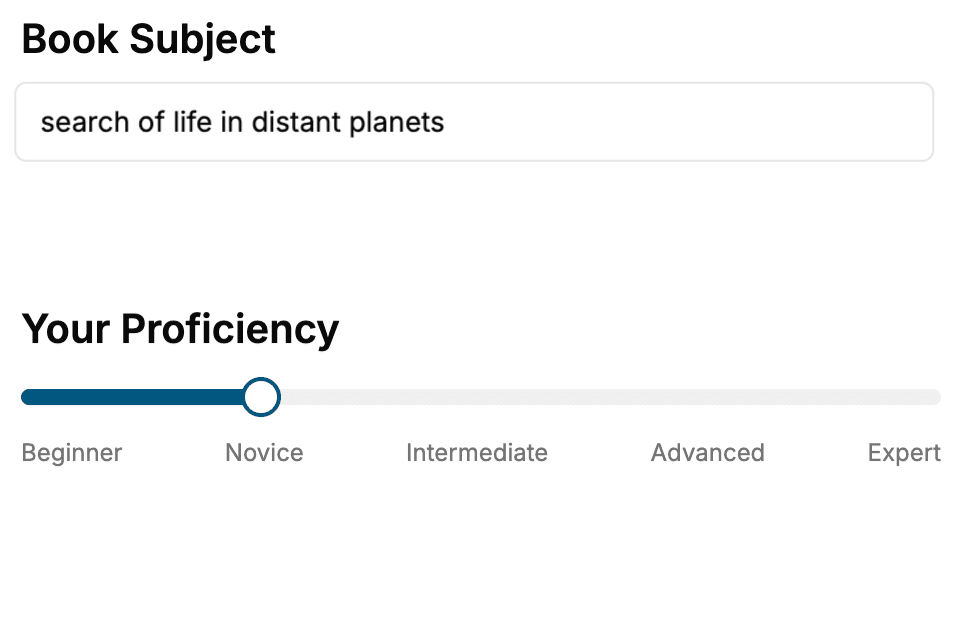
Select the focus of your JavaScript book and share your background
- 2. Personalize your book
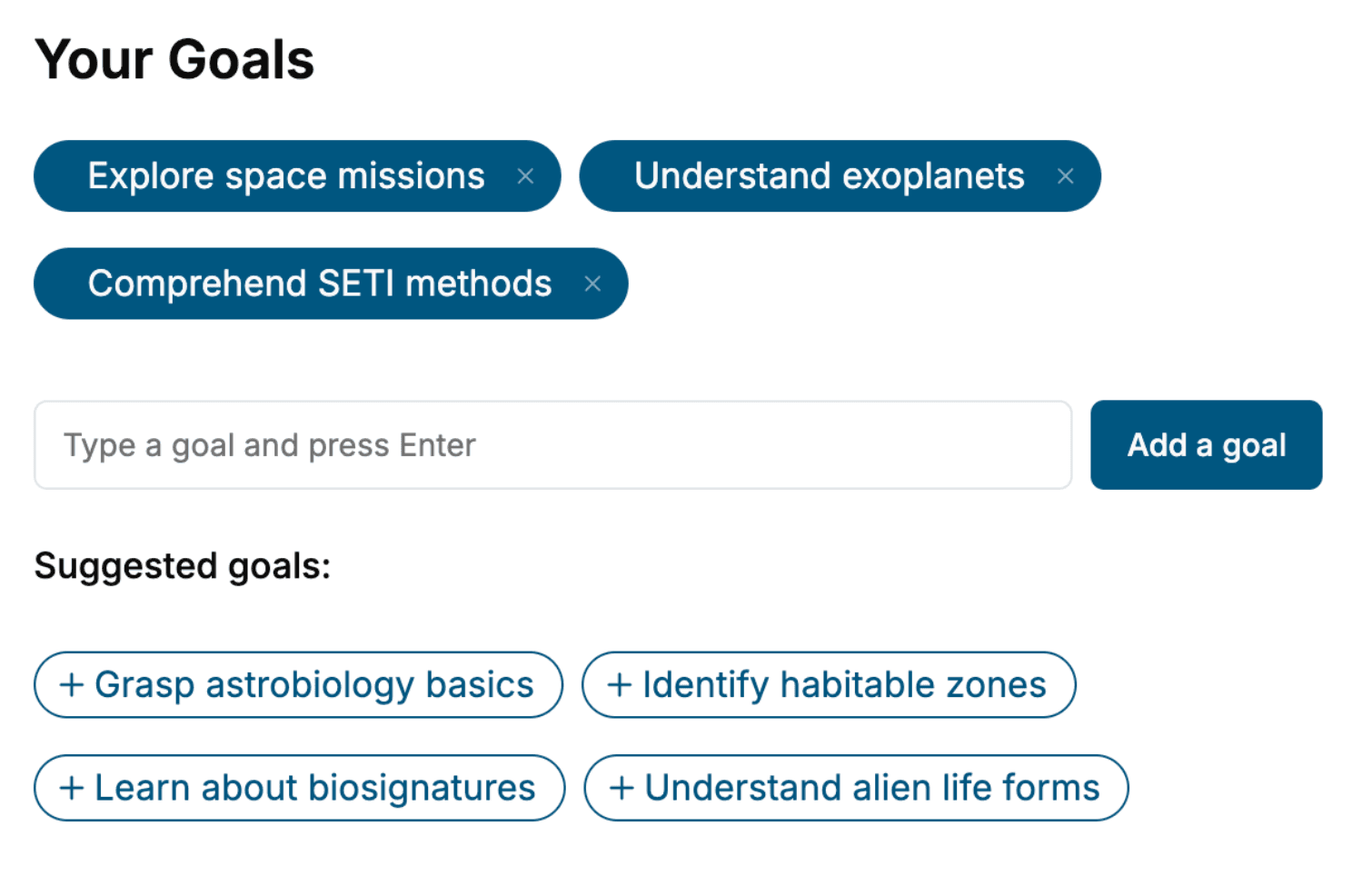
Specify your goals and choose sub-topics to include
- 3. Get your tailored book
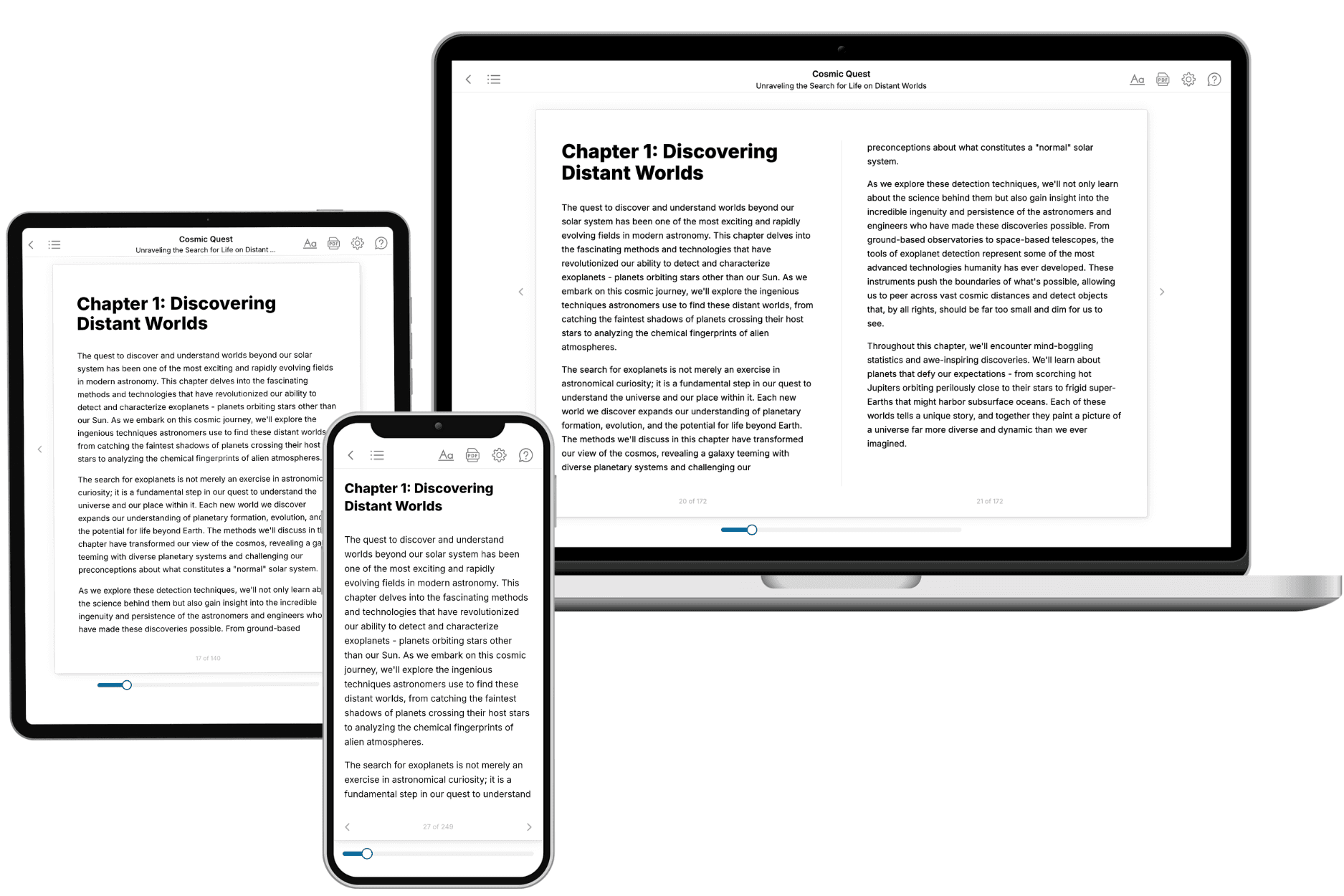
Your book is ready in 10 minutes. Read it online, download as EPUB or PDF, or send to Kindle.
Frequently asked questions
- What is TailoredRead?
TailoredRead creates complete, full-length nonfiction ebooks, written specifically for you. Tell us what you want to learn and why, and TailoredRead writes you a complete ebook on it, with charts, tables, and diagrams throughout. Read it online, on Kindle, or on any e-reader, or download it as a PDF or EPUB. Every book is written fresh the day you order it.
- How is the book tailored to me?
Before anything is written, you answer a few short questions about your goals, your background, and the topics you care about. Your book is then planned around your answers: written at your level, focused on your goals, and covering the topics you chose, instead of the one-size-fits-all book a store sells everyone.
- Will it read like generic AI content?
No. Your book isn't a chat transcript: it's planned chapter by chapter before a single word is written, told in a clear book voice, and explains ideas visually with charts, tables, and diagrams. After writing, every book goes through an editorial pass that polishes chapters so the book reads consistent from start to finish. Judge for yourself: browse thousands of sample books on our Explore Books page.
- How accurate is the content?
Our AI first checks whether your subject needs live research. Niche and fast-moving subjects are researched before writing, and the book plan and chapters are grounded in what it finds. After writing, every book goes through a quality pass that checks its facts and consistency, and researched books list their sources in a Notes section at the back.
- How long is the book?
You choose the length: Comprehensive (250-300 pages), Detailed (150-200 pages), Essential (70-100 pages), or Short (30-50 pages).
- Does the book include visuals?
Yes. Every book includes charts, tables, and diagrams: timelines, checklists, step-by-step guides, decision trees, comparison tables, matrices, and bar charts. A typical book includes dozens of these visual elements.
- Can I read it on Kindle? What formats can I download?
Yes. Every book can be read in our online reader or downloaded as a PDF or EPUB. The EPUB can be opened with Kindle, Apple Books, Kobo, and any e-reader. The Commercial and Author licenses also include an editable Word (DOCX) and Markdown download.
- How much does it cost?
About the price of a regular ebook. The exact price depends on your book's length and complexity, from $2 for the shortest books to $35 for the most comprehensive, and it's shown when you review your book, before you commit to anything. Each book is a one-time purchase, yours to keep, no subscription. Licenses that let you share, teach, or publish your book range from $35.99 to $49.99.
- Can I preview the book before purchasing?
Before you pay, you'll see what your book will cover: the title, a detailed description, the estimated length, and the complete chapter-by-chapter table of contents, so you know what you're getting before you decide. The full text itself is written after you purchase.
- How long does it take to create a book?
About 10 minutes. You can start reading the opening chapters while the rest is still being written.