Mastering Irregular Astigmatism
A Clinical Guide to Diagnosis, Management, and Surgical Correction
Many clinicians struggle to diagnose and manage irregular astigmatism effectively, often confusing it with regular refractive error or missing subtle corneal irregularities that significantly impact patient vision.
238 pages11 chaptersEnglishApr 5, 2026Ophthalmology
About this book
This comprehensive guide bridges the gap between theoretical knowledge and clinical practice, providing you with the diagnostic tools, management strategies, and surgical insights needed to confidently handle complex astigmatism cases. You'll master wavefront aberrometry interpretation, learn advanced contact lens fitting techniques for challenging corneas, and develop systematic approaches to patient assessment and emergency care. Through practical protocols and evidence-based strategies, you'll accelerate your clinical competency and build the professional expertise that distinguishes exceptional eye care providers. Whether you're examining your first irregular astigmatism patient or refining your surgical approach, this book equips you with the knowledge and confidence to deliver superior patient outcomes.
Table of contents
- IntroductionWhy Irregular Astigmatism Matters in Clinical Practice, What This Book Covers and How to Use It, The Clinical Impact of Mastering This SpecialtyRead below
- Chapter 1: Fundamentals of Irregular AstigmatismDefining Irregular Astigmatism and Its Characteristics, Distinguishing Regular from Irregular Astigmatism, Common Etiologies and Risk Factors
- Chapter 2: Diagnostic Techniques and Clinical ExaminationSystematic Clinical Examination Protocols, Advanced Refraction Techniques for Irregular Cases, Interpreting Visual Acuity Results in Irregular Astigmatism
- Chapter 3: Corneal Topography Mapping and AnalysisUnderstanding Corneal Topography Technology, Irregular Corneal Surface Assessment and Interpretation, Recognizing Pathological Topography Patterns
- Chapter 4: Wavefront Aberrometry and Higher-Order AberrationsPrinciples of Wavefront Aberrometry Technology, Interpreting Wavefront Aberrometry Data, Correlating Aberrations with Visual Symptoms
- Chapter 5: Contact Lens Fitting for Irregular AstigmatismSelecting Appropriate Lens Types and Materials, Advanced Contact Lens Fitting Techniques, Managing Patient Adaptation and Comfort
- Chapter 6: Scleral Lens Fitting for Complex CasesScleral Lens Fitting Basics and Advantages, Step-by-Step Scleral Lens Fitting Protocol, Troubleshooting Common Fitting Challenges
- Chapter 7: Surgical Basics and Treatment PlanningDetermining Surgical Candidacy and Indications, Comprehensive Preoperative Assessment, Overview of Surgical Treatment Options
- Chapter 8: Corneal Transplantation and Post-Transplant AstigmatismIndications for Corneal Transplantation, Managing Astigmatism Following Corneal Transplant, Long-Term Outcomes and Monitoring Strategies
- Chapter 9: Patient Management and CounselingEffective Patient Education and Communication, Irregular Astigmatism Counseling and Expectation Setting, Establishing Follow-Up and Monitoring Protocols
- Chapter 10: Emergency Care and Acute ComplicationsRapid Assessment and Triage of Acute Cases, Managing Acute Complications and Decompensation, When and How to Refer for Specialist Care
- Chapter 11: Professional Development and Continuous LearningAdvancing Your Clinical Skills and Expertise, Staying Current with Evolving Technologies and Techniques, Building a Career in Specialized Astigmatism Management
- ConclusionKey Takeaways and Clinical Pearls, Your Path Forward in Clinical Practice
- Glossary of Terms
- Further Reading and Resources
Introduction
Every clinician remembers a patient who didn't quite fit the expected pattern. The refraction looked reasonable on paper, but the patient still complained of ghosting, halos, or blurred vision that spectacles simply couldn't fix. The slit-lamp exam seemed unremarkable at first glance. Standard visual acuity testing returned numbers that didn't match the patient's experience. These are the hallmark moments of irregular astigmatism, a condition that quietly challenges clinicians who haven't yet developed the systematic tools to recognize and manage it. This book exists precisely for those moments.
Irregular astigmatism is far more common in clinical practice than many early-career eye care professionals expect. Conditions like keratoconus, pellucid marginal degeneration, post-surgical corneal changes, and corneal scarring all produce irregular astigmatism that standard refraction cannot fully correct. Research estimates that keratoconus alone affects approximately 1 in 2,000 people in the general population, though more recent studies using advanced topography suggest the prevalence may be considerably higher when subclinical cases are included.[1] When you add post-refractive surgery ectasia, corneal trauma, and other etiologies, the number of patients who need specialized management grows substantially.
The gap between knowing that irregular astigmatism exists and knowing how to manage it confidently is significant. Many clinicians learn the basics of regular astigmatism correction during training but receive limited exposure to the diagnostic nuances, contact lens fitting strategies, and surgical considerations that irregular cases demand. This guide is designed to close that gap. It moves from foundational concepts through advanced diagnostic interpretation, practical management strategies, and surgical principles, giving you a structured pathway to build genuine clinical expertise in this specialty area.
This introduction sets the stage for everything that follows. It explains why irregular astigmatism deserves dedicated attention in your clinical development, outlines how the book is organized so you can use it most effectively, and describes the real-world impact that mastering this specialty can have on your patients and your career. Whether you are a medical student encountering these concepts for the first time or an early-career clinician looking to sharpen your skills, the chapters ahead are built to meet you where you are and move you forward.
Why Irregular Astigmatism Matters in Clinical Practice
Irregular astigmatism is not a rare curiosity confined to subspecialty referral centers. It shows up in general optometry practices, community ophthalmology clinics, and hospital eye departments every week. The challenge is that it often presents subtly, disguised as a patient who is simply "difficult to refract" or who reports dissatisfaction with glasses that appear optically appropriate. Without a systematic approach to recognizing the signs, these patients can cycle through multiple appointments without receiving the diagnosis and management they need.
The visual impact of irregular astigmatism can be profound. Unlike regular astigmatism, which produces a predictable blur that spectacle lenses can largely correct, irregular astigmatism generates higher-order aberrations (HOAs) such as coma, trefoil, and spherical aberration. These aberrations cause symptoms that patients often struggle to describe clearly, including monocular diplopia, starbursts around lights, and a general sense that their vision is "off" even when Snellen acuity appears acceptable. A patient with 20/40 vision from irregular astigmatism may be far more visually disabled than a patient with 20/40 from simple myopia, because the quality of the retinal image is fundamentally different.
Consider a practical scenario that illustrates this point. A 24-year-old patient presents with a complaint that their new glasses prescription "doesn't feel right." Their manifest refraction yields a best-corrected visual acuity of 20/25, which seems reasonable. However, they report significant difficulty driving at night and describe seeing multiple overlapping images from one eye. A careful slit-lamp examination reveals subtle inferior corneal steepening, and corneal topography confirms early keratoconus. The spectacle prescription was never going to fully correct this patient's vision, because the problem lies in the irregular corneal surface, not in a simple spherocylindrical refractive error. Recognizing this distinction early changes the entire management pathway.
From a public health perspective, the consequences of missed or delayed diagnosis are meaningful. Keratoconus, the most common cause of irregular astigmatism in young adults, is a progressive condition. Early identification allows for timely intervention with corneal collagen cross-linking, a procedure that has strong evidence for halting disease progression when performed before significant corneal thinning occurs.[2] A clinician who misses the early signs delays this intervention, potentially allowing the disease to progress to a stage where more invasive surgical management becomes necessary.
Irregular astigmatism also matters because it sits at the intersection of multiple clinical disciplines. Corneal specialists, refractive surgeons, contact lens practitioners, and general ophthalmologists all encounter it regularly. Understanding the condition deeply makes you a more effective collaborator in multidisciplinary care teams. When a corneal specialist receives a referral with a well-documented topography series and a clear description of the patient's visual symptoms and contact lens history, the quality of care improves for everyone involved.
There is also a patient advocacy dimension worth acknowledging. Patients with irregular astigmatism frequently report frustration with the healthcare system before they receive an accurate diagnosis. They may have been told their vision problems are psychological, or that their glasses prescription is "as good as it can get." When a clinician finally identifies the true cause of their symptoms and offers a clear management plan, the relief is significant. Developing expertise in this area means you become the clinician who provides answers where others have offered only uncertainty.
Finally, irregular astigmatism is a condition where clinical skill genuinely makes a measurable difference in outcomes. The difference between a well-fitted scleral lens and a poorly fitted one can mean the difference between functional vision and continued disability. The difference between recognizing a pathological topography pattern and missing it can determine whether a patient receives timely cross-linking or progresses to needing a corneal transplant. This is a specialty area where your knowledge and attention to detail translate directly into better lives for your patients.
What This Book Covers and How to Use It
This book is organized as a progressive clinical curriculum. It begins with foundational concepts and builds systematically toward advanced diagnostic interpretation, management strategies, and surgical principles. Each chapter is designed to stand on its own as a reference for a specific clinical question, but the chapters also build on each other. Reading them in sequence will give you the most coherent understanding of how the different elements of irregular astigmatism management connect.
The early chapters establish the conceptual framework you need before approaching clinical cases. Chapter 1 defines irregular astigmatism precisely, distinguishes it from regular astigmatism, and surveys the major etiologies you will encounter in practice. This foundation matters because the management approach differs significantly depending on whether you are dealing with keratoconus, post-LASIK ectasia, corneal scarring, or another cause. Understanding the underlying pathophysiology helps you anticipate how the condition will behave and what interventions are most appropriate.
The diagnostic chapters form the core of the book's clinical value. Chapters 2 through 4 cover systematic clinical examination, advanced refraction techniques, corneal topography mapping, and wavefront aberrometry analysis. These chapters are deliberately practical. They walk through specific examination protocols, explain how to interpret topography maps and aberrometry printouts, and describe what findings should raise concern versus what falls within normal variation. You will find concrete examples of pathological patterns alongside explanations of what they mean clinically.
The management section spans Chapters 5 through 9 and covers the full spectrum of treatment options. Contact lens fitting for irregular corneas is addressed in depth across two chapters, with dedicated coverage of scleral lenses given their growing importance as a first-line management tool for moderate to severe cases. Surgical options are covered in Chapters 7 and 8, including patient selection criteria, preoperative assessment, and the management of post-transplant astigmatism. Chapter 9 addresses patient counseling and follow-up protocols, which are often underemphasized in clinical training but are essential for long-term management success.
Chapter 10 covers emergency care and acute complications, including how to rapidly assess and triage patients presenting with acute corneal decompensation, infection, or other urgent scenarios. This chapter is designed to be a practical reference you can return to when facing time-sensitive clinical decisions. Chapter 11 addresses professional development, offering guidance on how to continue building expertise after you finish this book, including how to stay current with rapidly evolving diagnostic technologies and treatment modalities.
Here is a practical guide to using this book depending on your current situation:
- If you are a medical student encountering irregular astigmatism for the first time, read Chapters 1 through 4 sequentially to build your conceptual and diagnostic foundation before moving to management topics.
- If you are preparing for a clinical rotation in cornea or contact lens services, prioritize Chapters 3, 4, 5, and 6 for the diagnostic and fitting skills most relevant to that setting.
- If you are managing a specific patient case, use the chapter headings and subchapter titles to locate the most relevant section quickly and treat it as a focused reference.
- If you are preparing for an exam or case presentation, the key terms highlighted throughout each chapter and the clinical pearls in the conclusion provide efficient review material.
Throughout the book, clinical examples and case scenarios are used to illustrate key concepts. These are not abstract thought experiments. They reflect the kinds of presentations you will actually encounter in practice, with realistic patient histories, examination findings, and decision points. Working through these examples actively, rather than reading them passively, will accelerate your learning considerably. Ask yourself what you would do at each decision point before reading the explanation that follows.
The book also uses a consistent set of visual markers to help you navigate the content efficiently. Key terms are bolded when first introduced and defined in context. Important clinical warnings and common pitfalls are called out explicitly so they are easy to identify during review. Footnotes throughout the text point to primary literature and authoritative sources for readers who want to explore specific topics in greater depth. The glossary at the end of the book provides quick definitions for all major terms used across the chapters.
One important note about scope: this book focuses on the clinical management of irregular astigmatism from the perspective of diagnosis, non-surgical management, and surgical planning. It is not a surgical technique manual. The surgical chapters provide the conceptual framework and decision-making principles that every clinician managing these patients needs, but detailed operative technique is beyond the scope of this guide. For readers pursuing surgical training, the references and further reading section points toward appropriate resources for that next level of learning.
The Clinical Impact of Mastering This Specialty
Developing genuine expertise in irregular astigmatism management changes the way you practice. It changes how you approach every refraction, because you begin to recognize the subtle signs that suggest a corneal irregularity rather than a simple refractive error. It changes how you read a topography map, because patterns that once looked like noise begin to resolve into meaningful clinical information. And it changes how you communicate with patients, because you can explain complex conditions in terms that are honest, clear, and genuinely helpful.
The impact on patient outcomes is concrete and measurable. Consider the difference in visual rehabilitation between a keratoconus patient who is managed with spectacles alone versus one who is fitted with well-optimized scleral lenses. Research consistently shows that scleral lenses can restore visual acuity to near-normal levels in patients with moderate to advanced keratoconus, with studies reporting best-corrected visual acuity of 20/20 or better in a significant proportion of patients who were previously unable to achieve functional vision with spectacles or conventional contact lenses.[3] That is a transformative outcome for a young patient whose career, independence, and quality of life depend on functional vision.
Mastering this specialty also positions you to contribute meaningfully to the management of post-refractive surgery complications, which represent a growing clinical challenge. As LASIK and other corneal refractive procedures have become more common over the past three decades, the population of patients with post-surgical irregular astigmatism has grown correspondingly. These patients often present with significant visual complaints and high expectations, having undergone surgery specifically to improve their vision. Managing their disappointment and finding effective rehabilitation strategies requires both technical skill and strong communication abilities, both of which this book addresses.
From a career development perspective, expertise in irregular astigmatism opens doors that general clinical practice does not. Clinicians who develop strong skills in corneal topography interpretation, scleral lens fitting, and surgical planning for complex astigmatism cases are valuable in academic medical centers, corneal subspecialty practices, and refractive surgery programs. This expertise is also increasingly relevant in the context of cataract surgery planning, where accurate identification of corneal irregularity is essential for appropriate intraocular lens selection and realistic outcome prediction.
The professional satisfaction that comes with this expertise is also worth naming directly. Eye care is a field where technical skill and patient impact are closely linked, and irregular astigmatism is one of the areas where that link is most visible. When a patient who has struggled with poor vision for years finally achieves functional acuity through a well-fitted scleral lens or a successful surgical intervention, the clinical reward is immediate and tangible. Building the skills to create those outcomes consistently is one of the most meaningful investments you can make in your clinical development.
There is also a broader contribution to consider. As diagnostic technology continues to evolve, with increasingly sophisticated topography systems, higher-resolution aberrometers, and artificial intelligence-assisted pattern recognition becoming more widely available, the clinicians who understand the underlying principles will be best positioned to use these tools effectively. Technology amplifies clinical skill; it does not replace it. A clinician who deeply understands what a topography map is measuring and why it matters will extract far more value from an advanced imaging system than one who simply reads the automated output without critical evaluation.
The following table summarizes the key clinical competencies this book is designed to help you develop, along with the chapters where each competency is primarily addressed:
- Systematic clinical examination for irregular astigmatism (Chapters 1 and 2)
- Corneal topography interpretation and pattern recognition (Chapter 3)
- Wavefront aberrometry analysis and HOA interpretation (Chapter 4)
- Contact lens selection and fitting for irregular corneas (Chapters 5 and 6)
- Surgical candidacy assessment and treatment planning (Chapters 7 and 8)
- Patient counseling and long-term follow-up management (Chapter 9)
- Emergency assessment and acute complication management (Chapter 10)
- Continuous professional development in a rapidly evolving field (Chapter 11)
Each of these competencies builds on the others. A clinician who can accurately interpret a topography map will make better contact lens fitting decisions. A clinician who understands wavefront aberrometry will counsel patients more accurately about what to expect from different management options. A clinician who has developed strong patient communication skills will achieve better adherence to follow-up protocols, which in turn leads to earlier detection of disease progression or complications. The competencies are interconnected, and developing them together produces a clinical capability that is greater than the sum of its parts.
One of the most important things to understand as you begin this journey is that expertise in irregular astigmatism is not achieved through a single course or a single book. It is built through repeated clinical exposure, deliberate reflection on cases, engagement with the primary literature, and ongoing dialogue with colleagues and mentors. This book provides the structured foundation and the clinical frameworks you need to make that ongoing learning efficient and purposeful. Think of it as the map for a journey that will continue throughout your career, with each patient encounter adding detail and depth to your understanding of this complex and rewarding clinical specialty.
The clinician who can see what others miss, and explain what they find in terms patients can understand, is the clinician who makes the greatest difference. In irregular astigmatism, that combination of diagnostic precision and clear communication is not just valuable. It is the foundation of excellent care.
With that foundation in mind, the chapters that follow are designed to build your knowledge systematically, challenge your clinical thinking, and equip you with the practical tools to manage irregular astigmatism with confidence. The work begins with understanding exactly what irregular astigmatism is, where it comes from, and why it behaves so differently from the regular refractive errors that form the backbone of most clinical training. Turn to Chapter 1 to start building that foundation.
Notes
Introduction
- 1. Rabinowitz YS. Keratoconus. Survey of Ophthalmology. 1998;42(4):297-319.
- 2. Wollensak G, Spoerl E, Seiler T. Riboflavin/ultraviolet-A-induced collagen crosslinking for the treatment of keratoconus. American Journal of Ophthalmology. 2003;135(5):620-627.
- 3. Visser ES, Visser R, van Lier HJ, Otten HM. Modern scleral lenses part I: clinical features. Eye and Contact Lens. 2007;33(1):13-20.
This is the end of the free sample. The full book has 11 chapters.
Want this book written for you?
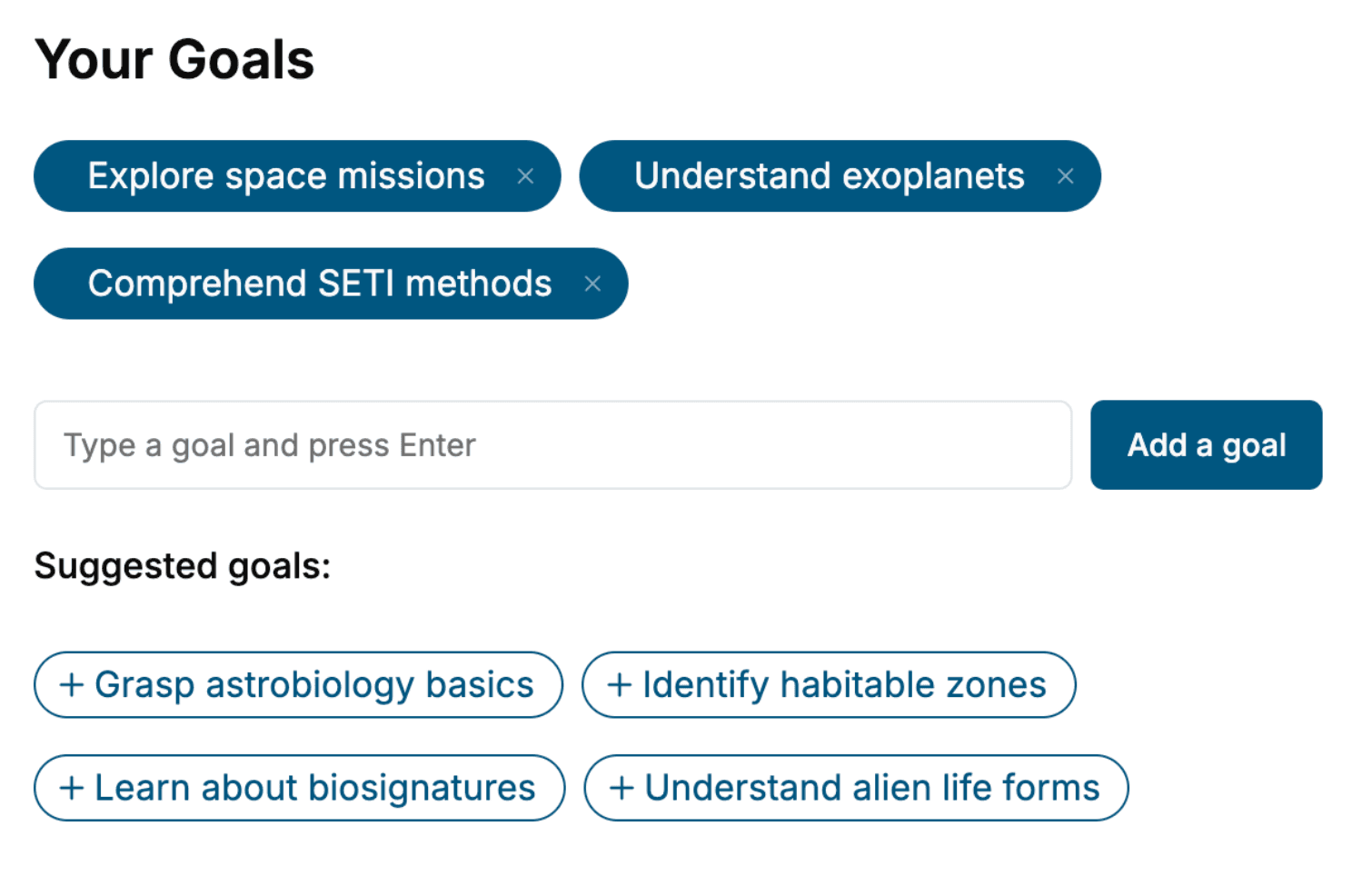
Tell us your goals and background, and get your own version of this book, tailored by AI to you.


Benefits of AI-tailored books
- Read one book, not ten:
- all the Ophthalmology knowledge you need, gathered into a single book.
- Save days of learning:
- tell us your goals, choose your topics, and the whole book is built around them.
- Learn effortlessly:
- Ophthalmology book written for your specific background and expertise.
- Understand at a glance:
- includes charts, tables, timelines, checklists, decision trees, and more.
- Stay current:
- written the day you order it, not years ago.
- Trust what you read:
- every book is checked for accuracy, with real research when your subject needs it.
Create your unique book in 3 steps
- 1. Select your focus
Select the focus of your Ophthalmology book and share your background
- 2. Personalize your book
Specify your goals and choose sub-topics to include
- 3. Get your tailored book
Your book is ready in 10 minutes. Read it online, download as EPUB or PDF, or send to Kindle.

Frequently asked questions
- What is TailoredRead?
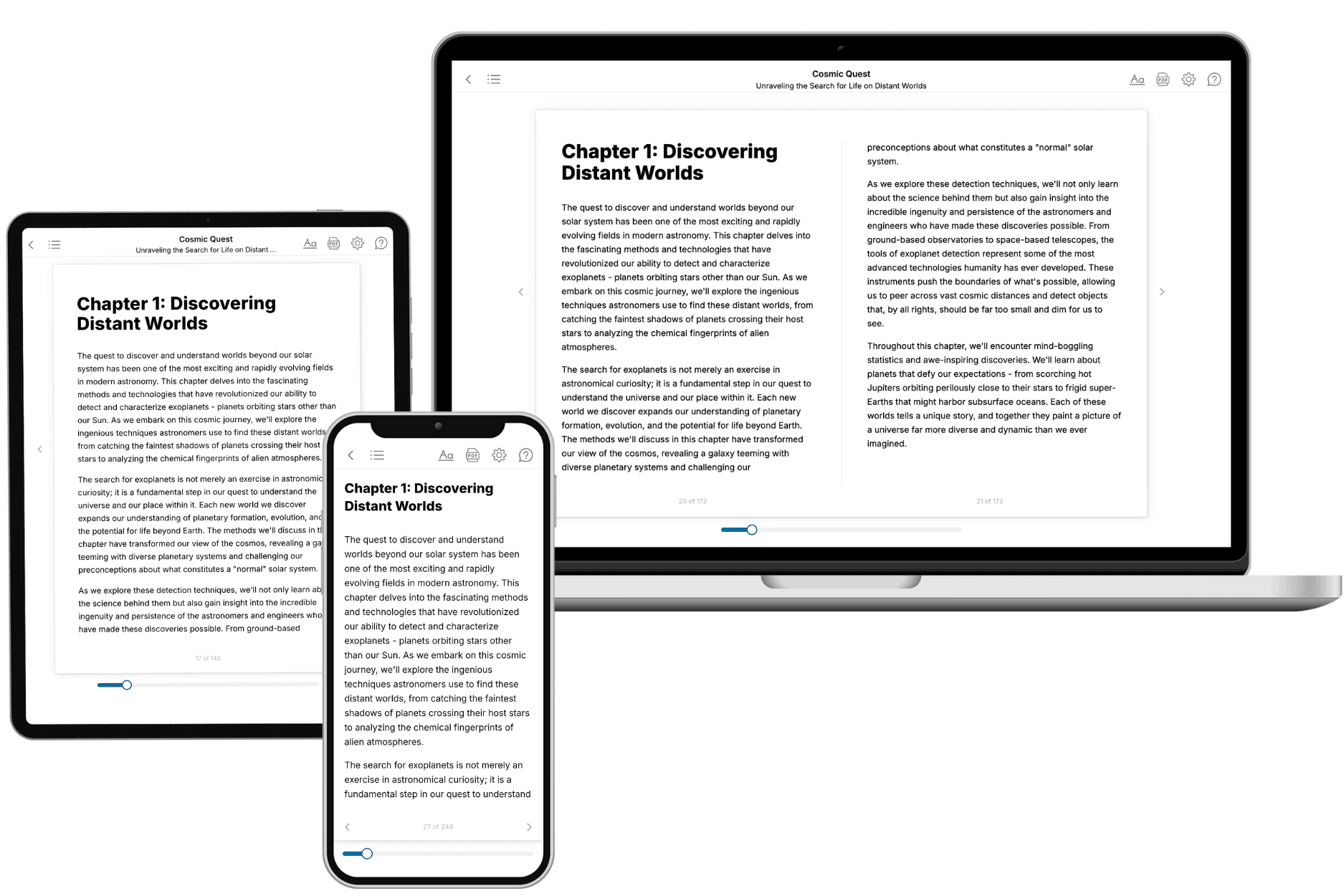
TailoredRead creates complete, full-length nonfiction ebooks, written specifically for you. Tell us what you want to learn and why, and TailoredRead writes you a complete ebook on it, with charts, tables, and diagrams throughout. Read it online, on Kindle, or on any e-reader, or download it as a PDF or EPUB. Every book is written fresh the day you order it.
- How is the book tailored to me?
Before anything is written, you answer a few short questions about your goals, your background, and the topics you care about. Your book is then planned around your answers: written at your level, focused on your goals, and covering the topics you chose, instead of the one-size-fits-all book a store sells everyone.
- Will it read like generic AI content?
No. Your book isn't a chat transcript: it's planned chapter by chapter before a single word is written, told in a clear book voice, and explains ideas visually with charts, tables, and diagrams. After writing, every book goes through an editorial pass that polishes chapters so the book reads consistent from start to finish. Judge for yourself: browse thousands of sample books on our Explore Books page.
- How accurate is the content?
Our AI first checks whether your subject needs live research. Niche and fast-moving subjects are researched before writing, and the book plan and chapters are grounded in what it finds. After writing, every book goes through a quality pass that checks its facts and consistency, and researched books list their sources in a Notes section at the back.
- How long is the book?
You choose the length: Comprehensive (250-300 pages), Detailed (150-200 pages), Essential (70-100 pages), or Short (30-50 pages).
- Does the book include visuals?
Yes. Every book includes charts, tables, and diagrams: timelines, checklists, step-by-step guides, decision trees, comparison tables, matrices, and bar charts. A typical book includes dozens of these visual elements.
- Can I read it on Kindle? What formats can I download?
Yes. Every book can be read in our online reader or downloaded as a PDF or EPUB. The EPUB can be opened with Kindle, Apple Books, Kobo, and any e-reader. The Commercial and Author licenses also include an editable Word (DOCX) and Markdown download.
- How much does it cost?
About the price of a regular ebook. The exact price depends on your book's length and complexity, from $2 for the shortest books to $35 for the most comprehensive, and it's shown when you review your book, before you commit to anything. Each book is a one-time purchase, yours to keep, no subscription. Licenses that let you share, teach, or publish your book range from $35.99 to $49.99.
- Can I preview the book before purchasing?
Before you pay, you'll see what your book will cover: the title, a detailed description, the estimated length, and the complete chapter-by-chapter table of contents, so you know what you're getting before you decide. The full text itself is written after you purchase.
- How long does it take to create a book?
About 10 minutes. You can start reading the opening chapters while the rest is still being written.