Mastering Japanese Alphabets
A Complete Guide to Hiragana, Katakana, and Essential Kanji for Practical Literacy
You'll develop genuine confidence in reading and writing Japanese by mastering all three writing systems through a structured, practical approach.
284 pages17 chaptersSep 25, 2025Learning Japanese
About this book
This comprehensive guide takes you beyond basic character recognition to achieve true literacy in Japanese alphabets. Starting with the foundational hiragana system, you'll build solid reading skills before progressing to katakana for foreign words and technical terms. The book then introduces essential kanji characters through frequency-based learning, focusing on the most useful characters for everyday communication. Each chapter combines clear explanations with hands-on practice exercises, stroke-by-stroke guidance, and real-world examples from Japanese media, signs, and literature. You'll learn to recognize patterns, understand context clues, and develop the visual memory needed for long-term retention. By the end of this book, you'll confidently navigate Japanese text in various contexts, from restaurant menus to social media posts, with the solid foundation needed for continued language growth.
Table of contents
- IntroductionUnderstanding Japanese Writing Systems, Your Path to Japanese Literacy, How to Use This Book, Effective Practice StrategiesRead below
- Chapter 1: Hiragana FoundationsWhat is Hiragana and Why It Matters, Mastering Stroke Order and Formation, The Five Vowel Foundation, Basic Consonant-Vowel Combinations
- Chapter 2: Core Hiragana CharactersKa, Sa, and Ta Character Groups, Na, Ha, and Ma Character Groups, Ya, Ra, and Wa Character Groups, Building Character Recognition Skills
- Chapter 3: Hiragana Modifications and CombinationsDakuten and Handakuten Marks, Combination Characters (Kyō, Sha, etc.), Long Vowel Patterns, Double Consonants and Special Cases
- Chapter 4: Hiragana in ContextReading Simple Japanese Words, Essential Particles and Grammar Markers, Everyday Expressions and Greetings, Connected Text Reading Practice
- Chapter 5: Katakana FundamentalsWhen and Why Katakana is Used, Comparing Katakana to Hiragana, Katakana Stroke Patterns and Formation, Understanding Angular Character Design
- Chapter 6: Essential Katakana CharactersKatakana Vowel Characters, First Consonant Groups (Ka-Ta), Second Consonant Groups (Na-Ma), Final Consonant Groups (Ya-Wa)
- Chapter 7: Katakana Modifications and Special UsesDakuten and Handakuten in Katakana, Adapting Foreign Sounds, Long Vowel Marks in Katakana, Special Katakana Combinations
- Chapter 8: Katakana in Daily LifeCommon Foreign Loanwords, Brand Names and Product Labels, Technical and Scientific Terms, Using Context to Understand Katakana
- Chapter 9: Introduction to KanjiThe History and Logic of Kanji, Understanding Kanji Components and Radicals, On-yomi and Kun-yomi Readings, Effective Kanji Learning Strategies
- Chapter 10: Essential Kanji - Numbers and TimeNumber Kanji (1-10 and Beyond), Time-Related Kanji, Days, Months, and Years, Practical Counting Applications
- Chapter 11: Essential Kanji - People and RelationshipsPerson and People Kanji, Family Relationship Kanji, Social Relationship Kanji, Common Name Kanji
- Chapter 12: Essential Kanji - Nature and ElementsFire, Water, Earth, and Air Kanji, Weather and Climate Kanji, Plants and Animals Kanji, Geographic Features Kanji
- Chapter 13: Essential Kanji - Actions and VerbsMovement and Direction Kanji, Daily Action Kanji, Communication and Expression Kanji, States of Being Kanji
- Chapter 14: Kanji Combinations and Compound WordsTwo-Kanji Compound Patterns, Three-Kanji Combinations, Predicting Readings in Compounds, Deriving Meaning from Components
- Chapter 15: Reading Mixed ScriptsHow the Three Scripts Work Together, Switching Between Scripts Smoothly, Understanding and Using Furigana, Practice with Mixed Script Texts
- Chapter 16: Practical Reading ApplicationsReading Signs and Labels, Menus and Shopping Lists, Social Media and Digital Text, News Headlines and Articles
- Chapter 17: Advanced Reading TechniquesBuilding Speed and Recognition, Advanced Context Clue Usage, Strategies for Unknown Characters, Continuous Learning and Improvement
Introduction
Learning to read and write Japanese represents one of the most rewarding challenges in language acquisition. Unlike languages that use a single alphabet system, Japanese employs three distinct yet interconnected writing systems that work together to create meaning, nuance, and cultural expression. This unique characteristic makes Japanese literacy both fascinating and initially intimidating for learners who come from alphabetic writing traditions. However, understanding how these systems complement each other rather than compete will transform your approach to Japanese literacy from overwhelming confusion to systematic mastery.
The journey to Japanese literacy requires more than memorizing individual characters or symbols. You need to develop visual recognition skills, understand contextual usage patterns, and build the cultural knowledge that informs when and why specific writing systems are employed. This book provides a structured pathway that respects both the complexity of Japanese writing and your need for practical, applicable skills. Rather than treating each writing system as an isolated challenge, you'll learn to see the logical relationships and patterns that make Japanese literacy achievable for dedicated learners.
Your success in mastering Japanese alphabets depends on understanding that literacy in Japanese is fundamentally different from literacy in languages like English or Spanish. Japanese readers don't simply decode phonetic symbols; they process meaning through multiple visual and contextual channels simultaneously. This introduction will establish the foundation you need to approach Japanese writing systems with confidence, providing you with both the theoretical understanding and practical strategies necessary for genuine literacy development.
The approach presented in this book emphasizes practical application over theoretical knowledge, authentic materials over artificial exercises, and systematic progression over random character memorization. You'll discover that Japanese writing systems follow predictable patterns and logical rules that, once understood, make reading and writing significantly more manageable. By the end of your journey through this book, you'll possess the skills and confidence needed to engage with real Japanese text in various contexts, from everyday communication to cultural media consumption.
Understanding Japanese Writing Systems
Japanese writing consists of three primary systems: hiragana, katakana, and kanji, each serving distinct but complementary functions in modern Japanese text. Hiragana represents the phonetic foundation of Japanese, providing the basic sounds and grammatical elements that hold sentences together. Every sound in Japanese can be written in hiragana, making it the most fundamental system for literacy development. Katakana serves as the system for foreign loanwords, onomatopoeia, and emphasis, while kanji characters carry semantic meaning and allow for efficient expression of complex concepts. Understanding these distinct roles prevents the common mistake of viewing the three systems as competing alternatives rather than collaborative tools.
The historical development of these writing systems reveals why they coexist rather than replace each other. Kanji arrived from China over 1,500 years ago, bringing with it a logographic system where characters represent meanings and concepts rather than sounds. However, Japanese grammar and phonetic structure differed significantly from Chinese, necessitating adaptations that eventually led to the development of hiragana and katakana[1]. These phonetic systems allowed Japanese writers to express grammatical particles, verb endings, and native Japanese words that couldn't be adequately represented by Chinese characters alone. This historical context explains why modern Japanese text seamlessly blends all three systems within single sentences.
Modern Japanese text demonstrates the efficiency and expressiveness that results from this multi-system approach. Consider how a typical Japanese sentence might use kanji for main content words like nouns and verb stems, hiragana for grammatical particles and verb endings, and katakana for foreign names or technical terms. This system allows readers to quickly identify different types of information within a sentence:
- Kanji characters signal important content words and concepts
- Hiragana characters indicate grammatical relationships and native Japanese words
- Katakana characters mark foreign words, emphasis, or technical terminology
- Mixed usage creates visual rhythm and reading efficiency
The visual distinction between these systems serves as a reading aid rather than a complication. Experienced Japanese readers use these visual cues to process text more efficiently than would be possible with a single writing system. Hiragana's curved, flowing characters contrast with katakana's angular, geometric forms, while kanji's complex structures provide semantic density. This visual variety helps readers parse sentence structure, identify word boundaries, and understand meaning relationships without relying solely on spacing or punctuation. Learning to recognize and utilize these visual cues will accelerate your reading development significantly.
Each writing system operates according to specific rules and patterns that, once mastered, make reading and writing predictable rather than arbitrary. Hiragana follows consistent phonetic principles where each character represents a specific sound or sound combination. Katakana uses the same phonetic principles as hiragana but applies them primarily to foreign words and follows additional rules for representing sounds that don't exist in traditional Japanese. Kanji characters combine semantic radicals and phonetic components in systematic ways that allow readers to make educated guesses about pronunciation and meaning even for unfamiliar characters.
The integration of these three systems creates a writing system that balances phonetic clarity with semantic efficiency. While this might seem complex initially, it actually provides multiple pathways for understanding and remembering written Japanese. You can approach unfamiliar text through phonetic reading (hiragana and katakana), semantic analysis (kanji meanings), or contextual inference (understanding how the systems work together). This redundancy makes Japanese text more accessible than it initially appears, providing multiple strategies for comprehension and learning.
Understanding the complementary nature of Japanese writing systems will shape your learning strategy throughout this book. Rather than trying to master each system in isolation, you'll learn to see the connections and relationships that make them work together effectively. This integrated approach reflects how Japanese children learn literacy and how adult native speakers process text, making it the most natural and efficient path to genuine Japanese reading and writing proficiency.
The practical implications of this multi-system approach become clear when you encounter authentic Japanese materials. Restaurant menus might use hiragana for traditional Japanese dishes, katakana for Western foods, and kanji for ingredients and cooking methods. Social media posts blend all three systems to create tone, emphasis, and clarity. News articles use the systems strategically to guide reader attention and convey information efficiently. Recognizing these usage patterns will help you navigate real-world Japanese text with confidence and understanding.
Your Path to Japanese Literacy
Successful Japanese literacy development requires a systematic approach that builds foundational skills before advancing to complex applications. This book follows a carefully structured progression that mirrors how Japanese children develop literacy skills, starting with hiragana as the phonetic foundation, progressing to katakana for expanded vocabulary, and then introducing kanji in order of practical frequency and usefulness. This sequence ensures that each new element builds upon previously mastered skills rather than overwhelming you with disconnected information. The progression also reflects the natural hierarchy of the writing systems, where hiragana provides the phonetic key to understanding katakana and kanji readings.
The learning methodology emphasizes active engagement over passive memorization, requiring you to practice writing, reading, and applying characters in meaningful contexts from the beginning. Research in second language literacy acquisition demonstrates that learners who engage with writing systems through multiple modalities—visual recognition, motor practice, and contextual application—achieve faster and more durable mastery than those who rely on rote memorization alone[2]. Each chapter includes structured practice activities that engage different learning pathways, ensuring that your character knowledge becomes automatic and accessible under various reading conditions.
Your learning journey will progress through distinct phases, each with specific goals and measurable outcomes. The initial phase focuses on character recognition and basic stroke patterns, establishing the visual and motor foundations necessary for fluent reading and writing. The intermediate phase emphasizes contextual reading and pattern recognition, helping you understand how characters combine to create meaning. The advanced phase integrates all three writing systems and develops strategies for handling unfamiliar text and complex reading situations. This phased approach allows you to build confidence and competence gradually while maintaining clear progress markers.
Effective Japanese literacy development requires balancing accuracy with fluency from the earliest stages of learning. While precise character formation and correct stroke order are essential for cultural appropriateness and long-term retention, you also need to develop reading speed and automatic recognition that allows for natural text processing. This book addresses both needs through structured practice sequences that begin with careful, deliberate character formation and progress to rapid recognition exercises. The balance between accuracy and fluency will shift as you advance, but both elements remain important throughout your literacy development.
The approach recognizes that adult learners bring both advantages and challenges to Japanese literacy acquisition. Your existing literacy skills in other languages provide cognitive frameworks for understanding writing systems, pattern recognition, and reading strategies. However, your established reading habits and expectations may initially interfere with Japanese text processing. This book leverages your existing strengths while addressing potential interference points:
- Cognitive advantages: Pattern recognition, analytical thinking, and metacognitive awareness
- Transfer skills: Understanding of writing systems, reading strategies, and learning techniques
- Potential challenges: Left-to-right reading habits, alphabetic expectations, and phonetic assumptions
- Adaptation strategies: Explicit instruction in Japanese-specific patterns and systematic practice with authentic materials
Motivation and persistence play crucial roles in Japanese literacy development, as the learning curve differs significantly from alphabetic writing systems. Initial progress may feel slow as you develop new visual processing skills and motor patterns for character formation. However, literacy development in Japanese follows a characteristic acceleration pattern where early investment in foundational skills leads to rapid improvement in reading ability once basic character recognition becomes automatic. Understanding this progression pattern helps maintain motivation during the initial learning phases and provides realistic expectations for your development timeline.
The learning approach emphasizes authentic materials and real-world applications from early stages, even when your character knowledge is limited. Rather than restricting practice to artificial exercises, you'll encounter genuine Japanese text with appropriate support and scaffolding. This exposure to authentic materials serves multiple purposes: it provides motivation by demonstrating practical applications, develops contextual reading skills that support comprehension, and builds familiarity with the visual patterns and conventions of real Japanese text. The authentic materials are carefully selected and sequenced to match your developing abilities while maintaining genuine communicative value.
Individual learning differences are acknowledged and accommodated through multiple practice formats and self-assessment tools. Some learners excel at visual pattern recognition, while others benefit from systematic analytical approaches. Some prefer intensive practice sessions, while others achieve better results through distributed practice over longer periods. This book provides various practice options and encourages you to identify and utilize your most effective learning strategies. Regular self-assessment opportunities help you monitor progress and adjust your study approach as needed.
The ultimate goal extends beyond character recognition to functional literacy that enables meaningful engagement with Japanese culture and communication. This means developing not just the ability to decode Japanese text, but also the cultural knowledge and contextual understanding that support genuine comprehension. Throughout your learning journey, you'll encounter explanations of cultural contexts, usage conventions, and social implications that inform how Japanese writing systems are employed in real-world situations. This cultural dimension transforms mechanical character recognition into meaningful literacy skills.
How to Use This Book
This book is organized into distinct sections that build systematically upon each other, requiring sequential completion for optimal learning outcomes. The structure follows proven pedagogical principles for second language literacy development, beginning with foundational concepts and progressing through increasingly complex applications. Each chapter includes multiple subsections that break complex topics into manageable learning units, with clear objectives, structured practice activities, and progress checkpoints. You should complete each section thoroughly before advancing to the next, as later chapters assume mastery of previously introduced concepts and characters.
The hiragana section (Chapters 1-4) establishes the phonetic foundation essential for all subsequent Japanese literacy development. These chapters introduce characters in pedagogically optimal order, focusing on high-frequency characters and systematic pattern recognition. Chapter 1 covers basic vowels and simple consonant-vowel combinations, Chapter 2 expands to the complete hiragana syllabary, Chapter 3 addresses modifications and combinations, and Chapter 4 provides contextual reading practice. You must achieve automatic recognition of all hiragana characters before proceeding to katakana, as hiragana knowledge supports katakana learning and provides the phonetic key for kanji readings.
The katakana section (Chapters 5-8) builds directly upon your hiragana foundation while introducing the specific patterns and applications unique to katakana usage. The progression mirrors the hiragana sequence but moves more rapidly, as you can leverage your existing phonetic knowledge. Chapter 5 establishes the relationship between hiragana and katakana, Chapters 6-7 cover the complete katakana syllabary with modifications, and Chapter 8 focuses on practical applications in contemporary Japanese. The katakana section emphasizes pattern recognition and contextual usage, preparing you for the foreign loanwords and technical terminology you'll encounter in mixed-script texts.
The kanji section (Chapters 9-14) introduces logographic characters through a frequency-based approach that prioritizes practical utility over traditional pedagogical sequences. Chapter 9 provides essential background on kanji structure and reading principles, while Chapters 10-13 introduce high-frequency characters organized by semantic categories (numbers, people, nature, actions). Chapter 14 addresses kanji combinations and compound words, which represent the majority of kanji usage in contemporary Japanese. The kanji progression emphasizes pattern recognition, radical analysis, and systematic approaches to learning characters efficiently.
The integration section (Chapters 15-17) synthesizes your knowledge of all three writing systems and develops advanced reading strategies for authentic Japanese texts. Chapter 15 focuses on mixed-script reading and the interaction between writing systems, Chapter 16 provides practice with real-world applications, and Chapter 17 introduces advanced techniques for continued learning and improvement. These chapters prepare you for independent engagement with Japanese texts and provide strategies for ongoing literacy development beyond this book.
Each chapter follows a consistent internal structure designed to optimize learning and retention:
- Learning objectives: Clear statements of what you will accomplish in each section
- Conceptual introduction: Background information and theoretical framework for new material
- Systematic presentation: Step-by-step introduction of new characters or concepts
- Guided practice: Structured exercises with immediate feedback opportunities
- Contextual application: Practice with authentic or semi-authentic materials
- Progress assessment: Self-evaluation tools and mastery checkpoints
The practice activities are designed for active engagement rather than passive reading, requiring you to write characters, complete recognition exercises, and apply new knowledge in contextual situations. Writing practice is particularly important for developing the motor memory that supports character recognition and retention. Each character introduction includes stroke-by-stroke guidance with proper stroke order, as correct formation habits established early prevent later difficulties and demonstrate cultural respect for Japanese writing traditions. You should practice writing each new character multiple times before proceeding to recognition exercises.
Progress tracking tools appear throughout the book to help you monitor your development and identify areas requiring additional practice. These include character recognition checklists, reading speed benchmarks, and comprehension assessments that provide objective measures of your advancing abilities. Regular self-assessment prevents the accumulation of gaps in your knowledge and ensures that you maintain solid foundations as you progress through increasingly complex material. The assessments also help you identify your most effective learning strategies and adjust your study approach accordingly.
Supplementary materials and extension activities are provided for learners who want additional practice or accelerated progression. These include additional character practice sheets, extended reading passages, and suggestions for authentic materials that match your developing abilities. The supplementary materials are optional but can significantly enhance your learning experience, particularly if you have additional study time available or want to explore specific applications of your developing literacy skills.
The book is designed for flexible pacing while maintaining the essential sequential structure. Some learners may complete chapters quickly, while others may need extended practice with particular sections. The important factor is thorough mastery of each section's content before advancement, rather than adherence to a specific timeline. Quality of learning takes precedence over speed of progression, as solid foundations enable faster advancement in later stages while weak foundations create ongoing difficulties that slow overall progress.
Effective Practice Strategies
Successful Japanese literacy development requires strategic practice methods that engage multiple learning modalities and promote long-term retention rather than short-term memorization. The most effective approach combines visual recognition practice, motor writing practice, and contextual reading practice in systematic cycles that reinforce learning through different pathways. Visual recognition develops the rapid character identification necessary for fluent reading, motor practice creates the muscle memory that supports both writing and recognition, and contextual practice builds the pattern recognition skills needed for real-world text comprehension. Balancing these three practice types prevents over-reliance on any single learning pathway while building comprehensive literacy skills.
Writing practice serves multiple functions beyond simple character reproduction, contributing significantly to recognition speed and retention durability. The motor patterns involved in character formation create kinesthetic memories that support visual recognition, while the attention to stroke order and character structure develops detailed visual analysis skills. Research in Japanese literacy acquisition demonstrates that learners who practice writing characters achieve faster recognition speeds and better long-term retention than those who focus exclusively on visual recognition[3]. Your writing practice should emphasize correct stroke order and proportional character formation from the beginning, as these habits become increasingly difficult to modify once established.
Spaced repetition principles should guide your practice scheduling to optimize retention and minimize forgetting. Rather than massing practice sessions on new characters, distribute your practice over multiple sessions with increasing intervals between reviews. A typical spaced repetition schedule might involve initial practice, review after one day, review after three days, review after one week, and review after two weeks. This schedule can be adjusted based on your retention patterns, with difficult characters receiving more frequent review and easily mastered characters moving to longer intervals more quickly. Spaced repetition prevents the illusion of learning that comes from intensive short-term practice while building the durable knowledge necessary for fluent reading.
Active recall techniques prove more effective than passive review methods for building automatic character recognition. Instead of simply looking at characters and their readings, practice retrieving information from memory through techniques such as:
- Character-to-reading recall: Looking at characters and producing their pronunciations
- Reading-to-character recall: Hearing or reading pronunciations and writing the corresponding characters
- Meaning-to-character recall: Thinking of meanings and producing the appropriate characters
- Contextual recall: Reading sentences with missing characters and supplying the correct forms
Contextual practice with authentic materials should begin early in your learning process, even when your character knowledge is limited. Start with materials that contain high proportions of characters you know, using context clues and familiar elements to understand unfamiliar components. Children's books, simple manga, social media posts, and product labels provide accessible entry points for contextual practice. As your character knowledge expands, gradually increase the complexity of your reading materials while maintaining a balance between challenge and comprehensibility. Contextual practice develops the inferencing skills and pattern recognition abilities that distinguish fluent readers from character-by-character decoders.
Error analysis and correction strategies help you identify and address systematic problems in your character recognition or formation. Keep records of characters that consistently cause difficulty, analyzing the specific features that create confusion. Common error patterns include similar-looking characters, stroke order mistakes, and reading confusions between different character types. Once you identify error patterns, develop targeted practice activities that address the specific confusion points. For example, if you consistently confuse similar hiragana characters, create comparison exercises that highlight the distinguishing features of each character.
Technology tools can enhance your practice efficiency when used appropriately, but should supplement rather than replace traditional writing and reading practice. Flashcard applications with spaced repetition algorithms can help manage review schedules for large numbers of characters. Writing recognition software can provide feedback on stroke order and character formation. Online reading materials offer access to authentic texts with adjustable difficulty levels. However, technology tools work best when integrated with handwriting practice and authentic reading experiences rather than serving as complete substitutes for traditional literacy activities.
Progress monitoring through regular self-assessment helps maintain motivation and identifies areas requiring additional attention. Establish specific, measurable goals for each practice session, such as achieving 90% accuracy on character recognition tests or completing reading passages within target time limits. Track your progress over time to identify improvement trends and celebrate achievements. Regular assessment also reveals when you're ready to advance to more challenging materials or when you need additional practice with current content. Objective progress measures provide more reliable feedback than subjective impressions of your developing abilities.
Collaborative practice opportunities, when available, can enhance motivation and provide additional perspectives on Japanese literacy. Study groups, language exchange partnerships, or online communities offer chances to practice reading aloud, discuss character meanings, and share learning strategies. Collaborative practice also provides social accountability that can help maintain consistent study habits. However, ensure that collaborative activities supplement rather than replace individual practice, as personal mastery of character recognition and formation requires individual effort and attention.
Adaptation and flexibility in your practice approach allow you to respond to changing needs and circumstances as your abilities develop. What works effectively for initial character learning may not be optimal for advanced reading development. Similarly, your available study time, energy levels, and learning preferences may change over time. Regularly evaluate and adjust your practice methods based on your progress, challenges, and changing circumstances. The most effective practice approach is one that you can maintain consistently while achieving steady progress toward your literacy goals.
Notes
Introduction
- 1. Christopher Seeley, A History of Writing in Japan, University of Hawaii Press, 2000
- 2. Keiko Koda, Insights into Second Language Reading, Cambridge University Press, 2005
- 3. Brent Bourke, "Maximising the effectiveness of learning Japanese kanji," Electronic Journal of Foreign Language Teaching, 1996
This is the end of the free sample. The full book has 17 chapters.
Want this book written for you?
Tell us your goals and background, and get your own version of this book, tailored by AI to you.


Benefits of AI-tailored books
- Read one book, not ten:
- all the Learning Japanese knowledge you need, gathered into a single book.
- Save days of learning:
- tell us your goals, choose your topics, and the whole book is built around them.
- Learn effortlessly:
- Learning Japanese book written for your specific background and expertise.
- Understand at a glance:
- includes charts, tables, timelines, checklists, decision trees, and more.
- Stay current:
- written the day you order it, not years ago.
- Trust what you read:
- every book is checked for accuracy, with real research when your subject needs it.
Create your unique book in 3 steps
- 1. Select your focus
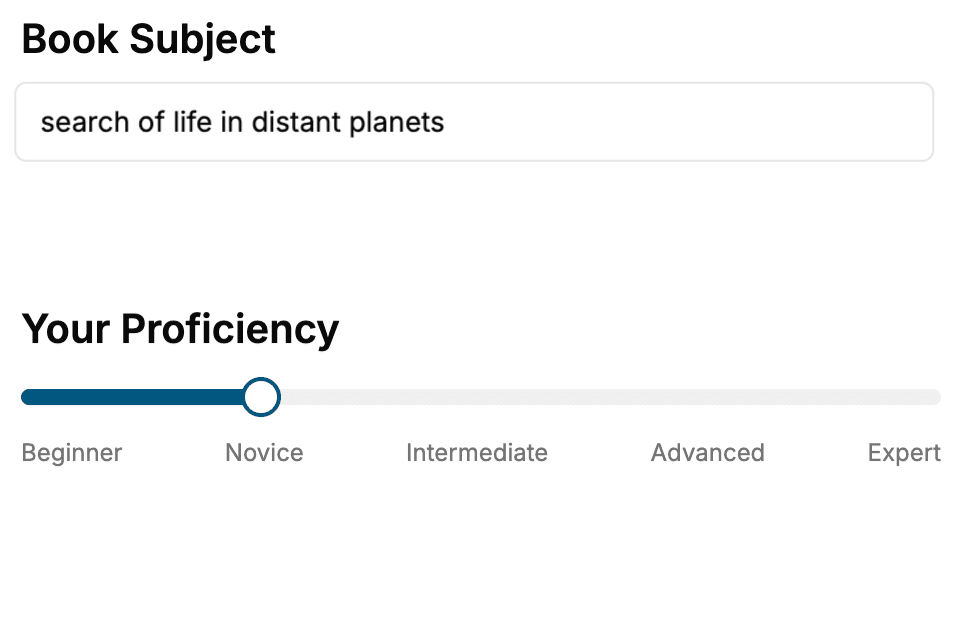
Select the focus of your Learning Japanese book and share your background
- 2. Personalize your book
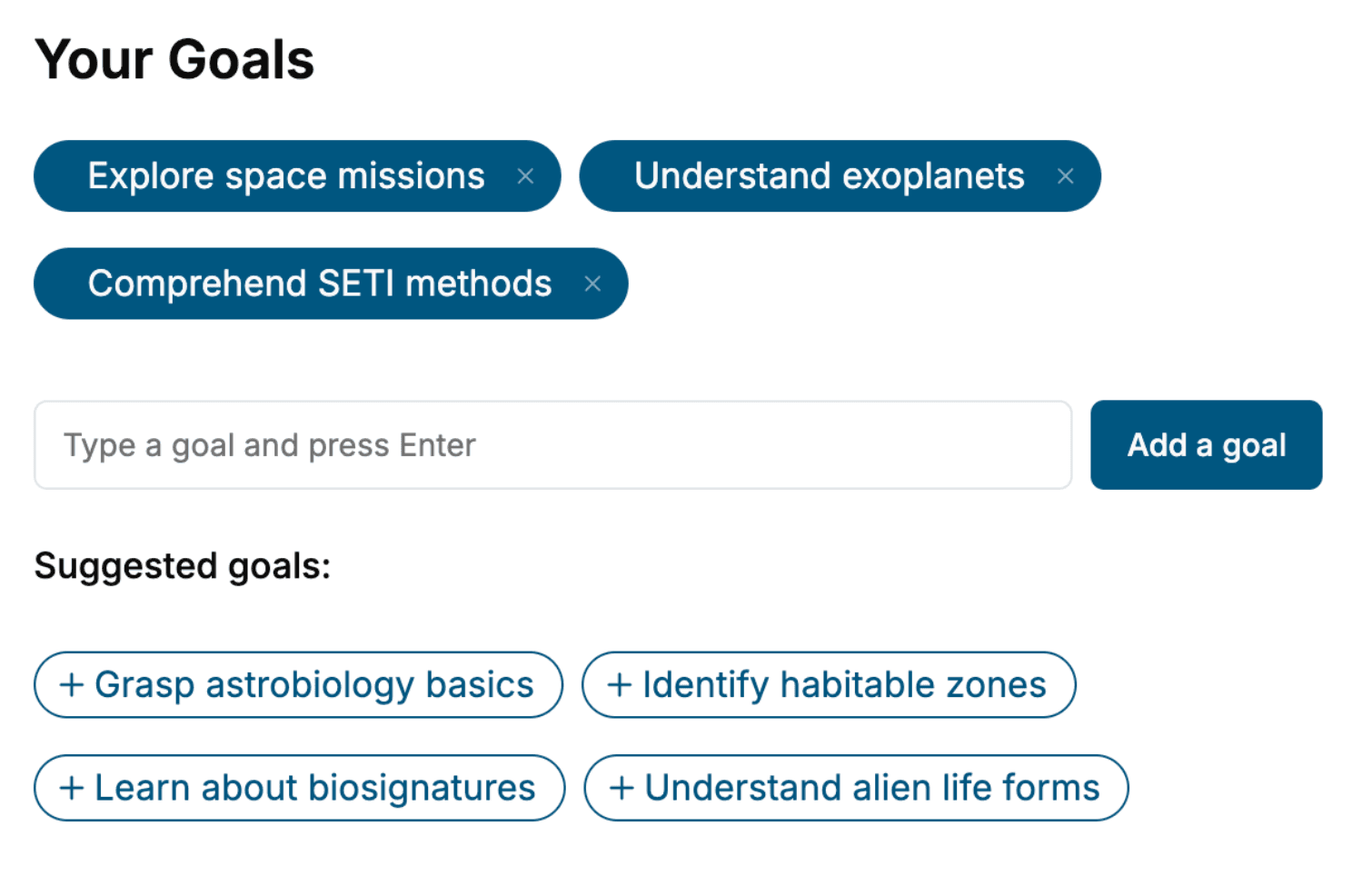
Specify your goals and choose sub-topics to include
- 3. Get your tailored book
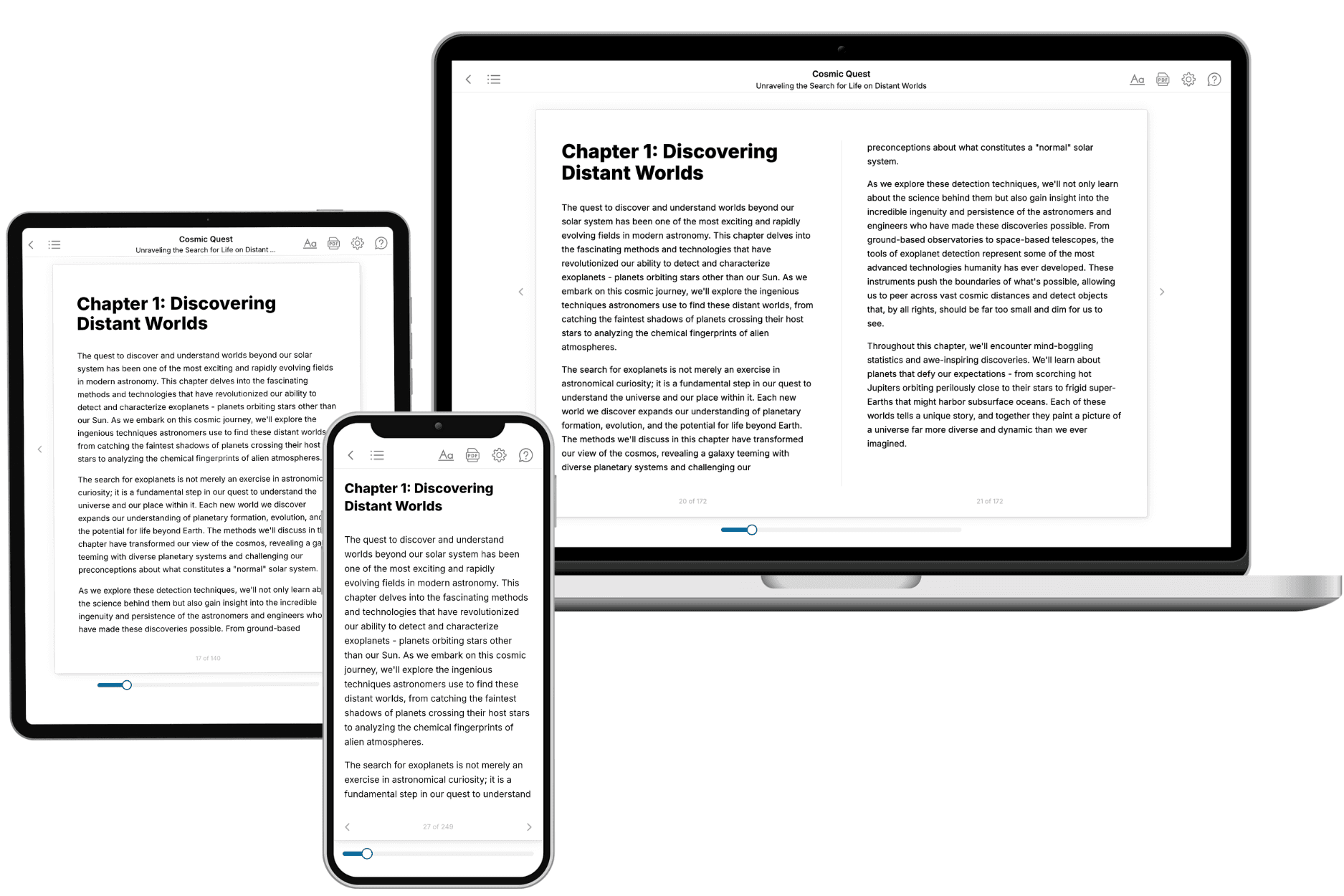
Your book is ready in 10 minutes. Read it online, download as EPUB or PDF, or send to Kindle.
Frequently asked questions
- What is TailoredRead?
TailoredRead creates complete, full-length nonfiction ebooks, written specifically for you. Tell us what you want to learn and why, and TailoredRead writes you a complete ebook on it, with charts, tables, and diagrams throughout. Read it online, on Kindle, or on any e-reader, or download it as a PDF or EPUB. Every book is written fresh the day you order it.
- How is the book tailored to me?
Before anything is written, you answer a few short questions about your goals, your background, and the topics you care about. Your book is then planned around your answers: written at your level, focused on your goals, and covering the topics you chose, instead of the one-size-fits-all book a store sells everyone.
- Will it read like generic AI content?
No. Your book isn't a chat transcript: it's planned chapter by chapter before a single word is written, told in a clear book voice, and explains ideas visually with charts, tables, and diagrams. After writing, every book goes through an editorial pass that polishes chapters so the book reads consistent from start to finish. Judge for yourself: browse thousands of sample books on our Explore Books page.
- How accurate is the content?
Our AI first checks whether your subject needs live research. Niche and fast-moving subjects are researched before writing, and the book plan and chapters are grounded in what it finds. After writing, every book goes through a quality pass that checks its facts and consistency, and researched books list their sources in a Notes section at the back.
- How long is the book?
You choose the length: Comprehensive (250-300 pages), Detailed (150-200 pages), Essential (70-100 pages), or Short (30-50 pages).
- Does the book include visuals?
Yes. Every book includes charts, tables, and diagrams: timelines, checklists, step-by-step guides, decision trees, comparison tables, matrices, and bar charts. A typical book includes dozens of these visual elements.
- Can I read it on Kindle? What formats can I download?
Yes. Every book can be read in our online reader or downloaded as a PDF or EPUB. The EPUB can be opened with Kindle, Apple Books, Kobo, and any e-reader. The Commercial and Author licenses also include an editable Word (DOCX) and Markdown download.
- How much does it cost?
About the price of a regular ebook. The exact price depends on your book's length and complexity, from $2 for the shortest books to $35 for the most comprehensive, and it's shown when you review your book, before you commit to anything. Each book is a one-time purchase, yours to keep, no subscription. Licenses that let you share, teach, or publish your book range from $35.99 to $49.99.
- Can I preview the book before purchasing?
Before you pay, you'll see what your book will cover: the title, a detailed description, the estimated length, and the complete chapter-by-chapter table of contents, so you know what you're getting before you decide. The full text itself is written after you purchase.
- How long does it take to create a book?
About 10 minutes. You can start reading the opening chapters while the rest is still being written.