Mastering L'Hôpital's Rule
A Comprehensive Guide to Solving Indeterminate Forms in Calculus
Dive deep into the fascinating world of L'Hôpital's Rule with this comprehensive guide.
284 pages14 chaptersNov 28, 2024Calculus
About this book
"Mastering L'Hôpital's Rule" takes you on a journey through one of calculus's most powerful tools for solving indeterminate forms. From its historical origins to its modern applications, this book provides a thorough exploration of L'Hôpital's Rule. You'll start with the basics, understanding what indeterminate forms are and why they pose challenges in calculus. Then, you'll discover how L'Hôpital's Rule elegantly resolves these issues, opening up new possibilities in mathematical problem-solving. Through clear explanations, step-by-step examples, and practical exercises, you'll gain confidence in applying L'Hôpital's Rule to a wide range of mathematical scenarios. Whether you're a student looking to excel in your calculus course or a professional seeking to refresh and deepen your mathematical skills, this book will equip you with the knowledge and techniques to master this essential calculus concept.
Table of contents
- IntroductionThe Importance of L'Hôpital's Rule in Calculus, Overview of the Book, How to Use This BookRead below
- Chapter 1: Foundations of Limits and ContinuityThe Concept of Limits, Continuity and Its Importance, Techniques for Evaluating Limits, Introduction to Indeterminate Forms
- Chapter 2: Understanding Indeterminate FormsThe 0/0 Form, The ∞/∞ Form, Other Indeterminate Forms, Challenges in Evaluating Indeterminate Forms
- Chapter 3: Introduction to L'Hôpital's RuleHistorical Context and Development, Statement of L'Hôpital's Rule, Intuitive Explanation of the Rule, Outline of the Proof
- Chapter 4: Applying L'Hôpital's Rule: Basic CasesApplying the Rule to 0/0 Forms, Applying the Rule to ∞/∞ Forms, Step-by-Step Problem-Solving Process, Common Mistakes and How to Avoid Them
- Chapter 5: Advanced Applications of L'Hôpital's RuleMultiple Applications of the Rule, Applying the Rule to Other Indeterminate Forms, L'Hôpital's Rule and Parametric Equations, Using L'Hôpital's Rule with Implicit Differentiation
- Chapter 6: Limitations and Pitfalls of L'Hôpital's RuleWhen Not to Use L'Hôpital's Rule, Avoiding Circular Reasoning, L'Hôpital's Rule and Oscillating Functions, Alternative Methods When L'Hôpital's Rule Fails
- Chapter 7: Real-World Applications of L'Hôpital's RuleApplications in Physics, Applications in Engineering, Applications in Economics, Applications in Biology
- Chapter 8: L'Hôpital's Rule and Infinite SeriesUsing L'Hôpital's Rule to Test Series Convergence, L'Hôpital's Rule and Power Series, Applications in Taylor Series Expansions, L'Hôpital's Rule and Improper Integrals
- Chapter 9: L'Hôpital's Rule in Optimization ProblemsSolving Maximum and Minimum Problems, Finding Inflection Points, Real-World Optimization Applications, L'Hôpital's Rule in Multivariable Optimization
- Chapter 10: L'Hôpital's Rule and AsymptotesFinding Vertical Asymptotes, Determining Horizontal Asymptotes, Calculating Slant Asymptotes, Exploring Curvilinear Asymptotes
- Chapter 11: L'Hôpital's Rule and Taylor's TheoremIntroduction to Taylor's Theorem, The Connection Between L'Hôpital's Rule and Taylor's Theorem, Using L'Hôpital's Rule for Error Estimation in Taylor Series, Advanced Approximation Techniques
- Chapter 12: L'Hôpital's Rule in Complex AnalysisLimits in the Complex Plane, L'Hôpital's Rule and the Cauchy-Riemann Equations, Applications in the Residue Theorem, L'Hôpital's Rule in Conformal Mapping
- Chapter 13: L'Hôpital's Rule and Numerical MethodsL'Hôpital's Rule in Numerical Differentiation, Error Analysis in Numerical Methods, Computational Challenges and Solutions, Implementing L'Hôpital's Rule in Computer Algebra Systems
- Chapter 14: Advanced Topics and GeneralizationsL'Hôpital's Rule for Multivariable Functions, L'Hôpital's Rule and Fractional Derivatives, Applications in Functional Analysis, Future Directions and Open Problems
- ConclusionKey Takeaways, Suggestions for Further Exploration
- AppendixDetailed Proof of L'Hôpital's Rule, Additional Exercises and Solutions
- Glossary
Introduction
Welcome to "Mastering L'Hôpital's Rule: A Comprehensive Guide to Solving Indeterminate Forms in Calculus." This book is designed to take you on an enlightening journey through one of the most powerful and elegant tools in calculus. Whether you're a college student looking to excel in your mathematics courses or a young professional seeking to deepen your understanding of calculus, this guide will equip you with the knowledge and skills to confidently apply L'Hôpital's Rule in a wide range of mathematical scenarios.
L'Hôpital's Rule, named after the 17th-century French mathematician Guillaume de l'Hôpital, is a fundamental concept in calculus that provides an ingenious method for evaluating limits that result in indeterminate forms. These forms, such as 0/0 or ∞/∞, often arise in various mathematical and real-world problems, and their resolution is crucial for advancing our understanding in fields ranging from pure mathematics to physics, engineering, and economics.
Throughout this book, you'll discover how L'Hôpital's Rule elegantly bridges the gap between basic limit evaluation techniques and more advanced calculus concepts. By mastering this rule, you'll not only enhance your problem-solving skills but also gain a deeper appreciation for the interconnectedness of different areas of mathematics. The rule's application extends far beyond simple limit calculations, touching upon topics such as asymptotes, optimization, Taylor series, and even complex analysis.
As we embark on this mathematical exploration together, remember that understanding L'Hôpital's Rule is not just about memorizing a formula or procedure. It's about developing a intuitive grasp of limits, derivatives, and their relationships. It's about learning to recognize when and how to apply this powerful tool, and equally importantly, when not to use it. By the end of this book, you'll have gained not just knowledge, but a new perspective on problem-solving in calculus.
So, let's begin our journey into the fascinating world of L'Hôpital's Rule, where we'll unravel its mysteries, explore its applications, and ultimately master its use in solving some of the most challenging problems in calculus.
The Importance of L'Hôpital's Rule in Calculus
L'Hôpital's Rule stands as a cornerstone in the edifice of calculus, bridging the gap between elementary limit evaluation techniques and more advanced mathematical concepts. Its importance in calculus cannot be overstated, as it provides a powerful method for resolving limits that, at first glance, seem impossible to evaluate. These limits, known as indeterminate forms, frequently arise in various mathematical contexts and real-world applications, making L'Hôpital's Rule an indispensable tool in the mathematician's toolkit.
At its core, L'Hôpital's Rule offers a systematic approach to evaluating limits of quotients where both the numerator and denominator approach zero or infinity. Without this rule, many of these limits would remain unsolvable using elementary techniques. The beauty of L'Hôpital's Rule lies in its ability to transform a complex limit problem into a simpler one by replacing the original functions with their derivatives. This process often unveils the true nature of the limit, allowing for its accurate determination.
The significance of L'Hôpital's Rule extends far beyond mere limit calculations. It serves as a bridge connecting various areas of calculus and higher mathematics. For instance, in the study of infinite series, L'Hôpital's Rule plays a crucial role in determining the convergence or divergence of certain types of series. In the realm of differential equations, it aids in finding asymptotic solutions and analyzing the behavior of solutions near singular points. Even in complex analysis, a generalized version of L'Hôpital's Rule finds applications in evaluating limits of complex functions.
Moreover, L'Hôpital's Rule is not just a theoretical construct; it has profound practical implications. In physics, it helps in analyzing the behavior of physical systems at extreme conditions or critical points. Engineers utilize it in optimization problems and in understanding the asymptotic behavior of systems. Economists apply it in marginal analysis and in studying long-term economic trends. The rule's versatility makes it an essential tool across various scientific disciplines.
Understanding and mastering L'Hôpital's Rule also contributes significantly to developing mathematical intuition and problem-solving skills. It encourages a deeper understanding of the relationship between functions and their derivatives, reinforcing the fundamental concepts of calculus. By working with L'Hôpital's Rule, you'll enhance your ability to recognize patterns, think abstractly, and approach complex problems with confidence.
Furthermore, L'Hôpital's Rule serves as a gateway to more advanced mathematical techniques. Its study naturally leads to explorations of Taylor series expansions, asymptotic analysis, and even aspects of complex analysis. This progression illustrates how a seemingly specific tool can open doors to broader mathematical landscapes, fostering a more comprehensive understanding of calculus and its applications.
It's worth noting that the importance of L'Hôpital's Rule is not just in its direct applications, but also in the mathematical thinking it promotes. It encourages you to look beyond the surface of a problem, to consider alternative approaches, and to think creatively about mathematical relationships. This kind of analytical thinking is valuable not only in mathematics but in all areas of scientific inquiry and problem-solving.
As you delve deeper into this book, you'll discover that L'Hôpital's Rule is more than just a method for evaluating tricky limits. It's a powerful conceptual tool that enhances your understanding of functions, limits, and derivatives. It provides insights into the behavior of functions near critical points and offers a glimpse into the elegant interconnectedness of mathematical ideas. By mastering L'Hôpital's Rule, you're not just learning a technique; you're gaining a new perspective on calculus and mathematical analysis.
In conclusion, the importance of L'Hôpital's Rule in calculus is multifaceted. It's a problem-solving tool, a bridge between mathematical concepts, a gateway to advanced topics, and a promoter of analytical thinking. As you progress through this book, keep in mind that each application of L'Hôpital's Rule you encounter is not just an isolated example, but a part of a broader tapestry of mathematical understanding. Embrace the challenge and excitement of mastering this rule, and watch as it transforms your approach to calculus and mathematical problem-solving.
Overview of the Book
"Mastering L'Hôpital's Rule" is structured to provide a comprehensive and in-depth exploration of this fundamental calculus concept. The book is designed to take you on a journey from the basic foundations of limits and continuity to advanced applications of L'Hôpital's Rule in various mathematical and scientific domains. Each chapter builds upon the previous ones, gradually increasing in complexity while reinforcing core concepts, ensuring a solid understanding of the material.
We begin our exploration with Chapter 1, "Foundations of Limits and Continuity." This chapter serves as a refresher and a foundation builder, revisiting key concepts that are crucial for understanding L'Hôpital's Rule. You'll review the concept of limits, explore continuity and its importance, and learn various techniques for evaluating limits. This chapter also introduces the notion of indeterminate forms, setting the stage for the introduction of L'Hôpital's Rule.
Chapter 2, "Understanding Indeterminate Forms," delves deeper into the types of limits that necessitate the use of L'Hôpital's Rule. You'll explore in detail the 0/0 and ∞/∞ forms, as well as other indeterminate forms. This chapter aims to develop your intuition about why these forms are challenging and why standard limit evaluation techniques fall short in these cases.
With this groundwork laid, Chapter 3 introduces L'Hôpital's Rule itself. You'll learn about its historical context, understand its formal statement, and gain an intuitive understanding of why the rule works. An outline of the proof is provided, offering insight into the mathematical reasoning behind the rule.
Chapters 4 and 5 focus on the practical application of L'Hôpital's Rule. Chapter 4 covers basic cases, providing a step-by-step problem-solving process and highlighting common mistakes to avoid. Chapter 5 extends this to more advanced applications, including multiple applications of the rule, its use with parametric equations, and its application in implicit differentiation.
Recognizing the importance of understanding the limitations of any mathematical tool, Chapter 6 is dedicated to exploring the pitfalls and limitations of L'Hôpital's Rule. You'll learn when not to use the rule, how to avoid circular reasoning, and what alternative methods to employ when L'Hôpital's Rule fails.
The subsequent chapters expand the scope of L'Hôpital's Rule beyond pure mathematics. Chapter 7 explores real-world applications in physics, engineering, economics, and biology, demonstrating the rule's practical significance. Chapter 8 connects L'Hôpital's Rule to the study of infinite series, power series, and improper integrals, showcasing its utility in more advanced calculus topics.
Chapters 9 and 10 focus on specific applications: optimization problems and the study of asymptotes, respectively. These chapters demonstrate how L'Hôpital's Rule can be a powerful tool in solving practical problems and understanding function behavior.
The book then progresses to more advanced topics. Chapter 11 explores the connection between L'Hôpital's Rule and Taylor's Theorem, a fundamental concept in approximation theory. Chapter 12 ventures into complex analysis, showing how L'Hôpital's Rule extends to the complex plane.
Chapter 13 bridges the gap between theory and computation, discussing L'Hôpital's Rule in the context of numerical methods and computer algebra systems. This chapter is particularly relevant in our increasingly digital and computational world.
The main body of the book concludes with Chapter 14, which explores advanced topics and generalizations of L'Hôpital's Rule. This chapter pushes the boundaries of the rule's applications, touching on multivariable calculus, fractional derivatives, and functional analysis. It also points towards future directions and open problems, inspiring further exploration.
Following the main chapters, you'll find a comprehensive conclusion summarizing key takeaways and suggesting avenues for further study. The book also includes an appendix with a detailed proof of L'Hôpital's Rule and additional exercises for practice. A glossary of terms is provided at the end for quick reference.
Throughout the book, you'll find a wealth of examples, exercises, and real-world applications. These are designed not just to test your understanding, but to deepen it, challenging you to apply L'Hôpital's Rule in diverse contexts. The book also includes historical notes and biographical snippets about mathematicians who contributed to the development of calculus, providing context and adding depth to your learning experience.
By the time you reach the end of this book, you will have gained not just a thorough understanding of L'Hôpital's Rule, but a broader and deeper appreciation of calculus as a whole. You'll be equipped with a powerful tool for problem-solving and a new lens through which to view mathematical relationships. Whether you're aiming to excel in your calculus courses, prepare for advanced mathematics, or simply satisfy your curiosity about this fascinating area of mathematics, "Mastering L'Hôpital's Rule" will guide you every step of the way.
How to Use This Book
To get the most out of "Mastering L'Hôpital's Rule," it's important to approach your study systematically and actively. This book is designed to be more than just a passive read; it's a comprehensive learning tool that requires your engagement and practice. Here are some guidelines on how to effectively use this book to maximize your understanding and mastery of L'Hôpital's Rule and its applications in calculus.
First and foremost, it's crucial to read the chapters in order. The book is structured to build your knowledge progressively, with each chapter laying the groundwork for the next. Start with Chapter 1 and work your way through sequentially. Even if you feel confident about the basics, don't skip the early chapters. They contain important foundational concepts and may offer new insights or perspectives that will be valuable later on.
As you read each chapter, take an active approach to your learning. Don't just skim through the text; engage with it. Take notes, highlight key points, and write down any questions that arise. This active engagement will help reinforce your understanding and make it easier to review the material later. Consider keeping a dedicated notebook for this purpose, where you can jot down important formulas, concepts, and your own observations.
Pay special attention to the examples provided throughout the book. These are carefully chosen to illustrate key concepts and techniques. Don't just read through them passively. Instead, try to work through each example on your own before looking at the solution. This practice will help you identify areas where you might need more work and will reinforce your problem-solving skills.
After reading each section, take some time to reflect on what you've learned. Try to summarize the main points in your own words. This reflection process helps consolidate your understanding and can reveal areas that might need further review. It's also a good practice to try to come up with your own examples or applications of the concepts you've just learned.
The exercises at the end of each chapter are an integral part of the learning process. Don't skip them! These problems are designed to test your understanding and help you apply the concepts in various contexts. Try to solve as many exercises as possible without referring to the solutions. If you get stuck, review the relevant sections of the chapter before attempting the problem again. Only check the solutions after you've made a genuine effort to solve the problems on your own.
Make use of the additional resources provided in the book. The historical notes and biographical snippets offer context that can deepen your appreciation of the material. The glossary at the end of the book is a valuable reference tool; familiarize yourself with it and use it whenever you encounter unfamiliar terms.
As you progress through the book, try to make connections between different chapters and concepts. L'Hôpital's Rule is not an isolated topic; it's deeply connected to many areas of calculus and mathematics. Look for these connections and think about how the different topics relate to each other. This holistic understanding will greatly enhance your mastery of the subject.
Don't rush through the material. Give yourself time to absorb and understand each concept thoroughly before moving on. If you find a particular topic challenging, it's okay to spend extra time on it. You might find it helpful to seek out additional resources, such as online videos or tutorials, to supplement your understanding.
Consider forming a study group or finding a study partner to discuss the material with. Explaining concepts to others and hearing different perspectives can significantly enhance your understanding. If you're taking a calculus course, don't hesitate to discuss the book's content with your instructor or teaching assistants.
As you near the end of the book, pay special attention to the advanced topics and open problems mentioned in the later chapters. These can serve as springboards for further exploration if you're interested in delving deeper into the subject.
Finally, remember that mastering L'Hôpital's Rule, like any mathematical concept, requires practice and patience. Don't get discouraged if you don't understand everything immediately. Mathematical understanding often comes in bursts, with periods of confusion followed by moments of clarity. Trust the process, stay persistent, and you'll find your comprehension growing steadily.
By following these guidelines and actively engaging with the material, you'll be well on your way to mastering L'Hôpital's Rule and enhancing your overall understanding of calculus. Remember, the goal is not just to memorize a rule, but to develop a deep, intuitive understanding that you can apply flexibly in various mathematical contexts. Enjoy your journey through the fascinating world of L'Hôpital's Rule!
This is the end of the free sample. The full book has 14 chapters.
Want this book written for you?
Tell us your goals and background, and get your own version of this book, tailored by AI to you.


Benefits of AI-tailored books
- Read one book, not ten:
- all the Calculus knowledge you need, gathered into a single book.
- Save days of learning:
- tell us your goals, choose your topics, and the whole book is built around them.
- Learn effortlessly:
- Calculus book written for your specific background and expertise.
- Understand at a glance:
- includes charts, tables, timelines, checklists, decision trees, and more.
- Stay current:
- written the day you order it, not years ago.
- Trust what you read:
- every book is checked for accuracy, with real research when your subject needs it.
Create your unique book in 3 steps
- 1. Select your focus
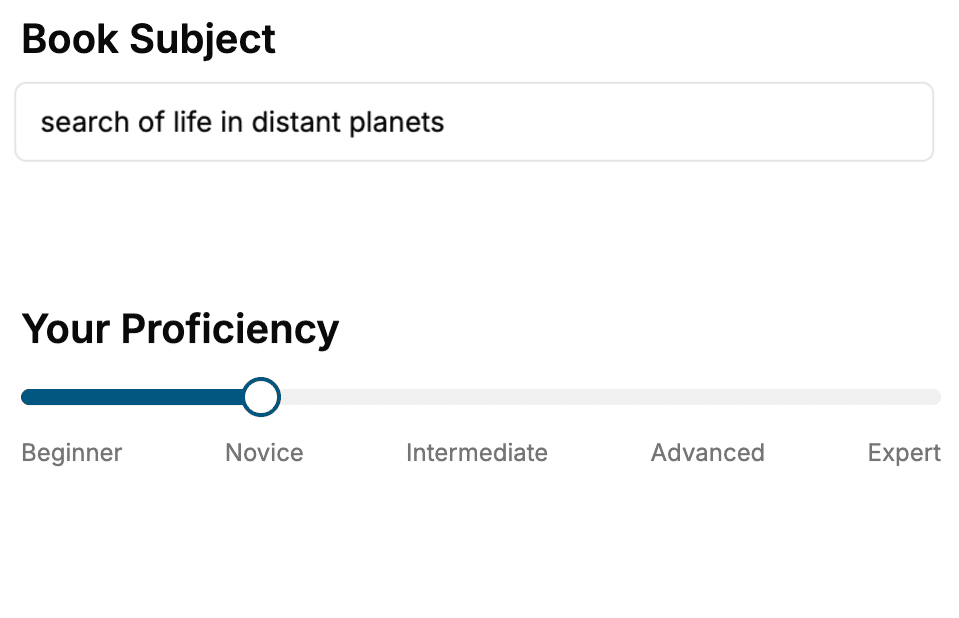
Select the focus of your Calculus book and share your background
- 2. Personalize your book
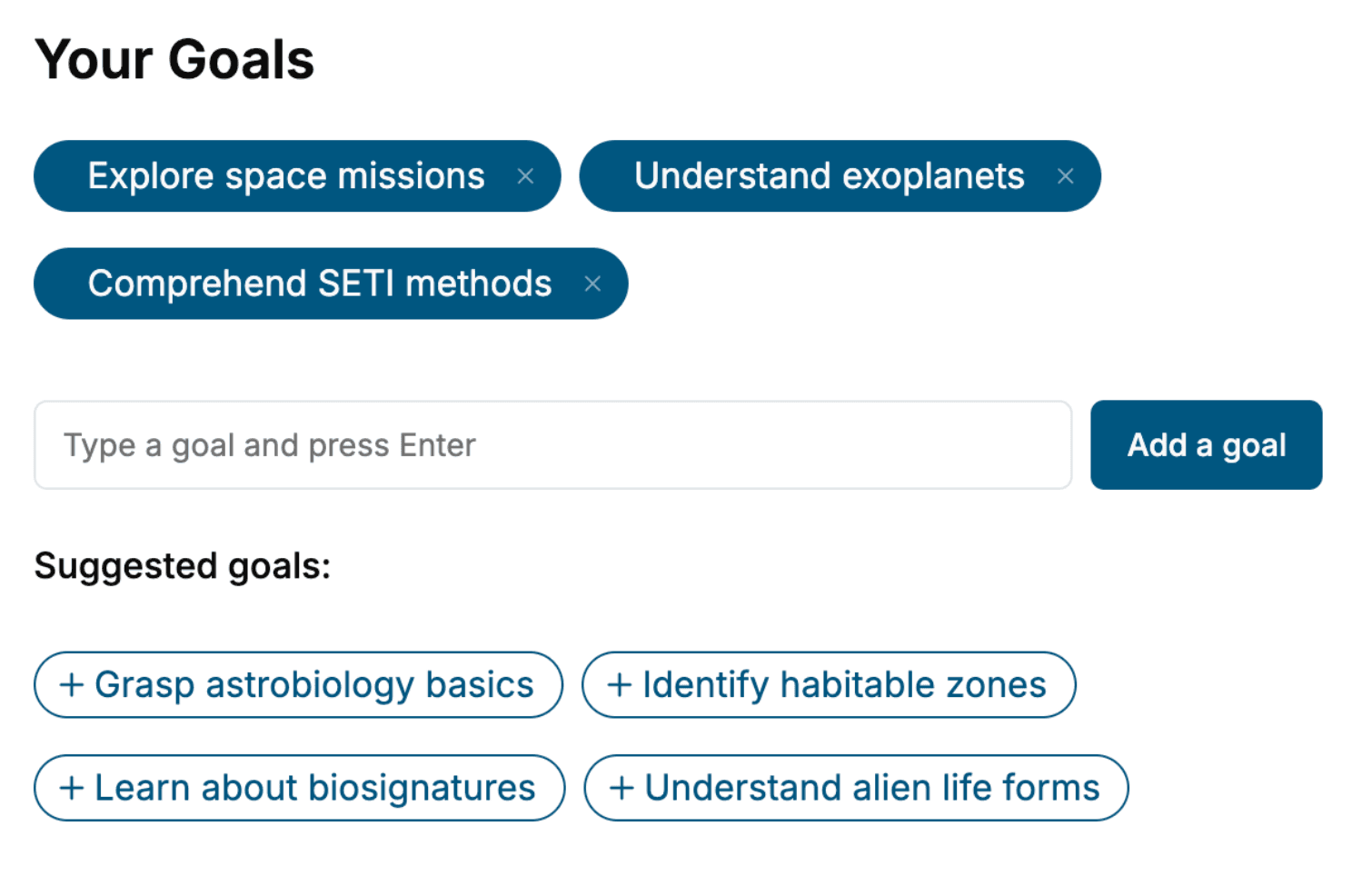
Specify your goals and choose sub-topics to include
- 3. Get your tailored book
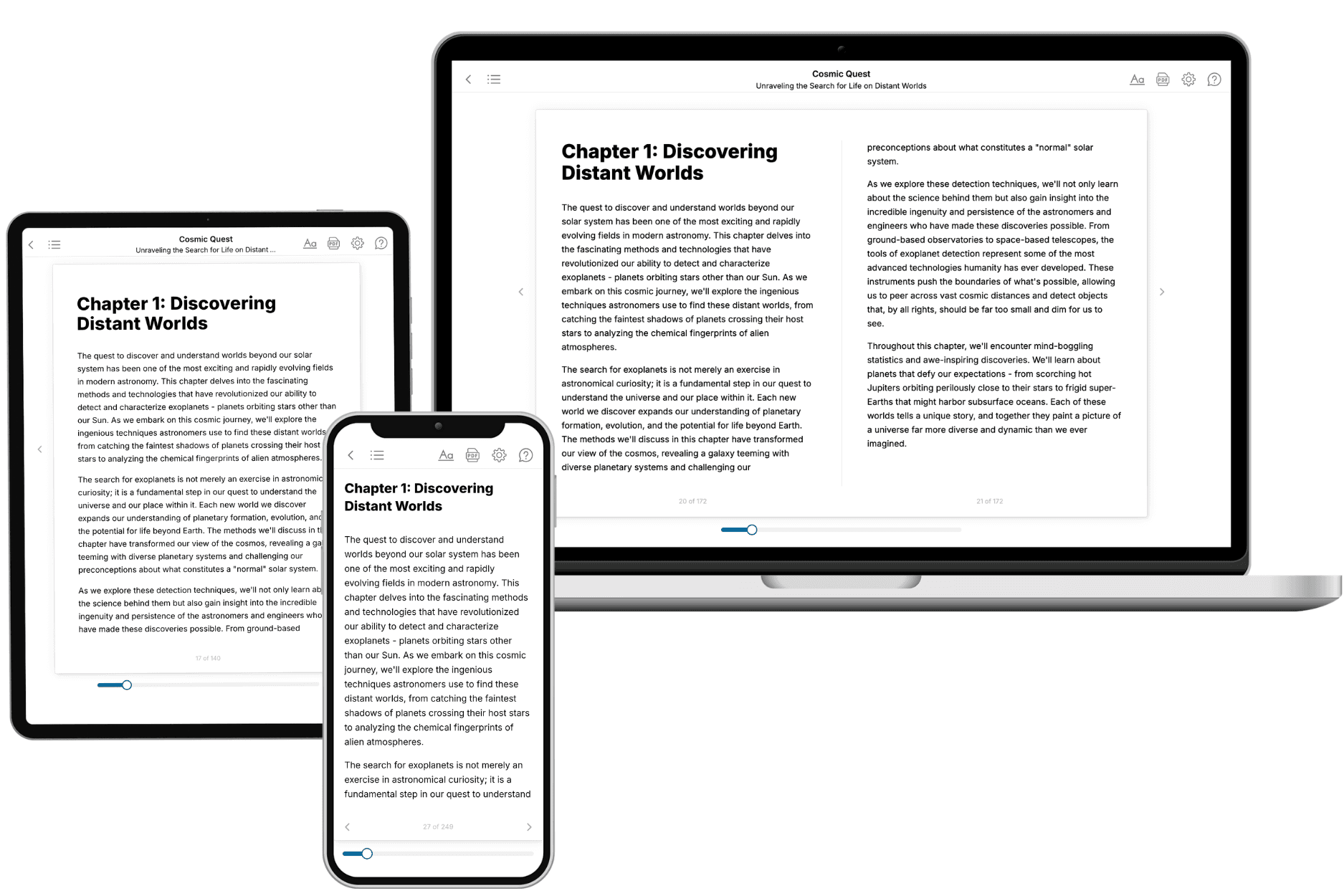
Your book is ready in 10 minutes. Read it online, download as EPUB or PDF, or send to Kindle.
Frequently asked questions
- What is TailoredRead?
TailoredRead creates complete, full-length nonfiction ebooks, written specifically for you. Tell us what you want to learn and why, and TailoredRead writes you a complete ebook on it, with charts, tables, and diagrams throughout. Read it online, on Kindle, or on any e-reader, or download it as a PDF or EPUB. Every book is written fresh the day you order it.
- How is the book tailored to me?
Before anything is written, you answer a few short questions about your goals, your background, and the topics you care about. Your book is then planned around your answers: written at your level, focused on your goals, and covering the topics you chose, instead of the one-size-fits-all book a store sells everyone.
- Will it read like generic AI content?
No. Your book isn't a chat transcript: it's planned chapter by chapter before a single word is written, told in a clear book voice, and explains ideas visually with charts, tables, and diagrams. After writing, every book goes through an editorial pass that polishes chapters so the book reads consistent from start to finish. Judge for yourself: browse thousands of sample books on our Explore Books page.
- How accurate is the content?
Our AI first checks whether your subject needs live research. Niche and fast-moving subjects are researched before writing, and the book plan and chapters are grounded in what it finds. After writing, every book goes through a quality pass that checks its facts and consistency, and researched books list their sources in a Notes section at the back.
- How long is the book?
You choose the length: Comprehensive (250-300 pages), Detailed (150-200 pages), Essential (70-100 pages), or Short (30-50 pages).
- Does the book include visuals?
Yes. Every book includes visual elements such as timelines, checklists, step-by-step guides, decision trees, comparison tables, and matrices, and many include bar charts. A typical book includes dozens of these visual elements.
- Can I read it on Kindle? What formats can I download?
Yes. Every book can be read in our online reader or downloaded as a PDF or EPUB. The EPUB can be opened with Kindle, Apple Books, Kobo, and any e-reader. The Commercial and Author licenses also include an editable Word (DOCX) and Markdown download.
- How much does it cost?
About the price of a regular ebook. The exact price depends on your book's length and complexity, from $2 for the shortest books to $35 for the most comprehensive, and it's shown when you review your book, before you commit to anything. Each book is a one-time purchase, yours to keep, no subscription. Licenses that let you share, teach, or publish your book range from $35.99 to $49.99.
- Can I preview the book before purchasing?
Before you pay, you'll see what your book will cover: the title, a detailed description, the estimated length, and the complete chapter-by-chapter table of contents, so you know what you're getting before you decide. The full text itself is written after you purchase.
- How long does it take to create a book?
About 10 minutes. You can start reading the opening chapters while the rest is still being written.