Mastering Monte Carlo Tree Search
A Developer's Guide to Implementation and Application in Python
Dive into the fascinating world of Monte Carlo Tree Search (MCTS) with this comprehensive guide tailored for developers.
238 pages12 chaptersNov 24, 2024Computer Science and AlgorithmsCreated by Ramesh
About this book
"Mastering Monte Carlo Tree Search" offers you a deep understanding of this powerful algorithm, from its fundamental concepts to advanced implementation techniques. You'll embark on a journey through the intricacies of MCTS, starting with the basics of Monte Carlo methods and progressing to the nuances of tree search algorithms. The book provides clear, step-by-step guidance on implementing MCTS in Python, allowing you to apply theoretical knowledge to practical coding scenarios. Whether you're working on game AI, decision-making systems, or optimization problems, this book equips you with the tools to leverage MCTS effectively. You'll explore real-world applications, learn optimization techniques, and discover how to integrate MCTS with other AI algorithms. By the end, you'll have the confidence and skills to implement and adapt MCTS for your unique development challenges.
Table of contents
- IntroductionWhat is Monte Carlo Tree Search?, Why MCTS Matters in Modern AI, Book Overview and Learning PathRead below
- Chapter 1: Foundations of Monte Carlo MethodsIntroduction to Monte Carlo Techniques, Random Sampling and Probability, Monte Carlo Integration, Monte Carlo Simulation
- Chapter 2: Understanding Tree Search AlgorithmsTree Data Structures in Computer Science, Basic Tree Search Algorithms, Minimax Algorithm, Alpha-Beta Pruning
- Chapter 3: Core Concepts of Monte Carlo Tree SearchMCTS Algorithm Overview, The Selection Phase, The Expansion Phase, The Simulation Phase, The Backpropagation Phase
- Chapter 4: Python Essentials for MCTS ImplementationRelevant Python Data Structures, Object-Oriented Programming in Python, Random Number Generation in Python, Introduction to NumPy for Numerical Computing
- Chapter 5: Implementing MCTS in PythonCreating the Node Class, Designing the Tree Class, Implementing the Selection Phase, Coding the Expansion Phase, Building the Simulation Function, Implementing Backpropagation
- Chapter 6: Upper Confidence Bound for Trees (UCT)Introduction to UCT, The UCT Formula Explained, Balancing Exploration and Exploitation, Implementing UCT in Python
- Chapter 7: Applying MCTS to Game AIRepresenting Game States and Actions, Implementing Game Rules, Integrating MCTS with Game Logic, Case Study: MCTS for Tic-Tac-Toe, Case Study: MCTS for Connect Four
- Chapter 8: Optimizing MCTS PerformanceProfiling MCTS Code, Algorithmic Improvements, Parallelizing MCTS, Efficient Memory Management
- Chapter 9: Advanced MCTS TechniquesIncorporating Domain-Specific Heuristics, Rapid Action Value Estimation (RAVE), MCTS with Function Approximation, Progressive Widening and Unpruning
- Chapter 10: MCTS Beyond GamesMCTS for Planning and Scheduling, Applications in Robotics, MCTS in Recommendation Systems, Solving Optimization Problems with MCTS
- Chapter 11: Integrating MCTS with Machine LearningCombining MCTS with Neural Networks, MCTS in Reinforcement Learning, Case Study: AlphaGo and AlphaZero, Future Directions and Research
- Chapter 12: Building Real-World Projects with MCTSDeveloping a Chess Engine, Creating a Go-playing Bot, Building a Puzzle Solver, Resource Allocation Optimizer
- ConclusionRecap of Key Concepts, The Future of MCTS in AI and Development, Next Steps in Your MCTS Journey
- AppendixMathematical Background, Useful Python Libraries for MCTS, Further Reading and Resources
Introduction
Welcome to "Mastering Monte Carlo Tree Search: A Developer's Guide to Implementation and Application in Python." This book is designed to take you on a comprehensive journey through the fascinating world of Monte Carlo Tree Search (MCTS), one of the most powerful and versatile algorithms in modern artificial intelligence. As a developer with a strong foundation in computer science, you are about to embark on an exciting exploration of an algorithm that has revolutionized decision-making processes in complex environments, particularly those with large search spaces and imperfect information.
Throughout this book, you will gain a deep understanding of MCTS, from its fundamental principles to advanced implementation techniques. You will learn how to harness the power of this algorithm to solve challenging problems in various domains, including game AI, robotics, planning, and optimization. By the end of this journey, you will have the knowledge and skills to implement MCTS in Python, adapt it to your specific needs, and apply it to real-world projects.
Before we dive into the intricacies of MCTS, it's essential to lay the groundwork for our exploration. In this introduction, we will provide you with an overview of what MCTS is, why it matters in the landscape of modern AI, and what you can expect to learn from this book. This foundation will prepare you for the in-depth discussions and practical implementations that follow in subsequent chapters.
What is Monte Carlo Tree Search?
Monte Carlo Tree Search is a heuristic search algorithm that has gained significant attention in the field of artificial intelligence, particularly in domains where traditional search methods struggle. At its core, MCTS combines the random sampling techniques of Monte Carlo methods with the strategic selection mechanisms of tree search algorithms. This powerful combination allows MCTS to efficiently explore vast search spaces and make informed decisions even in scenarios with incomplete information.
The name "Monte Carlo" in MCTS refers to the famous casino in Monaco, known for its games of chance. This analogy is apt, as the algorithm uses random sampling to estimate the value of different actions or decisions. However, unlike pure chance, MCTS employs a sophisticated balance between exploration of new possibilities and exploitation of known promising paths. This balance is crucial to its effectiveness and is achieved through a carefully structured process.
MCTS operates on a tree structure that represents the possible states of a problem and the actions that can be taken from each state. The algorithm builds and expands this tree incrementally, focusing computational resources on the most promising branches. This process is carried out through four main steps, which form the core of the MCTS algorithm:
- Selection: Starting from the root node, the algorithm traverses the existing tree, choosing child nodes based on a selection strategy that balances exploration and exploitation.
- Expansion: Upon reaching a leaf node, the tree is expanded by adding one or more child nodes representing new states or actions.
- Simulation: From the newly added node, a simulation (often called a "rollout") is performed, typically using random moves until a terminal state is reached.
- Backpropagation: The result of the simulation is then propagated back up the tree, updating statistics at each node along the path.
These steps are repeated many times, gradually building a more comprehensive and accurate representation of the problem space. The beauty of MCTS lies in its ability to focus on promising areas of the search space without requiring exhaustive exploration. This makes it particularly effective for problems with large branching factors, where traditional methods like minimax with alpha-beta pruning become impractical.
One of the key strengths of MCTS is its flexibility. The algorithm can be applied to a wide range of problems without requiring extensive domain-specific knowledge. While domain knowledge can certainly enhance its performance, the basic MCTS framework can yield impressive results even with minimal problem-specific heuristics. This versatility has led to its successful application in diverse fields, from game playing to robotics and beyond.
In the context of game AI, which is one of the most well-known applications of MCTS, the algorithm has demonstrated remarkable success. It forms the backbone of world-class game-playing programs for complex games like Go, where it famously powered Google's AlphaGo to defeat world champion Lee Sedol in 2016. This achievement marked a significant milestone in AI research, showcasing the potential of MCTS when combined with other advanced techniques like deep neural networks.
As you progress through this book, you will gain a deep understanding of how MCTS works, why it's so effective, and how to implement it in Python. You'll explore various enhancements and optimizations that can further improve its performance, and you'll learn how to adapt the algorithm to different problem domains. By mastering MCTS, you'll add a powerful tool to your AI and algorithm toolkit, one that can help you tackle complex decision-making problems with elegance and efficiency.
Why MCTS Matters in Modern AI
Monte Carlo Tree Search has emerged as a cornerstone algorithm in modern artificial intelligence, playing a crucial role in advancing the field and opening up new possibilities for solving complex problems. Its importance in the AI landscape cannot be overstated, as it addresses several key challenges that have long plagued traditional approaches to decision-making and search problems. Understanding why MCTS matters is essential for any developer looking to stay at the forefront of AI technology and harness its power for innovative applications.
One of the primary reasons for the significance of MCTS is its ability to handle large search spaces efficiently. In many real-world problems, the number of possible states or actions grows exponentially, making exhaustive search methods impractical or impossible. Traditional algorithms often struggle with this "curse of dimensionality," but MCTS shines in such scenarios. By selectively exploring the most promising paths and using statistical sampling to estimate the value of unexplored areas, MCTS can navigate vast search spaces with remarkable efficiency. This capability has made it invaluable in domains like game AI, where the number of possible game states can be astronomical.
Another key advantage of MCTS is its ability to work effectively with imperfect information. Many real-world problems involve uncertainty, hidden information, or stochastic elements. Traditional search algorithms often rely on having complete and accurate information about the problem state, which is not always available. MCTS, on the other hand, is designed to handle uncertainty gracefully. Through its Monte Carlo simulations, it can estimate the value of actions even when the outcomes are not deterministic. This makes MCTS particularly well-suited for problems like poker AI, where players must make decisions based on incomplete information about their opponents' hands.
The anytime nature of MCTS is another factor contributing to its importance in modern AI. Unlike algorithms that must run to completion before providing a solution, MCTS can be stopped at any time and still provide a meaningful result. The quality of the solution typically improves with more computation time, but even with limited resources, MCTS can offer valuable insights. This property makes it ideal for real-time applications where decisions must be made under time constraints, such as in robotics or autonomous vehicles.
MCTS has also proven to be highly adaptable and extensible. While the core algorithm is powerful on its own, it can be enhanced with domain-specific knowledge, heuristics, and other AI techniques to further improve its performance. For example, the integration of MCTS with deep neural networks in systems like AlphaGo and AlphaZero has led to breakthroughs in game AI that were previously thought to be decades away. This flexibility allows MCTS to evolve and remain relevant as new AI technologies emerge, making it a valuable skill for developers to master.
In the field of reinforcement learning, MCTS has become an important component of state-of-the-art algorithms. It serves as an effective policy improvement mechanism, helping agents learn better strategies for interacting with their environment. The success of MCTS in this domain has led to its incorporation in advanced reinforcement learning frameworks, further cementing its place in the modern AI toolkit.
The impact of MCTS extends beyond traditional AI domains. Its principles have found applications in diverse fields such as robotics, where it can be used for motion planning and decision-making under uncertainty. In operations research, MCTS has been applied to optimization problems, offering new approaches to scheduling and resource allocation challenges. Even in fields like molecular dynamics and drug discovery, variations of MCTS have been employed to explore complex chemical spaces efficiently.
From a software engineering perspective, MCTS offers several advantages that make it attractive for practical implementations. Its modular structure, consisting of distinct selection, expansion, simulation, and backpropagation phases, allows for easy customization and optimization. This modularity also facilitates parallelization, enabling efficient use of modern multi-core processors and distributed computing environments. As a result, MCTS can scale effectively to tackle increasingly complex problems.
The rise of MCTS has also spurred new research directions in AI. Researchers are continually working on improving the algorithm, developing new variants, and finding novel applications. This ongoing research ensures that MCTS remains at the cutting edge of AI technology, making it a valuable skill for developers who want to stay ahead in the field.
In conclusion, MCTS matters in modern AI because it offers a powerful, flexible, and efficient approach to decision-making and search problems. Its ability to handle large search spaces, work with imperfect information, provide anytime solutions, and adapt to various domains makes it an indispensable tool in the AI practitioner's arsenal. By mastering MCTS, you are equipping yourself with a versatile algorithm that can help you solve complex problems across a wide range of applications, positioning yourself at the forefront of AI development.
Book Overview and Learning Path
"Mastering Monte Carlo Tree Search" is designed to provide you with a comprehensive understanding of MCTS, from its theoretical foundations to practical implementation and advanced applications. This book is structured to guide you through a carefully crafted learning path, ensuring that you build a solid foundation before progressing to more complex topics. Whether you're looking to implement MCTS for game AI, apply it to optimization problems, or integrate it with other AI techniques, this book will equip you with the knowledge and skills you need.
The learning path of this book is organized into several key stages, each building upon the previous ones to create a cohesive and thorough exploration of MCTS. Here's an overview of what you can expect as you progress through the chapters:
- Foundational Knowledge: The book begins by establishing a strong foundation in the prerequisites for understanding MCTS. You'll start with an exploration of Monte Carlo methods, understanding the principles of random sampling and probability that underpin MCTS. This is followed by an in-depth look at tree search algorithms, providing you with the necessary background in data structures and search techniques.
- Core MCTS Concepts: With the foundations in place, you'll dive into the heart of MCTS. You'll learn about the four main phases of the algorithm - selection, expansion, simulation, and backpropagation - understanding how each contributes to the overall effectiveness of MCTS. This section will give you a clear conceptual understanding of how MCTS works and why it's so powerful.
- Python Implementation: Theory meets practice as you learn how to implement MCTS in Python. You'll start with the basics of setting up the necessary data structures and then move on to coding each phase of the algorithm. By the end of this section, you'll have a working MCTS implementation that you can use as a foundation for more advanced applications.
- Advanced Techniques: Building on your basic implementation, you'll explore various enhancements and optimizations that can improve the performance of MCTS. This includes techniques like Upper Confidence Bound for Trees (UCT), rapid action value estimation, and progressive widening. You'll also learn about parallelization strategies to leverage multi-core processors effectively.
- Application to Games: One of the most well-known applications of MCTS is in game AI. You'll learn how to apply your MCTS implementation to various games, starting with simple examples like Tic-Tac-Toe and progressing to more complex games. This section will help you understand how to adapt MCTS to different game rules and structures.
- Beyond Games: MCTS has applications far beyond game playing. You'll explore how the algorithm can be applied to other domains such as planning, scheduling, and optimization problems. This section will broaden your perspective on the versatility of MCTS and inspire you to consider novel applications.
- Integration with Machine Learning: In recent years, some of the most exciting developments in AI have come from combining MCTS with machine learning techniques, particularly deep neural networks. You'll learn about these cutting-edge approaches, understanding how MCTS can be enhanced with learned policies and value functions.
- Real-World Projects: To solidify your understanding and give you practical experience, the book concludes with a series of real-world projects. These projects will challenge you to apply everything you've learned, from basic implementation to advanced techniques, in creating sophisticated AI systems.
Throughout this learning path, you'll find that the book emphasizes not just the "how" but also the "why" of MCTS. You'll gain insights into the mathematical principles underlying the algorithm, understand the trade-offs involved in different design choices, and learn how to analyze and improve the performance of your implementations. Code examples are provided in Python, chosen for its readability and extensive libraries that make it ideal for MCTS implementation.
Each chapter builds on the knowledge from previous ones, with concepts revisited and reinforced as you progress. You'll find plenty of diagrams, pseudocode, and fully working Python examples to illustrate key points. Exercises and coding challenges at the end of each chapter will help you practice and reinforce what you've learned.
By the end of this book, you will have gained:
- A deep understanding of the theoretical foundations of MCTS
- Practical skills in implementing MCTS in Python
- Knowledge of advanced techniques for optimizing and enhancing MCTS
- Experience in applying MCTS to a variety of problem domains
- Insights into cutting-edge research combining MCTS with machine learning
- The ability to design and implement sophisticated AI systems using MCTS
This book is designed to be both a comprehensive learning resource and a practical reference guide. Whether you're reading it cover-to-cover or dipping into specific sections as needed, you'll find the information you need to master Monte Carlo Tree Search and apply it effectively in your projects.
As you embark on this learning journey, remember that mastering MCTS is not just about understanding an algorithm; it's about gaining a powerful tool for tackling complex decision-making problems. The skills and knowledge you acquire will be applicable across a wide range of AI and software development challenges. So, let's begin this exciting exploration of Monte Carlo Tree Search, and unlock its potential to transform your approach to AI and algorithm design.
This is the end of the free sample. The full book has 12 chapters.
Want this book written for you?
Tell us your goals and background, and get your own version of this book, tailored by AI to you.


Benefits of AI-tailored books
- Read one book, not ten:
- all the Computer Science and Algorithms knowledge you need, gathered into a single book.
- Save days of learning:
- tell us your goals, choose your topics, and the whole book is built around them.
- Learn effortlessly:
- Computer Science and Algorithms book written for your specific background and expertise.
- Understand at a glance:
- includes charts, tables, timelines, checklists, decision trees, and more.
- Stay current:
- written the day you order it, not years ago.
- Trust what you read:
- every book is checked for accuracy, with real research when your subject needs it.
Create your unique book in 3 steps
- 1. Select your focus
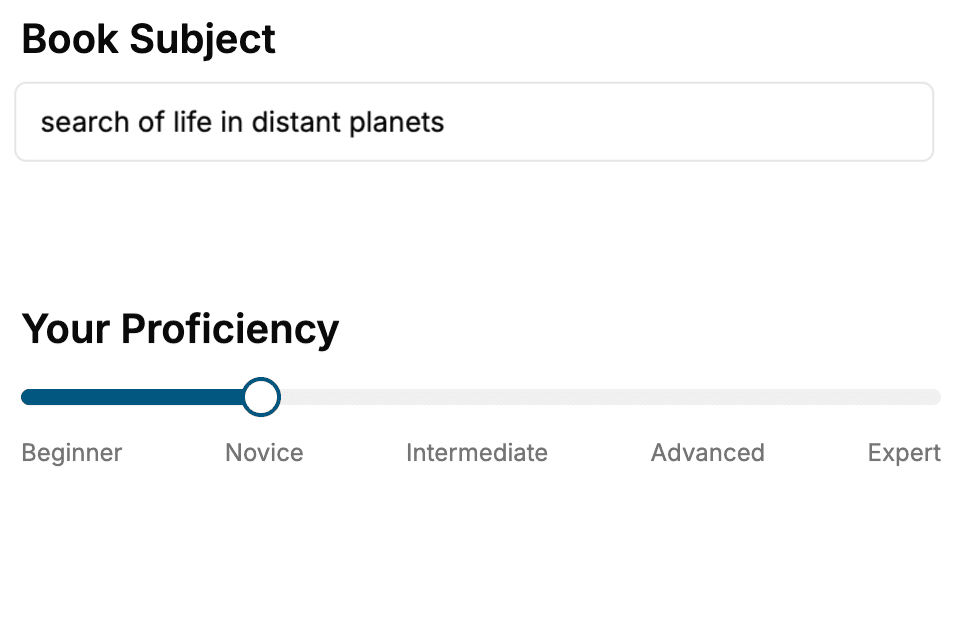
Select the focus of your Computer Science and Algorithms book and share your background
- 2. Personalize your book
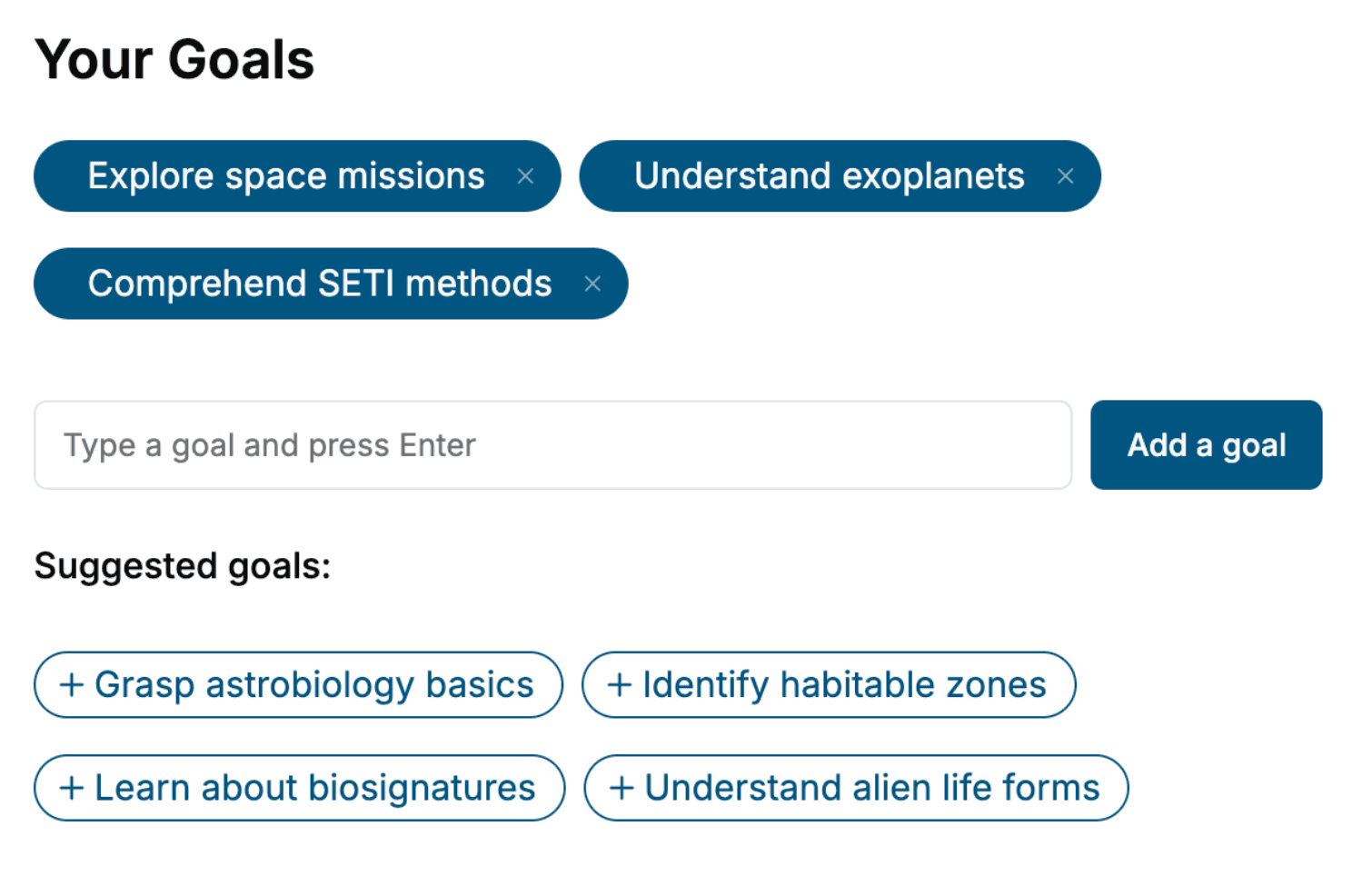
Specify your goals and choose sub-topics to include
- 3. Get your tailored book
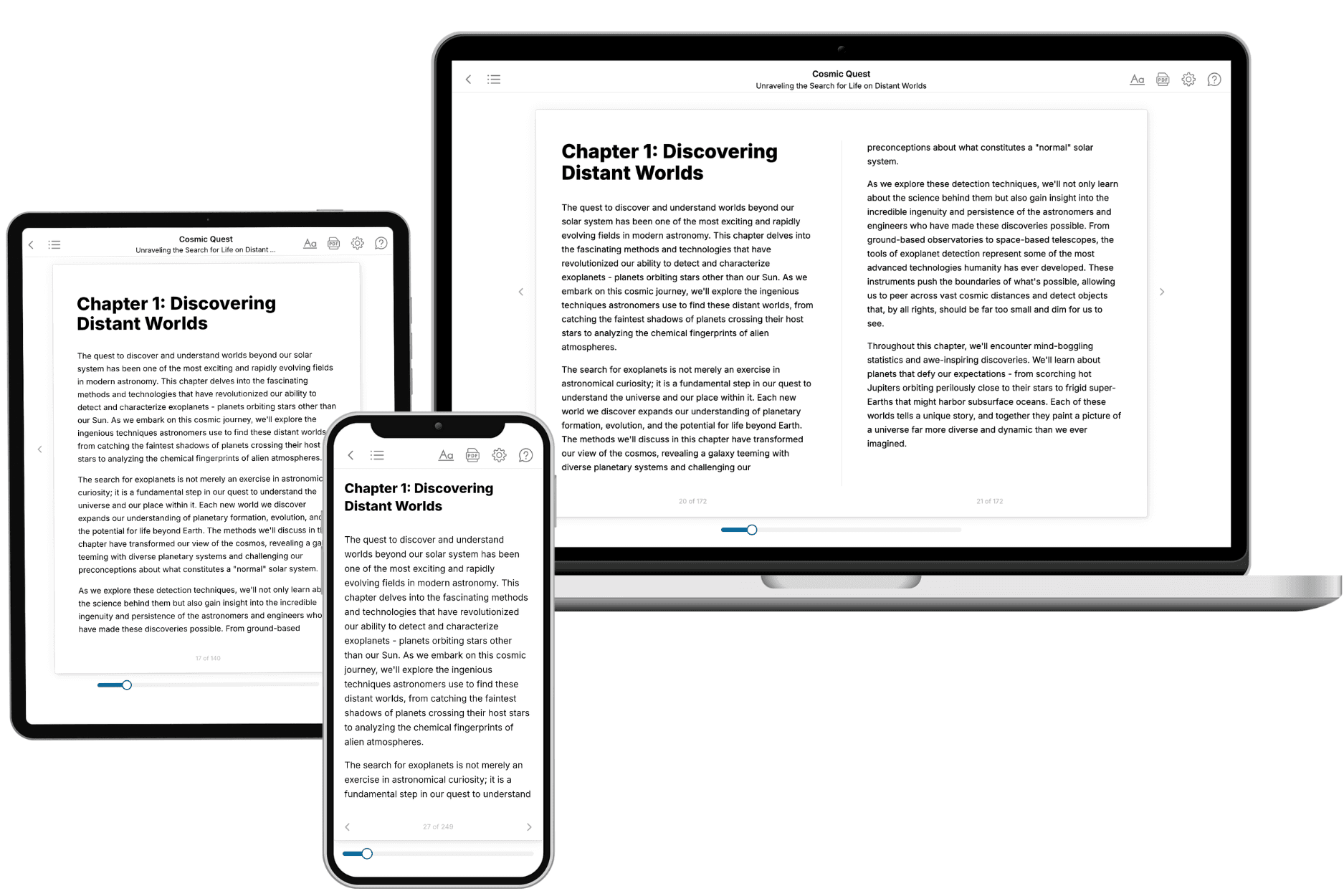
Your book is ready in 10 minutes. Read it online, download as EPUB or PDF, or send to Kindle.
Frequently asked questions
- What is TailoredRead?
TailoredRead creates complete, full-length nonfiction ebooks, written specifically for you. Tell us what you want to learn and why, and TailoredRead writes you a complete ebook on it, with charts, tables, and diagrams throughout. Read it online, on Kindle, or on any e-reader, or download it as a PDF or EPUB. Every book is written fresh the day you order it.
- How is the book tailored to me?
Before anything is written, you answer a few short questions about your goals, your background, and the topics you care about. Your book is then planned around your answers: written at your level, focused on your goals, and covering the topics you chose, instead of the one-size-fits-all book a store sells everyone.
- Will it read like generic AI content?
No. Your book isn't a chat transcript: it's planned chapter by chapter before a single word is written, told in a clear book voice, and explains ideas visually with charts, tables, and diagrams. After writing, every book goes through an editorial pass that polishes chapters so the book reads consistent from start to finish. Judge for yourself: browse thousands of sample books on our Explore Books page.
- How accurate is the content?
Our AI first checks whether your subject needs live research. Niche and fast-moving subjects are researched before writing, and the book plan and chapters are grounded in what it finds. After writing, every book goes through a quality pass that checks its facts and consistency, and researched books list their sources in a Notes section at the back.
- How long is the book?
You choose the length: Comprehensive (250-300 pages), Detailed (150-200 pages), Essential (70-100 pages), or Short (30-50 pages).
- Does the book include visuals?
Yes. Every book includes charts, tables, and diagrams: timelines, checklists, step-by-step guides, decision trees, comparison tables, matrices, and bar charts. A typical book includes dozens of these visual elements.
- Can I read it on Kindle? What formats can I download?
Yes. Every book can be read in our online reader or downloaded as a PDF or EPUB. The EPUB can be opened with Kindle, Apple Books, Kobo, and any e-reader. The Commercial and Author licenses also include an editable Word (DOCX) and Markdown download.
- How much does it cost?
About the price of a regular ebook. The exact price depends on your book's length and complexity, from $2 for the shortest books to $35 for the most comprehensive, and it's shown when you review your book, before you commit to anything. Each book is a one-time purchase, yours to keep, no subscription. Licenses that let you share, teach, or publish your book range from $35.99 to $49.99.
- Can I preview the book before purchasing?
Before you pay, you'll see what your book will cover: the title, a detailed description, the estimated length, and the complete chapter-by-chapter table of contents, so you know what you're getting before you decide. The full text itself is written after you purchase.
- How long does it take to create a book?
About 10 minutes. You can start reading the opening chapters while the rest is still being written.