Optimization Methods in Algebraic Systems
Convex analysis, integer programming and nonlinear techniques explained
Elevate your mathematical prowess with "Mastering Optimization: A Practical Guide to Linear Algebra Applications." This comprehensive guide bridges the gap between theoretical concepts and real-world applications, empowering you to tackle complex optimization problems with confidence.
253 pages13 chaptersMar 4, 2025Mathematics
About this book
Dive deep into the world of linear algebra and discover how optimization methods can revolutionize your approach to problem-solving. You'll explore a wide range of techniques, from classical algorithms to cutting-edge methodologies, all presented in a clear, accessible manner that builds on your existing knowledge. Whether you're a student looking to excel in your studies or a professional aiming to enhance your analytical skills, this book provides the tools and insights you need. With a focus on practical applications, you'll learn how to apply optimization methods to diverse fields such as engineering, computer science, and data analysis. By the end of this journey, you'll possess a powerful set of skills that will set you apart in the ever-evolving landscape of mathematical problem-solving.
Table of contents
- IntroductionOverview of Optimization in Linear Algebra, Structure of the Book, Mathematical Prerequisites, Importance of Optimization in Modern ApplicationsRead below
- Chapter 1: Foundations of Linear AlgebraVector Spaces and Subspaces, Linear Transformations and Matrices, Eigenvalues and Eigenvectors, Inner Product Spaces
- Chapter 2: Basic Concepts of OptimizationDefinition and Types of Optimization Problems, Feasible Region and Constraints, Objective Function and Optimization Criteria, Local and Global Optima
- Chapter 3: Linear ProgrammingFormulating Linear Programming Problems, Graphical Method for Two Variables, The Simplex Method, Duality Theory in Linear Programming
- Chapter 4: Unconstrained OptimizationGradient Descent Method, Newton's Method, Quasi-Newton Methods, Conjugate Gradient Method
- Chapter 5: Constrained OptimizationMethod of Lagrange Multipliers, Karush-Kuhn-Tucker (KKT) Conditions, Penalty and Barrier Methods, Sequential Quadratic Programming
- Chapter 6: Convex OptimizationConvex Sets and Convex Functions, Convex Optimization Problems, Duality in Convex Optimization, Interior Point Methods
- Chapter 7: Integer ProgrammingFormulating Integer Linear Programming Problems, Branch and Bound Algorithm, Cutting Plane Methods, Dynamic Programming Approach
- Chapter 8: Nonlinear OptimizationNonlinear Least Squares Problems, Trust Region Methods, Line Search Methods, Nonlinear Conjugate Gradient Methods
- Chapter 9: Global OptimizationSimulated Annealing, Genetic Algorithms, Particle Swarm Optimization, Differential Evolution
- Chapter 10: Multi-Objective OptimizationPareto Optimality, Weighted Sum Method, ε-Constraint Method, Multi-Objective Evolutionary Algorithms
- Chapter 11: Large-Scale OptimizationDecomposition Methods, Coordinate Descent Methods, Stochastic Gradient Methods, Parallel and Distributed Optimization
- Chapter 12: Optimization in Machine LearningOptimization in Regression Problems, Optimization in Classification Problems, Optimization for Neural Network Training, Support Vector Machines and Optimization
- Chapter 13: Numerical Considerations in OptimizationFloating-Point Arithmetic and Precision, Ill-Conditioning and Stability, Convergence Criteria and Stopping Conditions, Software Packages for Optimization
- ConclusionFuture Trends in Optimization, Challenges and Open Problems
- AppendixReview of Matrix Calculus, Proofs of Important Convexity Results
Introduction
Welcome to "Mastering Optimization: A Practical Guide to Linear Algebra Applications." This book is designed to be your comprehensive guide to understanding and applying optimization methods in the context of linear algebra. As you embark on this journey, you'll discover how optimization techniques can revolutionize your approach to problem-solving, enhance your analytical capabilities, and provide you with powerful tools applicable across various fields of mathematics and its related disciplines.
Optimization is a fundamental concept in mathematics, particularly in linear algebra, with far-reaching applications in science, engineering, economics, and numerous other domains. At its core, optimization is about finding the best solution from a set of possible alternatives. This could mean maximizing profits, minimizing costs, or finding the most efficient path through a complex system. The methods and techniques you'll learn in this book will equip you with the skills to tackle these challenges head-on, transforming abstract mathematical concepts into practical, real-world solutions.
Throughout this book, we'll bridge the gap between theoretical foundations and practical applications. You'll not only learn the mathematical underpinnings of various optimization techniques but also understand how to implement these methods to solve real-world problems. Whether you're a student looking to excel in your studies or a professional aiming to enhance your problem-solving toolkit, this book will provide you with the knowledge and skills to stand out in the field of mathematical optimization.
Overview of Optimization in Linear Algebra
Optimization in linear algebra is a vast and dynamic field that encompasses a wide range of techniques and methodologies. At its core, it involves finding the best solution to a problem within a given set of constraints. This process typically involves maximizing or minimizing a specific objective function, which is a mathematical expression representing the goal of the optimization problem. The power of linear algebra in optimization lies in its ability to represent complex systems and relationships through matrices and vectors, allowing for efficient computation and analysis of high-dimensional problems.
The field of optimization in linear algebra has evolved significantly over the past century, driven by advancements in mathematical theory, computational capabilities, and the increasing complexity of real-world problems. Early developments in linear programming, such as George Dantzig's simplex method introduced in the 1940s, laid the foundation for modern optimization techniques. These methods have since expanded to include more sophisticated approaches like interior point methods, which revolutionized the field in the 1980s by providing polynomial-time algorithms for linear programming problems[1].
The application of optimization in linear algebra extends far beyond simple linear systems. Nonlinear optimization techniques have been developed to handle more complex, real-world scenarios where the relationships between variables are not strictly linear. These methods, including gradient descent, Newton's method, and their variants, form the backbone of many modern machine learning algorithms and are crucial in fields such as data science and artificial intelligence.
Integer programming, another important branch of optimization, deals with problems where some or all of the variables are restricted to integer values. This area has significant practical applications in operations research, logistics, and scheduling problems. The development of efficient algorithms for integer programming, such as branch and bound and cutting plane methods, has enabled the solution of increasingly complex discrete optimization problems.
Convex optimization, a subfield that deals with minimizing convex functions over convex sets, has gained prominence due to its unique properties that simplify problem-solving. Many real-world problems can be formulated as convex optimization problems, and efficient algorithms exist for solving them. The theory of convex optimization provides a powerful framework for understanding and solving a wide range of problems in signal processing, control theory, and machine learning[2].
In recent years, the focus has shifted towards large-scale optimization problems, driven by the explosion of data in the digital age. This has led to the development of stochastic and online optimization methods that can handle massive datasets and streaming data. Parallel and distributed optimization algorithms have also emerged to leverage the power of modern computing architectures, enabling the solution of previously intractable problems.
The interplay between optimization and other areas of mathematics, particularly numerical analysis and computational mathematics, has been crucial in advancing the field. Understanding the numerical properties of optimization algorithms, such as convergence rates, stability, and sensitivity to input data, is essential for their effective implementation and application to real-world problems.
As you progress through this book, you'll gain a deep understanding of these various aspects of optimization in linear algebra. You'll learn how to formulate optimization problems, choose appropriate solution methods, and interpret the results in meaningful ways. This knowledge will empower you to tackle complex problems across various domains, from engineering design to financial modeling, and from scientific computing to artificial intelligence.
Structure of the Book
This book is structured to provide a comprehensive and logical progression through the field of optimization in linear algebra. Each chapter builds upon the knowledge gained in previous sections, gradually increasing in complexity and depth. This approach allows you to develop a solid foundation in the basics before tackling more advanced topics. The structure is designed to accommodate both sequential reading and targeted study of specific topics, depending on your needs and interests.
We begin with a review of the foundations of linear algebra in Chapter 1. This chapter serves as a refresher on key concepts such as vector spaces, linear transformations, eigenvalues, and inner product spaces. Even if you're familiar with these topics, this review will help establish a common language and notation that will be used throughout the book. It's crucial to have a solid grasp of these fundamentals as they form the bedrock upon which more complex optimization techniques are built.
Chapter 2 introduces the basic concepts of optimization. Here, you'll learn about the different types of optimization problems, the concept of a feasible region, constraints, objective functions, and the distinction between local and global optima. This chapter lays the groundwork for understanding how optimization problems are formulated and the challenges involved in solving them.
Chapters 3 through 5 focus on linear programming and its extensions. Linear programming is one of the most widely used optimization techniques and forms the basis for many advanced methods. You'll learn how to formulate linear programming problems, solve them using graphical methods and the simplex algorithm, and understand the powerful concept of duality. The chapters on unconstrained and constrained optimization introduce gradient-based methods, which are fundamental to many modern optimization algorithms.
In Chapter 6, we delve into convex optimization, a special class of problems with unique properties that make them particularly amenable to solution. This chapter builds on the concepts of convexity introduced earlier and explores how these properties can be exploited to develop efficient solution methods. You'll learn about interior point methods, which have revolutionized the field of optimization in recent decades.
Chapter 7 extends our discussion to integer programming, dealing with problems where variables are restricted to integer values. This chapter introduces techniques like branch and bound, cutting plane methods, and dynamic programming, which are crucial for solving many real-world discrete optimization problems.
Chapters 8 and 9 cover nonlinear optimization and global optimization techniques. These chapters introduce more advanced methods for dealing with complex, non-convex problems where finding the global optimum is challenging. You'll learn about trust region methods, line search strategies, and heuristic approaches like simulated annealing and genetic algorithms.
Chapter 10 introduces multi-objective optimization, where multiple, often conflicting, objectives need to be optimized simultaneously. This chapter explores concepts like Pareto optimality and introduces methods for handling these complex problems.
In Chapter 11, we address the challenges of large-scale optimization, which has become increasingly important in the age of big data. You'll learn about decomposition methods, coordinate descent, and stochastic gradient techniques that enable the solution of massive optimization problems.
Chapter 12 focuses on the application of optimization techniques in machine learning, one of the most exciting and rapidly evolving fields in modern mathematics and computer science. You'll see how optimization underpins many machine learning algorithms and how techniques like stochastic gradient descent have enabled breakthroughs in areas such as deep learning.
The final chapter, Chapter 13, deals with numerical considerations in optimization. This practical chapter discusses issues like floating-point arithmetic, ill-conditioning, and convergence criteria, which are crucial for implementing optimization algorithms effectively in real-world scenarios.
Throughout the book, you'll find numerous examples, case studies, and exercises that illustrate the concepts and techniques being discussed. These practical elements are designed to help you bridge the gap between theory and application, ensuring that you not only understand the mathematical principles but also know how to apply them to solve real-world problems.
By the end of this book, you'll have a comprehensive understanding of optimization methods in linear algebra, from foundational concepts to cutting-edge techniques. You'll be equipped with the knowledge and skills to tackle a wide range of optimization problems, analyze their properties, choose appropriate solution methods, and implement them effectively. This expertise will be invaluable whether you're pursuing advanced studies in mathematics, working in fields like engineering or data science, or applying optimization techniques in business or industry.
Mathematical Prerequisites
To make the most of this book and fully grasp the concepts presented, it's important to have a solid foundation in certain mathematical areas. While the book is designed to be as self-contained as possible, familiarity with some key topics will greatly enhance your understanding and ability to apply the optimization techniques discussed. This section outlines the primary mathematical prerequisites and provides some guidance on how to approach any gaps in your knowledge.
First and foremost, a strong grounding in linear algebra is essential. You should be comfortable with concepts such as vectors, matrices, linear transformations, eigenvalues, and eigenvectors. Understanding vector spaces, subspaces, and inner product spaces is also crucial. If you need to refresh your knowledge in these areas, Chapter 1 provides a comprehensive review. However, if you find this material entirely new, it may be beneficial to study a dedicated linear algebra textbook before diving into the more advanced topics in this book[3].
Calculus is another fundamental prerequisite. You should be familiar with differential calculus, including concepts such as limits, continuity, differentiation, and partial derivatives. An understanding of integral calculus is also helpful, particularly when dealing with certain optimization problems and their applications. Multivariable calculus, especially the ability to work with gradients and Hessian matrices, is crucial for many of the optimization techniques covered in this book. If you need to brush up on these topics, there are many excellent calculus textbooks available that cover both single-variable and multivariable calculus[4].
Basic knowledge of probability and statistics is beneficial, particularly when we discuss optimization in the context of machine learning and data analysis. Familiarity with concepts such as random variables, probability distributions, expectation, and basic statistical inference will help you understand the stochastic aspects of certain optimization problems and algorithms. If you need to strengthen your background in this area, consider reviewing a introductory probability and statistics textbook[5].
Some exposure to numerical analysis and computational methods is also advantageous. While not strictly necessary, understanding concepts such as numerical stability, error analysis, and iterative methods will deepen your appreciation of the practical aspects of implementing optimization algorithms. If you're not familiar with these topics, don't worry - the book will introduce relevant concepts as needed, but having some background will certainly be helpful.
In terms of mathematical maturity, you should be comfortable with abstract reasoning, mathematical proofs, and formal definitions. The ability to think logically and analytically is crucial for understanding the theoretical foundations of optimization methods. If you've taken upper-level undergraduate mathematics courses, you likely have the necessary level of mathematical maturity. If you find yourself struggling with the more theoretical aspects, it may be helpful to work through some introductory real analysis problems to develop your mathematical reasoning skills.
Programming skills, while not strictly a mathematical prerequisite, can be extremely valuable when studying optimization. Many of the algorithms and techniques discussed in this book are best understood through implementation and experimentation. Familiarity with a programming language such as Python, MATLAB, or Julia can greatly enhance your learning experience. These languages have extensive libraries for numerical computing and optimization, which can be useful for implementing the algorithms discussed in the book.
If you find that you're lacking in any of these areas, don't be discouraged. The book is designed to be accessible to readers with a range of backgrounds, and each chapter includes references to additional resources for further study. You may find it helpful to keep a linear algebra and calculus textbook on hand as you work through the material. Additionally, online resources such as Khan Academy, MIT OpenCourseWare, and Coursera offer excellent free courses that can help you fill in any gaps in your mathematical knowledge.
Remember, learning is a journey, and it's natural to encounter challenges along the way. If you find certain concepts difficult, take the time to work through them carefully, practice with examples, and seek additional explanations if needed. The effort you put into building a strong foundation will pay off as you delve deeper into the fascinating world of optimization in linear algebra.
Importance of Optimization in Modern Applications
Optimization has become an indispensable tool in numerous fields, driving innovation and efficiency across a wide spectrum of industries and scientific disciplines. Its importance in modern applications cannot be overstated, as it provides a systematic approach to decision-making and problem-solving in complex systems. This section explores the critical role of optimization in various domains, highlighting how the techniques you'll learn in this book are applied to solve real-world challenges.
In the realm of engineering and design, optimization plays a crucial role in creating more efficient and effective systems. For example, in structural engineering, optimization techniques are used to design buildings and bridges that maximize strength while minimizing material usage. This not only reduces costs but also contributes to sustainability by minimizing resource consumption. In aerospace engineering, optimization is employed to design aircraft with improved fuel efficiency, reduced noise pollution, and enhanced aerodynamic performance. The field of robotics heavily relies on optimization for path planning, motion control, and task scheduling, enabling robots to operate more efficiently and safely in complex environments[6].
The financial sector has long been a major adopter of optimization techniques. Portfolio optimization, based on the work of Harry Markowitz, uses quadratic programming to balance risk and return in investment portfolios. This approach has revolutionized modern finance and forms the basis of many investment strategies. In risk management, optimization models are used to assess and mitigate financial risks, helping institutions comply with regulatory requirements and protect against market volatility. Algorithmic trading, which now accounts for a significant portion of market transactions, relies heavily on optimization algorithms to make split-second trading decisions based on vast amounts of market data.
In the rapidly evolving field of machine learning and artificial intelligence, optimization lies at the heart of many algorithms. The training of neural networks, which power many of today's AI applications, is fundamentally an optimization problem. Techniques like stochastic gradient descent, which you'll learn about in this book, are crucial for efficiently training large-scale neural networks. In natural language processing, optimization is used for tasks such as text classification, sentiment analysis, and machine translation. Computer vision applications, including facial recognition and object detection, also rely heavily on optimization techniques to improve accuracy and efficiency.
The healthcare industry has seen significant advancements through the application of optimization techniques. In medical imaging, optimization algorithms are used to reconstruct high-quality images from raw data in techniques like computed tomography (CT) and magnetic resonance imaging (MRI). Treatment planning for cancer radiation therapy uses optimization to determine the optimal radiation dose distribution, maximizing tumor control while minimizing damage to healthy tissue. In drug discovery, optimization techniques are employed to design molecules with desired properties, potentially accelerating the development of new medications.
In the field of operations research, optimization is used to solve complex logistical and scheduling problems. Supply chain management relies on optimization to minimize costs and maximize efficiency in the movement of goods from suppliers to consumers. In transportation, optimization algorithms are used for route planning, traffic flow management, and airline scheduling. The rise of e-commerce has led to new challenges in warehouse management and last-mile delivery, where optimization plays a crucial role in meeting consumer demands for fast and efficient service.
Energy systems and environmental management are increasingly turning to optimization techniques to address global challenges. In power systems, optimization is used for load balancing, energy dispatch, and integrating renewable energy sources into the grid. Environmental scientists use optimization models to study climate change, design conservation strategies, and manage natural resources. Urban planners employ optimization techniques to design more sustainable and livable cities, optimizing factors such as traffic flow, energy usage, and green space allocation.
The telecommunications industry relies heavily on optimization for network design and management. Optimization algorithms are used to determine the optimal placement of cell towers, allocate bandwidth efficiently, and route data through complex networks. With the advent of 5G technology and the Internet of Things (IoT), optimization techniques are becoming even more critical in managing the vast amounts of data and ensuring seamless connectivity.
In the realm of scientific research, optimization techniques are essential for analyzing experimental data, fitting models to observations, and designing experiments. Fields such as physics, chemistry, and biology use optimization to solve inverse problems, where the goal is to infer the causes from observed effects. In computational science, optimization is crucial for developing efficient algorithms and improving the performance of scientific simulations.
As you progress through this book, you'll gain a deeper appreciation for how the optimization techniques you're learning are applied in these diverse fields. The ability to formulate and solve optimization problems is a powerful skill that can be applied to a wide range of challenges across various industries and scientific disciplines. By mastering these techniques, you'll be well-equipped to contribute to solving some of the most pressing problems facing society today, from improving energy efficiency to advancing medical treatments and beyond.
The importance of optimization in modern applications continues to grow as systems become more complex and data-driven decision-making becomes the norm. As you embark on this journey to master optimization in linear algebra, remember that the skills and knowledge you're acquiring have the potential to make significant impacts across numerous fields. Whether you're interested in pursuing a career in technology, finance, healthcare, or scientific research, a strong foundation in optimization will be an invaluable asset in your professional toolkit.
Notes
Introduction
- 1. N. Karmarkar, "A new polynomial-time algorithm for linear programming," Combinatorica, 1984
- 2. S. Boyd and L. Vandenberghe, Convex optimization, Cambridge university press, 2004
- 3. G. Strang, Introduction to Linear Algebra, Wellesley-Cambridge Press, 2016
- 4. J. Stewart, Calculus: Early Transcendentals, Cengage Learning, 2015
- 5. R. E. Walpole and others, Probability and statistics for engineers and scientists, Pearson Education, 2011
- 6. J. Nocedal and S. Wright, "Numerical optimization," Springer Science & Business Media, 2006
This is the end of the free sample. The full book has 13 chapters.
Want this book written for you?
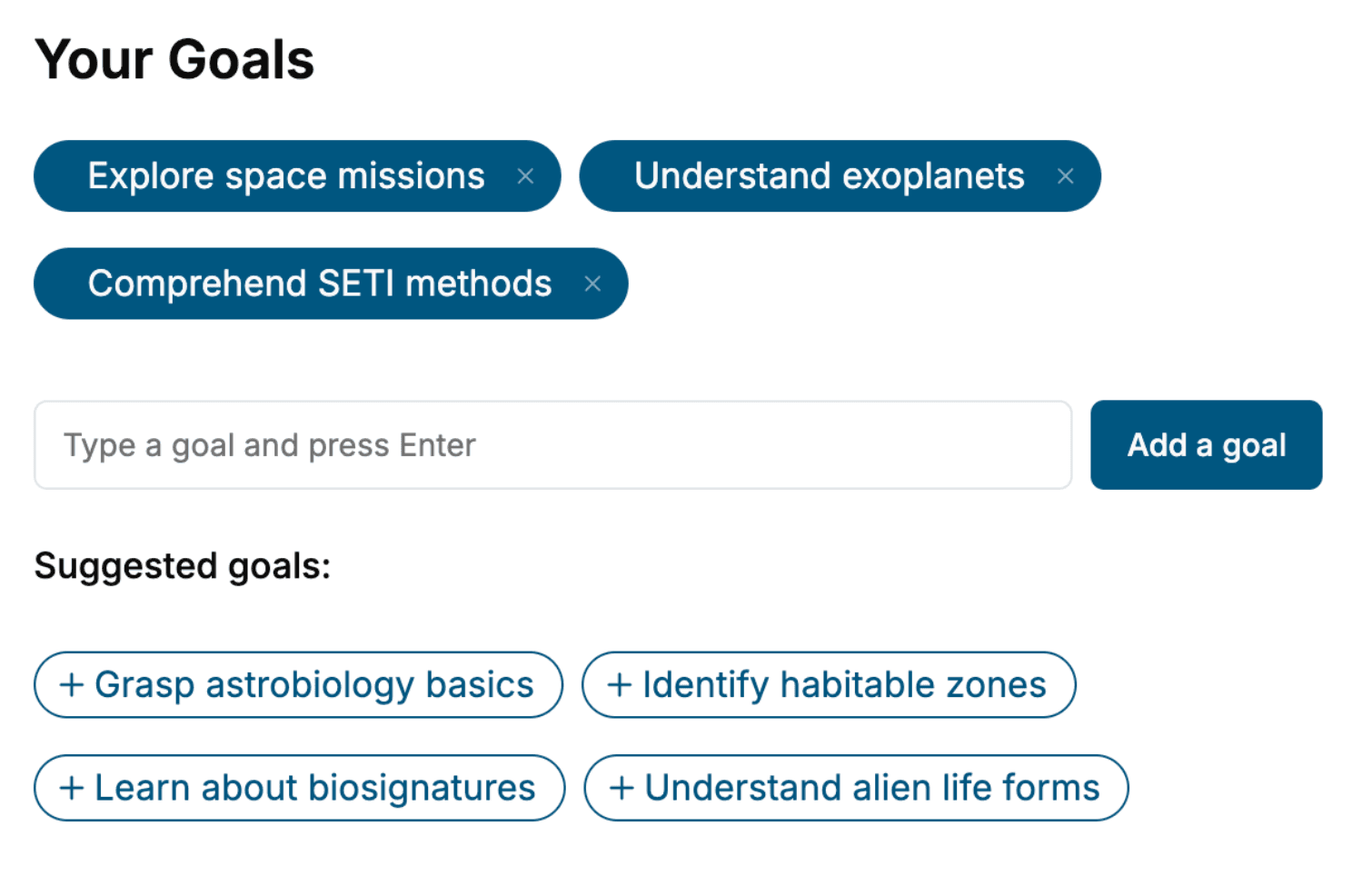
Tell us your goals and background, and get your own version of this book, tailored by AI to you.


Benefits of AI-tailored books
- Read one book, not ten:
- all the Mathematics knowledge you need, gathered into a single book.
- Save days of learning:
- tell us your goals, choose your topics, and the whole book is built around them.
- Learn effortlessly:
- Mathematics book written for your specific background and expertise.
- Understand at a glance:
- includes charts, tables, timelines, checklists, decision trees, and more.
- Stay current:
- written the day you order it, not years ago.
- Trust what you read:
- every book is checked for accuracy, with real research when your subject needs it.
Create your unique book in 3 steps
- 1. Select your focus
Select the focus of your Mathematics book and share your background
- 2. Personalize your book
Specify your goals and choose sub-topics to include
- 3. Get your tailored book
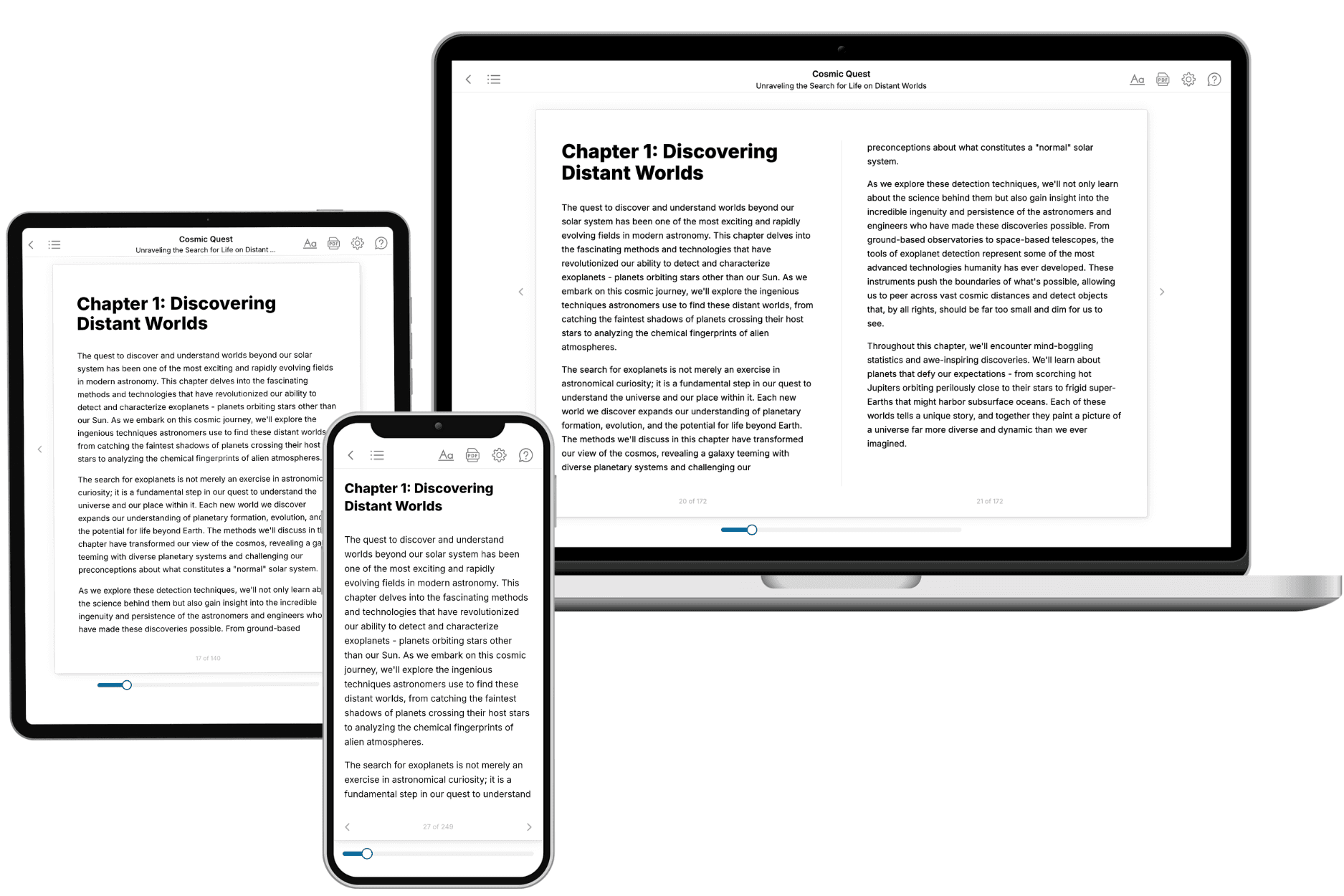
Your book is ready in 10 minutes. Read it online, download as EPUB or PDF, or send to Kindle.

Frequently asked questions
- What is TailoredRead?
TailoredRead creates complete, full-length nonfiction ebooks, written specifically for you. Tell us what you want to learn and why, and TailoredRead writes you a complete ebook on it, with charts, tables, and diagrams throughout. Read it online, on Kindle, or on any e-reader, or download it as a PDF or EPUB. Every book is written fresh the day you order it.
- How is the book tailored to me?
Before anything is written, you answer a few short questions about your goals, your background, and the topics you care about. Your book is then planned around your answers: written at your level, focused on your goals, and covering the topics you chose, instead of the one-size-fits-all book a store sells everyone.
- Will it read like generic AI content?
No. Your book isn't a chat transcript: it's planned chapter by chapter before a single word is written, told in a clear book voice, and explains ideas visually with charts, tables, and diagrams. After writing, every book goes through an editorial pass that polishes chapters so the book reads consistent from start to finish. Judge for yourself: browse thousands of sample books on our Explore Books page.
- How accurate is the content?
Our AI first checks whether your subject needs live research. Niche and fast-moving subjects are researched before writing, and the book plan and chapters are grounded in what it finds. After writing, every book goes through a quality pass that checks its facts and consistency, and researched books list their sources in a Notes section at the back.
- How long is the book?
You choose the length: Comprehensive (250-300 pages), Detailed (150-200 pages), Essential (70-100 pages), or Short (30-50 pages).
- Does the book include visuals?
Yes. Every book includes charts, tables, and diagrams: timelines, checklists, step-by-step guides, decision trees, comparison tables, matrices, and bar charts. A typical book includes dozens of these visual elements.
- Can I read it on Kindle? What formats can I download?
Yes. Every book can be read in our online reader or downloaded as a PDF or EPUB. The EPUB can be opened with Kindle, Apple Books, Kobo, and any e-reader. The Commercial and Author licenses also include an editable Word (DOCX) and Markdown download.
- How much does it cost?
About the price of a regular ebook. The exact price depends on your book's length and complexity, from $2 for the shortest books to $35 for the most comprehensive, and it's shown when you review your book, before you commit to anything. Each book is a one-time purchase, yours to keep, no subscription. Licenses that let you share, teach, or publish your book range from $35.99 to $49.99.
- Can I preview the book before purchasing?
Before you pay, you'll see what your book will cover: the title, a detailed description, the estimated length, and the complete chapter-by-chapter table of contents, so you know what you're getting before you decide. The full text itself is written after you purchase.
- How long does it take to create a book?
About 10 minutes. You can start reading the opening chapters while the rest is still being written.