Mastering Pose Estimation with PyTorch
From Fundamentals to Advanced Techniques
Harness the power of pose estimation in your computer vision projects.
284 pages14 chaptersJan 29, 2025Computer Vision
About this book
This comprehensive guide takes you from the basics of pose estimation to advanced implementation techniques using PyTorch. You'll gain hands-on experience in building, training, and optimizing pose estimation models, enabling you to create robust applications for human pose tracking, gesture recognition, and motion analysis. Through practical examples and real-world case studies, you'll learn how to overcome common challenges in pose estimation, such as occlusions, varying lighting conditions, and complex poses. Discover cutting-edge architectures and best practices that will elevate your skills and help you stay ahead in this rapidly evolving field. By the end of this book, you'll have the confidence and expertise to implement state-of-the-art pose estimation solutions in your own projects, opening up new possibilities in fields like augmented reality, robotics, and human-computer interaction.
Table of contents
- IntroductionWhat is Pose Estimation?, Importance and Applications of Pose Estimation, Introduction to PyTorch for Pose Estimation, Book Structure and How to Use ItRead below
- Chapter 1: Fundamentals of Pose EstimationUnderstanding Human Anatomy for Pose Estimation, Keypoints and Skeleton Representations, 2D vs 3D Pose Estimation, Common Challenges in Pose Estimation
- Chapter 2: PyTorch Basics for Pose EstimationTensor Operations and Manipulations, Automatic Differentiation with Autograd, Building Neural Networks in PyTorch, Optimization and Training Techniques
- Chapter 3: Data Preparation for Pose EstimationCommon Pose Estimation Datasets, Data Loading and Preprocessing in PyTorch, Data Augmentation Techniques, Keypoint Annotation and Labeling
- Chapter 4: Single-Person Pose EstimationHeatmap-based Approaches, Regression-based Approaches, Implementing Stacked Hourglass Networks, Simple Baseline for Human Pose Estimation
- Chapter 5: Multi-Person Pose EstimationTop-down Approaches, Bottom-up Approaches, Implementing OpenPose in PyTorch, Associative Embedding for Multi-person Pose Estimation
- Chapter 6: Advanced Pose Estimation ArchitecturesHigh-Resolution Network (HRNet), Pose Residual Network (PRN), Transformer-based Pose Estimation, Graph Convolutional Networks for Pose Estimation
- Chapter 7: 3D Pose EstimationLifting 2D Poses to 3D, Volumetric Regression Approaches, Multi-view 3D Pose Estimation, Temporal 3D Pose Estimation
- Chapter 8: Loss Functions and Training StrategiesMean Squared Error (MSE) Loss, L1 Loss and Smooth L1 Loss, Wing Loss for Pose Estimation, Adversarial Training for Pose Estimation
- Chapter 9: Optimization TechniquesLearning Rate Scheduling, Batch Normalization and Layer Normalization, Regularization Techniques, Transfer Learning for Pose Estimation
- Chapter 10: Real-time Pose EstimationModel Compression Techniques, Quantization in PyTorch, Network Pruning for Faster Inference, Deploying Models on Mobile Devices
- Chapter 11: Evaluation Metrics and BenchmarkingPercentage of Correct Keypoints (PCK), Object Keypoint Similarity (OKS), Mean Per Joint Position Error (MPJPE), Benchmarking on Standard Datasets
- Chapter 12: Handling Challenges in Pose EstimationDealing with Occlusions, Handling Varying Lighting Conditions, Estimating Unusual or Extreme Poses, Pose Estimation in Crowded Scenes
- Chapter 13: Applications and Case StudiesHuman Action Recognition, Sports Performance Analysis, Character Animation and Motion Capture, Augmented and Virtual Reality Applications
- Chapter 14: Future Directions in Pose EstimationWeakly Supervised Pose Estimation, Self-Supervised Learning for Pose Estimation, Federated Learning for Privacy-Preserving Pose Estimation, Emerging Trends and Research Directions
- Conclusion
- Glossary
- Further Reading
Introduction
Welcome to "Mastering Pose Estimation with PyTorch: From Fundamentals to Advanced Techniques." This comprehensive guide is designed to take you on a journey through the fascinating world of pose estimation, equipping you with the knowledge and skills to implement cutting-edge solutions using PyTorch. Whether you're a software developer looking to expand your computer vision expertise or a machine learning enthusiast eager to delve into the intricacies of pose estimation, this book will serve as your roadmap to mastery.
Pose estimation has emerged as a crucial component in various computer vision applications, revolutionizing fields such as augmented reality, robotics, and human-computer interaction. As you progress through this book, you'll gain a deep understanding of the underlying principles, explore state-of-the-art architectures, and learn how to overcome common challenges in implementing robust pose estimation models. By the end of your journey, you'll be well-equipped to create innovative solutions that push the boundaries of what's possible in human pose tracking, gesture recognition, and motion analysis.
Throughout this introduction, we'll lay the groundwork for your exploration of pose estimation. We'll begin by defining what pose estimation is and why it's such a critical area of study. Then, we'll delve into the wide-ranging applications of this technology, showcasing its potential to transform industries and improve our daily lives. We'll also provide an overview of PyTorch, the powerful deep learning framework that will be our tool of choice for implementing pose estimation models. Finally, we'll outline the structure of this book and offer guidance on how to make the most of its contents, ensuring that you're well-prepared for the exciting journey ahead.
What is Pose Estimation?
Pose estimation is a computer vision technique that aims to identify and track the position and orientation of human body parts in images or video sequences. At its core, pose estimation involves detecting key points or joints on the human body, such as shoulders, elbows, hips, and knees, and then inferring the spatial relationships between these points to reconstruct the overall pose of the subject. This process allows computers to understand and interpret human body language, movements, and gestures, opening up a wide range of applications across various domains.
The field of pose estimation has evolved significantly over the years, driven by advancements in deep learning and computer vision algorithms. Early approaches relied on hand-crafted features and geometric models to estimate poses, but these methods often struggled with complex scenarios and real-world variations. With the advent of deep learning, particularly convolutional neural networks (CNNs), pose estimation has achieved remarkable improvements in accuracy and robustness. Modern pose estimation techniques can handle challenging conditions such as occlusions, varying lighting, and multiple people in a scene, making them suitable for real-world applications.
Pose estimation can be broadly categorized into two main types: 2D pose estimation and 3D pose estimation. 2D pose estimation focuses on locating body keypoints in the image plane, providing x and y coordinates for each joint. This approach is widely used in applications that primarily require analysis of body posture and movement in a single plane. On the other hand, 3D pose estimation aims to reconstruct the full three-dimensional pose of the human body, including depth information. This more complex task enables a deeper understanding of human motion and is particularly valuable in applications such as virtual reality, biomechanics analysis, and advanced motion capture systems.
Another important distinction in pose estimation is between single-person and multi-person approaches. Single-person pose estimation algorithms are designed to detect and track the pose of a single individual in an image or video frame. These methods are often simpler and more efficient, making them suitable for applications where only one person is expected to be present or when individual poses can be easily isolated. Multi-person pose estimation, on the other hand, tackles the more challenging task of simultaneously detecting and tracking the poses of multiple individuals in a scene. This approach requires sophisticated algorithms to handle occlusions, overlapping body parts, and varying scales of people in the image.
The process of pose estimation typically involves several key steps. First, the input image or video frame is processed to detect potential human subjects. This can be done using object detection algorithms or specialized person detectors. Next, the pose estimation model analyzes the detected regions to identify key body joints or keypoints. These keypoints are then connected to form a skeleton-like representation of the human body. Advanced models may also incorporate temporal information from video sequences to improve the stability and accuracy of pose estimates over time.
One of the fundamental challenges in pose estimation is dealing with the high degree of variability in human poses and appearances. Factors such as clothing, body shape, camera angle, and lighting conditions can all significantly impact the performance of pose estimation algorithms. To address these challenges, modern approaches often employ data augmentation techniques, multi-scale processing, and attention mechanisms to enhance the robustness and generalization capabilities of the models.
As the field of pose estimation continues to advance, researchers are exploring new directions to push the boundaries of what's possible. Some areas of active research include weakly supervised and self-supervised learning approaches, which aim to reduce the reliance on large annotated datasets for training. Another emerging trend is the integration of pose estimation with other computer vision tasks, such as action recognition and scene understanding, to create more comprehensive and context-aware systems.
In the context of this book, we'll be focusing on implementing pose estimation models using PyTorch, a popular deep learning framework known for its flexibility and ease of use. PyTorch provides a rich set of tools and libraries that make it well-suited for developing and experimenting with cutting-edge pose estimation architectures. As you progress through the chapters, you'll gain hands-on experience in building, training, and optimizing various pose estimation models, from simple baselines to advanced state-of-the-art architectures.
By mastering pose estimation techniques, you'll be equipped to tackle a wide range of real-world problems and create innovative applications. Whether you're interested in developing interactive fitness applications, improving sports performance analysis, enhancing augmented reality experiences, or advancing robotics and human-computer interaction, the skills you'll acquire in this book will serve as a solid foundation for your future endeavors in the field of computer vision and artificial intelligence.
Importance and Applications of Pose Estimation
Pose estimation has emerged as a critical technology in the field of computer vision, with far-reaching implications across numerous industries and applications. Its ability to accurately interpret human body language and movement has opened up new possibilities for human-computer interaction, healthcare, entertainment, and beyond. As we delve into the importance and applications of pose estimation, it becomes clear why this technology has garnered so much attention and investment in recent years.
One of the most prominent areas where pose estimation has made a significant impact is in the field of augmented reality (AR) and virtual reality (VR). By accurately tracking human poses, AR and VR systems can create more immersive and interactive experiences. For example, in gaming applications, pose estimation allows players to control their in-game avatars using natural body movements, providing a more intuitive and engaging gameplay experience. In virtual try-on applications for fashion retail, pose estimation enables customers to see how clothing items would look on their bodies without physically trying them on, revolutionizing the online shopping experience[1].
In the healthcare sector, pose estimation has proven to be a valuable tool for various applications. Physical therapy and rehabilitation programs have been transformed by the ability to track and analyze patient movements accurately. Pose estimation algorithms can provide real-time feedback on exercise form, helping patients perform their rehabilitation exercises correctly and reducing the risk of further injury. Additionally, pose estimation is being used in gait analysis to diagnose and monitor conditions affecting mobility, such as Parkinson's disease or stroke recovery[2]. The non-invasive nature of camera-based pose estimation makes it an attractive option for long-term monitoring of patients in both clinical and home settings.
The sports industry has also embraced pose estimation technology for performance analysis and training. Coaches and athletes can use pose estimation systems to analyze techniques, identify areas for improvement, and track progress over time. In professional sports, this technology is being used to provide viewers with enhanced statistics and visualizations during broadcasts. For instance, pose estimation can be used to track player movements in team sports, providing insights into tactics and player performance. In individual sports like gymnastics or figure skating, pose estimation can assist judges in scoring performances more objectively by providing precise measurements of body angles and positions.
In the field of robotics and human-robot interaction, pose estimation plays a crucial role in enabling machines to understand and respond to human movements. This is particularly important in collaborative robotics, where humans and robots work together in shared spaces. By accurately detecting human poses, robots can adjust their movements to avoid collisions and work more efficiently alongside their human counterparts. In more advanced applications, pose estimation can enable robots to interpret human gestures and body language, leading to more natural and intuitive human-robot communication.
The entertainment and animation industries have also benefited greatly from advancements in pose estimation. Motion capture technology, which relies heavily on pose estimation algorithms, has revolutionized the way animated characters are brought to life in movies and video games. By capturing the nuanced movements of actors, animators can create more realistic and expressive digital characters. Furthermore, pose estimation is being used in live performances and interactive installations, allowing artists to create dynamic, responsive environments that react to the movements of performers or audience members.
In the realm of security and surveillance, pose estimation has found applications in crowd analysis and anomaly detection. By tracking the poses of multiple individuals in crowded scenes, security systems can identify unusual behavior patterns or potential threats. This technology is being deployed in public spaces such as airports and train stations to enhance safety and streamline operations. However, it's important to note that the use of pose estimation in surveillance contexts raises important ethical considerations regarding privacy and consent, which must be carefully addressed.
The retail sector has also begun to leverage pose estimation technology to enhance the shopping experience and optimize store layouts. By analyzing customer movements and interactions with products, retailers can gain valuable insights into shopping behavior and preferences. This data can be used to improve store layouts, optimize product placement, and even personalize marketing efforts. Some retailers are experimenting with "smart mirrors" that use pose estimation to provide virtual try-on experiences or style recommendations based on a customer's body type and posture.
In the automotive industry, pose estimation is playing an increasingly important role in developing advanced driver assistance systems (ADAS) and autonomous vehicles. By monitoring the driver's pose and attention, these systems can detect signs of fatigue or distraction and provide timely alerts. In the context of autonomous vehicles, pose estimation can help the vehicle understand the intentions of pedestrians and other road users, leading to safer and more efficient navigation in complex urban environments.
The importance of pose estimation extends to the field of ergonomics and workplace safety. By analyzing the poses of workers performing repetitive tasks, companies can identify potential ergonomic issues and design more comfortable and efficient workstations. This can lead to reduced workplace injuries and improved productivity. In industrial settings, pose estimation can be used to monitor worker safety, ensuring that employees are following proper procedures and wearing appropriate protective equipment.
As we look to the future, the applications of pose estimation are likely to expand even further. With the growing interest in the "metaverse" and virtual social interactions, accurate and real-time pose estimation will be crucial for creating believable and engaging virtual avatars. In the field of education, pose estimation could enable new forms of interactive learning experiences, particularly in subjects that involve physical skills or movements, such as dance, sports, or manual trades.
The importance of pose estimation lies not only in its current applications but also in its potential to enable new forms of human-computer interaction and understanding. As the technology continues to improve in accuracy, speed, and robustness, we can expect to see even more innovative applications emerge across various industries. By mastering pose estimation techniques, you'll be well-positioned to contribute to this exciting and rapidly evolving field, creating solutions that have the potential to transform how we interact with technology and each other in the digital age.
Introduction to PyTorch for Pose Estimation
PyTorch has emerged as one of the most popular and powerful deep learning frameworks, particularly well-suited for research and rapid prototyping in computer vision tasks such as pose estimation. Developed by Facebook's AI Research lab, PyTorch offers a dynamic computational graph, intuitive Python-like syntax, and a rich ecosystem of tools and libraries. In this section, we'll introduce PyTorch and explore why it's an excellent choice for implementing pose estimation models.
At its core, PyTorch is built on the concept of tensors, which are multi-dimensional arrays similar to NumPy arrays but with the added capability of running on GPUs for accelerated computations. This GPU support is crucial for training and running complex pose estimation models, which often involve large datasets and computationally intensive operations. PyTorch's tensor operations are optimized for performance, allowing for efficient manipulation of the high-dimensional data typically encountered in pose estimation tasks.
One of PyTorch's standout features is its dynamic computational graph, also known as "define-by-run." Unlike static graph frameworks, PyTorch allows you to define and modify your neural network's structure on the fly, during runtime. This dynamic nature is particularly beneficial for pose estimation research, where you might need to experiment with different model architectures or implement complex, conditional computational flows. For instance, when working with multi-person pose estimation models that need to adapt to varying numbers of people in a scene, PyTorch's flexibility shines.
PyTorch provides a high-level module, torch.nn, which contains a wide range of neural network layers and loss functions commonly used in pose estimation models. This module makes it easy to construct complex architectures by combining pre-defined layers or creating custom ones. For example, you can easily implement a stacked hourglass network, a popular architecture for pose estimation, using PyTorch's convolutional and upsampling layers[3].
The framework also offers robust support for data loading and preprocessing through its torch.utils.data module. This is particularly important in pose estimation, where you often need to handle large datasets of images or video frames along with their corresponding keypoint annotations. PyTorch's data loading utilities allow you to efficiently batch and shuffle your data, apply transformations on-the-fly, and leverage multi-processing for faster data loading, all of which are crucial for training pose estimation models effectively.
When it comes to optimization, PyTorch provides a variety of optimizers through its torch.optim module. These include popular choices like Stochastic Gradient Descent (SGD), Adam, and RMSprop, which are commonly used in training pose estimation models. The framework also supports learning rate scheduling, which can be crucial for fine-tuning the training process and achieving optimal performance in pose estimation tasks.
One of the most powerful features of PyTorch for pose estimation is its automatic differentiation engine, called Autograd. This system allows you to define complex computational graphs and automatically compute gradients for all the parameters in your model. This is particularly useful when implementing custom loss functions or experimenting with novel architectures for pose estimation, as you don't need to manually derive and implement the backward pass for your computations.
PyTorch also excels in its ecosystem and community support. The framework integrates seamlessly with popular computer vision libraries like OpenCV and torchvision, which provide additional tools and pre-trained models that can be valuable for pose estimation tasks. Moreover, the PyTorch community has developed numerous extensions and libraries specifically tailored for pose estimation, such as the "PyTorch-Pose" repository, which implements several state-of-the-art pose estimation models.
For deployment and production use of pose estimation models, PyTorch offers TorchScript, a way to create serializable and optimizable models. This allows you to export your trained pose estimation models for use in production environments, including mobile and edge devices. Additionally, PyTorch's integration with ONNX (Open Neural Network Exchange) format enables interoperability with other frameworks and deployment platforms, ensuring that your pose estimation solutions can be easily integrated into existing systems.
When working with pose estimation, visualization of results is often crucial for debugging and presenting your work. PyTorch integrates well with visualization libraries like Matplotlib and provides its own tensorboard support through torch.utils.tensorboard. This allows you to easily visualize training progress, model predictions, and pose estimation results, which is invaluable for understanding and improving your models.
As you progress through this book, you'll gain hands-on experience with PyTorch's features in the context of pose estimation. You'll learn how to leverage its tensor operations for efficient data manipulation, construct and train various pose estimation architectures, and optimize your models for performance. By mastering PyTorch for pose estimation, you'll be well-equipped to implement cutting-edge solutions and contribute to the advancement of this exciting field.
It's worth noting that while PyTorch is our framework of choice for this book, the concepts and techniques you'll learn are largely transferable to other deep learning frameworks. The fundamental principles of pose estimation remain the same, and the skills you develop will be valuable regardless of the specific tools you use in your future projects.
Book Structure and How to Use It
"Mastering Pose Estimation with PyTorch" is structured to provide a comprehensive journey from the fundamentals of pose estimation to advanced techniques and real-world applications. The book is designed to cater to your needs as a software developer or computer vision enthusiast with intermediate knowledge of PyTorch and machine learning. Each chapter builds upon the previous ones, gradually increasing in complexity and depth. This structure allows you to progressively develop your skills and understanding of pose estimation techniques.
The book is divided into 14 main chapters, each focusing on a specific aspect of pose estimation. Here's an overview of the book's structure and how you can make the most of its contents:
1. Fundamentals of Pose Estimation: This chapter lays the groundwork for your understanding of pose estimation. It covers essential concepts such as human anatomy in the context of pose estimation, keypoints and skeleton representations, and the differences between 2D and 3D pose estimation. You'll also learn about common challenges in the field, preparing you for the more advanced topics to come.
2. PyTorch Basics for Pose Estimation: While you already have some knowledge of PyTorch, this chapter ensures you have a solid foundation specifically tailored to pose estimation tasks. It covers tensor operations, automatic differentiation with Autograd, building neural networks, and optimization techniques in PyTorch. This chapter will help you refresh your PyTorch skills and learn how to apply them effectively to pose estimation problems.
3. Data Preparation for Pose Estimation: Data is crucial in machine learning, and pose estimation is no exception. This chapter introduces you to common pose estimation datasets, data loading and preprocessing techniques in PyTorch, and important data augmentation methods. You'll also learn about keypoint annotation and labeling, which is essential for understanding how pose estimation datasets are structured.
4-5. Single-Person and Multi-Person Pose Estimation: These chapters delve into the core algorithms and architectures used in pose estimation. You'll learn about heatmap-based and regression-based approaches, implement popular models like Stacked Hourglass Networks and OpenPose, and understand the differences between top-down and bottom-up approaches in multi-person pose estimation.
6-7. Advanced Architectures and 3D Pose Estimation: As you progress, you'll explore cutting-edge architectures like High-Resolution Networks (HRNet) and Transformer-based models. The 3D pose estimation chapter will teach you how to extend 2D techniques to the 3D domain, covering topics like lifting 2D poses to 3D and multi-view 3D pose estimation.
8-9. Loss Functions, Training Strategies, and Optimization Techniques: These chapters focus on the nuances of training pose estimation models effectively. You'll learn about various loss functions specific to pose estimation, advanced training strategies like adversarial training, and optimization techniques such as learning rate scheduling and transfer learning.
10. Real-time Pose Estimation: This chapter addresses the important aspect of deploying pose estimation models in real-time applications. You'll learn about model compression techniques, quantization, and how to optimize your models for mobile deployment.
11. Evaluation Metrics and Benchmarking: Understanding how to evaluate pose estimation models is crucial. This chapter covers standard metrics like PCK and MPJPE, and teaches you how to benchmark your models against state-of-the-art approaches.
12. Handling Challenges in Pose Estimation: Here, you'll learn strategies for dealing with common challenges such as occlusions, varying lighting conditions, and pose estimation in crowded scenes. This practical knowledge will be invaluable when applying pose estimation to real-world scenarios.
13. Applications and Case Studies: This chapter brings theory into practice, exploring real-world applications of pose estimation in areas like action recognition, sports analysis, and augmented reality. You'll see how the techniques you've learned can be applied to solve concrete problems.
14. Future Directions in Pose Estimation: The final chapter looks ahead to emerging trends and research directions in the field, including weakly supervised and self-supervised learning approaches. This will help you stay at the forefront of pose estimation research and development.
To make the most of this book, it's recommended that you follow the chapters in order, as each builds upon the knowledge from previous ones. However, if you're already familiar with certain topics, you can skip ahead to more advanced chapters. Each chapter includes practical code examples and exercises to reinforce your learning. It's highly encouraged that you experiment with the code, modify the examples, and try to implement the techniques on your own datasets or problems.
Throughout the book, you'll find references to research papers and additional resources. Take the time to explore these, as they can provide deeper insights into specific topics and help you stay updated with the latest developments in the field. The "Further Reading" section at the end of the book provides a curated list of resources for continued learning.
Remember that mastering pose estimation is not just about understanding the theory, but also about gaining practical experience. As you progress through the book, try to work on small projects or participate in online competitions related to pose estimation. This hands-on experience will solidify your understanding and help you develop intuition for solving real-world pose estimation problems.
By the end of this book, you'll have a comprehensive understanding of pose estimation techniques, practical skills in implementing and optimizing pose estimation models with PyTorch, and the knowledge to tackle advanced challenges in this field. Whether your goal is to develop innovative applications, contribute to research, or enhance existing systems with pose estimation capabilities, this book will provide you with the foundation and advanced knowledge needed to succeed in your endeavors.
Notes
Introduction
- 1. H. Jiang and others, Pose-guided fashion image synthesis using deep learning, IEEE Access, 2020
- 2. S. Springer and G. Y. Seligmann, "Validity of the Kinect for gait assessment," Sensors, 2016
- 3. A. Newell and others, "Stacked hourglass networks for human pose estimation," European conference on computer vision (). Springer, Cham, 2016
This is the end of the free sample. The full book has 14 chapters.
Want this book written for you?
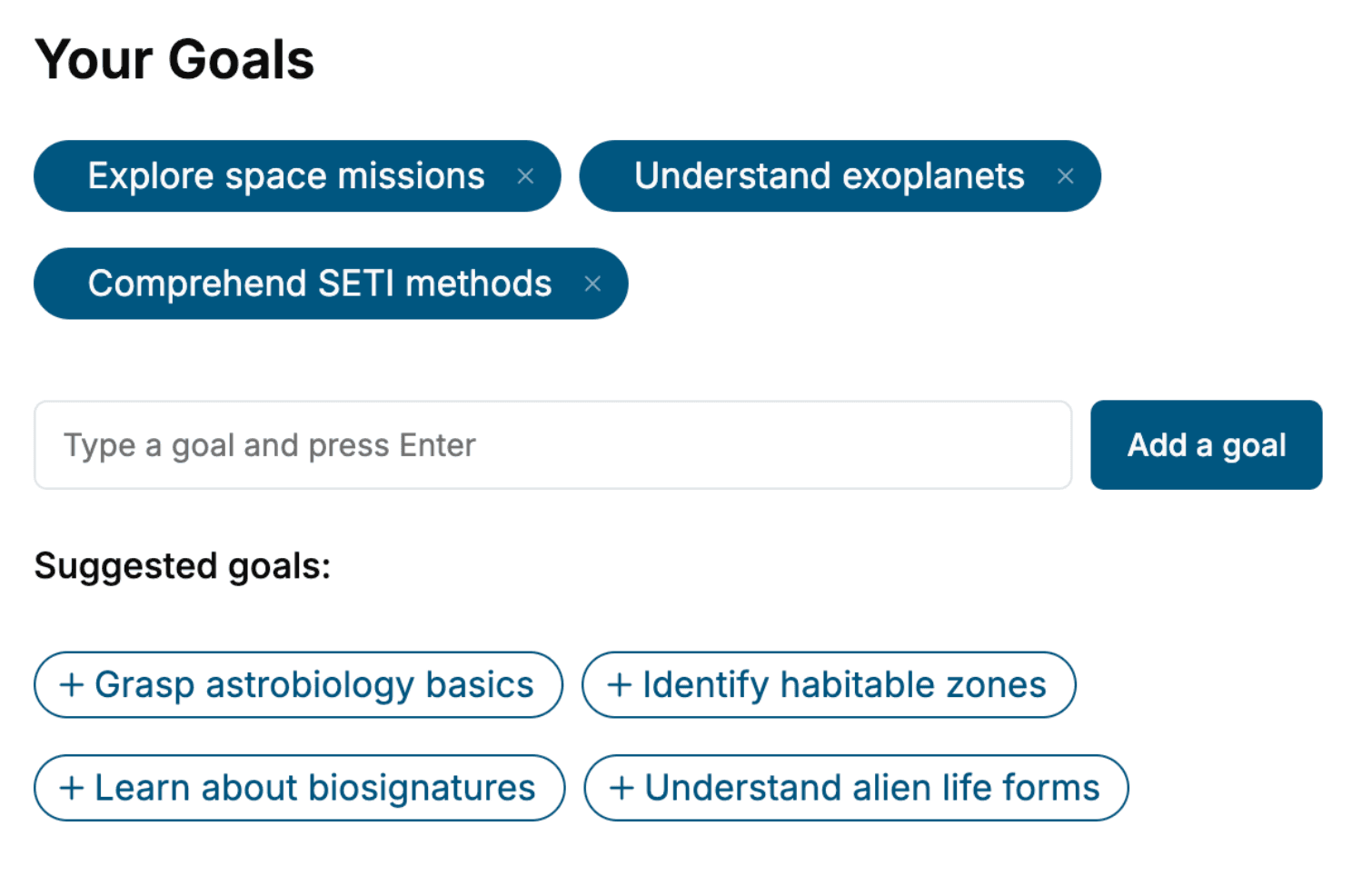
Tell us your goals and background, and get your own version of this book, tailored by AI to you.


Benefits of AI-tailored books
- Read one book, not ten:
- all the Computer Vision knowledge you need, gathered into a single book.
- Save days of learning:
- tell us your goals, choose your topics, and the whole book is built around them.
- Learn effortlessly:
- Computer Vision book written for your specific background and expertise.
- Understand at a glance:
- includes charts, tables, timelines, checklists, decision trees, and more.
- Stay current:
- written the day you order it, not years ago.
- Trust what you read:
- every book is checked for accuracy, with real research when your subject needs it.
Create your unique book in 3 steps
- 1. Select your focus
Select the focus of your Computer Vision book and share your background
- 2. Personalize your book
Specify your goals and choose sub-topics to include
- 3. Get your tailored book
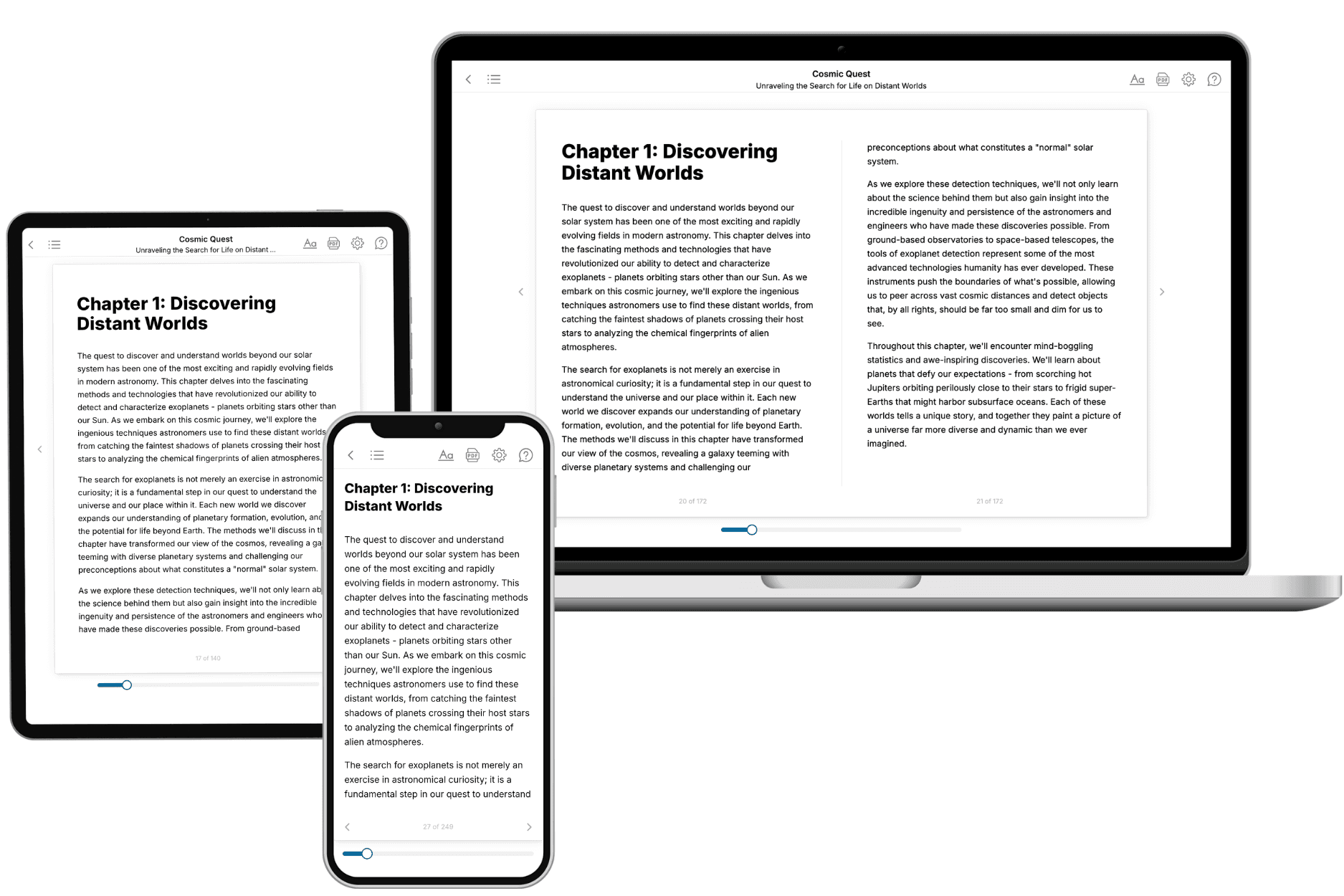
Your book is ready in 10 minutes. Read it online, download as EPUB or PDF, or send to Kindle.

Frequently asked questions
- What is TailoredRead?
TailoredRead creates complete, full-length nonfiction ebooks, written specifically for you. Tell us what you want to learn and why, and TailoredRead writes you a complete ebook on it, with charts, tables, and diagrams throughout. Read it online, on Kindle, or on any e-reader, or download it as a PDF or EPUB. Every book is written fresh the day you order it.
- How is the book tailored to me?
Before anything is written, you answer a few short questions about your goals, your background, and the topics you care about. Your book is then planned around your answers: written at your level, focused on your goals, and covering the topics you chose, instead of the one-size-fits-all book a store sells everyone.
- Will it read like generic AI content?
No. Your book isn't a chat transcript: it's planned chapter by chapter before a single word is written, told in a clear book voice, and explains ideas visually with charts, tables, and diagrams. After writing, every book goes through an editorial pass that polishes chapters so the book reads consistent from start to finish. Judge for yourself: browse thousands of sample books on our Explore Books page.
- How accurate is the content?
Our AI first checks whether your subject needs live research. Niche and fast-moving subjects are researched before writing, and the book plan and chapters are grounded in what it finds. After writing, every book goes through a quality pass that checks its facts and consistency, and researched books list their sources in a Notes section at the back.
- How long is the book?
You choose the length: Comprehensive (250-300 pages), Detailed (150-200 pages), Essential (70-100 pages), or Short (30-50 pages).
- Does the book include visuals?
Yes. Every book includes visual elements such as timelines, checklists, step-by-step guides, decision trees, comparison tables, and matrices, and many include bar charts. A typical book includes dozens of these visual elements.
- Can I read it on Kindle? What formats can I download?
Yes. Every book can be read in our online reader or downloaded as a PDF or EPUB. The EPUB can be opened with Kindle, Apple Books, Kobo, and any e-reader. The Commercial and Author licenses also include an editable Word (DOCX) and Markdown download.
- How much does it cost?
About the price of a regular ebook. The exact price depends on your book's length and complexity, from $2 for the shortest books to $35 for the most comprehensive, and it's shown when you review your book, before you commit to anything. Each book is a one-time purchase, yours to keep, no subscription. Licenses that let you share, teach, or publish your book range from $35.99 to $49.99.
- Can I preview the book before purchasing?
Before you pay, you'll see what your book will cover: the title, a detailed description, the estimated length, and the complete chapter-by-chapter table of contents, so you know what you're getting before you decide. The full text itself is written after you purchase.
- How long does it take to create a book?
About 10 minutes. You can start reading the opening chapters while the rest is still being written.