Mastering Reactive Programming in .NET
Build Responsive and Scalable Applications with .NET Framework 2.0
You've been building .NET applications for years, but traditional event handling and data processing approaches are becoming increasingly complex and hard to maintain.
269 pages15 chaptersOct 5, 2025.NET Framework 2.0
About this book
As your applications grow in complexity and user demands increase, you're finding it difficult to manage asynchronous operations, handle multiple data streams efficiently, and create truly responsive user experiences. This comprehensive guide takes you deep into reactive programming concepts specifically tailored for .NET Framework 2.0 developers. You'll discover how to think reactively about data flow, master the Observer pattern and its variations, and learn to build event-driven architectures that scale gracefully. Through practical examples and real-world scenarios, you'll understand how to implement reactive streams, handle backpressure, and compose complex asynchronous operations with elegance and clarity. You'll explore advanced topics including error propagation strategies, testing methodologies for reactive code, and performance optimization techniques that will make your applications more robust and maintainable. Each concept is presented with clear code examples, best practices, and common pitfalls to avoid, ensuring you can immediately apply these techniques to your current projects. By the end of this book, you'll have transformed your approach to building .NET applications, creating systems that are not only more responsive and scalable but also easier to reason about and maintain. You'll possess the skills to tackle complex asynchronous scenarios with confidence and build applications that truly excel in today's demanding computing environments.
Table of contents
- IntroductionUnderstanding the Reactive Paradigm, Reactive Programming in the .NET Context, How This Book Is Organized, Prerequisites and SetupRead below
- Chapter 1: Foundations of Reactive ProgrammingCore Reactive Principles, Push vs Pull Data Models, The Reactive Manifesto Applied, Traditional vs Reactive Approaches
- Chapter 2: The Observer Pattern Deep DiveClassic Observer Pattern Implementation, .NET Events and Delegates, Observer Pattern Variations, Memory Management and Weak References
- Chapter 3: Understanding Reactive StreamsStream Concepts and Terminology, Hot vs Cold Streams, Stream Lifecycle Management, Subscription Models and Disposal
- Chapter 4: Implementing Observables in .NETCreating Custom Observable Types, Observable Factory Methods, Subject Implementations, Threading and Synchronization
- Chapter 5: Basic Reactive OperatorsTransformation Operators, Filtering Operators, Aggregation Operators, Utility Operators
- Chapter 6: Advanced Reactive OperatorsCombining Multiple Streams, Time-Based Operations, Conditional and Boolean Operators, Mathematical and Statistical Operators
- Chapter 7: Stream Composition PatternsChaining Operations Effectively, Handling Nested Streams, Flattening Strategies, Composition Best Practices
- Chapter 8: Error Handling in Reactive StreamsError Propagation Mechanisms, Recovery and Retry Strategies, Error Transformation Techniques, Graceful Degradation Patterns
- Chapter 9: Managing BackpressureUnderstanding Backpressure, Buffering Strategies, Flow Control Mechanisms, Dropping and Sampling Techniques
- Chapter 10: Integrating with Asynchronous ProgrammingAsynchronous Programming Patterns, Task and Future Integration, Converting Callbacks to Streams, Coordinating Async Operations
- Chapter 11: Schedulers and ConcurrencyScheduler Concepts and Types, Thread Management Strategies, Creating Custom Schedulers, Concurrency Patterns and Pitfalls
- Chapter 12: Reactive Programming in User InterfacesHandling UI Events Reactively, Reactive Data Binding, MVVM with Reactive Extensions, Maintaining UI Responsiveness
- Chapter 13: Testing Reactive CodeChallenges in Testing Reactive Code, Using Test Schedulers, Marble Testing Techniques, Integration Testing Strategies
- Chapter 14: Performance OptimizationMeasuring Reactive Performance, Memory Usage Optimization, CPU Usage Optimization, Profiling and Debugging Tools
- Chapter 15: Real-World Application PatternsEvent Sourcing with Reactive Streams, CQRS Implementation Patterns, Microservices Communication, System Integration Patterns
- ConclusionKey Takeaways and Best Practices, Future Directions in Reactive Programming
Introduction
The world of software development has evolved dramatically over the past decade, and the demands placed on modern applications continue to grow exponentially. Users expect instant responses, seamless interactions, and applications that can handle massive amounts of data without breaking a sweat. Traditional programming approaches, while reliable, often fall short when dealing with complex asynchronous operations, multiple data streams, and the intricate event handling required by today's sophisticated applications. This is where reactive programming emerges as a game-changing paradigm that fundamentally transforms how you think about data flow, event handling, and application architecture.
Reactive programming represents a shift from the traditional imperative programming model to a declarative approach that focuses on data streams and the propagation of change. Instead of writing code that explicitly describes how to perform operations step by step, reactive programming allows you to describe what should happen when data flows through your application. This paradigm is particularly powerful in scenarios involving user interfaces, real-time data processing, network communications, and any situation where your application needs to respond to multiple, concurrent events efficiently and predictably.
For .NET developers working with Framework 2.0, mastering reactive programming concepts opens up new possibilities for building more responsive, maintainable, and scalable applications. While newer versions of .NET have introduced additional reactive programming libraries and features, the fundamental concepts and patterns you'll learn in this book remain universally applicable and form the foundation for understanding reactive programming in any .NET environment. The principles, patterns, and techniques covered here will serve you well regardless of which version of .NET you eventually work with in your career.
This book is designed specifically for intermediate .NET developers who have solid experience with object-oriented programming, understand basic design patterns, and are ready to take their skills to the next level. You'll discover how reactive programming can solve common problems you've likely encountered: managing complex event chains, handling asynchronous operations gracefully, dealing with backpressure in data-intensive applications, and creating user interfaces that remain responsive under heavy load. Through practical examples, real-world scenarios, and hands-on implementations, you'll gain the knowledge and confidence to apply reactive programming principles to your own projects immediately.
Understanding the Reactive Paradigm
At its core, reactive programming is about observing and reacting to changes in data over time. Traditional programming often treats data as static entities that you manipulate through explicit method calls and state changes. Reactive programming, however, views data as streams of events that flow through your application, with various components observing these streams and reacting accordingly. This fundamental shift in perspective changes how you design, implement, and reason about your applications. Instead of asking what is the current state of this data?
you start asking how should my application respond when this data changes?
The reactive paradigm is built on several key concepts that work together to create a cohesive programming model. Observables represent data streams that emit values over time, while Observers subscribe to these streams and define how to react to emitted values. Operators allow you to transform, filter, combine, and manipulate these streams in powerful ways, creating complex data processing pipelines with remarkably clean and readable code. This approach naturally leads to applications that are more modular, testable, and easier to reason about, especially when dealing with complex asynchronous scenarios.
Consider a practical example: imagine building a stock trading application that needs to display real-time price updates, calculate moving averages, and trigger alerts when certain conditions are met. In a traditional approach, you might have multiple event handlers, callback methods, and state management code scattered throughout your application. With reactive programming, you can model the price feed as an observable stream, then use operators to transform this stream into derived streams for moving averages and alerts. Each component of your application simply observes the streams it cares about, creating a clean separation of concerns and eliminating much of the complex coordination logic typically required for such scenarios.
The reactive paradigm also excels at handling temporal aspects of data processing. Many real-world applications need to deal with time-based operations: debouncing user input, implementing timeouts, scheduling periodic tasks, or coordinating operations that must happen in sequence or in parallel. Reactive programming provides elegant solutions for these temporal challenges through time-based operators and scheduling mechanisms. You can easily express concepts like wait for 500 milliseconds of inactivity before processing user input
or retry this operation up to three times with exponential backoff
using simple, declarative code.
Another crucial aspect of the reactive paradigm is its approach to error handling and resilience. Traditional error handling often relies on try-catch blocks and explicit error checking, which can become unwieldy in complex asynchronous scenarios. Reactive programming treats errors as first-class citizens in the data stream, allowing you to define sophisticated error handling strategies using the same compositional approach you use for normal data processing. You can implement retry logic, fallback mechanisms, and error transformation techniques that make your applications more robust and resilient to failures.
The benefits of adopting a reactive mindset extend beyond just technical advantages. Reactive programming encourages you to think more declaratively about your application's behavior, leading to code that more closely matches your mental model of how the application should work. This alignment between intent and implementation makes your code easier to understand, maintain, and extend. When you need to add new features or modify existing behavior, you often find yourself composing existing streams and operators rather than writing entirely new imperative code, leading to faster development cycles and fewer bugs.
Understanding the reactive paradigm also prepares you for the broader ecosystem of reactive technologies and patterns that have emerged across different platforms and languages. The concepts you learn here apply not just to .NET development, but to reactive programming in JavaScript, Java, Scala, and many other environments. This knowledge becomes increasingly valuable as distributed systems, microservices architectures, and real-time applications become more prevalent in modern software development. The reactive paradigm provides a unified way of thinking about data flow and event handling that scales from simple desktop applications to complex, distributed systems.
As you begin your journey into reactive programming, it's important to recognize that this paradigm shift requires practice and patience. The concepts may feel unfamiliar at first, especially if you're accustomed to imperative programming styles. However, once you internalize the reactive way of thinking, you'll find that many complex programming challenges become much more manageable. The investment in learning reactive programming pays dividends not just in the immediate improvements to your code quality and application performance, but in your overall growth as a developer who can tackle increasingly sophisticated software challenges with confidence and elegance.
Reactive Programming in the .NET Context
The .NET Framework provides a rich foundation for implementing reactive programming patterns, even in version 2.0 where dedicated reactive libraries weren't yet available. The framework's event system, delegate mechanisms, and threading capabilities offer all the building blocks necessary to create sophisticated reactive applications. Understanding how reactive programming concepts map to .NET's existing features is crucial for implementing these patterns effectively and leveraging the full power of the platform. The delegate and event system in .NET naturally aligns with reactive programming principles, providing the foundation for observer patterns and event-driven architectures that form the backbone of reactive applications.
In the .NET context, reactive programming builds heavily on the framework's multicast delegate functionality and event handling mechanisms. The EventHandler delegate type and the event keyword provide built-in support for the observer pattern, allowing objects to subscribe to and receive notifications about state changes. However, reactive programming extends these concepts significantly, adding powerful composition capabilities, error handling strategies, and temporal operations that aren't available with basic .NET events. You'll learn how to build upon these foundational features to create more sophisticated reactive systems that maintain the familiar .NET programming model while adding reactive capabilities.
The threading model in .NET Framework 2.0 presents both opportunities and challenges for reactive programming implementations. The ThreadPool class, Thread class, and synchronization primitives like Monitor and Mutex provide the tools necessary for managing concurrent operations in reactive applications. However, coordinating multiple threads while maintaining data consistency and avoiding common concurrency pitfalls requires careful design and implementation. Reactive programming patterns help address these challenges by providing structured approaches to thread management and data synchronization that reduce the likelihood of race conditions, deadlocks, and other threading issues.
Memory management considerations are particularly important in reactive .NET applications due to the potential for creating long-lived object graphs and event subscription chains. The .NET garbage collector handles automatic memory management, but reactive applications can inadvertently create memory leaks through improper subscription management or circular references. Understanding how to properly implement IDisposable patterns, manage weak references, and structure your reactive code to work harmoniously with the garbage collector is essential for building production-ready applications. You'll learn specific techniques for avoiding common memory management pitfalls in reactive applications.
The .NET Framework's extensive Base Class Library (BCL) provides numerous opportunities for reactive integration. Collections, I/O operations, network communications, and timer functionality can all be enhanced with reactive patterns to create more responsive and maintainable applications. For example, you can transform traditional callback-based asynchronous operations into reactive streams, making them composable with other reactive operations. File system monitoring, network data processing, and user interface event handling all benefit significantly from reactive approaches that leverage existing .NET capabilities while adding reactive composition and error handling.
Exception handling in reactive .NET applications requires a nuanced understanding of how exceptions propagate through reactive streams and how they interact with .NET's structured exception handling mechanisms. The traditional try-catch-finally pattern remains important, but reactive programming introduces additional error handling strategies that can provide more granular control over error recovery and propagation. You'll discover how to implement retry logic, circuit breaker patterns, and graceful degradation strategies that work seamlessly with .NET's exception handling infrastructure while providing enhanced resilience for your applications.
Performance characteristics of reactive applications in .NET require careful consideration of factors like object allocation patterns, method call overhead, and garbage collection pressure. While reactive programming can lead to more efficient resource utilization through better coordination of asynchronous operations, poorly implemented reactive code can also introduce performance bottlenecks through excessive object creation or inefficient stream processing. Understanding how to profile and optimize reactive .NET applications, including techniques for minimizing allocations and maximizing throughput, is crucial for building high-performance reactive systems.
The integration between reactive programming and existing .NET design patterns creates opportunities for enhancing traditional patterns with reactive capabilities. The Model-View-Controller (MVC) pattern, Observer pattern, Command pattern, and others can all be enhanced with reactive techniques to create more flexible and maintainable implementations. For instance, you can implement reactive versions of the Command pattern that support undo/redo functionality through event streams, or create reactive data binding mechanisms that automatically update user interfaces when underlying data changes. These enhanced patterns maintain the familiar structure that .NET developers expect while adding powerful reactive capabilities.
How This Book Is Organized
This book is carefully structured to take you on a progressive journey from fundamental reactive programming concepts to advanced implementation techniques and real-world application patterns. The organization follows a building-block approach, where each chapter builds upon the knowledge and skills developed in previous chapters, ensuring you develop a solid foundation before tackling more complex topics. The early chapters focus on establishing the theoretical understanding and basic implementation skills you'll need, while later chapters dive into advanced patterns, performance optimization, and practical application scenarios that you'll encounter in production environments.
The first section of the book, comprising Chapters 1-4, establishes the foundational knowledge necessary for understanding reactive programming in .NET. You'll start with core reactive principles and the theoretical underpinnings of the paradigm, then progress through detailed explorations of the Observer pattern, reactive streams, and basic observable implementations. Each concept is presented with practical .NET code examples that you can run and experiment with, ensuring you understand not just the theory but also the practical implementation details. This foundation is crucial because reactive programming requires a different way of thinking about data flow and event handling than traditional imperative programming approaches.
Chapters 5-7 form the operator and composition section, where you'll learn to manipulate and combine reactive streams effectively. This section covers both basic and advanced operators, teaching you how to transform, filter, combine, and aggregate data streams using reactive techniques. You'll discover powerful composition patterns that allow you to build complex data processing pipelines from simple, reusable components. The examples in this section progress from simple transformations to sophisticated real-world scenarios like real-time data analysis, event correlation, and complex business logic implementation using reactive streams.
The middle section, Chapters 8-11, addresses advanced reactive programming challenges that you'll encounter when building production applications. Error handling, backpressure management, asynchronous programming integration, and concurrency control are all critical topics that can make or break a reactive application. Each chapter in this section provides both theoretical understanding and practical implementation strategies, with extensive code examples showing how to handle common failure scenarios, manage resource consumption, and coordinate complex asynchronous operations. You'll learn to build resilient reactive applications that gracefully handle errors and maintain performance under varying load conditions.
Chapters 12-13 focus on practical application development, covering user interface integration and testing strategies for reactive code. These chapters bridge the gap between reactive programming theory and real-world application development, showing you how to integrate reactive patterns into user interfaces, implement reactive data binding, and maintain responsive user experiences. The testing chapter is particularly important because reactive code requires different testing approaches than traditional synchronous code, and you'll learn specific techniques for testing asynchronous, time-dependent, and event-driven reactive systems.
The final section, Chapters 14-15, covers optimization and real-world patterns that will help you build production-ready reactive applications. Performance optimization techniques, profiling strategies, and advanced architectural patterns like event sourcing and CQRS are covered in detail. These chapters draw together all the concepts from earlier in the book to show how reactive programming fits into larger application architectures and how to optimize reactive applications for real-world performance requirements. You'll see complete examples of reactive applications that demonstrate best practices and common patterns.
Throughout the book, you'll find several types of supplementary content designed to enhance your learning experience:
- Code Examples: Every concept is illustrated with practical C# code that you can run and modify
- Best Practice Boxes: Highlighted sections that summarize key recommendations and common pitfalls to avoid
- Real-World Scenarios: Detailed case studies showing how reactive programming solves actual business problems
- Performance Notes: Specific guidance on optimization techniques and performance considerations
- Integration Tips: Practical advice for integrating reactive patterns with existing .NET applications
Each chapter concludes with a practical exercise section that reinforces the concepts covered and provides hands-on experience with implementation techniques. These exercises range from simple coding challenges that test your understanding of specific concepts to more complex projects that require you to integrate multiple reactive programming techniques. The exercises are designed to be completed using only .NET Framework 2.0 features, ensuring that you can practice the concepts regardless of your development environment. Solutions and detailed explanations are provided to help you understand not just what to implement, but why specific approaches are recommended.
The book's structure also supports different reading approaches depending on your current knowledge level and immediate needs. If you're new to reactive programming, following the chapters in order will provide the most comprehensive learning experience. However, if you have some reactive programming experience or need to solve specific problems quickly, the detailed table of contents and cross-references between chapters allow you to jump to relevant sections while still understanding the dependencies and prerequisites for each topic. This flexibility makes the book valuable both as a learning resource and as a reference guide for ongoing reactive programming work.
Prerequisites and Setup
To get the most out of this book, you should have solid experience with C# and .NET Framework development, including a good understanding of object-oriented programming principles, generics, delegates, and events. You should be comfortable with concepts like inheritance, polymorphism, and encapsulation, as reactive programming builds heavily on these foundational object-oriented concepts. Additionally, familiarity with basic design patterns, particularly the Observer pattern, Strategy pattern, and Command pattern, will help you understand how reactive programming extends and enhances these traditional approaches. While this book will review key concepts as needed, it assumes you can read and write intermediate-level C# code without difficulty.
Your development environment should include Visual Studio 2005 or later with .NET Framework 2.0 installed, though the concepts and code examples will work with any version of Visual Studio that supports .NET Framework 2.0 development. You'll also benefit from having a good understanding of the Visual Studio debugger, as debugging reactive applications requires some specialized techniques that build on standard debugging skills. While not strictly required, familiarity with unit testing frameworks like NUnit or the built-in Visual Studio testing tools will be helpful when you reach the testing chapters, as reactive code requires specific testing approaches that differ from traditional synchronous code testing.
From a conceptual standpoint, you should have some experience with multithreaded programming and asynchronous operations in .NET, including basic understanding of the Thread class, ThreadPool, and synchronization primitives like locks and monitors. While this book will cover reactive approaches to concurrency management, understanding the underlying threading concepts will help you appreciate why reactive patterns provide better solutions for many concurrency challenges. You don't need to be an expert in threading, but you should understand concepts like race conditions, deadlocks, and the basic challenges of coordinating multiple threads of execution.
The code examples in this book are designed to run on .NET Framework 2.0 without any external dependencies, ensuring maximum compatibility and allowing you to focus on learning reactive programming concepts rather than dealing with library installation and configuration issues. All reactive programming functionality is implemented using only the features available in .NET Framework 2.0, including delegates, events, generics, and the base class library. This approach not only ensures compatibility but also helps you understand the underlying mechanisms that power reactive programming libraries in later versions of .NET.
To set up your development environment for the examples in this book, you'll need to create several project templates that will be reused throughout the chapters:
- Console Application Template: For basic reactive programming examples and algorithm demonstrations
- Windows Forms Application Template: For user interface integration examples and reactive UI patterns
- Class Library Template: For building reusable reactive programming components and utilities
- Unit Test Project Template: For testing reactive code using your preferred testing framework
While working through the book, you'll find it helpful to maintain a personal code library of reactive programming utilities and patterns that you can reuse across different projects. The book provides complete implementations of key reactive programming components, but organizing these into a reusable library will help you apply the concepts to your own projects more effectively. Consider creating a dedicated solution with separate projects for core reactive functionality, UI integration helpers, testing utilities, and example applications that demonstrate various patterns and techniques.
Understanding of basic software architecture principles will enhance your ability to apply reactive programming effectively in larger applications. Concepts like separation of concerns, dependency injection, and layered architecture become particularly important when building reactive applications, as the asynchronous and event-driven nature of reactive code can make architectural problems more pronounced. While this book focuses primarily on reactive programming techniques, it also discusses how these techniques fit into broader application architectures and how to maintain good architectural practices when adopting reactive patterns.
Finally, cultivating a experimental mindset will significantly enhance your learning experience with reactive programming. The concepts can feel unfamiliar at first, and the best way to internalize them is through hands-on experimentation and practice. Don't hesitate to modify the code examples, try different approaches, and explore variations on the patterns presented in the book. Reactive programming is particularly well-suited to exploratory programming because the compositional nature of reactive operations makes it easy to try different combinations and see immediate results. Keep a scratch project available for experimenting with concepts as you learn them, and don't be afraid to break things – understanding why something doesn't work is often as valuable as understanding why it does work.
This is the end of the free sample. The full book has 15 chapters.
Want this book written for you?
Tell us your goals and background, and get your own version of this book, tailored by AI to you.


Benefits of AI-tailored books
- Read one book, not ten:
- all the .NET Framework 2.0 knowledge you need, gathered into a single book.
- Save days of learning:
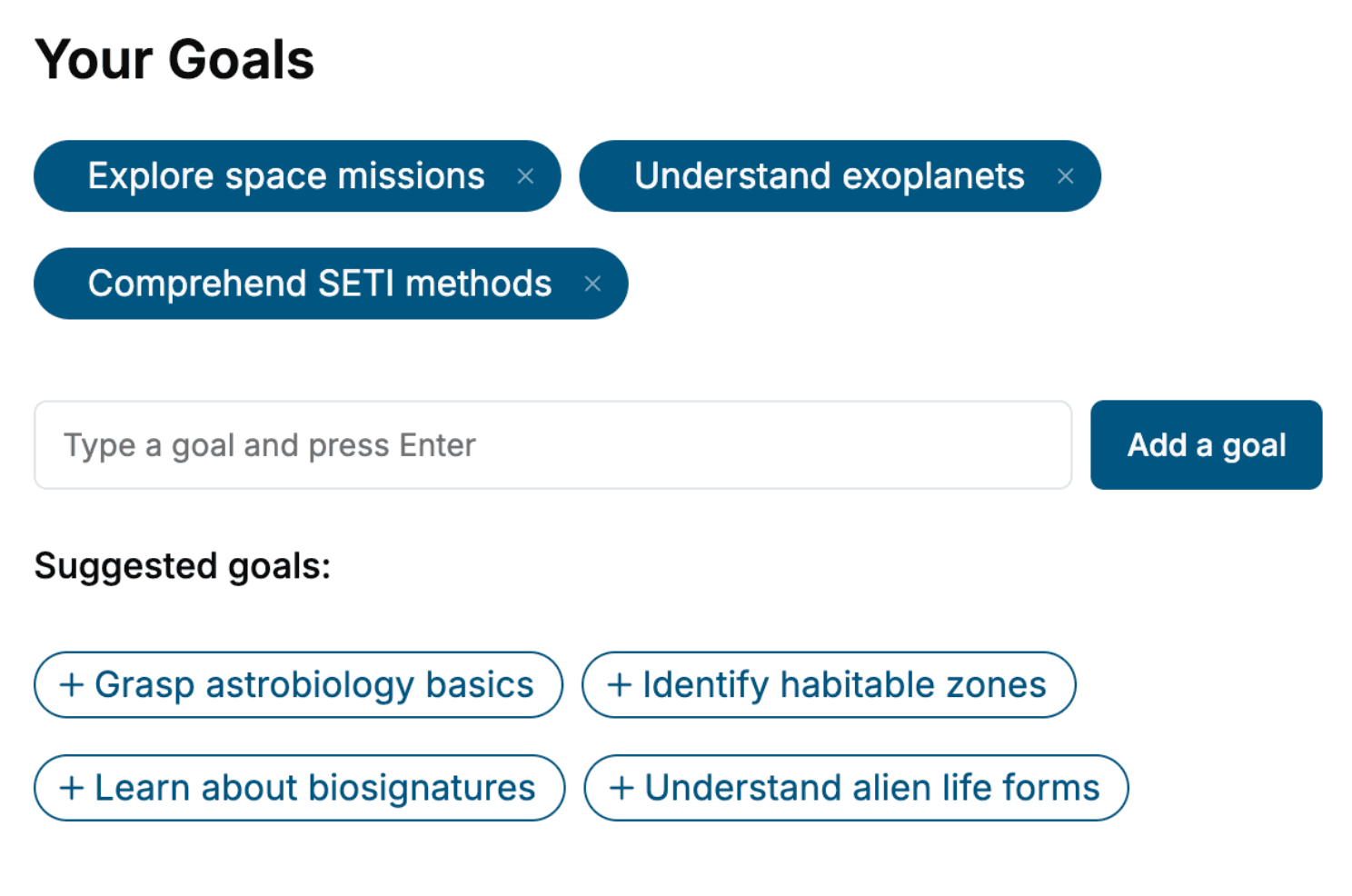
- tell us your goals, choose your topics, and the whole book is built around them.
- Learn effortlessly:
- .NET Framework 2.0 book written for your specific background and expertise.
- Understand at a glance:
- includes charts, tables, timelines, checklists, decision trees, and more.
- Stay current:
- written the day you order it, not years ago.
- Trust what you read:
- every book is checked for accuracy, with real research when your subject needs it.
Create your unique book in 3 steps
- 1. Select your focus
Select the focus of your .NET Framework 2.0 book and share your background
- 2. Personalize your book
Specify your goals and choose sub-topics to include
- 3. Get your tailored book
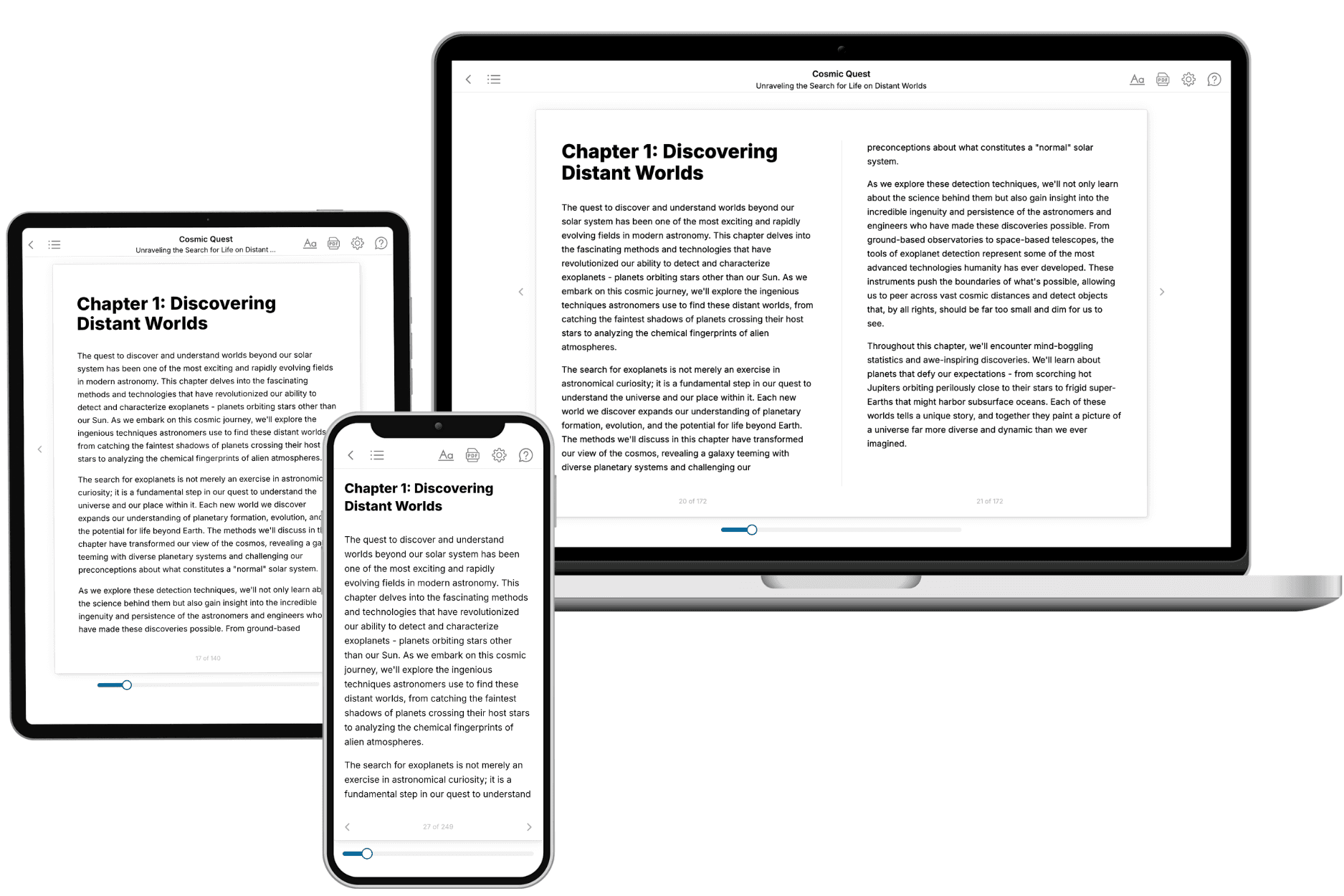
Your book is ready in 10 minutes. Read it online, download as EPUB or PDF, or send to Kindle.

Frequently asked questions
- What is TailoredRead?
TailoredRead creates complete, full-length nonfiction ebooks, written specifically for you. Tell us what you want to learn and why, and TailoredRead writes you a complete ebook on it, with charts, tables, and diagrams throughout. Read it online, on Kindle, or on any e-reader, or download it as a PDF or EPUB. Every book is written fresh the day you order it.
- How is the book tailored to me?
Before anything is written, you answer a few short questions about your goals, your background, and the topics you care about. Your book is then planned around your answers: written at your level, focused on your goals, and covering the topics you chose, instead of the one-size-fits-all book a store sells everyone.
- Will it read like generic AI content?
No. Your book isn't a chat transcript: it's planned chapter by chapter before a single word is written, told in a clear book voice, and explains ideas visually with charts, tables, and diagrams. After writing, every book goes through an editorial pass that polishes chapters so the book reads consistent from start to finish. Judge for yourself: browse thousands of sample books on our Explore Books page.
- How accurate is the content?
Our AI first checks whether your subject needs live research. Niche and fast-moving subjects are researched before writing, and the book plan and chapters are grounded in what it finds. After writing, every book goes through a quality pass that checks its facts and consistency, and researched books list their sources in a Notes section at the back.
- How long is the book?
You choose the length: Comprehensive (250-300 pages), Detailed (150-200 pages), Essential (70-100 pages), or Short (30-50 pages).
- Does the book include visuals?
Yes. Every book includes charts, tables, and diagrams: timelines, checklists, step-by-step guides, decision trees, comparison tables, matrices, and bar charts. A typical book includes dozens of these visual elements.
- Can I read it on Kindle? What formats can I download?
Yes. Every book can be read in our online reader or downloaded as a PDF or EPUB. The EPUB can be opened with Kindle, Apple Books, Kobo, and any e-reader. The Commercial and Author licenses also include an editable Word (DOCX) and Markdown download.
- How much does it cost?
About the price of a regular ebook. The exact price depends on your book's length and complexity, from $2 for the shortest books to $35 for the most comprehensive, and it's shown when you review your book, before you commit to anything. Each book is a one-time purchase, yours to keep, no subscription. Licenses that let you share, teach, or publish your book range from $35.99 to $49.99.
- Can I preview the book before purchasing?
Before you pay, you'll see what your book will cover: the title, a detailed description, the estimated length, and the complete chapter-by-chapter table of contents, so you know what you're getting before you decide. The full text itself is written after you purchase.
- How long does it take to create a book?
About 10 minutes. You can start reading the opening chapters while the rest is still being written.