Mastering Repeated Measures ANOVA
A Practical Guide for Data Scientists and Researchers in AI and Machine Learning
Elevate your statistical analysis skills with "Mastering Repeated Measures ANOVA: A Practical Guide for Data Scientists and Researchers in AI and Machine Learning." This comprehensive guide bridges the gap between traditional statistical methods and cutting-edge AI applications, empowering you to conduct robust analyses and draw meaningful insights from complex datasets.
269 pages13 chaptersDec 24, 2024Statistics
About this book
Dive deep into the intricacies of Repeated Measures ANOVA and discover how this powerful technique can enhance your understanding of statistical power in the context of AI and machine learning. You'll gain practical knowledge on designing experiments, interpreting results, and applying these methods to real-world scenarios in data science and research. From foundational concepts to advanced applications, this book equips you with the tools to confidently navigate the intersection of classical statistics and modern AI techniques. Whether you're analyzing longitudinal data, evaluating machine learning model performance, or conducting power analyses for AI experiments, you'll find invaluable insights and strategies to elevate your work.
Table of contents
- IntroductionThe Importance of Repeated Measures in Data Science, Overview of ANOVA and Its Variants, Structure of the Book, Repeated Measures ANOVA in the Context of AI and MLRead below
- Chapter 1: Foundations of Repeated Measures ANOVABasic Concepts and Terminology, When to Use Repeated Measures ANOVA, Advantages Over Other Statistical Methods, Types of Repeated Measures Designs
- Chapter 2: Understanding Statistical PowerDefinition and Importance of Statistical Power, Factors Affecting Statistical Power, Conducting Power Analysis for Repeated Measures ANOVA, Sample Size Determination
- Chapter 3: Experimental Design for Repeated Measures ANOVAPrinciples of Good Experimental Design, Within-Subjects vs. Between-Subjects Factors, Counterbalancing and Order Effects, Handling Missing Data
- Chapter 4: Assumptions of Repeated Measures ANOVANormality of Residuals, Sphericity and Compound Symmetry, Independence of Observations, Testing and Addressing Violations of Assumptions
- Chapter 5: Conducting Repeated Measures ANOVAData Preparation and Formatting, Software Tools for Analysis, Interpreting ANOVA Tables and Results, Post-hoc Tests and Multiple Comparisons
- Chapter 6: Effect Sizes and Practical SignificanceMeasures of Effect Size for Repeated Measures, Interpreting Effect Sizes, Reporting Effect Sizes in Research, Effect Sizes in Meta-Analysis
- Chapter 7: Advanced Techniques in Repeated Measures AnalysisMixed-Effects Models, Multivariate Approach to Repeated Measures, Non-parametric Alternatives, Bayesian Approach to Repeated Measures ANOVA
- Chapter 8: Applications in Artificial IntelligenceComparing AI Model Performance Over Time, Repeated Measures ANOVA for Hyperparameter Tuning, Evaluating Transfer Learning Effectiveness, Assessing AI Model Robustness and Stability
- Chapter 9: Applications in Machine LearningFeature Selection and Importance Analysis, Repeated Measures in Cross-Validation, Analyzing Ensemble Method Performance, Repeated Measures ANOVA in Time Series Analysis
- Chapter 10: Power Analysis in AI and ML ExperimentsDetermining Sample Sizes for ML Experiments, Estimating Effect Sizes in AI Research, Creating and Interpreting Power Curves, Balancing Statistical Power and Computational Resources
- Chapter 11: Visualizing Repeated Measures DataCreating Effective Interaction Plots, Representing Uncertainty with Error Bars, Visualizing Individual Subject Trajectories, Advanced Visualization Techniques for Complex Designs
- Chapter 12: Reporting Repeated Measures ANOVA ResultsAPA Style Guidelines for Reporting, Creating Effective Tables and Figures, Interpreting and Discussing Results, Addressing Limitations and Future Directions
- Chapter 13: Case Studies and Practical ExamplesLongitudinal Study of AI Model Performance, Repeated Measures Analysis of Cross-Validation Results, Evaluating Transfer Learning Across Domains, Repeated Measures in Hyperparameter Optimization, Comparing Multiple ML Models Over Time
- ConclusionKey Takeaways, Future Directions in Repeated Measures Analysis
- Glossary
- Further Reading
Introduction
Welcome to "Mastering Repeated Measures ANOVA: A Practical Guide for Data Scientists and Researchers in AI and Machine Learning." This book is designed to equip you with a comprehensive understanding of Repeated Measures Analysis of Variance (ANOVA) and its applications in the rapidly evolving fields of Artificial Intelligence (AI) and Machine Learning (ML). As a data scientist or researcher with an intermediate knowledge of statistics, you are about to embark on a journey that will deepen your understanding of this powerful statistical technique and its relevance to your work in AI and ML.
In today's data-driven world, the ability to analyze complex datasets with multiple observations per subject is crucial. Repeated Measures ANOVA provides a robust framework for such analyses, offering insights that are particularly valuable in the iterative and time-dependent nature of many AI and ML experiments. This introduction will set the stage for your exploration of Repeated Measures ANOVA, highlighting its importance in data science, providing an overview of ANOVA and its variants, outlining the structure of this book, and contextualizing Repeated Measures ANOVA within the realms of AI and ML.
The Importance of Repeated Measures in Data Science
In the realm of data science, particularly within AI and ML, the ability to analyze data collected over multiple time points or conditions is paramount. Repeated measures designs are ubiquitous in these fields, appearing in scenarios ranging from evaluating model performance over time to assessing the impact of different hyperparameter configurations. The importance of repeated measures in data science cannot be overstated, as it provides a powerful tool for understanding change, stability, and patterns in data that evolve over time or across different conditions.
One of the primary advantages of repeated measures designs is their ability to control for individual differences. In the context of AI and ML, this translates to controlling for the inherent variability in model performance or dataset characteristics. By using subjects (which could be individual AI models, datasets, or even hardware configurations) as their own controls, repeated measures designs can dramatically increase the statistical power of your analyses. This increased power means you can detect smaller effects with the same sample size, or maintain the same level of power with a smaller sample size – a crucial consideration when dealing with computationally intensive AI and ML experiments[1].
Furthermore, repeated measures designs allow for the examination of change over time, which is particularly relevant in AI and ML research. For instance, when evaluating the learning curve of a neural network, you might collect performance metrics at regular intervals during training. A repeated measures ANOVA can help you understand not just the overall improvement, but also the rate of change and any plateaus in performance. This temporal aspect is crucial for optimizing training procedures, early stopping criteria, and understanding the dynamics of model learning.
In the field of AI, repeated measures designs can be instrumental in assessing model robustness and generalization. By repeatedly testing a model on different datasets or under varying conditions, you can gain insights into its stability and reliability. This is particularly important in real-world applications where AI systems need to perform consistently across a range of scenarios. Repeated measures ANOVA provides a statistical framework for quantifying and analyzing this consistency.
For machine learning researchers, repeated measures designs offer a way to rigorously compare different algorithms or model architectures. Instead of relying on a single performance metric, you can analyze how different models perform across multiple datasets or problem instances. This approach can reveal nuanced differences between models that might not be apparent from aggregate statistics alone. It can also help in understanding how different models respond to various types of data or problem characteristics, leading to more informed decisions about model selection and ensemble creation.
The importance of repeated measures extends to the realm of hyperparameter tuning, a critical aspect of many machine learning workflows. By treating different hyperparameter configurations as repeated measures, you can gain a more nuanced understanding of how these parameters interact and influence model performance across different datasets or problem instances. This can lead to more robust and generalizable hyperparameter selection strategies.
In the context of transfer learning and domain adaptation, repeated measures designs can be invaluable. They allow you to systematically analyze how well knowledge transfers across different domains or tasks, providing insights into the generalizability of learned representations. This is crucial for developing AI systems that can adapt to new scenarios with minimal additional training.
Repeated measures also play a vital role in longitudinal studies of AI systems. As models are deployed in real-world settings, it's essential to monitor their performance over time to detect any degradation or drift. Repeated measures ANOVA provides a statistical framework for analyzing these long-term trends, helping to ensure the ongoing reliability and effectiveness of AI systems.
Moreover, in the rapidly evolving field of AI ethics and fairness, repeated measures designs can be used to assess the consistency of model behavior across different demographic groups or over time. This can help in identifying and mitigating biases, ensuring that AI systems perform equitably across diverse populations.
In summary, the importance of repeated measures in data science, particularly in AI and ML, stems from its ability to provide nuanced, powerful, and statistically robust analyses of complex, time-dependent phenomena. As you delve deeper into this book, you'll discover how to harness the full potential of repeated measures ANOVA to elevate your research and practical applications in AI and ML.
Overview of ANOVA and Its Variants
Analysis of Variance (ANOVA) is a fundamental statistical technique used to analyze the differences among group means in a sample. At its core, ANOVA is a way to test whether the means of several groups are all equal, which is useful in comparing three or more groups for statistical significance. Before delving into the specifics of Repeated Measures ANOVA, it's crucial to understand the broader ANOVA family and its variants, as this context will enhance your appreciation of the unique features and applications of repeated measures designs.
The most basic form of ANOVA is the one-way ANOVA, which examines the impact of a single factor on a continuous dependent variable. For instance, in an AI context, you might use one-way ANOVA to compare the performance of three different machine learning algorithms on a specific task. The null hypothesis in this case would be that all three algorithms perform equally well, and ANOVA would help you determine if there are statistically significant differences among them[2].
Building on this foundation, two-way ANOVA introduces a second independent variable, allowing you to examine the effects of two factors simultaneously, as well as their interaction. In the context of machine learning, you might use two-way ANOVA to investigate how both the choice of algorithm and the size of the training dataset affect model performance. This variant of ANOVA is particularly useful for understanding how different factors interact to influence outcomes, a concept that's often crucial in complex AI systems.
MANOVA, or Multivariate Analysis of Variance, extends the ANOVA concept to situations where there are multiple dependent variables. This can be particularly relevant in AI and ML scenarios where you're interested in multiple performance metrics simultaneously. For example, you might want to compare algorithms not just on accuracy, but also on computational efficiency and robustness to noise. MANOVA allows you to analyze these multiple outcomes in a single statistical test, providing a more comprehensive view of performance differences.
Factorial ANOVA is another important variant that allows for the analysis of the effects of multiple independent variables (factors) on a dependent variable. This design is particularly useful in machine learning experiments where you want to understand the impact of multiple hyperparameters or design choices simultaneously. Factorial ANOVA can reveal not only the main effects of each factor but also the interactions between factors, which can be crucial for optimizing complex AI systems.
ANCOVA, or Analysis of Covariance, combines ANOVA with regression analysis. It allows you to control for the effects of continuous variables (covariates) that might influence the dependent variable. In AI research, ANCOVA could be used to compare model performance while controlling for factors like dataset complexity or computational resources, providing a more nuanced comparison that accounts for these influential variables.
Mixed ANOVA designs incorporate both between-subjects and within-subjects factors. This approach can be particularly useful in AI and ML research when you're comparing different algorithms (a between-subjects factor) across multiple datasets or time points (a within-subjects factor). Mixed ANOVA allows you to analyze these complex experimental designs, providing insights into both the overall differences between algorithms and how these differences might vary across different conditions or over time.
Non-parametric variants of ANOVA, such as the Kruskal-Wallis test (for one-way designs) and Friedman test (for repeated measures), are essential tools when the assumptions of parametric ANOVA are violated. These methods can be particularly useful in AI and ML contexts where data might not meet the assumptions of normality or homogeneity of variance, providing robust alternatives for statistical analysis.
Bayesian ANOVA is an increasingly popular approach that applies Bayesian inference to ANOVA designs. This method can be particularly useful in AI and ML research, as it allows for the incorporation of prior knowledge and provides a more nuanced interpretation of results in terms of probabilities rather than p-values. Bayesian ANOVA can be especially valuable when dealing with small sample sizes or when you want to make probabilistic statements about the differences between groups.
Finally, we come to Repeated Measures ANOVA, the primary focus of this book. This variant is designed for situations where the same subjects are measured multiple times, such as in longitudinal studies or when comparing performance across different conditions. In the context of AI and ML, "subjects" might be individual models, datasets, or even hardware configurations that are tested repeatedly under different conditions or over time. Repeated Measures ANOVA accounts for the correlation between repeated measurements on the same subject, providing a more powerful and appropriate analysis for these types of designs.
Understanding this broader context of ANOVA and its variants is crucial for several reasons. First, it helps you appreciate the unique features and advantages of Repeated Measures ANOVA in comparison to other analytical approaches. Second, it allows you to make informed decisions about when to use Repeated Measures ANOVA versus other ANOVA variants or alternative statistical techniques. Finally, this overview sets the stage for more advanced topics covered later in the book, such as mixed-effects models, which combine elements of repeated measures and between-subjects designs.
As you progress through this book, you'll gain a deep understanding of how Repeated Measures ANOVA fits into this broader statistical landscape and how it can be leveraged to gain powerful insights in AI and ML research. You'll learn not only the technical details of conducting these analyses but also the nuanced considerations involved in experimental design, interpretation of results, and application to real-world AI and ML problems.
Structure of the Book
This book is structured to provide you with a comprehensive and practical understanding of Repeated Measures ANOVA, particularly as it applies to AI and ML research. The content is organized in a logical progression, starting with foundational concepts and gradually moving towards more advanced topics and practical applications. This structure is designed to build your knowledge systematically, ensuring that you have a solid grasp of each concept before moving on to more complex ideas.
We begin with the "Foundations of Repeated Measures ANOVA" in Chapter 1. This chapter lays the groundwork for your understanding, covering basic concepts and terminology, explaining when to use Repeated Measures ANOVA, discussing its advantages over other statistical methods, and exploring different types of repeated measures designs. This foundation is crucial for understanding the more advanced concepts that follow and for appreciating the unique value of Repeated Measures ANOVA in AI and ML research.
Chapter 2 delves into "Understanding Statistical Power," a critical concept in experimental design and analysis. You'll learn about the definition and importance of statistical power, factors that affect it, how to conduct power analysis specifically for Repeated Measures ANOVA, and methods for determining appropriate sample sizes. This knowledge is essential for designing robust experiments that can reliably detect effects of interest, a crucial skill in the often resource-intensive world of AI and ML research.
The book then moves on to "Experimental Design for Repeated Measures ANOVA" in Chapter 3. This chapter covers principles of good experimental design, the distinction between within-subjects and between-subjects factors, techniques for counterbalancing and managing order effects, and strategies for handling missing data. These design considerations are particularly relevant in AI and ML contexts, where experiments often involve complex, multi-faceted comparisons and longitudinal assessments of model performance.
Chapter 4 addresses the "Assumptions of Repeated Measures ANOVA," including normality of residuals, sphericity and compound symmetry, and independence of observations. You'll learn how to test for these assumptions and, crucially, how to address violations when they occur. This knowledge is vital for ensuring the validity of your analyses and for understanding the limitations and potential pitfalls of Repeated Measures ANOVA in various AI and ML scenarios.
In Chapter 5, "Conducting Repeated Measures ANOVA," you'll get hands-on guidance on performing the analysis. This includes data preparation and formatting, an overview of software tools for analysis, interpreting ANOVA tables and results, and conducting post-hoc tests and multiple comparisons. This practical knowledge will enable you to confidently carry out Repeated Measures ANOVA on your own data and interpret the results accurately.
Chapter 6 focuses on "Effect Sizes and Practical Significance," covering measures of effect size specific to repeated measures designs, how to interpret these effect sizes, best practices for reporting effect sizes in research, and the role of effect sizes in meta-analysis. This chapter is crucial for moving beyond mere statistical significance to understand the magnitude and practical importance of your findings in AI and ML contexts.
The book then progresses to more advanced topics in Chapter 7, "Advanced Techniques in Repeated Measures Analysis." Here, you'll explore mixed-effects models, multivariate approaches to repeated measures, non-parametric alternatives, and Bayesian approaches to Repeated Measures ANOVA. These advanced techniques will expand your analytical toolkit, allowing you to handle more complex experimental designs and data structures often encountered in cutting-edge AI and ML research.
Chapters 8 and 9 focus specifically on applications in AI and ML. "Applications in Artificial Intelligence" covers topics such as comparing AI model performance over time, using Repeated Measures ANOVA for hyperparameter tuning, evaluating transfer learning effectiveness, and assessing AI model robustness and stability. "Applications in Machine Learning" delves into feature selection and importance analysis, the use of repeated measures in cross-validation, analyzing ensemble method performance, and applying Repeated Measures ANOVA to time series analysis. These chapters provide concrete examples of how the statistical techniques you've learned can be applied to real-world AI and ML problems.
Chapter 10, "Power Analysis in AI and ML Experiments," brings together the concepts of statistical power and AI/ML applications. You'll learn about determining sample sizes for ML experiments, estimating effect sizes in AI research, creating and interpreting power curves, and balancing statistical power with computational resources. This chapter is crucial for designing efficient and effective experiments in the often computationally intensive field of AI and ML.
The book then addresses the important topic of data visualization in Chapter 11, "Visualizing Repeated Measures Data." You'll learn techniques for creating effective interaction plots, representing uncertainty with error bars, visualizing individual subject trajectories, and advanced visualization techniques for complex designs. These skills are essential for communicating your results effectively and gaining deeper insights from your data.
Chapter 12 covers "Reporting Repeated Measures ANOVA Results," including APA style guidelines for reporting, creating effective tables and figures, interpreting and discussing results, and addressing limitations and future directions. This chapter will ensure that you can communicate your findings clearly and professionally in academic or industry contexts.
The book concludes with Chapter 13, "Case Studies and Practical Examples," which provides in-depth, real-world applications of Repeated Measures ANOVA in AI and ML contexts. These case studies will help solidify your understanding and provide templates for applying these techniques in your own work.
Throughout the book, you'll find practical examples, code snippets, and visualizations to illustrate key concepts. Each chapter also includes exercises and discussion questions to reinforce your learning. By the end of the book, you'll have a comprehensive understanding of Repeated Measures ANOVA and its applications in AI and ML, equipping you with the skills to design robust experiments, conduct sophisticated analyses, and draw meaningful insights from your data.
Repeated Measures ANOVA in the Context of AI and ML
As we delve into the application of Repeated Measures ANOVA in the context of Artificial Intelligence (AI) and Machine Learning (ML), it's important to recognize the unique characteristics and challenges of these fields that make this statistical technique particularly valuable. AI and ML research often involves iterative processes, time-dependent analyses, and the need to compare performance across multiple conditions or time points. Repeated Measures ANOVA provides a robust framework for addressing these needs, offering insights that are crucial for advancing the field and improving AI and ML models.
One of the primary applications of Repeated Measures ANOVA in AI and ML is in the evaluation of model performance over time or across different datasets. For instance, when developing a new deep learning architecture, researchers often need to assess how the model's performance changes during the training process. By treating each epoch or set of epochs as a repeated measure, Repeated Measures ANOVA can provide insights into the learning dynamics of the model. This analysis can reveal not just whether the model improves over time, but also how the rate of improvement changes, whether there are plateaus in learning, and how these patterns might differ across different architectures or training regimes[3].
In the realm of transfer learning, a critical area of AI research, Repeated Measures ANOVA can be instrumental in assessing the effectiveness of knowledge transfer across domains. Researchers can use this technique to compare the performance of a model on multiple target domains after being pre-trained on a source domain. By treating each target domain as a repeated measure, the analysis can reveal not only overall transfer effectiveness but also how it varies across different types of target tasks or domains. This can provide valuable insights into the generalizability of learned representations and guide the development of more effective transfer learning strategies.
Hyperparameter tuning, a crucial and often time-consuming aspect of ML model development, can also benefit from the application of Repeated Measures ANOVA. By treating different hyperparameter configurations as repeated measures and evaluating them across multiple datasets or problem instances, researchers can gain a more nuanced understanding of how these parameters affect model performance. This approach can reveal interactions between hyperparameters and dataset characteristics that might not be apparent from simpler analyses, leading to more robust and generalizable tuning strategies.
In the field of ensemble methods, where multiple models are combined to improve overall performance, Repeated Measures ANOVA can provide insights into the contribution of individual models and the effectiveness of different combination strategies. By treating each base model as a repeated measure and evaluating performance across different datasets or time points, researchers can understand how diversity among models contributes to ensemble performance and how this relationship might change across different problem domains.
Repeated Measures ANOVA is also valuable in assessing the stability and robustness of AI models. In real-world applications, it's crucial to understand how model performance might vary across different operating conditions or over time. By repeatedly evaluating a model under different conditions (e.g., varying levels of input noise, different hardware configurations, or changing data distributions), researchers can use Repeated Measures ANOVA to quantify the model's robustness and identify factors that contribute to performance variability.
In the context of reinforcement learning, where agents learn through interaction with an environment, Repeated Measures ANOVA can be used to analyze learning curves across multiple episodes or environments. This can provide insights into how quickly agents learn, how consistent their performance is across different scenarios, and how different learning algorithms compare in terms of speed and stability of learning.
For natural language processing tasks, where models are often evaluated on multiple datasets or across different linguistic phenomena, Repeated Measures ANOVA can help in understanding how model performance varies across these different conditions. This can reveal strengths and weaknesses of different architectures or pre-training approaches, guiding the development of more robust and generalizable language models.
In computer vision applications, Repeated Measures ANOVA can be used to analyze how model performance changes across different image transformations, lighting conditions, or viewpoints. This can be crucial for developing models that are robust to real-world variability in visual inputs.
The application of Repeated Measures ANOVA in AI and ML extends beyond model performance evaluation. It can also be used to analyze the behavior of individual neurons or layers within neural networks across different inputs or time points. This type of analysis can provide insights into the internal representations learned by the network and how they evolve during training.
Furthermore, in the rapidly evolving field of AI ethics and fairness, Repeated Measures ANOVA can be applied to assess how model behavior changes across different demographic groups or over time. This can help in identifying and quantifying biases in AI systems, a critical step in developing more equitable and responsible AI technologies.
As you progress through this book, you'll discover how to apply Repeated Measures ANOVA to these and many other scenarios in AI and ML research. You'll learn not just the statistical techniques, but also how to design experiments, interpret results, and draw meaningful conclusions in the context of AI and ML. This knowledge will empower you to conduct more rigorous analyses, design more effective experiments, and ultimately contribute to the advancement of AI and ML technologies.
By mastering Repeated Measures ANOVA and understanding its applications in AI and ML, you'll be equipped with a powerful tool for gaining deeper insights from your research and experiments. Whether you're comparing algorithm performance, optimizing model architectures, or investigating the fundamental principles of machine learning, the techniques you'll learn in this book will enhance your ability to draw robust, statistically sound conclusions. As the fields of AI and ML continue to evolve rapidly, the ability to conduct sophisticated statistical analyses will be increasingly valuable, positioning you at the forefront of research and development in these exciting and impactful domains.
This is the end of the free sample. The full book has 13 chapters.
Want this book written for you?
Tell us your goals and background, and get your own version of this book, tailored by AI to you.


Benefits of AI-tailored books
- Read one book, not ten:
- all the Statistics knowledge you need, gathered into a single book.
- Save days of learning:
- tell us your goals, choose your topics, and the whole book is built around them.
- Learn effortlessly:
- Statistics book written for your specific background and expertise.
- Understand at a glance:
- includes charts, tables, timelines, checklists, decision trees, and more.
- Stay current:
- written the day you order it, not years ago.
- Trust what you read:
- every book is checked for accuracy, with real research when your subject needs it.
Create your unique book in 3 steps
- 1. Select your focus
Select the focus of your Statistics book and share your background
- 2. Personalize your book
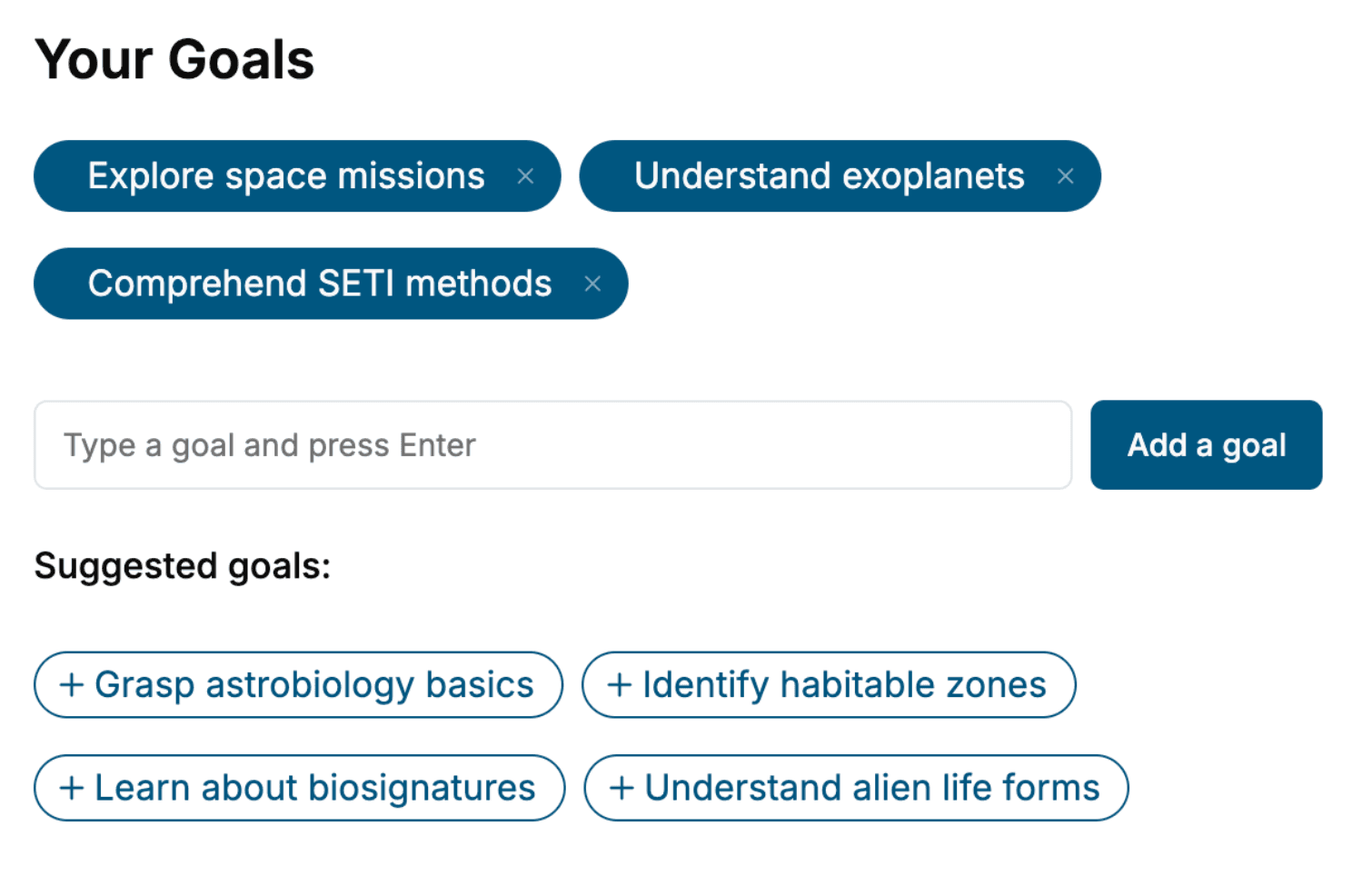
Specify your goals and choose sub-topics to include
- 3. Get your tailored book
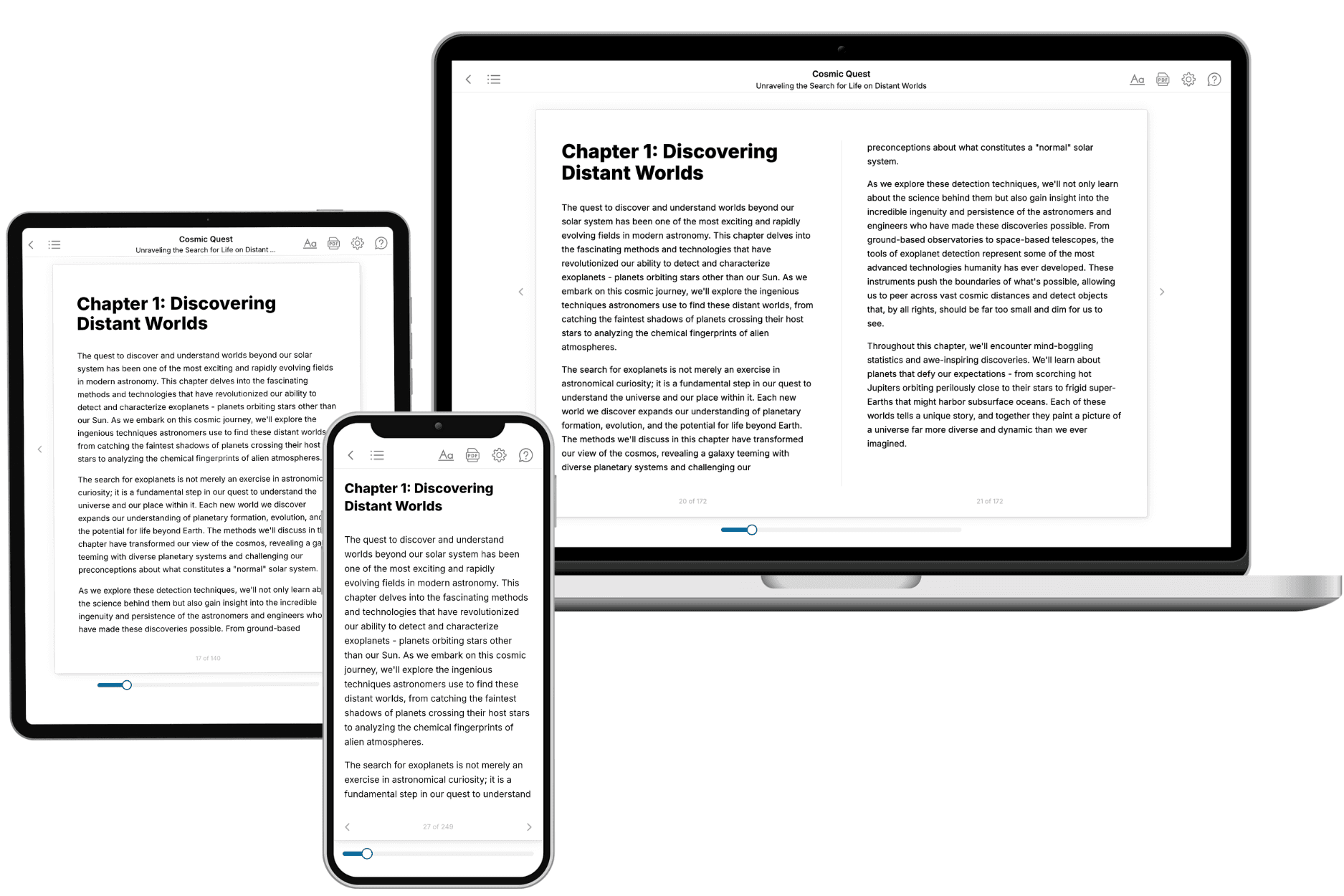
Your book is ready in 10 minutes. Read it online, download as EPUB or PDF, or send to Kindle.

Frequently asked questions
- What is TailoredRead?
TailoredRead creates complete, full-length nonfiction ebooks, written specifically for you. Tell us what you want to learn and why, and TailoredRead writes you a complete ebook on it, with charts, tables, and diagrams throughout. Read it online, on Kindle, or on any e-reader, or download it as a PDF or EPUB. Every book is written fresh the day you order it.
- How is the book tailored to me?
Before anything is written, you answer a few short questions about your goals, your background, and the topics you care about. Your book is then planned around your answers: written at your level, focused on your goals, and covering the topics you chose, instead of the one-size-fits-all book a store sells everyone.
- Will it read like generic AI content?
No. Your book isn't a chat transcript: it's planned chapter by chapter before a single word is written, told in a clear book voice, and explains ideas visually with charts, tables, and diagrams. After writing, every book goes through an editorial pass that polishes chapters so the book reads consistent from start to finish. Judge for yourself: browse thousands of sample books on our Explore Books page.
- How accurate is the content?
Our AI first checks whether your subject needs live research. Niche and fast-moving subjects are researched before writing, and the book plan and chapters are grounded in what it finds. After writing, every book goes through a quality pass that checks its facts and consistency, and researched books list their sources in a Notes section at the back.
- How long is the book?
You choose the length: Comprehensive (250-300 pages), Detailed (150-200 pages), Essential (70-100 pages), or Short (30-50 pages).
- Does the book include visuals?
Yes. Every book includes charts, tables, and diagrams: timelines, checklists, step-by-step guides, decision trees, comparison tables, matrices, and bar charts. A typical book includes dozens of these visual elements.
- Can I read it on Kindle? What formats can I download?
Yes. Every book can be read in our online reader or downloaded as a PDF or EPUB. The EPUB can be opened with Kindle, Apple Books, Kobo, and any e-reader. The Commercial and Author licenses also include an editable Word (DOCX) and Markdown download.
- How much does it cost?
About the price of a regular ebook. The exact price depends on your book's length and complexity, from $2 for the shortest books to $35 for the most comprehensive, and it's shown when you review your book, before you commit to anything. Each book is a one-time purchase, yours to keep, no subscription. Licenses that let you share, teach, or publish your book range from $35.99 to $49.99.
- Can I preview the book before purchasing?
Before you pay, you'll see what your book will cover: the title, a detailed description, the estimated length, and the complete chapter-by-chapter table of contents, so you know what you're getting before you decide. The full text itself is written after you purchase.
- How long does it take to create a book?
About 10 minutes. You can start reading the opening chapters while the rest is still being written.