Mastering Search Systems
Building a Scalable Prototype with Milvus, Elasticsearch, and React
Elevate your search application development skills to new heights with "Mastering Search Systems: Building a Scalable Prototype with Milvus, Elasticsearch, and React." This comprehensive guide is tailored for experienced software engineers ready to tackle the complexities of modern search systems.
284 pages15 chaptersEnglishMar 31, 2025Software DevelopmentCreated by Chris
About this book
You'll dive deep into the intricacies of vector similarity search, distributed indexing, and microservices architecture. Learn how to seamlessly integrate Milvus and Elasticsearch, optimize query performance, and create intuitive user interfaces with React. This book goes beyond basic concepts, offering advanced techniques in data pipeline ETL, custom plugin development, and scalability patterns. Whether you're optimizing query execution plans, implementing sophisticated caching strategies, or fine-tuning search relevance, this book provides the expert-level insights you need. By the end, you'll have the skills to architect, build, and optimize a cutting-edge search application that can handle complex queries at scale.
Table of contents
- IntroductionThe Modern Search Application Landscape, Book Overview and Learning Path, Introduction to Milvus, Elasticsearch, and React, Setting Goals for Our Prototype Search ApplicationRead below
- Chapter 1: Search System FundamentalsSearch System Architecture Overview, Vector Search Fundamentals, Understanding Inverted Indexes, Relevance Scoring and Ranking
- Chapter 2: Deep Dive into MilvusMilvus Architecture and Components, Vector Indexing in Milvus, Querying in Milvus, Scalability and Performance in Milvus
- Chapter 3: Mastering ElasticsearchElasticsearch Architecture, Indexing in Elasticsearch, Elasticsearch Query DSL, Elasticsearch Mappings and Schema Design
- Chapter 4: Developing the React UIReact Application Architecture, React Component Design for Search UIs, State Management in React Search Applications, Advanced React Hooks for Search Functionality
- Chapter 5: Search System DesignMicroservices Architecture for Search Systems, Data Modeling for Search Applications, RESTful API Design for Search Services, Load Balancing in Distributed Search Systems
- Chapter 6: Integrating Milvus and ElasticsearchDesigning a Hybrid Search Solution, Data Synchronization Between Milvus and Elasticsearch, Query Routing and Aggregation, Result Fusion and Ranking
- Chapter 7: Building the Data PipelineETL Process for Search Data, Data Ingestion Strategies, Data Preprocessing and Normalization, Monitoring and Managing the Data Pipeline
- Chapter 8: Advanced Indexing AlgorithmsVector Indexing Algorithms, Text Indexing Techniques, Hybrid Indexing Approaches, Index Optimization Strategies
- Chapter 9: Implementing Distributed SearchData Sharding Strategies, Distributed Query Execution, Ensuring Consistency in Distributed Search, Fault Tolerance and Recovery
- Chapter 10: Query Optimization TechniquesQuery Analysis and Planning, Optimizing Query Execution Plans, Implementing Effective Caching Strategies, Query Performance Tuning
- Chapter 11: Search Relevance TuningUnderstanding Relevance Metrics, Customizing Scoring Functions, Implementing Feedback Loops, A/B Testing for Search Relevance
- Chapter 12: UI/UX Best Practices for SearchSearch User Experience Design, Effective Presentation of Search Results, Implementing Faceted Search, Autocomplete and Suggestions
- Chapter 13: Developing Custom PluginsCustom Elasticsearch Plugins, Extending Milvus Functionality, Custom React Components for Search, Integrating Custom Plugins into the Search Stack
- Chapter 14: Performance OptimizationProfiling Search System Performance, Identifying and Resolving Bottlenecks, Scaling Strategies for High-Load Scenarios, Implementing Comprehensive Monitoring
- Chapter 15: Advanced Search TopicsImplementing Fuzzy Search, Semantic Search Techniques, Multi-Modal Search, Real-Time Search Considerations
- ConclusionFuture Trends in Search Technology, Next Steps in Your Search Engineering Journey
- AppendixUseful Tools and Resources, Search System Performance Checklist
Introduction
In the rapidly evolving landscape of software engineering, the ability to create efficient, scalable, and intelligent search applications has become a critical skill. As data volumes continue to grow exponentially and user expectations for fast, accurate search results increase, the demand for sophisticated search solutions has never been higher. This book, "Mastering Search Systems: Building a Scalable Prototype with Milvus, Elasticsearch, and React," is designed to equip you with the advanced knowledge and practical skills needed to excel in this challenging and rewarding field.
Throughout this comprehensive guide, you'll embark on a journey to master the intricacies of modern search systems. You'll learn how to harness the power of vector similarity search, leverage distributed indexing techniques, and implement a microservices architecture to create a high-performance search application. By integrating cutting-edge technologies like Milvus for vector search, Elasticsearch for text search and analytics, and React for building dynamic user interfaces, you'll be well-prepared to tackle the most demanding search challenges in your professional career.
This introduction will set the stage for your learning journey, providing an overview of the current search application landscape, outlining the structure and goals of this book, introducing the core technologies we'll be working with, and establishing clear objectives for the prototype search application you'll build. By the end of this chapter, you'll have a solid foundation and a clear roadmap for the exciting path ahead.
The Modern Search Application Landscape
The search application landscape has undergone a dramatic transformation in recent years, driven by advancements in machine learning, natural language processing, and distributed systems. Today's search applications are expected to handle massive volumes of diverse data types, from text and images to audio and video, while delivering results with lightning-fast speed and pinpoint accuracy. This evolution has been fueled by the exponential growth of data across industries and the increasing sophistication of user expectations.
One of the most significant shifts in the search landscape has been the rise of vector similarity search. Unlike traditional keyword-based search methods, vector search allows for more nuanced and context-aware queries, enabling applications to understand the semantic meaning behind user inputs. This approach has opened up new possibilities for search applications, from recommendation systems and image recognition to natural language understanding and anomaly detection.
Another key trend is the move towards distributed and scalable search architectures. As data volumes continue to grow, search systems must be able to scale horizontally, distributing both data and processing across multiple nodes to maintain performance under high loads. This has led to the adoption of technologies and design patterns that support distributed indexing, sharding, and query execution.
The integration of machine learning and artificial intelligence into search systems has also become increasingly common. These technologies are being used to improve relevance ranking, personalize search results, and even predict user intent. Advanced techniques like semantic search and multi-modal search are pushing the boundaries of what's possible, allowing users to find information in more intuitive and natural ways.
On the front-end side, there's a growing emphasis on creating rich, interactive search experiences. Modern search interfaces go beyond simple input boxes and result lists, incorporating features like faceted search, autocomplete, and dynamic filtering. The rise of single-page applications and component-based frameworks has enabled developers to create more responsive and user-friendly search interfaces.
In the enterprise world, search has become a critical component of data analytics and business intelligence platforms. Companies are leveraging search technologies to gain insights from their vast data stores, combining structured and unstructured data to power decision-making processes. This has led to an increased focus on features like real-time indexing, complex aggregations, and integration with data processing pipelines.
The open-source ecosystem has played a crucial role in shaping the modern search landscape. Projects like Elasticsearch have democratized access to powerful search capabilities, while newer entrants like Milvus are pushing the boundaries of vector search performance. This vibrant ecosystem has fostered innovation and collaboration, allowing developers to build on top of robust, community-driven foundations.
Security and privacy considerations have also come to the forefront in recent years. With regulations like GDPR and increasing public awareness of data privacy issues, search applications must now incorporate features like access control, data encryption, and audit logging as fundamental components rather than afterthoughts.
As we look to the future, emerging technologies like edge computing and 5G networks are set to further transform the search landscape. These advancements will enable new use cases for distributed search, such as real-time search in IoT environments and augmented reality applications.
In this rapidly evolving landscape, staying ahead of the curve requires a deep understanding of both the underlying principles of search systems and the latest technologies and best practices. This book aims to provide you with that knowledge, equipping you with the skills to build cutting-edge search applications that can adapt to the changing needs of users and businesses alike.
Book Overview and Learning Path
"Mastering Search Systems" is structured to provide a comprehensive and practical learning experience, taking you from the fundamentals of search system design to advanced topics in optimization and scalability. The book is organized into fifteen chapters, each building upon the knowledge gained in the previous sections. This carefully crafted learning path ensures that you'll develop a deep understanding of search systems while gaining hands-on experience with real-world technologies.
We begin with an exploration of search system fundamentals in Chapter 1, laying the groundwork for the rest of the book. Here, you'll gain a solid understanding of search architecture, vector search basics, inverted indexes, and relevance scoring. This foundation is crucial for appreciating the more advanced concepts that follow.
Chapters 2 and 3 dive deep into the core technologies we'll be using: Milvus and Elasticsearch. You'll explore the architecture, indexing mechanisms, and query capabilities of each system, gaining insights into their strengths and how they complement each other. This knowledge will be essential as you work towards integrating these technologies in later chapters.
Chapter 4 shifts focus to the front-end, introducing React and its application in building search user interfaces. You'll learn about component design, state management, and advanced hooks specifically tailored for search functionality. This chapter bridges the gap between backend search capabilities and user-facing features.
With a solid understanding of the individual components, Chapter 5 guides you through the process of designing a complete search system. You'll learn about microservices architecture, data modeling for search applications, API design, and load balancing strategies. This chapter sets the stage for the integration work that follows.
Chapter 6 is a pivotal point in the book, where you'll learn how to integrate Milvus and Elasticsearch to create a powerful hybrid search solution. You'll explore techniques for data synchronization, query routing, and result fusion, bringing together the strengths of both vector and text search.
The next several chapters delve into more advanced topics. Chapter 7 covers building robust data pipelines, essential for keeping your search indexes up-to-date. Chapter 8 explores advanced indexing algorithms, while Chapter 9 tackles the challenges of implementing distributed search at scale.
Chapters 10 and 11 focus on optimization, covering query optimization techniques and search relevance tuning. These chapters will help you fine-tune your search system for maximum performance and accuracy.
Chapter 12 returns to the user interface, exploring UI/UX best practices specific to search applications. You'll learn how to create intuitive, efficient search experiences that delight users.
In Chapter 13, you'll learn how to extend the capabilities of your search stack by developing custom plugins for Elasticsearch, Milvus, and React. This knowledge will allow you to tailor your search solution to specific requirements and use cases.
Chapter 14 is dedicated to performance optimization, covering techniques for profiling, bottleneck identification, and scaling your search system to handle high loads. The book concludes with Chapter 15, which explores advanced search topics like fuzzy search, semantic search, and real-time considerations.
Throughout the book, you'll find practical examples, code snippets, and best practices drawn from real-world experience. Each chapter builds upon the last, culminating in the development of a fully-functional, scalable search prototype that integrates all the concepts and technologies covered.
By following this learning path, you'll not only gain theoretical knowledge but also develop practical skills that you can immediately apply to your own projects. Whether you're looking to build a new search application from scratch or optimize an existing system, this book will provide you with the tools and insights you need to succeed.
Introduction to Milvus, Elasticsearch, and React
The technology stack we'll be using to build our scalable search prototype consists of three primary components: Milvus for vector similarity search, Elasticsearch for full-text search and analytics, and React for building the user interface. Each of these technologies brings unique strengths to the table, and their combination allows us to create a powerful, flexible search solution capable of handling a wide range of use cases.
Milvus is an open-source vector database designed for similarity search and artificial intelligence applications. It excels at managing and querying large-scale vector data, making it ideal for scenarios like image similarity search, recommendation systems, and natural language processing tasks. Milvus supports multiple index types optimized for different data distributions and query patterns, allowing for high-performance similarity search even with millions or billions of vectors.
Key features of Milvus include:
- Support for multiple vector index types (e.g., FLAT, IVF_FLAT, HNSW)
- Horizontal scalability through distributed architecture
- ACID transactions for data consistency
- Support for hybrid searches combining vector similarity with scalar filtering
- Integration with popular machine learning frameworks
Elasticsearch, part of the Elastic Stack (formerly known as the ELK Stack), is a distributed, RESTful search and analytics engine. It's built on top of Apache Lucene and provides a powerful full-text search engine with an extensive query DSL (Domain Specific Language). Elasticsearch is widely used for log and event data analysis, full-text search, and as a general-purpose document store and analytics engine.
Key features of Elasticsearch include:
- Distributed architecture for high availability and scalability
- Near real-time search and analytics capabilities
- Schema-free JSON documents
- Powerful aggregations for data analysis
- RESTful API for easy integration
- Extensive ecosystem of tools and plugins
React is a popular JavaScript library for building user interfaces, particularly single-page applications. Developed and maintained by Facebook, React has become a standard in modern web development due to its efficiency, flexibility, and strong ecosystem. Its component-based architecture makes it well-suited for creating complex, interactive UIs like those required for advanced search applications.
Key features of React include:
- Virtual DOM for efficient updates and rendering
- Component-based architecture for reusable UI elements
- Unidirectional data flow for predictable state management
- JSX syntax for describing UI components
- Large ecosystem of libraries and tools
- Strong performance optimizations
By combining these technologies, we can create a search application that leverages the strengths of each:
- Milvus provides high-performance vector similarity search, enabling advanced features like semantic search and image similarity.
- Elasticsearch offers robust full-text search capabilities, along with powerful analytics and aggregation features.
- React allows us to build a responsive, interactive front-end that can efficiently display and update search results.
This combination allows for a hybrid search approach, where we can use Elasticsearch for traditional text-based search and filtering, while leveraging Milvus for vector similarity searches. The results can then be combined and ranked to provide the most relevant results to the user.
Throughout this book, we'll explore how to integrate these technologies, optimize their performance, and leverage their unique features to create a state-of-the-art search application. You'll gain hands-on experience with each of these tools, learning best practices for development, deployment, and scaling.
As we progress through the chapters, you'll see how these technologies work together to form a cohesive search system. We'll cover topics such as data synchronization between Milvus and Elasticsearch, designing APIs that can query both systems efficiently, and creating React components that can handle and display complex search results.
By the end of this book, you'll have a deep understanding of how to leverage Milvus, Elasticsearch, and React to build scalable, high-performance search applications capable of handling a wide range of search scenarios.
Setting Goals for Our Prototype Search Application
As we embark on this journey to master search systems, it's crucial to establish clear, ambitious goals for the prototype search application we'll be building throughout this book. This prototype will serve as a practical demonstration of the concepts and technologies we'll be exploring, as well as a foundation that you can build upon for your own projects. Let's outline the key objectives and features of our prototype search application.
1. Hybrid Search Capabilities: Our primary goal is to create a search application that seamlessly combines the power of vector similarity search (using Milvus) with traditional full-text search (using Elasticsearch). This hybrid approach will allow us to handle a diverse range of search scenarios, from finding similar images to complex text queries with semantic understanding.
2. Scalability and Performance: The prototype should be designed with scalability in mind from the ground up. It should be capable of handling large volumes of data (millions of documents/vectors) and high query loads. We'll implement techniques like distributed indexing, sharding, and caching to ensure our application can scale horizontally as data and user demands grow.
3. Real-time Indexing: Our application should support real-time or near-real-time indexing of new data. This means implementing efficient data pipelines that can process and index incoming data quickly, ensuring that search results always reflect the most up-to-date information.
4. Advanced Query Capabilities: The search API should support a wide range of query types, including:
- Full-text search with relevance scoring
- Vector similarity search
- Faceted search and filtering
- Geospatial queries
- Aggregations and analytics
5. Relevance Tuning: The prototype should include mechanisms for fine-tuning search relevance. This includes implementing custom scoring functions, relevance feedback loops, and A/B testing capabilities to continuously improve search result quality.
6. Rich, Interactive UI: Using React, we'll create a responsive and intuitive user interface that showcases the full capabilities of our search backend. This will include features like:
- Auto-suggest and autocomplete
- Dynamic faceting and filtering
- Infinite scrolling or pagination of results
- Visual representation of vector search results (e.g., for image similarity)
7. Microservices Architecture: The application will be built using a microservices architecture, demonstrating how to effectively split search functionality into modular, independently scalable services.
8. Performance Monitoring and Optimization: We'll implement comprehensive monitoring and profiling tools to track the performance of our search system. This will allow us to identify bottlenecks and optimize query execution for maximum efficiency.
9. Security and Access Control: While not the primary focus, our prototype will include basic security features such as authentication, authorization, and data access controls to demonstrate how these crucial aspects integrate into a search system.
10. Extensibility: The prototype should be designed with extensibility in mind, allowing for easy integration of new data sources, custom plugins, and additional search features.
11. Multi-modal Search: As an advanced feature, we'll explore implementing multi-modal search capabilities, allowing users to search across different types of data (text, images, etc.) in a unified interface.
12. Documentation and Testing: Throughout the development process, we'll emphasize the importance of thorough documentation and testing. This includes API documentation, code comments, and the implementation of unit and integration tests to ensure reliability and maintainability.
By setting these ambitious goals for our prototype, we ensure that the application we build will cover a wide range of real-world search scenarios and challenges. As you work through the book and implement these features, you'll gain hands-on experience with the most important aspects of modern search system development.
Remember, while we'll be building a fully functional prototype, the skills and knowledge you gain throughout this process are designed to be transferable to a wide range of search applications and use cases. Whether you're working on e-commerce product search, content discovery platforms, or enterprise data search solutions, the principles and techniques you'll learn will be invaluable.
As we progress through the chapters, we'll revisit these goals, showing how each concept and technology we introduce contributes to achieving them. By the end of the book, you'll have not only a powerful search prototype but also the skills and understanding to adapt and expand upon it for your own unique search challenges.
This is the end of the free sample. The full book has 15 chapters.
Want this book written for you?
Tell us your goals and background, and get your own version of this book, tailored by AI to you.


Benefits of AI-tailored books
- Read one book, not ten:
- all the Software Development knowledge you need, gathered into a single book.
- Save days of learning:
- tell us your goals, choose your topics, and the whole book is built around them.
- Learn effortlessly:
- Software Development book written for your specific background and expertise.
- Understand at a glance:
- includes charts, tables, timelines, checklists, decision trees, and more.
- Stay current:
- written the day you order it, not years ago.
- Trust what you read:
- every book is checked for accuracy, with real research when your subject needs it.
Create your unique book in 3 steps
- 1. Select your focus
Select the focus of your Software Development book and share your background
- 2. Personalize your book
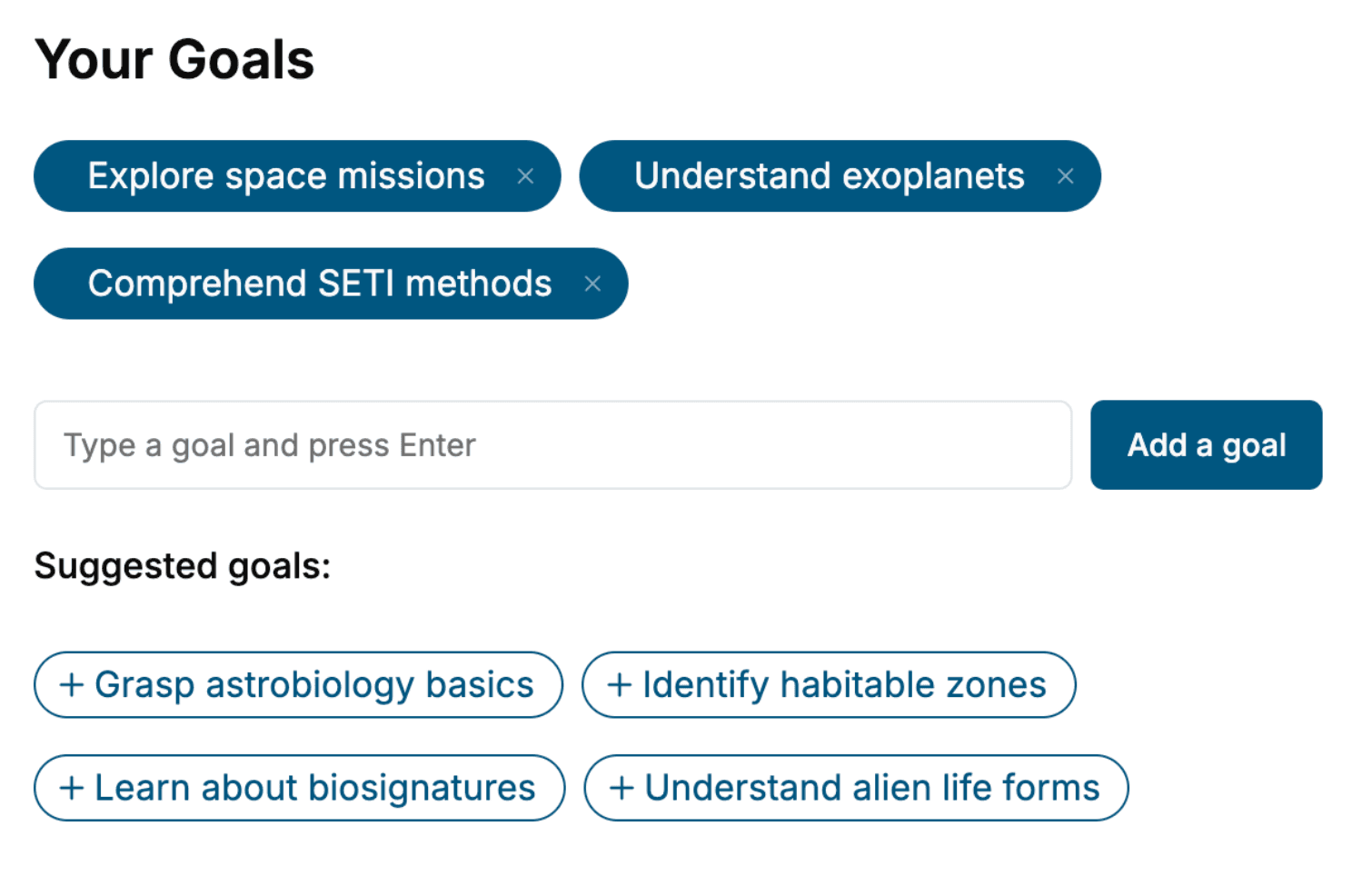
Specify your goals and choose sub-topics to include
- 3. Get your tailored book
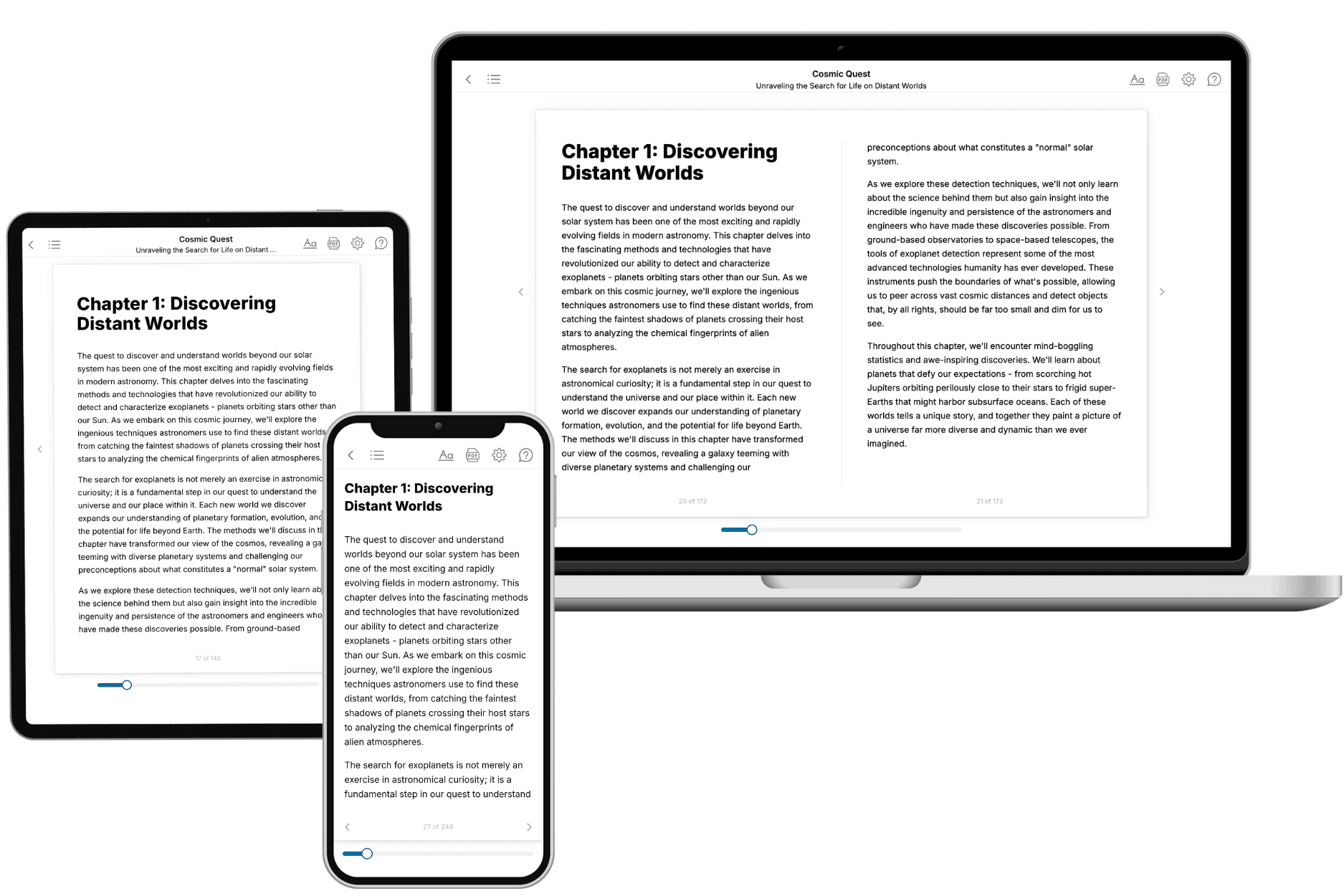
Your book is ready in 10 minutes. Read it online, download as EPUB or PDF, or send to Kindle.

Frequently asked questions
- What is TailoredRead?
TailoredRead creates complete, full-length nonfiction ebooks, written specifically for you. Tell us what you want to learn and why, and TailoredRead writes you a complete ebook on it, with charts, tables, and diagrams throughout. Read it online, on Kindle, or on any e-reader, or download it as a PDF or EPUB. Every book is written fresh the day you order it.
- How is the book tailored to me?
Before anything is written, you answer a few short questions about your goals, your background, and the topics you care about. Your book is then planned around your answers: written at your level, focused on your goals, and covering the topics you chose, instead of the one-size-fits-all book a store sells everyone.
- Will it read like generic AI content?
No. Your book isn't a chat transcript: it's planned chapter by chapter before a single word is written, told in a clear book voice, and explains ideas visually with charts, tables, and diagrams. After writing, every book goes through an editorial pass that polishes chapters so the book reads consistent from start to finish. Judge for yourself: browse thousands of sample books on our Explore Books page.
- How accurate is the content?
Our AI first checks whether your subject needs live research. Niche and fast-moving subjects are researched before writing, and the book plan and chapters are grounded in what it finds. After writing, every book goes through a quality pass that checks its facts and consistency, and researched books list their sources in a Notes section at the back.
- How long is the book?
You choose the length: Comprehensive (250-300 pages), Detailed (150-200 pages), Essential (70-100 pages), or Short (30-50 pages).
- Does the book include visuals?
Yes. Every book includes charts, tables, and diagrams: timelines, checklists, step-by-step guides, decision trees, comparison tables, matrices, and bar charts. A typical book includes dozens of these visual elements.
- Can I read it on Kindle? What formats can I download?
Yes. Every book can be read in our online reader or downloaded as a PDF or EPUB. The EPUB can be opened with Kindle, Apple Books, Kobo, and any e-reader. The Commercial and Author licenses also include an editable Word (DOCX) and Markdown download.
- How much does it cost?
About the price of a regular ebook. The exact price depends on your book's length and complexity, from $2 for the shortest books to $35 for the most comprehensive, and it's shown when you review your book, before you commit to anything. Each book is a one-time purchase, yours to keep, no subscription. Licenses that let you share, teach, or publish your book range from $35.99 to $49.99.
- Can I preview the book before purchasing?
Before you pay, you'll see what your book will cover: the title, a detailed description, the estimated length, and the complete chapter-by-chapter table of contents, so you know what you're getting before you decide. The full text itself is written after you purchase.
- How long does it take to create a book?
About 10 minutes. You can start reading the opening chapters while the rest is still being written.